
Mbali Zondo: Surround yourself with people who you admire

[bctt tweet=”Do your homework before networking. Make sure you have introduced yourself to the host if you can” via=”no”] PR doyenne turned award-winning director Ava Duvernay famously said: “when you’re in your lane there’s no traffic”. Mbali Zondo’s remarkable career journey is a testament to this truth. She continues to cement her place in the world of public relations having worked on global brands such as Apple and Clinique. She does it all with the kind of poise, humility and grace attendant with royalty. Her enthusiasm for people and technology and how they all come together to direct meaningful conversations about brands through public relations is truly inspiring. She has walked the graduation stage 3 times for disciplines such as marketing and communications from prestigious institutions such as the University of Pretoria. Not even 30 yet, she continues to startle her peers with her forward thinking approach to creating lasting brand legacies in the digital space. She has the determination, grit, and power to continue to be a game changer in the PR world. Success is not a ‘one-size-fits-all’ and Mbali defines this her own way, through her individual journey. In her work, she continues to remind us all that reputation matters, and that building big brands require long-term, strategic thinking, and a little PR magic. Why did you choose P.R as a career path? Growing up, I did not know what PR was, let alone that it could be done as a career choice. All I know was that I wanted to express my creativity and be amongst interesting people at events. I’m a visual person and I wanted to be featured in magazines or to work with people who worked for magazines. What are two of the most important lessons you’ve learnt about yourself through your career journey? Trust your skills but don’t be afraid to improve on them in order to be recognised as an expert in your field. Surround yourself with people who you admire because this forces you to raise the bar when it comes to excellence. Tell us about a professional situation when the odds were against you, and how you overcame this? Part of PR is organising media events. I remember organising an annual lifestyle event and the whole event was scheduled to be outside. This event was scheduled for the end of September and I didn’t take into account that the summer rains in Joburg start at that exact time of the month. As fate would have it, there was rain predicted for the whole day for the day of the event. I overcame this situation because, with my background with having had used many suppliers before, I was able to call a supplier who gave me a personal referral to a supplier who puts up stretch tents. Due to having that personal relationship, I was able to negotiate to have the stretch tent set up and ready a day before the rain hit Johannesburg. Needless to say, my team was very impressed that I could think on my feet and get a quick turnaround time with a new supplier. [bctt tweet=”Success is not a ‘one-size- fits-all’. Success is subjective” username=”SheLeadsAfrica”] If your life were a movie title what would this be? Mad Max (with Tom Hardy and Charlize Theron). This movie highlights determination, grit, and power in an unexpected and challenging situation. Although battered and bruised in the end, Charlize’s character comes out victorious and succeeded in her mission. What does sisterhood mean to you? To me, sisterhood means uplifting other women and sisters without feeling envious of the other woman’s gift or talent. It’s about supporting each other beyond our backgrounds and standing up for one another. What do you know now, that you wish you knew 5 years ago? I wish I had known 5 years ago that everyone has a unique path for a reason and that achieving success is not a ‘one-size-fits-all’ shoe size. Success is subjective. I also wish I had known that financial literacy is important and that saving up to buy a house is a long process. For those who find networking daunting, what are 3 tips you can share? When it comes to networking if you can take a friend, do so because networking becomes easier when you do it with someone you know and feel comfortable with. When you are comfortable, networking becomes easier. Share your professional contact details with new connections and stay in touch with them when you can. They will appreciate your efforts of investing in the relationship. Do your homework before networking. Try and find out who will be on the guest list so you can initiate conversations with people who may have mutual interests with you. Also, familiarise yourself with the purpose of the event and make sure you have introduced yourself to the host if you can as [bctt tweet=”Trust your skills but don’t be afraid to improve on them” username=”SheLeadsAfrica”] What skills should every P.R professional have in their “bag of tricks”? Writing: Every PR Professional needs to be able to write as you will often find yourself in situations where you need to write content, messaging documents etc. Be prepared. Presentation skills: You need to be able to present ideas or host an event with media, therefore, learning how to present is crucial to PR. Adaptability: PR is an industry that changes often and as much as you can be organised, sometimes, not everything goes according to plan. A good PR professional needs to be able to adapt accordingly to any situation to remain relevant and resilient. What is your morning get up and go song? It has to be Nina Simone: Four Women. This song gives me the confidence to start the week. What are your plans for the next 5 years professionally? Over the next 5 years, I’d like to do the following: Be featured in the 40 under 40 Forbes list. Complete a Master’s degree in Creative Brand Leadership. Travel
Facebook Live with Jamila Lawal: Starting a talk show to tackle social issues (July 26).

When it comes to tackling social and economic issues, starting a talk show and getting your voice on air could be the way to go. Did we hear you say talk shows are only for people in the media? It doesn’t matter what your career is, or your major source of income, if you know how to use social media to your advantage, then you can also start your own talk show or TV series. Join us for a Facebook Live on Wednesday, July, 26th, with Jamila Lawal, a nutritionist, culinary expert, and the producer and host of the TV series, Mila’s Diaries. She’ll be sharing with us how talk shows are so not outdated, and what it takes to start your own talk show. Jamila started her talk show, Mila’s Diaries to be of service to the economically disadvantaged and address issues affecting northern Nigeria such as divorce, child abandonment, early marriage, education etc. She also uses this medium to showcase success stories of the people within the region. [bctt tweet=”Jamila Lawal wants to teach you how to start your own talk show. Facebook Live( July 26)” username=”SheLeadsAfrica”] Register below for this session and ask Jamila any questions you might have on this topic. Some of the topics we’ll cover Why TV and talk shows are not yet outdated Best approaches to addressing social and economic problems What it takes to start a talk show Tackling the issue of divorce in Nigeria Facebook Live Details: Date: Wednesday, July 26th Time: Lagos 5pm // Joburg 6pm // Nairobi 7pm Where: facebook.com/sheleadsafrica/ Watch here: https://www.facebook.com/sheleadsafrica/videos/1917891998434111/ About Jamila Jamila Lawal is a qualified Biochemist with advanced degrees in nutrition. She was recently on the Maggi Ramadan campaign trail offering nutrition advice to women in different communities. She advocates living a balanced and healthy lifestyle in fun and exciting ways without compromising the enjoyment and quality of meals, culture, and most of all your relationship with God. Jamila considers herself progressively multi-lingual with current fluency in English, French, Arabic, Ebira, Hausa and with a more than average understanding of Yoruba. Her TV Show, “Mila’s Diaries” debuted recently and it encapsulates all her interests and the values that she holds dear to heart. Jamila loves music and flowers. When she isn’t trying out new recipes, you can catch her baking cupcakes with her 6-year-old son.
5 things to do to get the corner office

[bctt tweet=”Working your way up the corporate ladder? Take a look at how to get there with ease!” username=”SheLeadsAfrica”] After reading the book, “Nice Girls Don’t Get the Corner Office 101” by Lois P. Frankel, I felt it was only best to share some of the best tips that I learnt from this book! The book offers a bunch of no-no’s that we tend to overlook but actually, play a huge role in our professional careers. As Black women, it is already an uphill battle as it is! We all know the steps we need to take to be successful, but how about we look at it from a different angle? Let’s take a look at what a Motherland Mogul should NOT be doing in order to reach the top. 1. Asking permission It should be clear to people from the get go that you do not need approval from anybody! Go after what you want and be confident. If you are asking for permission, especially for simple things, you downplay the position you are in to make decisions. Instead of asking your boss, “May I work from home today?” rather say, “I will be working from home today, I will be available via email or cell”. This shows that it is important for your boss to be informed, yet you can make your own decisions when it comes to yourself and your work. 2. Needing to be liked Everybody wants to be liked and it can play a huge role in your success but, you have to strike a balance. If you are overly concerned with being liked, that means you are easily swayed by stronger personalities. I was thrown into an industry I knew nothing about. I knew I was capable of doing the job, but I felt I needed to be liked because it was my first time at the rodeo. I became a “yes” woman and ended up doing other people’s work. I learnt that I need to stand my ground – new or not. Not having a backbone meant that nobody was giving the respect I deserved, but at the same time, I was not showing anybody that I deserved it because I wanted to be liked so badly! [bctt tweet=”Click here to see what you should NOT be doing to reach success in the office. ” username=”SheLeadsAfrica”] 3. Holding your tongue Society has been conditioned to believe that if a woman is being assertive, she is being a bitch and many women do not speak up as a result. This happens not only at work but in our personal spaces too. A friend of mine told me about a superior who shoots down all her ideas, yet uses them as his own in important meetings to take all the credit. She let this happen for a while, but this made her realize that her boss is only stunting her growth in the long run. My friend kept all her ideas to herself until it was time to brainstorm in a meeting. She received some great feedback and because of all the great work she put in over time, she was promoted. This also allowed her to gain the respect of her superior, keeping him from stealing any of her ideas! It is ok to disagree, and being assertive means people will respect you, not walk all over you. 4. Minimizing your work or position Women tend to downplay their positions at work. Often you will hear, “Oh, I’m just a secretary, nothing special”. This is wrong! Whether you are a secretary or manager, each position plays a role in the growth of the company you work for. My new transition into the finance industry was not the easiest as I learnt about everything from scratch. This made me downplay my role when people asked “what do you do?”, I just wanted to avoid the topic completely because I was ashamed of the fact that I was not in the field that I worked hard and studied for. People did not take my expertise seriously because of this. I taught myself to snap out of that habit and acknowledge the fact that I am amazing at what I do and I should be proud of it. If you act like your job is not serious, then people will not take you seriously. [bctt tweet=”Check out how these office faux pas can stop a #MotherlandMogul from getting that corner office.” username=”SheLeadsAfrica”] 5. Failing to define your brand Personal branding is all the rage, and for good reason! Ask yourself how you want people to see you, what your expertise is and what you want to be known for. You may be working in finance, but ultimately you want to be a writer. What are you doing to make sure that people know you as a writer? What are you bringing to the table to make sure your expertise is communicated well? Ask yourself these questions. A lot of people make you feel like you should be following one path. But as a Motherland Mogul, it’s ok to be a jack of all trades or take on many interests. Show people what you got and you’re well on your way to success.
Bookkeeping for dummies

[bctt tweet=”Bookkeeping is an important skill to have when you’re starting your business” username=”SheLeadsAfrica”] One thing that you quickly learn when you start your business is that you’ll have to handle every aspect of it; from marketing your products, hiring your employees and most importantly getting a handle of your accounts. It is therefore important that you get a good understanding of the basic set of accounts for any business, how they relate to each other and how the different actions you take are represented in your books. The more your business grows the more complex it becomes and at that point, you might want to consider getting yourself some professional help. In this Forbes article, the writer talks about what you need to know about the 10% of start-ups that succeed. One of the things he talks about is making sure you understand the ‘’boring’’ stuff about your business. It is so easy to get carried away by the more interesting aspects of your business and forget to handle the less interesting but many times the most important aspects of your business. One of these is the accounting. What we are going to do here is to give you a basic introduction to the business accounting concepts that you need to understand as you run your business. Don’t be worried about whether or not you have an accounting degree, these are things you can do with your eyes closed. [bctt tweet=”Every business transaction is an exchange of one thing for another” username=”SheLeadsAfrica”] Double entry: All business transactions have a double effect on the accounts Every business transaction is an exchange of one thing for another. This is the basis of accounting, the idea here is to get an all rounded picture of where your money is going and keep yourself from small mistakes. As a boutique owner, you sell an outfit (inventory) in exchange for cash. This simple transaction has a double effect of increasing the amount of cash in your business while reducing the count of inventory. Very simply put that is double entry affecting your cash account and your inventory account. The accounts are interrelated At this point, we are basically building up on the double entry concept by creating an account for every element of your business. If for example, you did not sell the outfit for cash but for credit, then you’ll want to keep an account of the person to whom you sold the outfit to until you get the money in cash and then close off that account while increasing the amount of actual cash that you have. Every time you use your cash for something new then create an account for whatever aspect of your business is affected by that transaction. If it is an account that you already opened then you just keep building on that account. Balance the accounts You’ve probably heard this phrase before, what it simply means is that after some time you’ll want to know how your accounts look. Say every month or every week when you want to know where your business stands you’ll make sure that for every account you opened both sides have an equal amount. For example, your inventory account had a balance of $1000 when you started off, every time you sold something that balance reduced. Let us assume that at the end of the month your inventory reduced to $250, you’ll continue selling it off at the beginning of the next month so to balance your account the $250 will simply be considered as inventory carried forward. [bctt tweet=”Bookkeeping grows more technical as your business grows & there are many apps you can use to do this” username=”SheLeadsAfrica”] These are the basic accounting ideas that you need to understand. Bookkeeping, of course, grows more technical as your business grows and there are many applications that people employ these days to do this, however, the idea remains the same. In the next article in this series, we’ll help you understand the important accounts when doing bookkeeping for your business. We’ll talk about differentiating between cash and profit, understanding the incoming statement as well as the balance sheet.
Elizabeth Akanbi: Make mistakes, learn, grow and do better

[bctt tweet=”We aim to reach women that have a passion to become game changers” username=”SheLeadsAfrica”] If there’s something she’s known for, it’s adding value to other women’s lives. With over 7 years experience across different industries, Content creator and Marketing communications professional, Elizabeth Akanbi is Founder and Managing editor of For Working Ladies, an online career lifestyle hub for women. With a strong passion of understanding people’s journeys to success she uses this knowledge to inspire, empower and motivate individuals. Asides equipping women with inspiring and motivational content Elizabeth is passionate about sharing the African culture through art, food, music and social events. As such she co-founded a lifestyle brand, The Social Bloc which runs periodic social events in the UK to highlight the African culture. What inspires For Working Ladies? I have always desired a mentor, someone to tell me how to make decisions, someone to give me career advice, tell me the risks of starting a business, I’m sure you know what I mean right? But I have never been fortunate to have one. I would search the internet day and night looking for answers to my questions, read loads of articles, career profiles and then draw a conclusion on the topic. I knew I wasn’t the only person going through this and needed to create a platform where you could get career/entrepreneurship tips, read about other women that have taken your path and just daily lifestyle content. Why an online platform? Because the world is going digital and people are constantly on their phones so I saw this was the best place to share content and reach our audience. For Working Ladies is a career lifestyle hub for women created to motivate, inspire and give guidance. What kind of content do you provide and what women does your business aim to reach? Our content mainly focuses on career and entrepreneurship, however, we also share lifestyle content also. We aim to reach women that have a passion to become game changers, we want to equip them, motivate them and be that big sister that says we have your back. What innovations and future plans are you looking towards for your business? 2017 is the year that I hope to take For Working Ladies offline and create interactive events. Things are still in the pipeline; I am excited and currently looking for speakers and brands to partner with for our first interactive event. Asides from events we hope to start delivering content in new and fresh ways as the behavior of people are changing and they want more than just written content. Tell us about your greatest challenge as well as your greatest achievement so far? My greatest challenge has been creating content that is new, fresh and relevant on an ongoing basis. There is so much content out there that it is necessary to give people a reason why they should read yours. Luckily I have an amazing team of contributors who are constantly creating fresh and relatable content for women. My greatest achievement so far has been keeping this content-based site going for over a year, being the only editor, managing the digital marketing, overseeing over 15 contributors whilst working. It takes a lot of time and dedication; there have been times where I have gotten so tired of proofreading and writing that I just want to give up. I am working on building a team so that as a brand more can be achieved. What business tools have helped you in running your business successfully? My daily tasks consist of sending emails, a lot of emails! mainly to contributors and also to people I am interviewing. I am literally always stuck to my phone/Mac refreshing my inbox, it can be a headache but it has to be done. The best tool that has helped me in managing emails is Boomerang for Gmail, it allows you to schedule emails, receive notifications to follow up on an email and also receive a notification when they have read the email. It’s a really user-friendly plugin! There are so many great features, we have an article on our website about it. [bctt tweet=”Learn from every mistake, because every experience and encounter is there to teach you” username=”SheLeadsAfrica”] What personal values have guided you as an entrepreneur? Hard work and consistency. Results don’t just come; you must be intentional and put the work in. The first step is making the commitment but the next, which can be the hardest is consistency coupled with hard work. Also as Oprah said, “Learn from every mistake, because every experience and encounter, particularly your mistakes, are there to teach you..” It’s okay to get it wrong, it’s okay for that partnership to breakdown, it’s okay for that idea not to work out, but in all of that experience what did you learn? I try my best to analyse every experience I have had and learn from it. Without mistakes how would we learn? Make mistakes, learn, grow and do better! From your business name, it is safe to say you have nothing for the unemployed ladies? We have something for every female, whether employed or not. Our main focus is career and entrepreneurship, however, we touch on lifestyle, fashion and much more content that is relevant to all ladies. Everyone has something they want to achieve in life, a dream they want to pursue, something they are working on and we want to be part of that journey in inspiring, encouraging them that they can achieve whatever they set their mind to do. [bctt tweet=”Don’t allow the distance between where you are and where you want to be scare you” username=”SheLeadsAfrica”] Advice for entrepreneurs about to throw in the towel? Why did you start in the first place? Sit down and have a deep think. Remember your why at every low point and allow it to push you. Don’t allow the distance between where you are and where you want to be scare you,
Ifrah Arab: This is just not a joke for me

[bctt tweet=”We faced a lot of challenges being in a conservative community they weren’t ready to accept change” via=”no”] Ifrah Arab is only 20 years old, but she is on a mission to alleviate poverty and inspire more women much older than herself into enterprise. Through this effort Ifrah was a 2016 Anzisha Prize finalist and a 2016 Echoing Green semifinalist quite a mean feat. Ifrah grew up in Garissa town, a conservative community where women were never encouraged to have economic independence. In 2015, when her mother passed away, Ifrah felt the need to uplift mothers in her community. She founded SuperMom, a door to door distribution network that gives Kenyan women in disadvantaged areas access to quality and essential consumer products. Within two years of operation, she now has 50 women now selling products door to door earning an income and making household items accessible to thousands. Ifrah hopes to draw in 2,000 women in the next two years and double their incomes. How many commodities is SuperMom now selling door to door in Garissa County? We sell a whole range of products. Our main ones are consumer goods which include sugar, salt, flour etc. mainly basic everyday use consumer products, clean green energy, sanitary products and health products. Garissa has a relatively large Muslim population some of whom are conservative when it comes to women working. Has SuperMom encountered any challenges around this with the community? Yes, we faced a lot of challenges mostly because of, as you said it, being a conservative community they weren’t ready to accept the change. Most of them saw it as a breach of culture and all that and we faced a lot of opposition. [bctt tweet=”Ifrah Arab personally interacts with the women in her SuperMom network.” username=”SheLeadsAfrica”] How are you overcoming this challenge? We overcome this challenge by using a new tactic. We decided to first approach the community elders, religious leaders, local women groups and made them understand our mission. This made it easier for us to then penetrate the larger community because now we had people they trust endorsing us. You were a 2016 Anzisha Prize finalist, how has this experience improved your outlook and operations at SuperMom? I learnt a lot from the Anzisha Prize. I met different young people from Africa who shared the same vision of making Africa great. They were all young problem solvers aged between 15 and 22. It was wonderful being able to meet and build networks with people of the same mindset and share ideas. You were also a semifinalist in the Echoing Green Fellowship of 2016? What are some of the lessons you learnt from that process? I wasn’t able to make it to the finals for Echoing Green but the feedback they gave me after the selection process has helped SuperMom grow. We were able to take in all the advice we got from them and that was really great. What are some of the most successful pitching techniques you use when seeking funding for SuperMom? When I am pitching SuperMom I always make sure I am clear and the audience clearly understands what SuperMom is all about. I also make sure to always show traction. What we have done so far to earn that trust. I always give my story too. It makes people understand the reason why am doing this. That it’s just not a joke for me. [bctt tweet=”When I am pitching SuperMom I always make sure the audience clearly understands” username=”SheLeadsAfrica”] What keeps you going? I personally interact with the women in our network. Every time I hear any of the women talking about how SuperMom has improved her life it motivates me to do more. What big plans do you have in store for SuperMom? The problem we are trying to solve is not unique to my community. Several other marginalised communities in Kenya face the same problem. My vision is to expand and reach these other communities. We are also not covering all the products needed so also to form more partnerships so as to increase the number of products in our catalogue. What’s the one thing you would not leave the house without? My phone. If you’d like to share your story with She Leads Africa, let us know more about you and your story here.
Ethel Cofie: Share your knowledge, inspire others

[bctt tweet=” I have always loved the idea that technology can allow you to create – Ethel Cofie” username=”SheLeadsAfrica”] When Ethel was 18 years old her father sent her to computer diploma class, so she would keep busy. There, one of the lecturers made a life-changing statement to Ethel, “the computer is dumb and the computer is only as smart as the one who writes its logic”. That simple line led to Ethel choosing to do a degree in computer science and then a master’s degree in Distributed System on scholarship in the UK (the only female in her specialization). Ethel made her first attempt at entrepreneurship with a software firm in her Ghana which failed. Because she was self-funded, Ethel lost her savings in the process. Not daunted, Ethel went back to full-time employment across Ghana, and Nigeria, Sierra Leone building innovative technology or managing teams that build innovative tech. She eventually found her way back into entrepreneurship and is now an award-winning entrepreneur. Her software company EDEL Technology Consulting won the IT Consulting Firm of the Year, as adjudged by the Ghana Telecom and IT Industry. In the last few years, Ethel Cofie has gone from being named one of the top 5 women influencing technology by the Mail and Guardian (South Africa) to winning the Most Influential African Woman in Business and Government: ICT Category by CEO Global. How did you get the idea/concept of EDEL Technology? As I sat through my first programming class, I thought, the computer is only as smart as the one who writes its logic, and I’m smart so why can’t I? I had just signed up to my first computer training class after my secondary education. It was all new and exciting for me –learning about computers. This first lesson revolutionalised my life and the way I felt about computers. It’s one of those aha! moments of my life. After 6 months of the computer training course, I decided that a career in computing was what I wanted; I, therefore, applied to Valley View University to pursue a BSc course in Computer science. I have always loved the idea that technology can allow you to create and make drastic changes in industries in technology. So I knew I was always going to become an entrepreneur. In my mind, I was going to build an organization around technology. I chose to focus on building an IT Strategy and Consulting company so I can strategically work with companies to build new revenue streams and make them more efficient. What has been your biggest hurdle so far? In business, there are challenges– times you feel like giving up. Times you feel you made a mistake. Like all entrepreneurs, the biggest challenge is the self-doubt, and also the negativity from people you think should support you. The story is no different from mine. Leaving a lucrative corporate job to start my own business was a challenge. [bctt tweet=”After failing the first time round, Ethel Cofie went on to be an award-winning enrepreneur” via=”no”] Has there ever been a time when you thought of giving up? What kept you going? I left my lucrative job and very comfortable life in London and returned to Ghana with the intention of starting a Software Business of my own (EDEL Technology Consulting). I told nobody about it. Not even my parents, because considering that they were the typical African parents, I knew they would object. They only got to know of my intentions after I had shipped all my belongings and arrived in Ghana. Everybody thought I was insane. And guess what, I failed completely at my first attempt. A lot of my working life was spent in the United Kingdom, where people understood technology. However, I painfully came to understand what it meant to build technology in Ghana, where at the time most people did not understand what it meant. You can just imagine what my parents and people said at the time. The blow was overwhelming because I had spent all my savings on this new adventure. But I didn’t let this deter my vision. I plodded on, mastered courage and took on a few jobs, did a lot of projects and started EDEL Technology consulting version 2 and I am glad to report that the second version has grown to the point where we have clients not only in Ghana but in the United Kingdom. What is your favourite thing about the tech industry? I love the ability to create and change industries and change how businesses use technology to solve business challenges. This is why I love technology –we can change how the world works. [bctt tweet=”Ethel Cofie: This is why I love technology –we can change how the world works.” username=”SheLeadsAfrica”] As one of the top 5 women influencing IT in Africa, to what do you attribute your success? I’m always learning and sharing. I’ve found that nothing is more rewarding than learning new things, and this has always been my mantra. You cannot over-learn. Another thing is also to share. Share your knowledge, inspire others, hence my fixation with getting more girls into tech. I also believe that to be successful, one must maximize their opportunities and believe in the purpose for which was born. Which season is the toughest for your job? How do you overcome this? We work with businesses so our seasons are based on general economic trends. We provide solutions to businesses so when business is booming, our services are also in high demand. If you’d like to share your story with She Leads Africa, let us know more about you and your story here.
Omowunmi Kolawole: Social media is my only marketing channel

[bctt tweet=”I make more sales via Twitter than other social media networks- Omowunmi Kolawole” username=”SheLeadsAfrica”] Omowunmi Kolawole is a 26-year-old graduate of Political Science from the University of Lagos. In September 2016, she founded Shoepify, a shoe brand targeted at women who are all about winning in the financial world while looking amazing and saving money at the same time. The brand is dedicated to the smart spenders who can totally “slay” without breaking the bank. Apart from selling shoes, Omowunmi is a trained fashion designer who is on her way to launching the next best brand in the Nigeria’s fashion industry. Why did you choose to sell shoes? Two major factors triggered this. The first is my target audience. I target people with big feet; these are people who find it difficult to get their shoe sizes. This is a major challenge because I can personally relate. Most of the sizes we stock are 39 upwards. Although we are looking to stock more of 37, 38 and 43 as we have had increasing demands for them. The second factor was based on a research I did. I found out there was a gap in the online shoe business. Vendors often cater more to high-end customers. People weren’t really selling shoes below N12,000 (~$37) so it was an opportunity for me as there was a market suffering. We don’t stock shoes above N10,000 for now. Is social media your only channel of marketing? Yes, it definitely is. Apart from the word-of-mouth marketing, I do at various gatherings, I channel all other marketing into social media. What are your primary social media channels and how long have you been using them? Twitter and Instagram. We started using them September 2016 but went full scale in March 2017. What social media platform do you consider more productive in terms of audience and sales? Sometimes it shifts, but I have definitely made more sales on Twitter. I personally use the platform a lot, so I have been able to capitalize on my personal profile. Customers are also more engaging via Twitter. Retweets go a long way in helping the business as it can land on thousands of people’s timelines. Twitter has definitely been more productive. [bctt tweet=”People find it hard to trust brands on social media- Omowunmi Kolawole” username=”SheLeadsAfrica”] What are some of the challenges you have faced while using social media? With social media, you have to be constantly online to engage potential buyers. You need to keep them engaged and the platforms are quite different. What works for Twitter may not work for Instagram thereby, making you create double content around the same picture/post to get reactions. Another challenge is trust. I found out there are a lot of illegitimate businesses running online especially on Instagram so people find it hard to trust brands. Clients are skeptical about paying their money to someone they don’t know or not getting the exact item they paid for as shown in pictures. So we have to go the extra mile to convince them. How has social media affected your general sales? About 90% of the sales have come from social media so I can say that even though there are challenges, we are pushing through and it is definitely getting better. People are beginning to trust the brand more. [bctt tweet=”Do a research before using social media for marketing- Omowunmi Kolawole” username=”SheLeadsAfrica”] Which one-sentence advice would you give to someone interested in using social media as their marketing force? Do your research, know what your target market wants and give them. f you’d like to share your story with She Leads Africa, let us know more about you and your story here.
7 effective strategies to start any organisation: Lessons from Julie Nixon
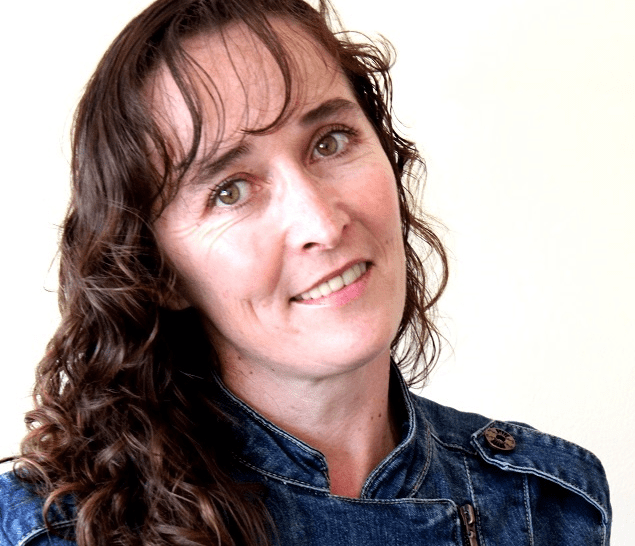
[bctt tweet=”You have to prepare a plan to execute your business solutions. An idea will remain that until it’s put into action” via=”no”] Julie Nixon was educated in the United Kingdom before immigrating to South Africa in the late 1980’s. After undergoing extensive Retail Management courses with a leading retail chain, Julie utilised her broad experience in sales, merchandising and human resource courses to streamline the Gone Rural operations. Julie arrived at Gone Rural in 2005 to take on the position of Workshop Manager and was promoted to General Manager in 2007 with new responsibilities including Sales, Human Resource courses, and Logistics. As head of sales, Julie oversaw a one hundred parent sales increase in three years which in turn quadrupled the women’s income during the same period. Julie due to her successes was given the position of Chair Person for the “Swazi Secrets” (a women’s empowerment company started by Her Majesty the Queen Mother) where she served a two-year term. While chairing this organisation, Julie realised that though artisans in Swaziland are hardworking and talented, they do not make much income. This led her to start a fair-trade organisation called Swaziland Fair Trade (SWIFT) which ensures that supply chains are fair while creating opportunities for fair wages at grass roots level. Julie is passionate, dedicated and committed to improving the lives of the people of Swaziland and has managed to secure a grant for a three-year capacity building project for handcrafters in Swaziland. If you are planning on starting any organisation, here are 7 effective strategies you can learn from Julie Nixon. 1. Identify the need for the community and possible solutions To start any type of organization, you will first have to discover the need and then provide solutions. The core purpose of any organization is to fill a need –be it goods or services, the organisation must provide some satisfaction. This was the case of Julie who discovered that though artisans in Swaziland are highly skilled and talented with an abundance of natural raw materials, they had no way of getting their beautiful pieces to the market. The artisans had capacity needs such as proper costing as many of them did not cost their labour into the product which meant it was actually costing the artisan to produce and sell a product. This led her to provide a solution by starting a system where all will benefit and as she has always been a big supporter of Fair Trade, she decided that would be the best way to make a difference. Thus social enterprises like those in the Fair-Trade model ensure that their supply chains are fair, they create opportunities for fair wages at grass roots level and they are transparent and inclusive. This is a model she supported, which is why Swaziland Fair Trade (SWIFT) came into being. 2. Prepare a plan or strategy to execute these solutions After discovering the need and possible solutions, you then have to prepare a plan or strategy to execute these solutions as an idea will remain an idea until it is actually put into action. Julie’s plan for SWIFT is to grow the local economy and create more socially responsible companies that operate under the principles of Fair-Trade. Thus, a network of businesses that work together as a united front to protect the weakest members of their society. With this as the fundamentals, Julie set out to put her idea into action by; Targeting a group Every organization needs a focus group for it to function, as if you do not have people believing or patronizing what you intend to provide, then there really is nothing to give. The target group for SWIFT was local handcraft or food producers who have a marketable product and a will to create jobs through the application of Fair Trade standards. Making a list of services to be provided or goods to sell What do you intend to give this target group? Julie carefully crafted a capacity building, mentoring and coaching, training and development program to capacitate the highly skilled artisans of Swaziland. The training was supported by trade linkage opportunities and sales platforms such as the Bushfire Marketplace, to ensure members “earned while they learned”. Marketing strategies Making a list of how to communicate your plans to the target group. This can be through word of mouth, social media etc. depending on who your target group is. 3. Get a mentor, attend workshops and do some research As you are working on getting your organization out there, you also have to work on yourself and that is by getting a mentor who has been in that trade or industry for a while, attending workshops/school and doing some research. Julie attended workshops by Paul Meyers the Chairman of the World Fair Trade Organization (WFTO) who called for the setup of country networks that offered an alternative to the classic capitalist model and became active in spreading the word about Fair-Trade. [bctt tweet=”As you’re getting your organisation out there, you also have to work on yourself by getting a mentor” via=”no”] 4. Invest in the organization If you have chosen the path of starting an organization, then you must already know that this organization will run on money and time. This means you should be prepared to invest with both your money and time. SWIFT was started with zero finances but with decades of collective business knowledge. Their vision was pure, capacitate handcrafters at grass roots level, to promote Fair Trade as an ethical business practice and a will to grow their domestic economy. In the very early years, SWIFT used membership contributions to hire a part-time country manager and the company Julie worked for Gone Rural, allowed her time to work setting up SWIFT. 5. Start small Rome wasn’t built in a day so be prepared to start small unless you already have your funding and professionals who are willing to sacrifice their all for your dream. If not, you would have
Laying the foundations of your business while holding down your day job

[bctt tweet=”This been the hardest undertaking of our lives thus far, but also the most rewarding ” username=”SheLeadsAfrica”] In August 2016, my friend and I took the plunge and decided to launch our very own social enterprise. Born out of many long conversations and brainstorming sessions, we finally settled on creating an organization that could help address some of the challenges Nigerian girls are facing stress-induced their educational development. That was how Give Girls A Chance came about. We were giddy with excitement as we embarked on the process of registering the organization and launching a fundraising campaign. In January 2017, we had raised enough money to sponsor the first group of girls in the program with full scholarships including tuition, fees, books, and uniforms. We also recruited five amazing volunteers to serve as mentors through our dedicated mentoring program. With all of this in place, we set to work running the organization like the bad-ass boss ladies we are. Half a year later, we can honestly say that this been the hardest undertaking of our lives thus far, but also the most rewarding thing we have ever done. Mind you we both decided to do this right at the moment when our other professional careers were taking off. I had just joined the UN in August and was posted to Zambia. My partner Hauwa was wrapping up her youth service and about to start working as a full-time doctor. But this idea was something that had been on both of our minds for a long time and we did not want to wait any longer. We are both deeply passionate about public service and believe that it is our duty to contribute to the development of Nigeria. What better way to do that than by training up the next generation of women and future leaders of our country? So, we took the plunge, and for better or worse, we have survived to talk about it. For every success that we have had, we have had twice as many failures and faced countless roadblocks. When it comes to laying the foundations for your businesses while holding down your day job, here are some of the experiences we’ve had and advice we would like to share with the readers. Say goodbye to sleep…at least for the time being Before you take this flirtationship any further, imagining the idea of starting a side hustle, business or organization while keeping your day job and still managing to get 8 hours of sleep, stay fit and avoid stress-induced acne, let me stop you right there. Unless you are Wonder Woman (and who knows some of you very well may be), you should know now that you’re going to have to make a choice between bringing your business to life or getting the daily recommended 8 hours of sleep. I can’t tell you how many sleepless nights we’ve had and how many things we’ve had to miss out on because we choose to invest our waking hours and our resources into growing our organization. There is so much research, planning, and coordination required to grow a business and if you have to do this alongside a job that demands the 8 hours of the day when most people are typically productive, it simply means you’re going to have to cut into your sleep and leisure time to stay on top of everything. The good news is that the joy of seeing your idea come to life is unparalleled. Nothing beats that feeling of satisfaction and accomplishment you will have when you start to hit your targets. And if all it takes is skimping on sleep every now and then, that’s a small price to pay, right? You can always make it up later when your name is up in flashing lights and you’re rolling deep in that moolah. [bctt tweet=”You’re going to have to make a choice between bringing your business to life or sleeping” via=”no”] Budget, budget, budget I grew up with a banker for a father and he tried his best to instill in me the spirit of budgeting and saving. But I like shiny things too much and I’m always ready to take on the challenge of seeing how much stuff I can get for all the money in my account. I am so thankful that Hauwa is in charge of the finances for Give Girls A Chance. We managed to raise a significant amount of money when we first launched and true to form I wanted to go big and sponsor as many girls as we could but Hauwa talked sense into me. We decided to start with 11 girls, put some money into savings so we could pay for events and plan for the future. We knew that it would not be cool if we sponsored 200 girls for one semester or two, but then had no money to keep on going. The girls would end up right back where they started, having to drop out of school because they could not afford to go. Instead, we decided to take things step by step, prudently accounting for every kobo and making sure we were getting the best return on our investments. As the new school year approaches, we are thrilled as we can now comfortably take on more girls for an extended period of time. My advice is to use the resources you have wisely and always have some money left in the bank. [bctt tweet=”Use the resources you have wisely and always have some money left in the bank ” username=”SheLeadsAfrica”] Be consistent Because we both have full-time jobs, the only times we are able to work on Give Girls A Chance related activities are in the evenings and on weekends. In fact, that’s not true. We end up replying to emails, texts, and requests during our lunch breaks at work too! Saturday mornings at 9 AM are set in stone for our weekly check-in meetings and Sundays