
What Career Should I Have? – The SLA Career Quiz

When I was younger, my mama always said to me “Anything is possible! You can be anything when you grow up”. As much as this is true, I sometimes wondered what job will be right for me. We all want to pursue different careers for reasons known to us but then only certain careers might just be the perfect fit for us. Are you wondering what career to get into or simply curious if you made the right choice? Take this easy and fun quiz designed to show you what your career should be based on your personality and interests. Heads up guys- you may fall into multiple categories for some of the questions, so just select the closest option that suits your kind of person. Have fun! [viralQuiz id=12]
Padebi Ojomo: Business Savvy Chick

[bctt tweet=”Remember that whatever you learn makes you and your business better – Padebi Ojomo” username=”SheLeadsAfrica”] If you follow Padebi Ojomo, you can’t help but fall in love with her vibrant personality. This dynamic entrepreneur is so full of life that you can’t help but smile. Padebi runs the Business Savvy Chick Academy and is referred to as the client attraction genie. #MotherlandMoguls, you definitely need more clients no matter where you are on the business ladder. How did you get involved in business? I’ve been involved in business for about 16 years. It actually started with my mum who sent me to learn hair making because I was causing problems at home. She reasoned that since I had so much energy, I could channel it to better use. I didn’t like it initially because it felt like punishment. But I got fascinated with the fact that one could do stuff and money would get exchanged. I started buying and selling stuff: Adire, handkerchiefs to anybody most especially family. This experience opened my eyes to business and built my threshold for taking risks. I had never thought of getting a 9-5 job even though I studied Computer Engineering. After school, I continued buying and selling before branching out to other businesses. [bctt tweet=”I had never thought of getting a 9-5 job even though I studied Computer Engineering” username=”SheLeadsAfrica”] What businesses have you been involved in? My first registered business was Nirvana Design, an interior decorating business. I really love interior decoration most especially for homes. The second one was Blue Tangerine which was basically just a shop. I bought things from China and sold them. It was just something I did because money came in from it. I got married and started Purple Signatures with my husband. This was more like training for small business owners and aspiring entrepreneurs. However, in the course of doing my interior decoration business, I realised that most of the money went towards purchasing furniture. Design always needs good furniture and sometimes artisans could be a pain. I started Chic Carpenter and it was a hit back to back. Though it was stressful, it was a really successful business. I had my factory and a good client base. But it got really difficult to combine it with my pregnancy in 2015 and baby came too early. I had to stay indoors for 4 months because of my baby’s health. This lead to some of my businesses going down due mismanagement. My restless and extroverted nature wouldn’t allow me sit still for 4 months. I had to do something and that was how my online business started: Business Savvy Chick Academy. It has been an awesome experience. How would you advise an entrepreneur trying to find her feet? You need to start with passion otherwise, you would give up when frustration and stress sets in. It is also important to start early. Personally, I started early and it boosted my risk taking threshold. I have done businesses that failed woefully and I have done ones that succeeded. This helps because I have tested it and I see it works so my resolve is strengthened. When you start at an early age, the world isn’t expecting too much from you. So, even when you get your fingers burnt, it’s not really the end of the world as you just learn from it. For example, I’d lose money in my business as a student but my father would still be available to pay my school fees. But as you get older, you have more responsibility and do not have the luxury to keep wasting resources. Passion is really important but if it is not profitable you could branch out and still find ways to do your passion, maybe as a CSR. What do you wish you knew earlier in business? The importance of having a mentor and supportive parents. If I had more support from my parents, it would have been more helpful but I had to hide most times to do stuff. As a matter of fact, they wanted me to get a job with one of the oil companies since I’m from the Niger Delta region. But I knew I didn’t want that kind of job. The major challenge most businesses have is getting clients. As the client attraction genie, what would you suggest we input in our businesses? Based on experience, people buy from people they know, like and trust. For instance, we might use a particular salon or doctor because of the relationship we have with them. Therefore, to sell you need to be deliberate. Be helpful to your clients, give compliments and be there for them. Satisfied customers will always speak about you to others within their circle of influence. Remember, they are not just buying your product or service but the experience of you. [bctt tweet=”To sell you need to be deliberate, be helpful to your clients and be there for them” username=”SheLeadsAfrica”] What’s your tip for running a home and a business efficiently? It’s important to have a supportive spouse, be extremely organised and plan ahead. For example, I plan ahead for the food that will be eaten and for cleaning. In today’s world, it is important to work smart. Focus on the areas you are good at and do it with joy. The others you’re not good at, you could automate. I always stress, “Enjoy, Delegate, Automate or Delete” to my community. If you are good at something, do it with joy, enjoy the process. If it’s not your best task, delegate to someone who would do it with ease and joy. You could also automate the process to make it easier or delete it from your agenda. What are your final words for female entrepreneurs? Do not make your small business make you small minded. Take it seriously and grow it to outlive you. It should not be a second fiddle because you plan to get married or you
How to land a job with the African Union Commission
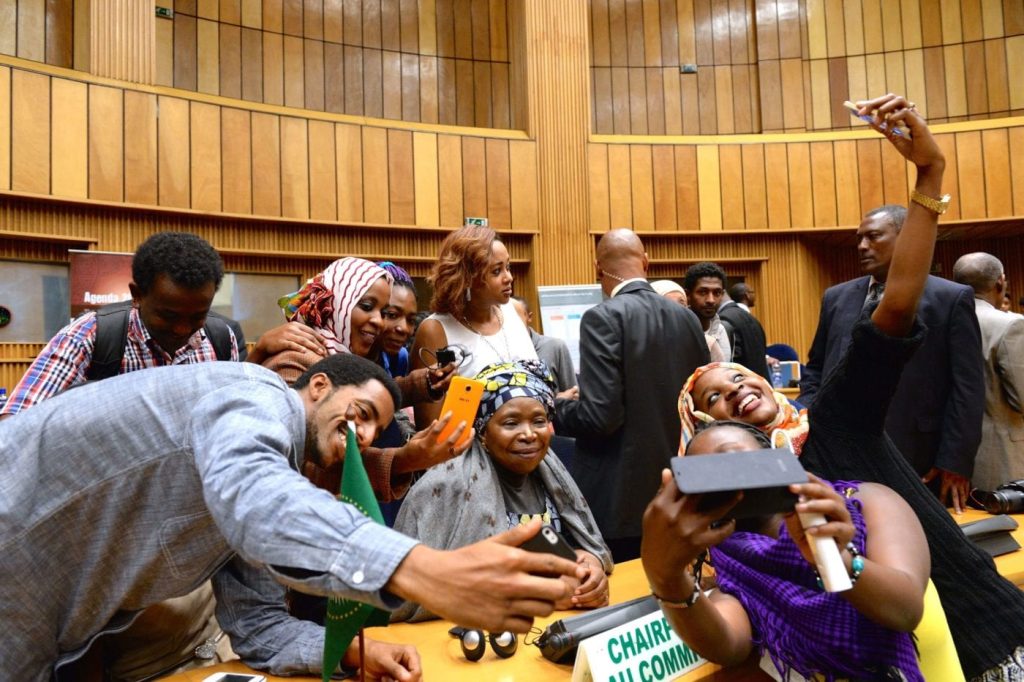
[bctt tweet=”Would you like to work for the AU? Here are some tips on how you can land a job with the AU” username=”SheLeadsAfrica”] The African Union Commission, previously the Organisaton of African Unity, is Africa’s biggest and most influential regional body. Its origins span from a time the continent was fighting against colonialism and Apartheid with African heroes such as Kwame Nkrumah, Emperor Hailie Selassie, Muammar Gaddafi, Sekou Touré, Jomo Kenyatta, Julius Nyerere and many others being its founding fathers. It’s 54 years later and the AU has won its fight against colonialism and Apartheid and has shifted its focus to the development of the continent in order to create a prosperous, people-centered Africa which is a key global player. More and more young people want to join the AU and contribute to the development of the continent. Would you like to work for the AU? Besides meeting the requirements of the job description here are some tips on how you can land a job with the AU. Be a Pan Africanist! In order to work for Africa’s largest regional organization, you have to love the continent and be a Pan-Africanist. Pan-Africanism is essentially the belief that African unity is important for the social, political and economic development of the African people. When talking about Pan-Africanism, other theories such as Black Consciousness and Ubuntu come to mind. However, this should not just be a theory, you should genuinely believe in a Pan-African Africa with a strong regional identity. Your belief in Pan-Africanism should be evident in your cover letter, make it known through the interview, and your personal and professional experiences should speak to that. Demonstrate that you have done development work in your community. This is very important. Your previous and current experiences (personal and professional) should demonstrate that you have been active in the African development space, especially in your country of origin and/or its sub-region. This shows that you aware of and can conceptualize the realities that Africa is faced with in different subjects and can make a meaningful contribution as you are in sync with the realities. Be African with an international view The African Union works with a wide variety of organizations and governments worldwide. The pool of AU staff come from different African countries and the diaspora. This means that you will constantly work with people from different countries, cultures, and backgrounds, whose working language is probably different from yours (The AU has four official working languages). You have to be culturally sensitive and be willing to learn from other people’s cultures and backgrounds. You have to demonstrate an international outlook and be forward thinking. Any international experience you might have will work out in your favour. Do not conceptualize ideas within the framework of your country origin but it should have an African and international view. Simply put do not give a single country’s view/perspective to solve continental problems. Be diplomatic Diplomacy plays a huge part in the African Union’s work so you need to be diplomatic. You need to be able to find diplomatic solutions in your work and in all your experiences. Most, if not all, of the work done at the AU is very sensitive so you need to be sensitive to others while so you need to be tactful and consider everyone’s opinions while maintaining your own. Know Agenda 2063 Agenda 2063 is the holy grail of the African Union as it is the continent’s 50-year developmental framework. It is based on seven aspirations which will result in the “Africa We Want”. Agenda 2063 works towards creating a prosperous, peaceful, people-centered Africa with a regional identity. If you want to land a job with the AU you have to know and understand Agenda 2063 and its flagship projects which are currently being implemented. For the first time, the AU’s focus is not only predominantly on peace and security but on the continent’s development and making it a key player in the global arena. Agenda 2063 does not belong to the AU but to all Africans! It relies heavily on its implementation by member states. Every single African has the responsibility to seeing this great plan through in order for the continent to enjoy the fruits of its aspirations. Thousands of people who meet the job description apply for jobs at the AU Commission but it is those who robustly believe in themselves and the continent who get the job. If you would like to get more information on vacancies at the AU Commission visit http://aucareers.org/
Melford Vincent: Kick the notion that two things don’t go together

[bctt tweet=”I have great aspirations for my brand & I hope to see it throughout Africa” username=”SheLeadsAfrica”] There is nothing as gorgeous as having glowing melanin with the kink and curls that come with it. Yes, I’m talking about the beauty of African hair. Most of us however, feel compelled to straighten our hair so that we fit in easily. While doing up our hair and getting extensions is not a bad thing, all I’m saying is that it’s still important to maintain that natural and just be naturally unbothered! Melford Vincent a 21-year-old Sierra Leonean lady who is pursuing a degree in Law struggled with badly damaged hair for a long time. She had a hard time with it but through extensive research, she finally found the most effective herbal remedy for African hair. Melford formulated this herbal hair remedy into the I-GRO hair recipe that works wonders for African hair. It helps with hair moisture and the acceleration of hair growth. I-GRO ingredients are all acquired locally from the markets of Sierra Leone and currently it’s one of the main brands leading in the hair community of her country. This is evident in the young women, children and young men that are getting hair breakthroughs through its use. Unbelievably this young #Motherland Mogul started her business with less than $10, making just a few for friends and using the little profits to produce more. To date Melford has made over a thousand products, developed her brand through her smartphone and notepad and now she is looking into hiring staff. I had the opportunity to talk to this goal getter and this is what she had to say. Why do you think the natural hair community is small in Sierra Leone? The natural hair community in Sierra Leone is a small one but it keeps growing from time to time. Most Sierra Leonean Women don’t practice safe hair practices they prefer throwing on a wig or other hair extensions, so they see little or no need to care for their natural hair underneath. Most of us have been conditioned to believe that natural hair is bad and need to be tamed with relaxers. How long do you think it will take to convince the African woman to embrace the texture of their natural hair? I think with the growing trend of the natural hair movement, most African women are coming to terms with it and embracing their natural hair, although some may need extensive schooling and persuasion so as to even give going natural a thought. There are quite a number of hair products for African hair and most women have been disappointed by most of the results. How do you assure someone who has never used l-GRO that it’s different? Through experience, most of the products allegedly made to cater for African hair needs don’t necessarily work for African hair effectively. Reason being that in most cases the African climate was not in mind when these products were formulated. The African climate is a harsh one, with excessive heat, humidity and dry winds in the harmattan, I-GRO bridges that gap. It was formulated, to perform perfectly in an African climate, balancing the hair moisture and not leaving a greasy feeling. The product likewise works for other climates and colder weathers because of its potency. There are over a hundred people talking about your product on Facebook. What are your strategies to multiply this number? I-GRO is fast becoming the most sought after hair solution in Sierra Leone and it has also been spreading to neighboring countries like Liberia , Guinea, Ghana, Nigeria etc. I am working daily to develop my social media following, which is growing substantially daily. How do you manage your time since you are a student and at the same time you run your business? I am still trying to find a balance, as it is actually not easy. For now I make sure I manage my time well. I don’t procrastinate. And I make sure to produce a lot of products at a time so I don’t have to be doing it every now and then. I am thinking of hiring as the business is fast becoming too big for me to handle alone. [bctt tweet=”Melford Vincent says, There’s nothing wrong in starting small.” username=”SheLeadsAfrica”] What advice would you give a young you? I would tell them, to kick the notion that two things don’t go together. They sure do, and you can start building your dream, no matter how old you are. There’s nothing wrong in starting small, you don’t need to break the bank to start a business. I started mine with less than $10. If you’d like to share your story with She Leads Africa, let us know more about you and your story here.
Webinar with Wild Fusion: How to grow your business with digital marketing (Apr.11)

Are you wondering why your business is not getting the online attention it deserves? Or why Facebook and Instagram is not really working for you? Hold up! Lets educate you a bit more on digital marketing! It has been proven by many successful businesses, that digital marketing is the way forward to boost and expand your business online. But what you need to know now is how to keep up its evolving and ever changing strategies. Join us on Tuesday April 11th for a webinar with 2 professionals from Wild Fusion – Africa’s leading digital marketing agency, who have been in the digital marketing game for awhile. Agatha Emina – (General Manager) and Prashant Kirpalani – (Social Media Manager) of Wild Fusion, as they share with us fresh and unknown strategies of digital marketing every business owner must know of. During this webinar, you’ll get direct answers from these professionals on any digital marketing related question you ask, so, you don’t want to miss it! Register below to get the exclusive link to the webinar. Topics that we’ll cover: Digital marketing for African start-ups The top 4 mistakes you need to stop making on your business social media page Strategies you can use to gain more customers without breaking your budget Webinar details: Date: Tuesday April. 11th, 2017 Time: 2pm Lagos // 3pm Johannesburg // 4pm Nairobi Help us spread the word: [bctt tweet=”Sign up for this webinar with @Wildfusion to increase your business social media reach (Apr.11)” username=”SheLeadsAfrica”] Watch this webinar: About our experts: Agatha Emina, is an online enthusiast with over 7 years working experience in the digital industry from the client side and the agency side. She has worked as a Digital Strategist and Project Manager in the financial, e-business, online advertising and traditional advertising industries. With her strong understanding of digital marketing and project management skills, Agatha has executed award winning digital campaigns across various sectors including FMCG brands, Telecom, Finance and more. Some of her latest works includes taking Close Up and Knorr Nigeria online and enabling these brands succeed while increasing Returns on Marketing Spend. Prashant Kirpalani, is a social media enthusiast who is certified in Google Analytics, Social Media and Digital Marketing. His work experience cuts across social media strategy, Google Analytics, Facebook and pay per click advertising, blogging, website management and forum management. He has a Bachelor of Engineering in Computer Engineering from the Maharashtra Institute of Technology where he created a social media network targeting students who wished to study abroad for his final year project.
Tips from Shonda Rhimes on handling tough conversations

[bctt tweet=”Fight your way through uncomfortable situations at work with these tips” username=”SheLeadsAfrica”] Raise your hand if you would rather avoid confrontation and addressing difficult conversations that make you uncomfortable at work? Not because you are slow and don’t know how to stand up for yourself. Instead, it just isn’t something that comes naturally to you. To some, this may seem like an absurd thing because, how hard can it be to articulate a fluent conversation that isn’t muffled by fear or anxiety? All I can say from experience is these things happen. Long after the moment where you had the opportunity to speak up is gone, you find yourself considering all the smart things you should have said. If this sounds like you, rest assured that you are not alone. As big of an influencer Shonda Rhimes is, she had to fight her way through uncomfortable situations at work in as graceful of a manner as possible. She had to learn how to stop avoiding conversations she did not want to have. Chapter 8 of her book, Year of Yes details the struggle and importance of putting your fear aside and voicing your concerns. If you have ever doubted yourself in the workplace or let fear get the best of you from saying the crucial things you really needed to, it’s time to take charge girl. Below are some useful tips from Shonda’s book to get you started on that journey. No is a complete sentence Every now and again, you might be plagued by the constant need to explain yourself when you disagree with someone or when you simply can’t do something. So much time and in some cases (money) is wasted beating around the bush when all you can do is just say no. No is a complete sentence and you don’t owe anybody an explanation. Ask questions Petty and nasty things will be said. A strategic way of dealing with this is asking “what did you mean by that?” Shonda explains that asking this question can be effective because too often, people are used to being spoken about not spoken TO. Most people would rather bottle everything inside or worse off rant about what upset them to someone else. Next time you feel offended, always clarify by asking questions. “When something wasn’t going well, when there was a conflict or someone was upset or being difficult, the more introverted me would flee and hope it all went away. The new me wades right into the deep end as asks, “What’s wrong?” –Shonda Rhimes [bctt tweet=”Say yes to difficult conversations at work, it’ll help you thrive in your career” username=”SheLeadsAfrica”] Say yes to difficult conversations There is no easy fix or supplement you can take to make hard conversations any less daunting. The fear will always be there if you are not used to having them. With practice, it does get better and you will find your voice. So if you take nothing else from this post, just remember to just say yes to difficult conversations. The more open you are to the idea; there more willing you’ll be to seek help and find ways to tackle those hard discussions and thrive in your career.
KudaRachel: The accidental entrepreneur proving age is no excuse to not venture into business

[bctt tweet=”I used to be so focused on my competitors until I realised that everyone is different” username=”SheLeadsAfrica”] For Kuda, the 18-year-old founder of KudaRachel, failing to find a reasonably priced corsage for her high school prom proved to be a blessing in disguise; it birthed the idea of creating her own. The then 17-year-old learned through trial and error before finally perfecting the hand-made corsages and boutonnieres. After seeing her daughter’s creative invention, Kuda’s mother suggested that she sell them, which Kuda did. “I posted photos on facebook and 12 people bought from me! The fact that people wore the work of my hands on such a huge night of their life filled me with immense pride and happiness.” Realising that corsages were only a seasonal thing, Kuda embarked on another great idea, extending to African print accessories. “African prints were the perfect choice because they can be worn in any season. The idea to venture into African accessories came at a perfect time my mother was preparing to go to Zimbabwe for the first time in 6 years. I happened to have $50AUD in my bank account which I gave to her to buy me African print fabrics. ’’ Product differentiation is an essential element in business and KR fashion’s specialty factor is that each product is customer oriented not just mass produced. As Kuda says, time and effort are spent on each KR piece and they pay attention to detail. “I used to be so focused on my competitors until I realised that everyone is different and that no idea under the sun is new. Everything is just a different version of the original! We may make the same things but we each have our own visions therefore, we’ll each have our own target markets. I really do believe in the saying, ‘There is space for everyone at the top.’” Kuda also shares that she connects with other people in the same line of business as her to share ideas. She even sometimes provides fabrics from her suppliers to them. Obtaining fabrics is a major challenge in the business as she claims that the fabrics in Australia a super expensive hence outsourcing them is the better alternative even though large shipping costs are incurred in the process. Giving back where it counts KudaRachel is not just concerned with making profits but fuses social entrepreneurship as well. The social enterprise is visionary and has three main aims which it is committed to. “KR aims to make a difference in people’s lives through fashion. I want fashion to be able to pay for someone’s education or put food on the table for someone in need! KR supports a charity each year.” Since its Since its inception, KR has been supporting Act for Peace by donating 50% of profits from its KR merchandise collection. Kuda further adds on, “In 2016, I represented KudaRachel and did a ration challenge where I got sponsored to eat the same rations of food that a Syrian refugee would eat for a whole week. So far we have raised AUD$439 worth of donations and sales from the KR Merchandise.” Concerned with youth development among its social aims, KR provides opportunities to upcoming talent. Having realised one the main difficulties young people face when looking for jobs is concerned with experience, KR gives them a chance to build their portfolio since most big corporations turn them out. Currently, the business team is made up of 2 main photographers; Feranmi Taiwo and Kelsey Grant, 2 seamstresses, and the models and make-up artists who rotate according to the type of shoot they are holding. The KR website is also a wall of positivity filled with quotes and the blog journey of the KRfam. This is just one of the many platforms KR uses to interact with its clients. The evolution of marketing hasn’t been the same with the arrival of social media marketing. Kuda certainly lets in that it has had tremendous benefits on growing the business. “Social media plays a big role in bringing clients, we use Snapchat, Facebook, and Instagram a lot (just type Kudarachel in all of them). Through them, we have managed to attract customers from countries such as USA and UK. Hustling while being a full-time student As a full-time nursing student, it is a wonder how Kuda manages to keep her business afloat, especially when the two industries; fashion business and nursing are so unrelated. She credits the success of the business to a lot of time invested in financial education. She has taken it upon herself to learn as much as she can about the business aspect. “I read a lot of books and blog posts by people I look up to; Daymond John – “The Power of Broke”, Janine Allis – “The Juicy Bit”, Sophia Amoruso – “Girl Boss” and of course SheleadsAfrica blog..DUH ahahA. Everything I have learnt so far is through the internet, books, other people and trial and error. I’m excited to keep on learning. It also helps that I have a mentor Alyce Schlothauer who is helping me with my overall branding strategy while Shingai Manjengwa advises me on how to run my business.” Kuda certainly credits the success of the venture to the entire KRFAM’s support which is made up of her customers, her mother, friends, and family. She had to sacrifice a lot of her time in order for KR to succeed, cut back on going out and invest instead on special events such as friends’ birthdays. [bctt tweet=”Everything I have learnt so far is through the internet, books, other people and trial and error” username=”SheLeadsAfrica”] Embark on business for the right reasons Her last tips for budding entrepreneurs, “It’s really hard work to be honest. Being your own boss means that when you are starting out, normally your funds are limited hence if you don’t do it yourself, no one else will. You will have to wear the hats of a cleaner,
Isis Nyong’o Madison: The journey has to be worth it

[bctt tweet=”African founders have to actively create the environment needed for success – Isis Nyong’o Madison” username=”SheLeadsAfrica”] Isis Nyong’o Madison is a well-known media and technology leader in Africa who has held leadership roles at Asphalt & Ink, InMobi, Google and MTV. Over the past decade, she has made her mark scaling media and digital businesses across the continent. Isis holds degrees from Stanford University and Harvard Business School and is the CEO and Co-founder of Mums Village – an online start-up dedicated to enriching the lives of current mothers and mums-to-be in urban Kenya. Accolades awarded to her include being named a Young Global Leader by the World Economic Forum and one of Africa’s most Powerful Women by Forbes. She serves on the boards of two technology companies and can’t hurt to add that her family boasts of greatness with Academy award-winning actress, Lupita Nyong’o as her cousin. We’ve shared her lessons on landing a job in the media industry already, this article focuses on Isis’s start-up experiences and her lessons learned from challenges. Overcoming challenges faced in the startup field There are three types of challenges I have observed while working in this industry: Access to capital Access to capital is very different in Africa as compared to the US – there are a lot more types and forms of capital that are accessible, especially for technology-driven startups. Ecosystem Development Despite having a critical mass of people online now in Africa, unlike more mature markets such as the US, there’s more consumer education and ecosystem building. African founders have to actively create the environment needed for success. For example, a couple years ago if you had an app, you would have to tell people what an app was, where to go to get it and how to download it. In the US no one has had to do that for the last seven years at least. So that shows us that there’s still a lot more work to do here to just get going, particularly with the consumer. There’s similar challenges on B2B type businesses where you’re really trying to sell something useful for that particular business and that process is probably a lot longer than at other markets abroad. Team Building With regards to finding talent, the dynamics are just a little bit different. To get the talent that you want in a place in the west where every person has many options, you need to sell a more compelling vision or have deeper pockets. Here we just don’t have that depth of talent pool so you have to invest more time in identifying people who are problem solvers and then develop the other skills on the job. I look for talent in unconventional places and try make the work environment an inviting and enjoyable space to be in. In regards to ecosystem development, I focus on leveraging partnerships as much as possible. From an access to capital standpoint, I think that’s something that is still definitely a work in progress in terms of trying to be more open-minded to the organic ‘zebra’ growth versus the ‘unicorn’ approach. [bctt tweet=”Isis Nyong’o Madison: I focus on leveraging partnerships as much as possible” username=”SheLeadsAfrica”] Take the Imposter Syndrome as a sign of growth “This is something I have dealt with many times. I feel that it is probably just an indication of real challenge and growth where you feel almost not ready for something this is your chance to step up to the plate. I certainly believe it’s an inner belief that builds up over time, and I usually just internally calibrate and tell myself ‘you know what there are probably people who feel the same way here and if they haven’t felt it here then they’ve probably felt it somewhere else.’” On balancing life as a working mother… Isis is a mother to Juno (3) and Sky (18 months) and has been a successful entrepreneur in Nairobi, running both MumsVillage and Asphalt & Ink for close to four years combined. “You just have to be extremely organized and ensure that you build as much flexibility to your work and life as you can. It’s also about checking in to see if the way you are living your life has the values that you have. People make different choices, there are those who decide to take time off, others who don’t have a choice. It’s a careful calibration where one might adjust on a week by week or month by month basis. As an entrepreneur, it’s not such a super static thought process as my schedule is more fluid. The reality is though that most mothers don’t really have a choice and they just have to try and do their best to balance it out as there’s no magic formula.” Parting shot… My mantra in life right now is – ‘the journey has to be worth it’. Ask yourself, how much am I enjoying the journey? Versus looking to the end goal. This is a shift for me because I’ve been very goal oriented and so I think the journey in itself has to be rewarding as well. Another thing I’d add is, always have a long term view –that’s very much where I’m at right now.
Kairoshoppers: Empowering and changing the lives of designers

Kairoshoppers Network (also known as KSN), is a marketplace platform created for new, up and coming, heretofore undiscovered designers who are seeking opportunities to get into the marketplace, display and sell their products in the marketplace. KSN is not limited to up and coming designers though, more established designers are also welcome. Kairoshoppers is aimed at increasing brand visibility and product awareness for designers; KSN is a marketplace where unique designs are found that are not commonly seen in the fashion industry. These designs are new and avant-garde, differentiating Kairoshoppers from other platforms. Through its networks, Kairoshoppers increases brand visibility for many designers who come from African countries, such as Nigeria, Ghana, and even South Africa, who sell their products on the platform, taking them to a global market. What is the purpose of Kairoshoppers? The purpose is to increase brand visibility for new and struggling designers. These are people who may be students, unemployed graduates, or self-employed individuals, who believe in themselves and want to make something happen! They strive to make a living from the talents with which they are gifted and maximize their creativity. KSN is geared toward empowering these individuals to attain a success-driven future. What are your predictions for the African fashion industry ? I believe this is going to be huge, I see a situation where not only Africans will be wearing African outfits but this will extend to other countries. Africa is known for its vibrant colours and attractive cultures, which is evidenced in our fashion style, best expressed by embracing our culture. African prints will increase in demand and more people will embrace African culture, a trend we already see now. What advice do you have for women who want to be fashion enterpreneurs? First, I would say to build your faith because everyone’s faith is going to be tested even as my faith has and will be tested. Second, one must be able to persevere and remain on top of your tasks and responsibilities at all times. Also, one must be dedicated. A lot of people have beautiful and awesome dreams that can materialize by being dedicated. It is paramount that one use the right instrument for the right purpose; this is to say using the right and appropriate photographs, models, hiring the right staff, working your crafts, and more. Consistency is also a key factor because the best you have given must be replicated as a standard in all you do, for instance the perfect finishing on a size 12 must also be the same on sizes 14 and 16 and this is how you maintain and retain your customers. What does the future hold for Kairoshoppers? We are looking forward to continue to expand and bring more designers on board. It is our joy and fulfillment that these designers are being empowered, lives are being changed for the better and their families maintained. We also look forward to gaining a greater share of the market, positioned competitively in the marketplace and territory. What are the top four ways to create brand visibility? Kairosshoppers has a TV show here in Houston, Texas that talks about our designers and celebrates them. We also network with other parties like bloggers and stylists in the fashion industry who help in creating brand visibility for up and coming designers. Customer service is also a key…responding promptly and resolving customers issues has a long lasting effect on the customer’s sense of brand loyalty. We also share information about our designers on all social media platforms like Twitter, Instagram, Facebook etc. Would you say Kairoshoppers is a success? Yes, most definitely. Apart from increasing brand visibility, we have been able to break new ground, transcending barriers; KSN has been able to sell into both the American and African markets. This points to the fact that new and struggling designers can sell their products globally. Sponsored post
Emma Macharia: Invest in data and analytics from the beginning

[bctt tweet=”EM Consulting exists to help such businesses scale through effective communication” username=”SheLeadsAfrica”] Emma Macharia is a communications consultant at EM Consulting, a communications firm based in Nairobi, Kenya. EM Consulting is dedicated to helping start-ups and SME’s grow and scale by effecting impact based marketing and communication strategies and tactics. Passionate about life, people, and business, Emma loves insightful conversations and turning ideas into successful business stories. Emma shared with SLA her thoughts on the Kenyan start-up ecosystem and her tips on effective marketing for start-ups. What are your thoughts on the Kenyan start-up ecosystem? How does your company fit into it? Kenya’s startup ecosystem, in my opinion, is at maturity level. By this, I mean that we are slowing moving from the hype of entrepreneurship and now starting to look at the sustainability of businesses. We are evolving from collaborations into partnerships and similarly from churning just new products and services to products and services that are customer focused and scalable. EM Consulting fits into this system simply because it exists for one agenda only which is to help such businesses scale through effective communication with all their stakeholders; suppliers, customers, shareholders and so on. We help your business speak one language to get everyone growing and moving in the same direction. How easy (or difficult) was it for you to step up EM Consulting in Kenya? How did you overcome any challenges? Setting up EM Consulting in Kenya was not too difficult because of continuously improved business facilities and regulations that make the process of setting up a business more flexible. Similarly, the relevant government institutions have begun opening up to entrepreneurs and taking a more active role in the entrepreneurship space in Kenya. However, building a communications firm in Kenya was quite a challenge due to the cut-throat nature of the industry. For this, I ensured I built my business on values that would withstand the industry such as innovation. Also, I ensured to surround myself with people of different skills sets and expertise to help me create a solid and well-planned business. Some of these experts include financial experts, tax consultants, brand strategists and technology experts. [bctt tweet=”I ensured to surround myself with people with the expertise to help me create a solid business” username=”SheLeadsAfrica”] What do startups get wrong when it comes to marketing? When it comes to marketing within a startup, it is very easy to initially place the customer in the back seat of the business. Between figuring out your financials, to perfecting the product and pleasing investors; customers tend to take a back seat in the scheme of things. This is where I feel startups get it wrong. If startups and founders mastered two key things then their solutions would be irrefutable. These are; the problem around the solution they are working on and the value proposition of their solution to their customer. If there is one thing I would advise all startups to have on the back of their hand it is their customer; to do this, collect insights, and invest in data and analytics from the beginning. How can start-ups leverage their brand to achieve business goals? Your brand is your credibility, so to this, I say build a brand that attracts your customer to your business. Communicate correctly and efficiently; figure out the one message you want your customers and stakeholders to pick from you and communicate it efficiently. Also, invest in a marketing plan to reap well from your brand. How do you hope to inspire current and future entrepreneurs? How can they get it right? Through the training service of EM Consulting, I speak to and train businesses and entrepreneurs on the value and leverage of the customer in building a business. Through these training sessions, I am able to share insights and trends about different kinds of consumers and audiences in different industries hoping to spark new ideas and innovations amongst entrepreneurs. How to get it right? Learn from and listen to your customer. There are a lot of benefits to focusing your business on the ‘consumer;’ it helps with forecasting the numbers, it helps you anticipate future trends and therefore innovate accordingly, it helps you build a business beyond yourself. [bctt tweet=”Figure out the message you want your customers/stakeholders to pick from you & communicate it” via=”no”] What’s your major challenge as a startup that caters to other startups? My major challenge as a startup working with startups and growing businesses would have to be money and buy in. I have learnt that the reason a lot of businesses are failing at communications and marketing is because they do not budget for it like any other business function. Secondly, a lot of entrepreneurs and business owners overlook the role of effective communication on their bottom line. This is why I decide to include training and business consulting in my range of services to listen to my clients immediate and long-term business needs, and show them how effective communications will help them get there. What communication trends have you noticed as more impactful for African businesses? I personally think Africans are by nature early adopters of technology among other solutions and that is why platforms like Facebook, WhatsApp, Uber, and even LinkedIn thrive in our markets. However, in the last few months is when I’ve seen African businesses applying these technologies to their context and markets. A great example is how service industries use WhatsApp or Telegram to build niche communities with their customers and share more personalized content or using Facebook communities to educate customers and build customer lists. Other communication trends include getting in touch with Generation Z consumers who are more focused on purpose and changing the world forcing businesses to relook their social impact as well as sharing more authentic communication to reach them. If you’d like to share your story with She Leads Africa, let us know more about you and your story here.