
Tight Money: The Cash Flow Guide
First goal in the quest to being a #MoneyMakingMogul? Master your cash flow. How you handle your cash flow could make or break your business. But if you aren’t sure exactly what “cash flow” means, this guide is where to get started. Before we reached out to the financial whizzes at Standard Chartered Bank Kenya and they broke it down for us, we didn’t know what business cash flow was either. Get you this guide to understand the importance of mastering your business’s cash flow. Topics this guide will cover: What is cash flow? What are the stages of the cash flow cycle? What do you do if you can’t pay all your creditors on time? Can we get an amen on the last point though? Better get your hands on this guide before your creditors go all Rihanna circa BBHMM on you and your business. This guide will get you started on managing your cash flow. Once you’re done with it, check out the next guide in the series for a downloadable cash flow analysis sheet. Don’t forget to read up on when to time your cash flow! Getting access to this guide is easy: just fill out the form below to join our community and get access to this guide, as well as AWESOME weekly content.
Amarachi Attamah: It hasn’t been easy, but we have succeeded
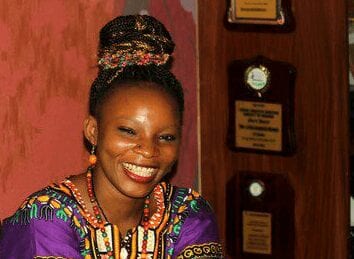
Sometimes it takes another eye to see and encourage you for you to know that what you are doing really makes sense! Amarachi Attamah is just a young simple Igbo girl. She is someone who scribbles some lines and calls them poetry. Amarachi, by career is a broadcaster and she has worked with different radio and television stations. As a young woman who loves who she is, Amarachi’s career draws from her identity, her roots and her cultural heritage. “My father would always say, ‘When you go out, remember that you have roots, so don’t go out and get lost’”, she says. Today, Amarachi is a performing poet specifically in Igbo language, and a writer. She has four published titles which include, “My Broad Daydream”, “Tomorrow’s Twist”, “Making a Difference” and her first Igbo collection, ‘’Akuko Ifo Nnem ochie koro m” (Folktales my Grandmother Told Me). SLA contributor Onyekachukwu Asadu met Amarachi in Enugu to find out more about what she does and how it is contributing to the growth of her community. Do you think you are making a difference? If yes, how are you making a difference in your community? Of course, I think I am making a difference. If I am not, I wouldn’t have continued what I am doing. However, the encouragement comes from seeing that what you do, actually makes a difference, even if it seems so stupid sometimes or unrealistic. I was born in Northern Nigeria and I grew up amongst a people that know who they are and are proud of it. As a child in that environment, I would tell you that I never saw a northern child that couldn’t speak their indigenous language; be it Hausa, Gwari, Nupe or whatever. They speak their language. They were always proud of their local food, or dressing. However, coming back to the east, I noticed that it was different; we were not even proud of our names. This got me worried and I made a resolve that the negative trend of denying our culture had to stop. I am proud of my identity and culture, and I have to make others see the same. So I thought to myself, ‘perhaps I should bring in this consciousness’. Honestly, I can’t tell when it started. When I was doing my NYSC, I wasn’t quite fluent in Igbo language but in my local dialect (Nsukka). I had published my first Igbo collection in 2007 and it was during that time that I met the literary icon, Professor Anezi Okoro. Despite my challenges at speaking and writing the Igbo language (I had failed Igbo language in my Senior School certificate examinations!) he encouraged me to do something in Igbo. I remained resilient and kept learning. I decided to dress in Igbo attires, making Igbo hairstyles. During that time, I started thinking of how to present my poetry and when I started displaying my craft on stage, I got a good response! So I continued, I never planned it but I saw the opportunity and so I started creating awareness about Igbo language and culture. I went to secondary schools, talking to students and teachers and parents; persuading them to speak the Igbo language. From there, we got the inspiration to organize festivals where schools make presentations and cultural displays in the Igbo language, then we published a collection of poems rendered by students. Gradually, people started coming around and getting involved with what we do. We have not gotten there yet but we have engaged the community, we have increased their consciousness and we are restoring the dignity of the Igbo race. Tell us about OJA Cultural Development Initiative. What plans are you making to reach and impact a global audience? OJA is ‘Odinala na omenala jikoro anyi’, which implies the culture and traditions that bind us together. It is an NGO created out of my passion to unite people. As a broadcaster working in the civil service, I discovered that even with most employees coming from Enugu State, there was still discrimination and segregation along village and local government lines. This did not sit well with me. I also realized that at the village level, certain positive elements/practices of our culture that united us was no longer there. For example, the women associations that changed the communities, the kinsmen and age grade meetings were no longer as strong and edifying as they used to be. This is because we accepted/adopted the foreign individualistic style of living that is not our cultural heritage. In as much as culture can be modified, we should not destroy our culture or lose the major ingredients that bind us together. This is why OJA is working with the younger generation because they are the ones that are mostly affected by this. To achieve this, we introduce regular festivals to bring these kids together and remind them of who they are. We go around reviving positive cultural practices that are going down. We don’t promote clandestine practices, after all, beyond Nigeria; there are cultures that are repugnant to natural existence. In addition to OJA, we also have a cultural outfit, Nwadioranma (The child that puts smiles on people’s faces) outfit. It is into cultural performances and all creative enterprise promoting our culture. People call us to perform at their events for entertainment. We also train young and consenting adults to work with us there to raise funds and further support our work. [bctt tweet=”Amarachi Attamah’s passion to unite young people and preserve Igbo culture with the OJA Cultural Development Initiative” via=”no”] You once worked with a Broadcasting house. As a Mass communication graduate, tell us how you perceived it was time to leave paid employment to becoming the one calling the shots? As you know, world changers are not regular employees. The world needs people with passion to drive a cause. To drive a cause, you must be creative. People will say you are crazy, they will assume you are not well.
Show Me The Money: The Cash Flow Guide
Balance and position…your cash flow of course 😉 Now you know what the cash flow is and understand the intricacies of the whole process, so what next? Strategies to manage it of course. In this guide brought to you by Standard Chartered Bank Kenya, we’ll reveal strategies for managing your cash flow. After reading this guide, you’ll be top of your game at showing the money to your business. Topics this guide will cover: Cash flow management strategies, How to keep the cash flowing and How to determine your cash flow position. There’s a bonus for you in this guide; a printable cash flow analysis statement that will help you take charge of your monthly cash flow. We hope, no we’re sure, that after going through this series you’ll never have another emergency “this business has no funds” meeting. Getting access to this guide is easy: just fill out the form below to join our community and get access to this guide, as well as AWESOME weekly content.
Impact investing is on the rise, what do you know about it?
[bctt tweet=”Impact investing fills a vital funding gap at a time when so many people are struggling” username=”SheLeadsAfrica”] First things first, what is impact investing? Impact investing refers to investments in entities and funds with the purpose of generating a determinate, positive social or environmental impact, along with a financial return. Another term for impact investing is “socially responsible investing.” Impact investments can target a range of returns from below-market to market rate, depending upon the circumstances, in both emerging and developed markets. With impact investing on the rise globally, the market provides capital to address the most pressing challenges in sectors such as housing, education, sustainable agriculture, green technology, and healthcare. As such, impact investing counters conventional views that social and environmental issues can only be addressed by philanthropic donations. Impact investing reduces the burden on philanthropists and other not-for-profit entities by stepping in to fill a vital funding gap at a time when so many people are struggling, and the programs meant to support them are more strained than ever. Indeed, the world truly needs impact investments. Impact investing looks at impact, social and investment return. Here, you target an entire system when you look at the social return and convert it into an economic return, education, create jobs, improve health, and take the burden off the government. This kind of investment can save the government more money so that can in turn, be invested into developing other critical infrastructure in the continent. Opportunities abound John Pierpont “J. P.” Morgan was an American Financier and banker who dominated corporate finance and industrial consolidation in late 19th and early 20th Century United States. He, in 2014, along with Monitor Deloitte and the Calvert Foundation, predicted investments to increase from US$60 billion to between US$400 billion and US$1 trillion worldwide in the next five years. Additionally, of this number, 22 percent of global impact enterprises are located in Sub-Saharan Africa, and much of the opportunity lies throughout the continent. No matter where you are in the world, chances are that impact investing is happening all around you. You may not realize it, but a road under construction could have been made possible by impact investments – or a new school, a new water filtration system, a wind farm. The possibilities are endless. But one common thread remains the same: impact investing, at its core, is about the investor’s intention to facilitate a beneficial social or environmental impact that goes beyond the individual. It is not a practice solely for personal gain but rather for the greater good. After all, what again is the definition of an investment in its truest sense? “A devoting, using, or giving of time, talent, emotional energy, as for a purpose or to achieve something.” [bctt tweet=”Chances are that impact investing is happening all around you, here’s how to get into it” username=”SheLeadsAfrica”] Ready to get started in impact investment? Some next steps Marina Leytes is an Impact Consultant. Most recently, she worked with the World Economic Forum’s blended finance and Impact Investing Initiatives; among others. As outlined by Marina, there are at least seven steps that any individual who desires to pursue Impact Investing, should consider. Explore: Discover and build an initial understanding of the principles and practices of impact investing. Reflect: Identify your motivations—why you wish to make impact investments, and how those investments might fit within your broader “portfolio” of impact (philanthropy, work, advocacy, etc). Assess: Determine the specific needs and constraints that govern your asset owning entities and consider how those needs and constraints shape your investment strategies. Strategize: Develop an actionable impact investing strategy, guided by an understanding of your personal motivations and objectives, and the needs and constraints. Invest: Make impact investments! You can make these investments across asset classes, sectors, geographies, impact strategies and return profiles. Measure: Gather and assesses performance and impact data from the existing investments to determine whether the investments are achieving their objectives and meet the requirements of your impact investment strategy. Optimize: Use the data you have gathered and the experiences you have gained through the process of making and monitoring investments to revise and/or expand your impact investment strategy, in order to continually pursue better outcomes with your investments. Finally, these are some Impact Investing Institutions and the areas they operate: Global Impact Investing Network (GIIN): operating in Kenya, Ghana, India, France and the Netherlands. Rockefeller Foundation: operating in Cote d’Ivoire, Ghana and Senegal. Acumen : Accra, USA, Kenya, Pakistan and India.
Candice Nkosi: Consistency builds a brand
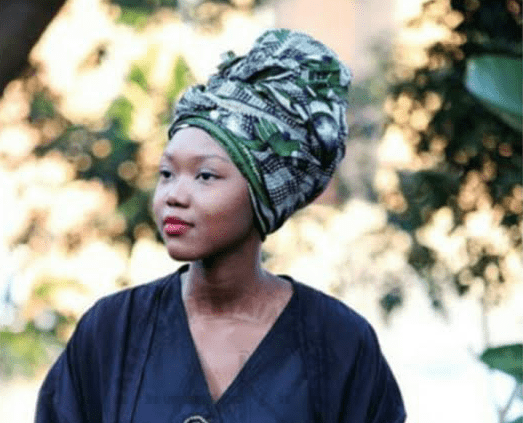
[bctt tweet=”I saw a chance to create jobs for women that I identified in my community @CandiceNkosi” username=”SheLeadsAfrica”] Born and raised in Mpumalanga, Candice Nkosi is a small-town girl with hopes and aspirations of reawakening the spirit of women empowerment. She works towards building from strength to strength with women from all spheres of life and in various fields. Candice is the founder of Pink Package Bag – a sanitary towel and toiletry drive for high school girls. She’s also the proud owner of Joyful Hearts Cleaning Services. Candice tells all in an interview with SLA contributor Jeanette Nkwana. Why ‘Joyful Hearts’? The name ‘Joyful Hearts’ was inspired by the idea of fulfilling and satisfying a client’s needs. It captures that we work hard to the best of our abilities and leave them happy and content to call again. How did you first get introduced to the industry? I saw a gap in the market, a chance to create jobs for women that I identified in my community and went through with it. Cleaning is an everyday part of our lives and more often than not, some households require extra hands to get the job done due to long hours of work and not finding the balance to manage household duties and work. What duties does managing Joyful Hearts include and what skills do those duties require? Joyful Hearts was established in 2016. We are still finding a knack of it, learning about all the ropes in the industry. A day in life includes approaching companies and individuals for work, pitching and thriving on a daily. I am still finding the balance between managing the company and being a student. [bctt tweet=”‘Businesses must strive to master their craft’” username=”CandiceNkosi”] In business, you need to work hard and master your craft. Find all the aspects you excel in and spend every day trying to get better and better. Be consistent in your work because that will influence your company brand and business all in all. Be a people’s person, go out there and network. Most importantly, surround yourself with individuals or brand that align with what you are offering, to continue to vibrate higher. What was the biggest challenge you faced when you first started and how did you deal with it? The biggest challenge was getting cash injection and having to assure clients that I can do the job. It is always hard for a start-up because you don’t have experience and it is never easy for companies to trust new businesses making their way up. But through hard work and selling your idea, you can achieve it all. My parents assisted me with capital, working hard and selling what I offer gets me clients. I try by all means to earn their trust. What, in your opinion, do people not know about the industry you operate in that is critical to the survival of a (similar) startup? [bctt tweet=”Every business requires consistency.” username=”CandiceNkosi”] The quality of your work needs to speak for itself just like any other business. You need to be professional and reliable at all times. Workers need to be on time, areas where you work have to be spotless and the consistency has to be forever. Consistency builds a brand. Has being a blogger been helpful to Joyful Hearts? If so how? Being a blogger has been really useful because through it, the brand Candice Nkosi gets exposure. That doesn’t only lead to people being interested in my blog posts but what I also work on besides that. It leads to a bigger clientele for my businesses. What can we expect from Candice Nkosi and Joyful Hearts this year? You can expect a lot that will unravel this year from Candice Nkosi. I am currently working on a sisterhood club called “Woman To Woman Brunch” where we celebrate each other and get inspired by individual journeys. I am also branching out into events. Hopefully, through the grace and hard work Joyful Hearts will expand and reach greater heights. If you’d like to share your story with She Leads Africa, let us know more about you and your story here.
Nozuko Mayeza: The strength of will to succeed needs to be constant in any businesswoman’s mindset
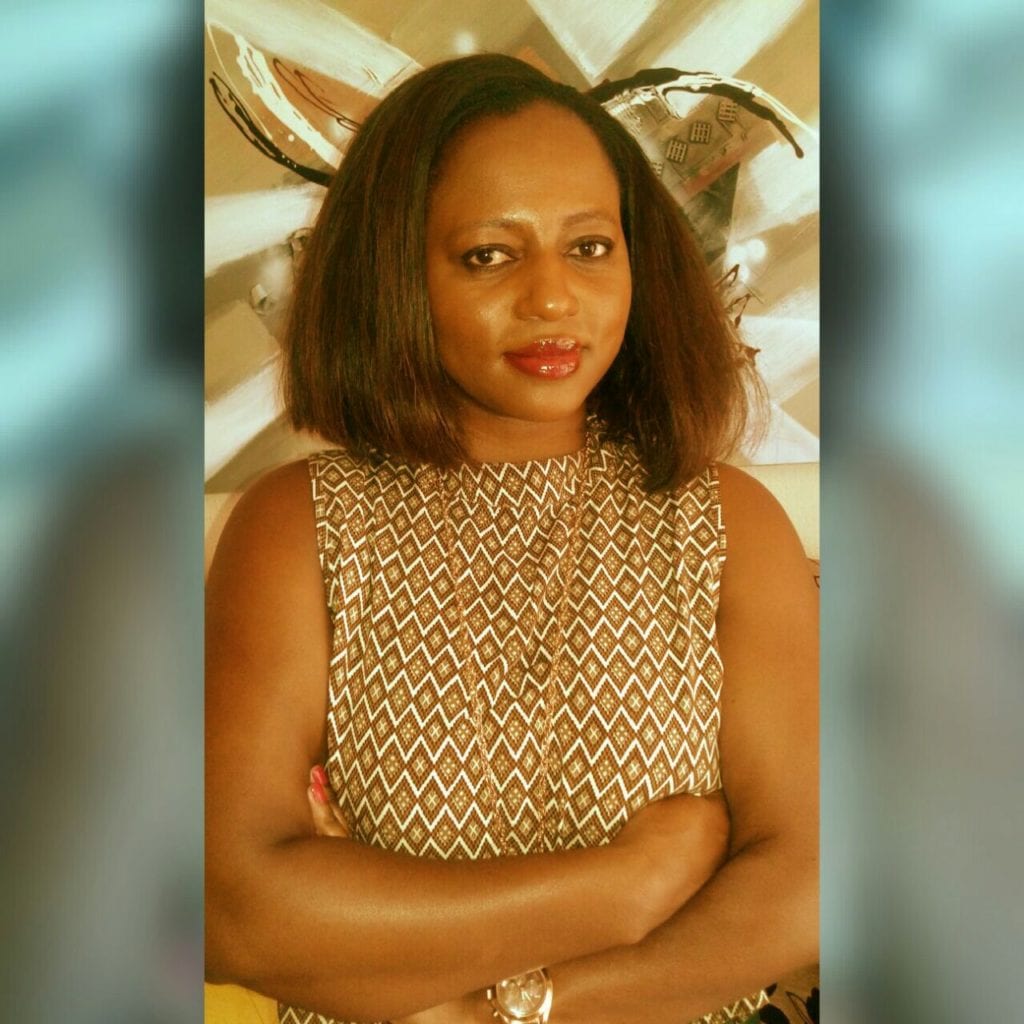
[bctt tweet=”After spending 7 years in banking, Nozuko Mayeza figured it wasn’t for her” username=”SheLeadsAfrica”] Women are generally underestimated simply for being a woman, hence the belief that we cannot perform like men in their work environment. However, given the equal opportunity as men, we see that many women perform wonderfully in their careers and becoming successful as entrepreneurs. Nozuko Mayeza is one of the few South African women breaking glass ceilings and navigating her way through male-dominated industries successfully. As a woman of great business sense with a passion to see her business and other small businesses succeed, Nozuko also trains young women on how they too can break through in any industry. Nozuko is the founder of Tulsawiz Logistics (Pty) Ltd which has operated in the supply chain sector for several years. Nozuko also has her eyes set on expanding her horizon with her successful strategies that have gotten her far. SLA contributor Neo Cheda met Nozuko through a mutual friend who introduced us a few years back and was attracted to her as most strong women are attracted to other strong women! Nozuko gladly took up the opportunity to meet with Neo and to share her story of how she has risen and continues to soar and overcome societal norms and tribulations that try to hinder successful people from exercising their personal power. So, why logistics? Well, after spending seven years in the financial services industry, banking to be precise, I figured this was not for me. From a young age, I had always wondered why there was heavy traffic and so many trucks on the road and what they were on about. I then realized that logistics permeates every field, be it fashion, technology, construction, science and more. There were opportunities waiting for someone with my kind of passion and skills set in logistics. My current role spans client relations, managing diverse stakeholders, finance, and connecting with industry experts. This is what I enjoy. How did you begin your journey? There is a lot to learn from men in terms of how they do business –everything from their work ethic, confidence and their strategies to solving problems. A male friend of mine after attending a networking event, introduced me, to logistics. He mentored me and taught me all about the business dynamics until I acquired my first contract. I even worked as a subcontractor for him until I eventually landed on my feet. [bctt tweet=”Nozuko Mayeza: There is a lot to learn from men in terms of how they do business” username=”SheLeadsAfrica”] You’ve been making the headlines and I recently saw a TV interview of you. Tell me, what has driven you to succeed? It’s mostly about following my passion and proving to myself that I can be more. I attribute the greatest lessons in my life to the hardships I endured along my journey and credit my mother for my tenacity. Born and raised in a village called Ndakeni/Ntlenzi in Eastern Cape, my twin sister and I had to juggle a home run shop and take turns with the younger siblings. Since then I have been business savvy and pushed to find ways to make things happen. My success in this field was born from life’s hard lessons. I chose to learn “how to be better” from each one and never quit on myself! It takes a lot of courage and with no money and finance, I had to hit the ground running. Getting big contracts is extremely difficult, but the trick is to never give-up. I was not received well as a woman in the industry but my strategies helped a lot. How is it being a single mom with a high-powered career? Though this can all be very challenging, it’s important to find ways to integrate work and life. I don’t approach it as though someone else was meant to help me parent my child. I’ve taught my son total independence, he knows I won’t make it to all his rugby matches etc, and he is cool with that. Whenever there is an issue (teenage problems) I find a solution quickly to avoid escalation. What advice do you have for women considering a career in logistics? Logistics is an exciting and challenging career choice that brings with it a lot of rewarding relationships and lifelong customers. I have witnessed first-hand over the last six years the growth of women in the industry and seen their roles continue to strengthen. Hopefully, in the next decade the term “a man’s field” will no longer exist in supply chain management. I am very passionate about mentoring and helping other women discover and exercise their potential and at the moment I have a few ladies I mentor as they start their own businesses! Society needs more entrepreneurs to eradicate poverty and make the world a better one. The main challenge however, is the lack of skills in demand, funding, and basic knowledge. This is where I step in and freely provide any knowledge to powerful women as I walk them through their path and start-up phase. [bctt tweet=”My success in this field was born from life’s hard lessons – Nozuko Mayeza” username=”SheLeadsAfrica”] Any other highlights to date? I recently traveled abroad for a business trip which enabled me to form partnerships with international companies. This was an experience which has made realize how far I have come. I also write and have co-authored a book entitled “Share Your Story, Vol. 5”. Also be on the lookout for my new book titled “Plan Your Walk and Walk Your Plan” which should be published by December 2017. Tips for emerging female entrepreneurs: Dedication- Know what you want and go for it. Network often Keep pushing- Quitting is not an option Get a mentor- I credit mine for contributing to my business success Failure is never an option and the strength of will to succeed needs to be a constant factor in any businesswoman’s mind-set. Nozuko Mayeza If you’d like to share
Bilikiss Adebiyi- Abiola: I chose waste for impact
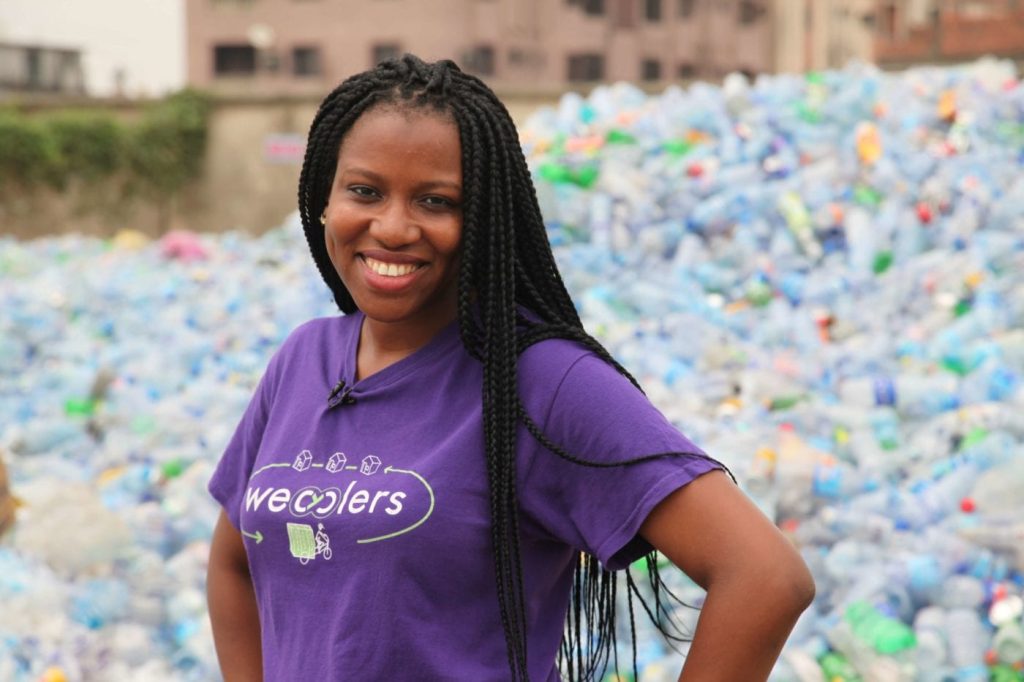
[bctt tweet=”Bilikiss Adebiyi-Abiola – I like that my work makes me live a life of purpose” username=”SheLeadsAfrica”] Bilikiss Adebiyi-Abiola developed the idea for Wecyclers while she was a student in the US. She wanted to address two major challenges of waste management and unemployment by offering recycling services to low/middle-income households. Once she returned to Nigeria, Wecyclers Nigeria Limited was born. Wecyclers is now an award-winning company and as its Co-Founder and CEO, Bilikiss’ work is well recognised. She is a Carroll Wilson Fellow, an Echoing Green Fellow and a 2013 recipient of the Cartier Women’s Initiative Awards. She is also a member of the Lagos State Employment Trust Fund, founded by the Lagos state government. SLA contributor Olayemi Olajide recently caught up with Bilikiss to find out more about her journey….. Kindly tell us about Wecyclers? What made you return to Nigeria to start this company? Wecyclers is an award-winning company that is committed to improving recycling in Nigeria. We address the challenge of waste management and unemployment by offering sustainable and convenient recycling services to low/middle-income households and businesses while creating grassroots jobs and economic partnerships. The idea for Wecyclers was developed while I was in the US as a student at the MIT Sloan School of Management. Following a five-year career as a corporate software engineer at IBM. I was assigned to a study project to help people at the bottom of the pyramid (people living on less than $2 a day). I decided to work on waste with a focus on its uses, collection, and processing. After the project was completed, we (the project team) did some research and saw the huge potential in the waste recycling sector in Nigeria. Especially among the manufacturing plants who are hungry for a cheaper and easily available source of raw materials due to local and foreign demand for end products. I then decided to move the idea forward and Wecyclers was born. What do you enjoy the most about doing business in Nigeria? I like that my work makes me live a life of purpose and that it is having a positive effect on my country and my children. Wecyclers turns waste into wealth and supplements the income of thousands of households. Since August 2012, Wecyclers has registered over 15,000 households for our collection service in 3 Lagos neighborhoods, collected over 3,000 metric tons of recyclable materials, created over 100 jobs and rewarded our subscribers with over $75,000 worth of gifts and cash prizes. Since August 2012, Wecyclers has registered over 15,000 households for our collection service in three Lagos neighborhoods, collected over 3,000 metric tons of recyclable materials, created over 100 jobs and rewarded our subscribers with over $75,000 worth of gifts and cash prizes. [bctt tweet=”@wecyclers @realwecyclers @bilikiss are demonstrating that waste can be a source of wealth” username=”SheLeadsAfrica”] How has your experience working and living outside the continent helped you shape Wecyclers into what it is today? I think my educational experiences and starting my career as a software engineer in the United States provided me the toolkit with which to solve the kind of large-scale problems we are tackling at Wecyclers. It also provided opportunities to build an international network that has helped to guide and support our work. It also provided opportunities to build an international network that has helped to guide and support our work. [bctt tweet=”@bilikiss @wecyclers We have benefited greatly from the Lagos State Government’s progressiveness” username=”SheLeadsAfrica”] How has your partnership with Lagos State Government and other organizations contributed to building Wecyclers? Can you tell us names of organizations you have partnered with? Our partnerships with Lagos State Government and organizations has been a critical part of Wecyclers’ development. We have benefitted greatly from the Lagos State Government’s progressiveness and openness to working with organizations that provide solutions to Lagosians’ challenges. Wecyclers recently received a grant from the Lagos State Government to expand our collection and processing services into two new local government areas, create 120 jobs and 8 micro enterprises and reach an addition 68,000 Lagosians. Our partners also include FCMB, DHL, Unilever, Oracle, the Nigerian Bottling Company, MIT Sloan School of Management, and others listed on our webpage. Our partnerships have helped to improve our visibility, enabled large-scale programs like clean-up days, and enhanced our management operations. What are the constant challenges you face running Wecyclers? What’s next for Wecyclers? A major challenge is funding. We are a social enterprise, so we are more focused on having a positive impact on communities than generating profit. We are always looking for companies and foundations that are willing to support our efforts. Another constant challenge has been ensuring the supply of electricity to our hubs, which is essential for processing the recycled material we collect. We also have to deal with the negative perception that some people have of working in waste recycling as a dirty job. We are demonstrating that waste can be a source of wealth and that handling it well is good for our communities and the environment. Our plan is to continue expanding our operations and reach, encourage more communities to get involved in recycling. My plan is for Wecyclers to operate all across Nigeria and my long-term goal is to be the largest recycling company in Africa. [bctt tweet=”Bilikiss Adebiyi Abiola – My long-term goal is to be the largest recycling company in Africa. ” username=”SheLeadsAfrica”] 5 things you do to relax when you are not working. Listen to music, work out, cook, travel and read books. If you’d like to share your story with She Leads Africa, let us know more about you and your story here.
How to plan your finances and investments – The Worksheet
What would you like your income statement to look like? We don’t need to tell you to stop spending and start saving, you already know that. Whenever you go an a spending spree, you’ll definitely feel a pang of purchasing remorse, and even feel much worse when your bank statement arrives at the end of the month. You don’t necessarily need a banker to help you manage your expenses, it is impossible to save and invest, if you don’t have the surplus to save and invest. So how do you create capacity, manage your obligations, and achieve your financial goals? This worksheet will inform you of your funding needs and help you reach your investment goals. Topics this guide will cover: Identifying your investment goals Financial questions every woman asks themselves Personal income statement With the aid of this worksheet generated from our webinar with Samke on managing your personal finance and investments you’ll be able to identify your financial inflows and outflows and also strategize towards planning your finances. To have access to this worksheet, fill the form below to join our community and also get access to amazing weekly contents from us. [ninja_forms id=113]
Is my business ready for SEO?
[bctt tweet=”Without SEO, your business is basically invisible. You need to be visible!” username=”SheLeadsAfrica”] Search engine optimization (SEO) is the process of refining your website using both on and off-page optimization techniques so that it will be indexed and ranked by search engines, naturally. – Digital Marketing Institute If you have had a hard time understanding SEO (Search Engine Optimization), let’s start with a visual exercise. Picture this -you have a wonderful store with all the best offerings, only…your store is invisible. Not just that; millions of your potential consumers pass by daily looking for just what you offer. Crazy right? Yes, that’s exactly what your business is without SEO. You need to be visible! Take results from a Wild Fusion Digital Center 2016 channel effectiveness study, for instance; 63% of Nigerian consumers use search engines to research and buy products. This puts Search right at the center of the purchase funnel. You need to ensure your business shows up when people search for the services you offer. How SEO Works Ever wondered how search results show up? Let’s talk spiders! Google has an inventory or index where it stores keywords and information regarding the websites they originate from. This index is populated by search engine spiders who crawl the web. When they get to your site, they populate the index with keywords from your site. As people search online they are actually querying the index. What Google then does is to present the most relevant results of the search from its inventory. So basically, if Google doesn’t have you in their index, there’s no way you are showing up in the search results. This is why you need to optimize your website for search engines. Ranking on the search engine … Page 1, Page 2..Page 10 Ranking is website positioning in SERP (Search Engine Results Pages). Your ultimate goal would be to rank on page 1 and even better, be the first result. Like the saying goes ‘the best place to hide a dead body is on page 2 of Google search engine’. As crazy as that sounds, the reality is that search engine visibility is a clear indicator of good marketing, it also lends credibility to your brand. [bctt tweet=”Search engine visibility is a clear indicator of good marketing & lends credibility to your brand” username=”SheLeadsAfrica”] SEO is a continuous effort. Every day, businesses similar to yours are competing for the same keywords, trying to convince Google that they are more relevant. Google considers a number of factors when ranking websites, but today we will highlight two. Content Relevance You want to ensure that your content is relevant. Start your content strategy with keyword research. This helps you figure out real questions and ideas that matter to your consumers. The Google Keyword Planner will come in handy here. Also, your content should be readable, you should avoid duplicating content at any cost. Mobile Responsiveness Nothing is more frustrating than getting to a site via your mobile phone and finding it’s so difficult to navigate. Think user experience when designing your site! – This article was written by Uche Offokaja. Uche is the Client Solutions Manager Wild Fusion, Africa’s leading Digital Marketing Agency.
‘57 Chocolate: How to start a chocolate company on a budget in the Motherland
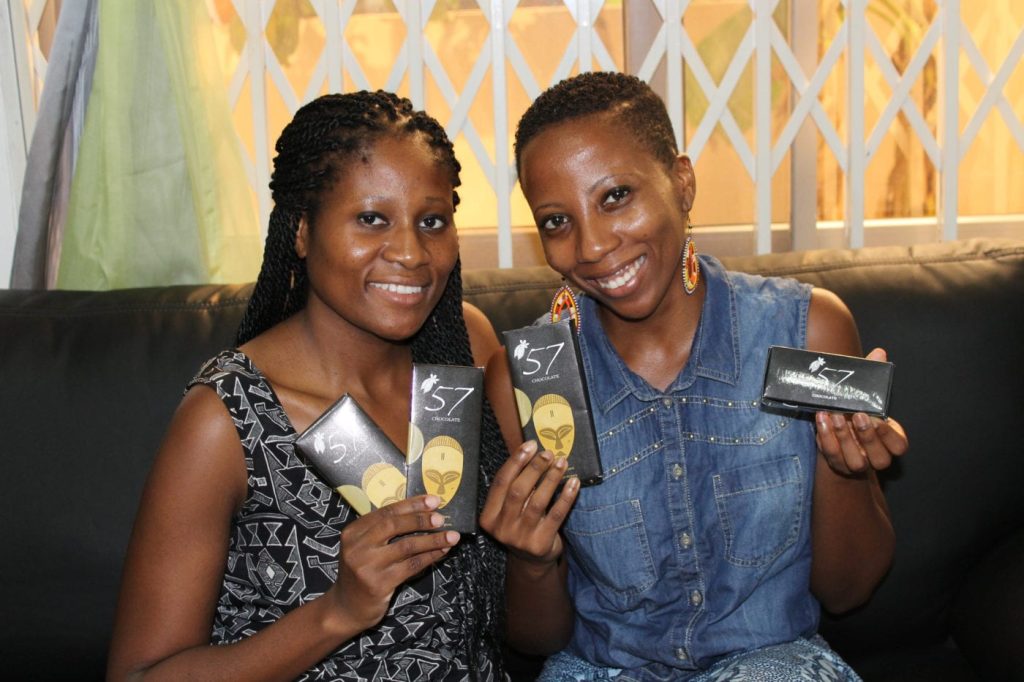
[bctt tweet=”The Addison sisters saw the need for a Ghanaian chocolate company before launching ’57 Chocolate” username=”no”] As the saying goes “an entrepreneur is someone who identifies a need in a market and finds a way to fill it”. This is what Priscilla and Kimberly Addison did when they realized that though Ghana is the second largest producer of cocoa in the world, the country produces little chocolate. Having recognized this, the sisters saw an opportunity to start an artisanal premium chocolate making company which they named ‘57 Chocolate –short for 1957, the year of Ghana’s Independence. The sisters upon starting the company in January 2016 applied for the 2016 Tony Elumelu Entrepreneurship Programme for Manufacturing where they were selected as one of the winners. This programme provided them with a small grant and networking opportunities to assist them in pushing their company further. Now, their aim is to set an example and demonstrate to the world that Africans can create products of the highest excellence and quality. What motivated you to choose this industry? Having spent time living in Geneva, Switzerland, we thought it was strange that Switzerland is known for its chocolate yet doesn’t grow cocoa, the core ingredient in chocolate. Meanwhile, Ghana is the second largest producer of cocoa, but produces very little chocolate itself. We saw a vast need for manufacturing of chocolate in Ghana and across the continent of Africa. In Ghana, the candy shelves of supermarkets and malls are overflowing with foreign chocolate bars, many undoubtedly made with Ghana’s very own cocoa. Having recognized all this, we were determined to use Ghanaian cocoa to create a Ghanaian brand of premium chocolate that is reputable locally and internationally. Chocolate really peaked our interest because it allows us a lot of creativity. We get to experiment with different factors such as how dark to roast the beans, the percentage of cocoa to include, and creating different flavors and pairings (e.g. sea salt, coconut shavings etc). We also love chocolate because it really is a healthy treat if you choose chocolate that is high in cocoa content. At ’57 chocolate, cocoa, as opposed to sugar, is always the first and main ingredient in our dark and milk chocolate. What steps did you take to start the company? What was/is your niche? We started the company before we even had a name for it. The idea came about in 2014; however, we made our first batch of chocolate in 2016. In between this time, we took courses on chocolate making and confections and trained with people in the field. We also did a lot of research and reading on the industry then we developed our chocolate recipes through trial and error. We would give our small-batch chocolate to family and friends who happily agreed to taste test. Also, we spoke to people already working in the industry to seek advice and support. [bctt tweet=”We developed our chocolate recipes through trial and error @57chocolategh” username=”SheLeadsAfrica”] Being from Ghana, it was important for us to create something that we were passionate about and that stood for a bigger purpose. Building our brand has been intricately tied to our desire to see Africans create products of premium value with the abundance of resources available. Hence the name ’57 Chocolate, which is short for 1957, the year of Ghana’s independence. 1957 was a revolutionary year for Ghana, not only because it was freed from colonial rule, but it is the year that gave birth to the nation’s “can do” spirit. The name ‘57 is meant to inspire a reawakening of Ghana’s 1957 “can do” spirit. From 1957 onwards, Ghanaians were creating and developing their own industries and products which resulted in a massive industrial boom. We want to return to that. ‘57 Chocolate aims to inspire the people of Ghana and Africa, to create and develop made in country products of high quality. Our niche is comprised of individuals who are looking for premium handmade chocolate that is made from bean to bar, and those keen on supporting Ghana’s industry by buying Made in Ghana products. How did you fund the company? Are there companies willing to invest in this industry? We funded the company with our personal savings, and with a few contributions from friends and family. We didn’t start with much, and we’ve been bootstrapping our way through this process. You have to make adjustments and sacrifices. As a silly, but true example, that pricey face toner from that fancy store we used to love for healthier-looking skin has now been replaced by a simple lime or lemon wedge. It surprisingly works just as well, though! It was important for us to commit to properly investing in our own company. Additionally, we applied and were selected as a winner of the 2016 Tony Elumelu Entrepreneurship Programme for Manufacturing which provided us with a small grant and networking opportunities. There are definitely numerous companies willing to invest in cocoa processing. It is, after all, a multi-billion dollar industry. What did you need academically and financially to qualify to start the company? There aren’t really any academic qualifications needed to start the company. Neither of us (Kimberly or Priscilla) has a background in chocolate making. We did need to take courses and get training on how to make and mould chocolate. How did you brand your company? What were your business and/or marketing plans when you launched the product? Our company is an artisanal premium chocolate company, as we wanted to fulfill this unique void in Ghana. Most importantly, we aim to keep Ghana’s cocoa in its truest form. Our chocolate is handmade in small batches, starting from sorting the cocoa bean by hand and processing it into the chocolate bar. Our chocolate is rich in cocoa, and made without any artificial colors, flavors, preservatives or weird things that are hard to pronounce. Additionally, our chocolate challenges the status quo of luxury chocolate being only a product of Europe. We are