
Thembelihle Terry-Lynne Zulu: Every woman needs a big sister

The idea of women helping other women, benefits both parties and demonstrates just how powerful every woman can be with the right support. Thembelihle Terry-Lynne Zulu, through Girl Grandeur Zimbabwe which she co-founded, is going the extra mile to encourage women to pursue their dreams. Here is what she is doing to support other women. How have you used your personal challenges to inspire other young women? Women shouldn’t be shamed for sharing their pains, struggles and life experiences. No woman deserves to be slammed or termed ‘attention-seeking’ or ‘too sensitive’ for sharing her story. Our stories need to be told because in them is the hope for survival for every woman. My life’s journey epitomizes, to a great extent, the challenges faced by the African girl child. I have been through most of the issues plaguing young women, from abuse to pregnancy, and everything else in between. I once wrote on my personal blog, “I went through some mistakes so that you don’t have too.” Walking young women through their ordeals is a mutual healing process as it helps me as much as it does them. Tell us more about Girl Grandeur Zimbabwe, how did it come to be? As the first of five girls, I considered it my duty to help my sisters make the right life choices. Gradually, this mentoring circle grew to include their friends. Our goal is to help every woman, especially the young ones access safe and comfortable adult counsel. We need them to be able to do this without the fear of being judged or unduly reprimanded. To address this, Girl Grandeur Zimbabwe has a mentorship program for business newbies, as well as a Big Sister program for the little girls. In addition, to debunk the myth that women are naturally unable to work together, we created a platform that has some semblance of a sisterhood. Here, women come together in an informal setting to discuss issues relevant to them, share opportunities, advertise their businesses and have meaningful debates about womanhood in Zimbabwe. How does a social club in Zimbabwe function? Girl Grandeur Zimbabwe may not be the first social club for Zimbabwean women, but our approach is the first of its kind. We have branched out into various income generating programs and it’s a constant learning process. The club is accessible to every young woman in Zimbabwe, subscription fees are affordable and within reach. Our structure includes a board, a committee, and ordinary members. Our diversity reveals the implicit beauty of our differences and we are determined to do much more. How do you provide support when needed? Through our several social media platforms, we invite Girl Grandeur Zimbabwe members to contribute to planned projects or offer free services. For example, one of our members in Harare identified a pregnant homeless woman who needed help. To alleviate her plight, we brainstormed on possible support solutions. Our growing membership increases the need to incorporate a wide range of issues facing every woman. We work closely with other NGOs while monitoring progress through the appropriate authorities. As a co-founder, what advice will you give any woman looking to start a business with someone else? When starting out, it’s easy to go for people who are within your reach and that’s usually kith or kin. In getting the right hands, be drawn to people who are not only passionate about your vision but who have proved that they can deliver results. You won’t always end up with the ones you started out with and you need to be okay with that. Appreciate small beginnings and don’t mess with the growing process. Among other things, Girl Grandeur aspires to bridge the generational gap between mothers and daughters. How can young modern women overcome this gap? A friend once suffered vaginal thrush but couldn’t tell her mother for fear of receiving retribution. There’s no gainsaying the fact that mothers need to create more time for their daughters. These days, more women work as hard and long as most men. And so, inadvertently abandon the formative training of their children to maids, nannies, the media, peers and even Google. Some parents have been distracted by the cash-stretched times but good parenting isn’t just about money. Making time for your children is paramount – you can’t put a price tag on a thing like that. Tell us about your relationship with your mother, was there any tension? How was it resolved? When is there never any tension between mothers and daughters?! As a young girl, I didn’t understand half of the policies she’d put in place. As cliché as this sounds, as I grew older, I began to understand why she did what she did. Now, I understand that she didn’t ‘hate’ me but had to curb some of my rebellious tendencies. Open and honest communication is key to the mother-daughter relationship. I strongly believe that when a child understands the reason(s) for a reprimand or punishment, he/she is more unlikely to repeat offense. What do you love best about your mother? I consider my mother a warrior! A warrior who never let societal beliefs stop my sisters and I from finding our identities and flourishing in them. In retrospect, she understood that everything I did was in preparation for who I was to become. Never did she ask me to be who I was not. If you’d like to share your story with She Leads Africa, let us know more about you and your story here.
4 business lessons I learned from my mother (and aunties)
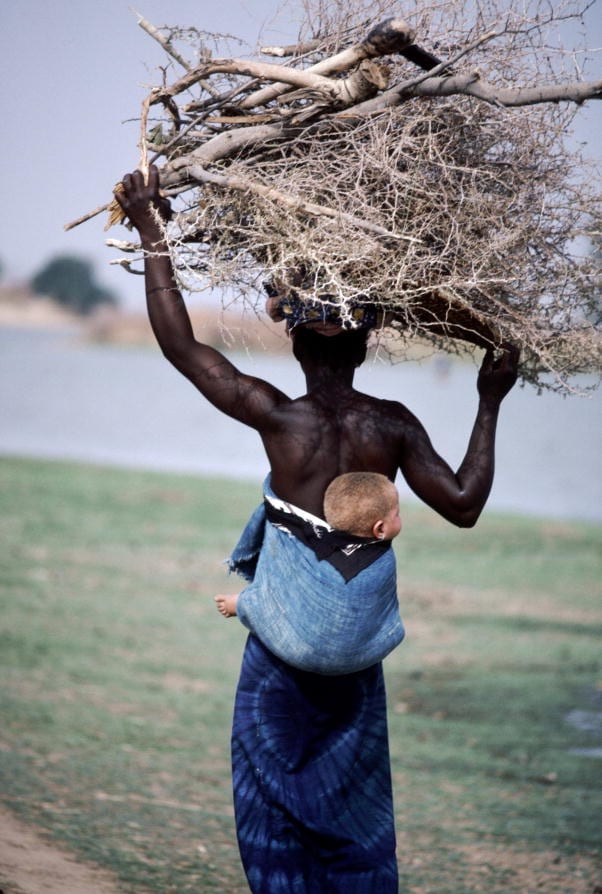
No one works as hard as an African mother. I should know because I was raised by one. You see them everywhere, trying to build new businesses from the farm, to the market place, to distributing companies and high-rise malls, to boardrooms and to the top of multi-national companies. Mothers are the epitome of perseverance, the backbone of our society, really. Mom aside, I was also brought up by more than five aunties! I know there are some entrepreneurial tips that we all need to follow from these marvelous older women. These are age-old tips that work anywhere, and have seen our mothers and their mothers through tides of disasters and of plenty. Reputation In business, your reputation is everything. Without a good reputation, your future businesses are worthless really. This is greater than branding, dear ladies. A reputation speaks to your character, and is bound to outshine all however much you brand yourself or your company. It is the core of who you are. Get a good reputation and guard it with everything you have. Be a woman of your word, conduct your affairs with dignity, have good products and services. You know…reputation. Appeal to self-interest in business This is where most aspiring #MotherlandMoguls go wrong. I get that we are emotional beings but when making a deal, never play to mercy or pity. A Motherland Mogul never grovels, not when you know you can bring something to the table. And it does not matter whether it is the centerpiece or the whole darn table. If you always find a way to ensure the other party can benefit, the deal is yours. That is how barter trade worked for years. If it was good enough for our ancestors, it should serve the purpose well for us. Afterall, we are here due to them. Keep people guessing The easiest way to fall in a rut is being predictable in business. While there is some good in being consistent, predictability points more to actions than products or services. It encourages you to get out of your comfort zone and actually be out there. It means partnering up with people that are not like you and learning new things. Why else do you think women form small funding groups that bring together people of various professions and backgrounds? If it works for your personal life, why can’t it do so in business? Always keep an air of unpredictability. That way, no one ever sees you coming and the traps are definitely fewer. Never retreat, never surrender Our mothers run the household. No matter how big it is, no matter how much work is, you are sure that your mother will leave everything at the door and be your mother. If there is punishment to be delivered, it will be delivered. And she never lets her children see her overwhelmed or tired. Why is it then, that when some of us go to work, we carry unnecessary baggage that distracts us the whole time? Then we actually end up doing nothing at work. We end up frustrated and are grumpy to our families when we go back home. Some household issues like worrying when laundry will be done or planning the meal for the next day calls for some serious time management. And when you’re at work, let it be no retreat, no surrender for things that are worth it. We often look for business strategies elsewhere while in truth, they are right in front of us. Staring right into our faces, like our mothers often do. And yes, the pun was very much intended.
6 ways to turn your business dream into a reality

Chasing a business dream requires a deliberate and focused sense of concentration on set goals. Don’t you hate-love those successful people who make success seem so easy? Wouldn’t it be great if you could bring their magic to your own life? Imagine walking into a multi-million dollar event to a standing ovation. Everyone is clapping and the spotlight is on you, the bombass CEO of your own company. Sounds like a dream, right? Snap out of it! It’s time to live that dream. First, there’s the parody of that person who takes the giant step of starting her own business. Now, years have passed and the enthusiasm has dwindled because she’s held on to the same approach. Don’t be her. If you must make the leap, be sure the potential rewards are huge and satisfactory. Otherwise soon, you’ll be complaining like Jane who went into selling clothes because Maryann’s boutique was blossoming. It’s a simple, sad fact that the vast majority of entrepreneurs would rather invest in whatever business idea is currently trending than create their own dreams. Yes, we all need inspiration but success doesn’t come by pursuing someone else’s dream. You want to become the next Oprah Winfrey? Cool, but you need to learn to do what you love better, faster and more often. Where am I going with all of this? Simple. Define your dream Do you have a business idea? How big is your goal? Think back. How long have you nurtured this idea? How sure were you in it, when it was birthed in your mind? It’s so easy to look around at people who have achieved business success and say, “Oh she achieved that height because she’s special, it’s just the way she was made.” Okay, saying this may make you feel a bit better, but like Lupita Nyong’o once said, “Your dreams are valid too.” Yes girl, they are! Vision The idea, big or small, must be laid out in detail. Achieving your dreams does not have to be easy, but you need to be able to know, at any moment, where you are headed. Set goals with timelines. Here’s my example, by January 13th, 2017, I shall have set up a firm on the 14th floor of East Grove Towers with a portfolio of 120 clients. Time to werk. Get to work The nature of the idea must require an intense sense of concentration. An example would be a goal-driven SLA contributor. Ideally, she is a brilliant lady who is detailed, pays attention to research and is not afraid to be sassy. This is someone who can devote the energy required to get the work done. Now apply that to your business. Outsource expertise You must be willing to make the best of resources to get work done. If you have the innate abilities of a genius kid, beautiful! (Also, lucky you) Otherwise, leave the work to experts. This is especially important in sensitive areas like sales, finances or technical implementation. That dream of you wearing 20 hats and running everything yourself should remain in lala-land. You’re awesome but you’re not Super Woman. Send yourself future letters or emails This might sound crazy but stay with me. There are great websites and apps that allow you write yourself emails due to being delivered say, in three months. I love starting my letters this way, “Dear future me, by now you must have scored that East Grove Tower office and earned enough for a holiday in Maldives. Where are we at now?” See, not hard. Believe it or not, these letters are a great source of motivation and accountability. Share your dream with 5 people You need regular enough feedback from sincere people. This way, you can constantly adapt and make progress toward your goal. These people should call you out when you fail on your business plans. They should challenge you to be the best you can be. Choose the No BS’er friend who will taunt you to action. Finally, if you must be successful, you’ve got to work hard, very hard. The way you go about it is the difference between good and top-of-the-ladder great. While working hard, remain positive. Positivity is a virtue common to successful people. It’s that cultivated sense of success. We have Walt Disney to thank for this quote, “Dreams come true… only if we have the courage to pursue them.” What steps are you taking in achieving your business dreams?
Sibahle Khumalo: Balancing a baking business with my studies in Genetics

For some us, side hustles only became real when we started our careers. For others, it starts much earlier. Sibahle Khumalo is a university student and a #MotherlandMogul. Between studying to complete her degree in Genetics, she bakes and sells cakes. Sisi Lwandle recently caught up with Sibahle for a chat where she discovered what it takes to balance studies and entrepreneurship, and what Sibahle views as success. How did the idea for your baking business come about? It was actually my mother who had the idea of me starting a baking business. I learnt how to bake muffins and cupcakes from my mom and I had tried baking cookies and brownies before, but I had never baked a “big cake” as I called it. So, early last year I was feeling brave and I searched on the internet for a good chocolate cake recipe. To my surprise we had most of the ingredients I needed in the house. I just had to buy a round cake pan, after which I proceeded to bake my chocolate cake and decorate it. It was the best chocolate cake I’ve ever tasted and everybody in the house was so surprised to see that I could bake a delicious cake in just one try. My mother loved it so much she took it to work the next day to share with her colleagues and they loved it to. She then told me that I could actually start my own small baking business and from then I started modifying the recipe and practicing to bake it perfectly. After some time I started advertising my creations on Facebook and well one thing led to another and I found myself starting my own small business. Where did your capital funding come from? How were you able to start up? My capital funding came out of my pocket as I have a part-time job as a coach at a local high school. I used the little money that I had to buy equipment and even now I use some of the business’ profit to build the business. Slowly but surely my dream of having my own bakery is coming together. You’re studying a degree in Genetics. This is a complete contrast to the industry of your current business, where and how do they both fit into your future plans? That’s a very good question. I plan on continuing my studies and going into medicine as it has been my life long dream. At the same time, I plan on growing my bakery business to the extent where I don’t have to work myself but have staff working for me, I’m planning for it to become a passive form of income. As a full time student, how do you juggle academic responsibilities and the demands of your growing business? I won’t lie, it’s very tough. Sometimes I find myself having to turn down customers because of writing tests or exams. Other times, I find myself stressing and not having enough time to study. But with the help of my mom and aunt I get everything done in time, which usually means going to bed at midnight. How has being an entrepreneur and student affected your social life? I’m surprised it hasn’t affected it too drastically, I still have time for my friends and family. It just takes a lot of pre-planning for things to work. So now I actually have a use for calendar/journal. What advice would you give to other university students who wish to become entrepreneurs? Go for it! There’s nothing worse than just keeping business ideas in your head, start small and grow your business from the ground up. Understand that success isn’t something that happens overnight, but know that all the hard work will pay off soon. And also, be prepared to have to choose sometimes between your education and your business. If you won the lotto right now, what would you do? If I won the lotto I would open my own bakery/cafe. And I’d also treat myself to a long deserved holiday, baking can get really tough. What motivates Sibahle Khumalo? Making my customers happy, there’s nothing better than putting a smile on someone’s face. What is your favourite aspect about being an entrepreneur? Being able to say, “I have my own business” has to be my favourite part! But, what I love the most about being a black female entrepreneur is having the platform to inspire other people. How do you define success? Success is the result of an ongoing process of bettering yourself and working on your goals. Which company or business person inspires you? Buddy Valastro, the owner of Carlo’s Bakery, most commonly known as the Cake Boss. Want to see women you know featured on SLA? Tell us what amazing things women are doing in your communities here.
Didi Akinyelure: Success has no format

Didi Akinyelure is a producer and business news anchor who hosts the CNBC Africa morning show called “Open Exchange, West Africa”. She is also the 2016 winner of the prestigious BBC World News “Komla Dumor Awards”. Didi calls herself an accidental journalist since she never had any formal education in journalism. With a financial background, a passion for real estate and telling African stories, Didi wanted to be a media entrepreneur who makes and sells contents to news networks. Instead, she found herself on live television after being discovered by the Country Manager of CNBC Africa. Didi believes that success has no specific format and with passion, preparation, hard work and research, one can achieve anything. Tell us a brief history of your career before CNBC? Before CNBC, I worked with a financial advisory company in the UK to make some money since investment firms pay very well but my passion was real estate. I did not know where I developed the passion but I knew it was there so I started attending real estate investment seminars to learn more about it. After working for a while with the financial advisory company, I decided to branch out from financial planning to real estate. I then got a job at Barclays Wealth Management where I purchased two properties. After indulging in my passion for real estate, I became an investor and moved back to Nigeria to work with asset management division of investment bank, Oceanic Capital for slightly over two years. I then resigned from my position due to the financial crisis which made things difficult for the company. The capital side of the company got mixed with banking and most of us did not want that since this resulted in being paid less. My job became less interesting and exciting so I saw it as an opportunity to chase what I was passionate about. Thus, changing the perception of Africa by telling the African story through real estate and real estate investment. Why and how did you switch to journalism? What led you to work for CNBC? Journalism was never part of the plan. The plan was to pursue real estate investment in Nigeria. However, I found out that one needs lots of capital to be able to pursue this career. While in the UK, it is very easy for someone out of the university to get on the property market where you can buy property without much cash. In order to not let my passion die, I decided to make a documentary about real estate in Africa and sell it to any news network that will show an interest. I convinced my mother to accompany me to Cape Town where I filmed a documentary about real estate. I had never stood in front of a camera before and after 30 minutes, the production crew commented on a work well done. I tried marketing the pilot with the news network where I found out that the networks did not buy documentaries directly rather, I needed companies to sponsor my work. This proved very difficult since I had almost zero experience and it is not easy getting someone to sponsor your work. I then decided to go to CNBC Africa because I had seen their shows on the screen while I was working at Oceanic Capital. I had a meeting with Country manager who accepted my CD. He commended me a work well done and asked I asked me to join their team since I was a natural. I declined. The idea was to be a media entrepreneur who creates contents and sells it to interested buyers and not to work for anyone. So I went back to hustling and later decided to consider the CNBC offer. I had become a liability to my entire family who were wondering what I intended doing with my life. In just a couple of years, I had switched from banking to real estate to making documentaries. As much as they loved me, they did not understand the path I had chosen since there had not been any results. I thought I was going to be filming documentaries but rather, the job description was for live television. I decided to give it a shot as I had the financial background CNBC was looking for. Who was the biggest inspiration for your choice of career? This is a tough one since journalism was never my dream. It was somewhat thrust upon me so I refer to myself as the “accidental journalist”. I have always been inspired by Isha Sesay from CNN but I never for once thought about being a journalist or a news anchor. I didn’t even know that journalism was going to be a part of my life. So what I did was to learn from all anchors I met at CNBC and those I saw on television. What has been your personal key to success as an anchor on the CNBC? My personal key to success was learning to accept criticism and letting my passion shine through. The first 3 months at CNBC were very tough because journalism is very different from banking and asset management where you perform similar tasks each day. In journalism, each day comes with a different story so I had to keep up with news and conduct lots of research. I came to understand that on live TV, people are not that forgiving compared to other jobs where you are given a grace period of two or three months to be conversant with the work. Whenever I went off air, I was being told about the wrong things I did on set. This is when I had to be strong inside and accept the criticism and turn them into strengths. Also, what I’ve learnt from this career is that I was bored in my other life. I was doing the job for the paycheck while with this one, I am doing it because I love and enjoy
Who you’ll meet at SheHive London – Jessica Laditan

Jessica Laditan is the Founder and CEO of Pop Up Africa, a pop up events company that runs African-inspired events across London. She’ll be one of the many participants at SheHive London (which is now just 8 days away!). SLA intern, Lamin recently talked with Jessica about her work and her expectations for SheHive London. Thanks for speaking with us. Can you please introduce yourself, tell us who you are and what you do? Hey guys, my name is Jessica Laditan. I’m the Founder and CEO of Pop Up Africa. Pop Up Africa is an African inspired pop up events company. We curate and run African-inspired events across iconic spaces in London. The idea is to bring diversity to the space whilst celebrating culture and giving traders who sell African inspired goods a platform to promote their brand to a wider market. Our events vary from trade events, to street food markets, cultural festivals, private functions and networking seminars. I’ve been featured on the Women4Africa ‘100 Gold List’ 2016. Earlier this year I was a Judge in the ‘Next Star in African Food’ Initiative launched by Red Magazine in partnership with publishers Harper Collins. I also regularly share my knowledge and expertise on pop up retail for African brands at events, on radio, online and via print features. Is this where you thought you would end up? Haha no, definitely not where I thought I’d end up. In school I had dreams of becoming an actress until my dad quickly told me to think of a more serious career. I studied Marketing at University and wanted to go into Fashion PR. I dabbled in that for a bit until it quickly became apparent that I wanted to own my own business. Having my first child gave me that push that I needed and a few poor business ideas later I came up with Pop Up Africa and haven’t looked back since. What’s your big idea that you’re looking to achieve in the next 5 years? In the next 5 years, I’m praying that the business will grow to higher levels with an international presence. What professional organisations are you associated with and in what ways? Over the past few years, I have developed and worked in partnership with a few organisations including, Spitalfields Market, The Southbank Centre, Farm Africa, Red Magazine, Google Campus… What made you want to attend SheHive London? I’ve been tracking She Leads Africa and the SheHive events and couldn’t wait for it to come to London! The founders are inspirational and I love events where African women come together to empower each other so I decided that I definitely had to attend SheHiveLondon. Who are you looking to network with and meet at SheHive London? I’m open to networking and meeting anyone at the SheHiveLondon event. I’m looking forward forward to hearing and learning from others. Also to meeting anyone that’s interested in Pop Up Africa and the work that we do. What skill are you most proud of that you believe can add value to another attendee at the event? I’m most proud of my event management skills, my knowledge of the London pop up scene and my skills in helping brands raise their profile. Meet Jessica at SheHive London! Buy your pass here!
6 South African women killing it as we celebrate #WOMENSMONTH
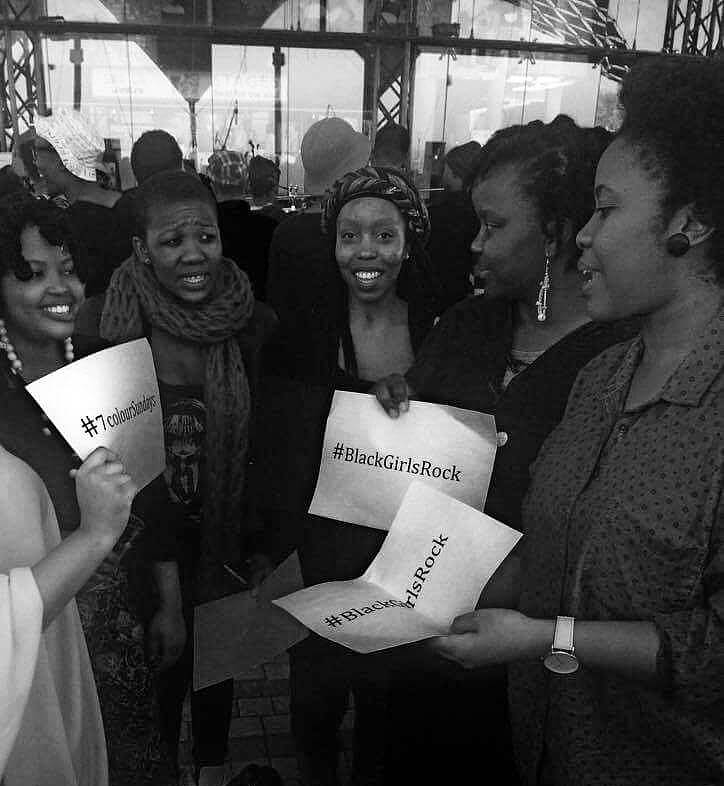
Gwa thinta abafazi, wa thinta imbokodo! This means, “You strike a woman, you strike a rock.” Currently, it’s women’s month in South Africa but I think the party shouldn’t start and end there. The month should celebrate and honour women in our entire continent, This should include women who are powerhouses and moguls, whether in communities and the business world. Let’s talk about some history. On August 9, 1956, thousands of women marched to Pretoria. It was to fight for their rights to freedom of movement without documentation, referred to as passes, along other segregation laws. In commemoration of women’s rights today, questions still remain debated over the role of women in society. This especially concerns women in positions of power. Six decades later, women continue to fight. This time, we fight a different fight. Evidently, we have MotherlandMoguls who carry a dumbbell with one hand and a mine of gold in the other. Today, we want to celebrate not just the woman in South Africa, but in Africa. She is an instinct-driven entrepreneur, who will be featured on Destiny Magazine, Forbes Africa, Forbes Woman and the likes. She is on her way to becoming the leading lady of a nation. She has a vision, creates networks and positively influences other young women. Now, let’s take a look at 6 young women killing it in South Africa: Mpho Khati Mpho Khati of Indlovukazi is a vibrant woman who celebrates herself through modelling. She invented the word ‘thick-thighing’ as a plus size model and is also an Instagram influencer. Mpho’s to watch for. Palesa Kgasane Palesa Kgasane is a young lady in her early twenties, born in cape town and raised in Bloemfontein. Amazingly, she’s the curator at Mzansimoodboard, a writer, and creative director. She also designs her own clothes. Khanya Mzongwana (aka Yulu Ishii) It is said that a woman’s place is in the kitchen and she makes it her business. Khanya, the foodie entrepreneur, is called the queen of pop-up restaurants. She’s the co-owner of Off The Wall pop-up restaurant. She is also a recipe developer and food stylist. Panashe Chigumadzi Panashe Chigumadzi is the author of Sweet Medicine. She’s also the founder and editor of Vanguard Magazine, a black feminist platform for young black women coming of age in post-apartheid South Africa. Also, Panashe is a storyteller interested in the narratives of black and African women. Tumelo Mothotoane As a television and radio broadcaster, Tumelo started locally with a woman’s programme called Sistas on Soweto TV. She moved to being a news anchor at the SABC. Now, she’s gracing the worldwide screens with being an international news anchor and correspondent for Russia today TV. Lumka Msibi Lumka Msibi is a 25-year-old qualified and international award–winning Aeronautical Engineer. She’s a global speaker and Entrepreneur from Soweto in South Africa. Regardless of the system in places that may hold women down, Lumka rises above limits. She creates the most compelling content, business industries, and communities. Commendably, this woman rises above societal pressure that dictates what a woman shouldn’t talk about. Here’s the thing A woman alone is success personified and she matters. She is not a statistic but she creates ground-breaking statistics. The stereotype that women are catty and always fight each other is old and needs to go. As women, we need to constantly remind ourselves that we’re flawless. We need to create circles of support platforms to generate a revolution of power among sisters. Now, Motherland Moguls, be your own kind of woman this month. Your career goals and strategies are valid. Start improving your business, and yourself! Kill it and make your entity your mark.
Top tips on human resources from two Sierra Leonean experts
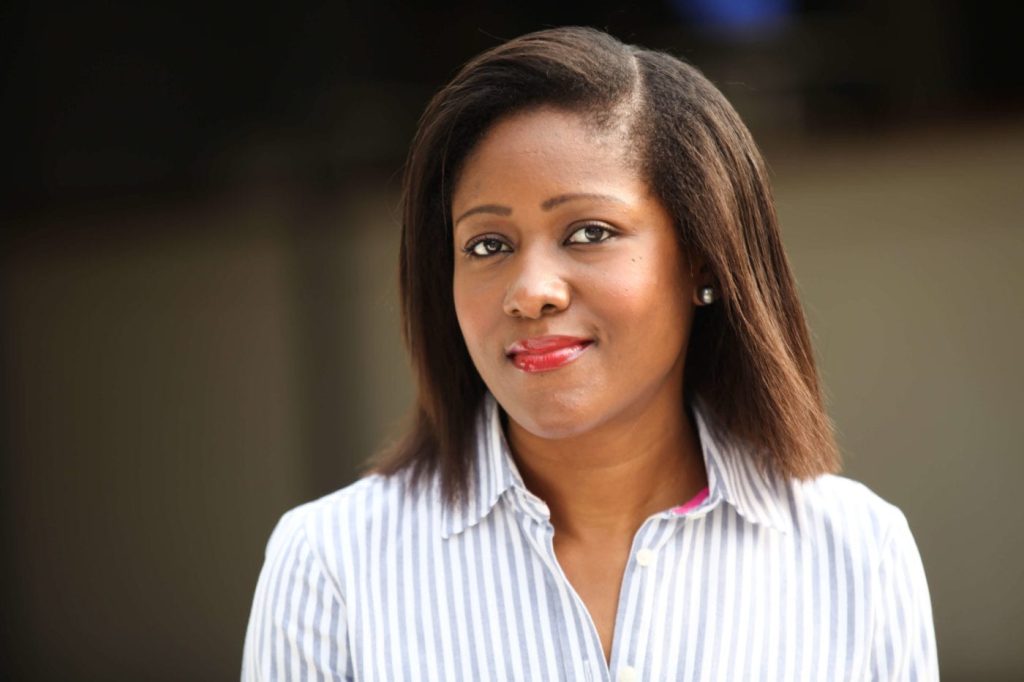
The Sierra Leonean economy is in dire need of a streamlined and engaging workforce. Edleen B. Elba and Fullah Musu Conteh are two professionals in the Human Resource field helping to develop, recruit and retain talent in various sectors for the Sierra Leonean workforce. Edleen is a Chartered Human Resources Analyst who owns JobSearch, a human resources management company while Fullah is co-founder and managing human capital consultant at human capital solutions firm TV-PG. In this article by Moiyattu Banya caught up with both ladies and got them to share some tips on building human capital for any business. It is a known but sad fact that the average job seeker in Africa is a young person. Add to this the African Development Bank’s prediction of a youth bulge on the continent. This just begs the question, how will African countries cope with the increase of young people who will far outweigh available opportunities? In post-conflict countries like Sierra Leone, that rate is even higher. According to the 2013 Status of Youth Report released in Sierra Leone, over 70 percent of young people live under a dollar a day. The country’s unemployment rate is at 60 percent and is one of the highest in West Africa. Ladies, how important is setting up an efficient team? What key attributes should young women possess for business? Edleen: Your team is critical. Hire employees with the right attitude. They may not be the most qualified or experienced but you can always train them. People with integrity and those who care about their personal development and business growth are likely to be more committed and therefore, more productive. Fullah: Be professional at all times with your team. When it comes to your team and standards, be professional. Culturally in Sierra Leone, the lines tend to blur between professional and personal relationships. This situation, if not well-handled, can diminish one’s image as a leader. Case in point, as a start-up, you may have set systems in place and your policies may be top-notch. However, consistent adherence can be a challenge when clear-cut boundaries are not set. Evaluate your leadership style, and ensure your team is in agreement with your expectations. Always check for non-compliance to policies and structures, address the culprits and help them improve on compliance. However, if they still don’t fit in, let them go, irrespective of who they are. What would you consider critical for a young woman setting up a business? Fullah : Understand your business market. Understand your competitors, know what the market needs, lacks or has in abundance – then strategically come in. To this end, you can create a niche that caters to your passion and also the market. Use that knowledge to find mentors who can help you reach your goals and potential customers/clients. Know when to take a step back and when to aggressively push with a service or product. While at it, align with international best practices and contribute to Africa’s consistent growth. It’s best to do away with the standard TIA aka “This is Africa’s way” by ensuring that you adapt to best business practices for your clients’ sake and personal prestige. The bar should be raised, always. Let’s talk about the dream team. How can one effectively manage a team without breaking it? Edleen: Share your vision! I would say, share your vision with your employees and give them responsibilities. If they are actively involved in the decision-making process, they are more likely to believe they are a vital part of the business. Also, it is important to have open communication channels. This is essential to any relationship. Be fair, give regular and effective feedback. How do we maintain personal control in the face of business expansion? Fullah: Know and understand your strengths and weakness. Once you do, find ways or people who can help close that gap. For example, I am a transformational person and monotony bores me to distraction. Owing to this, I do not consider myself a sales person as I am terrible at selling my organization’s new products and services. To address this weakness, I have a strong team consisting of a competent operations person and a passionate business development individual. I design products and services while the operations person follows through with implementation. The role of the business development individual is to get clients while I work quietly behind the scenes to make us all happy. Want to see women you know featured on SLA? Tell us what amazing things women are doing in your communities here.
Starting and sustaining an NGO in Nigeria: 3 important things to consider

You can actually set up the next big NGO, and maybe win a Nobel prize for your wonderful contribution to the society. Isn’t that amazing? But wait! Before rehearsing your Nobel prize acceptance speech, have you given enough thought to the sine qua non of setting up and sustaining an NGO? No? It’s not too late. Let’s start with the basics. A Non-Governmental Organization (NGO), according to www.ngo.org, “is any non-profit, voluntary citizens’ group which is organized on a local, national or international level.” In Nigeria, they play important roles, often filling gaps which the government is unable to while complementing existing government activities. These organizations, small or large, work in the health, civil society and other sectors of society. Individuals and groups often set up NGOs with altruistic motives, with the intention of impacting positive societal change. Having worked for an NGO for several years, I know that most people assume that starting and sustaining one is a laid-back affair. On the contrary, it is in fact as critical as starting up a for-profit business. It really does not matter if it is on a small-scale basis, or whether you have vast amounts of cash, there are key guides to consider. Here’s what you need to know. Legal requirements A lot of times, enthusiastic newbies fail to consider the legal requirements of embarking on such a venture. Someone wakes up, scribbles an interesting name for a proposed NGO, then proceeds to print branded T-shirts. That’s not bad for effort, but you need a more structured process. For proper legal status, your NGO must be registered with the relevant body; the Corporate Affairs Commission (CAC). Take ownership of the process, and as much as possible, avoid using a proxy. That way, you will be in possession of all necessary documents and minimize the chances of a disaster. Now, you’ll need to establish the following: The legal obligations it will be subject to. Your goals and objectives. The problems you intend to solve. Equally important, you’ll need a lawyer during this process. Having a lawyer at your side will keep you updated on the rights and obligations of the registered NGO you’ll soon be running. Acquiring and sustaining funds When setting up an NGO, you must be very clear on the source and availability of funds. You can’t begin with the, ‘Well, I just started’ or ‘Let’s see how it goes’ attitude. Having said that, let’s see if you can answer these questions: Do I have funds for the activities I’d like my NGO to embark on? Are there government or other organizations’ grants I can apply for? Can the NGO sustain itself on a long-term basis? Do I have an efficient structure? What are my planned activities, and who will be responsible for each activity? Run your NGO like you would run a business. Look, I get it. The society seriously needs solutions and you’re revved up for the challenge. Your idea is the best, most unique and different one and you’re in line to becoming the next Mother Theresa. Listen though, other NGOs are profit-oriented and well, only focus on making profit. If you want your NGO to be around for a long time, you’ll need to integrate these profit-making elements to your operations: Have a defined strategy for hiring, operations and other organizational processes. Have a strong financial system. Have a target audience? A robust marketing strategy will cater to them. Have a marketing budget. Decide on what strategy to apply. Person-to-person? Social media? Flyers and posters? Or a mix of different strategies? How about record-keeping? Do you have a plan? How often would you produce reports? Bi-monthly, quarterly or annually? The above requirements are essential, especially if your NGO’s activities are grant-funded (which means you’ll have to submit regular reports to your handlers). The sad reality is not everyone gets grants at the start, but proper record-keeping would prove very helpful should you decide to apply for funds in the future. #MotherlandMoguls should know that NGOs are businesses too. Your profit is in the satisfaction of helping people in profound ways.
Carmen Attikossie: I want Cartik to contribute to a better Africa
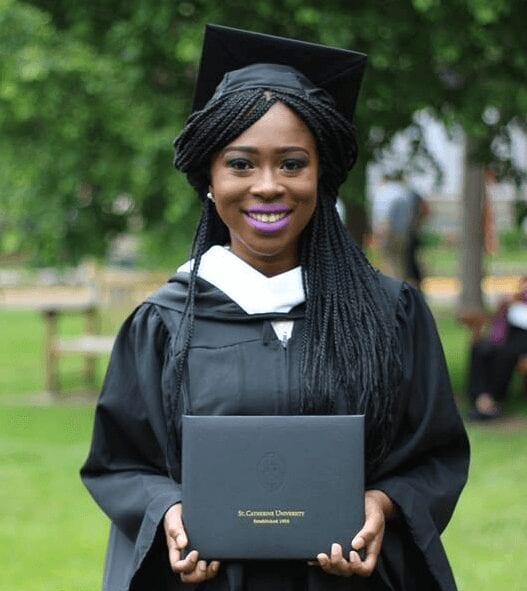
In these days of ubiquitous African wax prints, only a few businesses stand out. One of them is Cartik, a brand started by Carmen Attikossie. Carmen used her links to her homeland of Togo, along with new networks formed while studying in Ghana to start a fashion label that uses African wax print. Here, Carmen gives us insight into Cartik, explains why she plans to venture into agriculture and schools us on the Nana Benz. What sort of artisans does Cartik you work with? I work with artisans from all walks of life in Ghana and Togo. In Togo, there is an artisan village in the capital city Lomé and when I started Cartik, my aunt took me there. I met artisans who were shoemakers, leather-workers, jewelry-makers, etc. I took my time, picked the artisans I wanted to work with and went from there. In Ghana, I had the opportunity to travel to Kumasi, and I met some artisans at Bonwire, Kente village. Throughout the time I was Accra as a student, I took my time to search for individuals who were skilled in bag-making and were interested in making my designs. There was difficulty in finding these artisans and I spent weeks and months trying to find the right individuals to bring my designs to life. Most of the artisans I work with are people who have either left their countries due to conflict or lack of jobs and have settled in Ghana or Togo. They are young individuals who have graduated from university but due to lack of employment, they picked up artisan skills and are looking to have a steady income. I like working with these young individuals because I am young myself. As a university graduate, I understand the difficulty of receiving a degree and not finding work in your field or employment in general. Today, I work with a small group of artisans in Accra and in Lomé, I still work with artisans at the artisan village. What is the fashion scene in Togo like? Togo is a small country and the fashion industry is slowly gaining momentum with the likes of Grace Wallace. Grace is a Togolese-Nigerian fashion designer that is well known throughout Togo and in West Africa. Lomé, the capital city known to be a hub for African prints. Many people travel from Ghana, Cote d’Ivoire, Senegal and other countries just to buy prints at Assigame , the biggest market in Togo. Tell us about your experience studying in Ghana. I went to Ghana on a study abroad programme at my university. In Ghana, I stayed on campus at the University of Ghana and lived in the international student hostel. My experience there was phenomenal. I did not want to leave Ghana, I even asked my school if I could stay for another semester but I was not given the opportunity. Honestly, I felt comfortable in Ghana. I grew up in the USA so when I was there everyone thought I was from the USA. Many people were shocked to know that I’m from Togo. My classmates and professors were always surprised when I spoke Ewe, one of the languages spoken in Ghana and Togo. They couldn’t believe that after 15 years in the USA I can still speak Ewe so well. I made new friends, learned a little bit of Twi and experienced life as a student in an African country, something that I’ve always wanted to do. I also volunteered at Future Leaders, an organization that takes disadvantaged kids off the streets of Accra and provides them with the basic tools of education. I taught science to 5th and 6th graders in Teshie, Ghana. At Future Leaders, I helped initiate a plan for women and microfinance and got involved in many other aspects of the organization. As someone who has received scholarships, do you have any advice for other young African women looking to gain a scholarship? Google is your best friend, go to networking events if you can because you never know who might be there and what connections and networks they have. When writing scholarship essays or filling out grant applciations, start early and take your time. Also, make sure to have others look over it. Looking for a scholarship is a like looking for employment. You want to take time to research and plan how to write your scholarship essay. You mentioned that you want to venture into agriculture. Why agriculture? Once Cartik is out of its startup phase and is well established and known, I want to delve into agriculture. At the moment the only steps I’ve taken is to do more research on African agriculture. I became interested in agriculture after reading Africa Unchained by George Ayittey in college. That book taught me the importance of agriculture in Africa. The rural population in many African countries hold the wealth to Africa’s prosperity and that is agriculture. If we spend time investing and educating the rural population on better and efficient farming techniques, I believe would be on our way to alleviating some of the problems we have. From what I’ve learned in college, at times rural areas in African countries are neglected when it comes to development. If we provide rural populations with access to healthcare, education, development for women and children, the possibilities will be endless. Can you tell us a few things about Togo that other Africans don’t know? – Togo is home to the Nana Benz women. The Nana Benz are a group of women who began their journey as textile traders during the time of French colonization. These women came from nothing and rose to fame, power, and fortune because of the wax prints. They were ambitious, hardworking entrepreneurs and leaders who contributed greatly to the economic growth of Togo. The lives and stories of the Nana Benz women have been preserved in a book called Nanas Benz: Parcours de Vie. The English translation would be, “The lives of Nanas Benz”. The