
Should you plan ahead or just ‘go with the flow’?

[bctt tweet=”You need intention and you need to have some sort of plan with your life” username=”SheLeadsAfrica”] There’s nothing wrong with occasionally going ‘with the flow’ when it comes to events that are not major. Like just deciding to get in your car and driving to wherever the road may lead you, we all need to be a little spontaneous at times! The problem with ‘going with the flow’ is not knowing where that flow will lead you. I came across a statement that said: “the trouble with going with the flow is, you might wind up getting sucked down the drain”, and isn’t that true? The danger of moving without a clear plan There are times when going with the flow feels great, the times when everything just seems to fall into place. And sure enough, there are times we have no control over situations, and we have to just go with the flow of things. The tricky thing about going with the flow is that firstly, it takes time to notice things going astray and you may fall into traps, which you could have been able to avoid, had you had a clear set plan. The second reason why going with the flow is not always the wisest thing to do is that if all you do is “go with the flow”, you put yourself at risk of losing focus and allowing yourself to settle for less than what you can achieve. You need intention and you need to have some sort of plan, which maps out how you will get to your target. Life is unpredictable and we often have to deal with things we have not been prepared for. However, planning ahead is still the better thing to do, if you have planned properly, you can always go to ‘Plan B’. Also, if you plan ahead you can usually assess the risks involved, and that may save you from unforeseen challenges. Your plan doesn’t have to be incredibly researched or very detailed but it should have some general idea on how you will achieve or approach a specific situation. It will always make it easier for you to take the next step required in your situation. A plan works exactly like a map –you know how hard it can be trying to get to a place with no directions. What would have taken a few minutes, can easily end up taking hours! The same can be said when you go through each year or day-to-day activities without any form of direction; you may find yourself circling the same place over and over again –but with a plan you have some form of direction, meaning you can go straight to your destination point without going through the same circles. Why planning is important #1 You have a clearer vision of where you want to go. #2 It makes it easier to examine the risks involved. #3 There’s no wasted time; therefore you can achieve your goals in a shorter time frame. #4 Should something go wrong, you can always move to ‘plan B’. My go-to manual for all matters of life, the word of God says: “Plans fail for lack of counsel, but with many advisers they succeed” – Proverbs 15:22. We should never forget that there are people who have already been where we need to go. There are people who can guide you in the right direction. That’s what communities like SLA are for. So, if you have not already done so, it’s time to start making a plan about the steps you need to take to get to the top in 2017. You can’t allow yourself to go with the flow… we need to be intentional!
Chika Madubuko: Creating a platform of care and support for the elderly

[bctt tweet=”I was able to identify winning business routes and steered Greymate Care in that direction” via=”no”] A young woman’s trouble in finding a safe and reliable caregiver for her bedridden granny, made her think of filling that void for others. As a #MotherlandMogul who believes in improving the African economy by identifying and solving problems, Chika Madubuko is using technology to support Nigerians, one elderly and disabled person at a time. Making life easier in Africa is one of the causes Chika is passionate about, she has businesses in the agricultural and health sector including her caregiving online platform Greymate Care. Greymate Care offers a safe and secure platform for people to look for a caregiver for their elderly family. With experience in multinationals such as Amazon Inc. and Guinness, Chika is gradually turning Greymate Care into an empire and improving the lives of the vulnerable people. In this interview, Chika talks about the selflessness and business acumen of African women when it comes to unconventional business ideas. What is the story behind the birth of Greymate Care? Greymate Care was created so Nigerians never have to experience the same hassle we did when my granny became bedridden due to diabetes. We were all busy and couldn’t provide her with the care she deserved. Hiring a caregiver for her was so complicated. Sometimes miles were travelled in futility to interview one caregiver, and we often ended up with a poorly trained caregiver. Not to forget the security issues that had to do with having a total stranger in the home. I asked around and discovered it was not peculiar to our family. The busy professionals complained too. Greymate Care addresses the problem and is an online platform that connects the vulnerable to a competent, insured, and professional caregiver. Our caregivers are background checked thus taking the stress of care off busy professionals. The icing on the cake is that you can get even a doctor or a nurse from the platform. Even in the event there’s a strike, doctors never have to worry as there is a source of income for them. [bctt tweet=”The African market is a very unique one and a foreign business idea would fail if necessary tweaks are not carried out” username=”SheLeadsAfrica”] What skills have come to play for you in the course of running your business? My meticulous nature and business acumen have been pivotal to the success of Greymate Care. I was able to identify winning business routes and steered Greymate Care in that direction. The business also requires a lot of personalised activities per service user; I could spot each peculiarity by paying attention to detail. Did you experience hiccups in localizing this western business concept into the African market? And how did you scale through? The African market is a very unique one and a foreign business idea would fail if necessary tweaks are not carried out. One marketing or recruitment error can grind the business to a total halt. For Greymate Care, it was hard initially to convince everyone on the value chain, from the investors to the consumers. The consumers were worried about safety due to concerns about crime rate and the investors, viability. We subscribed to premium insurance and background checks from experts and with that, we were able to convince the prospects on security. They were converted to paying clients, and when the numbers increased, the investors became convinced on viability. What business support(s) have helped you so far in the course of running your business? Mentorship from successful entrepreneurs has helped a lot. Attending relevant networking events has also proven useful in the growth of Greymate Care. [bctt tweet=”Build an excellent product and watch it sell itself – Chika Madubuko” username=”SheLeadsAfrica”] How do you sell your business to your clients and make them trust you? First is developing a good product that speaks for itself, our methods are different. For example, instead of manually lifting a service user, we insisted on hoists. We then sell our uniqueness and reviews from existing customers through social media, press releases, and offline marketing. Our best bet is influencer marketing where we partner with key individuals/firms and gain referrals from them. Gaining their support is easy as our services are unique and of world standard. Our mantra remains ‘build an excellent product and watch it sell itself’. What four words resonates with your business Priority, Attention, Technology, Compassionate. [bctt tweet=”With the right business strategies, your market share will be significant – Chika Madubuko” username=”SheLeadsAfrica”] As a young entrepreneur, what are your expectations in the business world? I am mentally prepared for the daunting process called entrepreneurship. I hope to achieve my milestones, such as gaining 30,000 service users by 2018, and raising enough funds to expand to other African countries like Kenya and Ghana. Does monopoly from a starting a new business concept play any role for start-ups? Running a monopolistic business can be likened to a life-size oxymoron. With the right business strategies, your market share will be significant but your marketing budget has to be really high since you’re first on the scene. If not Greymate Care, what other name would you go for? Iya Care If you’d like to share your story with She Leads Africa, let us know more about you and your story here.
Nelly Olang’: Women, sanitation & basic hygiene are the key to creating lasting change in Africa

[bctt tweet=”Nelly Olang’: Lack of sanitation remains one of the world’s most urgent health issues.” username=”SheLeadsAfrica”] Nelly Olang’ is the founder and Managing Director of Connel Enterprises Limited, a company that brings relief to women and girls through provision of sanitary services. With good use of her creativity and drive, she is improving personal hygiene to transform lives and boost health and survival in Kenya. Nelly thrives on challenges especially those that aim towards making her company grow. In her words, “I believe that the question isn’t who is going to let me; it’s who is going to stop me.” SLA Communications Fellow, Tonye Setima-Benebo was able to get more insight on Nelly Olang’s entrepreneurial journey in this interview below. Please tell us more about your business? My company is registered by the name Connel Enterprises Ltd. It is a hygiene services company which aims to bridge the gap in health promotion. The company provides quality foot-pedal operated sanitary bins that are placed in female washrooms. The sanitary bins fit feminine hygiene requirements since they are placed with liners, perfumed disinfectant and strong granules that kill bacteria. This provides a safe and discreet disposal solution for female dressings. The bins are regularly maintained, serviced and contents are incinerated. Our clients include hotels and restaurants, hospitals, schools, offices, NGO’s, parastatals and churches. We are currently providing services in the Nyanza and Western Regions and rapidly expanding countrywide. Why choose to focus on women’s hygiene? Women, sanitation and basic hygiene are the keys to creating lasting change in Africa. Lack of proper sanitation and poor hygiene play a major role in mortality. Ensuring that girls and women are provided with a means of observing their personal hygiene, could transform their lives by boosting their health. Lack of sanitation remains one of the world’s most urgent health issues hence bringing relief to women and girls through provision of sanitary services will result in better services for all and benefit entire communities. With limited resources, how were you able to run your start-up? The first years were very challenging with cash flow. I had to plough back profits to keep the business running. This also made me run a one-man show for a while, as I had to play almost all the roles single-handedly (playing the marketer, director, messenger, accountant, service lady) till I could afford to employ staff to assist me. I really had to reduce expenditures as much as possible and put all the cash I had growing the business as much as possible. [bctt tweet=”Entrepreneurship is about living like most people won’t to spend the rest of your life like most can’t.” username=”SheLeadsAfrica”] As an entrepreneur, what are some of your skills that have been useful in business? Marketing skills: I am a very good marketer and very good at creating rapport and conversations. This has played a huge role in driving clients to have interest in our services and has greatly contributed to our growth in the two and a half years. Customer focus: My number one priority is to ensure all our clients get quality service and that our service crew delivers professionalism which we promise our clients. Communication skills: Through this skill, I have been able to charm new clients as well as retain our clients. This skill enables us to have a good relationship with our clients. What lessons have you learnt from owning a business? I have learnt that sometimes all you really have is just yourself to help you get what you want so you really have to go confidently in the direction of your dreams to get what you want. People will only show approval/support when things start taking shape. I have also learnt that entrepreneurship is not an easy journey; most people never share the challenges. It’s all about living a few of your years like most people won’t so that you can spend the rest of your life like most people can’t. Then I have learnt not everyone is genuinely happy for someone else’s accomplishment, loyalty is also very rare and you have to be careful about who you keep close to you. Finally, passion, drive, patience, persistence and loving what you do and understanding your reasons for doing it, is very important to help you get started. [bctt tweet=”Go confidently in the direction of your dreams to get what you want” username=”SheLeadsAfrica”] You started your business at younger than 25 years old, where do you see yourself at 50? The future is bright, I have plans to scale it up and expand the business by incorporating hygiene-related services and expanding to the East African region. Which would you spend more money on, make-up or lingerie? I would spend more on lingerie. Lingerie is the foundation of your everyday wardrobe so investing more on it would be better as it makes me feel comfortable. If you’d like to share your story with She Leads Africa, let us know more about you and your story here.
Veronica Otogo, The Asoebi Guru: I’ve always wanted more than a degree and a job
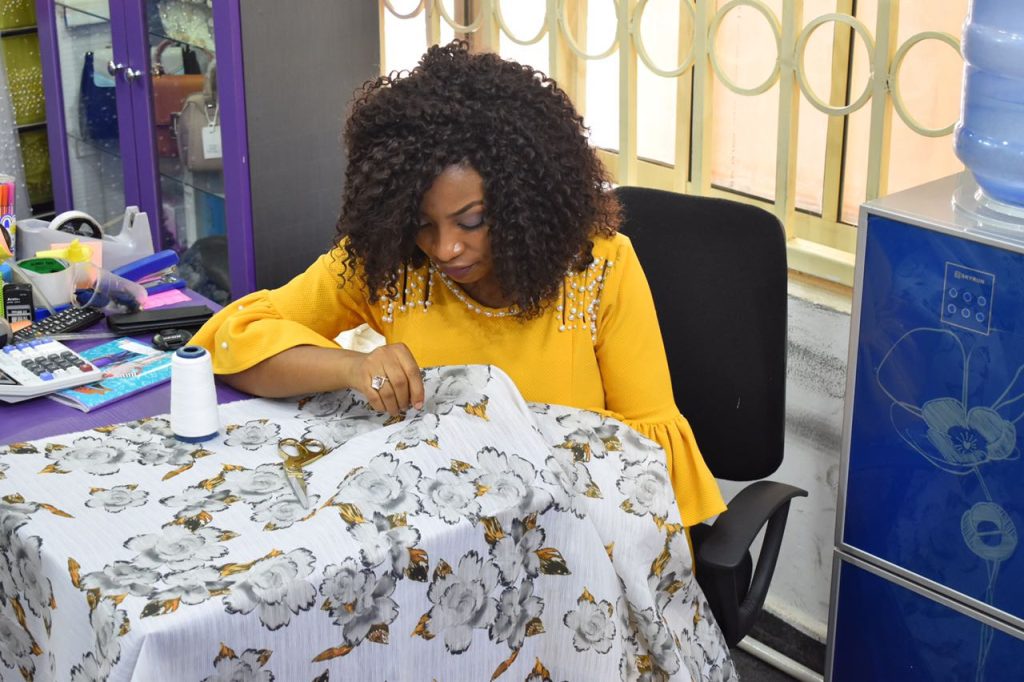
[bctt tweet=”I’ve always been driven to be the best version of myself – Veronica Otogo” username=”SheLeadsAfrica”] As #MotherlandMoguls, no matter what is thrown at us, we need to bounce back stronger. Enter entrepreneur Veronica Otogo. Ronnie as she is fondly called, has been hit by her fair share of challenges however, she is not letting up. Veronica Otogo was recently all over social media and in our prayers. With SLA contributor Ugochi Obidiegwu, she shares her entrepreneurship journey and how her business runs in her absence. What lead to the Asoebi Guru business? I have a degree in accounting however, I have always wanted more than a degree and a job. I graduated and got a job in an investment company but something wasn’t just right, I just wasn’t happy even though I had started my business. My sister and I co-founded AsoebiGuru Fabrics. We started fabric retail in 2014 because it was something we both knew about. It wasn’t easy at first, reaching our target market and finding loyal customers due to our location (we weren’t very visible). In 2015, we lost our dad. He had been our main pillar of support and had convinced us to quit our respective jobs to grow AsoebiGuru Fabrics since we loved it. Even when we felt the stress was too much, he encouraged us. When he left in January 2015, it was devastating, even now, nothing has come close to the pain we felt (and still feel). We closed down the business, but with God, we picked up again in October and from then it was all about making our dad proud. AsoebiGuru Fabrics is better than ever, we have the best customers, we get to meet new people everyday especially women and get to share in their stories and experiences. In 2016, it was all about growing the business, having a good background and a sustainable system. I am a strong believer in this -there’s nothing that can stop you from achieving YOUR greatest except you and this has pushed me. I’ve always been driven to be the best version of myself, to motivate someone to go higher than they are. Why did you choose fabric retail despite other businesses similar to yours? I’ve always wanted to be in the fashion industry, but I wanted to do something different. So we decided to make the best of the fabric business my sister started when she was in school. We don’t just offer the regular fabrics you find in a typical Nigerian fabric store, but something exceptional, something different. How did you make it in a seemingly overpopulated industry? When you have a vision of what you want to do, you cannot afford to second-guess yourself. You have everyone else to do that for you so, focus on the vision. Next, you have to find people who are already in the business to learn from. It is important to find these mentors and watch them. The importance of mentors cannot be oversold. If you are in an overpopulated industry, you cannot afford to be mediocre, strive to have the best product, the best service. Recently, you were away from your business, did business still go on in your absence? How? My business did go on in my absence but it wasn’t easy! It was like everything was paused for 10 days. Yes, we had a structure and staff who work in our store, but it wasn’t just the same. Business was really slow then (I could tell from the records). Some customers were scared of coming to the store, my sister was only concerned about my whereabouts and safety, staff input was really poor. I am a strong believer of “a happy heart produces good results” and at that time, no one was happy. In all, I am grateful for my team. They stood by us through that rough period. We came out stronger. I am not one to stay down after a fall. I am blessed to have amazing people around me so the healing process was fast and easy. Business is back to normal now, and we are looking forward to an amazing year ahead! Why are systems necessary even in a small business? When you have structure everything flows. When people working with you understand your vision and know where you want your brand to go, it automatically makes your business easier. We cannot control what happens around us but we can control how we react to it. Setting up a system not only eases your business but it prepares you for the unknown. What is the most difficult part of being an entrepreneur and how do you manage it? There are a lot of ‘difficult parts’ of being an entrepreneur but I’d say one that is tough to fight is unfavourable government policies that affect everything from travelling to sourcing for fabrics to shipping to renting shop space. We have no other choice but to push through it. When a new policy is enacted that makes business tough, we always find a way around it. God is on our side. What do you wish you knew before you started your business? The power of advertising. For about a year when we started, we struggled because we didn’t get the word out. [bctt tweet=”The secret to being a successful woman in today’s market is to walk to the beat of your own drum” via=”no”] What are your final words to young women in business and career. I’ve not had a lot of experience, but one thing I am sure of is the secret to being a successful woman in today’s market is to walk to the beat of your own drum. Always listen to your intuition. Use your stumbling blocks as stepping stones. When you feel you have greatness in your heart, go for it! The worst thing that can happen is that it wouldn’t work out, but you get a medal for trying. Always keeps moving, even if
Gina Din-Kariuki: Treat your business like you would a lover
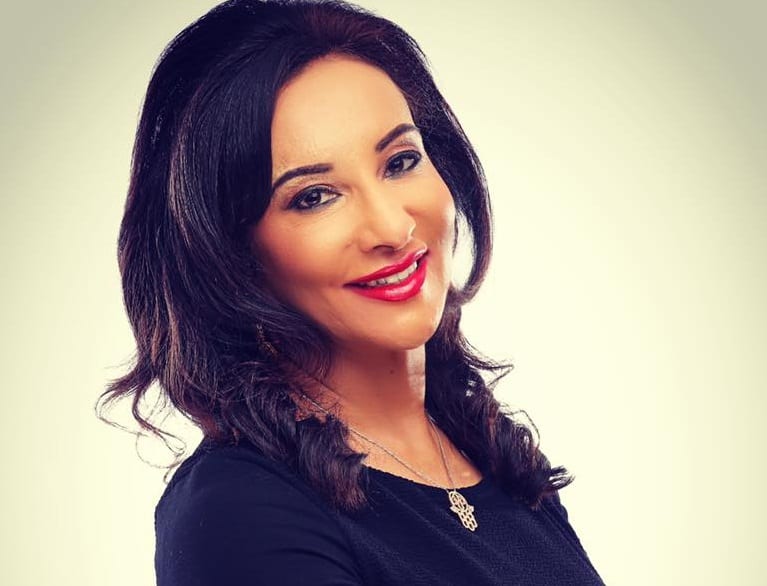
[bctt tweet=”I wasn’t doing what I was doing just to be an entrepreneur, I was doing it to build a life I love” via=”no”] Gina Din Kariuki is a great example of the trade she practices perfecting the public image. An expert in the communications and Public Relations field, Gina has grown her company Gina Din Corporate Communication into the award-winning machine it is today. After 14 years with finance giant, Barclays Bank, she took a leap of faith and decided to be her own boss. The communication agency has been responsible for the strategic PR work for major brands like Kenya Airways, Red Cross, Safaricom and Kenya Commercial Bank (KCB). SLA contributor, Diana Odero engaged with Gina to discover the tricks of her trade and on why she thinks being a boss isn’t always as glamorous as people think. Why did you choose to get into the communications and PR field? I am actually a trained journalist but I have never practiced. After school, I got a temporary job at Barclays handling their shares issue and ended up working there for 14 years. I started off as aPR manager and rose to become Head of Corporate Affairs. After that amount of time, I decided it was time to start my own company. October of this year will mark 20 years since we opened the doors to the Gina Din Group. What has kept you going in this industry for almost two decades? 20 years in October! Quite a feat, it has been an incredible journey, let me break it down a bit for you. Keep evolving: I have always set a high standard for the work we do. There is nothing we do today that will be good enough for tomorrow. We don’t place limits on what we can achieve and keep pushing ourselves further. We have always had people who gave us opportunities. Starting out as a relatively unknown brand playing in the field with only international players (at that time) was challenging. We were lucky to have businesses that rolled the dice and gave us a shot well before I earned it. I am grateful to them 20 years later. Perseverance. The ability to roll with the punches and hang in there even when things weren’t great. To have an inner faith and belief in yourself that tomorrow will be another day. Remaining optimistic is so important when running a business. A great team is indispensable. I have had the opportunity to work with incredible people. Many who came to me with little to no experience but with passion and drive. Treat your business like you would a lover. Give it love, attention and nurture it. Reignite the fire every now and again and always stay relevant. What skills do you think one needs to be a great communicator? You need to know what you are talking about. Obtain knowledge, insight and earn the respect of people in your industry so that you actually know your subject well. Don’t just talk, listen. Focus on understanding what the other person is saying. Watch out for the non-verbal communication. Be open to other points of view. Build relationships. [bctt tweet=”20 years running a communications agency is quite a feat, @gina_din breaks down how she did it” via=”no”] Running a company is no easy feat and you have probably felt burnt out a few times. If yes, how did you deal with it? What do you think is the best way one should deal with that feeling? Of course, I have, as most business owners have. When I do feel a sense of burnout coming I take time to recognize I am human. Sometimes when one is successful we can be perceived as super humans… we can be seen as invincible and never failing. I have failed often and suffered burn out and fatigue. The key for me is to keep evolving as a person and as a brand. As Benjamin Franklin once said, “When you’ve finished changing, you’re finished.” On a personal level, I keep a good balance between work and pleasure. I start the day with quiet time and set the tone for what my day will look like and that really helps in ensuring my mind doesn’t get too overwhelmed. Also, I travel a lot and love visiting new countries and seeing new cultures. I exercise, practice yoga and spend time with loving, supportive people. As an expert in your field, you’ve had your fair share of multitasking jobs. What skills would you advise young business women to have in order to be effective multi-taskers especially when working in a profession as demanding as Public Relations? I like to break things down in blocks so it doesn’t appear too overwhelming and I try as hard as I can to avoid distractions. Being efficient with your time is important when you have to juggle. It’s also crucial to learn to prioritize tasks and delegate what and where you can. [bctt tweet=”What has kept @gina_din going – the ability to embrace success & failure in equal measure” via=”no”] Building an award-winning company from scratch must have come with its various challenges. How did you overcome any challenges that you faced and how would you advise the women reading SLA to handle challenges that may come their way? I have faced many challenges and failures in business and in life but through everything I have found my inner strength and that is what has really kept me going -the ability to embrace success and failure in equal measure. When I first started my business, I took failure very personally but as my inner strength has developed, I have developed the knack of quieting the voice of resistance and stepping outside my comfort zones. I have always tried to keep my spirits high and now fully understand my ‘big why’. In my 20 year journey, I have come to understand you never know what’s around the corner. It can be
Mutsa Majero: There are many companies for self publishing

[bctt tweet=”I am looking forward to highlighting Zimbabwean women who are creating waves all around the world” username=”SheLeadsAfrica”] Thirty-year-old Mutsa Majero has been living in the US for the past 14 years. She is the author of “Meet Chipo”, a children’s book. Mutsa is a licenced Mental Health Therapist and holds a Masters in Counselling Psychology. She took time off in June 2016 to finish her Ph.D. in International Psychology, as well as self-publish “Meet Chipo” and other children’s books. She is the brains behind Zim.Babe.Iwe! an online platform for empowering women and girls as well as promoting literacy. Mutsa has a passion for working with children and as a Mental Health Therapist, she has worked with children and adolescents for the past six years building their esteem and resilience to get through difficult times in their lives. What is Zim.Babe.Iwe! all about and why the name? The name is inspired by two things, my love for Zimbabwe and for women. It’s a play on Zimbabwe with an emphasis on “babe” or women. It’s a brand created to promote literacy and women empowerment. “Meet Chipo” was published under Zim.Babe.Iwe! and at the moment I am looking forward to highlighting Zimbabwean women who are creating waves all around the world and doing big things. That is where the Iwe! comes in, it’s women who have people’s heads turning and doing big things and have people saying, “Iwe!” Why did you decide to start a series of children’s books? I always knew I wanted to write a book but felt like I didn’t have the time, until one day I just decided to do it. My love for education, reading, Zimbabwe and young girls also built on this decision. Growing up my parents put a lot of emphasis on reading and for that to continue and for me to pass it on, a children’s book was ideal and I knew a lot of people would be inspired to read. I wanted Zimbabwean children and non-Zimbabwean children growing up in the Diaspora to have a feel of life in Zimbabwe and therefore connect with it. And for children in Zimbabwe to relate to Chipo and some of the things she goes through in the Diaspora. Where do you draw your inspiration from? A lot is from my experience as a child growing up in Zimbabwe, those were the best days of my life. Some came from my fathers’ experience as a child -he grew up in rural Zimbabwe like Chipo did. So it was bringing out those different experiences and fun aspects of Zimbabwean culture. How has the journey to self-publishing been like for you? It was really challenging getting someone to publish “Meet Chipo”, so I sat on it since 2010 until I decided to take it in my own hands, and discovered I could self-publish. The self-publishing process started in 2014 when I got an illustrator to draw exactly what I was looking for, for the book. It has been a long journey, but I am glad I self-published and did not go any other way. What can you tell other writers about self-publishing? It is important to do your research and to do it early, figure out what works best for you as a writer. There are many companies that one can go to for self-publishing. Talk to other people who have done it before and find out their experiences and some do’s and don’ts. What major start-up challenges did you face? Self-publishing is expensive therefore one has to have some sort of financial stability especially when publishing a children’s book where there are illustrations and a lot of pictures included. And so I encourage women to save because you never know what financial endeavour you may want to start in the future. Another challenge was trying to figure out where I fit in the children’s books world because there are a lot of them. But I think my book stands out in that it is multi-cultural and talks about life in two different cultures. It’s educational as well as fun. I encourage other writers to scan the market to see where they fit in and how they can stand out. Tweet: Self-publishing is expensive therefore one has to have some sort of financial stability How has the market responded to your book? People have actually really loved it because it has taught them about some aspects of the Zimbabwean culture. Many people can relate to resettling, and therefore this book is easy to relate to. What are some of the challenges you have faced as a black African woman living abroad? People have pre- conceived notions of how an African should be, talk, or look like. These kinds of assumptions used to frustrate me before, but I now take it as an opportunity to teach people about Africa, and more importantly, about Zimbabwe. Which African woman has had the strongest influence on you? Definitely my mother. She embodies a lot of what African women are known for, hard work, selflessness, she is inspirational not just to myself but to people around her. Chimamanda Ngozie Adichie. She once said, “Many stories matter. Stories have been used to dispossess and to malign. But stories can also be used to empower and to humanise. Stories can break the dignity of a people. But stories can also repair that broken dignity” I resonated a lot with that because as an immigrant in America, it is important to be inspired and stay inspired because it is easy to be swallowed up and almost lose yourself to the culture you have migrated to. Not that there is anything wrong with acculturation, but I do think that it’s important to recognise and maintain your heritage.Therefore the stories we tell continue to empower and humanise people. I love her books and a lot of what she stands for. Danai Gurira is a strong Zimbabwean Woman who emphasises on telling stories for us by us. I love her
Jennifer Onwumere: I never take on any project just for the money!

[bctt tweet=”The most fulfilling aspect has been the dynamic nature of entrepreneurship” username=”SheLeadsAfrica”] A vibrant and exceptionally hardworking public relations expert, Nigerian-American, Jennifer Onwumere, is the brainchild behind the Dallas, Texas, based Jen-gerbread Marketing. A young woman who painstakingly proves that the business hustle starts and ends with hard work, Jennifer is graciously African, proudly wearing her Nigerian roots everywhere that she goes. Jennifer courageously embraces the dynamic nature of entrepreneurship, which guarantees that every day looks different and that every client carries a unique set of needs and expectations. With her a heart for the community, Jennifer continues to invest countless hours into the lives of others, and well understands that hard work can offer you the opportunity to do more for your world. Here, Jennifer shares her advice on what it takes to be a successful entrepreneur in the Diaspora. Thank you Jennifer for your wisdom and for your commitment to helping businesses grow! How would you describe what you do? That is a great question. I have worked on a variety of projects ranging from non-profit and entertainment, to lifestyle and more. If I had to summarize what I do, I would say that I create the strategy and visibility/marketing plans for brands. What inspired you to become an entrepreneur? I have always been excited about the idea of being able to forge my own future. Being an entrepreneur allows me creative freedom as well as the chance to be innovative. What inspired you to start a business such as this? I have always been fascinated with consumer marketing and entertainment. It is interesting how different brand messages can attract customers and convert prospects into patrons. My business has allowed me the opportunity to work with some amazing brands and have some great experiences. It has also allowed me the opportunity to work on the type of projects that I want to work on, and has challenged me to take on new project goals. What do you love the most about being a marketing/ public relations expert? I love the fact that I am able to create effective messaging and strategies for brands that I believe in. For example, I produce an annual event called Be a Blessing Day. For this event, we collect much needed toiletries for homeless and domestic violence survivors. Working in my field as an entrepreneur has allowed me the opportunity to execute my vision and strategy in a creative way to achieve my project objectives. As a result, since its inception 5 years ago, over $10,000 worth in donated products, has been collected during Be a Blessing Day. [bctt tweet=”I am excited every time I have a success, it just reinforces the fact that the sky is truly the limit” username=”SheLeadsAfrica”] In the world of entrepreneurship, why is it important that brands like yours exist? In my business, I have taken a primary focus on working with start-up businesses. I think that this allows me to serve a small business customer base that needs strategy and marketing support, but may not have the funds to hire a large corporate agency. My niche allows me to focus on providing startups with the marketing assistance they need, at a rate that is conducive to their current financial resources. What has been the most fulfilling aspect about your entrepreneurship venture? The most fulfilling aspect has been the dynamic nature of entrepreneurship. I never know what is going to happen next, but I am excited every time I have a success because it just reinforces the fact that the sky is truly the limit, and that I can do anything I put my mind to. What have seen some of the challenges? Being an entrepreneur definitely keeps you on your toes. You are never off the clock. You are always prospecting new clients, managing current clients, and managing any problems that may arise. Despite the challenges, the joy comes in the fact that you are making your dreams come true, helping your clients achieve project objectives and educating consumers or prospects. What would you say to a young woman who wanted to start a business like yours? Don’t let fear stop you from achieving your dream. If you have a business you want to start, launch it but be sure to launch with a plan. You must have a strategy for anything you want to achieve in life. What do you think has been your greatest contribution to your work? I never take on any project just for the money. I work on projects that I am truly passionate about and that causes me to go beyond my role to do everything that needs to be done for the project to be successful. How do you ensure that your business remains relevant? Never get comfortable. Continue to create, continue to network and build relationships, continue to invest back into other people. As an African woman in the Diaspora, how do you maintain connections with other African peoples in the diaspora, and how do you make your work relevant to those living in the motherland? I handle the PR and Strategy for AFRIMMA (African Muzik Magazine Awards). This project is special to me because it celebrates some of the most influential music and political figures in Africa. As a Nigerian-American, this is very important to me because it allows me to play a role in an amazing event that celebrates the rich culture of not only Nigeria, but Africa as a whole. How do you maintain a healthy work-life balance? I always make time to do something fun, whether traveling, social events and more. It’s great to work hard, but we are also working hard to enjoy life. So I try to never forget that. [bctt tweet=”It’s great to work hard, but we are also working hard to enjoy life” username=”SheLeadsAfrica”] How do you de-stress and/or unwind from a long day? I love music, so I listen to all kinds of music from Afrobeat to hip-hop,
Top-level website changes that will turbocharge your business SEO
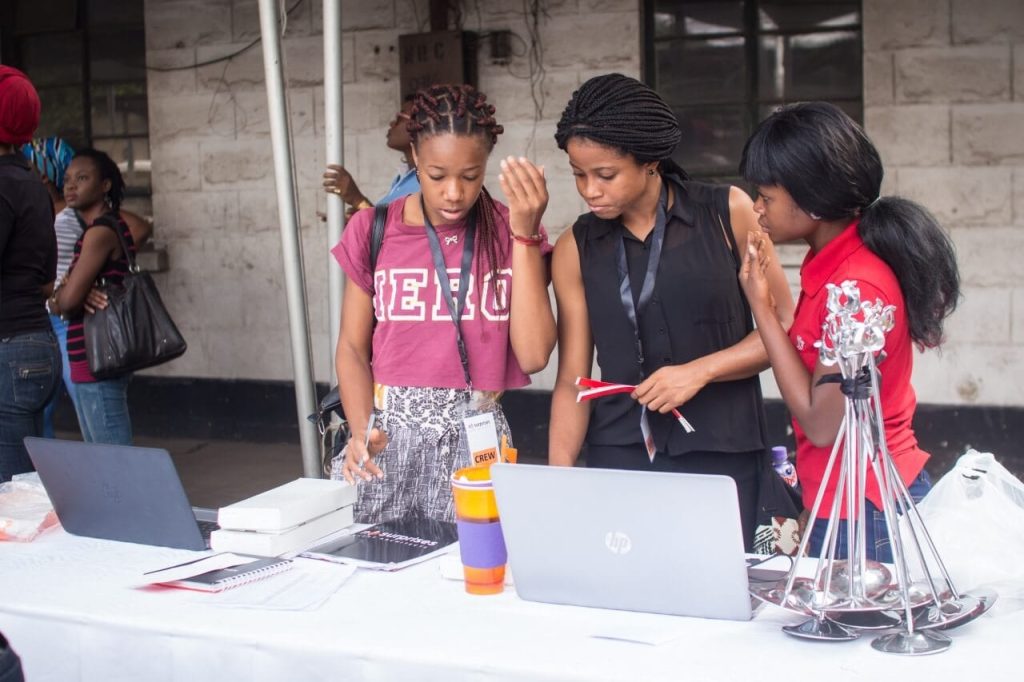
[bctt tweet=”Every business needs an SEO strategy, why not share with changing how your website looks” via=”no”] Every business that will grow beyond the street corner needs an SEO strategy; a way for it to get found online. Why? Because online is where 67% of Nigerian buyers start their purchase journey [PDF]. So, your SEO and profitability are not only equally important, they also go hand in hand. What is SEO again? Why do you need it? If you can’t answer these questions, eead Uche Offokoja’s SEO primer; “Is your business ready for SEO?” to get a quick refresher. __ It’s impossible to cover the nuances of SEO in a 1000-word article. If we are being honest, 10,000 words, and we’d only be halfway there. What you’ll read in this article are fundamental aspects of your website you can improve to start ranking on Google, getting seen by your consumers and making more sales. Start with a website audit The first step to creating an SEO strategy is your website audit. Doing this lets you know the specific elements of your website to improve. A professional SEO service will provide a more in-depth outlook for your website complete with SEO competitive analysis, wireframe recommendations plus a search audit. But a great way to do this on a shoestring budget is to use the SEMRush tool. It’s a free tool that will give you an interactive snapshot of your current SEO efforts; your top organic keywords and their positions, what other sites are competing for your position, backlinks and more. A basic audit of one of my favourite websites; Copyblogger.com, returned this: (All traffic to copyblogger is organic and the leading keyword is “how to write an article.” The data points are interactive and you can dig further down to extract more insights). These insights are useful for your content strategy (more on this later) and possible website upgrades to improve usability. Optimize your site for mobile As an extension of your website audit, examine how you are doing on mobile. Google ranks mobile-optimized websites higher in SERPs (search engine results pages). But more important is the implication of this on your visitors. More than 55% of all searches now come from mobile, and if your consumers can’t use your site on mobile, they won’t stick around. To get a good sense of how your website does on mobile, use Varvy. (Copyblogger.com is optimized for mobile, although the site latency on mobile needs to be optimized.) The relationship between brands and customers is not an equal one. Customers have the leverage and you have to be there for them as they navigate their social and transactional realities. To do that is to be available on their mobile phones where they spend a third of their waking lives. I’ll leave Tom Fisbourne of Marketoon to drive the point home; “A well-loved brand that isn’t optimized for mobile may not be well-loved for long.” Speak to your developer about responsive website design to improve your mobile-optimization. Tweet: When last did you do a website audit? Never? Find out why you need one here Develop a content strategy The number of visitors to your page and how long they stay (their dwell time) also affect your ranking. Useful content with high production values is one of the most effective ways to attract and keep traffic on your website. A content strategy doesn’t mean you start a podcast, a webinar and an email autoresponder series at the same time. Start with blogging… Companies with blogs have 97% more inbound links (Source) B2B marketers using blogs generate 67% more leads (Source) Small business with blogs generate 126% more leads (Source) Start your content strategy with keyword research. This helps you figure out real questions and ideas that matter to your consumers. The Google Keyword Planner or the SEMRush tool will come in handy here. Some general ideas for your content strategy: – Develop content for humans and make your content helpful. – Your content strategy should include your content matrix, content calendar and an operational calendar. – Annotate your content with header tags, add outbound links, make your content readable (avoid walls of text), use alt texts for your images, and compress image sizes to reduce latency. – Finally, distribute your content. Suss out a robust distribution strategy that will ensure your content reaches your desired audience. You could, for instance, start sending weekly email to your list or create a social sharing strategy. Are you using popups? Pop-ups: online forms that keep you away from your heart’s desires. Only a few people are a fan. That’s why Google is cracking down on websites that have pop-ups. Such websites rank lower in search engine results pages. Speak with your developer to remove any pop-ups on your website and explore alternative lead-generation elements, including stationary banner ads, stationary sidebar ads, behavior-driven pop-ups or notification style ads. The idea is not to get rid of lead-generation, but to present decent usability. Improve your site architecture Finally, how easy is it to navigate your website? When visitors can’t find what they want on your website, they often leave right away; leading to high bounce rate, leading to low ranking on Google. As a general rule; your website should not take more than four clicks to get to the deepest level. LIke this: The fact is; site architecture is not only great for usability, it makes it easier for search engine bots to crawl and index your website. While SEO is not the goal in itself (sales and profitability are), you’ll often need SEO to get you there. The ideas here will get you right on your way. — This article was written by Gbenga Onalaja. Gbenga is a Content Strategist at Wild Fusion, Wild Fusion is Africa’s leading Digital Marketing Agency.
Khumo Kgwaadira: Sometimes I fall, I rise up, fall and rise up again

[bctt tweet=”I don’t sleep. I see the need to put in work and take advantage of my position.” username=”SheLeadsAfrica”] Khumo Kgwaadira is an entrepreneur, radio presenter, a sought-after host, fashion designer and #MotherlandMogul in Botswana. Having studied IT in Malaysia, she still managed to dominate the entertainment industry working for Radio Botswana under the RB2. Khumo has been a television presenter on various television shows. She also runs a community organization called WHO AM I which is helping young individuals self-actualize and realize their true potential. What would you say led you to radio and entertainment? It is something that has always been in my heart. As a little girl I used to love watching television and imitating presenters as they did their job. I would always tell my parents and sisters that one day I would be a superstar…they thought I was kidding. As for radio, it’s a thought that came to mind while I was in college. When I have an idea I write it down and revisit all my ideas time and again but funny enough the radio idea, I put it on social media. I updated my twitter profile in college and wrote: student, upcoming radio presenter. I don’t know why I did but that was the beginning of my journey. Can you tell us more about your brand as a radio host and what challenges you faced? I work at RB2 FM and have worked there since October 2013. I currently host the breakfast show called Breakfast n’ Bold with T.H.A.B.O Weekdays 6-9 a.m. On Fridays, I read the 3pm news bulletin and on Saturday I host the TOP40 with Zandile Bawe. Radio is one of the highlights of my life and working for a national radio station truly is a blessing. I have learnt to connect to a wide listenership of different cultures, races and backgrounds. I have learnt to grow up funny enough, to be mature, to invest in my craft through reading, and to be better every single day. Also, I have had to overcome not letting the noise from outside shift my focus. [bctt tweet=”Radio is one of the highlights of my life @MissGeeKays” username=”SheLeadsAfrica”] What four skills have you found yourself using/learning frequently since starting in the business? Patience: I am the least patient person in the world I must confess but working with a team has helped me understand that not everyone is like me. More than that not everything or everyone will work as hard as I do so I leaned into being enduring with the people around me. Focus: I believe this is the greatest weapon everyone should have. Sometimes I fall, I rise up , fall and rise up again, I am learning every day to focus on what is important. This entertainment industry is unkind, complicated and harsh…focus is what has gotten me through. Hard work: I don’t sleep. I see the need to put in work and take advantage of my position in the industry because in the next 3 years there will someone better and more relevant in the industry. Commitment: I have learnt this early on in college, to stay committed to my work because I know for sure at the end of the day I will be reaping the rewards of the work I put in. What challenges have you faced working in a male-dominated industry and also being on television? Unfortunately, people take you for granted thinking you cannot deliver, that is the nature of the game. I have had to constantly prove myself that I can actually deliver. That has been and still is one of the challenges I face. You expanded recently to clothing with Faddic, what inspired that and what do you hope to achieve? My love for fashion started in college after I was exposed to the Asian fashion scene. The lifestyle in Asia is completely different from what we see in Botswana. I was especially drawn to Malaysia which is so diverse and the fusion of different cultures sparked my interest. I am one person who is always interested in knowing more, I gravitated towards fashion and being chic. I said to myself that one day when I am a powerhouse I would have my own fashion label and it would really be cool to have people wear “ME”.. and I didn’t want do it alone. I waited for the right time and One Motlhabane was the right person to work with together and our collaboration is black girl magic MISSGEEKAYSxFADDIC. We hope to change the fashion industry in Africa and take it by storm. What led you to start WHO AM I and what do you want to accomplish through it? This came from a tough place. A place of pain.. a place of self-doubt. It got to a point and a time in my life where I felt there was no reason to live. The stigma and insecurity was overwhelming. One evening in 2011 I wrote a proposal down and titled it WHO AM I and prayed about. I asked God to guide me and help me launch a powerful movement that will tackle issues of “self”. In 2015 we launched and now WHO AM I is changing the lives of many in a positive way. I’m thrilled to be part of that movement. How would you advice someone who looks up to you? Love and believe in yourself a little bit more. [bctt tweet=”I don’t believe in regrets …instead what I draw from that is my biggest achievement, living my dream” username=”SheLeadsAfrica”] Do you have any regrets? I don’t believe in regrets …instead what I draw from that is my biggest achievement, living my dream. Everything I am doing now is what I have always wanted to do since I was young. If you’d like to share your story with She Leads Africa, let us know more about you and your story here.
Olwethu Mabumbulu: We have everything we need

[bctt tweet=”If we can leverage from one another, we can do so much towards growing prosperity within our communities” username=”SheLeadsAfrica”] While we all sang along to Solange Knowles’ A Seat at the Table album, Olwethu Mabumbulu was propelled to create something that is for us, by us. By day, Olwethu helps people trade derivative instruments as a Sales Executive at a listed global trading company. She has gained four years of experience within the financial services industry, particularly investments and trading. The rest of the time, she nourishes her entrepreneurial appetite as founder of the subscription box startup, Heart of Brown (Pty) Ltd. Heart of Brown offers a bi-monthly lifestyle subscription box for women of colour, which features, natural and artisan products from local, black women-owned businesses. Olwethu’s subscription box aims to affirm young black women, and expose us to products that are great for our skin and hair, and helps us highlight the importance of self-care. Olwethu aims to make a difference in the lives of busy millennial women and lift up other fellow black entrepreneurs with great products and she shares how she plans to achieve this. Talk us through what Heart of Brown entails? Heart of Brown is a lifestyle subscription box for brown beauties. We curate lifestyle products spanning skin, hair, beauty, accessories and edibles based on our bi-monthly theme. Our purpose is to help busy young black women discover the best in local products. We have two boxes: a HOB box, which costs R400 plus shipping, and HOB mini box priced at R200 plus shipping. How do you choose the products for the subscription boxes? This is the part of the business that I thoroughly enjoy. I’m always on the lookout for good products. Firstly, I love visiting local markets and trying new products. I also spend an insane amount of time researching about local entrepreneurs. At any given time, I have a notebook with a running list of vendors and products I would like to feature in future. I then purchase and test the different products. If they meet the criteria in terms of the box’s vision and criteria then I will curate products that fit the theme and approach the vendors to purchase from them. Does innovation play a role in the course of running your business? Yes, in fact running a business successfully is a constant process of going back to the drawing board to come up with something new. In my experience, the quest for innovation has manifested in a new way to connect with local vendors, a new way to gain customers and frequently trying new products. Also, every second month, the box has a new theme. For example, the theme for the box running between April and May is ‘’Autumn Renewal”. [bctt tweet=”Running a successful business is a constant process of going back to the drawing board ” username=”SheLeadsAfrica”] Are you looking to expand beyond the South African market? In the short term, my goal for HOB is to increase our customer base and dominate the subscription box market locally, while really showcasing and uplifting brilliant products made by independent entrepreneurs. In the medium term, I would love to expand our reach by collaborating with other African entrepreneurs and shipping our box to brown beauties across the continent. A friend of mine encouraged me with these wise words just the other day, “we have everything we need”, I believe this is true of us as Africans. If we can leverage from one another, we can do so much towards growing prosperity within our communities. So far, what happy days have encouraged you? The day I registered the company was a milestone for me. Heart of Brown really started its humble beginnings as a “Eureka moment” brainstorm I had while studying for my exams late last year. I had been researching the subscription box concept, particularly prominent in North America and the UK. I had a clear vision -to localise the concept and offer products to women who are like me. Once I actually registered the company, then got the logo done it really started to click that the vision was slowly becoming a reality. The real challenge that lay ahead though, was getting my first customers. After much trial and error, when I got that first sale I felt happiness and validation all wrapped in one. This still encourages me to keep going on a daily basis. Tweet: when I got that first sale I felt happiness and validation all wrapped in one What tools and skills have played a vital role to support and grow your business? An array of online tools have proved to be time saving and invaluable to my business (the great news is that they all have free versions) -Evernote, MailChimp, Hubspot, Canva, Google Ads express, Reddit, and of course, social media platforms as well. Skills needed to survive include passion, voracious reading, keeping abreast of industry developments, adaptability and people skills. Tell us about the Solange Knowles song being inspiration for you I have been a Solange Knowles fan for a long time; what I love most about her is her ability to honour her own path and not conform. A Seat at the Table, to me, is actually the pinnacle of her following her truth and this paid off. The whole album was a meditation on being unapologetic and proudly black. Having this message on rotation became a catalyst for me to ask what I can do to express my own truth. My favourite songs on the album are “FUBU” and “Don’t Touch My Hair” these songs resonate because they empower the black community, especially black women. What has been the greatest challenge so far in the course of the business? As a bootstrapping business, the number one challenge is making the best possible use of a limited budget, but I’m quickly learning to be creative as I go and that is also the fun part. You learn to let go of perfectionist inhibitions