
Zimkita Nogela: Continuous progress is better than delayed perfection
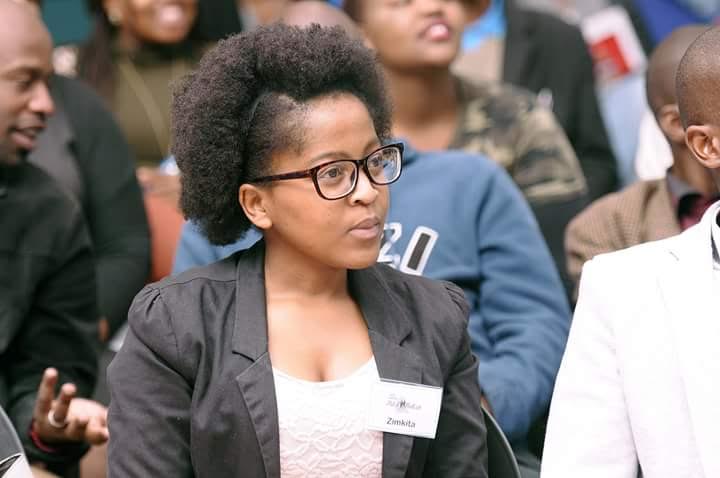
[bctt tweet=”Our passion is merging the latest technology in marketing science with strategic thinking” username=”RoundSquareSA”] 23-year-old Zimkita Nogela, founder of RoundSquare, is passionate about entrepreneurship, social development and mental wellness. RoundSquare is a boutique studio founded in 2015 based in the heart of East London. The studio crafts cutting edge ideas into delightful software and provides marketing strategist to software-based tech companies. The company’s functional practice areas include UX design and development, strategy, process, app analytics, and growth. RoundSquare’s mission is to help clients create, manage and grow their visions, nurture their brands and provide an unrivaled user experience. Besides being mostly occupied with running RoundSquare and her accounting studies, Zimkita lives on books and enjoys rambling about life and food on her blog. In an interview with SLA contributor Jeanette Nkwana, she shares her lesson-filled journey with us. What gap did you spot in the market that you feel Round Square fills? We provide proper targeted marketing for software based companies and affordable software development. Tech people are amazing at crafting awesome code but not communicating what their creation does in a way that speaks to their prospective users, as well as that getting any type of software from as small as a website to complex intranets or apps tends to cost an arm, this is where we come in. What skills does it require to service your clients and how did you acquire these? I actually studied and am studying accounting which might seem odd being in the tech field and all. I learnt coding and design online (perks of being a curious being). Both of these skills not only build a proper business but service our clients well. Again, all this is a team effort and having the right team with diverse skills from an array of industries adds and enables us to craft the work we do. How do relevant technological advancements or innovations impact on your business model? They impact it tremendously and more often than not positively. We are for all things innovative and love incorporating the newest tech in both our work and the running and growth of the company. What are 3 marketing strategies that start-ups can try out? It is vital to develop a vibrant, content filled social media presence. It is one of the strategies we use ourselves. Partner with organisations who have the same or similar interests as your own to drive both sales and marketing reach by leveraging on each others already established networks/client bases. Lastly, (and yes I might be a bit biased) get a delightful website/app that speaks to both your current and prospective clients/customers. [bctt tweet=”Partnerships are a good way to drive both sales and marketing reach.” username=”ZimkitaNogela”] What are ways to increase reach with zero funds? The simplest way for free marketing has to be using online platforms and leveraging on one’s current networks. How does one choose a market for their product? Choosing a market is inherent to the problem one is solving or the need they are addressing, whether that is a feasible market or not is another issue. What has been the most important lesson your journey taught you and how did it help you grow RoundSquare to its current glory? My greatest lesson has to be that continuous progress is better than delayed perfection. As a recovering perfectionist, I often let this curb my progress because everything I did had to be just right. I am learning that nothing will ever be perfectly perfect. What do you do for fun that you believe contributes to the successful running of RoundSquare? I love reading, both for recreational and learning purposes so this consumes a chunk of my free time. I also enjoy cooking and being around people albeit I’m an introvert. This balance contributes greatly as it keeps my mental health sound which is vital for the running of my business. What are some of the quotes you live by that have shaped how you manage your life and business? “Never live in fear of people’s opinions,” – unknown author and; “Whether you were born by, bore or born with a person, never let how they live their lives dictate how you live yours,” – my mother. [bctt tweet=”Never live in fear of people’s opinions shapes @ZimkitaNogela’s business management” via=”SheLeadsAfrica”] What is your vision for RoundSquare and how do you plan on forging closer to realizing it this year? My vision is for RoundSquare to be a leading global tech firm both in software development and software marketing. I think my main focus this year is getting over the start-up slump and mindset and going for the big project I’ve been a bit hesitant to go for. In addition to this, developing a great company culture and team to attract top talent is another focus for this year. If you’d like to share your story with She Leads Africa, let us know more about you and your story here.
Janine Gaëlle Dieudji: I like changing and renewing myself
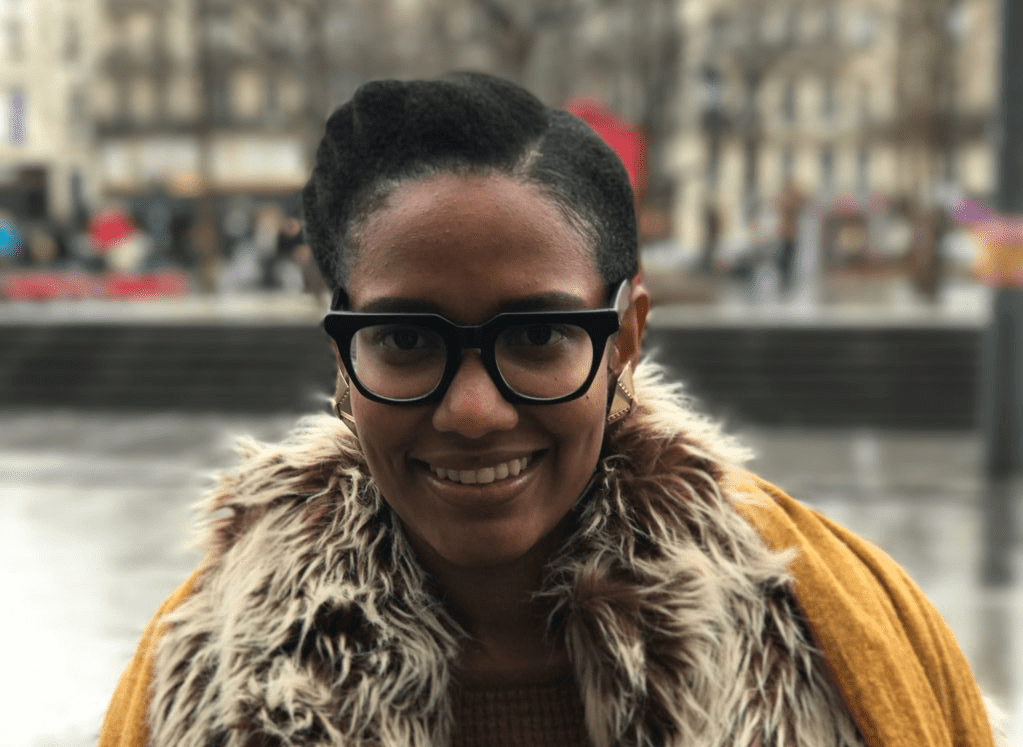
[bctt tweet=”We don’t have to be afraid to share ideas with people, this is how beautiful things happen” username=”SheLeadsAfrica”] Janine Gaëlle Dieudji is a bi-national French and Cameroonian graduate of Culture and International Relations from Lyon 3 University in France. She also holds a Master Degree in Political Science from Paris 2 Panthéon Assas University. She’s been living in Florence, Italy, for the past six years, a city she has since fallen in love with. This is how Florence became home to her and the place where she started to build her career as an art professional. She considers herself as a ‘multilocal’ by believing that we belong to all the places we have lived in. Home is where the mind can create and feel rested at the same time. This is what the life journey is made for, exploring to become the person we decide to be. Janine, what is an art agitator? I consider as an art agitator to be a person who makes the difference. For me, it’s a person who makes the art scene move and is committed to it. It could be a curator, an artist, an art dealer, a gallerist or a collector. The ability to inspire others by your achievements and the way you humbly contribute to the dynamism of this versatile field. What gave you the sparks to follow this career path? Well, I truly love what I do which helps a lot. The absolute truth is that this path in a certain way chose me, actually. First when I landed six years ago in the renaissance city, Florence. I was there for a year through a study exchange program (Erasmus). I had no idea six years later I would still be here, but I fell in love with this city, and every time I tried to leave (I have tried three times), I always come back after a couple of months. The second time (in 2012) I was about to leave Florence because I wasn’t happy professionally. Then, randomly, I met the artist Clet Abraham. We quickly got along and I think he saw something in me, which became a working relationship. After six months in Lyon to complete my Master’s degree, we started a three year, beautiful and enriching collaboration. Two years before Clet, I had a two month internship at the city hall of Rosny-sous-Bois in France where I assisted the Director of the Cultural Department in the organization of Beninese artist Zinkpè’s exhibition. At that time, I wanted to be a journalist or work in a cultural department of an international organization like the UN, La Francophonie or a French Institute abroad. What’s the best way for one to make a name for themselves? It may sounds cliché, but I would say to be yourself, stay humble and always be curious to learn something new. I believe that these ingredients make people excel at what they do. Humility and originality are the key, but also the hard work you put on it. One can not forget that fears and struggles are important in ones daily development. [bctt tweet=”Humility and originality are key to making a name for yourself – Janine Gaelle Dieudji” username=”SheLeadsAfrica”] How is it like working with talented people such as Johanne Affricot of Griotmag.com? It’s definitely inspiring. Johanne Affricot is one of a kind and I’m very grateful to work with her. She’s multi-tasks, a great mom, a wife and a do-er with no fear. She created Griotmag.com two years ago, the first Italian webzine celebrating an aesthetic, creative and cultural diversity in and from Italy – African Italians – and the African diaspora. From this project, she pushed forward by creating a webserie, The Expats – a a documentary web series exploring the lives of African Italian creatives living abroad in the search of new opportunities. Two new episodes filmed in London will be released by the end of this month. The use of the term in the title of the series is meant to be provocative and encourage reflection not only about the idea of black Italians in Italy and abroad but also Italians who do not know this “different” or “diverse” Italy. I was very excited when she approached me a year ago, we immediately clicked the first time we met, we have a lot in common and work well together. [bctt tweet=”I realized that together we do better and we go further – Janine Gaelle Dieudji” username=”SheLeadsAfrica”] You have a lot of experience as a contributor. What is the most valuable thing you have learnt so far? I realized that together we do better and we go further. I like changing and renewing myself so being a contributor on different projects makes me do different things and it’s exciting. I recently collaborated with Justin Thompson on the organization of the Black History Month Florence, we had at least 50 events all over the city, in only one month. My main satisfaction was the Clay Apenouvon’s installation “Film noir, danse de survie” which I curated in collaboration with the City Hall and Institut Français Firenze. I met Clay almost two years ago at 1:54 art fair in London where I discovered his work and I love how down to earth the artist was. After that, we decided we want to collaborate, so we started in Florence, and hopefully will do more in the future. My point is we don’t have to be shy or afraid to share ideas with people, this is how beautiful things happen, by putting our strengths, capacities, and inspirations together. With this philosophy, I’m actually doing a collaboration with Wires eyewear on the Italian and French market, and I’m planning to organize a Street Art Festival in Cameroon for 2018, as soon as I find some partners to fund it. So Janine is also a translator. Is there a code of ethics when it comes to translating? I’m new in this field actually; I started a couple of months ago in a
Trecia Makhubele: It is ordinary South Africans that will create jobs in SA
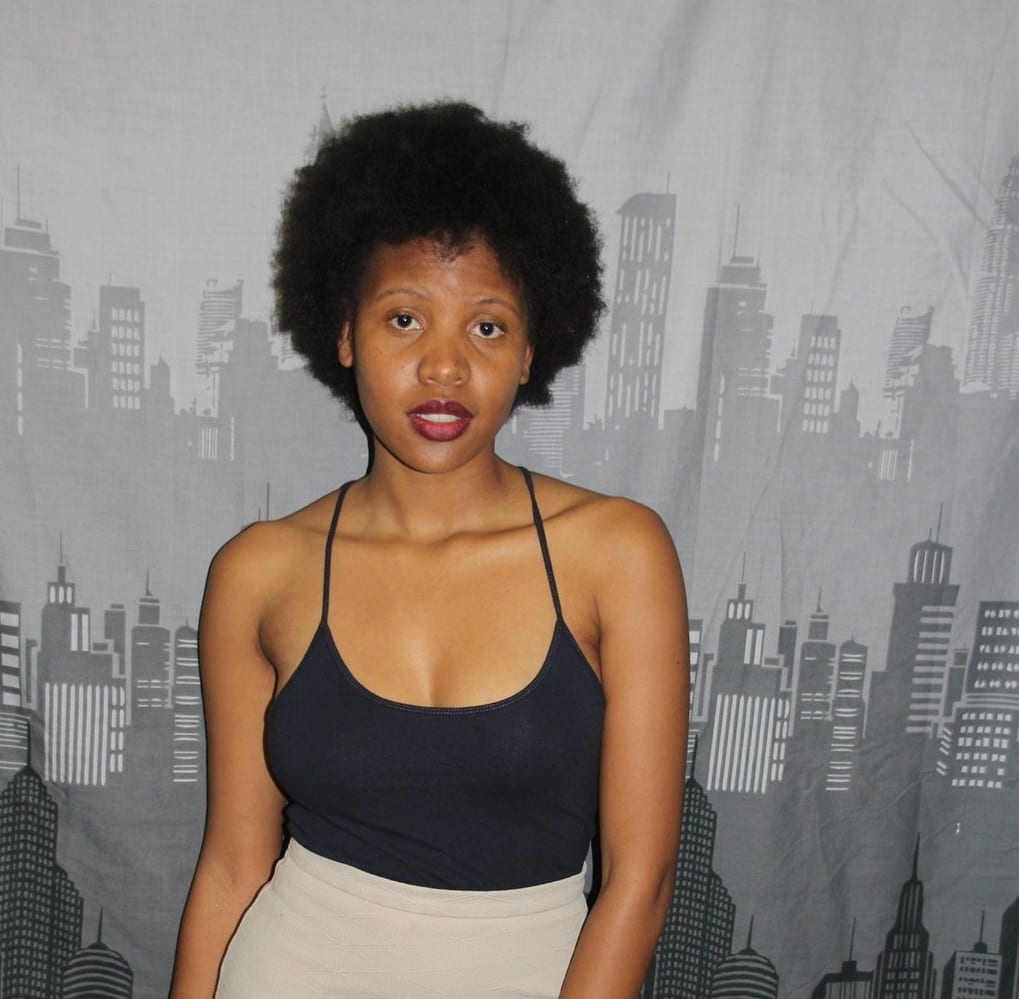
[bctt tweet=”Bohochic was born from a desperate need for financial stability” username=”SheLeadsAfrica”] Born in rural Mpumalanga in a small town called Bushbuckridge, Trecia Makhubele, co-founder of Bohochic, is a graduate from the Oprah Winfrey Leadership Academy for girls. In 2016, she went on to achieve her undergraduate degree in Politics and international studies. Trecia is currently a Penultimate year law student at Rhodes University where she tutors law first-yearear students and works as a law library assistant. Trecia is passionate about entrepreneurship and believes that it is ordinary South Africans that will be able to create jobs in SA. SLA contributor Jeanette Nkwana interviewed this young South African entrepreneur, this is how it went. How did Bohochic and your partnership with the co-founder come about? Bohochic, like most black owned businesses in SA, was born from a desperate need for financial stability. Rue, my friend and co-founder, and I found it difficult to go to residence trips to buy appropriate clothing for court visits and textbooks because our parents were just not able to provide us with everything that we needed. Instead of accepting our financial situation, we each started our own businesses, mine being Spiritus Mundi designs and Rue’s being Rude-soul chains, making jewellery. However,separately we were not making enough money to sustain ourselves. We then looked at trends and realised there was a growing fascination for crochet clothing. Having had basic crochet skills, we read blog posts and watched YouTube videos and soon we had a couple of designs. Once we were confident enough with the idea, we abandoned our businesses and used their respective profits to start Bohochic. What are some of the challenges of working with a partner and how do you personally deal with them? For some reason, we both work really well together and have never had any major fights to date. I think it’s all about finding someone you have a good chemistry with. Both Rue and I luckily found that in each other. [bctt tweet=”‘Good chemistry is important in a partnership – Trecia Makhubele’” username=”Spiritus_Mundii”] Another reason we hardly face any challenges in this partnership is the consistent brutal honesty between us. If for example, someone makes something ugly, the other is not afraid to speak up. The receiving party does not take it personally either. It simply becomes a laughing matter! This is perhaps due to the fact that we are also friends and thus know each other well. You value your academic career, how do you deal with the pressures coming from school and entrepreneurship? We made a pact that no matter how big Bohochic gets, we would not let it take up more space in our lives than our academics. At the beginning our timetables allowed us to split our times to ensure our academic lives did not suffer. Of late, the business has become too big as we are now doing post-graduate studies which requires more of our time. This has. undoubtedly, put a lot of pressure on both of us. We have decided to start a skills development programme in Grahamstown which allows us to teach a number of people how to crochet so that they can eventually come on board as our employees and do the actual crocheting. This will lessen our burden of making each order and help families like our own by way of job creation. [bctt tweet=”Bohochic is more than a brand dedicated to making money, we want to uplift our communities” username=”SheLeadsAfrica”] You are also a YouTuber, how has this helped with the success of Bohochic? Bohochic is more than just a brand dedicated to making money. It is about showing young people like ourselves that social media can be used to uplift ourselves and communities. Through our tutorials and videos, we hope to get people thinking. We want to show them that there are awesome business ideas that do not require large sums of money to execute. We have been able to fulfill this mandate through our YouTube channel as most of our viewers are students like ourselves. What is the most fulfilling thing about what you do? The financial independence. Nothing is more fulfilling than being able to buy a bus ticket to school or that ridiculously expensive textbook without having to put pressure on our families. What do you think your customers value most about Bohochic? The creativity that goes into the products we make. We do not just make crochet tops, we take the time to research and see what people are into and translate that into each crochet item. [bctt tweet=”Bohochic looking to expand from crochet tops and chokers to Bohochic Kids and Home.” via=”no”] What can we look forward to from Bohochic this year? Growth, lots of it. We have dedicated so much time to improving our craft. This year we will see the finalization and launch of Bohochic Kids and Bohochic Home. If you’d like to share your story with She Leads Africa, let us know more about you and your story here.
Bamisaye Folasade: I want to promote menstrual hygiene for girls and women

[bctt tweet=”I realised that I can impact my community without being rich – Bamisaye Folasade” username=”SheLeadsAfrica”] Meet Bamisaye Folasade, a social entrepreneur who is passionate about menstrual hygiene for girls and women of reproductive age. She is an example that you can effectively do business while solving social problems. Bamisaye has over 8 years experience improving psycho-social wellbeing of girls and women at the grassroots. She is the founder of Young Women Arise an organisation with the goal to give power to girls and women. It’s meant for them to be able to make right and informed decision about their Sexual and Reproductive Health and Right (SRHR). Through this project, Bamisaye has trained over 1600 girls and young women at the grassroots. She is also the curator of Ablaze Ladies Camp which provides participants with the needed skills for them to make informed decision about their SRHR. Bamisaye is also the brain behind MyPeriod Kit, an innovative product that aims to increase access to menstrual hygiene and help keep girls in school during their periods. How did you get involved in women health advocacy? I am driven by my passion for community and human development, as well as a strong desire to make a positive change. Right from childhood, I have always wanted to be a philanthropist so I can help the vulnerable people in the area of education, health, and poverty. But I reasoned that I could only do so when I get wealthy. As I grew older I began to gather information on how I can start impacting my community without being rich. I then began to understand what volunteerism is all about. In 2009 I became a full-time volunteer, working on issues of women and young people’s sexual and reproductive health and rights. My first major experience was on PACT/USAID supported REACH project in Ekiti State. You recently launched a new product, MyPeriod Kit, tell us about it? Yes… that is MyPeriod Kit and I am so excited about it. MyPeriod Kit is the first product with a compilation of sanitary materials for young girls and women of reproductive age in Nigeria and the West Africa sub-region. The product aims to promote menstrual hygiene and healthy transition into womanhood for girls and women of reproductive age especially those residing in under-served communities. The justification for having MyPeriod Kit is that girls and women residing in under-served areas around Nigeria are faced with huge challenge of coping with their menstrual period hygienically. Women and girls’ capacity to manage their periods is affected by factors, including limited access to affordable hygienic sanitary materials and disposal options. This has led many girls and women to manage their periods ineffectively, uncomfortably and unhygienically. Young girls and women in rural areas tend to opt for natural materials such as mud, leaves, dung or animal skins to manage the menstrual flow due to inadequate knowledge about puberty education, access to affordable sanitary materials as well as poor menstrual hygiene management. This is in addition to insufficient access to safe and private toilets and lack of clean water and soap for personal hygiene. As a result, menstruating girls and women often feel ashamed and embarrassed. How have you been able to manage entrepreneurship and advocacy efficiently? My sister, I will say it has not been an easy task. This is especially when coupled with the fact that I am also an employee. But you know what happens when determination meets passion and grace, then you can consider challenges as a piece of cake. My passion for girls and women’s general well-being keeps me going. [bctt tweet=”When determination meets passion and grace, challenges are a piece of cake” username=”SheLeadsAfrica”] Can you share a story on your toughest day/period? Hmmm… the life of a development worker coupled with being an entrepreneur cannot always be a bed of roses. Each day comes with its own unique toughness in different forms. So it is really difficult for me to isolate a day out as my toughest day. However, if we say period then I can say the toughest period in my life was between 2014/2015. I was running my Masters degree full-time, working full-time and also setting up a new NGO in a new environment in that period. I only had a few staff to work with, so the work was so enormous. And I still had to study hard to have good grades. That period was so challenging but grace and passion were at work in my life. What do you recommend to other women based on your experiences? It is never too late to start being productive and resourceful. Whatever positive things you dream of doing, believe me, you can achieve it. Seize the moment now that international organizations are advocating for huge investment to be made in girls and women. Try to make something meaningful out of life, invest in yourself and in others. What are the misconceptions/myth on women’s health you’d like to debunk? That menstruating is a taboo or a dirty process. This myth has for long put girls and women in a position of being discriminated against to the extent that in some society menstruating girls and women are barred from participating in religious exercises. Also, girls in school are forced to stay at home while their male counterparts stay in school to learn. Menstruation is a biological process that girls must undergo. It is the onset of womanhood and thus must be appreciated and treated with dignity and the highest level of hygiene. Menstruation in itself is not dirty, but the process must be undergone hygienically. What are your plans for your product/business? MyPeriod Kit is a work in progress. In the coming years, we plan to reach more girls and women of reproductive age with menstrual hygiene supplies that are hygienically packed to meet their specific needs at an affordable rate. If you’d like to share your story with She Leads Africa, let us know more about you and
Mweshi Ng’andu: I was looking for a way to be more and do more

[bctt tweet=”With every little bit that you try, you gain more wisdom – Mweshi Ng’andu” username=”SheLeadsAfrica”] If passion had an alternative spelling, it would be spelt Mweshi. As a Global Shaper (a World Economic Forum initiative) and alumna of the Young African Leaders Initiative Regional Leadership Center for Southern Africa and the Mandela Institute for Development Studies (MINDS), Mweshi Ng’andu has done a lot of work focused on engaging youth to uplift underprivileged and at risk children within her community. She has used her skills to mentor, give leadership talks, and mobilize resources to assist various shelters for children, orphanages, and schools. Recently, she started Bloom, her own company working in the space of events management and marketing consultancy. Bloom focuses primarily on corporate and educational events and digital marketing. In this interview, this passion driven #MotherlandMogul takes us on a walk through her amazing journey so far. Take us on a tour of what Bloom Events Management stands for. Bloom is a young and innovative events management and marketing consultancy company. Our focus areas are corporate events management (everything from providing ushers, to catering, to sourcing speakers/industry experts, to venue scouting, to sponsorship engagement) and educational events. We create events for young professionals and students to learn how to advance their careers and to link them to the right people to help them create opportunities. We also develop innovative marketing techniques for companies through social media management and product promotions to name a few. The events and festival industry has grown significantly and Bloom recognises this. What we offer is fresh and exciting as we aim to create distinctive and memorable events. Bloom is an expression of growth, a way to look back at where you’ve come from with a sincere admiration for the person that you have become today. Bloom will be an example of what you can expect to happen when young people come together to showcase their talents and ability. What were the greatest challenges in building your business? We are still in the first year of our business and as such, we are working on finding our ‘groove’. However, immediate challenges that come to mind are gaining the confidence of corporates. When two unknown young women walk into an office to pitch their services to a well-established bank or firm, you can always sense that the person you are pitching to has a little bit of doubt in your ability to actually deliver. Then there’s the competition. Bidding for tenders is tough! Finding our unique selling point was extremely difficult, particularly in an industry where there is only so much you can offer. We realized that it is not so much about the services, but more about the way you deliver. And there’s finances; the first event we had, boy were we broke! So even completing it was a HUGE victory for us. Although it’s great to invest money into your business, you need to set boundaries as to how much of your personal resources you are putting in. You are very passionate about young people, what are you doing to be better and get more young people involved. Bloom offers opportunities for university students to learn a thing or two about what it means to manage tasks and to work with corporates. We specifically target enthusiastic young people who are looking to gain work experience and ask them to join our team on specific projects; this worked very well when we organized a TED event. One of the best things you can do for young people is to support their businesses! Whenever we are working with a client and there is need to outsource, we try as much as possible to look for companies that are run by young people to offer services like photography or sound equipment. For educational events, whether it is a breakfast meet up or a seminar, we try as much as possible to cover topics that are relevant to the reality of being a young, Zambian professional. We make our events interactive and encourage lots of networking. [bctt tweet=”It is not so much about the services, but more about the way you deliver – Mweshi Ng’andu” username=”SheLeadsAfrica”] As an avid traveller, global shaper, and emerging young leader, how has your experience reflected on your business style? I joined the Global Shapers Community at a time in my life when I was looking for a way to do more and be more. The Community changed my life in ways I cannot even express. I became connected to a group of ambitious, hardworking and innovative young people. What I noticed about myself almost immediately is that my mindset dramatically changed. It was because of this community I quickly realize how as a proudly Zambian woman, I can have dreams to take on the world but still be so deeply rooted in where I am coming from and what I can do to add value. Attending the World Economic Forum on Africa in 2015 and rubbing shoulders with some of the continent’s biggest power players made me think, how dare I not dream BIG? As a Shaper, I contributed to a book project featuring 80 incredible young Africans, offering their perspectives on entrepreneurship, leadership, culture, and ways in which we can transform the continent. It is because of experiences like this, that I am bold in my approach and I have a tendency to continuously ask myself how I can improve my business model and make it more relevant. What has been the most difficult phase in your career and how did you scale through? The most difficult phase was pinpointing exactly what I wanted to do and being confident in my capabilities. I could easily tell you that in ten years I wanted to be successful and financially stable. But I had a harder time telling you how. I overcame this in two ways. Firstly, by establishing what it is I am passionate about. My answer is simple: it is people.
Degree in view: Five things you must start now

[bctt tweet=”Don’t pause your life in university, you can’t expect to play it back after your degree” username=”SheLeadsAfrica”] Shout out to those of us that are yet to officially stop getting monthly allowances and still basking in the euphoria of the school life freedom. Undergraduate life can be amazing, and besides attending lectures (and partying non-stop), there’s a lot more you can do while still in the ivory tower which would be healthy for you and your future, sista. So before, you join the 9-5ers or labour market or whatever it’s called, here are five things to start now to save you some stress in the future Be independent and explore your options. (Yass girl, start learning to do things on your own). Take responsibility for yourself and your actions now and start gathering up skills and those sorta things you would require to be your own #MotherlandMogul. Start making great and valuable decisions that would do you good years from now. Regardless of the course you might be studying (whatsoever course) try your hands on a couple of other extracurricular activities and studies. You could learn a second language or some photography, or even try participating in an art exhibition. A professional job and a side hustle never hurt anybody, plus you never know where your big break would spring from in the long run. [bctt tweet=”Talk to your career counsellor, get a career mentor…and other things to start while in uni” username=”SheLeadsAfrica”] Get all the advice you can and enjoy the process Talk to your course adviser or career counsellor (inasmuch as it might be boring). Get yourself a mentor, gain as much mentorship knowledge as you can about your career path. The internet is also a great stop for amazing career advice. Read with a lil’ dash of fun Immerse yourself in schoolwork, attend classes, never miss an assignment, read, read, and read, anything to come out with a turn-up degree, and do this while having a good time (cause we girls, are smart like that). You could try organizing a creative and fun study group with a few smart friends, that way, studying wouldn’t be so boring. Have safe fun as much as you can, but whatever you do, don’t stay partying on the eve of your exams, you are on your own. Spice up your profile Create a professional online presence for yourself towards whatever path you are looking to take in the future. Know what you really want to do; the kind of job that excites you and start building yourself and your resume in that direction (you do not want to come out of school with only your name and personal profile barely half page on what should be called your resume, nah). [bctt tweet=”You can start building yourself and your career strategy while in university” username=”SheLeadsAfrica”] Research on specific companies you’d love to work with in the future and apply to intern with them, chances are that they might want to retain you after you get a degree, or not (anyways, you still lose nothing). Jumpstart your career School is the best place to start your career and your friends and classmates are the best customers you could have. However you start up, chances are that you will likely get loyal classmates and friends that’ll want to help your hustle. Don’t dull, take advantage of the university environment before you are shown the door out. Start gathering your Oprah money: I know everybody talks about money, and honestly, we all need money to survive. So whether you’ll be gathering up from the tons of free money that comes your way while in school or from all the monies you’ll come to earn from doing jobs or having a business, start investing your money and saving enough cash for you and your great future of responsibilities. Start making every second count now. Don’t pause your life, expecting to play it back after you’ve gotten a degree- nah, because when the degree comes, you’ll be in for some shocker reality check. Don’t take it personal though, everybody faces the check.
Maria Auma: Becoming self-employed is one of my goals
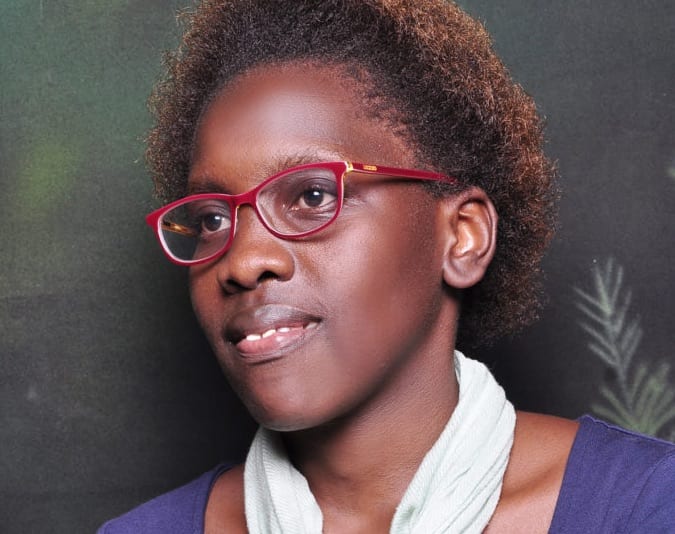
[bctt tweet=”Maria Auma’s tips to success: Be bold, know your worth & manage your time” username=”SheLeadsAfrica”] Maria E. Auma is the founder of Blue Luxury Investments, an investment management company that provides finance and capacity building services to African businesses. This young entrepreneur started her business in 2014 and has since worked closely with African entrepreneurs and private investors in developing strategy, business plans and fundraising. Maria desires to inspire women out there who are thinking of venturing into business or who are simply looking for the strength to persevere in their business. She currently lives in Kampala, Uganda and enjoys learning about investments, interacting with businesses and investors and finding suitable matches for businesses. Can you tell us more about your business and how long it has been in existence? Blue Luxury Investments is an investment management company that focuses on deal sourcing and subsequent investment in viable ventures. The business demonstrates a clear return on equity whilst leaving a positive social impact on the sector in which the project is operating. Our primary market is Africa, promoting areas of infrastructural development, clean energy, and technology advancement among others. We are passionate about developmental projects and align ourselves with key stakeholders in relevant economic sectors. What has been your favourite goal that you have achieved so far and which one are you most excited to complete in the future? I have to say that becoming self-employed is one of my favorite goals. This means that I get to grow-up. I am more aware of life and its challenges, and I take responsibility for my actions and the ripple effect it has on people around me. Having a business gives you some clarity on management and the oh-so-exciting experience of wooing a client. Close to that is graduating college and pursuing my Masters Degree. For the future, we are spending all our energy setting up a fund for African businesses at the moment. We are optimistic that this fund will contribute to the economic growth of Africa as a whole while socially impacting lives of people that their businesses get funded. You help people turn their dream business to reality, what would you say are the main fears that stop people from chasing their dreams? Fear of failure (risking everything with no guarantees): People are first of all afraid to dip their toes in the water because they have a well-paying job that takes care of all the bills and then some. Making that decision to say good bye to a salary is a very bold and mature move and not to be taken lightly, because the odds of you succeeding are really zero to one, if any. Fear of the unknown: It’s hard to determine whether the business you are running now will not be disrupted by some new generation idea, technology, or nationalization. The only advice that can be given is to be in constant flux. Always be ready for change and able to change. [bctt tweet=”Maria Auma is spending all her energy setting up a fund for African businesses” username=”SheLeadsAfrica”] What would you reckon are the three skills that successful entrepreneurs possess? Each entrepreneur is unique in their own right and may have a set of skills they are good at and those that they are in less abundance of. However, to be successful it helps if you practice the following skills: Time Management It is important to note that time wasted is like spilled milk. You can never get it back. Even before your business kicks off, you need to practice the art of managing and taking control of your time. Do not let others set your schedule for you, otherwise you become their employee and not your own. Your business needs you to take care of, and nurture it, the same way a growing child needs its parents to be there and shower them with affection. Know your worth It’s nice to give charity and offer your time to good causes when you have the extra time to spare and when you can afford it. But when you get down to business, do not let anyone boss you around about how much they think you are worth for your services or products. Perhaps the first step is to determine your worth, and then bill accordingly. If you keep on giving away tiny bits of yourself for free in business, you will eventually have nothing to give, and will wonder why all the time you have invested into growing your business is not bearing significant fruit. Be bold Stand up for what you believe to be right, whether it is your morals and beliefs or simply the way you conduct your business. It’s okay to not always follow the straight road, as long as you are comfortable with it. This is business, anything goes all the time. There are no rules set in stone that people follow. So try not to beat yourself about certain decisions you make, or worry much about consequences. Life is meant to have mistakes, and we are meant to learn from them. What three tips would you give someone starting a business? Plan and Research: It’s important to have a business plan for whatever business you are getting into. Feasibility studies and SWOT analyses help businesses determine the viability of their businesses in competitive environments, so take them seriously. Adequate finances: Make sure to have saved up enough to start your business. You may decide to fund-raise from close family and friends, which is alright. However create an estimated budget of how much you will need to get the business starting at least, and then may be look at breaking even. Surround yourself with positive thinkers: It is important to interact with others who are doing business but who are thinking positively and creatively. You do not want to dampen your spirits and drive for the business in its early days by being around people that only complain about one
Rebecca Rwakabukoza: Stay humble, Stay hungry!
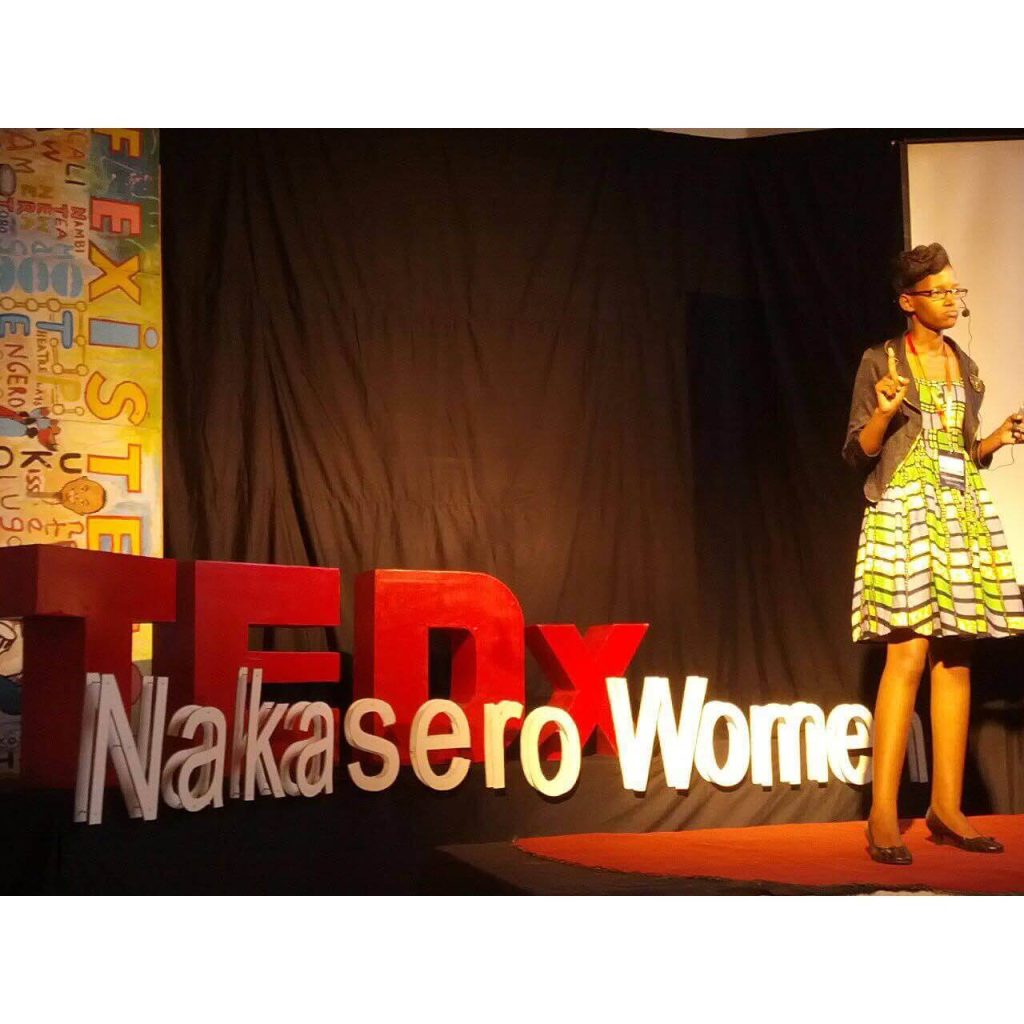
[bctt tweet=”It actually gives hope to have media see women as more than the boxes they have ticked us on” username=”SheLeadsAfrica”] Rebecca Rwakabukoza is a Ugandan feminist blogger and freelance journalist who writes at the intersection of gender, feminism, health, and social justice. She is currently co-organising dialogue initiatives to improve gender equity in the Ugandan media sphere. As a 2014-2015 Global Health Corps fellow at ACODEV in Uganda, she led efforts to improve knowledge management and communications for the organization. Rebecca completed her undergraduate studies at Amherst College where she was a United States Student Achiever’s Program Scholar and Koenig Scholar. She spent her summers during college with the Uganda Village Project in Iganga, Uganda Rural Fund in Masaka, and interning at the national daily newspaper, Daily Monitor. As someone who majored English in college, are you surprised to find yourself working in the global health space? What drew you to the field? I was lucky that I studied in a liberal arts curriculum so while I majored in English, I took classes across several fields. I was not surprised to find myself in the global health space because while public health was not offered as a major at Amherst College, I was able to take plenty of classes in the field, both at Amherst and at the other colleges in the 5-college area. Also, I interned in the field. Global health was one of the fields that I knew I would always end up in because it just felt natural. My mother is a nurse, and I grew up knowing that conversations about health were especially important outside the doctor’s room. You’ve spoken widely on global health and social justice, including at TEDx Live in Kampala. For so many of us, public speaking can be overwhelming. Why is it important that we raise our voices for what we believe in? Any advice on how to stay calm on stage? For me too! It was very scary to stand on the stage. I had practiced several times with friends, and the TEDx organizers in Kampala. Some friends in GHC had also filmed me while I practiced and I got to watch myself before. I went over my script several times and was afraid it would sound practiced, so definitely getting to watch myself before braving the stage was good. This might sound cliche but I think ultimately what helped was choosing a topic I was most passionate about. Speaking from the heart should be scary, but it does have a way of calming you when on a stage. Because you know, if anything, at least I was true to myself. What is your major source of inspiration in the face of challenges and obstacles? I draw inspiration from so many places, depending on the gravity of the challenge. If it feels like Rwenzori Mountain level stuff, then I have to call in the big guns: my mother and grans. They field many calls and sometimes we don’t even talk about what the issue is, but just speaking to them about something random helps. I am really big on history so I suspect some of my attachment to them is the stories they tell. Plus they are pretty incredible women. I also get a lot of inspiration from archives so I listen to a lot of history podcasts and visit the Uganda Society library to read old books. Digging through history is my happy place. But also, food. I am a stress eater. Can you tell us about a mentor or advisor who really made a positive impact on your life? There are so many! There has always been someone holding my hand through life, from primary school to now, seeing a better, more hardworking, more focused, smarter, more empowered version of me and helping me work towards her. If I had to pick just one, I would say my college advisor, Professor Rhonda Cobham-Sander. I don’t know how she believed in me or why, but she did and it made all the difference. [bctt tweet=”Rebecca Rwakabukoza says better media coverage is good for women’s health” username=”SheLeadsAfrica”] You’re currently working on improving gender equity and representation of women in the media in Uganda -so cool! What’s the tie in with health? Health ties into everything. Some of the biggest issues women face right now are health-related: access to family planning, gender-based violence, maternal health. The most direct answer, therefore, is better coverage is good for women’s health. But the project I am co-organising however, is more than health and the specific women-related issues. It actually gives hope to have media see women as more than the boxes they have ticked us on -boxes that either have to do with our reproductive health or that see us as caregivers in society. Media that allows for the presence, and wisdom, of women in their coverage and sourcing is good media. It is what media should be period. Anything else is a disservice to the community. And you recently became a mother -congrats! As a woman who is identified as a feminist, what are your hopes and dreams for your daughter’s future? Thank you! My wish for her is that she gets to choose. To choose how she wants to live her life, to choose who she would like to be, and how she would like to contribute to the universe. And if she doesn’t want to contribute, that’s fine too. Now, the hardest part I suspect is going to be my role in this. I hope I am able to teach her enough and may she -goddesses willing- be an even better, stronger, more badass feminist than I will ever be. Which accomplishment -personal or professional- are you most proud of? I am yet to do something and look at it and think of it as my biggest, or best, achievement. I am still working on things and it all only goes higher. My next one is my biggest. What is
Volunteering: Diversify your professional experience and drive social impact

[bctt tweet=”Let’s admit – w/everyday #adulting struggles, it can be difficult to consistently volunteer” via=”no”] Community service and a spirit of volunteerism hold a place in the hearts of many millennials. We relentlessly seek ways to care for the marginalized. College provided a perfect platform for us to exercise this passion as opportunities to plug into communities and give back were ready-made; all we really needed to do was sign up and show up. Life after university has, however, proved to be a different story as we have to seek out volunteer opportunities on our own. Let’s admit: with jam-packed schedules and the everyday adulting struggles, it can be quite difficult to find an organization to volunteer with on a consistent basis. Enter skill-based volunteering This is where skill-based volunteering —typically known as pro bono work— comes in. Skill-based service enables you to match your skills and interests with the needs of a non-profit. Many non-profits are often lacking the staff capacity, so they need help in areas like marketing, financial management, strategic planning, and technology. Organizations are in need of professionals to partner with them in solving complex, pressing issues —and that’s where you provide value. While filling an essential need, volunteering gives you an invaluable opportunity to sharpen your skills and diversify your background in areas that interest you. Technology opens greater access to organizations and projects that are all over the globe. Through skill-based volunteering, the digitally savvy woman can tap into a deeper pool of opportunities that are not readily available in her current network. You’ll build a portfolio for that side hustle you’ve been meaning to kick start and amp up the experience section of your CV. All from the comfort of your living room with a warm cup of coffee (or tea) in hand. [bctt tweet=”Skill-based volunteering grants you an invaluable opportunity to sharpen your skills” username=”SheLeadsAfrica”] I started my skill-based volunteering journey to explore an interest in consulting non-profit organizations. I wanted to facilitate an experience that would mirror the expert-client relationship found in working with organizations to help further their mission. After looking through LinkedIn postings and several volunteer websites, I came across Catchafire —a website that connects professionals with nonprofits. Within three months, I worked with three organization on projects that involved marketing and communications strategy. The most rewarding part being that these organizations supported issues that I cared about! If you’re ready to launch your skill-based volunteering journey, here are 3 quick ways to get started: Sit down and draw a list of the competencies you’d like to build. A great way to do this is to review career opportunities that interest you and see what a competitive candidate background looks like. This can help you determine the kinds of projects to take on. Think of causes that you’re most passionate about. If you enjoy working with troubled teens, for example, you can focus your search on organizations that serve that demographic. This will not only allow you to engage a community you care for but also aid in addressing the issues facing it. Once you’ve narrowed your list of competencies and causes, it’s time to reach out to nonprofits. Leverage volunteer matchmaking platforms like Catchafire and Taproot, or utilize your LinkedIn profile. Catchafire connects volunteer professionals with nonprofits through 1-hour consulting phone calls and/or fully-fledged projects. My favorite aspect of Catchafire is the personal dashboard it generates with project details, experience testimonials, and your monetized impact —all great metrics to share on your CV or portfolio. Taproot has pro-bono opportunities ranging from one-on-one consultations to team-based, long-term projects. On LinkedIn you can specify in the volunteer section that you’re searching for pro-bono projects, thus making it easier for nonprofits to find you. As you start working with nonprofit organizations, it’s important to treat these projects with the same regard and excellence as you would any other engagement. Discuss project specifics and map out a project timeline with benchmarks, deliverables and KPIs. A carefully organized experience enables you to share your skills in a meaningful way and also ensures that the nonprofits get quality service. [bctt tweet=”Organized skill-based volunteering enables you to share your skills in a meaningful way” username=”no”] What are you waiting for? The bottom line is that skill-based volunteering is a great way to build and develop your professional background as you provide value and drive social impact in marginalized communities. While you diversify your CV, you’re also building a network of professionals active in the causes you’re most passionate about. Therein opening up opportunities for future ventures to implement sustainable community development programs. So, what are you waiting for? Get out there and start volunteering! To help guide you through the volunteering process, SLA has created a cheat sheet. Grab it by here —sign up and slay up!
Third Stop on the Delicious Naija Food Tour? Daura, Katsina
Katsina is claimed to be the home of heritage and hospitality, so Delicious Naija went to go see what that was all about. A trip to the history-heavy Kusugu Well solidifies Bunmi’s place as a tourist and her ride on the significant horse had her feeling a little like royalty. Then it was food time! The real reason we’re here… Lucky Bunmi got to share a meal of Tuwo Shinkafa & Miyan Kuka with the famous Northern musician, Sani Danja (Man, you should see that plate of Tuwo – salivating galore!) And then she was off to Hajara Sanni Lawal’s home, a young wife, mother, civil servant, teacher, MAGGI Star and all-round boss! She taught Bunmi how to make millet-based Fura & Nunu and a local cous cous based meal called Brabisco. So, if you’re on that healthy train, this Katsina episode was totally for you! Hajara Sanni’s husband says he rushes home everyday and hardly eats outside… that’s #goals and we knew the recipe was going to be lit! Definitely going to get the family to eat dinner Daura-style soon. We really enjoyed this episode and you should catch up on Delicious Naija episodes on the Maggi YouTube channel. The food journeys of Delicious Naija can always be watched at 7:30pm Saturday on Africa Magic (Family), at 5pm Sunday on NTA and at 5:30pm Friday on Arewa24. But if you can’t get to these, that’s okay – there’s Facebook, Instagram & Youtube to keep you updated! Go watch! Sponsored post