
Feruz Gebremeskel: This lawyer & entrepreneur is building a platform to reverse Africa’s brain drain
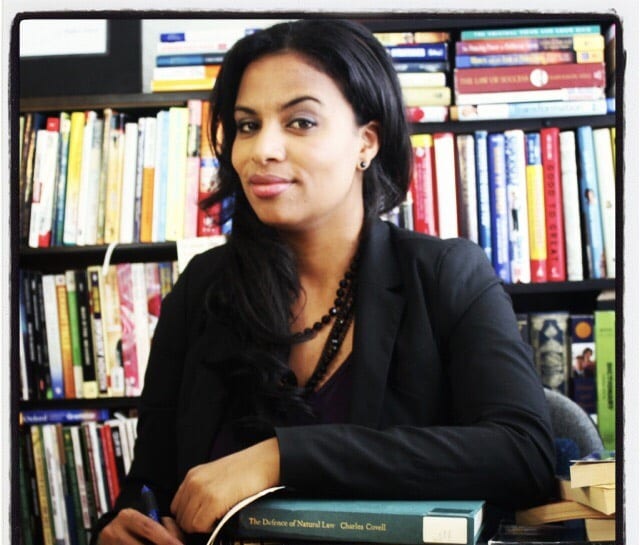
Meet Feruz Gebremeskel. She prosecuted criminal defendants in courts of law, produced and directed movies performed songs that inspired many, graduated with honors. She is a researcher, JSD candidate and the founder & CEO of two social enterprises. Is there anything that this woman can’t do? “Be open-minded but skeptic at the same time. Ask questions and demand answers”, Feruz Gebremeskel often says. When it comes to challenges, she has never been crestfallen, has never stopped aspiring to change the world. “When we face a challenge, I think our primary task should be, to begin with asking good questions. Because almost all of the time these questions eventually lead to great answers and solutions to the problem at hand.” And so, ever since she was young, Feruz has worked hard to stand up, speak out, and become an incredible inspiration. Feruz was born and raised in Eritrea. The early years of her life were during the Eritrean War for Independence, in which the Eritrean People’s Liberation Front (EPLF) fought against the Ethiopian Government. This war lasted well into the early 90s. After Eritrea had gained independence, Feruz finished most of her schooling in Asmara, the capital city of Eritrea. Having a childhood during wartime increased Feruz’s interest in justice. She studied law at the University of Asmara, graduated and worked as a prosecutor at the Attorney General’s office of the country. In 2009, she relocated to the United States to pursue her studies, but her heart and soul continue to breathe for her African roots. Where do you currently find yourself as a student and entrepreneur? Could you tell us more about the two social platforms you have founded and run as the CEO? Presently, I am a researcher, currently working towards my Doctorate of the Science of Law (JSD) at St. Thomas University of Miami, Florida. My research focuses on Law, innovation & technology. My plans include working in the field of social enterprise law, artificial intelligence, and animated innovation or robotics. I think the world of intellectual property law in the future of self-driving cars, internet of things and artificial intelligence is going to be pretty interesting. So I am looking forward to indulging myself into this adventure. One may have several talents that he/she could offer to the world. If all these qualities can be integrated and directed to serve one main goal, I think that a lot can be achieved. When I make films, songs, do research or found organizations, all of these activities are aimed towards one big goal, the promotion of human rights and dignity. For example, in 2013, I put together a short film called Dilemma. The story was about a wedding counselor who falls in love with one of her clients. But there was much more to it than that. There is a discussion of cultural practices, women’s rights, and moral code. In 2014, I also worked alongside Raee Productions to direct and produce a compilation of short films entitled Ab Asmara which highlighted the struggles and hopes of Eritrean refugees and immigrants. I have always been fascinated by how the sharing economy markets (when formed and maintained properly) can positively change the world. They create micro-entrepreneurs, more jobs and can potentially stabilize the global economy. The inspiration for creating native apples & AfroPros come from this way of thinking. I wanted to create systems where social capital is valued and being who you are is celebrated. What inspired you to form Afro Pros? Human capital flight is one of the major issues that is draining Africa. We have to work harder in creating sustainable political and social systems so that the push factors for unnecessary immigration are stopped. While working on that, we also should get creative and find smart ways to utilize these intelligent minds we’re consistently losing to the western world. AfroPros was created in support of this idea. I aim to use Afro Pros as a way to reverse the ‘brain drain’ that continues to grip Africa and make the future brighter for the continent than ever before. I work as the CEO and founder, and I consider myself fortunate to work alongside incredible professionals throughout Africa and in the diaspora due to war, social instability, and uncertain economy. Through AfroPros, these professionals get valuable connections abroad by using the flexibility of the gig economy. So, what would you say is your ultimate goal for both Afro Pros and Native Apples? I want Afro Pros to be a center where organizations —government, non-governmental, or businesses— could refer to appropriate and relevant services that represent and promote sustainable development in Africa. Native Apples looks at the issues I hope to combat with a different lens. With Native Apples, I asked myself, ‘What can I do as a native that no one else can?’ I realized that I had a heritage that others may be interested in. Then I thought, what if others could use their unique cultural practices as a side hustle? So the main highlights of Native Apples are sustainable travel, global citizenship, and authentic experiences. Native Apples allows people throughout the world to buy, sell, or rent ‘native’ services and products —like, for example, learning native languages or sitting in on a coffee ceremony. [bctt tweet=”Sometimes people overestimate the state’s power while underestimating individual change makers” username=”SheLeadsAfrica”] Sometimes, people overestimate the state’s power and political will to protect or respect human rights while underestimating individual change makers to have a similar or even more positive effect. The Native Apples platform highlights the latter; it gives people the opportunity to do good in the world and help others to succeed. For example, some members used the platform to raise funds for refugees in need of immediate assistant by hosting a food party. By raising the necessary funds and spreading the word they are protecting refugee rights (one of the fundamental basic human rights). There is a tango master who teaches classes. In 2009, UNESCO listed tango as
Is your personal growth stunted? 5 signs that it might be

[bctt tweet=”Sometimes we get stuck because we haven’t learned anything new, these tips should help” username=”SheLeadsAfrica”] What to do when you’ve lost your mojo We all want to become the best we can be. But what happens when you’ve lost your mojo? There’s a chance that your personal growth might be stunted. There’s no shame in that, it happens to the best of us: sometimes you just get stuck and it feels gross. Here are some signs to help you tell, and some quick simple ways to overcome it. 1. You’re really comfortable right now Life is fine. Like, just fine. Everything is just okay. You’ve got a good steady rhythm at home, at work and in your relationships but it’s been steady like that for A WHILE… to the point of standing still. You look around you and feel the buzz around you, but you’re on the outside. While being in this position isn’t necessarily bad, it’s not amazing either. It’s just —you guessed it— fine. You’ve stopped growing. Ask yourself: When did I last get excited about creating something new and of real value? If you’re struggling to find an answer, it’s time to change. Why not take on a new challenge? Join a society at university, or a network at work. Volunteer at a local charity that your care about or look for opportunities to give your skills to budding entrepreneurs. All you have to do is reach out and ask —over the phone, in person or using social media. It’s all there ready and waiting for you. 2. You’re bored at work Even when we’re in our dream jobs, work can sometimes be less than glamorous. There’s always that one activity that you’d rather skip. When you face this boredom or frustration you need to…. Ask yourself: Is it time to move on, or do I just need to do something different where I am? Next, have a conversation. With your boss, your manager or your team (if you are the boss/manager) about new opportunities or projects that you can try out. Of course, the way you ask depends on your role at work, so take that into consideration. Once you’ve identified these new personal growth goals you can set monthly or weekly goals to drive your progress. Many of us make great 1-5 year plans but struggle to translate them into our daily hustles. 3. You don’t leave conversations feeling inspired, motivated or energized You can’t remember the last time you learned anything of value, every conversation feels the same. I get it, it’s happened to me before. But too many people blame others, they claim that there aren’t ‘enough people to have intelligent conversation’ with. Well, before you blame others for anything in life, always look at yourself. Be the change you want to see in the world. Ask yourself: What do I bring to the table? If you’ve followed personal growth steps 1 & 2 above, you may eventually have something new to bring to your conversations. Once you’ve done that, you can start planning how you expand your horizons and your network. The age-old saying goes, ‘your network is your networth’ and if you haven’t made any new friends lately, maybe it’s time to go to an event, #SheHive or conference to get the conversational juices flowing again. [bctt tweet=”Before you blame others for anything in life, always look at yourself” username=”SheLeadsAfrica”] 4. You know as much as you did yesterday, and the day before that… and the day before that Sometimes we get stuck because we haven’t learned anything new. Personal growth involves your body AND your brain. We all have our niche —whether it’s fashion, tech, finance, politics or anything in between. But we can all benefit from knowing a little bit of everything across the board. Some employers call this being a ‘t-shaped’ person, someone who has deep knowledge in a few areas and broad knowledge across many others. These types of people can work well in many situations and are typically more employable. Ask yourself: When was the last time I learned anything new? The good news is that in the age of Google, a lot of information is $free.99 – shout out to SLA for this free guide right here. You can learn most of the basics on a shoestring budget, or no budget at all. What have you got to lose? 5. You lack energy and feel sluggish Sluggish. What a word, sounds horrible right? You might feel chronically tired, or that you’re living life in slow motion. Sometimes this is because you’ve been working too damn hard, but other times it’s caused by the fact that you aren’t doing much at all. If it’s the latter, the final thing you can do to boost your personal growth is actually get moving. Ask yourself: How can I shake up my routine in some way? This might be something really small like changing the route you take to work or your night-time beauty routine. It could also mean becoming more active. YES, I do mean going to the gym, joining a sports team or doing a class. A little sweat never hurt anyone! It sounds kind of crazy, but the more you work out, the more energy you have for other areas in your life. So, no excuses. Try these recommendations out and let us know how they work for you. Doing something new is scary, but life begins outside of your comfort zone. So does personal growth. You’ll be challenged in a new way, and you’ll develop into a more well-rounded person in the process.
Samira Sanusi: You can still have dreams, goals and ambitions while living with Sickle Cell disease

[bctt tweet=”Samira Sanusi: The misconceptions of people living with Sickle Cell are stigmatizing” username=”SheLeadsAfrica”] Samira Haruna Sanusi is a Nigerian writer and Sickle Cell awareness advocate. Samira is the President of the Samira Sanusi Sickle Cell Foundation, an Abuja-based NGO. She is also the author of “S is for Survivor”, a memoir about her personal experiences with Sickle Cell Anemia and getting cured. Her upcoming book titled “I Wrote This For You” is a collection of prose, poetry, philosophical quotes and short essays which will be published later this year. In this interview, She Leads Africa fellow Tonye Setima-Benebo chats with Samira Sanusi on living with Sickle Cell disease. After 6 years on wheelchair, 28 surgeries, chemotherapy and a bone marrow transplant, Samira has learned a lot from her life struggles and is eager to share her testimonies with the rest of the world. Read more on Samira’s story of hope, survival, and strength below. What are some of the misconceptions of people living with sickle cell disease? The misconceptions of people living with Sickle Cell Disease (SCD) are many and have become stigmatizing to warriors living with the disease. Many people believe warriors do not grow up into adulthood, or that if they do, they eventually outgrow the disease. Many people including healthcare providers see warriors as attention or drug seekers who are trying to feed a painkiller addiction. However, with limited pain management options, warriors are forced to rely on strong painkillers. Now the consistency of the pain crisis sometimes means the patient has to be on pain medication for a long period of time. Who were your greatest supporters during your crisis? My greatest supporters were my family. They have seen me struggle with the crisis, limitations, and treatments. Being the ones who are always there means they really see the effect and understand the magnitude of the disease. Friends were also a great support and offered help in their own little way. How has Sickle Cell affected your personal life? Sickle Cell has affected my personal life in great ways -good and bad. I’ve had 28 surgeries, collected a lot of scars, dealt with health complications related to SCD and a sizable amount of PTSD. At the same time, this disease has been the best thing that has happened to me, without which I wouldn’t be who, I am today. Can you tell us what you do on a daily basis to stay healthy and out of the hospital? A typical daily routine includes taking my daily medication, staying hydrated by drinking at least 2 litres of water, avoiding stress and strenuous activities and adjusting to weather conditions and other factors that might trigger a crisis. [bctt tweet=”Samira Sanusi: I want my book to make people feel less alone in their Sickle Cell journey” username=”SheLeadsAfrica”] You wrote a book “S is for Survivor”, what was your intention for the book? My intention of writing “S is for Survivor” was to tell a story once painful and untold, and to make sense of my past and pain. Books were my toys and companions during my childhood, and so many stories I read in books connected me to human experiences that made me feel less alone. In the end, I wanted to do that, to be able to touch lives and reach out to people who’ll read my book and have hope or feel less alone in their journey. Tell us about your foundation. My battle with Sickle Cell Anemia is what inspired me to start the Samira Sanusi Sickle Cell Foundation to help people living with the disease. The foundation raises funds for organizations and clinics that provide Sickle Cell patients with care, aid, and treatment. We organize awareness programs in several parts of Nigeria to educate and sensitize people on the disease. This awareness covers how the disease impacts the lives of sufferers and care-givers alike, its complications, and the importance of genotype testing before deciding to have children. Its focus also includes creating awareness on the cure for Sickle Cell disease and finding ways to make it accessible for patients in Nigeria. The foundation is committed to supporting the Nigerian government in accelerating provision for management and treatment of Sickle Cell complications, as well as enlightening citizens about the disease, and most importantly, making informed decisions to avoid more Sickle Cell births. What would you say to a teenage girl living with Sickle Cell disease? To a teenage girl living with SCD, I would say, you are more than a disease and stronger than you think. You can still have dreams, goals, and ambitions. It might not look like the picture in your head, or happen at the same pace as everyone, the important thing is to live fully and out loud and fight against all the odds. [bctt tweet=”Samira Sanusi’s foundation enlightens Nigerians about Sickle Cell disease” username=”SheLeadsAfrica”] What is your best memory so far? My best memory so far would be getting cured of Sickle Cell Disease, the day felt like my birthday, a new beginning to a pain-free, health complications and limitation free life with endless possibilities. I don’t think anything can ever top that, being cured of a disease that is still considered as a death sentence. If you’d like to share your story with She Leads Africa, let us know more about you and your story here.
The Shine Theory: What it is and why you need it.

[bctt tweet=”Building friendships with accomplished women is great for your business & personal network” username=”SheLeadsAfrica”] What is your first thought when you get introduced to another woman? ‘She’s pretty but maybe not as pretty as me?’ or ‘Gosh, I wish my edges were that laid’ perhaps ‘Who is this? Does she think I’m cool?’ Whether it’s involuntary or not we tend to have a train of thought that borders on the competitive when we meet someone new. It even happens with people we do know, hearing good news about a friend’s new promotion or engagement can sometimes make us feel a little left behind. Well the Shine Theory, advocated by Anne Friedman, challenges you to flip the script. The basic premise is that when you meet an intimidatingly successful bad ass woman, instead of letting that little voice in your head tell you that you should feel inferior or even intimidated, send it back where it came from and befriend her! Friedman explains, ‘Surrounding yourself with the best people doesn’t make you look worse by comparison. It makes you better.’ Why the Shine Theory? We live in a society that constantly pits women against each other, as if we can’t imagine a world where two successful women can exist without being competitors. The Shine Theory encourages us to surround ourselves with women who are successful and to encourage these successes. How can we not want to see the women around us flourish and do the most? After all, we are the company we keep. But does the Shine Theory actually work? It has been tried and tested by the women in the Obama Administration with the effects fostering an important change in the way women treat each other in the workplace. It has been a long time coming but it is definitely time to change the narrative that women cannot exist in the same space without being pitted against one another. So how can you practice the Shine Theory? Well, charity does start at home. How we see and treat others is based on how we see and treat ourselves. A little self-love and self-confidence goes a long way. When you recognise your potential and your unique path, you’re less likely to compare yourself to others and resent their accomplishments. It is important to ask yourself why you instinctively take a negative approach to meeting someone new. How do you feel about yourself, your career and happiness? Your answers to this will generally reflect how you ultimately treat others. Convinced? Here’s how to start. The Shine Theory can easily be done with our friends and general social circle but it is not just limited to seeing our inner circle flourish. It is also key to make an effort when we meet someone who potentially intimidates you. This isn’t a ‘fake it till you like her’ situation. Be genuine and honest with your friendships and acquaintances, be part of a BOSS community that encourages and thrives off each other’s success.Whether it’s a tweet of encouragement or creating platforms that support another woman’s business, the Shine Theory allows all those involved to bask in each other’s sparkle. Building friendships with more accomplished women is great for building your business relationships and your personal networks. Who knows? That seemingly intimidating woman could be you next business partner. More significantly, you gain you a strong support system that pushes you to be the best version of yourself. We need friends that are smart, confident and kick-ass women who dish out the best advice and inspire us daily. Create and foster friendships based on mutual appreciation and respect in seeing each other’s triumphs as a celebration for all.
Lukunse Betty Paulls: I want to create awareness about the history and culture of Africa

[bctt tweet=” There is nothing as satisfying as watching a seed you have planted grow @LukunseBettyPaulls” username=”SheLeadsAfrica”] At 21, Lukunse Betty Paulls has already accomplished more than most women her age could even dream of. The Kampala native who is currently working towards her degree in Business Administration at Ashesi University in Ghana, is also a model, blogger and writer. Most recently, she added the title of social/cultural ambassador to her resume. What began as a simple idea to find a way to showcase the richness and diversity of African culture has turned into Mutima_Wangu, an online platform that seeks to create awareness about the history and culture of Africa in different settings. Over the past year, Lukunse has directed a lot of effort towards growing the platform. She’s orchestrated everything from picking the concept, finding models and photographers and even doing a bit of creative directing herself. In her own words “Africa is rich (in culture), let us never forget that”. For someone so young, you already have quite a list of accomplishments under your belt. Could you share with our readers your story so they understand your journey and how you have managed to take on all these roles successfully? I don’t see them as many achievements but thank you. To be honest, I still feel like my journey has only just begun. I started writing at fourteen, even though my writing still hasn’t garnered much publicity. I self-published my first poetry collection in early 2015, and the other two books shortly after joining Ashesi. As for modelling, I had my first photoshoot ever in June 2015. It was a great experience and the support I received from my manager and the filmmakers at the Uganda National Theatre was overwhelming. I’ve done a bit of modelling and had a few photo-shoots since moving to Ghana as well. I started blogging on and off since January 2015 and have only recently decided to start blogging more consistently and using that as a platform to share my voice and my work. And finally, about being a cultural ambassador, I guess that came about when I realized I could not focus on modelling without combining it with something else. For me, that something was art. I have no intentions of being a runway model. I have always focused more on the more commercial aspect of modelling than the typical struggle of making it as a runway Queen. And I decided that if I was going to take the commercial route, I wanted to do it in a way that would be beneficial to society. Bearing all this in mind, I went through a period of soul-searching and consulting with my mentors Kobby Graham and Dean TK, and through this the idea for Mutima_Wangu was born. I checked out the website for Mutima_Wangu and I think it’s really impressive how you are working to develop a platform that not only showcases but celebrates the diversity of African cultures. How did you come up with the concept and what are you hoping to accomplish through this platform? The idea for Mutima_Wangu first came to me in my philosophy class. I’m a firm believer in acting on an idea the moment it is conceived and so I knew I had to do something about it. But I also realized that I could not do it on my own, so I started looking for photographers on campus and sharing my idea with them until I found one who was willing to work with me. Next, I scouted potential models for the project. For Mutima_Wangu, it was never about finding the girl or boy who was perfect for the runway, it was more about finding the person whose composure suited the craft. Through this project, we are teaching people what being African means to us and we demand to be heard. Our ultimate goal is to create awareness about the history and culture of Africa in different settings. [bctt tweet=”Our goal is to create awareness about African history and culture @LukunseBettyPaulls” username=”SheLeadsAfrica”] What is the process like for curating the content on the platform? How do you identify the topics that are discussed, what is the research process like and how do you decide on what aspects of the topic are important enough to be showcased and how? To be honest, the process is not hard. I personally think that there is a lot of content to choose from. I also believe that I am naturally creative. So when an idea pops up into my mind, I note it down. I also get ideas from my sketches, from lectures I attend, from the literature I read and the images I see, from conversations with my neighbors and from observing people I meet. My sources of inspiration are limitless and once an idea is conceived, I work on expanding it and bringing it to life. Throughout this process of creation, I remind myself that there must be story, a lesson, a history, a piece of information that the idea delivers to the intended audience. In the end, it must be art. What have been some of the biggest challenges you have faced in running this social enterprise? So far the biggest challenge has been sourcing funds for the project. We are in the process of devising the best strategy to get sponsorship to drive Mutima_Wangu forward. I did not realize how expensive this project would be when I started it. But after completing our first shoot, and seeing the number of people who would like to be part of this project, especially those who would feature as models, I quickly realized that it was going to cost more than I had expected. It takes a lot of time and effort to come up with a concept and implement it, it takes time to style all the models, to bring the concept to life the way I envision. There are costs involved in shooting, directing the project and securing the
A stitch in time: The importance of timing in managing business cash flow

[bctt tweet=”#MotherlandMoguls be aware that poor cash flow management could ruin your business” username=”SheLeadsAfrica”] A stitch in time saves nine…whoever said that was right. The saying is a warning against procrastination. Putting off doing important stuff until it is more convenient is never a great strategy in personal life and especially in business. When it comes to your business, it needs to have a minimum amount of cash to remain afloat. Maintaining liquidity requires intentional effort and coordination to ensure that you meet this requirement. Poor cash flow management has been known to floor businesses. At the root of the famous Enron scandal was the management of cash flow. That is why #MotherlandMoguls who are their own #Bosses need to pay attention to it. Managing your business cash flow There are three major warning signs you need to pay attention to when managing your cash; Slow Collection: When your sales are not moving as fast as you expected them to or you are not making sales at all. Excessive short-term debt: “Short term” usually refers to debt that is due in 90 days or less. The larger this figure is, the higher the chances that your business is cash strapped. Overtrading: Making sales is a good thing; the problem is having more credit sales which means that the cash your business should have is stuck with your customers. Sometimes what happens is that businesses ignore some warning signs and fail to respond to them on time which leads to bigger problems. One of the most important things to do here is to monitor and coordinate when money comes in and when it goes out. The moment you recognise a situation that is likely to put your business at cash flow risk, deal with it at the earliest opportunity. This is one of the lessons that Julia learned. [bctt tweet=”Timing is everything when it comes to managing cash in a business” username=”SheLeadsAfrica”] A business at standstill We met Julia in one of our Financial Education workshops. Julia runs a small milk delivery business and she was having a few challenges with her cash flow. A majority of her customers bought her milk on credit which she let them have for a period that was not specified. When we met her, her main problem was that she was not able to pay her milk suppliers because she didn’t have enough cash on her. Some of her customers owed her for more than two months and the fact that she could not pay for the milk meant that her business was at a standstill. Julia also rents a storage unit where she stocks up her milk; she was in arrears for one month and was about to throw in the towel when we met her. Lessons from Julia Timing is everything when it comes to managing cash in a business, you must be sure about the dates when major payments (out and into the business) are expected and when. Some of the tips we gave Julia for her business were: First to consider taking a loan as she tries to stabilise her cash position Not to rely on her sales to make basic payments such as rent and wages since Julia might not always meet her sales targets. Rather she should have savings that she can dip in when the going gets tough. This savings can be built slowly over time when business is good. Not to order excess milk if she doesn’t think she can sell it. To compare the credit terms of different suppliers and pick the one that works best to her advantage. [bctt tweet=”One way to ensure money moves through your business is by saving up to make basic payments ” username=”SheLeadsAfrica”] A couple of months later, Julia who had decided to continue her business reported that her business was doing much better as she had found another supplier who had better credit terms. She also instituted stricter credit terms with her customers. If your business is cash-strapped consider taking on some of the tips we have given and you just might end up with a smile on your face like Julia did.
Biabu Shaffi: The difference in winning and losing is most often, not quitting! So, don’t quit.

[bctt tweet=”If you have identified a problem, look for a solution & turn it into a business @BiabuShaffi” username=”SheLeadsAfrica”] From the coastal part of Kenya, Biabu Shaffi is among many things a passionate baker and a cooking enthusiast, always looking to try new recipes. For the past 3 years, she has been baking cakes, cookies, and other pastries to earn an extra shilling which she has used to fund her degree in Business Management. After being approached by several family members and friends looking to find suitable housekeepers, Biabu realized that there was a gap in the market and she decided to fill that gap by launching Pristine Housekeeping Agency. Through Pristine, Biabu hopes to establish a one-stop shop that Kenyans can look to for all their household needs: cleaning, babysitting, shopping…you name it, Pristine will offer it. What’s her mantra? Biabu believes that if you have a passion, you should pursue it. What was the inspiration behind the birth of Pristine Housekeeping Agency? The idea of running a housekeeping agency came from a comedy series entitled “Devious Maids” lol. There is this character called Marisol Suarez, who started an agency for maids. People go to her to look for maids. Initially, I thought I could do the same but after some consideration, I decided not to –I didn’t see the need then. But then one day, it happened that my cousin, my sister, and aunt were looking for house-helps and they just couldn’t find one that would fit their need(s). And there I was, again, thinking, if I start a housekeeping agency, train the ladies/gents on the basics, like how to clean the house, do laundry, cooking etc. I would really be making money. Then I remembered that people here travel to other countries, especially the Middle East, to clean houses for money and some end up getting hurt, others even get killed. So, Pristine will also be creating/providing employment to the unskilled, jobless youths and women and in the long run, grow a skilled community, end crime and poverty. What was the need you saw lacking in the Kenyan housekeeping industry that made you want to pursue this idea? In your view, what is it about Pristine that sets it apart from other similar ventures? First the Kenyan housekeeping industry only concentrates on commercial buildings –like offices, malls and supermarkets, hospitals, and hotels. Not one person has thought of venturing into house cleaning services, NONE! Pristine will do the household chores for you. From cleaning, cooking, shopping to babysitting. Lots of people look for professional house-helps –one that can do the house chores without needing someone breathing down their neck. I haven’t seen any agency like Pristine except when seeking employment in the Middle East. Pristine’s vision is to be the best housekeeping agency in Africa by 2030. How far have you gotten with the development of your idea into a fully functioning agency? What would you say have been some of the biggest challenges that you have faced along the way? Winding up on the proposal, working on the logo and registration. I am done with the name search so I am waiting for the response. So far, the challenge I have faced is time. I must juggle in between my full-time employment, cake orders, school, volunteering and researching on Pristine. It has been and is still is a very big challenge. Finances too have been a challenge as I use my savings to get things done, so hopefully, I will get some funding or someone with a good deal to invest in my business. When it comes to opening a business, where/who would you say you have received the most support from? How have you been able to capitalize on that? I have a colleague, who is also my mentor, who said that gone are the days when people started businesses just to make a profit and become wealthy. These days it is more about “what problem are you solving?” or “what are you doing for the society?”. I saw a need in my community, the need for good and professional help, and I believe that we, at Pristine, are going to satisfy that need. [bctt tweet=”Challenges are opportunities in disguise @BiabuShaffi” username=”SheLeadsAfrica”] Starting a business can be a daunting process for many young women. As someone who is currently going through the process, what would be your advice to other young women in your shoes looking to embark on a similar adventure and become business owners? Yes, it is a daunting process. Especially if you have a full-time job and other things running. What I can just tell other women out there is; Never give up! Challenges are there to make us stronger. In fact, challenges are opportunities in disguise –grab them and face them head on. You know why you started, and what you are looking at achieving in the short and long run. And always remember that the difference in winning and losing is most often, not quitting! So, don’t. With regards to Pristine Housekeeping, what would you say are your top three goals for 2017 and how are you planning to accomplish them? Get registered as a limited liability company by March – I have started on the registration process and I am at least half way. Recruitment and placement of at least 20 youth and women – I will be training them at my home before I secure a perfect place for this –I am also working on the plan. Funding/Donors/Investors – This is in order to be financially stable and/or get an investor. You are also in the process of completing your degree, how are you managing to handle it all, finishing school, starting a business and presumably trying to have a social life and pursue your other passions. I am a very good multitasker and all this is because I am self-motivated. In other words, my passion drives me to work harder and move, despite loving my nap times,
You vs Them: Staying relevant in the dawn of rising business competition
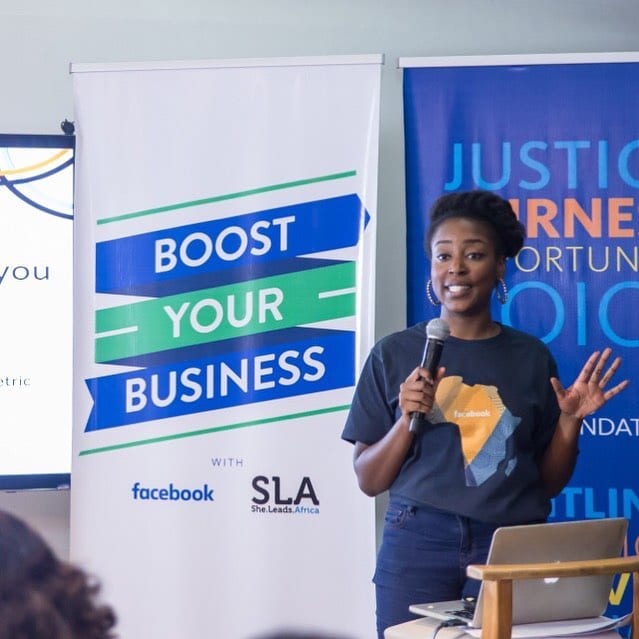
[bctt tweet=”Never, ever, lose sight of your business game because of the competition” username=”SheLeadsAfrica”] Competition is everywhere. These days, everything is basically a competition in business, from online DIY blogs and vlogs giving clients all the information for the same services you render to the new enemy in the block rendering the exact same services or product your offer. On the bright side however, competition can be healthy for your business and customers too (they literally pray for it). Every customer loves to have a wide range of options and the universe is big enough to accommodate you and a million others to do business. So rather than putting all your energy in prayers for your competitor(sss) to fold up pretty soon, it’ll be much better for you to start pouring all that energy into keeping your business relevant and on top the lighthouse, and here’s how: First things first, avoiding irrelevance is the first major step to take in staying relevant So at every point, always halt and ask yourself (with or without the competition) if your business is still relevant. You should also ask if your relevance is slowly fading out. This helps you understand and reinvent your business better to fit the changing times. Keep your eyes on the game: Never let your competitors get you all jerky and stuff. Stay focused on your business, consolidate on your strengths, and work on strengthening your weaknesses. Think about: What you can be doing to ace up your product and service How to top up your customer service (veryyy key) How to improve on your quality and business value How to expand and reach more markets and more people Build integrity for your business and keep it that way. Say what you have and offer what you can give, this will keep your customers coming back to you even after checking out a new competition. Never, ever, lose sight of your game because of the competition. Do a Lil’ Checking Out: Eyes on your game all right, but a lil’ spying never hurt anybody. Take a moment to check out your competitors, do some quick research, find out all you can about them especially their greatest strength and weakness. Leverage on their weakness and see what you can do about their strength. However, don’t panic and copycat the enemy in desperation. Don’t go slashing your prices when you clearly don’t need to, because your competitor has done so. Do Not Be The Last To Trend: Time waits for no one and so does technology. Whether it’s a start-up or full grown business, don’t stay sleeping on your achievements and get left behind. Be innovative, research on the latest technology, (and the ones to come) and constantly build your brand to fit in before you walk into a Kodak moment. This also involves understanding that diverse locations have diverse customer needs. Know your customers and know what is in trend for them, like if they more concerned about service or quality, or price. Spice Up Your Marketing Strategy: Constantly make an effort to spice up your marketing strategy. It could be with a re-branded logo or a new tag line, loyalty discounts and promotions on your services and products, collaborating with other products or services related to yours, anything to customizing your bottle with individual consumers’ names (we know who did this one). #MotherlandMogul key word: Keep it spiced up, don’t hang on stale strategy (even if it was once a major hit). Take Care Of Your In-House: Treat your employees great and make them understand the goal, cause employees can make or mar your business, sista. You don’t want your employees telling your clients (through words or actions) why patronizing your competitor might be a better idea. We know the competition can be fierce sista, but so are you. So, put on some stilettos, and get to work; today is for good business *raises glass*
Tshenolo Sebogodi: I found something many yearn for, fulfillment!

[bctt tweet=”More than anything I believe I was called to do this, I have found my purpose.” username=”SheLeadsAfrica”] Most of us are familiar with Afro-jazz which is a style embedded in the African traditional music and dance. On the other hand we also have AfroSoul, it’s fairly new and its a blend of African Folk and urban Soul. Tshenolo Sebogodi was raised in this type of genre. She grew up in a township called Montshiwa in Mafikeng, North-West South Africa and generally she is a lover of arts especially music, of course. Despite being a law graduate, the optimist is pursuing a career as a songwriter and Afro Soul/Jazz singer. Tshenolo definitely has big dreams for herself and she says it’s made possible by her child and husband who are her biggest cheerleaders. Tshenolo is also a true believer who lives by faith and with the support she has, there is every reason for her to keep going. Tell us about your album Journo. What is the story behind this name? Journo is my upcoming debut album that consists of songs that l wrote myself. The title Journo depicts articles and journals about my life experiences and those around me in a musical form. It was inspired by the transformations we all go through in life. I seek comfort in music, so all songs have a significant meaning from a particular period in my life. The album is very inspiring and motivational. It talks about hardships we all go through of feeling inferior, being afraid of dreaming , being afraid to have a voice and most importantly not conforming to society’s expectations. It talks about how great each of us are and how we’re all capable of achieving our goals. Also, it highlights the beauty of each season we go through in life and embracing every moment, even the bad times. Have you always loved the art of music? I have always loved the art of music from a very early age and have known all my life that I was born to do this. I was born in a very musical family and was exposed to classical music but fell in love with jazz music when I started performing 10 years ago. My family is also academic, I then had to take a break from active performing to obtain my LLB degree. Even during years of schooling, I knew the end goal was to be a My family is also academic, I then had to take a break from active performing to obtain my LLB degree. Even during years of schooling, I knew the end goal was to be a full-time musician, that’s what kept me going. It was a bit of a shock to everyone when I put aside my qualification to pursue the art of music, still is to most. [bctt tweet=”It was a bit of a shock when I put aside my qualification to pursue music – Tshenolo Sebogodi” username=”SheLeadsAfrica”] How has your life changed since you started your music career? My life changed dramatically when I officially began my music career. It was a pivotal time in my life, more like a make or break situation. My faith, my ability and even my talent was tested. The period of transformation from being a normal individual and completing studies in record time to pursuing music full time was a drastic change. I was obviously expected to practice law and possibly be a judge one day, but that was not what I was called for I believe. In that period, I was questioned by many and was told that I live in an imaginary world of my own. Not only did I have to fight to get my music career off the ground, I had to seek inspiration from within and fight for what I believe in when everyone else thought I am living in dreamland. More than anything I believe I was called to do this, I have found my purpose. With all the challenges and backlash received I found something many yearn for, fulfillment. I have so much joy in my heart, things still aren’t easy but I wake up each day looking forward to another chance to reach my goals. You had the opportunity to perform at the 4th annual Mahikeng Jazz Festival alongside the most revered legends in SA music, how do you do it? When I get the opportunity to perform at jazz festivals such as the Mahikeng Jazz Festival/Mapungubwe Jazz Festival to name a few, I perform along side legends. It does get overwhelming at times, I mean these are people I look up to and have been following for years. It gives me affirmation that I am heading towards the right direction. I definitely still observe and take tips and learn how they perform so that I’m able to be a legend one day. You have gained a lot of support from family, friends, and even strangers. What does this support mean for your journey as an aspiring Singer? Although self-belief comes first, getting support from my loved ones means everything. It means the world when your support structure is solid. There’s so much uncertainty that comes with the job, it really is crucial to have those that have your back no matter what. It took my family and most of my friends time to understand and eventually lend their support. There had to be a family intervention before my parents eventually understood, my husband had to help me take them through it. Today my family and friends are my biggest supporters and I draw strength from their words of encouragement. Getting support from strangers was overwhelming in the beginning, unlike family, they don’t have to listen to me. When I see strangers paying attention and enjoying my music, I get goosebumps and literally get more inspired to give it my all. It truly does boost my confidence on stage and as a songwriter. I just want to get better
Caroline Numuhire: If you want to be a human rights advocate, just do it

[bctt tweet=”Work on your gifts and then the universe will grant you wisdom to shine.” username – Caroline Numuhire=”SheLeadsAfrica”] Global health and creative writing go hand in hand for Caroline Numuhire. From Kigali, Rwanda, Caroline got her start in global health as an intern with Save the Children Rwanda. She went on to address childhood malnutrition as a Global Health Corps (GHC) fellow at Gardens for Health International (GHI) in 2014 before joining GHC staff as a Program Associate last year. Caroline regularly contributes to ECOFORUM and Environmental Africa in addition to penning inspirational short stories. She is currently working on a novel and pursuing a Master’s degree in Global Health Delivery at the University of Global Health Equity in Kigali. You are both a global health practitioner and a writer. How do you juggle your main hustle and your side hustle? Is there overlap in these seemingly disparate worlds? My professional life in the global health domain matters a lot to me to feel fulfilled as a human being as this is my contribution to build a more just world. I enjoy sleeping at night knowing that I spent a day achieving a good goal. If I was ever asked to pick one job, it would be a hard decision because I am passionate about my work as well as my writing. I always feel lucky to live in a world that allows me to practice both. When I believe in a cause or a profession, it becomes so easy to handle it because I understand why I invest every drop of energy and I ensure that I find time to juggle and work on my passions. The reason why I (agronomist and writer) smoothly fit in global health is because it is not and has never been an isolated technical field. Communication, writing, and public speaking are some of the key tools that allow me to be an effective advocate for global health issues. There’s still a huge need to write about these issues that are affecting humanity. Agriculture, nutrition, and the environment are often overlooked aspects of health and wellbeing. Why are you passionate about these issues? The simplest answer would be that I have an educational background in agriculture, rural development, and global health delivery. But the true answer is more complex. Sometimes when we talk about good health, we think about the absence of diseases and when it comes to wellbeing, we picture cash in our minds! In Rwanda, communities of farmers are the first victims of climate change effects and of malnutrition. In the early days of my career, one of the startling realities I faced in the field was that farmer communities suffer from malnutrition while they produce all the beautiful and healthy food that we consume and consequently they face poor health outcomes. In my eyes, it was an obvious facet of social injustice that I had to dedicate my efforts to. You work with Global Health Corps fellows in Rwanda, many of whom are new to the health sphere and even to living and working on the African continent. What’s been your most challenging experience in this role so far? The biggest challenge of my work is to work with smart, energetic and result-driven young people who want to observe the impact of their fellowship right away. It requires a form of art to help them understand that once you sow a tree seed it takes days, weeks, and most of the time years to yield flowers and then fruits. And your most rewarding? The most rewarding part is to see fellows graduating from the fellowship as empowered, more resilient leaders who are ready to continuously change the face of poverty and inequity wherever they are heading. It is a true transformation! [bctt tweet=”Caroline Numuhire says ‘Don’t fear that there are so many human rights advocates already – they are not YOU’” username=”SheLeadsAfrica”] Professional women are often stereotyped and coerced into looking, acting and being a certain way. How do you stay true to yourself in the face of societal pressure to conform? Oh, that’s a poisonous disease! Yes, we live in a society with predetermined norms. Yes, we want to experience the feeling of belonging. Yes, we have so many excuses, right? In the last 20+ years of my life, I have played the card of likability. You know what? I lost, miserably. Just because I failed to please the only person who matters to me: myself. It’s so easy to be a submissive, scared, shy, soft, incompetent, slow, lazy woman (beauty being tolerated!) and be accepted, included and appreciated. But if your inner voice tells you that you are something else, then be exactly that person. For yourself. Don’t fear making men feel insecure because of their own weaknesses. It’s not your role. If you want to look sexy, smart and happy, be sexy, smart and happy. The formula is simple. I intimately know that I’m an energetic, hard-working, empathic and imperfect girl and I totally, shamelessly and unapologetically embrace myself. What other people think of me is their own right but not a business I manage. A woman has to value herself and if you don’t know how you can start reading or watching Louise Hay’s meditation videos as well as learning about other women who understand the secret of true self-love. What advice would you share with other young leaders who want to use their gifts to make a difference in the world? First of all, work hard on your gift. The world will respect you if you respect your gift. We are all talented. God created us with tremendous reserves of amazing aptitudes and gifts. Just find your own, refine it and it will blossom to heaven. Epictetus said, “If you want to be a writer, write”, so if you want to be a human rights advocate and you believe that this is your call, your life purpose, just do it. Just do it and dare to believe