
Will Nigeria’s president ever be a woman?

There is this palpable level of excitement all around the world as we all watch in to see if the USA will have its first woman president. This got me thinking about my country, Nigeria. What will it take for Nigeria to get to that stage? When will our president be a woman? Hold off on the evil stares will ya. Let’s take a look at four groups of people and what they say about the chances of a lady Nigerian president happening. In-laws In Africa, especially my beloved Nigeria, in-laws are not to be joked with. They can make or break your marriage so you don’t want to be too close to them but at the same time, you can’t do without them. PRO: Bragging rights. As everyone wants to be associated with success, of course they’ll support and even hound people to vote so they can do yanga. They’ll want to tell anyone and everyone that their daughter-in-law is the Commander-in-Chief of the armed forces. CON: Just because she is president doesn’t mean she should forget her culture. If she doesn’t kneel properly to greet, WAR. If the protocol officers so much as ask if the president’s husband’s cousin’s son’s wife has an appointment before seeing her, WAHALA. If they find out she no longer cooks personally for her husband, they’ll go to the village and bring their son another wife (Blame my Nollywood childhood for this imagery). Feminist Twitter If you are always on Twitter then you’ll know that this group is no joke. Women can form a strong line of defence, they’ll go to war over anything and win. PRO: There will be an astounding level of support and love towards a woman president by this group. And we all know, in the words of QueenBey, women run the the world. Stop rolling your eyes, we really run this. CON: Well, this is where it gets tricky. Chances are they’ll let the president get away with ANYTHING, even outright murder! We get that we girls need to stick together but that shouldn’t mean we don’t call out bad behaviour. Meninist Twitter The camaraderie in the above group on Twitter had men coming together to fight “battles” of their own. Yes, this group even went as far as creating a hashtag, (#Meninist), for themselves. Anyways, these MEN complain about the littlest things in women. PRO: Because they’ll want to prove to that they are not chauvinistic in the least, they may also support and welcome the idea of a lady president. This support would be crucial as they are a large part of the population. CON: They’ll complain and blame the president’s gender for every little thing that happens in the country. They’ll create hashtags like #thepresidentdoesntcook #thepresidentdoesntdolaundry. Sigh! The First Gentleman As we have the First Lady, so we have the First Gentleman. This is the official title given to the husband of the president. PRO: Being the husband of the president, he’ll enjoy benefits and opportunities like the First Lady (if not more). CON: Let’s admit it. Men love to be at the center of everything and the minute they feel like they aren’t, all hell will break loose. It’ll even be worse if his friends make it a point to make jest of his title. “So instead of you to be President, you’re First Gentleman”, “I’m sure that your wife doesn’t respect you as a man anymore”. All this will lead to another wahala when he gets home to Aso Rock. There are a number of things we need to deal with as a nation to finally arrive at a place where we can happily vote in a woman as the president of Nigeria. What I’ve listed above goes to show that we are still stuck in the “a woman’s place is in the kitchen” era. I mean look at this; @TheRoyalButler please, should a woman know how to cook good food or not before considering such for marriage? — Temilade (@Temilade) August 3, 2016 Until we evolve past this ideology, our Nigerian woman president will live only in our imaginations.
What the misadventures of Koffi Olomide tell us about violence against women

Koffi Olomide has had quite a week. To be honest with you, I’d never heard the name before. My taste in music seems to run parallel with his specialties. I got to know him recently though, and for all the wrong reasons. If you aren’t aware already, let me fill you in. The renown rhumba singer from the Democratic Republic of Congo was kicked off Kenyan soil on July 22 after clearly kicking one of his dancers. On the same day of his arrival and still at the Jomo Kenyatta International Airport, he assaulted the lady in front of Kenyan airport police and the media. Now, in another place and time, this incident would have blown over pretty quickly after a few comments thrown around here and there and a slot in the day’s prime-time news. He’s a celebrity after all. All publicity is good publicity. Unfortunately for Olomide, these are different times.As soon as the videos of his assault hit the interwebs, a barrage of condemnation and censure descended upon him like hell-fire in the form of social media outcries, especially on Twitter. The 60-year-old singer, known for acting on his anger outbursts, was not getting away with it this time. The jig was up. Olomide’s scheduled performance was cancelled after public outcries to boycott it. He was then taken to the police station and deported, along with three of his dancers the very next day. Catching up on these events, what first came to my mind was, “Shame on you!” I don’t get how a man old enough to be my father was caught kicking a woman. When confronted about the issue Olomide gave some nonsensical excuse about protecting the lady from muggers. Bah! I wasn’t hearing it. And neither were a lot of people, men and women alike. Even the higher-ups of Kenyan society spoke out. In a statement, Kenya’s Cabinet Secretary for Youth and Gender affairs, Sicily Kariuki, described his conduct as an insult to Kenyans. The Constitution states that violence against women and girls cannot be accepted in any shape, form or manner. When he landed back in Kinshasa, Olomide was received by a wave of jeers from the gathered crowd. He was booed by fans as he left the airport for his house in Kinshasa. Following this fiasco, Zambia, where the singer had a series of shows, also cancelled his performances. One of the organisers of that show Njoya Tembo, said, “Koffi has proved to be violent when musicians are generally peace ambassadors.” But it did not end there. Olomide was then charged with assault in a Kinshasa court and sentenced to three months in jail. This came after a rigorous campaign to have him arrested was started by Congressman Zakarie Bababaswe, who had filed a petition on behalf of the Congolese public to get the musician punished for assault. His arrest – which was ordered by the attorney-general– was received with jubilation by locals and foreigners, who feel justice must be done for all, and especially in enforcing women’s rights. As I watched all these events unfold in the space of a week, I just knew I was witnessing a revolution. African countries have generally lagged behind in condemning (and enforcing laws against) violence towards women. Yes efforts are being made, but it is taking longer for us to see the effects. However, this outward condemnation of a seasoned musician in the face of his actions is a sign of progress. If even he can be charged in court and receive a sentence to serve jail time, then we are definitely moving in the right direction. To that I say, hongera! (Swahili for ‘congratulations’). My cheering didn’t last very long. After just one day, Olomide was released from prison on July 28. For some weird reason, another twitter campaign got him out. This campaign was started after an outcry from his team for DRC to rally behind the singer as he had been ‘unfairly prosecuted’. Please tell me, what unfair prosecution are they referring to? He got what he deserved as far as I’m concerned. Kicking a woman is inexcusable, especially with his past record of similar transgressions. But you know, what? I still see a victory. Africa has learned something. One cannot get away scot-free for such gender-based violence any longer. Olomide’s trials through the past week will serve as a warning to anyone else even thinking that they can get away with such actions. It is a victory for women in Africa. Mess with us and you’ll receive a stern reminder that we are people too and assault is assault. You can go to jail for that, whether you’re famous or not. Motherland Moguls, what do you think of the singer being released from his sentence? Sound off below in the comments.
Why we need to start empowering girls
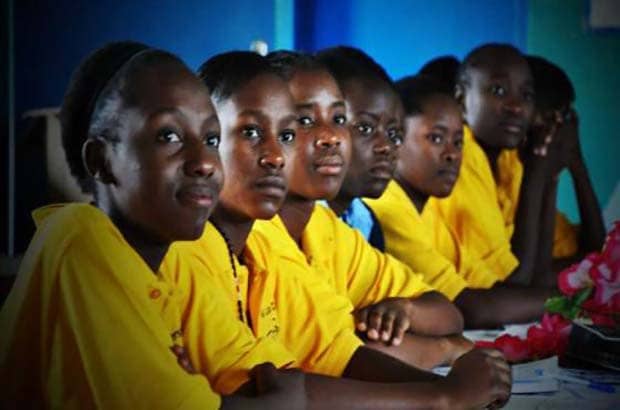
A number of African cultures traditionally sideline girls leaving few opportunities for us to talk about the prevention of abuse. While some African governments have introduced laws aimed at protecting girls, protection alone is insufficient. We need the platform to show who we are and what we can do without being viewed as “just girls”. Over the years, more women locally and internationally have responded positively to the upliftment of girls by taking on higher positions of authority in society and government, and pushing for change. Successful women respond to criticism by proving that life is not about being at home and raising the kids, but there is so much more we can do out there to change the political and economic situations all over. This stresses the need for us, as sisters to stand up and act. Surely in a world where girls outnumber boys by 52 to 48 percent, the scales of authority should tip in our favour? We can’t have patriarchy controlling us from all corners. The situation in Zimbabwe Where I’m from, we are slowly reaching a far yet near destination in total emancipating girls. I say its far because of the mountains and obstacles to be moved and grappled with along the way. The situation of girls in Zimbabwe is a sorry state of oppression disguised as norms heavily imposed on girls. To adjust and adapt to the hostile environment and curve their own space in the world, girls use methods that often diminish their being. Take for instance, the Blesser-Blessee “situationships”, where girls offer men sexual favours in return for their needs being met. It is exploitation, yet it happens because girls don’t see a way out. Then, some of us are criticized for our choices to remain single or childfree, even when it’s our choice to create our own path and not fall into traps created by society. Zimbabwean society even gives unmarried women nicknames such as “Chipo Chiroorwa”, which translates to “get married now or risk becoming ridiculed.” Girls are good for more than marriage I met a young girl from my hometown once, Ruvimbo. She fell pregnant at the age of 14 leading to a loss of parental love, education and deterioration of her physical health. She dropped out of school to look for work and fend for herself and the baby after been chased away from home and forced to elope. The boy, on the other hand, was allowed to continue with his studies. Ruvimbo suffered silently, unable to share her concerns for fear of rejection, stigma and discrimination. Her story brings to light how girls are more often than not, overpowered by societal pressure to get married even when they don’t want to. Many young girls and women out there put on brave smiles that hide sad stories about the detrimental effects that adolescent pregnancy has had on their lives. By succumbing to such pressure, girls are forced to deal with the overwhelming psychological trauma of giving up their dreams, and being forced into parenthood at a young age without necessarily being prepared for it. Stereotypes can be changed We are brought up in a culture that indirectly promotes male chauvinism. Some of us believe that the only way to belong to society is to abide by social standards and chauvinistic rules. The problem is, behind these rules is a false idea that gendered roles, emotions and behaviors are biological. They say it’s natural for men to show superiority, dominance and aggression and for women to be weak and servile. Really? The truth is, these stereotypes can all be changed. Women need to kick start the revolution and increase the volume of voices to prove that we too can be superior and aggressive. Ladies, let’s avoid people that try to belittle us and our ambitions. Small people always do that but the really great people make you feel that you too, can become great. Let’s review our own beliefs, attitudes and stop perpetuating the male chauvinism that limits our opportunities. We all want to see girls doing good for themselves. If each successful woman can hold one girl’s hand, imagine how many of our girls will be at peace.
10 Startups Selected For The Inaugural SLA Accelerator

Earlier this year we kicked off the first ever She Leads Africa Accelerator Program. In partnership with the Work in Progress! Alliance (VC4Africa and Oxfam) and Guaranty Trust Bank we set out to create a 3-month accelerator program designed to identify, support and fund the next generation of Nigeria’s brightest female entrepreneurs. The SLA Accelerator received applications from over 120 startups from across Nigeria. The selected entrepreneurs were evaluated based on their traction and progress in the market, management team and vision to grow and scale across Africa. The selected businesses are: Fresh Direct Produce and Agro-Allied Services – An eco-friendly social enterprise that produces premium organic produce through hydroponics and community action. DeliveryBros – Helps you save time and stress through pickup and drops from the market to your house or office. Medsaf.co – Solves the medical industry’s procurement problem, by providing a technology enabled distribution solution resulting in transparency and simplicity. Koko’s Kitchen – An indigenous brand of confectionary dry mixes specially tailored to suit the taste buds and pocketbook of the quintessential person on the go. Bubble Tii – Bringing the Bubble Tea phenomena to Africa. Shuttlers – Enables professionals to access comfortable and efficient transportation to and from work using seat matching technology. Keek’s – Designs tailored weight loss packages for busy women who want a plan that is both effective and simple to implement. Art Splash Studio is a virtual art studio offering a social art experience through our Paint Nite painting classes hosted at different venues in Abuja. Paint, eat, and sip on cocktails while you create. Our instructors will guide you. So bring your friends and let’s have an art party! BathKandy Co. – Creates sumptuous dessert-inspired beauty treats for women who crave the finer things. Independent Personal Assistant (iPA) – Provides strategic virtual assistance to high-level executives across Africa. We take care of the mundane while you focus on what matters. SLA Accelerator participants will spend the next three months working on their business strategy and growth, while networking with investors and potential partners. Experts and program mentors include Chudi Amu, Vice President of Investment at Verod Capital; Shirley Somuah, Investor at Cardinal Stone Partners; Seun Abolaji, Creative Director at Wilson’s Juice Company; and Tunde Kehinde and Ercin Eskin, Cofounders of ACE. The entrepreneurs will have the opportunity to pitch their businesses at an investor Demo Day in October and compete for N2 million investment from She Leads Africa along with other business support services. Congratulations to all of the selected entrepreneurs!
Is the law keeping young African women safe from sexual violence?
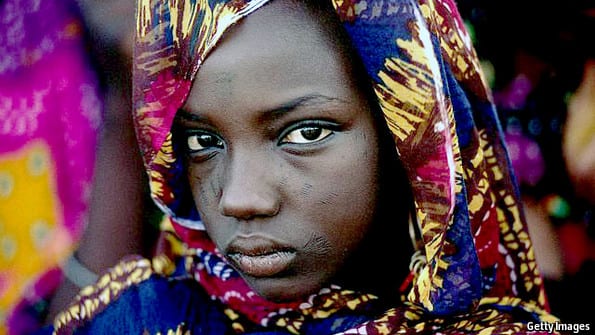
It may be 2016, but young Nigerian girls are still being exploited by those who should be protecting them. I’m referring to the father figures, lawmakers, community leaders and even some parents. Only recently, the internet and media went into a frenzy over the notion that the age of consent had been lowered from 18 to 11. The reason for this confusion? A bunch of subsections under Section 7 of the Sexual Offences Bill postulating penalties for sexual penetration in girls under the ages of 11, 15 and 18. We’re all still asking ourselves why the need to highlight these three ages rather than the relevant one which is 18. This is of major concern as concerns two main areas: child marriages and rape. Source: BBC Africa UNICEF reports that Nigeria is the country with the highest number of child brides across Africa. The number of child brides across Africa is expected to almost triple by the year 2050. It’s been almost 2 years now since the world has been fighting for the return of the Chibok girls following the #BringBackOurGirls campaign. Sadly, at this time, we are still waiting and hoping that they are rescued. Ese’s story Most people have been following the story of 14-year-old Ese Oruru who was abducted from her base by a man who took her to the North to become his bride. Reports made by the Bayelsa State Police Command as captured in Punch Newspaper state that her recent kidnapping from her home in Bayelsa to faraway Kano is a case of eloping. It’s almost laughable except that it’s not. This is a grave issue that affects every one of us regardless of gender. It thus becomes obvious that law enforcement and the rest of the community have failed to catch on that the law does not condone the violation of any woman especially one who is still a child. Ese’s predicament is our predicament and as such statements made by the very institution put in place to install law and order demonstrates our failure as a society. How on earth does a teenager elope? The fact that such a statement can be made by the police public relations rep confirm to us that child marriages are still very much a thing in this part of the world. This is a practice prevalent in the northern part of the country where matured men take on child brides. At this point of the century where societies are moving to expel inhumane practices, the reaction to Ese’s case is a prime example of the normalcy of such a practice. Whether or not Ese voluntarily left her base in Bayelsa for a faraway state or was kidnapped / coerced into doing so as certain assertions have been made, the baseline is she is still a minor. Although it has taken six whole months, the good news is Ese has been handed over to the police for her return to her family in Bayelsa. Just as author Chimamanda Ngozi Adichie has been quoted as saying, ‘culture does not make people, people make culture’. Thus, the mere fact that something is a part of our culture is not a good enough reason to uphold it. There is certainly good culture and bad culture and as humans we are expected to evolve and be progressive. What are some of the risks? There are several risks that child brides are faced with including emotional and psychological trauma that may follow them way into adulthood and in fact for the rest of their lives In addition, if the ‘marriage’ had been consummated underage, pregnancy, Vesicovaginal Fistula and STIs are all common occurrences for child brides. As a society, where do we go from here? We need to close the gap between the law and its practice through proper information dissemination and sensitization. The Nigerian police force must undertake reorientation programs with the passing of new laws. The law should expressly state the age of consent for sexual intercourse by getting rid of the compounding subsections in the Sexual Offences Bill. It is also not enough that the law prescribe a penalty of 5 years imprisonment or a fine of N500,000 for the perpetrators in child marriages! A part of her life is taken away from her as she is forced to grow up in the worst ways possible. The maximum penalty should be sought for such offenders. What can we do as women? As women, each of us has a responsibility to uplift other women especially those who do not have some of the privileges we do have. Speak up about it! Challenge the status quo! Tweet about it, blog about it, discuss with peers, make your voice heard. You may be surprised how little people actually think about this issue. Educate yourselves including other young girls and women. Females need to be aware of the dangers they face and to take extra precaution where necessary. Counsel and encourage one another. As women we need to quit slut shaming and blaming the victim. The guilty party is the aggressor or manipulator. Skimpy clothing or a flirtatious nature do not equal a license to rape. Parents and guardians also need to be receptive enough for their daughters to feel free enough to tell them about any funny business going on. Raise your sons to respect women. Men have as much a part to play as women do in the promotion of gender rights.