
Sharon Moatshe: A PR Business Must Not Over-Promise and Under-Deliver
From the dusty streets of Kagiso township in Gauteng, South Africa, Sharon Moatshe has tapped into the world of entrepreneurship at a young age, and believes that she can create whatever door she wants to open. After many months of looking for a job after graduating, the solution was simple, start a business with the limited resources that she had and survive. Currently, she is the Director and Co-founder( along with Unathi Dingiswayo) at PR House of Creatives, a motivational speaker, wife and mother. In her words: she didn’t believe she would end up so great; but here we are. Take a walk with us in this interview as we look into Sharon’s amazing work, and how she’s helping startups thrive in South Africa. Take us on a walk through PR House of Creatives PR House Of Creatives was co-founded by Sharon Moatshe and Unathi Dingiswayo after a long time spent job searching, and the resultant unhappiness of not seeing the change we wanted to see in our lives for ourselves. We were then able to identify the necessity of PR and marketing, pertaining to brand management for SME’s within our community. What support systems are critical to companies like yours? Financial backing to ensure that costs are covered for: the technology used in ensuring we deliver real-time results, keeping up with current news & trends, graphics for content. As well as for our PR travels. Another important thing is mentorship from big PR Firms and structures. PR is not an easy industry for businesses to remain sustainable, your business many come and go because of lack of mentorship. What innovations have helped your business stand out from competitors? For a previous client of ours, Distinkt Vodka, we made media kits with vodka bottles and we had packaged these in potato bags, because the primary ingredient of vodka is potatoes. We draw our inspiration from client products/ services, and conceptualise from that point. What challenges have helped your company grow over the years? We have had challenges with regards to what we charge our clients. We have had to learn that SME’s are still growing and not making much money, but ,we must still charge a price that allows us to grow and sustain our business. [bctt tweet=”Know your WHY, your business exists as a solution to a problem ” username=”SheLeadsAfrica”] What values are critical for success in the PR business? Intergrity. A PR business must not over promise and under deliver! Always be a person of your word. Execute and do your very best to match the concept you sold your client. What is your greatest success story thus far? Our greatest success story has to be TG Foods and Events! We started with the team in the township when they were starting out, we poured our hearts into our work with TG. After a few months of working together the team got their own shop which they cater food from in an uptown busy market! The place is big and beautiful. The teams understands the importance of their brand, even when they keep growing they continued using our services! It’s been beautiful watching them grow from strength to strength and knowing our creative team is a part of this journey. [bctt tweet=”Always be a person of your word” username=”SheLeadsAfrica”] What’s the next step for your company? Any plans to help small businesses outside the shores of South Africa? We would love to first help small businesses in South Africa grow and sustain that growth, then certainly the rest of Africa will have a piece of our goodness! The first thing businesses cut-out when they sinking/struggling is marketing and PR, which is more like stopping the clock to save time. We want to re-introduce to Africa what amazing impact PR can have for a business. [bctt tweet=”We want to re-introduce to Africa what amazing impact PR can have for a business.” username=”SheLeadsAfrica”] One phrase that resonates with your business strategy? Creative team of all trades and master of all! Do you run a PR company? Let us know more about you and your story here.
5 Things We Love About Shop & Ship!
We are all about the latest shipping solution from Aramex – Shop & Ship and here are 5 reasons why we can’t get over this new service. 1. Offers shoppers 23 physical addresses across the globe: With Shop & Ship you get 23 physical addresses across the globe making it easier for members to shop from websites that don’t normally ship to Nigeria! Shop and Ship provides physical addresses in 23 countries, that enables members to purchase goods and ship them from as many countries as desired. 2. Delivery within 3-6 days: Presently S&S has the fastest delivery time for shopping at international stores. 3. Cost saving – Pay for just what you order: S&S ensures that shoppers are only charged based on the actual weight of the item(s) bought and not by volumetric weight. What this means is that unlike other regular shipping companies, S&S will only charge for the weight of the product to be shipped, and not its dimensions. This is a sure way of reducing shipping costs. 4. S&S allows for tracking of goods to the point of delivery: Shoppers are able to track their goods from the first day until it arrives at your destination. This service guarantees peace of mind especially with customs bottlenecks and all. 5. Pay for your Shipping in Naira: For added ease, Shop & Ship offers you the option of paying for your shipping using your Naira card when your shipping arrives Nigeria. Join us for a Twitter chat with Shop and Ship! [ninja_forms id=158] *Sponsored post by Aramex Aramex (DFM: ARMX) is the disruptive leader in the global logistics and transportation industry. Established in 1982 as an express operator, the company rapidly evolved into a global brand recognized for its customized services and innovative multi-product offering. Traded on the NASDAQ from 1997 to 2002, Aramex today is a publicly traded company on the Dubai Financial Market, employing more than 18,000 people in 567 locations across 69 countries and leads a strong alliance network providing global presence, and bringing together 40 independent express companies from around the world. The range of services offered by Aramex includes integrated logistics solutions, international and domestic express
Kagiso Legodi: the little that I have to give means everything to me
“Whatever my mind can comprehend, I can achieve” these words are from 22 year old Kagiso Legodi, born and bred in the dusty roads of Gamashashane Limpopo, a rural Village tucked away from Polokwane CBD, South Africa. A Social Entrepreneur,Writer and Founder of ‘I am She’; a women empowerment initiative that aims to address and redress the social gender inequalities of the past. Kagiso studied Accounting at Tshwane University of Technology; is a certified Emotion coach from MHI leadership firm; and recently she wrote a book, ‘Flooded But Not Drowned’. Tell us about ”I am She”. What inspired you to start the organisation? The reason why I started I am She is because I saw how as women we are still told of things that we cannot do. Some of us dream of only being housewives and most men still see us as objects. Therefore, I wanted to inspire women and to remind them that they are capable of achieving anything, beyond the stereotypes and labels. Why women? I am passionate about women and their well-being. We are living in a developing country whereby a lot of people still go to bed on an empty stomach. Why was it important for you to create and run an organisation like this? I know that I cannot help everyone( I cannot feed every hungry child) but, the little that I have to give means everything to me. My hope is that those who I have helped, will one day go out and help other people too. What are the challenges you face when running your organisation and how do you overcome these challenges? Not having the finances to fund all my ideas. Sometimes people say things like, ‘she thinks she can change the world’. But, I never listen to negative talk and I don’t entertain it. I overcome my challenges because I believe that whatever my mind can comprehend, I can achieve. [bctt tweet=”I never listen to negative talk and I don’t entertain it.” username=”SheLeadsAfrica”] What are your words of encouragement to young people out there who would like to be a helping hand? Be in it for the people you are helping, not for yourself . Be selfless and true. Things will not be a walk in the park, but, remember your ‘why’- why are you in it? Is it fame, recognition or your love of people? You recently wrote a book “Flooded But Not Drowned”, please tell us a bit about it. Flooded But Not Drowned is a collection of real life stories by women. These are women who came out strong and victorious from the many storms they encountered. I have featured 7 different women who have been through child molestation, rape, rejection and low self esteem. I want this book to touch lives, bring hope to the lost and heal the broken hearted. I call it ‘a book for the nations’ because of how it will change lives in Africa and beyond. This means you will be playing a huge role in the media and people’s hearts . How do you plan on using this platform? I plan to use this platform to groom myself into the woman I am destined to be. To create a positive name for myself in the media, and most importantly, to encourage other women to work on their dreams and transform their lives. Where would you like the organization to be in the next five years? My vision for I am She is beyond myself and beyond Africa. I see it as an international women’s empowerment platform. A platform addressing and redressing all the social gender inequalities of the past. I want it to teach women to embrace and inspire one another. Facebook: Kagiso Princess Legodi Instagram: KagisoPrincessLegodi Email: legodiprincess@gmail.com Are you involved in a women’s empowerment initiative? Let us know about you and your story here.
Sonya Sandra Toukam Inah : Tips for taking up a banking career in Cameroon

In Cameroon, a banking career is every girl’s dream job. For one thing, working in a bank comes with a glamorous lifestyle, which most young ladies dream of; a well organised air-conditioned office, a safe place to work and obviously the glamour of dealing with money. But 25-year-old banker, Sonya Sandra Toukam Inah says being a banker takes a lot of hard work. There is no substitute for hard work, “you must be willing to work, to make a contribution and have a personal sense of identity”. Toukam has five years’ experience working with Union Bank of Cameroon. Throughout this time her humility, dynamism, and spirit have given her the opportunity to serve in several capacities in the bank. From an internship, Toukam has been able to accelerate all units of the operations department ranging from customer service, fund transfer agent, clearing officer and personal assistance to the General Manager at the prestigious bank. Toukam told SLA contributor Marriane that, even though dynamism and humility propelled her career, what really did the trick for her was hard work. She equally advocates for a great degree of clarity and purpose. “I think having clarity of where you are headed, is important. It is important to know where one is headed.” [bctt tweet=”having clarity of where you are headed, is important. It is important to know where one is headed.” username=”SheLeadsAfrica”] When asked for her advice to other young ladies who dream to take up banking as career, Toukam proposed the following tips: Ladies…you have to be clear on what your goals are and how important they are to you. When this is known, you have to go for it. But remember, nothing comes on a silver platter. Choose your subjects rightly and remember hard work is key. As an aspiring banker, you have to be confident, smart and above all well groomed. A good banker should be very optimistic. This is because your positive attitude is a pulling factor to all potential customers. A bank is a confidential institution; every potential banker should be of good morals and integrity. Lastly, you must be smart and willing to learn from your superiors and colleagues. Do you have a career in banking? What other tips would you offer aspiring bankers? Let us know here.
Women at Wave: Empowering Young Africans Beyond the Limits
Wave Academies is a vocational training platform which aims to empower millions of disadvantaged West African youth. With skills that transform their mindset and employment opportunities that enhance their social mobility. Misan Rewan is the founder of WAVE Academy. Born and raised in Nigeria, Misan plays a vital role in the transformation of Nigeria’s education and skill development sectors. She has worked in management consulting with The Monitor Group on a wide spectrum of projects in both the private and public sector. She also supported aspiring Ivoirian entrepreneurs through, TechnoServe’s Business Plan Competition; and developed a scholarship administration model as a consultant with the Center for Public Policy Alternatives in Nigeria. Misan supported Bridge International Academies’ international expansion strategy, and is a Draper Richards Kaplan Social Entrepreneur. Noella Moshi is the Programs Lead at WAVE. She was on the founding team of African Leadership University (ALU) Education where she directed Marketing, and worked on the curriculum. Noella co-developed Goodbye Malaria, a social impact venture that works with private and non-profit organisations to eliminate malaria. She is a Mandela-Rhodes scholar, and a Praxis Fellow. Ifeanyi Okafor grew up in Lagos, Nigeria. She is passionate about helping young people discover themselves. Aissatou Gaye is a Senegalese citizen who works as a Finance Coordinator at WAVE. She is currently helping the organization draft its way towards financial sustainability through various revenue diversification and cost reduction strategies. Aissatou is also the co-founder of YAWcamp, a summer camp that focuses on developing critical, creative and proactive thinking among Senegalese youth. Amina Lawal is the training operations coordinator at WAVE. She is skilled in communication, research and creative writing. She firmly believes that having the balanced 360 degrees life is possible and steadily strives to have such balance. When she is not working, Amina writes for various blogs. We share the amazing story of these great women and how their awesome work at WAVE is creating the next generation of change drivers. What was the driving force that lead to creating WAVE? Lifting John Stott’s definition of vision as: a deep dissatisfaction with what is and a clear grasp of what could be, I’d say the driving force behind starting WAVE was a deep dissatisfaction with the state of affairs for West African youth. There are over 40 million unemployed youth in West Africa, but beyond the statistics are real faces, people like you and I, whose reality is chronic unemployment, disillusioned poverty and a loss of dignity that leads to growing levels of frustration across the region. WAVE was an attempt to stop complaining and to do something about it. So a few friends got together in a room and started designing a solution. Enter WAVE – an attempt to level the playing field for hardworking young people by teaching them the skills required to get a good job, increase their incomes and build a brighter future What has been the biggest challenge(s) you’ve faced and how have you crossed each hurdle? Biggest challenge faced has probably just been me dealing with my own insecurities (imagined and real) and coaching has been helpful in crossing the hurdle. I don’t hear enough leaders in this part of the world talk about their shortcomings and how they’ve built support networks to deal with them, and I’m no different. So overcoming has been through everything, from having a coach who helps bring self-awareness to my “automaticities” (my default way of responding) and helps me generate my best self, to family and friends who “hold the space” for me to JUST BE (rather than DO), to the serenity prayer that helps me discern where to focus my brain cells, effort and anxiety. I could give you a laundry list of other challenges faced but the critical challenge/hurdle is dealing with me first so I can see most other challenges as opportunities for learning and growth. [bctt tweet=”I see most challenges as an opportunity to learn and grow” username=”SheLeadsAfrica”] What values have been crucial to your success in the business world? Inclusiveness – Most of what drives me comes from a simple notion I’ve had since I was a kid, of not wanting poor people to be poor. At WAVE today, this value translates as “Putting People First” – from the people we exist to serve, to our team who does the serving to our partners who support our service. Our clients see how we have designed our model, service delivery and feedback culture to put them first and so are able to be very forgiving when we slip up, give us feedback and grant us a second chance to make it right. What principles and skills are necessary for young people to possess in order to excel in today’s world? There are three things I think are important for success: Knowing your “why”: Understand what motivates you, and connect it to whatever work you are doing. For example, I care about learning for the sake of personal growth. That’s my “why”. As long as I am doing work that pushes me to stretch beyond my current capabilities, my “why” is being fulfilled. Learning from everyone: Everyone has something to teach us, and if at any point we aren’t learning, then we need to look harder for the lessons. One of my favourite things about working at WAVE is that each person brings insights from their unique experiences; from the driver to an intern, to the people we serve. Trusting yourself. No one knows you better than you know yourself. Take advice from everyone, but at the end of the day, whatever decision you make must come from you, so that you can stand by it. That way you avoid regret, and you avoid living someone else’s life. What innovations have helped in achieving the set goal at WAVE, and how exciting is it to train young people of diverse background and see them become more equipped Africans? Our goal at WAVE is to increase income for unemployed youth. We do
Dorcas Tshuma: Making Every Women Count
Dorcas Tshuma is the South African founding member and programme director for Triumphant Hand of Mercy Initiative (THOMI Africa). THOMI Africa empowers women and girls, who are helpless or homeless, with the skills and confidence necessary to secure a job, create a healthy lifestyle, and regain a home for themselves and their children. Dorcas has participated in prestigious events across the globe: The UN Global Compact Leaders Summit in New York, the Civil Society Policy Forum in Washington DC and as the guest speaker for NIMSA (Nigerian Medical Students Association) on their Empowering women to Empower Humanity female international summit. Please briefly highlight what THOMI Africa is about? We are a non-governmental organization which support the UN Women’s flagship programme of ”making every women count”. We look at challenges women face, and suggest different solutions. We equip women with the knowledge that will enable them to be skilled at all levels, irrespective of their geographical location. THOMI Africa is against the abuse of women and children. We also campaign against the abuse of drugs, alcohol, and form of substances. We raise awareness pertaining to breast cancer, TB, HIV & AIDS, including the care and counsel of victims dependents. Additionally, we make every women count by assisting the elderly, disabled and widowed in our community. Why and when was THOMI Africa founded? I founded this organization a long time ago, but it was officially registered in 2015; due to my natural passion for gender equality. It used to sadden me every time I saw girls and women suffering, begging on the streets with kids on their back, starving, being raped, abused and murdered. That is what triggered me to be involved in making every women count, through empowerment programmes which equip women and girls. As a Programme Director what does your role entail? I oversee the administration of policies and programmes; and I monitor and report on the economic empowerment portfolio and provide assistance when needed. I also communicate with all project/programme partners at all levels, and ensure that the organisation strategy is developed across all areas. I play a role in in decision making and provide financial analysis, and provide guidance on all activities, plans, targets and business drivers. What is the best book you have ever read? Animal Farm by George Orwell. Since its inception what are some memorable THOMI Africa achievements? Attending the UN Global Compact Leaders Summit (New York) in 2016; Being part of the World Bank/International Monetary Fund Annual Meetings as part of Civil Society Policy Forum in October 2016 in Washington DC,USA; Being guest speaker at NIMSA Female International Summiton on the topic, “Empowering Women to Empower Humanity”. We also participated in the Anti Female Genital Mutilation Campaign which took place on Saturday, 19th of November, 2016; and were nominated by United Nations women last year, as a 2016-2017 Global Champion for change. Any challenges? Being unable to secure adequate funding to execute programmes and campaigns. But, every organisation face challenges and they differ depending on the circumstance at hand. For anyone who would like to contribute to ‘making every women count’, which qualities are you looking for? Someone who will contribute to ‘making every women count’ must have, among other qualities, a natural passion for helping the underprivileged. That individual needs to be able to listen, give appropriate counsel and mentoring. They need to have a strong sense of compassion and empathy for people. In conclusion they need to be able to meet deadlines and interact effectively across many levels of management. I have developed multitasking and prioritization abilities, and willingness to do whatever is needed to empower women. And a positive attitude! Do you know of or run an organisation which positively impact women? If you’d like to share your story with She Leads Africa, let us know more here.
Women at Afroes: Anne and Gathoni are Leading the Mobile Gamification Path
Afroes , short for ‘African heroes’, is a mobile-first enterprise. They’re on a mission to position African youth for productive futures by, innovating in skills acquisition, engagement and connecting to opportunity. Anne Githuku-Shongwe is a Social Entrepreneur, Social Innovator, a Development Professional and a thought leader on digital and social innovation. Anne founded Afroes in 2010, as a digital enterprise. Creating gamified learning solutions designed to reach, teach and connect Africa’s young women and men to life skills, through their mobile phones. Her vision is to revolutionise learning in Africa, with a focus on delivering positive, Africa-focused mobile phone entertainment to the youth market across the continent. Anne and Afroes have received multiple awards including, the prestigious Schwab Foundation/World Economic Forum Social Entrepreneur of the Year 2013. Gathoni Mwai is a Sustainable Development professional. She has over 7 years experience working on social development issues in Africa, and on the use of data, technology and innovation for development. Having been brought up in Kenya she is passionate about the country, its people and seeing them all thrive. Gathoni joined Afroes as project manager for the development of the PeaceApp award winning Haki II: Chaguo Ni Lako, ,a mobile game that was used for peace building in Kenya, in the run up to the 2013 elections following the post election violence experienced in 2007-8. She recently completed her Masters in Sustainable Development Corporate Responsibility. Currently, she takes on the role of Kenya programme manager, where she is tasked with scaling the Afroes product range and developing partnerships. Join us on this inspiring journey as we share the stories of these two front-running African women in tech. Tell us the story behind Afroes Afroes (the name comes from a play on the words African Heroes and Heroines) was inspired by conversations with my children. I was worried that they weren’t being exposed to any positive African media content; and that their ideas and aspirations for Africa were being influenced by the Western media’s pervasively negative messages about the continent. I wanted to do something to change that. But it was whilst I observed my son excitedly relating things he’d learned while playing the computer game, Civilisations, that I realised that, children who play computer games are a captive audience for anything you want to teach them. I knew from that point onwards that I needed to harness the power of computer games, to deliver positive messages to African children. Given the growth of mobile phone usage and ownership across Africa the idea of computer games evolved to mobile phone games. How effective has the Afroes’ strategy been, in achieving its set goals and what successes have you recorded in recent times? The Afroes strategy has had to be very adaptable to the changing times, technology and issues that affect African youth. At our core ,our main goal has been to inspire and empower young Africans with 21st Century skills, which will help them transform their lives and the lives of people in their communities. We have set out to build partnerships with like-minded organisations that see mobile phone technology as a medium to change mindsets and positively impact young Africans. In the last 3 years we have been lucky enough to receive the following awards: Winner of PeaceApp – promote digital games and gamified apps as venues for cultural dialogue and conflict management, 2014; Winner, Gender Mainstreaming Awards, Empowerment Initiatives, South Africa, 2014; Winner, ICT Innovation Award for Gender Youth and Vulnerable Groups, Kenya, 2014; To date we have had over 800,000 users download our games and 100,000s more through offline activations. [bctt tweet=”Our core our main goal has been to inspire and empower young Africans with 21st Century skills” username=”SheLeadsAfrica”] What challenges have you faced in the course of running your business and how have you been able to walk through them? Sustainable financing has been a major challenge. We have been lucky enough to have our games fully funded by our project partners, but this has been quite limiting. Another challenge we have had is convincing programme/ solution stakeholders to adopt an alternative media/ mediums, strategy and methodology to reach and engage their traditional intended audience; as well as appeal to a new demographic of social issue based content advocates, stakeholders and consumers. How important is technology for Africa’s future and how well has the African market tapped into it? Technology is important on a global scale. What is more important for Africa is appropriate technology to enable sustainable growth and livelihood development for all. The African markets have not only tapped into the technology, but are leading the charge in technological innovation. From Mpesa (mobile money), to the use of drones to transfer essential goods. Recent statistics have showed that 2/3 of young people own a smart phone, giving them access to a world of information, allowing them to tap into new ideas and adapting it for themselves. [bctt tweet=”Technology is important on a global scale” username=”SheLeadsAfrica”] If you had to binge watch any movie series, which would it be? The Wire – because it’s on my watch list but I’ve never watched it. Tell us about the Job Hunt game launching soon and the concept behind it JobHunt is a mobile game designed to simulate the online/ digital work experience. The concept of this game is to create awareness on digital jobs and the opportunities to earn an income for young people. In the game you bid for jobs, improve skills and ultimately build the skills required to win jobs in this space. What is the greatest lesson you’ve learnt on your entrepreneurial journey so far and how has it helped you in the course of your work at Afroes? Being an entrepreneur is not an easy life, very often you need to be motivated even when things may not be working in your favour. There is this image of a man digging in a cave with a huge diamond just a few digs
Dr Yabome Gilpin-Jackson: My work is about developing our human capacity to be, think and do things differently and better
Dr. Yabome Gilpin-Jackson was born in Germany, grew up in Sierra Leone, and completed her studies in Canada and the USA. She is a social scientist, organization consultant, academic and writer. Dr Yabome Gilpin- Jackson considers herself to be a global African, dreamer and storyteller – a curator of African identity and leadership stories. She’s been named International African Woman of the Year and Emerging Organization Development Practitioner 2017. The author of Identities: A short story collection, and initiator and co-editor of We Will Lead Africa, Volume 1. Best known for: Her laugh. Yabome, who is married and the mother of 3 children, has also published several journal articles and book chapters and continues to research, write and speak. Most recently at Princeton University – on the importance of holding global mindsets and honouring diversity and social inclusion in our locally global world. What is We Will Lead Africa? We Will Lead Africa is a platform for inspiring continued change and transformation on the African continent, in two ways: First, we collect, curate and share the stories of everyday African leaders who are making a real impact on the progress of the continent. Second, we encourage networks of everyday leaders to gather in their communities to share, learn and inspire each other to continue taking actions that make a difference. At our root, our work is about sharing inspiration and action, through the power of storytelling. We know that the personal narratives of ordinary everyday leaders are in fact extraordinary. Our first volume shows this powerfully. It reminds us everyday that Africans are taking charge of their destinies and futures, despite popular opinions. [bctt tweet=”Africans are taking charge of their destinies and futures, despite popular opinions” username=”SheLeadsAfrica”] What inspired you to create We Will Lead Africa? My inspiration came from a deep desire to be part of the movement of Africans reclaiming our own narratives. When you live in the West/Diaspora, you are bombarded by news, images, and everyday negative stereotypes, that imprint the challenges and deficits of the continent on entire populations that don’t know any different. As this is perpetuated, Africans ourselves become hooked into a sense of helplessness and hopelessness, even when we know that the dominant view is an incomplete one. We do not hear about all that is going well, the innovations occurring, the industries emerging and expanding, the people and groups who are no longer waiting for our political leaders and foreign aid to fix all our problems. As we lose hope, our conversations become like the very dominant Western narratives we are subsumed in. For example, I received a call for submissions to the Kwame Nkrumah International conference a few years ago and the list sparked a deep desire for change in me. The list was focused on all the historical issues that have led us to the political leadership challenges we face on the continent. Then, I thought what about leadership NOW and into the FUTURE? What does that look like? That was what sparked the idea for We Will Lead Africa. When I met my co-founders and co-editors, Sarah and Judith, they shared similar thoughts and sentiments and off we went. It’s important to say also that we are not interested in a one-sided view or only the positives…we want to know and be inspired by the fullness of stories of everyday leaders. How do they navigate and overcome the challenges they face everyday, to solve complex problems on the African continent? [bctt tweet=”My inspiration came from a deep desire to be part of the movement of Africans reclaiming our own narratives” username=”SheLeadsAfrica”] What one story had the most impact on you? This volume is so full of inspiration and examples of courage! I was impacted by all of them in different ways. But, the one that I keep remembering though is, Chris Mulenga’s story about starting a program to help get street children recognized for their resilience and innovative capacities and reunited with their families. Chris describes how he has done this work that has a 90% success rate. He describes himself as poor when he started and says he is still poor. Yet at the time of writing the book he had helped over 6,500 children and has been recognized with international humanitarian awards. He attributes his inspiration to the value of being hospitable-which he learned as a child- whereby his family would share what they had no matter how little; and to the orientation of service to the poor that comes from his Catholic faith. I just keep thinking about the resources available to so many of us, and yet, we are stopped by the myth that we do not have enough to make a meaningful difference to the lives of others. What if we just tried? What if we just started now, with whatever we have? What are the 3 main steps you’d advise for an aspiring author ? 1. Get clear what story you are passionate about telling and why 2. Get clear who you want to tell it to 3. Be focused and determined…and just start writing. There really is no magic to it – it’s 90% determination and the willingness to make time to do the work needed. Growing WWLA brand… Our priorities are growing We Will Lead Africa networks and encouraging other African leaders to take on editing volumes as well. The three of us have identified a volume we will work on next, and we are documenting our process, which we will make available to others interested in editing a volume as well. For now, stay tuned in the next 18months to 2 years for the following volumes: We Will Lead Africa: Technology; We Will Lead Africa: Women; and We Will Lead Africa: Governance. Our priority is in growing our impact in inspiring everyday Africans to take action for the change and transformation of the continent. We are in this for the long haul and are choosing to go
Udoka Uju: I am the first woman in Nigeria to come out boldly as a creative Painter
Udoka Uju the ‘first lady painter’ as she fondly calls herself, is specialized in creative wall designing (interior and exterior painting). She is also the founder of the ‘Grab a brush, Color a Life’ Initiative,which targets poorly kept environments and beautifies them. She took a bold step in 2015 when she resigned from her banking career to pursue her passion as a painter. [bctt tweet=”… I am an influence to all other creative women out there…” username=”SheLeadsAfrica”] What does it feel like to be a lady painter in a male dominated vocation? Knowing that I am the first woman in Nigeria to come out boldly as a creative Painter, with a totally different painting concept and solution, does feel good. The idea of it being a male dominated field is because we allowed it to be so in this part of the world. I am glad I am an influence to all other creative women out there, now a lot women are coming out as Painters, even those who only called themselves “Artists” are now adding Painter to their profile. [bctt tweet=”…my experience made me realize how some of us actually take people with blue-ollar jobs for granted.” username=”SheLeadsAfrica”] What gave you the push to walk away from your 9-5 job to pursue your passion? What motivated me to go pursue this business idea was the desire to find my own path in life, and to use it to inspire the lives around me. Up until late 2015, I had never thought of being a Painter. I had only always been fascinated with beautiful homes and spaces. I used to wonder what it took create beautiful spaces and I used to imagine myself creating spaces like that. So one day I just started calling myself The Lady Painter, and since then all I think of is how to create amazing spaces for people to live and work in. How was your transition like from being an employee to becoming an entrepreneur? What hurdles did you encounter? My transition was a hard one, from paid employment to uncertainty. When I started off this business, my experience made me realize how some of us actually take people with blue-collar jobs for granted. I used to have clients turn down signing an agreement with me, because they felt my job was not serious enough to have an agreement. I found myself spending even my profit on jobs I had concluded. To stop that from happening further, before I proceed on any job, my clients must sign my service request form, with my terms and conditions of service stated clearly, which saves me from being liable for defects on walls that I have no control over. This helps me do my job professionally. [bctt tweet=” Start by taking a first step which is understanding that your life is purposeful.” username=”SheLeadsAfrica”] Tell us about your initiatives and how they are impacting lives, As part of my desire to give back to society and really inspire lives around me, I founded an NGO ‘Grab a brush, Color a Life’ Initiative. This initiative is all about beautifying a poorly kept school or location- in any local community with colours and patterns. The maiden project took place on October 1st, 2016 at Araromi Primary School Mushin, Lagos. What led to it was the desire to not only make money from my skills, but, to also touch lives positively using my painting. I believe that everyone deserves to live and learn in a beautiful environment and so my mission is to inspire people to live in their full potential- using colours and bold patterns. My next project is in Imo state, I choose my locations randomly. Have you done jobs for male clients? Was their response positive or negative and how did you stand up to negative responses? Yes I have done jobs for male clients and the response is always good, I have not received any negative response or feedback from male clients. What message do you have for women who feel stuck in their jobs and would want to pursue their passion?Where do they start from? I would give them the same advice I gave myself, which motivated me to be who I am right today, I curled it from a bible verse and gave it some twist. It says: whatever makes you happy, whatever gives you satisfaction, if it will make you a better person, if it will make your neighbor (in this case your customer) happy, and if it will earn you a decent income, then by all means go out there and do it! Start by taking a first step which is understanding that your life is purposeful. How do you combine working as an entrepreneur and pursuing your other initiatives? Thankfully, both my business and my initiative have the same offering – Painting, which makes it a little easy to manage. The only difference is that one brings in money and the other cost me money. It’s quite a lot of work because both my initiative and job require me to travel to different states frequently. Also, I have a reliable team to handle my business when the initiative requires my attention. I can be reached on 08063275102 or email info@theladypainterng.com and my website is www.theladypainterng.com. I am also available on the major social media platforms. Twitter – @LadyPainterNG Facebook – @TheLadyPainter Instagram – @theladypainterng LinkedIn – The Lady Painter Are you female painter or aspire to be one? If you’d like to share your story with She Leads Africa, let us know more about you and your story here.
Rutendo Beverly Mpofu : A lot of people feel there are no returns in basketball
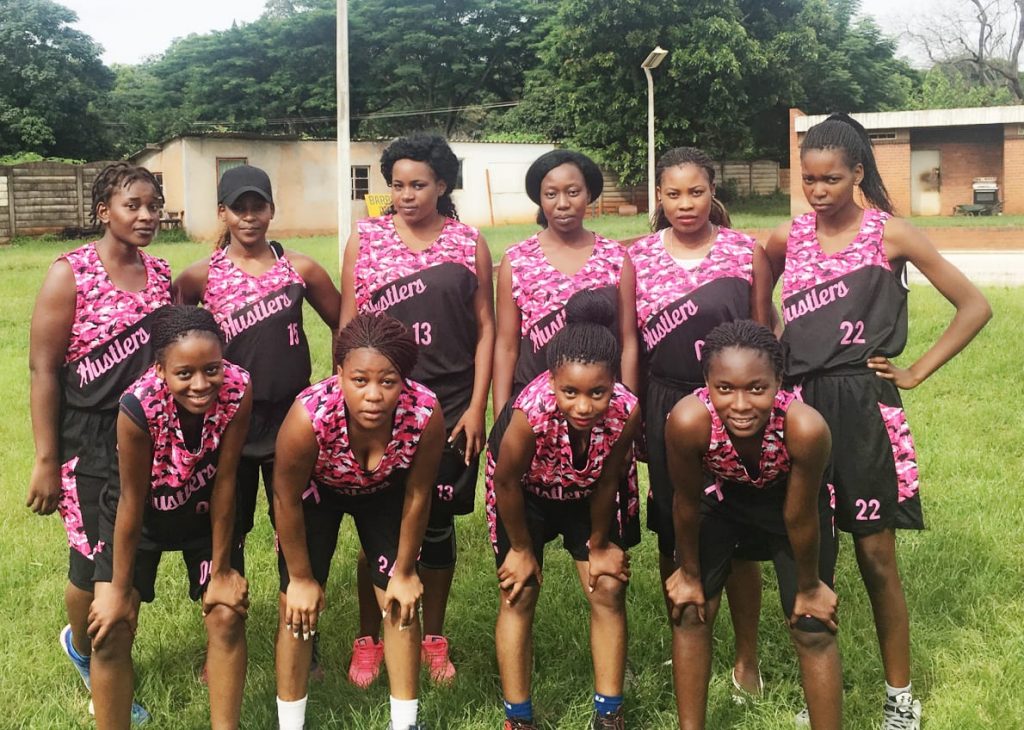
Twenty seven (27) year old Rutendo Beverly Mpofu, was born in Bulawayo, Zimbabwe. In September 2015 she started a basketball team, Lynx Ball Queens, with four other women, Tanya Kazembe, Celestine Karimbika, Sarah Kabiseni and Melisa Maganga. Beverly is the team captain and currently plays number 15. She also holds a Communications and Media with Management degree from Monash University in South Africa. [bctt tweet=”One doesn’t have to be social but on the court there has to be unity” username=”SheLeadsAfrica”] When did you decide to start a basketball team? I joined a basketball ladies association team soon after my undergraduate degree, but realised we had different goals. This pushed me to start my own team. At first there was a lot of slacking and not taking things seriously. But, after the loss of one of the team founders, we decided to be serious about the team. We joined another team called Hustlers in Mufakose, Harare and after a while we branched out on our own to become Lady Hustlers. We recently rebranded to Lynx Ball Queen. We started out small with a group of about seven women and now we are more than 12. Our team is made up of women between 16 – 27 years of age. Within our first year we managed to make it to the top six in the national league with only seven players. It was really challenging but we were happy with the results. Last year (2016) we were number two. So I clearly see a great improvement. Where do you get your sponsorship? We currently do not have sponsorship, because a lot of people feel that there are no returns in basketball therefore they do not want to sponsor it. We have approached many people and Net-One (a telecommunications company in Harare) has given us t-shirts before. We take whatever small donation we get and are open to working for our sponsorship. Because we do not have sponsorship, we purchase our own kits, and cover transportation costs to and from training and tournaments. A subscription fee of $10 is paid every month by each team member, but because of the current economic conditions we have agreed that people pay whatever they can. This is what is used for the basic running of the club. Where does your inspiration come from? My brother used to play since primary school. So that was my grand entrance into basketball. All the women on the team started playing when they were young, so it’s just a passion for most of us. What does a normal day look like for you? We train during the week but it is very challenging to get everyone in the same spot at the same time because of our many different commitments. We have players that are still in school and some work, so we have to incorporate training with other clubs that have venues with good lighting. This is so that we are able to train late into the evening. We generally try to put in work where we can. On the day of the tournament, we do not train. We sit, talk and strategise and do warm ups 15 mins before a game. It also helps if we know the people we are playing. Which women have been the most influential in your life? My Mother. She continues to teach me that you can’t wait for other people to do things for you. You need yourself first before you need someone else. [bctt tweet=”When you get on the court, you leave your quarrels on the line” username=”SheLeadsAfrica”] What is the greatest lesson you have learnt when setting up your team? To be patient. I deal with people from different backgrounds who have so many things going on, so I have really learnt to be patient. How do you manage conflict within the team? When one gets on the court, they leave their quarrels on the line, they can always pick them up after if they choose. But basketball time is basketball time. One doesn’t have to be social but on the court there has to be unity. That being said, people don’t bring their problems on the court. What personal traits are necessary for what you do? A high basketball IQ. One should be able to take theory and apply it on the court. A fighting spirit and perservance. The ability to work within a team and realise that one cannot do everything by themselves. Do you run a business in the sports industry? If you’d like to share your story with She Leads Africa, let us know more about you and your story here.