
Trish Lewis: I’ve always been obsessed with businesses that solve problems
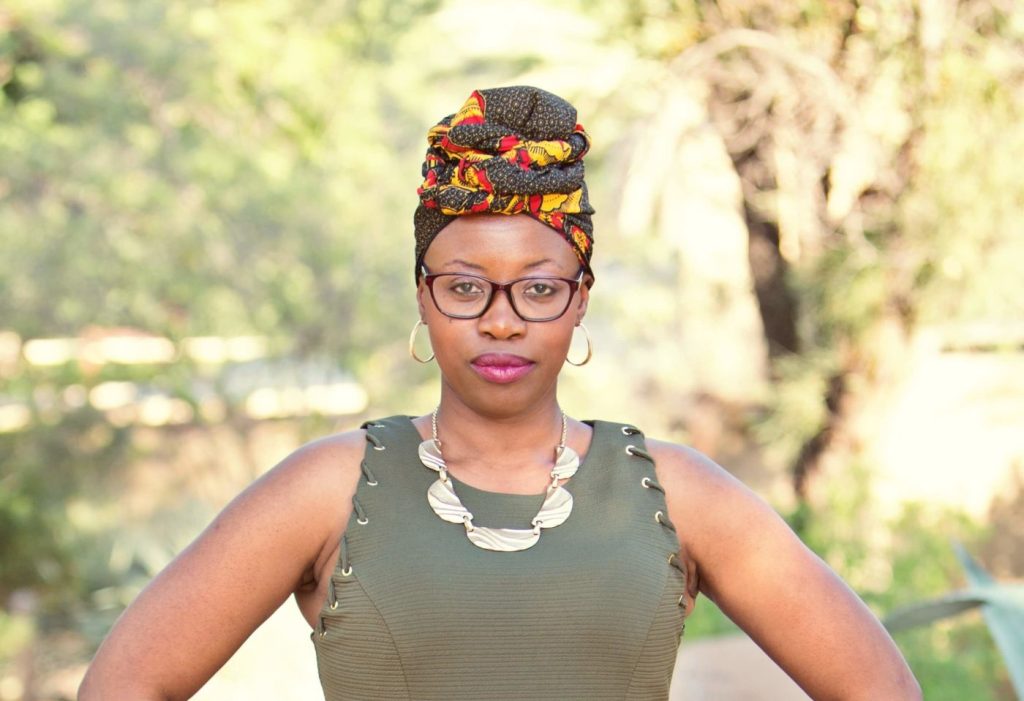
[bctt tweet=”Trish Lewis: Launching Heritage Box has been the ultimate expression of me following my dreams” username=”SheLeadsAfrica”] History doesn’t always stay in the past and for Trish “Manyoni” Lewis, heritage is a means to profit-earning. Trish Lewis is the founder of Heritage Box, a business that delivers snippets from African-American and African history to eager children each month. Her business has been featured in Essence Magazine, ABC News and BlackNews.com to name a few. Through Heritage Box, Trish is helping black parents raise children that are knowledgeable of their rich African heritage. Believe it or not, this thriving business is Trish’s first attempt. Trish is a firm believer of start first, improve later. Keep reading to find out how Trish Lewis has kept her business from failing. What was the idea that sparked Heritage Box? I have always been fascinated, no, actually obsessed with businesses that arise to solve problems. I knew I wanted to start a business that solved a problem I had, that had true impact and was in my field of passion. The idea truly fell on my lap. My then 8 year old daughter made a remark that all they had done for Black History month was colour a picture of Dr Martin Luther King. I was shocked that this was the extent of their black history education. But more importantly, I felt as a parent, it was my responsibility to share this history with her. My husband and I regularly visit my native country Zimbabwe with our children. However, teaching them more about Africa was something we were not being consistent about. Given this problem, or “exposed gap” in our home education, we knew as parents we had to be more intentional and consistent. [bctt tweet=”Trish Lewis: I felt as a parent, it was my responsibility to share black history with my daughter” username=”SheLeadsAfrica”] We examined the reasons we were not consistent and realized that the busyness of school activities, being working parents and the children’s extra-curricular activities were preventing us from devoting the time we knew was necessary to teach our children about their African heritage. We spoke to a number of other parents and realized we were not the only ones with a desire to correct this. The “how” was easy, our kids love getting mail! I had a literal light bulb moment when they received a package in their name and were so excited to open it and let everyone in the family know. I figured, why not package fun lessons and activities on African American history, African history and geography as a gift in the mail? How does one make a business while celebrating heritage? I think at its core, every business is influenced by the owner/founder’s heritage. The extent to which they show it may be different. At some point or another, I believe we all ask the question, “Who am I?” The answer to this question normally involves an analysis of one’s lineage and heritage. I think our business helps a lot of parents who are in the process of getting to the core of who they really are. These parents care about their children having the same foundational knowledge and pride. The key as a business built on celebrating heritage is to make yourself visible to those who share the same vision and to stay grounded in your purpose. [bctt tweet=”Trish Lewis: I think at its core, every business is influenced by the owner/founder’s heritage” username=”SheLeadsAfrica”] When would you say you took a chance and followed through in your dreams? I would say by far launching Heritage Box has been the ultimate expression of me following my dreams. Even at a young age, growing up in Zimbabwe, I always dreamt about owning and running my own business. My academic strengths were in Mathematics and the sciences, so societal pressures had me focus on a career in the sciences. It was more “secure”, and I felt I was “wasting” my talent by pursuing something else. I came to the United States and pursued a degree in biology and subsequently had a great career in the medical field. [bctt tweet=”Trish Lewis: I realized that my career would never offer me the one thing I defined as success” username=”SheLeadsAfrica”] However, after my husband and I started having children, I realized that my career would never offer me the one thing I defined as success; freedom of time. The life I envisioned after the career had set off was one of enjoying quality, present time with my husband and children. The freedom to visit my family in Zimbabwe frequently, and the ability to support or build an orphanage in Zimbabwe. Deep down, I knew that my childhood dream of entrepreneurship was the key to my ideal life becoming a possibility. With this conviction, I began to seriously consider starting a business. How were you able to build your business without any prior experience and escape the failure that affects many start-ups? The key for me was, this was a business I believed in with every core of my being. It was something I saw as having an impact not only to my children, but to families all across the Diaspora and to parents adopting African or African-American children. Through early surveys, I had received a resounding “Yes , we need this” and this carried me through. It fuelled me as I read voraciously on the ins and outs of starting a business. It emboldened me as I started building relationships with other entrepreneurs and learning from them. Above all it kept me going whenever self-doubt would start to kick in. I believe that clarity drives results. If you can get clear on why you would like to build that particular business, your how will naturally be a sustainable one. And naturally is adopting the mentality that failure is not an option. I didn’t even consider failure. I would say you have to commit to fighting for this dream, even to the
Salha Kaitesi: Many of our traditions and stories have been lost
[bctt tweet=”Salha Kaitesi of @ElleAfrique shares her advice on starting a blogzine. It’s not so hard!” username=”SheLeadsAfrica”] Salha Kaitesi is a social entrepreneur currently managing two projects: Beauty of Rwanda, a not-for-profit organisation that economically empowers women and girls in Rwanda; and ElleAfrique, a blogzine dedicated to challenging the perceptions of African girls and women in the world today. The blogzine features writers and wide-ranging topics from across Africa, providing a space for African women to empower and celebrate one another and unite through their stories. How does ElleAfrique stand out in comparison to other lifestyle magazines that target African women? ElleAfrique stands out for several reasons but what truly makes it special is that it’s a platform dedicated to the everyday African woman. Most of our contributors are not “professional” bloggers/writers, they’re just everyday women with a story to tell and wisdom to share. ElleAfrique bloggers are university students, stay at home mums, professionals and everything in between. Our blogzine also covers a range of topics, from the negative effects of the war in Burundi to the latest fashion trends in Cameroon, and span the entire continent because we have gathered women from many different parts of Africa and given them a voice through our platform. The special ingredient to our success is our contributors. What’s the most difficult aspect of running an online website in an age where advertising money is hard to come by and entry barriers are low? Starting a blog has never been easier. What’s important is uniqueness because there are thousands of blogs out there. Attracting new readers with fresh content while maintaining our current readership has been vital to the success of ElleAfrique. It’s a constant balancing act. Constantly monitoring the performance of the blog has been key to keeping on top of things. I have an amazing management group of women that work with me. The blog would not be what it is today without them (and those who share their stories, of course). ElleAfrique is successful because of the entire group. [bctt tweet=”@ElleAfrique is a platform dedicated to telling the stories of the everyday African woman ” username=”SheLeadsAfrica”] Are there stories about African women begging to be told that no one is telling but should? I believe the stories of our mothers and grandmothers are absent in magazines and media in general. However, they are important because these matriarchs, through their life experiences, have shaped today’s African woman. Through modernization, civilisation and the mass exodus of many towards the “Western world”, many of our traditions and stories have been lost. Writing and reading about them will strengthen our connection to our past and bring greater perspective to our present. What’s your advice to anyone starting an online African magazine? Having a unique niche is great, but even if that niche is already being covered elsewhere you can always turn your model into something that is still appealing to future readers. Starting an online magazine isn’t as hard as you might think, but you must be prepared to work really hard. Your small idea can become a household name! When I started ElleAfrique, it was being managed by someone else because I knew nothing about blogging. But I took the time to learn about web design and building a blog. Knowledge of online marketing was also an advantage and an important area to be familiar with. [bctt tweet=”Salha Kaitesi – What’s important is uniqueness because there are thousands of blogs out there” username=”SheLeadsAfrica”] What does the future hold for ElleAfrique? The African woman is multifaceted, multitalented and multicultural and it is because of this that we want all of her represented. I think the best way to achieve this is to have at least one contributor from each country in Africa. We want to attract brands that cater to African women and to be a bridge for businesses to reach their target market. Ultimately, our mission is to change the narrative about the African woman, and who better to do this than the everyday African women, living on the continent or in the diaspora. If you’d like to share your story with She Leads Africa, let us know more about you and your story here.
Yeniva Sisay-Sogbeh: You have a rare gift to share with the world
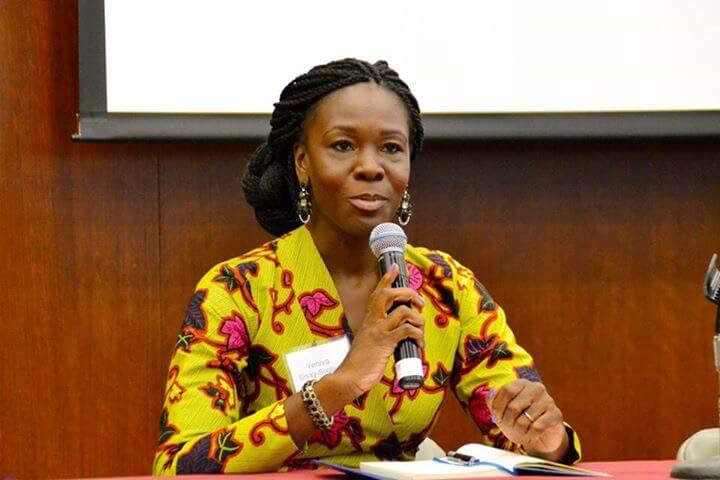
[bctt tweet=”Yeniva Sisay-Sogbeh of @EXCEL_SL is passionate about Sierra Leone with her leadership” username=”SheLeadsAfrica”] Picture a fully rebuilt Sierra Leone where every citizen has fulfilled their potential. Yeniva Sisay-Sogbeh is trying to make that a reality. A consultant and value creator, Yeniva is bringing change to her country through education and youth development. For Yeniva, what she does isn’t just a job. As a consultant, her goal is to create value for her clients and inspire people to expand their horizons. Yeniva also does this with her experience in youth development, she’s spent over 18 years in that sector. You call yourself a value creator, what does this mean? As a consultant, facilitation is at the heart of what I do. My work is to help programs, products, and people expand. I approach my work from a creative manner. What that means is throughout my career I have worked in education, training and development, marketing, facilitation and business development. These are very diverse experiences. I love what I do and I don’t just consider it just a job. In any one of my consultancy assignments, I have my goal to create value for my clients. By way of growth, capacity development, increase in sales, brand recognition, visibility or whatever the assignment may be, I show up to create and deliver value. The twist to being a consultant is you are with each client for a specific amount of time. It can be anywhere from 3 weeks to 3 years, so you have to be focused on the value creation you bring to the table in that set amount of time. [bctt tweet=”@iamyeniva – I teach to inspire people, especially young people to expand their horizons.” username=”SheLeadsAfrica”] Tell us about starting EXCEL Sierra Leone, what were the particular challenges you faced and how did you overcome them? I first began my work in youth development over 18 years ago. As a beneficiary of after school programs, I know the value of the life lessons I learned inside and outside of the classroom. Founded in 2007, EXCEL Sierra Leone (Educational Excellence, Community, Empowerment, Leadership —a community based organization CBO) has endeavoured to reach some of the most promising young people in Sierra Leone to participate in collaborative educational enrichment activities, programs and support services. EXCEL seeks to pioneer the transformation of the education system in Sierra Leone in order to develop a culture of academic excellence. This transformation focuses on empowering the next generation to become leaders, creatives, innovators, thinkers, and change-makers who are not only inspired, but in action to re-define Sierra Leone. We envision a Sierra Leone where everyone has an opportunity to fulfil their potential and achieve educational excellence. Running an organization comes along with many challenges, from staffing to keeping overheads low. I would say our biggest challenge however is finding the funding needed to support our programs and services. Many grants are focused on primary schools, girls child education etc, which are very important causes. However, I find that there are few geared towards secondary school students. We have had to remain creative, finding alternative ways of raising funds inside and outside of Sierra Leone. I have been determined not to allow these challenges to derail or discourage the team. We remain optimistic and seek assistance through partnerships and mentoring from other experienced organizations. What motivates you everyday? Getting up everyday and setting out towards my goal of and doing the work I love and enjoy. Knowing the work I do in the community, private sector or development; impacts my community and my country. That is powerful. I am also motivated by the shift that is happening on the continent and how people in the world see, view and respect Africa. That makes me proud and I am motivated to contribute to the shift. [bctt tweet=”Yeniva Sisay-Sogbeh: We envision a Sierra Leone where everyone can fulfil their potential” username=”SheLeadsAfrica”] Your mantra is “I teach to revive the heartbeat of a generation gone numb”, tell us the story behind this Being an educator is my passion. I teach to awaken the possibility that is in each of us. There is so much happening in the world and we see our youth growing up way before their time due to a variety of circumstances. I teach to inspire people, especially young people to expand their horizons. To revive the heart beat and thirst for change through education and excellence. My greatest wish is to see all of the young people I encounter #EXCEL. You’ve appeared in the documentary, “Am I too African to be American or too American to be African”, can you share how this experience was like? This was a dream come true. Being a first generation African in America, we have a unique experience and story to tell. It seems as though we have heard the Jewish- American, Asian-American, Latino- American story but never our own. It was such an honour to share my perspective and my story as a part of the cast. I think it is imperative that African women tell their own stories and through this film, I have been able to contribute to the discourse around what it means to be a part of both worlds. It is something I wanted to do for a long time so I am grateful for the opportunity. It has been awesome connecting with others just like me all across the world! Why do you think you were awarded the Young Fem-Leader at the Illumessence National Women Awards (INWA)? I was humbled by this great honour. To be recognized amongst some of the most powerful and inspirational women in my country blew me away. I have been a catalyst of many movements which advance opportunities for changing the narrative of the Sierra Leoenan’s especially woman and girls. As the founder of EXCEL Sierra Leone, many young people from the program have gone on to attend some of the best universities all over the world. As
Esther Mahlangu: It is my passion to transfer this skill to the generations after me
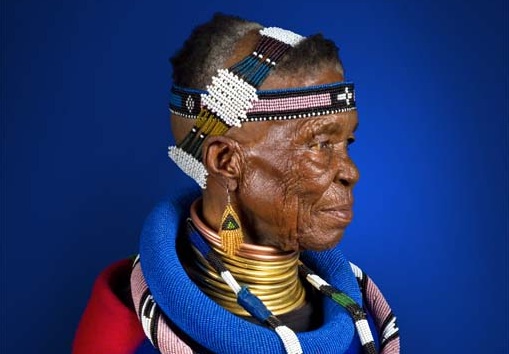
Esther Mahlangu may be the oldest #MotherlandMogul we’ve shone the spotlight on but she is serious goals. She is the world-renowned artist credited with elevating the Ndebele painting and culture on the world stage through her work. Esther is has created a successful brand of her products in Mpumalanga, Kwamhlanga where she lives. She is known for her bold large-scale contemporary paintings that reference her Ndebele heritage. Esther has worked with the likes of BMW, FIAT, Belvedere and many other globally-recognised brands. SLA contributing writer Khethiwe Mndawe interviewed Esther Mahlangu at the Lilizela awards. Khethiwe also got a special invite at her her 81st birthday celebration. When and where were you born? I was born in 1935 on a farm outside Middleburg, in the Mpumalanga province. Being the first of nine children —six boys and three girls, I had huge responsibilities at a young age. Yet, my parents and family allowed me to be a child. When I got introduced to art, they realised that they couldn’t keep me away from painting no matter what duties and chores I had to take up. I started painting at 9 years old, being taught by my mother and grandmother. I was inspired by both women. From as far as I can remember, I followed traditions passed down from my mother and grandmother. I learned traditional Ndebele wall painting and bead-work, as a child that was all I did every day. I can say I became an expert in executing murals as a teenager, using a wide range of paint colours. Initially, we used to gather traditional soil paint from the forests and by the rivers but eventually we started using modern paints. [bctt tweet=”Esther Mahlangu: I started painting at 9 years old, taught by my mother and grandmother” username=”SheLeadsAfrica”] What type of work were you doing before you were discovered as a renowned artist? Who discovered you as an artist and icon for the Ndebele culture? Between 1980 and 1991 I lived and worked at the Botshabelo Historical Village, an open-air museum of Ndebele culture. I can say I was discovered in 1986, by researchers from Paris who were travelling the world to document traditional arts. These artists saw the paintings of Mahlangu’s house. They learnt more about why we paint like this and the significance of the paintings. They invited me to create murals for an exhibition of international contemporary art, the Magicians de la Terre (Magicians of the World). I travelled to France in 1989, and stayed there for two months. I painted a house in front of thousands of spectators that included the media and art lovers. People form Europe got to know about me, where I come from, and the Ndebele culture in South Africa. After a few months, I was asked to also decorate a wall inside the Angoulême Museum of Fine Arts and so I went on to other locations in France. In 1990, I began to paint murals for public venues in Johannesburg and elsewhere in South Africa. This was soon followed by more locations in Europe and the United States. My work appears in exhibitions in more than a dozen countries. How did BMW approach you? BMW got hold of me through the government. They asked me to decorate a so-called BMW “art car” in traditional Ndebele design in 1999. I stepped into the league of Andy Warhol and David Hockney (both world-renowned artists who created previous art cars for the company). From what I know I was the first woman artist to have been honoured as such. [bctt tweet=”Esther Mahlangu was the first woman artist to be invited to make a BMW art car” username=”SheLeadsAfrica”] Which other projects have you received and achieved at? What awards have you received the past couple of years? I exhibited locally and abroad in Australia, America, Japan and in many European countries. Also, I was awarded the Order of Ikhamanga in Silver by the South African presidency for my contribution to the development of indigenous Ndebele arts. I had a painting project with FIAT, British Airways, Belvedere ReD and a project for HIV/Aids with John Legend. Also, I have many award which I received in South Africa for arts and craft. I have been honoured in the tourism sector nationally and in my province, and in the arts and craft sector. In 2016, I was again involved in a BMW project, painting Ndebele patterns on the real wood interior trims of a BMW 7 series. This was shown for the first time at the Frieze Art Fair in Regent’s Park, London. This car now takes pride of place at South Africa: the Art of a Nation, a major exhibition currently showing at the British Museum from 27 October 2016 – 27 February 2017. I had the opportunity to interview you in IsiNdebele for SA Tourism, at the Lilizela awards. How did you feel winning the Lilizela Ministers Overall award 2016 by the Department of Tourism South Africa? I was not expecting this award at all. I was so happy in the manner which my country honoured me. The attention I received after that, made me feel proud to be a South African artist and I am glad that you came in to interview me in IsiNdebele. It was difficult to understand all the journalist/radio station who were there to hear what I had to say about this once in a lifetime award. Tell us about your art school. I have always had the calling to teach the science and significance of the Ndebele painting, and why we paint. Over the decades it has become my goal to preserve my cultural heritage. I built an art school in the backyard of my home in Mathombothiini (Weltevreden) in the Kwamhlanga district in Mpumalanga Province. I have been funding the school myself. When I am not travelling for exhibitions, I still spend most of my time mentoring young artists in the traditional style of Ndebele design. I teach mostly
Samantha Chovuchovu: Logistics is not just a man’s career
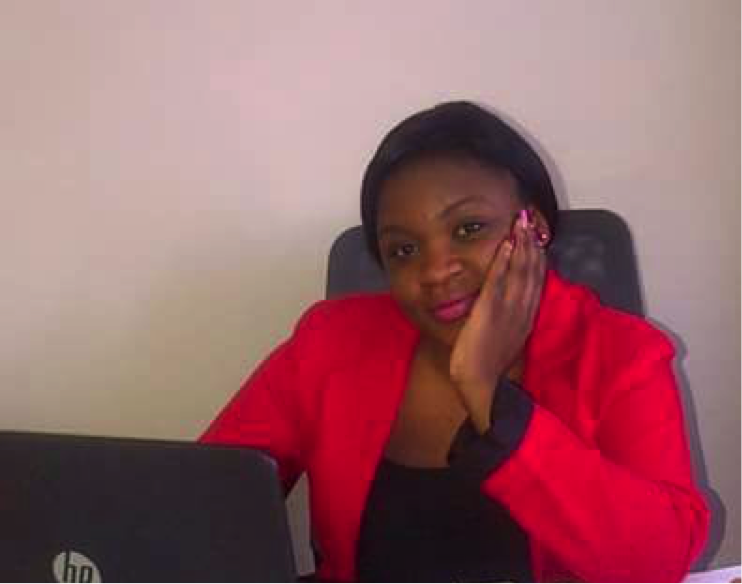
[bctt tweet=”Samantha Chovuchovu shares her experiences as woman dominating in the logistics sector” username=”SheLeadsAfrica”] Addressing the stereotype that the logistics or transport industry is a career option for a very specific gender is a challenge. The most common managerial positions undertaken by women are in secretarial, communications and human resources. What’s worse is that the industry’s positioning in the manufacturing sector unfortunately, means that very few women are employed in or run businesses. It’s been for ages considered a male-dominated field, but women have developed a significant presence in the industry workforce. From railways to roads, urban transport to civil aviation and as seafarers and dockers, women are working as drivers, conductors, pilots, mechanics and officers, as well as in administrative roles. Samantha Chovuchovu, started her own logistics company and here she shares her experiences as woman dominating in the sector. Why did you choose logistics? Logistics is an industry that continues to grow, be it on the local, national or global scale. It links me to different people. I saw this as an opportunity to grow my network and get exposure to people in different businesses, which made good business sense. Funny enough, growing up I always wanted to do law (which I’m still studying by the way) but I had a vision to run my own business one day. What does one require for such a start-up? First things first, a business plan and the ability to identify your target market. Then obviously, capital to get up and running. Once capital is established you need to source reliable suppliers and manpower. [bctt tweet=”Samantha Chovuchovu: Logistics continues to grow, be it on the local, national or global scale” username=”SheLeadsAfrica”] What common challenges come with this business? Running a logistics company can be very demanding, yet it offers a rewarding work environment. Suppliers can be unreliable and the main issue is that the business has a lot of risk factors involved. To be prepared for this one needs to be insured to cover any accidents. How do you handle competition from the male competitors? Competitors are everywhere. Being a woman in logistics has never been an issue to me. What’s more important is the role that I have to play and making sure the job gets done. I am aware of competitors out there but I consider them more of an encouragement than a challenge to me. [bctt tweet=”Samantha Chovuchovu: Running a logistics company can be very demanding, yet it is rewarding” username=”SheLeadsAfrica”] Going forward, what are your career prospects? There are a lot of opportunities in logistics apart from just transporting goods. Operations, purchasing warehousing material handling and inventory control all fall under the umbrella. I would love to seize and take advantage of all these. Any recommendations or advice to young women considering logistics business? I recommend that young women should seriously consider a career in logistics. As globalization moves forward, manufacturing and consumer behaviour will be influenced more and more by global and local markets. Hence, there’s a growing need for logistics services in the supply chain. It is not easy, but one just needs to be very diligent and it will surely pay off. Would you be in a position to mentor other women and/or offer internships to help them get ahead? Sure, I am. Mail me visit our webpage or contact me via email. Want to see women you know featured on SLA? Tell us what amazing things women are doing in your communities here.
Kendibone Sapepa: Barbara McKenzie started off with me making garments for myself

[bctt tweet=”@Kendibone_S I wanted my brand @_BMcKenzie__ to be a brand with purpose ” username=”SheLeadsAfrica”] Imagine starting out making clothes for yourself and then moving on to make a business out of it due to popular demand. That’s the story behind Barbara McKenzie, a clothing brand, styling service and consulting service based in Joburg. Barbar McKenzie is run by Kendibone Sapepa, a fashion enthusiast who wants to provide customers with classic fashion-forward clothing. You may have read some of her writing right here on SLA where Kendi schools us on different careers in fashion. Read on to find out how Kendibone Sapepa, a Marketing Management graduate is growing her brand and what she has to say about New Year resolutions for businesses. Tell us about your journey to starting Barbara McKenzie clothing. Barbara McKenzie started off with me making garments for myself. When people took an interest in what I was making, I decided to create a business out of it. You established Barbara McKenzie in 2013, how has your brand grown? Has it exceeded your exceptions? It has grown to become what I had wanted from its inception and much more! From just making clothes at home for fun, I’ve dressed admirable women and it continues to grow. [bctt tweet=”Kendibone Sapepa: Barbara McKenzie’s target market is women who emanate elegance & femininity” username=”SheLeadsAfrica”] You have a degree in Marketing Management, do you use what you’ve learned in university in running Barbara McKenzie? If so, how? Every single day. Brands need to be marketed, other wise, how would people know that Barbara McKenzie exists? Activities vary between advertising, collaborations, to anything you can think of, as well as the strategic side of it which the public sometimes does not see. 10% of your profits go towards helping a girl-child, can you tell us more about this initiative? It is a new initiative that I’ve just started. I often come across many stories about how girls cannot go to school and I’ve decided to do something about it. 10% of Barbara McKenzie profits will go to an organisation that helps young girls in need, or directly to these young girls. This of course does not exclude those who cannot afford school fees, and with FeesMustFall —we will help where we can. I wanted my brand to be a brand with purpose, so if people are buying clothes to look good, let them also feel good as well by knowing that when they buy from Barbara McKenzie, a young child is helped as well. Tell us about your consulting service, it sounds quite unique to bring clients on to be part of the design process. How did you come up with this idea? Have there been any particular difficulties implementing it? It is not really unique, as many designers offer this service to all clients. It was not really a matter of coming up with it, but rather clients who wanted a specific looking garments. Difficulties vary, from clients wanting garments that do not compliment my brand, to changing their designs half-way through production, but at the end of the day customers’ happiness matters most. What/who would you say captures the Barbara McKenzie style? The brand’s target market is women of all ages who are feminine and prefer classic style with a modern element in their clothing. Women who emanate effortless elegance and femininity. [bctt tweet=”Kendibone Sapepa went on a mini-mission to find out more fashion-related careers” username=”SheLeadsAfrica”] From your articles on SLA, you seem passionate about different careers in fashion, how did this come about? A couple of months ago, a young lady in grade 10 came to me to somewhat “job-shadow” me as her school does on an annual basis. When we spoke I learned that her parents, like most, wanted her to follow a career in science. They thought a career in science ensures a comfortable and secure life, but as one can see today, this is not how it goes. I’ve seen many a picture of people with degrees, standing at robots asking for jobs. So I went on a mini-mission to find out more about these fashion related careers to better inform these young people about what they entail. I mean with employment in RSA at its worst, why not follow what you like anyway, and also encourage entrepreneurship? What will be your New Year resolutions for Barbara McKenzie? I’m not sure if a entity can have New Year Resolutions, but I personally don’t. One need not wait till January of each year to start doing something, one just starts. Why wait for the next year to start doing something, when you can do it sooner? [bctt tweet=”@Kendibone_S – One need not wait till January of each year to start doing something” username=”SheLeadsAfrica”] I’ve started the help-a-girl-child initiative at the end of this year, I don’t think waiting until the beginning of 2017 would be any better, just so I can say that I have a “New Year Resolution”. Want to see women you know featured on SLA? Tell us what amazing things women are doing in your communities here.
Rose Mutsau: I believed in myself enough to make my own perfume
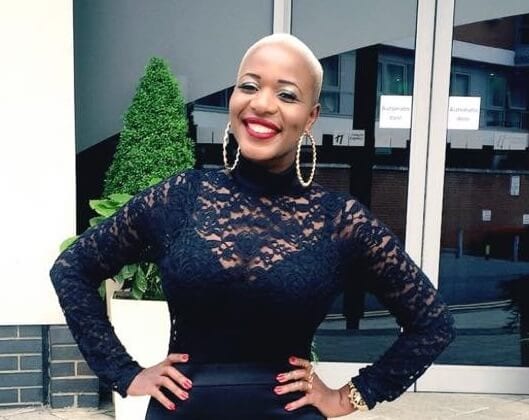
[bctt tweet=”@Summer__Rose – All I ever wanted was to make women feel beautiful” username=”SheLeadsAfrica”] Rose Mutsau is a nurse, a nutritionist and runs an online shop. But perhaps what she’s really known for is her personal brand, Summer Rose. Summer Rose is also part of the name of a fragrance Rose has created. Belle by Summer Rose is a perfume that the streets are saying smells like a million bucks and lasts the whole day. We’re tempted to add perfume-making to our growing list of unusual business ideas. Think about it, how many scents created by African women do you know? Read on to learn how Rose Mutsua found her way to creating her own fragrance line. Please briefly tell us who Summer Rose is. If you don’t mind me asking, is it your real name? My name is Rose Mutsau but most people that know me via social media know me as Summer Rose. Summer Rose is my brand name and my social media handle. I was born in Gutu, Zimbabwe and I grew up in Glenview area 8 Harare. I also lived in Gwanda for a couple of years, then Gweru before I moved to the UK in 2002. You have ventured in one of the most difficult fashion businesses and produced your own fragrance line, what inspired you? My business inspiration is definitely my mother. She was always selling something at any given time, what a woman! God rest her soul. I have always had love for fragrance and over the years I have spent a lot of money on high end perfumes such as Tom Ford, Dior, Jo Malone etc, they are a few of my favourites. When a business opportunity presented itself to me, the first thing that came to my mind was perfume. I knew that it was not going to be easy. At that point, I did not have a clue on how to make perfume let alone convince buyers that it was a worthy product to spend their money on. I believed in myself and that I could turn this dream into reality, so I started working on it straight away. My aim was to produce a fragrance just as good in quality as the high-end fragrances but a lot more affordable so that women from all walks of life could afford it. I think I have managed to accomplish that. How long did it take for you to discover the final scent of Belle? It was a longer process than I anticipated. I had to change the mix three times before I was happy with it. I wanted to release a product that I would be happy to use on myself before I expect other people to love it. All in all it took about six months to approve the final scent. I noticed that your clientele all love Belle and have been gushing over it, how does that make you feel? Are you going to offer a different scent as yet? It makes me so happy, you have no idea! I believed in myself enough to make the perfume and I totally loved the scent. Yet, I was not sure how people would receive it. The feedback has been so amazing. Most of my customers send me pictures of them holding their Belle boxes and it makes me so happy. The name Belle simply means “beautiful woman”. All I ever wanted was to make women feel beautiful and boost their confidence and I have managed to do that through this beautiful fragrance. As for what’s coming next, just watch this space… [bctt tweet=”Rose Mutsau: Business is actually at an all time high during this period” username=”SheLeadsAfrica”] Besides producing your own perfume line what other business are you into? I have an online shop where I sell the perfume and clothing items. I’m working on revamping the website soon. I’m also a rep for a nutritious weight loss programme which has helped me and many women reach their weight loss goals. In addition to that, I am a mental health nurse by profession, a role I’m very passionate about. We are in the festive month and about to close up on 2016, is this a slow time for your business? Business is actually at an all time high during this period. Many people are buying the perfume as Christmas presents for their family and friends. There’s no better time for business than right now. Describe your fashion sense in three words. Also, what’s one 2016 fashion item you will take with you in 2017. My fashion sense is trendy, adventurous and elegant. One fashion item I will take with me into 2017 God willing is none other than my Belle By SummerRose. It goes everywhere with me, my little bottle of heaven. [bctt tweet=”@Summer__Rose – Believe in yourself first before you expect anyone else to believe in you” username=”SheLeadsAfrica”] Any words of encouragement to aspiring business women out there? Dream big and work hard to turn your dreams into reality. Believe in yourself first before you expect anyone else to believe in you. In your journey, there will be many obstacles but never give up. Let that drive you to push even harder until you reach your goals. Don’t be too proud to ask for help, you’ll be amazed how helpful people are if only you ask. Above all pray. Never under estimate the power of prayer. Compliments of the season to you all. Want to see women you know featured on SLA? Tell us what amazing things women are doing in your communities here.
Maria Ebenezer: I decline clients unwilling to comply with our standards

[bctt tweet=”Maria Ebenezer: I believe women should enjoy exclusivity in this particular profession” username=”SheLeadsAfrica”] Emerald Green Ushering Services is a Nigerian-based event hostess agency, providing professional staff for international corporate and luxury social events. Founder, Maria Ebenezer’s entrepreneurial drive was birthed from modelling and her experience in ushering, which gave her the basic knowledge to kick-start Emerald Green Ushering Services. Though Emerald Green Ushering Services’ clients include multinational and indigenous firms, catering for weddings, birthdays and annual general meetings are also par for the course for the firm. Why was it important for you to hire only female ushers as opposed to a mixed staff? Ushering is a profession I have always considered to be best suited to women considering the glamour and hospitality skills that are often required. I believe women should enjoy exclusivity in this particular profession. More so, I have found that it is easier working with female staff as they maintain a better professional conduct. Quality customer service is quite difficult to come by in Nigeria. How does Emerald Green Ushering Services avoid this pitfall? We pride ourselves in excellent service delivery. One of our basic requirements for recruitment is work experience; afterwards hostesses undergo basic training. We are constantly researching innovative ideas to ensure our services are on a par with global professional standards. Feedback forms are given to my clients at the end of each event to evaluate the quality of our service for improvement purposes. So far, feedback has been great. [bctt tweet=”Maria Ebenezer’s core focus for @EMushers is attracting multinational corporate organisations ” username=”SheLeadsAfrica”] How do you handle difficult clients? Initially, I accommodated excessive, unreasonable demands because we needed to build a portfolio. But now, I decline clients unwilling to comply with our professional standards. What’s the biggest challenge facing Emerald Green Ushering Services, and how has it been able to overcome or mitigate it? In our first year, we were enlisted by an indigenous multinational company to bid for their annual conference. Their vendor’s form stated ushering companies were required to have 5 years of experience with renowned firms. Clearly, we didn’t have that and though we lost the bid, I was grateful for the experience because it gave me a clearer picture of what was required to win my dream clientèle. It made me re-strategise. I put in a lot of work to improve staffing and our brand, and in a couple of months, I landed my first international client and then another. But like every other service provider, our biggest challenge has been acquiring new clients. Plus, my core focus is on attracting multinational corporate organisations, which require more work as they are highly competitive and often require rigorous processes. [bctt tweet=”@EMushers aims to be the first firm companies looking for ushers will call upon” username=”SheLeadsAfrica”] What does the future hold for Emerald Green Ushering Services? Currently, every business move we make is geared towards our 5-year goal of establishing Emerald Green Ushering Services as a model framework for event collaboration and partnership between West Africa and multinational companies globally. We aim to be the first firm companies looking for ushers will call upon for their corporate events in Nigeria. If you’d like to share your story with She Leads Africa, let us know more about you and your story here.
Naa Oyoo Kumodzi: How to survive a lay-off

[bctt tweet=”There is no quick fix to surviving a lay-off, follow these guidelines to prepare for it. ” username=”SheLeadsAfrica”] “Everyone is dispensable in a workplace. As long as it’s not your company, then yes you are dispensable. This shouldn’t come as a surprise to anyone. If the company you work for today, decides that they are bankrupt hence they are shutting down or they are unable to pay you, what can you do? You just move on.” These were the words of Naa Oyoo Kumodzi as she spoke of her lay-off experience at Tullow Oil, Ghana after working with the company for six years. Before the lay-off, Naa Oyoo worked as an officer in the health and safety department where she was training into Occupational Hygiene. Though the layoff had been communicated to all employees worldwide and she had prepared herself for it, it still came as a shock. It is only natural for you to question the company when you realise how dispensable you are. This was what Naa Oyoo did. She was hurt and confused as to why a company would invest so much in her and still choose to let her go. Despite these natural reactions, the lay-off was not hard-hitting for Naa Oyoo compared to others who experienced the same fate. The reason is that Naa Oyoo started blogging five years ago. This job had gradually turned into an income earning source. So when one income source was cut-off, Naa Oyoo knew she had other things going on for her. Today, the lifestyle blogger, entrepreneur and social media marketer uses her experiences to educate others to prepare for the unexpectedness in life. To Naa Oyoo, a lay-off is an experience which some people have to go through. The memory of this incident rises up even after a long period of time, but it does not have to be traumatic. If you’re adequately prepared, you can survive this. There is no quick fix to surviving a lay-off but you can follow the guidelines below to prepare. [bctt tweet=”Naa Oyoo Kumodzi: Anything can happen any time, you should always be prepared financially” username=”SheLeadsAfrica”] Prepare yourself mentally and emotionally Preparation is always key. When a lay-off is communicated to you, you just have to prepare yourself mentally and emotionally. You have to ask the questions; Is it going to be me? What if it is not? If it is going to be me, what will be my first mode of action? If not, what should I do to prepare myself for any future lay-offs Should I resign soon? These are some of the mental preparations you have to go through in order to be alert and ready for the unexpected. You should also come up with an action plan that you will follow. Have multiple streams of income and never be okay with one stream of income Naa Oyoo Kumodzi may not have been aware of it at the time but starting out in blogging and creating content prepared her for the future. While she was with Tullow Oil, she managed social media accounts for companies, this was also a source of income for her. Due to this, the day after her lay-off, Naa Oyoo was not wallowing in self-pity. Rather it was another day for business as she had to rise up early and work on the accounts she managed. [bctt tweet=”Naa Oyoo Kumodzi: Anything can happen any time, you should always be prepared financially” username=”SheLeadsAfrica”] Learn about savings and investment and start investing now You cannot go through life without a dime to your name. You have to have some sort of investments and savings, no matter how small it is. As you generate income from pay-check to pay-check, you have to save some somewhere for unexpected circumstances. There are so many banks and investment companies around, it would be advisable to find one that suits you. Anything can happen any time and you should always be prepared financially. [bctt tweet=”Naa Oyoo Kumodzi: Do not be satisfied in staying in your little corner always” username=”SheLeadsAfrica”] Learn more about yourself and improve on your strengths You will need to be strong to face life’s storms. They can come at you when you least expect it. By learning more about yourself, you are able to identify your strengths and weaknesses. This will help you improve upon them and equip you into reaching your ultimate success goal. Knowing thyself is the first step to success. Given the fact that the world is a learning ground; you should learn to open yourself to explore new opportunities and experiences. Build a strong business network even whilst you have a day job Everyone needs somebody at a point in their life. Who are you going to call if you do not network? You never know when you need to call up someone. Even though you may have a day job that takes all of your time, it is an obligation to go out there. Build strong business networks, they will definitely come in handy one day. Do not be satisfied in staying in your little corner always. Learn to make new friends, go for business seminars, meet your friends’ friends. Just network! Want to see women you know featured on SLA? Tell us what amazing things women are doing in your communities here.
Uloma Ogba: Whenever I get serious about something, I get what I aim for

[bctt tweet=”@OgbaUloma has always kept herself busy observing & figuring out how to make sense of things” username=”SheLeadsAfrica”] It’s time for you to meet one of the people that make the SLA website run smoothly. We’re talking about our contributors who selflessly share their writing through us. Uloma Ogba has given us advice on landing a job at the United Nations and shared her experience with depression. Before moving to Zambia to work with the UN, Uloma has lived in several cities across three continents. Wherever she’s found herself, Uloma has started something. Whether it’s a community of like-minded black women or the Lusaka Book & Brunch club. Uloma Ogba is an ordinary girl trying to save the world, get to know her below. What do you think started your interest in hearing people’s stories? I think I’ve always been this way…more interested in listening than in speaking. Even as a child, I was dubbed the “quiet one”. I was always busy observing and figuring out how to make sense of things, and of course how to take over the world. I also come from a family where we were encouraged to reason and talk through everything. We were encouraged to read a lot, learn history, listen to stories and talk about our feelings, our dreams and our needs. So I’ve grown up listening to stories. It must have clicked in me a long time ago that to truly understand people, where they are coming from, what they need and how you can be of service to them, you have to be willing to listen. Before I ended up in the line of work that I’m in today, I toyed with the idea of going into psychology. I imagined becoming a therapist to feed my desire to know what people are really thinking so that I can know how to relate to them meaningfully. Even though I don’t get to do that for a living, it’s a skill I try to apply in everything I do. People can tell when you’re really making an effort to listen to them and everyone appreciates being heard. And its not that hard to do, so I do it. Can you tell us something about the various countries you’ve lived in? Have you had any difficulty living abroad as a Nigerian? I was born in Canada while my parents were attending school there. So I’ve always had a Canadian passport which I won’t deny has definitely made it easier to live and travel in different places. My family moved to Nigeria when I was 3 years old. We lived in Kwara, Imo, Lagos and Abia states. When I was 16, I moved to the US to join my brother and sister and there I completed my first bachelor and master’s degrees (in Physics and Medical Physics). I moved to Canada when I was 24 years old because I wanted to “try something different” as I felt after 8 years I still hadn’t adjusted to life in America. I went back to university for a second bachelor’s degree in a non-science field (European Studies) at the University of Toronto. My school had an exchange program with the University of Amsterdam and I went on a semester abroad when I was 26 again to “try something new”. However, that one semester turned into almost 6 years. I transferred to and graduated from the University of Amsterdam and subsequently enrolled in my second master’s program (Medical Informatics). Of all the places I’ve lived, Amsterdam is definitely my favourite. It is the one place I would move back to if the opportunity presented itself again. Three months ago when I joined the UN, I moved to Lusaka, Zambia and that’s where I live now. You wrote about getting into the UN based on your experience yet your educational background is in the sciences. How did you find your way to the NGO sector? My second master’s degree was in Medical Informatics. At the time, my plan was to get a job as a consultant with a focus on healthcare. However, I was not successful with any of the consulting firms I applied to. This was partly because I did not have the traditional business background or go the MBA route like most consultants do. Also, I was not yet fluent in Dutch which was a requirement for a lot of the companies. As I applied for consultancy positions as a back up, I also applied for analyst jobs. That was how I ended up working as a junior analyst for PharmAccess after I finished my Masters. My initial intention was to go in and gain some experience as an analyst to help with my consulting applications in the future. In the end, I found that I really enjoyed the work I was doing. The fact that it was in the healthcare development sector and focused on Africa was an added bonus. Having spent almost half of my life outside Nigeria and Africa, I was excited at this opportunity, albeit an unplanned one, to learn about my continent. I was part of the work being done to secure Africa’s development, in this case through improving access to quality healthcare. PharmAccess has offices in 9 countries and I was fortunate to get to work in the Kenyan and Nigerian offices for a while. That experience made me realize that as much as I’d grown accustomed to life in the West, there was a part of me that really just wanted to be where the “action was”. I wanted to live and work on the continent for a while and so when the opportunity to apply to the job at the UN came up I jumped at it because I wanted to be based in one African country full-time. Even though I have a background in Physics and Medical Informatics, I’ve managed to pick up other skills along the way. At the time I was applying to the UN, I