
Hayat Essakkati: I believe in Africans growing their own continent
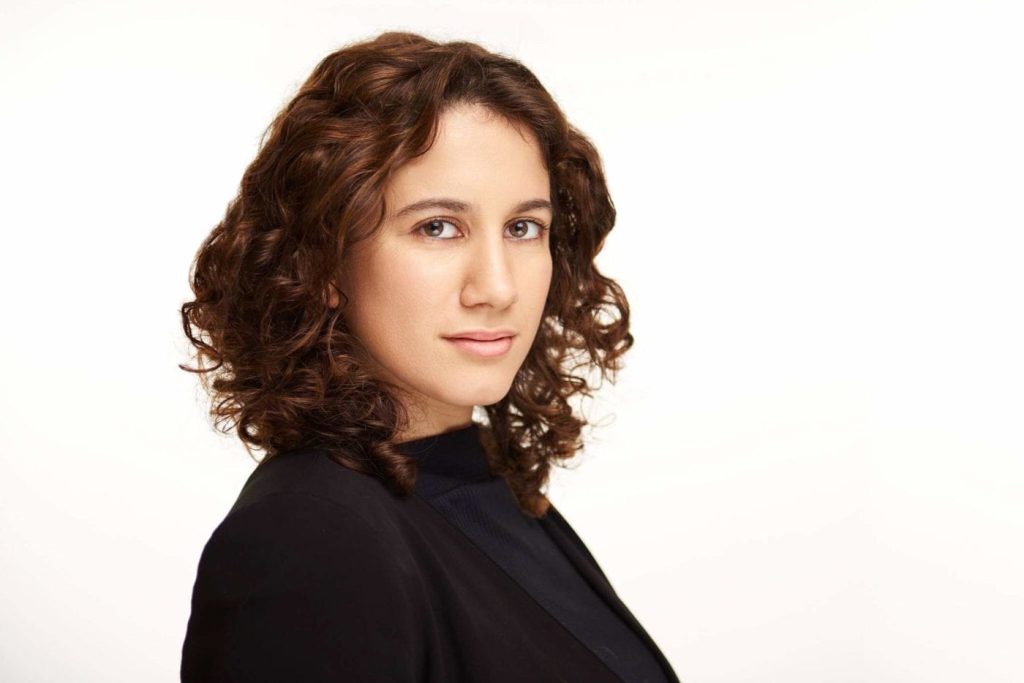
Won’t it be great to have a one-stop shop where investors can be guided through establishing their businesses in foreign countries? Good news is there’s an organisation that provides such services for Morocco, Maroc4Invest (M4I). It’s principal/director Hayat Essakkati is passionate about women and Morocco’s development. Here she shares her insight on expanding internationally and how her work experience has shaped her as entrepreneur. When lead you to start Maroc4Invest? I started Maroc4Invest (M4I) in June 2015. When I was working for the International Finance Corporation in Morocco, I realized that foreign investors were increasingly interested by the Moroccan market. The market was/is faring very well, both economically and politically in contrast to its unstable neighbouring countries. On top of that, there has been an increase in the number of companies expanding their activities in Africa and a majority of them are changing their thinking in relation to doing business in Africa. They know the Africa-to-Africa business channel is more effective than Europe-Africa or US-Africa. Morocco has become the ideal location for doing business in Africa. This has lead me to start my company as I believe in Africans growing their own continent. What kind of services do you offer? Are they aligned with your academic background? Maroc4Invest enables foreign investors to penetrate the Moroccan market using a multitude of services. Our services are aimed at taking clients through the process from company registration to ultimately running their operations in Morocco. The idea behind the company is straightforward: to navigate the business world in Morocco, you need insider’s information and access. Maroc4Invest is a one-stop shop with the objective of making foreign investors feel at home by minimizing their risks. They’re aligned with my academic interests. My Master’s thesis is titled, ‘National Use of International Norms: Morocco’s Implementation of the IFI pressures’ and on top of that I’ve written numerous papers on Morocco’s sectors. I have always been interested in the impact of foreign entities on Morocco’s economy. You have offices in three continents, can you share tips on expanding a business internationally? What challenges did you face? The most important aspect of international business, in my perspective, is running your administration correctly. You can’t be in all 3 continents at the same time so making sure your processes run smoothly without a daily administrative to-do list will prove very useful in the long term. I prepared it adequately, talking with friends and people who’ve already went through the same process before opening the offices. I’d suggest choosing countries you know very well. Holland and the USA are countries I know very well, so it makes sense. How large is your team and how do you go about selecting members for it? Our team has been growing and we expect to reach 10 in-house consultants by the end of the year. We have also developed a group of experts I can tap into on any occasion. Tell us about your experience with the World Bank Group and the African Development bank. Have these shaped you as an entrepreneur? I started my own companies to fund my college from the time I was 18 years old to be able to pay my college and expenses. I also worked in international organizations. It was more out of a sense of urgency rather than wanting to penetrate a certain market. After my studies in the US, I started working with the World Bank on topics that interested me; strengthening youth civil society and entrepreneurship in the Arab region. I could keep my entrepreneurial spirit while working as I had the right managers. The same goes for when I was working for the International Finance Corporation. The key thing is to make sure to surround yourself with good managers/colleagues that know your strengths and understand how to tap in to them. What do you think the rest of Africa should know about Morocco? Morocco is fully reliant on its human wealth. It has no natural resources, making the country’s success depend completely on its men and women. If you’d like to share your story with She Leads Africa, let us know more about you and your story here.
Dorinda Mawuenya Matey: It never started as a business, I was just sharing my passion

Dorinda Mawuenya Matey is a natural hair enthusiast and entrepreneur who turned her love for natural hair into her profession. She started the “We Naturals Team” as a Facebook page to share her discoveries and knowledge about her hair journey. In time as her followers grew, they needed more than just advice; they needed quality products to grow healthy hair. Dorinda saw this as an opportunity to turn her passion into a profession. Currently, her company is one of the leading hair products brand in Ghana and Nigeria. We Naturals has 19 employees and 68 retailers in Ghana, 39 in Nigeria and one in Cote d’Ivoire. What ignited the spark to start the We Naturals Team? When I started my natural hair journey in 2011, I was completely lost. I had no idea how to handle my hair and eventually relaxed it again. In 2013, I went back to natural hair, I realized it was much easier this time as I was reading a lot about my hair and experimenting with different hairstyles, products and regimen. On my first anniversary, I decided to start a Facebook page (We Naturals) to share all that I’m learning to help make the journey easier for others. It never started as a business; I was just sharing my passion. The business We Naturals came in after my followers on Facebook started asking about products. I saw an opportunity in there and started selling other brands until I started making my own products. How did your followers react when you started making hair products? They were excited and received it very well. We won’t be where we are today if it wasn’t for our very amazing followers and customers. Our very first sale was made on Facebook. What was unexpected when you started We Naturals? Well, I realized people will do anything to undermine others just to get ahead. You have to be diligent not to compromise on your integrity and focus on your goals to keep moving forward. What creative strategies did you use to acquire funds to start the business? I had funds from a 3 year life investment policy I started in 2011. Because I had this money, it was fairly easy for me to get going when I decided to start selling products. It wasn’t enough to do everything, but it was a good start. Did you get the products right on the first try or did you have to do more trial and errors? We often do a lot of trials until we are satisfied with the efficiency of the product, the consistency, scent, colour etc. We have a production team who make the products, they’re then sent to labeling and quality control before it moves to store. We experiment on employees, friends and family. We sometimes also request for product testers from social media who also serve as our final testing point before the product is introduced. Why do you focus on only natural hair products? Do you have plans on making products for relaxed hair? The company started off with my passion for natural hair, because of that the products were automatically perceived to work for only natural hair. However, most of our products can be used for all types of hair, though in some cases with slight difference in method. Have you had any formal education pertaining to your choice of career? Yes I have a certificate in Natural Products Formulation from the USA. I had to learn how to make the products from a credible institution to be able to make quality products. I have experience in business and marketing which come in handy. What do you enjoy most about what you do? I love reading positive feedback from our customers. Fortunately about 90% of all the feedback we receive is positive and they come in very often. Every single time I receive a positive feedback, I smile. It makes me really happy because that is one more person we have provided a solution to, not just sold a product. How did you distinguish yourself from your competitors? Our primary target groups are individuals on a healthy hair journey, mainly the natural hair journey and these are people who are looking for results. Our business is built on selling solutions, not just products. We solve hair problems and I believe this is what our credibility is built on. I am passionate about making the hair journey for all my customers a delight so I always go out of my way to help them find solutions. That is what automatically sets us apart, the genuine passion to make our customers happy always. Describe a typical day at work. No two days are ever the same with me. It depends on what needs my attention the most but generally I go over accounts with the sales team and allocate monies for various things that need to be taken care of. I then go into production, mainly supervising and sometime making products myself when necessary. I handle our social media platforms personally so I am on and off social media throughout the day responding to questions, sharing contents and taking orders. I also check for orders on our website and respond to emails. I go to our store to check on stock and bulk orders going out, as well as inspecting products especially labeling and responding to complaints and other issues. What difficulties did you face expanding to other African countries? What was surprisingly simple? The major difficulty we faced and are still facing in Nigeria, is the exchange rate. The Naira keeps falling and we end up losing money through exchange. With the Francophone countries, I will say the language barrier has slowed our efforts but we are taking necessary steps to resolve these issues. What was surprisingly easy was how quickly Nigerians accepted our products. What are your goals for the company? Our goal is to be the number one in Africa not just in product quality, market
Maphefo Ingrid Mashigo: I hated every minute of the corporate world

How many single mothers and divorced women do you know in the modeling industry? From that number, do you know any that will leave their stable job with guaranteed income to introduce young, unknown girls from the village into the world of modeling? Well, meet Maphefo Ingrid Mashigo. Maphefo is the young Limpopo-born woman who opened up Bokamoso Future Models to young women in rural areas. Maphefo doesn’t just discover models, she produces them. To Maphefo, models are her ‘rare, raw, rough diamonds’. When did you know modeling was in you? Modeling runs in my family, I was inspired by my aunts and uncles. They were models in the local scene and I got to love modelling because of them. Since I was a little girl, I’ve always loved the spotlight. I did a lot of drama and beauty pageants from the age of six. Like I have mentioned, my surrounding was a big influence. Tell us about Bokamoso Future Models. What have you achieved to date? With Bokamoso Future Models, I produce models from the rural areas who have never modeled before. I want to bring them to the international stage. For a company that is only eight months old, we have shaken the industry and are taking it by storm. Before people know it, they won’t know what hit them. I am so happy to announce that I have a model that is going to represent South Africa at the Miss Heritage International that will be taking place in India this December. I look up to the likes of Tyra Banks who has her own production company. I would want to be remembered as an icon. There are so many modeling agencies out there, what are you bringing that is different? Unlike any other agency, I don’t sign models, I produce them. That is a big difference. I spend a lot of time, until the wee hours of the morning hosting extensive trainings and workshops. I provide transport for my models to castings, auditions and shoots; they don’t have to pay for such services. More than anything else, I mentor them. In an industry that is clouded by a lot of negativity such drugs, alcohol and also anorexia, How do you guard yourself and your models against it all? Morals are something that were instilled in me by my grandparents from a very young age. I am personally not a huge fan of alcohol and my parents taught me those things are demonic. I have never forgot those lessons. The fact that I am a Christian and a huge believer helps and guides me in everything I do. How did you find the corporate world and when did you know it was time to leave? Corporate world? I hated every minute of it. I never looked forward to going to the office. The idea of working for someone else was slowly killing me daily as I’ve always wanted to be independent. The salary was good and it got me by, but I was never happy. The fear of living an unhappy life forever based on a good salary was not part of my plans. Maphefo had to come to life. Being a single mother and business owner in the shrewd modelling industry, how do you handle everything? We have an amazing father called God, through him, all things are possible. The father of my child does not support her in any form but we are surviving through the angels that God had sent through. I have amazing friends, business associates and parents who look out for us and assist me with anything I need. The world has so many ills, what calms you down? I am very family oriented and my daughter calms me down. You have a hoarse voice, have you ever been mistaken for a man on the phone? Hahahaha, no! I am instead encouraged to do radio presenting. I have such a deep, strong voice even if I can say so myself. Want to see women you know featured on SLA? Tell us what amazing things women are doing in your communities here.
Rafiat Kasumu: I was literally weaving history

The kente cloth of the Ashanti is one of the most recognisable African fabrics worldwide. We’ve seen kente dashikis, kente wax print and now kente graduation stoles. Rafiat Kasumu is a Nigerian-American who developed a love for kente while working with kente weavers in Kumasi, Ghana. Rafiat took this love to the next level by co-founding Kente Master which seeks to expand the international reach of Ghanaian kente weavers. Here, Rafiat schools us on international social impact and the importance of maintaining the tradition of kente weaving. What was the spark that lead you to start Kente Master? Kente Master started as an idea amongst a group of my peers and I who participated in University of Pennsylvania’s joint International Development Summer Institute (IDSI) with KNUST in Ghana. While I was in undergrad, I was fortunate enough to be one of 15 UPenn students selected to go. There, I was placed in a small group of students who worked directly with local kente weaving associations daily to help scale their businesses and practices. It was a life changing experience! Thanks to it, I fell in love Ghana’s culture and history. The most profound moments of this experience were when I heard about the history of kente from the weavers themselves. I witnessed it’s traditional production from thread to final product, and got to try my hand at weaving traditional kente cloth. I was literally weaving history and this was the spark! Learning about the significance of kente –down to the meanings of colors and patterns– really opened my eyes to how important this craft is. From that moment on, I knew I wanted to be a part of the movement to expand this craft internationally. Not only the significant story of kente needs to be spread. International social impact might be a new term to some, what exactly does it mean? Sure, “social impact” is a broad term that has been used a lot over the years by different organizations and within different contexts. Because of this, the definition of social impact is continuously in flux. It is really determined by that institution in that given time. Kente Master is a social enterprise that promotes African entrepreneurship by servicing premium Kente graduation stoles to major universities abroad. For us , “social impact” is the positive impact an action has on a community or society. At Kente Master, we create international social impact through the connections we facilitate between local Kente weaving associations in Ghana and top universities in the United States. These connections provide greater opportunities for local entrepreneurs to scale their craft and businesses. With the influx of inauthentic and over-priced kente textile merchandise coming from China and other non-traditional manufacturers, these opportunities are essential for local Ghanaian entrepreneurs. What steps do you take towards economic self-empowerment for the weavers you work with? As I mentioned, Kente Master is all about economic self-empowerment of the artisans and weavers we work with. As an organization, we do not change any of the current business practices of the various weaving associations we work with. Rather, we give them an online platform as well as resources to market and sell their products and goods globally. Economic self-empowerment of the weavers is also tied to the fact that they are still able to use the traditional weaving methods of kente. These methods are passed down from generation to generation. For weavers, self-empowerment is the notion of knowing they can continue their craft the way their ancestors taught them as well as knowing that their clients value these traditions. Share with us a brief history of kente weavers. Is the tradition as prestigious as it presumably was in the past? Sure! To understand the history of kente weavers, you must first understand kente itself. Kente cloth is the finished product of a traditional form of weaving that originated in Ghana from the Ashanti Kingdom. It is a fabric made of interwoven silk and cotton strips that has a really unique texture. According to Ashanti legend, centuries ago the first piece of kente was sewn and was given as a gift from two weavers to an Ashanti king as a symbol of royalty and wealth. Since then, the brightly woven kente has been passed down through generations of esteemed royal families, with each symbol and colour standing for a particular meaning. As the years went by, kente became widespread beyond royalty and was used to mark important stages of life in Ghana, such as weddings and baby naming ceremonies. Today, its significance to these important passages of life has transcended both continents and cultures. Kente stoles are now, among other things, seen as a wearable staples of a collective heritage in the United States. In Ghana, the craft is as prestigious as it was in the past, as skilled artisans still customize kente for important ceremonies. Abroad, we found that though people may wear kente stoles at graduations, many may not know the origin or creation process of the cloth. Kente Master was created to solve this critical gap so that students at universities abroad understand this unique tradition and know that their stoles were made in Ghana. Who are the clients that go for Kente graduation stoles? Great question! Some of our past customers have been the black cultural centers of universities and individual student organizations that identify with the African Diaspora such as multicultural Greek organizations, Black Student Leagues, or African Student Associations. But, we’ve also had clients that fall outside of these groups. Really, kente stoles are for anyone who wishes to stand out at their graduation by wearing a customizable piece of graduation regalia! Do you work with any universities in Ghana or other African countries? Yes! During its early stages, Kente Master was selected to participate in the World Bank-backed Kumasi Business Incubator (KBI) at the Kwame Nkrumah University of Science and Technology (KNUST). This program equipped us with tools we needed to turn our innovative idea into a
Tebatso Molapo: Don’t do it for the fame

Before you came across SLA, chances are majority of the business people you saw were men. That was the case for Tebatso Molapo, a 20 year old dreamer and student who started Re Basadi (We are Women), a platform to showcase women-owned businesses. To Tebatso, entrepreneurship is not just about empowering herself but giving the people around her the opportunity to grow with her growth. Here SLA contributor Makalela Kgotlelelo discovers the history of Re Basadi and the challenges of inspiring others. How did Re Basadi come about? I founded Re Basadi late in 2015. Re Basadi a private organisation that aims to get women involved in business by giving them a platform to showcase their businesses. Re Basadi aims to tackle the socio-economic issues experienced by women. The early idea behind Re Basadi was to create a platform for women to get along and with its growth, I noticed a patterned interest in business involvement. I wanted to create a platform wherein women are given the opportunity to openly support each other. Re Basadi is currently running three projects. First there’s “A Part of Me” by Relebohile Majoro which is a campaign that collects and distributes sanitary towels to young girls who can’t afford then. Our second campaign is “Dress-A-Girl” which aims to provide dresses for young girls during their matric farewell (prom). The third project we are currently working on is the “What I Deserve campaign” by Pabalelo Matenchi. This campaign aims to get to women to declare what they want for the lives. Currently, Re Basadi also hosts Market Days where women showcase their business initiatives. On the first Market Day we hosted, we accommodated eight stalls and at our most recent we grew to 20 stalls. Why women? I am from a small town in the southern parts of Limpopo where a lot of the prominent business and brands are owned by guys. I noticed that gap and knew that it was something that needed to be filled. There are so many brilliant, hardworking women in my town and all over South Africa. I am a feminist at heart and it brings me so much joy to see women openly support and love each other. What challenges have met running Re Basadi and how did you handle them? Initially, Re Basadi was aimed at young women within my age group. But, after launching our Facebook page and hosting the first Market Day, we noticed we attracted a much older crowd. One of the most difficult challenges I’ve faced is being a 20 year old and having to tailor my platform for a more matured audience. Their interests are not similar to those of individuals in our age group. Another major challenge has been financial constraints. I am a student, and living on a student’s budget makes it difficult to execute some ideas I have for the organisation. I rely on my passion for what I am doing to keeps me going. Where do you see Re Basadi in the next five years? In the next 5 years, Re Basadi would have impacted the lives of Southern African women and it will be venturing into working in other African countries. Are you an indoors or outdoors person? Indoors. Spending time indoors gives me the time to meditate on my thoughts and my life. I am a low-key introvert. Spending time indoors with friends also gives me the opportunity to learn from them, we get to exchange thoughts and ideas in calm and quiet spaces. What’s your idea of a perfect day out? My perfect day out would definitely be feeding my caffeine addiction with a few friends. There will be good and mind stimulating conversation. What do you love best about Re Basadi? My favourite part of running Re Basadi are the conversations I have with other women about ways to move forward. The constant words of encouragement and appreciation from others helps a lot. There is also nothing more motivational than inspiring other people. I’ve seen the next person working on their lives because they are motivated by what I and other women are doing. For a long time, I wanted to do something because I wanted the popularity that would come with being great. After growing up a bit, I realised that fulfillment comes from being able to change someone else’s mindset on life. When you want something because you want to rub it in people’s faces, it will often be out of your reach until you learn humility. Don’t do it for the fame, do it with passion. Want to see women you know featured on SLA? Tell us what amazing things women are doing in your communities here.
Nok Nora Duany Bassey & Aprelle Duany: We wanted South Sudanese children to access education
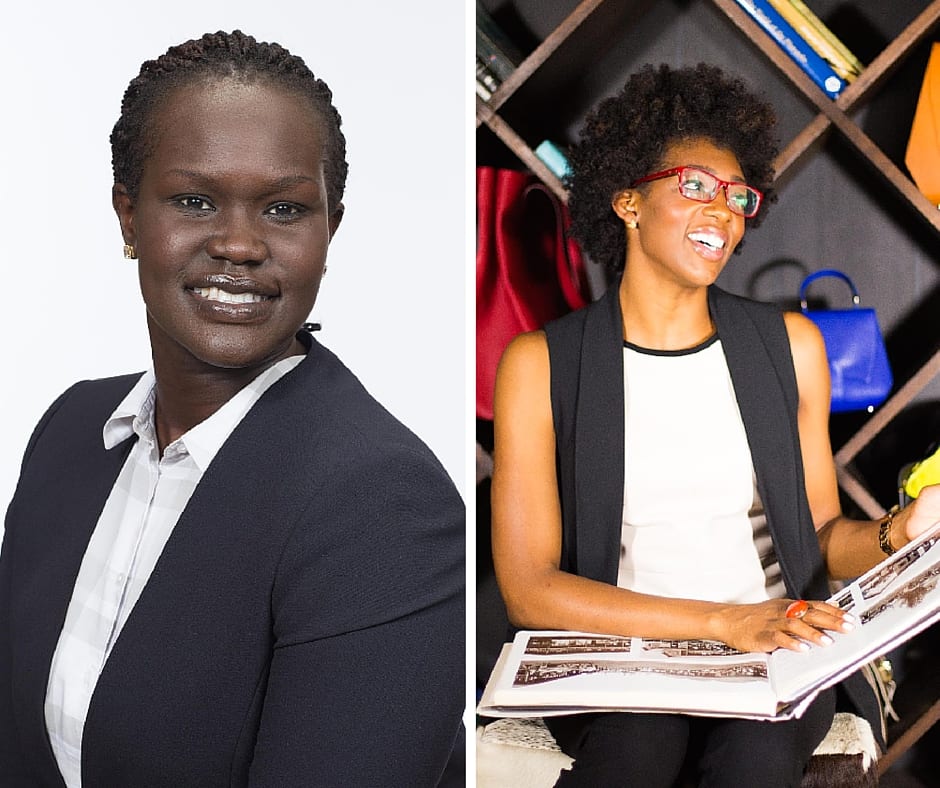
South Sudan is the world’s youngest country. Despite the ongoing conflict, it’s status provides many opportunities for business. Sister-in-laws Nok Nora Duany Bassey and Aprelle Duany joined forces to create The American School of South Sudan (TASOSS) in order to provide much needed high quality early childhood education. Nok’s background is in finance and Aprelle is a fashion designer but both wanted the best for their native and adopted homeland. Below the founders share their greatest challenges, hopes and advice for creating a business in the midst of conflict. Liz: Nok, can you tell me a little about how you came to leave South Sudan and live in the US? Nok: We left South Sudan immediately after the civil war started and came to Bloomington, Indiana where my parents were graduate students at the time. Even during that period, my parents remained really connected to the conflict and worked on the peace process. My dad used to spend six months in Kenya or wherever he could in the bush in South Sudan and then six months in the US to check on the family. I had three brothers and a sister so there were five of us with my mother. She did a lot of advocacy work with churches from the US but there was always a narrative in the household that, “When there is peace we will go home.” And that narrative stuck. So literally when peace came in 2005 after the CPA was signed, I went back after 21 years of being away. My father was already in Juba and we first went to the North, to Khartoum. I remember thinking, “Why haven’t I been here?” A Sudanese classmate from Georgetown was showing me around and everything was so developed. We spent Christmas there and I flew to Juba in time for New Year’s and when I arrived there was completely nothing. I remember getting into the back of a truck to go to my childhood home where I was born. There were no roads. Everything was still under construction. My father had been there for a week and was working to set everything up but it had been abandoned for twenty years. When he came back home they had a found a corpse there and many dead animals. Coming back, I remember this feeling of excitement but also of anger. I thought to myself that I would never go back to the North until I had played some part in developing South Sudan. Coming back forever changed me. I finished my graduate studies in 2006 and moved back to South Sudan permanently. Liz: How was the transition moving back? Nok: Of course it was difficult but it was such a mix of emotions. There was a lot of excitement. So many South Sudanese were moving back after a long time. Over 4 million people were displaced during the war so there was an influx of different South Sudanese from all over the world. Everyone was so encouraged and inspired. I remember drums beating at nights and elders telling stories. People were finally moving freely and everyone was happy. My mom would say, “This really is what peace is: freedom.” We were all building things from scratch and anything that you wanted to do in South Sudan was possible. My father would tell me, “If you miss something you had in the US ,build it here.” I was so inspired and encouraged seeing the work being done for us to have our own country. Of course it was also a big culture shock and it took time and patience to take everything in. Liz: What about you Aprelle? How was it for you moving to Juba? Aprelle: Moving to South Sudan was a difficult transition for me. I left my family and comforts of New York City to support my husband, who like his sister Nok, wanted an opportunity to redevelop his home country. As a new wife and mom, there were many cultural differences that I was not expecting. In addition to the lack of development and language barriers, the environment was difficult to ease into. Overtime, I began to meet new people and gain a better understanding of why South Sudan faced generations of challenges, which held the country back. South Sudan was not an easy place to thrive, but everyday I would meet people who were so passionate about changing the country into a place where they could call home, it was inspiring. At that time, I also began to appreciate the simplicity and beauty of life and I began to explore areas where I could also contribute. Liz: So once you were based in Juba, how did the idea to create a school come about? Aprelle: The school was inspired by my daughter Jinai. The idea became actualized over lunch with Nok, myself, and a few friends. Children in Juba were often isolated in their compounds without an opportunity to engage with other children, which is key to healthy childhood development. One of the things that I wanted for my daughter was a sense of community where she could play and learn. Additionally, Nok and I both benefited from education in our lives from a young age and we wanted to create opportunities for young South Sudanese children to access education. Nok: Yes, oftentimes, people were sending their kids to Kenya or Uganda for school. Young women like myself left kids with their grandparents in other countries. It was heartbreaking. We finally had peace and families were being split again after so many years of being unstable. There were not many schools to support kids in Juba. We initially decided to start a nursery school because Jinai needed one. We started with one classroom and one student. The first day we held an Open House and a few people passed through but Jinai was the only student enrolled for the first two weeks. So everyone was looking over Jinai saying, “Oh, she’s coloring!
DiElleCi: Working with sisters can be light on tough love

Diasy, Luisa and Cleo are Angolan sisters who are leaving their imprint on the blogosphere not just in English but Portuguese too. Their blog DiElleCi, a mash of their names, is becoming the go-to for advice on beauty, fashion and health. These sisters are all students, Cleo recently graduated with a degree in engineering, but find the time to give readers a peak into their lives. SLA reached out to them curious to know more. We learned that working with sisters is great but can be light on the tough love and reduces the need to micromanage. DiElleCi share more about running a bilingual blog, including what’s in their purses below. When did you start your blog? What lead you to it? We started our blog on February 10th, 2016 because we have always had a creative side. We also had the desire to do a project together. However, we noticed that as university students, the academic side of our lives was taking over the creative side that we very much exercised when we were younger. For that reason, we decided to create an outlet where we could share another side of us and our additional interests. Also we, as young African women, felt like we weren’t represented in social media, especially in the Portuguese speaking market. Have you faced any difficulties blogging in both Portuguese and English? Which of your audiences is bigger? The only difficulty we’ve had with running the blog in two languages has been ensuring that our voice remains the same both in English and in Portuguese, regardless of translation. So, it takes some time when translating posts since we need to add expressions for each language. But we are glad we have done so, since our biggest audience is the Portuguese one. Have you taken any special steps to grow your audience? Social media has been a great catalyst to the growth of our audience. Firstly, Facebook is great since almost everyone has an account, so we make sure to keep our Facebook page current and engaging. In addition, Instagram has been equally great since it has so many pages that cater to girls that share similar interests to ours. Because of that, we have been featured on some high quality pages and have seen more growth and exposure from them. Most importantly, we have made it a priority to remain consistent in both the frequency of posts and in the quality of content. How can a young African woman reading this start monetizing her blog? Blogs can be monetized in many ways. As a starting point for us, we decided to monetize our blog through affiliate links. However, we have noticed that it’s not the most sustainable option. We’re currently working on developing different ways to get a more sustainable return without compromising the overall brand. What is it like working together as sisters? Is there any conflict? Working with sisters is great because we share the same values and know each other very well so when conflicts arise, there are no issues in addressing certain situations. However, since we know each other so well and care about each other, sometimes it is hard to give much needed “tough love”. Above it all, the biggest benefit since we know each others weaknesses and strengths is that there is no need to micromanage, which makes task distribution easier. How do you find time to update your blog regularly as students? Being students has taught us about discipline and multi-tasking, so we have applied those attributes to our blogging routine. In addition, like we mentioned before, we separate our tasks according to our strengths and weaknesses. We have seen it has helps us save time and energy when tasks are well divided and only the best person for the job is in charge of a specific task. What’s the process of blogging like for you? How do you come up with content ideas? The process of blogging for us is very interactive. We have been very lucky because our audience has been very good at telling us what they like and what they want to see. Even more, we get inspired by our everyday routines and experiences and share what we think would be helpful or interesting. Most importantly, we gain inspiration by seeing ourselves as the audience and consistently asking ourselves what we would like to see. Can you share what’s in your purses right now? Wallet, student and Oyster card (for public transport in London), our blog planner, snacks, chapstick, a book we are currently reading, iPhone, portable charger and of course keys. What is the last song you played on your iTunes/iPod? We were just listening to the new Rihanna song ” Sledgehammer”. If you’d like to share your story with She Leads Africa, let us know more about you and your story here.
“Be realistically audacious” : Teniola Adejuwon on the 500 StartUps accelerator experience
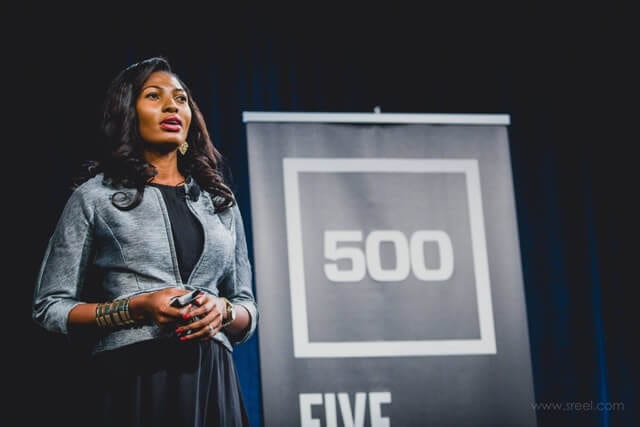
Podozi.com is a beauty ecommerce platform that gives African women access to both local and international beauty brands. Co-founders, Teniola Adejuwon and Wale Babatunde, recently completed a 4-month accelerator programme with 500 StartUps, a leading venture capital fund in Silicon Valley. To date, 500 StartUps has invested in over 1,500 businesses across 50 countries worldwide. Every year, thousands of businesses apply either through a formal application or referral, and after passing 5 or 6 rounds of interviews are accepted onto the programme. Podozi was one of 50 startups accepted for the most recent cohort ‘Batch 16’. With the programme, Podozi worked in Silicon Valley, learned how to take their business to the next level and received a net investment of $100k. In this interview, Teniola shares her experiences with 500 Startups and gives some advice for aspiring entrepreneurs. How did you get involved with 500 Startups? It came as a total surprise. Last year, we were introduced to 500 Startups through an investor who was a personal contact. As my mentor Tara Fela-Durotoye always reminds me, your network is your networth. Previously, the investor had mentioned that although they typically focus on Series A funded businesses or higher, they really liked the Podozi business. So we agreed to keep in touch for when the business grew bigger. Applying to 500 Startups was an aspiration of ours, which we planned to pursue in the future. About a year later, we got an email introducing us to 500 Startups, and that was it. How has being part of the 500 Startups programme helped develop Podozi? We recently completed the programme, so it’s still very early to articulate the full benefits, but being part of the 500 network is like being part of a global family. It’s a lifetime thing, where you grow and evolve. We were exposed to people and ideas from across the world. While we have formally finished the programme, we continue to keep in touch with our batch and the other businesses in the community via a group email. We have a well of resources to draw from and access to mentors who we can reach out to for advice. Throughout the programme, we had opportunities to pitch to hundreds of investors and peers in the startup ecosystem. One of our pinnacle moments was presenting Podozi during the closing ‘Demo Day’. Being able to articulate our brand raised our profile with international peers and investors, which also helped our profile in Nigeria. Also, to be eligible for the programme, we had to (re)incorporate as a U.S. company which gave us access to U.S. specific venture networks and investors. Tell us more about your experience in Silicon Valley as part of 500 Startups Batch 16? Living in California was an interesting experience. Given the 8-hour time difference, we were working from 9am to 7pm U.S. time, then worked after hours to service Nigeria alongside our colleagues back home. It was a demanding but authentic experience of what it means to run a truly international business. All businesses in our batch worked from the same office in San Francisco. This helped develop a spirit of camaraderie, collaboration and shared learning, which is not always a given in most accelerators. We travelled to Los Angeles, New York and other cities across the U.S. which gave us exposure to international best practices and processes. Once you get established processes in place, you’re able to serve your customers better. I’ve always been an advocate of this and Podozi advocates this too. While it’s not always possible to please everyone, I remind my team to put themselves in the customer’s shoes. Empowering the customer is crucial, and something businesses on the continent tend to miss. What advice would you give to aspiring startups and entrepreneurs? Cultivate an attitude of excellence. Being entrepreneurial isn’t about calling yourself the CEO, you need to have a long-term mindset. My first company, Beauty by Nature, ran the Beauty Business Masterclass series. We would teach attendees that no matter whether you’re a nail technician or a self-taught makeup artist, you need to develop your craft and put the right structures or systems in place to support it. That is the difference between a sustainable business and one that burns out quickly. Also, it is not only about funding. Successful entrepreneurs are convinced beyond reasonable doubt about what they are doing. In the past I’ve seen African startups get deterred early on by investor questions about about basic things like their business model or business numbers. If you are not convinced about your product, it will be difficult to enter in, let alone survive in Silicon Valley. It can become quite distracting when your brand gets bigger and your profile increases, so you need to keep focused. As one of my mentors says, ‘the media, awards and accolades will come; just do your work’. What tips would you recommend for making a successful application to an accelerator? Firstly, do your homework. There are funds and accelerator programmes that may be targeted to your industry or geography. Be aware that while some of them are global, their funds might be localised to specific regions. Then, develop a proof of concept. Ideas are a dime a dozen, so don’t just go about touting ideas. Don’t simply try to replicate an idea that works in another country, ensure that it’s relevant to your market. My mentor, Mrs Ibukun Awosika says, “Be the expert of your business – know your numbers and keep your books tidy”. Businesses sometimes rush to launch an app without considering the consumer behaviour in their locality or whether they have the capacity in-house to maintain such. In e-commerce the big question is traction! It’s all about your metrics. Third, be humble enough to admit what you don’t know and be ready to learn quickly. Utilise your resources, prepare in advance and ask as many questions as possible, there’s a wealth of resources out there like Quora to keep you
Kah Walla: Starting a business in Cameroon is easier than before
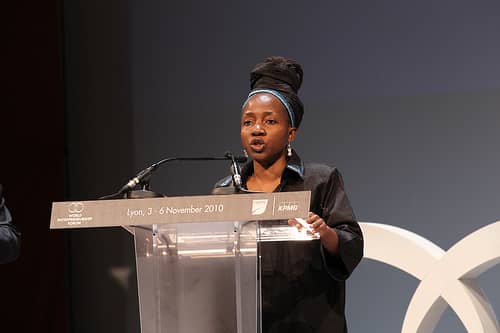
Kah Walla is one of Cameroon’s most successful female entrepreneurs. When she started her consulting firm 20 years ago, she says she never stopped to consider how unusual, and challenging, it would be for a woman in her 20s to begin a business in Cameroon. Despite being a woman and facing the hurdles of the Cameroonian tax system at the time, Kah successfully established her consulting firm. Her company; Strategies is now across the world, serving both domestic and international clients, and draws in an average annual revenue of $500,000. Kah’s consulting firm, which makes over 90 percent of its turnover outside Cameroon. It offers services in leadership, strategy and organisational development to multi-national firms and development organisations. Kah’s business reach and outstanding impact throughout Africa, Europe, and the US, has given her recognition and many awards. In 2008, she was recognised by the World Bank as one of the seven women entrepreneurs working to improve the African business environment. Today, Kah says now is the best time for entrepreneurs, especially women, to start a business in Cameroon. This, given that Cameroonian laws now grant women new rights, such as travelling without male companions, opening bank accounts and registering businesses on their own, without their husbands’ consent. This is something which didn’t exist before. In the following excerpt, Kah shares more tips on starting a business in Cameroon. Do research: Know the country’s laws and what the people need Any entrepreneur willing to start up any business in Cameroon has to do some professional homework regarding the country’s business and tax laws, including general marketing analyses. You also need to know what the people really need in a bid to understand if your business project will be people-friendly. Cameroon’s business law is harmonized under the OHADA treaty like other countries in West and Central Africa, and is at face value gender neutral. But there are customary laws and traditional practices which sometimes disadvantage women in business dealings. So knowing the laws is a salient point to consider before starting out. Put down your plan on paper The next step in starting businesses at any level is creating a plan. You must create some kind of plan before going into business. Putting something down on paper will remind you of your objective and goals. Then you can continually develop this plan, but make sure to always have one from the get-go. At some point –even after you’ve started a business, return, rearrange things, and reflect. Just put your plan together first! Be proficient in the country’s two languages. Cameroon is a bilingual country with English and French as its two official languages. Any young entrepreneur who wants to succeed should know how to manoeuvre between English and French. Get the right information, meet and create the right network “Meeting and creating the right network is very important. There are many businesses that have not seen the light of day simply because they didn’t get the right information. Connect with people who have different strengths but are like-minded in their entrepreneurship and development interests. Being a business owner or entrepreneur can sometimes get lonely, particularly in the start-up phase. The government of Cameroon has been striving to assist entrepreneurs in setting up and running their own businesses in Cameroon through the One-Stop Pilot Centre. The Centre is one of out of the many other investing paltforms in Cameroon. These centres unite all administrative services for creating a business –including taxation, insurance, treasury and customer service. There are places where people can find out what documents they need to prepare and fees they need to pay in establishing their businesses. Any person willing to start up a business should go to these places to get the right information. These centres have eased the process of creating businesses in Cameroon, which now is supposed to take between three to five days.” Have the right mind-set There are certain basic mind-sets which are critical to becoming the ultimate entrepreneur. They include: Everything is possible, Passion first, We are connected, 100 percent accountability, Attitude of gratitude, Live to give, and The time is now. All challenges have solutions “All challenges and problems have solutions, and in order to be successful, one has to be innovative and creative. Successful business women must remember that everything is possible. When I started out in my 20s, I didn’t realize that the markets would be a challenge for me. But what I had was the will and desire to make it and to start my business venture. With that alone and my passion, I think I have been extremely successful in my life. Summarily, I will advise entrepreneurs to create businesses that provide what Cameroonians need and to welcome any challenges as added motivation for innovation. The keys to success are sticking to a plan, being creative, remaining optimistic and doing one’s homework. The Cameroonian government has made starting a business faster and easier here. So the time to start-up is now!”
Nneka Offor: Digital publishing can transform learning in Africa
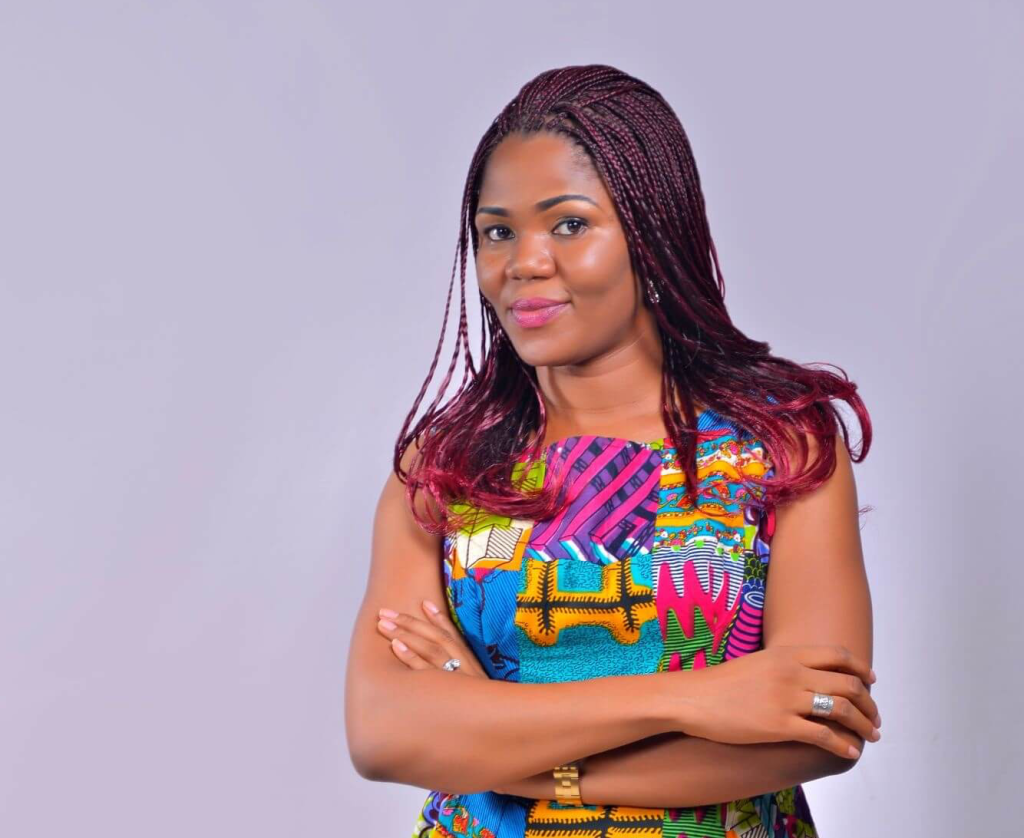
The digital revolution doesn’t start and end with social media. Some entrepreneurs are pushing the revolution into other parts of life. Take education and reading for example, 20 percent of Nigerians who go online do so to read something new. Nneka Offor is at the forefront, pushing eBooks and eLearning to change the way Africans learn. Nneka is the founder and CEO of WhiteLeaf Digital, a digital publishing company based in Enugu, Nigeria. Here she explains how the digital revolution will affect reading and learning. Is there a market for eBooks and eLearning in Nigeria? There is a huge untapped market for eBooks and eLearning in Nigeria and Africa at large. The concept of an eBook is an electronic version of a printed book that can be read on any smart device. eLearning involves utilizing electronic technologies to access educational curriculum outside of the traditional classroom. At the close of 2016’s second quarter, the number of internet users on Nigeria’s telecoms networks hit 97.21 million with 85 percent accessing the Internet via mobile devices. On exactly what these people do online, 22 percent spend their time on social media, 20 percent opt for reading, 19 percent spend their time reading and sending emails. Movies and music enjoy a 13 percent share of the Nigerians time online while shopping gets a 5 percent cut. These statistics show that Nigeria already has the enabling platform for eBooks and eLearning. The overall growth rate for self-paced eLearning in Africa is 15.2 percent. Senegal has the highest growth rate, followed by Kenya and Nigeria. Selfpaced elearning revenues in Africa reached $ 250.9 million in 2011 and will more than double by 2016. Research analysts forecast the eLearning potential will get tripled largely in South Africa and Nigeria. Why start a technologically driven business considering high data costs across Africa? eBook or eLearning does not consume data. Online readings consumes between 380KB and 1MB depending on how long you spend online. Downloading a book from an eBook server archive needs 800KB. The longer you read, the more data it consumes. After you have downloaded your eBook and have them saved on your device, subsequent readings will be done offline and does not require data. Data is only spent when you’re reading online or downloading from the server after which you will no longer require data to read. Video or audio take more data. Online video streaming can take as much as 1GB in an hour. It takes between 3MB to 160 MB to download a 17-hour video. What steps are you taking to transform African educational sector? Our first point of call is Nigeria. Presently we are in talks with Nigerian based educational publishers over integrating digital publishing. Not only is this technology driven, it is also cheaper to publish eBooks as there are no distribution or warehousing cost. We’re also working towards getting institutions and corporate organizations to have eLibraries and eLearning platforms so as to encourage students/employees to read at their own pace anytime and anywhere. The other thing which is undoubtedly the easiest way to transform the educational sector, is awareness. Publishers and book lovers need to be aware of the transformation. That is why we are currently organizing a digital publishing summit scheduled to hold by the last quarter of 2016. The details are not in the news yet but it will attract traditional and digital publishers all over Africa. We will be discussing pertinent issues on how to convert and integrate traditional prints into digital formats, especially for educational purposes. How will digital publishing revolutionize learning? Digital publishing creates interactive learning. Studies show that interactive content can boost learning retention and students prefer to learn by doing, versus seeing or reading. When they interact with videos, charts, and graphs, they retain more information. Digital publishing can help transform passive learners into active participants. Also, learning materials are more accessible and affordable, and it reduces traditional book printing and distribution cost. By producing digital versions of educational literature and publications, you can substantially cut printing costs. This leaves you with more budget for other learning and marketing activities. Distributing heavy printed text books can be very expensive, not to mention slow. Using a digital distribution channel you can get your message out to a wider audience immediately, with no postage costs. Access to eBook is also quicker, cost effective and friendlier on the environment. In many cases, content can be created once and delivered to multiple platforms and operating systems, reducing the cost of publishing while simultaneously reaching broader audiences. Have you faced any challenge in setting up a digital publishing company outside Lagos? We have not faced any technological challenge setting up our business in Enugu. The only challenge we have faced with is delay in working with the traditional publishers. Most of them are based in the west while we are in the east. On many occasions, we have to go travel to meet with publishers for meetings. This has prompted us to start making plans to setup an office in Lagos precisely so we can be closer to the publishers. How would you like to be remembered? I would like to be remembered as a transformational leader who created value and made a significant positive impact in the society I lived in. If you’d like to share your story with She Leads Africa, let us know more about you and your story here.