
Rebecca Kanoerera Munyuki: Leaders lead from within, regardless of their position
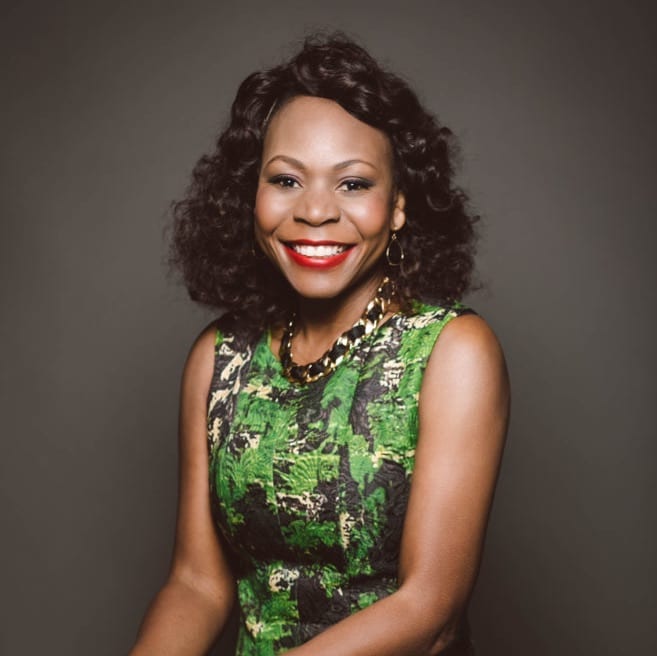
[bctt tweet=”@RebeccaKano is a woman who simply refused to accept average” username=”SheLeadsAfrica”] You know the famous Shakespeare quote: “Some are born great, some achieve greatness, some have greatness thrust upon them”? I am obsessed with hearing stories of how those who achieved greatness did it. Rebecca Kanoerera Munyuki is a great example of a woman who simply refused to accept average. She resolved that if it was possible to achieve greatness, she was going to be one of the ones who achieved it. I sat down with her to chat about her inspiring journey. You truly have humble beginnings. You started as a childcare giver, to working as a call centre agent, and then working for an international company. During your time at IBM South Africa, you held various management and key leadership roles. You ran their ‘Deal Hub’, then moved to marketing, covering multiple software technologies for Middle East, Africa and Turkey. Not to mention you served as chairperson for IBM Women in South Africa network group. What went into realising your personal greatness? Firstly, it is important to say that I actually don’t have to have it all figured out. Sometimes I stumbled into success. That’s not to say that I didn’t prepare and bravely accepted the opportunities that came and continue to come my way. This is what worked for me. If I had to give three keys of what got me here I would say: While you are figuring things out, make sure you stick with things and finish with excellence. You never know where opportunities come from. Mentors anchored me. You need people to encourage you and keep you accountable. Look for tangible models of how to get where you want to go. Even if you think you are doing something that no-one has done before. There is always someone out there who can model, if not your exact career path, at least a set of skills you will need to get there. This is why I am so insistent on women and Africans telling their stories. There is always something that someone can learn from you. [bctt tweet=”There is always someone out there who can model a set of skills you will need ” username=”SheLeadsAfrica”] When I left Zimbabwe and spent some years in America, I certainly didn’t know I’d be where I am now. Studying ICT was never in my plan. I always tell people not to ‘despise the day of small beginnings’ (which is from verse from the Bible and a useful thing to remember). One thing I admire about your journey is: it wasn’t linear. We see you now as a woman who has been successful in the tech space, but tech wasn’t your background. How did you chart a course in a space that I feel can be very exclusive? Keeping an open mind has been critical for my development. Thinking of your career opportunities in silo’s can limit you. After working for a bit, I realised that I wanted to enter the tech space. When I decided this, I didn’t only look for jobs in tech. I also seized opportunities that were tech-adjacent. For example if you want to work in tech, don’t just apply to traditional IT firms. Consider companies that may have a tech department and try get in there. [bctt tweet=” Thinking of your career opportunities in silo’s can limit you.” username=”SheLeadsAfrica”] You told me the story of a time when you were up for promotion. What should have been a great moment became a nightmare. Approval was held back because someone preferred a different candidate. After going through reviews and interviews, you were appointed. Your career journey was obviously not smooth sailing. How did you handle workplace opposition, and not take it personally. Also how do you continue to work with people who may have been difficult or who doubted your capabilities for a role? I have a philosophy for the companies I work for: They are my client and I am theirs. Ultimately I need to contribute to the success of the business results. In leadership and collaborating with colleagues and stakeholders, find a way to work towards a common goal no matter how diverse we may all be. While I can’t convince everyone to like me or believe in me, I make it a point to deliver. Also, in my case it was important to keep perspective. While there were people against me, I had mentors, team members and senior leaders who were incredibly supportive. [bctt tweet=”I have a philosophy for the companies I work for: They are my client and I am theirs” username=”SheLeadsAfrica”] Recognize the difference between potential and being capable. Potential is an intangible measure of the capacity you have inside to do a certain thing. Capability is usually measured by the tangible things you have already done. In trying to win people over, don’t just tell them you have potential. Show them why you are capable. Use past accomplishments to show you are capable, even if it’s a big step up. Also have willingness to learn and a teachable attitude. When taking up oversight of a team of people who are potentially hostile, be extremely deliberate in creating a new culture. Have one on one meetings; even if you are the leader, realize you are the new person. Do proper introductions, and get acquainted with the team. Learn the culture first before you change it; only impose ideas once you understand the context. Create systems and protocols to live by; make sure these processes are company standard to cut down on arguments. Never hide issues; Be deliberate in addressing things as and when they come up. Dealing with others’ criticism is tricky, but often we can be our own worst critics, right? You took an unconventional route to get into the tech space. Were there times where you didn’t feel qualified for promotions you received? Oh yes! An example is when I was looking to get into a more senior position, so I
Josephine Forson: At Tekura, quality means everything!
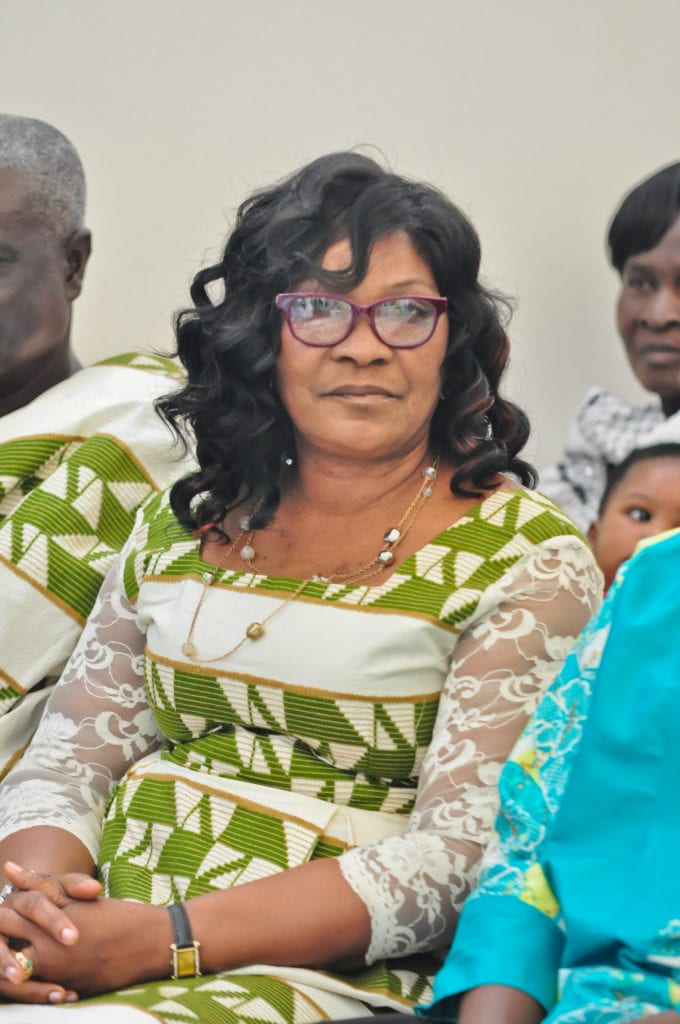
[bctt tweet=”Tekura started in 2000 with only two local artisans, crafting baskets under a mango tree” username=”SheLeadsAfrica”] Josephine Forson founded Tekura, an interior decor enterprise, in 2000 with only two local artisans, crafting baskets under a mango tree. By 2009, she was exploring other art forms made from locally sourced materials developed by artisans within the community. In partnership with Ghana’s Forest Research Institute and the Forestry Commission, Tekura sources reclaimed wood (off-cuts and dead wood) from forest plantations in Ghana for their furniture pieces. Tekura designs have been exhibited in USA and Europe, and have won the Africa Growth Institute of South Africa’s Trade Sector Award in 2008. Behind the scenes, Tekura is run by a mother, father and daughter team, and is inspired by the rich, diverse cultures of Ghana. Tekura is a family business run by a mother, father and daughter team. What do you think are the advantages and disadvantages of working closely with family? And when it comes to decision-making, whose call is it? Working closely together as a family has and continues to propel our loyalty and commitment to our brand and business. This makes pooling of resources much easier and everyone is empowered to bring along their own skills to grow the business. Like any family business that cherishes unity, we were concerned external investments would trigger a takeover. But with our well-structured succession plan, we will soon be on our way to going public. We’re grateful to God for Tekura’s success but what’s great is the opportunities and potentials for higher achievements. Our success mix is hard work, perseverance and love. The direction of policy is led by the board of Tekura. The Managing Director leads the daily consultative decision-making process. Your daughter, Audrey, is the manager of Tekura, what’s the biggest business disagreement you’ve had with her? And how are business skirmishes handled? Disagreements are essential for growth. It can be hard for us to agree on the definition of the various markets for our product lines. [bctt tweet=””Disagreements are essential for growth” – Josephine Forson, founder Tekura” username=”SheLeadsAfrica”] Something like this could be a major issue if you don’t make room for frequent team discussions and consulting with industry experts for fresher views and advice. Aside from Ashanti and Fanti cultural artistry, where else do you find inspiration for your unique pieces? Our inspiration goes beyond the cultures of Ghana. We pride ourselves in the rich cultures and heritage of Africa like the Fulani, Fang and Guoro. And since we’re in a land of beauty and natural wealth, we express all of these —who we are as African people through our furniture, handicrafts and other pieces. You mentioned in an interview how difficult it is for artists in Ghana to protect their furniture designs from forgery or reproduction, what’s your advice to aspiring furniture makers? Nobody likes copycats but we all in one way or the other have to deal with them. For us at Tekura that means staying ahead of others, focusing on innovative design and not compromising on quality. [bctt tweet=”Nobody likes copycats but we all in one way or the other have to deal with them” username=”SheLeadsAfrica”] Climate change is an issue on everyone’s lips. As a furniture company reliant on wood from reforested woodland, what role does Tekura play in sustaining the forests and in turn its business? Tekura is committed to keeping its environment safe and so we have a strict policy not to cut down trees in order to do our work. Our work involves recycling wood, and working with the Forestry Commission to collect and transform waste wood. A lot of African business struggle with quality control and consistency. How does Tekura ensure standard procedures are being followed at every stage of the design process and that every piece reaches customers in perfect condition? At Tekura, quality means everything! It’s not been easy but over the years we have engrained a kind of obligation in everyone to ensure the highest level of excellence and quality. This has been through supervision and other forms of checks and balances right from pre-production stage until the final product. What does the future hold for Tekura? The prospects for Tekura are great. Our partnerships with World Fair Trade Organization (WFTO) and the Centre for the Promotion of Imports (CBI) from developing countries has been successful as Tekura has penetrated global markets, particularly in the US and Europe. Also, Tekura’s space in the local market has grown and achieved great strides. There are so many opportunities out there with changing trends, markets and even competition, and that excites us. Tekura’s vision is to be the world’s go-to brand for hand-crafted furniture and décor. If you’d like to share your story with She Leads Africa, let us know more about you and your story here.
Kgadi Mmanaka: I’m a self-acclaimed “possibilitarian”
[bctt tweet=”Kgadi Mmanaka’s photo should appear beside the dictionary definition of possibility” username=”SheLeadsAfrica”] Kgadi Mmanaka has made it her life purpose to plan the “seed of possibility” in the minds of people. Now we get why she calls herself a possibilitarian. At just 21 years old, Kgadi is heavily involved in equipping and inspiring people in her community especially around development and solving socio-economic issues. When she’s not inspiring people with her speaking, Kagid runs The Possibilitarian Group, See Beyond the Clouds Foundation and KM-CDS, a strategy consulting company. She’s also a certified Associate Fellow of the Royal Commonwealth Society, an organisation working to promote values of Commonwealth citizens. Tell us about your childhood. Born and bred in Ga-Matlala Ga-Ramalapa, a rural village in Limpopo, I am the fifth and last in my family. I’m also the first to fill out an application form to study further after Matric. I grew up in an abusive and violent home, an environment that gave me all the “good” reasons why I will amount to nothing in life. Growing up, I was a loner that was always depressed and felt so small around my peers. My turning point came when I was in Grade 8 (I was 14 years old), when I made a vow to myself that I want to make sure that whatever choice I make in my life will get me to a point whereby I can come back and make a change at home. I wanted to live my life as far away as possible from my comfort zone. At that point, I was really tired of being labelled poor and of waking up to bogobe ka meetse (pap and water) everyday. I knew that the tendency that has run through my family for ages can and will stop with me. I was the link between the past and the future. That vow that I made when I was 14 drove me to become the top Matric achiever at my school. Today, when my family sends, “Please call Electricity” messages I can reply them with the voucher. I never want to return to where I’m from (my childhood) again but I will honour it forever. [bctt tweet=”I was really tired of being labelled poor and of waking up to pap and water everyday” username=”SheLeadsAfrica”] “Kgadi Mmanaka the possibilitarian”, why do you call yourself that? A possibilitarian is a person who knows that no matter how dark the clouds may be, there’s still the brightest sky up in there. A possibilitarian is a possibility thinker, has positive attitude towards life and gives a positive interpretation of a negative event that happens to them —they choose to see possibilities. Finally, a possibilitarian refuses to be defined by circumstances. If you could wake up in someone else’s body, who would you pick and what would you do? I would pick any person who has superpowers to convince the students at higher learning institutions that there are other ways to send a message or rather communicate their demands besides the destruction of property (learning infrastructure). For I think, the more the property is destructed the less chances of being granted their wishes i.e. free education. This regardless of the fact that they did the maths and free education is feasible. As much as I understand what they’re fighting for, I am against the destruction of property because that doesn’t only delay the processing of their demand, but also the academics. A new strategy is needed that still emphasizes the demands but that doesn’t destruct the property nor delay academic activities. [bctt tweet=”A possibilitarian has positive attitude towards life” username=”SheLeadsAfrica”] “See beyond the clouds” is a very powerful name, tell us more. See Beyond the Clouds is a foundation I founded to create an enabling environment that is rich in information, support and resources for youth in rural and township areas to better their lives and the society. I was inspired to establish it for I have realized that past mistakes, failures and underprivileged background often-times are the reasons why most people’ dreams are diluted and why they give up in life. The mandate of the foundation is to create possibilities to help them “see beyond their clouds” and whatever attempting to dilute their dreams. The foundation seeks to transform youth from being job-seekers to job creators by introducing entrepreneurship as a long-term solution to unemployment through the Enterprise Development program. We also aim to increase higher education enrolment by exposing school and and out-of-school youth to post schooling opportunities and and information through the Career Development and Mentorship programs. Lastly, the foundation seeks to equip youth with computer skills and make internet services available through the ICT skills program. With all these, the foundation seeks to help them See Beyond the Clouds. [bctt tweet=”Kgadi Mmanaka’s foundation creates possibilities to help youth see beyond the clouds” username=”SheLeadsAfrica”] What have you always wanted? Did you ever get it ? I’ve always wanted to live my life as far away as possible from my comfort zone. To make choices that will get me to a point whereby I can come back and change the economic status at home. For me this is a process and not an event. Recently, I’ve just turned 21 and when I was reflecting, I was so proud of the choices I have made so far. Honestly, I can say I am off my comfort zone. I am determined to let those vows be the blueprint of my life. Congratulations, you were selected as one of the 60 emerging women leaders that participated in Vital Voices mentoring walk SA. How did you make it? Basically a mentoring walk is an event whereby emerging women leaders (mentees) are partnered with established women leaders (mentors) along industries. It creates an opportunity where time is spent together to give the mentee an opportunity to learn from the mentor and establish the mentorship relationship for the year ahead as they “walk in the park”. This
5 life lessons we can learn from Becca

[bctt tweet=”One failed option does not mean all is lost! Lesson learned from @beccafrica and her career” username=”SheLeadsAfrica”] Becca’s first appearance into the spotlight was on the second season of the TV3 annual singing competition, Mentor, where she was selected to represent the Ashanti Region, Ghana. The music mogul who barely had fame then, however had to pull out of the contest. This was after discovering that participants had been secretly tested and cleared of HIV/AIDS without their knowledge and consent. Also, because the terms of contract were not up for discussion and rather was a ‘take it or leave it’ affair. Upon quitting the show, Kiki Banson, under EKB records signed her and released her first debut studio album “Sugar” which got five nominations at the 2008 Vodafone Ghana Music Awards. Today Becca is a multiple award winner (Kora Award, one National Youth Achievers Award, four Ghana Music Awards, and three 4Syte TV Music Video Awards) and one of the most influential women in the country; a status she may not have acquired if she had not been bold and daring enough to stand her grounds. Here are five life lessons we can learn from Becca; 1. Know your rights and fight the system to do the right thing Many people are being taken advantage of and have had their rights infringed upon because they themselves are not aware of their civil and human rights. Becca knew her rights and knew they were being trampled upon when her consent was not sought before the HIV test was conducted. If you do not speak up against infringements and injustices, the world will assume you are okay with whatever treatment given to you. [bctt tweet=”Know what you are about and never accept just anything” username=”SheLeadsAfrica”] 2. Know what you are about and never accept just anything People who usually say “anything goes” are seen as indecisive, unfocused and complete pushovers. They are also often taken for granted. Knowing and expressing explicitly what you want and deserve will convey the message that you are not a pushover or easy prey to sleazy commitments. 3. Never be afraid to pull out of a negative environment When Becca found out that the contract she was given was not going to help her reach her goal, she pulled out. As humans, we sometimes adapt to a toxic place or an unhealthy environment not due to the lack of options but mostly due to fear of the unknown. Eventually, we end up paying dire consequences for our actions and choices. You need to learn how to let go of things, people and situations that can be a breeding ground for retrogression. 4. There are other ways to succeed There isn’t one formula for success so if going one way doesn’t help, try the other. Identify and if need be, create avenues to thrive; what matters is reaching your destination. Becca left a reality show and ended up with a record company which guided her to success and catapulted her to 5 nominations in the 2008 VGMAs. One failed option does not mean all is lost. In fact, it could be for a greater good or just the boost you need to get to your green land. [bctt tweet=” Resolve issues amicably and in the best and most healthy way possible” username=”SheLeadsAfrica”] 5. Always be the bigger person Life will always kick your butt; that is something we cannot control. What we can put a rheostat on however, is how we react to difficulties and problems we face. Don’t dwell too much on the past that you lose focus on the future. Resolve issues amicably and in the best and most healthy way possible so you can move on without any demons of the past.
Shana Kay Derman: Perfection is something that I’ve always strived for
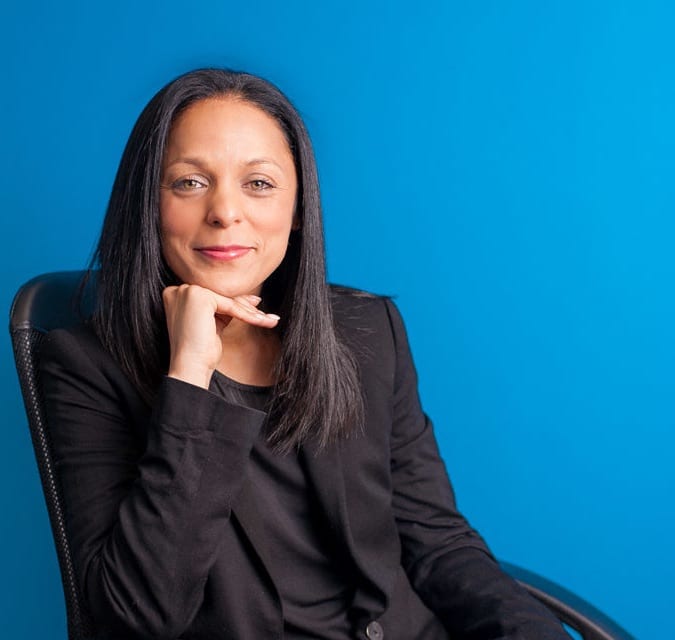
The first time I met Shana Kay Derman, she was dancing along to a music performance at a women in technology conference. Actually, she was the only person in the whole room dancing, so naturally I joined her. I will admit, I was bit shocked to see her go up on stage a few minutes later. Not only was she a speaker, but she was the Chief Innovator and co-founder of a successful internet security company. With a refreshingly authentic leadership style reminiscent of leaders like Richard Branson, Shana heads up innovation at IntelliCred in Johannesburg. While there remains a noted absence of women founder’s in the tech space, Shana has managed to find success. Who better to meet up with for a little inspiration? You have built an amazing tech company. Looking back on your journey, what do you wish you could have done differently? My journey is still very much in progress, but what is always top of mind is being less afraid. Being more willing to take risks is something that as a woman, I always thought was more of a “me” thing than a gender thing. But over 25+ years, and engaging with women from all walks of life, many of them including myself admitted to not big risk takers. An example of when I should have spoken up and taken a risk was with my first business. I wish I would have had the opportunity to purchase a larger share of the company I was building. At the time, I didn’t feel I was worthy of asking, when in hindsight, I definitely was. Another aspect of business that I wish I had been more vocal about was questioning things. I learned not to assume that if someone is older, or in the industry for longer, or even seen as knowledgeable, that anything they claimed should be taken as fact. Questioning engagements, partnerships, points of view, opinions and especially advice is something that I do more now. Whenever I feel that the point does not sit well with me or simply does not make sense, I question it. I know you worked incredibly hard in your first company. With that in mind I can’t imagine you being afraid to ask for the full value of your contribution. I’ve heard similar stories a little too often. With the wisdom of hindsight, how can women begin to have their value realized in the workplace? In my opinion, gender-roles are responsible for women (and I am referring to my experiences here and the stories shared by my female friends and peers) not valuing themselves in the business place. Sheryl Sandberg’s Leanin.org published a statistic that a man will apply for a job with only meeting 60% of the criteria where a woman will want to meet 100% of the criteria to apply for the same job. This takes me back to risk-taking and raises the topic of assertiveness. Being assertive doesn’t mean being a b***h or being a horrible person, it means we need to speak up more. Speaking up more means we start to be seen. Ensuring that our team members see and acknowledge the work we do is one of the ways that we can ensure that our value is visible. Perhaps men value themselves more because they are allowed to experiment a lot more when they are younger? As children, girls are not nurtured nearly enough to hone the skills that allow us to show and feel value, in a business context. However, having said all that, to me the essence of value resides in women supporting and uplifting each other. Women and men should consider showcasing women more as there are so many doing amazing things who no one ever gets to hear about. At this stage you have successfully brought your idea to life. What advice do you have on shattering our personal glass ceilings and nurturing entrepreneurship qualities? I believe that there are two core qualities in entrepreneurs that cannot be taught. The one is perseverance and the other is drive or vision. Perseverance is key to sustaining the entrepreneurship spirit. You’ll go through many challenges before successes and the challenges are many. A few tips on shattering any personal glass ceilings are: Constantly educate yourself, especially on the essentials of the marketplace. Find a mentor that can give you support and a boot in the butt when needed, and hone your skills irrespective of gender. Having a mentor is also key to challenging my thinking when I am in a rutt. Drive or vision is the key sustainer for me. Have a vision greater than yourself. Doing a greater good for the world at large while building a successful profitable business is something I’ll always come back to. I’ve heard it said that tech is ‘the great leveler’. Meaning that, it’s a space that doesn’t care about gender, as long as your product is good. Have you found this to be true? I would not say that tech doesn’t care about gender. It remains a very male-dominated industry. What I will say is that when you build something, no-one cares if a male or female built it. All they care about is that it works the way it is meant to. In this regard, tech is a leveler. In the beginning of my technology career, I worked ten times harder because the field was so sparse with women. Over time and feeling more confident in my ability (due to educating myself and working hard), I had to prove myself less and less. You do of course still come across the chauvinistic person every now and then. I deal with that by always speaking up in meetings or contribute to sessions where my contribution makes sense. I imagine being one of so few women in the industry you must have felt the need to be close to perfect? Perfection is something that I’ve always strived for in everything I do. With that said, I realize that one cannot
Arit Okpo: I call myself a socially adept introvert

[bctt tweet=”@menoword presenter/producer of @TheCrunch_EL is a socially adept introvert” username=”SheLeadsAfrica”] You may have seen Arit Okpo on TV and marveled at her grace and poise. Arit currently produces and presents The Crunch, the flagship news show for Ebonylife TV. On The Crunch, she discusses and analyses current affairs issues and stories. When she’s not producing content or presenting shows, Arit writes prose, opinion pieces and discussions on current affairs. And she doesn’t stop there, Arit has also functioned as facilitator and event MC for a number of public functions. With all this, it’s kinda hard to believe that Arit is an introvert. For someone who is constantly in front of the camera (whether at work or on her very active Snapchat), Arit has found a way to make her shyness work for her as she forges her path in Nigeria’s media industry. How did you come to be a presenter and producer? I had been thinking about going into media for a while, but thought it was going to be purely behind the scenes as a Producer and Director. One day in 2013 however, I got a call from my now CEO Mo Abudu, informing me that she was launching a new show and that she thought I would be great for it. I had participated in her reality show The Debaters in 2010 and she had remembered me. Even though it was totally unexpected, I knew immediately that this was the opportunity I needed and I said yes to the job! As someone who is shy and an introvert, how do you appear so comfortable in front of the camera? I call myself a socially adept introvert, meaning I have learned how to engage actively in social settings. I bring this to my work in front of the camera, I try to chat and engage as if the people I am talking to are friends sitting right there in the studio with me. When I’m in front of the camera, I talk and act in the very same way I act in my everyday life. In a nutshell, instead of stepping out of my comfort zone, I take my comfort zone to work with me. [bctt tweet=”Instead of stepping out of my comfort zone, I take my comfort zone to work with me – @menoword” username=”SheLeadsAfrica”] What is the typical day in the life of a producer like? I produce a daily news show and so my day usually consists of; previewing the episode going to air that day, then checking that all the other inserts of the show are ready or being prepared (we produce these ahead of time). I check invitations to events and say yes to the ones that align most closely with our direction as a show and send these off for scheduling. Then, I review the work we have to shoot and try to craft a direction for it. I check the news for the next day and send it off for recording and finally, I scour the web for possible stories and guests that we can feature. This is aside from the meetings, budget preparations, planning and general craziness that is all in a day’s work. What do you think other young women can learn from you career path? There is no one way to achieve your goals. My career path is very varied but each time a new opportunity came up, no matter how out of the way it seemed, I always looked for (and found) a thread tying it to the past and leading to my future. Don’t be afraid to say yes to unexpected opportunities and don’t be afraid to try things you’ve never tried before. [bctt tweet=”Don’t be afraid to say yes to unexpected opportunities @menoword’s advice on career paths” username=”SheLeadsAfrica”] Do you have a career development plan? If so, can you share it with us? I am very excited about curating and sharing the everyday stories of the continent. Whether it’s our food, our habits, our people or our politics, Africa is a very interesting continent. I look forward to creating content that celebrates the very fabric of who we are –our similarities, differences, hopes, failures and successes. You’re very active on Snapchat. Do you use this medium to actively build your brand or is it something you do for fun? It’s pure fun for me. It’s a chance to share my everyday life, my thoughts and my activities. I enjoy the chance to share with people a little bit more about who I am away from the camera. Your hairstyles and clothing choices on The Crunch are always on fleek, what’s your favourite clothing item? I have a fantastic styling team that does such an awesome job of making me look good and they’ve given me some incredible looks. For my every day look, I’m crazy about my ankara pants of which I have quite a number; they’re comfortable, versatile and made in Nigeria! Do you always have a good night’s sleep? Nope! I only get a full night about 2 nights a week. I am very nocturnal and so my brain starts to wake up around 10pm at night and goes strong till 2–3am. Sadly, this lifestyle is not very compatible with a 9 to 5 job, meaning that on average, I get about 5 hours during the work week. [bctt tweet=”I look forward to creating content that celebrates who we are – @menoword” username=”SheLeadsAfrica”] How do you find time to write while working full-time on The Crunch? I have to say that it is not always easy. Sometimes I am tired, other times I am simply not in the mood, especially because my job makes me associate writing with work. Deadlines help though, once I have a submission deadline I make it happen. I’m going to work on writing more next year though (I say this every year). If you’d like to share your story with She Leads Africa, let us know more
Jinna Mutune: Girls need to be told that they can have it all

[bctt tweet=”I have lived long enough in Africa to be able to tell an African story in an African way” username=”SheLeadsAfrica”] Dreams and making them come true; this seems to be the running theme with this film-maker, Jinna Mutune whose feature film LEO was well received by international audiences in twelve global cities. SLA contributor Juliet had the great pleasure of visiting Jinna at the Pegg Entertainment offices in Karen Country Lodge within the leafy suburbs of Karen, Nairobi. Amidst a couple of monkeys doing monkey business on the office rooftop and peering into their interview through the glass windows, they managed to have a great chat. When did you figure out that you wanted to do film? I actually always wanted to do it, I just didn’t know what it was, and I didn’t know it had a name. There was a creative space in our home that allowed me to explore a lot. When I was 12, my first mentor —who was a student pastor— used a lot of art and creativity to teach the Bible and that really inspired me. So I did a lot of plays in school and carols in church. At 15, I got to a place where I needed to know what my purpose was and was stirred up by my faith. The most defining moment though was when I met my mentor; that really opened my mind to what I wanted to do. Dream Dare Believe. How do those three words speak to you personally? That you should dream, I think it’s time to encourage the African children to dream out-of-the-box dreams, of becoming astronauts and scientists, things that are not on our regular spectrum. Daring comes with doing, going after the dream making plans with people. Trying and failing and trying again until it works. Then, believing means hanging on to it until it comes to pass. The only problem when we talk about dreaming in this generation, is that people want it to happen in a flash. The whole idea of believing is the consistency, I knew this at 16 when I wrote the plan of how I was going to be a film-maker. I thought I was going to make a feature every year; more than 17 years later though I have only done one feature and working on my second. [bctt tweet=”I think it’s time to encourage the African children to dream out-of-the-box dreams” username=”SheLeadsAfrica”] There’s always a bit of a time lag between the dreaming and the coming true, what do you advice dreamers out there to do during that time lag? I’d encourage people to start small; I personally started with small plays. You can always tell a great person by what they do with the little resources they have. Many times I meet young people who say that they want to do big things but don’t know where to start. Start from where you are and do it to your level best because you never know who is in your audience. Maximise the small opportunities, I did a lot of plays when I was starting out. When I was getting the movie to screen in 12 global cities, most of these cities are the same ones where I did the small plays. Faith has also been everything in this journey, I have relied on it, it has been my inspiration and it’s how I charge up half the time. Is there any point when you thought your dream was crashing before your eyes? How did you pick yourself up again? There have been many; let me talk about distribution though. When we did LEO, we didn’t have a marketing budget. We thought we’d be acquired by one of the major distribution channels, but the deal didn’t pull through. So here I was with a product and no money to let people know about it and I really wanted to give up. It was really tough because I found that there was a lack of understanding from the masses about the work I did. There was a lot of criticism and very little support and I wondered why? Why did I need to move forward? I used a lot of inspiration and scriptures that I call ‘muffins’ to keep me running. One was a visual of a man running through a wall, and every time I looked at it I told myself ‘something has got to give’, ‘something has got to happen’. So, I started speaking more and got radical about it until I finally got a lead to get the movie into the air-planes. [bctt tweet=”The thing that this journey has taught me is that there is nothing like impossible.” username=”SheLeadsAfrica”] Out of the blue, an old friend called me from Houston and wanted to screen the movie there. Soon after that the cinemas opened up. The thing that this journey has taught me is that there is nothing like impossible. I think it’s Einstein who said ”… it’s not that I am a genius, it’s just that I stay with problems longer.” That’s why I find the culture of instant success amongst our young people a bit scary because I feel like we are going to lose our genius minds. Our genius minds need to develop the character of staying-in until it works. You’ve talked a bit on money matters when it came to distribution tell us more about talk about getting funding. Money follows good ideas, one of my mentors said to me and I thought it was mind boggling. I always thought you get the money and then get ideas to use the money. But now, if I have an idea and I’m not getting money then I go back to the drawing board and ask myself how I can improve this idea so that it attracts the money people. [bctt tweet=”Money follows good ideas, one of my mentors said to me…” username=”SheLeadsAfrica”] LEO the movie went through about 20 drafts before the shooting begun. So there’s always a way in which you can improve your product. One door may close but they will leave you with ideas on how you can tweak your product to make it more sellable. I never feel like any of my meetings are quite wasted even if I don’t get the deal that I am looking for. It somehow adds up to something or they give me an idea that helps me move in the right direction. Does where you live geographically affect the filmmaking process? Hollywood has systems. There, film-making is an art and a job, if you are talented, you can find your way into the system. There’s a system with compensation in every stage which motivates film makers. There are also things like 3D studios, trained actors, trained animals, period wardrobes etc. These things help you create your story and your imagination canvas as a director becomes wide. From creation to consumption there are systems that acknowledge the work and a willingness to pay for the work. Locally, my advantage is that it’s never been done before. In the West for a young independent film maker, it can be very difficult to access the system. But here I can talk to anyone for things like location and negotiate on rates and because it’s an African story its best told in African soil. I have lived long enough in Africa to be able to tell an African story in an African way and that’s a huge advantage. Have you experienced any challenges in your journey as a filmmaker being a woman? I don’t think I have ever gone into the
Nomsa Daniels: Putting capital in the hands of women #SheHiveJoburg
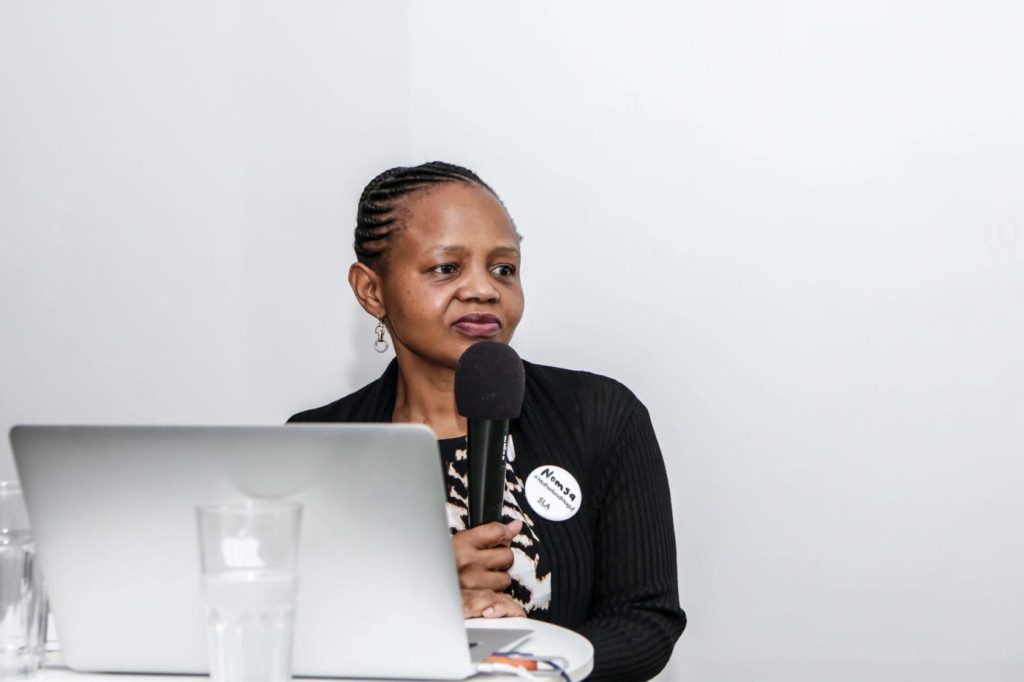
[bctt tweet=”Through New Faces New Voices @nomsa_daniels aims to link more women to financial institutions” username=”SheLeadsAfrica”] On the last day of SheHive JoBurg, the audience heard phenomenal woman share her equally amazing story. Nomsa Daniels is CEO of the Graça Machel Trust, she heads a team of specialists that support the trust’s work on women and children’s rights across the continent. Nomsa is working to ensure that more women in business are able to access the kind of capital they need to start and grow their businesses. During her talk, Nomsa Daniels focused on the initiative, New Faces New Voices. What is Nomsa Daniels’ story? Even from a young age, Nomsa was already interested in development issues. She received a bachelor’s degree in English Literature & History and a Master’s degree in Geography and Environmental Studies. Her first job involved working for the US government where she was able to focus on issues pertaining to Africa. This experience, while enlightening, made Nomsa realize that rather than look at Africa through the lens and agenda of a third party, she would much rather be on the continent, immersed in its issues and dealing with its development there. As a result, she moved to South Africa in 1987. There, Nomsa was involved in several different projects before she was approached by Graça Machel to join the trust. At the trust where Nomsa, along with her peers, came up with the idea to start New Faces New Voices. This is to give the new generation of young, enterprising black women a space where they could be seen and heard. What is New Faces New Voices and why should we be interested? New Faces New Voices is an initiative established by the Graça Machel Trust in 2010 to deepen women’s participation and influence in the financial sector. Its three main objectives are to: increase women’s access to finance and financial services, build capacity and skills of women to access finance and, promote women’s leadership in the financial sector. Initiatives like this are particularly important because studies have shown that countries that have greater gender equality have more inclusive growth. Also, women tend to invest up to 90% of their wealth into improving the education, health and economic well-being of their families. This investing in women and ensuring that they have access to finance will not only benefit them but their families and countries. [bctt tweet=”In South Africa, only 7% of adults are engaged in entrepreneurship and the typical entrepreneur is male” username=”SheLeadsAfrica”] What is the landscape in which New Faces New Voices operates? In South Africa, only 7% of adults are engaged in entrepreneurship. This figure is alarmingly low when compared to other African counties, also considering the fact that unemployment levels in SA are high. The typical entrepreneur is male, between 25 to 44 years old and lives in an urban area. He is involved in retail and wholesale sector and has a secondary or tertiary education. So where are all the women? Research on the topic shows that businesses run by women are most prevalent in the following sectors: retail trade, manufacturing clothing, professional services, restaurants/bars and social work activities. Comparing the activities of men and women, it is clear that there is a lot of potential for women especially in atypical areas where they have largely been under-represented. Reflection point for Motherland Moguls: Challenge yourself to think more broadly and to think outside the box! [bctt tweet=”Women are faced with cultural constraints that limit their ability to participate fully in business” username=”SheLeadsAfrica”] Looking at the numbers, there is definitely a business case for investing in women and they represent a sizeable and viable market that can yield a return on investment. Given that this is the case, why are there not more women in business? Part of the issue is that women face a number of challenges, which although not unique to them, do affect them uniquely. These challenges include that women tend to have lower levels of education and lower income levels. Women also lack collateral, exposure to the market, mentors and role models. On top of all that, women are faced with cultural constraints, norms and belief systems that limit their ability to participate fully in business. In addition, women face several funding constraints such as lack of business training, lack of information on where to find funding, lack of understanding of what funders look for and lack of business track record. Reflection point for Motherland Moguls: How do we reform the educational system to ensure that young girls and women are exposed to entrepreneurship at a young age? How is New Faces New Voices tackling this issue? New Faces New Voices aims to link more women to financial institutions and funding vehicles that target women. A lot of women are not aware that a lot of institutions have funds ring-fenced specifically for women. These institutions often complain that they cannot find enough women to give these funds to. New Faces New Voices is working to bridge that gap by helping to connect the right women to the right institutions so that they can access capital that is ready and waiting for them. On the one hand, New Faces New Voices works with the women to bring them to the level they should be at. This is so that they can present an interesting value proposition to these institutions. On the other hand, New Faces New Voices works with the institutions to help them tailor their programs. This way, their criteria are more realistic and actually suit the needs of the women they are targeting. Reflection point for Motherland Moguls: Access to finance is important, but so is access to markets! Final words of advice to all women out there looking to get into business. Do your research. Who funds the type of business you are looking to establish? What is their funding criteria? Understand the type of funding your business requires at various stages (working capital, bridging
Leslie Ossete: Improving lives through better transportation

If your mission is improving the lives of millions, you’ll find some similarity with Leslie Ossete. She is one of four co-founders of Magic Bus Ticketing, an offline SMS based ticketing system. Magic Bus Ticketing aims to improved lives by simplifying how they interact with transportation. It’s a student start-up that lets bus commuters know when the next bus arrives and how much it is charging. It also allows payment through mobile money. Recently, Magic Bus Ticketing won $1 million dollars from the Hult Prize. Pretty amazing, right? Let’s start with the Hult Prize. Congrats on winning the $1 million! How do you plan to use the money from the prize? Thank you! After a year long process, Magic Bus Ticketing has finally won the Hult Prize, which awards $1M in seed funding to the winning start-up. My team was among the 5 finalists out of 25,000 applicants worldwide to compete in what is now the largest student competition for social good. This September 20th at the Clinton Global Initiative in New York, we pitched our innovation in front of notable judges such as Bob Collymore, CEO of Safaricom, and Akinwunmi Adesina, President of the African Development Bank Group. And, we won! The $1M prize is distributed to Magic Bus Ticketing through monthly instalments. Depending on how much is required to effectively run the business, the Hult foundation makes funds available to Magic Bus Ticketing. Magic Bus Ticketing will use the million to fully launch its operations in Kenya, and scale fast to other East African countries with similar market conditions, Tanzania and Uganda by the end of this year. You are from Congo Brazzaville and Madagascar, why set a company in Kenya? I grew up in Brazzaville, and my team-mate Wyclife is from Nairobi. Both of us as Africans had experienced similar challenges in public transportation; long wait times at the bus stop and inconsistent pricing when it comes to bus fares. We decided to focus our pilot in Kenya because first, Nairobi is one growing tech hub on the continent. Second, Nairobi has the fourth highest commuter pain point according to IBM. And third, there had already been a lot of research and initiatives done towards using technology to improve public bus transport. In fact, Nairobi is a place of innovations. Several projects to introduce cashless payments in the bus system had been led, such as Google’s BebaPay bus card. What sparked the idea to integrate urban commuting with mobile payment? The public bus system in Africa is mostly privatized and informal. The day-to-day operations are run by a crew of drivers and conductors who earn little money from their hard work. That pushes them to overcharge commuters for their own benefit. They abuse the current cash system to set higher fares based on demand and supply. For instance, in Nairobi when it rains, the bus fare triples. Commuters themselves don’t like to carry cash around. They worry about pickpockets, and not being able to get their change back in the bus. Furthermore, the police also abuses the cash system. Police officers know the bus crews carry cash 24h/24h, and do not hesitate to fine them for absurd reasons. We envision that cashless payment in the bus industry will bring more safety and order. We believe the way to implement a cashless bus system is through the use of mobile money, which is already widely used in East Africa. It is quick, accessible, and locally relevant. Prior initiatives have been using bus cards linked to banks, but most people don’t have bank accounts, banks have high transaction fees, and buses need liquid cash on a daily basis. What steps did you take to grow your company by 5000 booked tickets in less than two months? In order to acquire a customer, you must spend on marketing. We did a lot of mass-marketing through social media platforms such as Facebook, Twitter, and Whatsapp groups. We also do outreach marketing, implementing stalls at university campuses. Furthermore, we do collaborative marketing with the bus operators themselves, handling flyers to commuters, in order to build trust with potential customers. Last but not least, we also do product demos of our technology at major bus stops. As we launch in Nairobi, we will expand to advertising through radio, TV, and billboards. What does a student start-up need to thrive and be successful? A student start-up needs to be backed by a board of advisers, with a diverse background and expertise. Magic Bus Ticketing consistently asks for feedback from renowned experts in the fields of transport, technology, finance, and organizational management. Our advisers come from valued institutions such as the World Bank and MIT university. Briefly, a student start-up needs to create for itself a network of mentors who understand the goals and challenges of the organization —no, they don’t have to come from particular institutions, but they have to be right for your organization. For example, for Magic Bus Ticketing, one of our key advisor is Bernard, who has been a bus driver in Nairobi for the past 10 years. That’s real knowledge! Perseverance is key, even more for student start-ups, to succeed. I remember our humble beginnings on our campus at Earlham College. Our initial plan was to add more buses on the roads, and to provide commuters with a subscription model to access buses on-demand. Our buses were supposed to have TV screens, Wi-Fi, bike racks, online libraries, and much more. We presented this idea at the local Hult Prize at Earlham, and were not selected to attend the regionals. It was extremely upsetting because we all knew we were tackling a real challenge in public transportation. We had to iterate our business model, and re-apply online to ensure our spot at the Hult Prize Boston regionals, which we won. Without perseverance, we would not have come this far! What do you think of the industry you work in? How do you plan to remain consistent? Magic Bus operates in
Taking command: Meet Kenya’s first female marine pilot, Elizabeth Marami
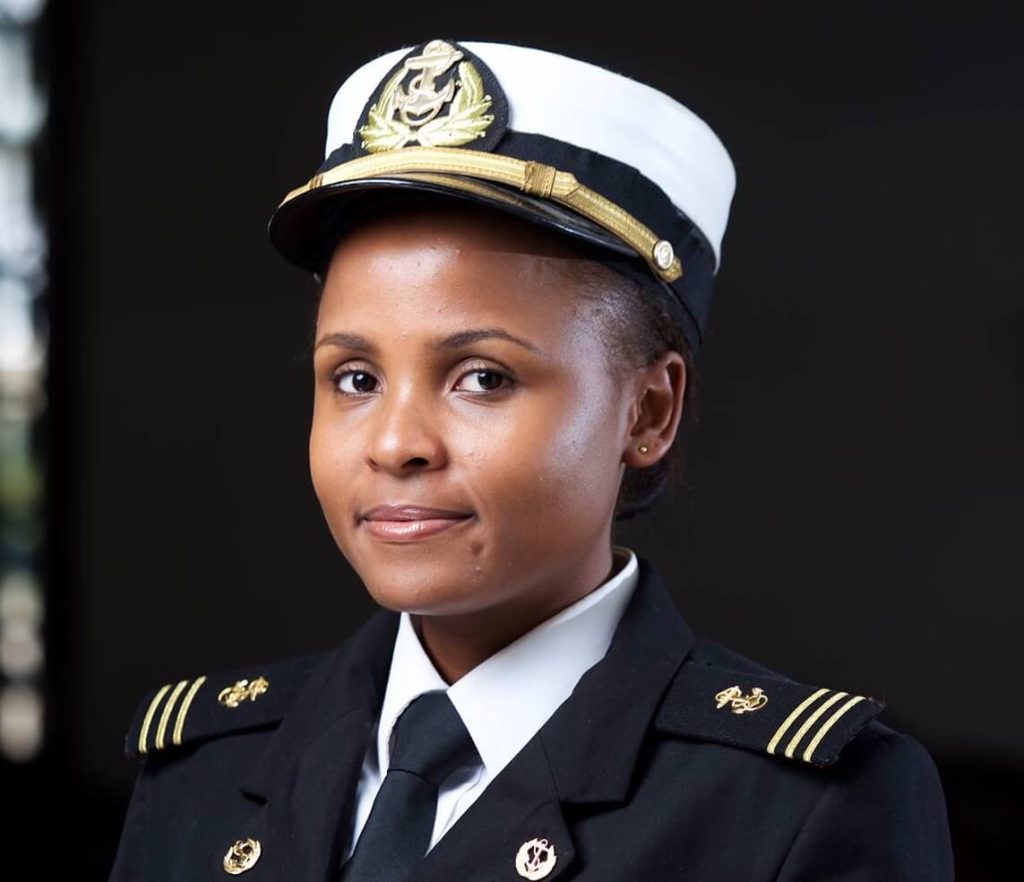
At only 27 years, Elizabeth Marami is charting the path less travelled and breaking gender barriers that have been in place for so long. Her courage would see her swim away from the waters of comfort to take up a comprehensive and challenging course in navigation and become a marine pilot. Intimidating and authoritative would be the ideal requirements for her job. However, Elizabeth has a warm personality, petite physique and is soft spoken for a person whose main duty is to take ‘command’. You have the name pilot in your job title, does that scare you? I do not often introduce myself as a marine pilot. It was just recently that I just found myself doing so. I believe it must have leaned more into the fact that I was talking to someone who inspires me and made me feel comfortable saying it. I am just Liz. What influenced your choice of career? I didn’t want to be ordinary. I wanted to pursue something that would challenge me. So when I heard about a scholarship, I could not resist the temptation to apply. The scholarship would have me leave Kenya for Alexandria, Egypt to study navigation. The selection process was very competitive and I couldn’t believe it when I was awarded. I had another offer to study law at the University of Nairobi but my mind was set on navigation. What comprises navigation studies? The degree course takes 5 years. On completion you get certification from a UN body, the International Maritime Organization (IMO). There is also a mandatory requirement of 18 months of sea time for every rise in rank and additional channel training at Kenya Ports Authority (KPA). I’m currently at second officer level. When I joined the training I was one of 2 female students, the rest were men. The training is very extensive with classes running late into the evening. I never had a typical college life of fun and socializing. You are now a marine pilot; describe a typical work day in your life I am a second officer in command. Foreign ships coming to the Kenyan territorial waters are not allowed to navigate on their own and have to have a Kenyan pilot meet them and help navigate. By doing that, you are taking ‘command’. I understand you are the only woman in your workplace. What are the dynamics? Do you prefer working with men as opposed to women? Our workplace is predominantly male. Small things such as bathrooms —where we have separate bathrooms for the male staff and the rest for general public— goes to show the gender disparity that is in the maritime industry. Yet the real struggle is not about the bathrooms but so many other key policies that keep away women from the sea. There is gender imbalance in staffing and training. Consider that women in the maritime industry account for only one or two per cent of the world’s 1.25 million seafarers, according to the International Labour Organisation. The men I work with are great; they encourage me and push me towards achieving my goals. Actually, working with men has helped me understand women better. The men in my workplace affirm, encourage me to be more assertive and don’t compete against me. This has helped me look at women not as competition, but team players in the same frontier. If you weren’t a marine pilot, what would you be doing? I would be working in the fashion industry. I would want to build an international brand that showcases African fabric and authentic designs. Tell me about your blog? Is it an escape from the unwavering tide in your career? I have always loved writing and fashion. Running my blog keeps me normal. I get to wear beautiful pieces and get photographed —which is a world away from my job. Sometimes I wish I could run this blog anonymously and that way I would be able to write about the deep-rooted issues of my life. You wrote extensively about rejection on your blog. Would you comment on that? We were 9 students who were awarded the same scholarship, 8 are male and 1 is female. Part of our course requirements is practical skills in form of 18 months of sea time. All the men in our class have successfully secured sea time on board ships since been offered the opportunity. I have been rejected by various companies in my quest to meet the board requirements for 18 months of sea time so that I can graduate to a captain, 1st in command. My applications often come back with rejections based on my gender which can be very frustrating. Companies are afraid of getting into sexual harassment (legal) suits so they prefer not to hire women. The blog gives me an off-my-chest platform where I can share my frustrations. I have however learnt to be patient. Good things come to those who wait. What does your family feel about your career choice? My family is very understanding. They have been very supportive. It’s only when I started my initiative, ‘Against the Tide’ that my dad became a little concerned. Be on the lookout for the official launch of this initiative. Tell me more about the initiative Against the Tide is my own initiative to see a reasonable gender balance in the maritime industry. Although in its infancy, I want to advocate for policies that favour both genders and allows for equal opportunities in access to opportunities in the industry. I also intend to mentor young girls into believing in themselves and having the courage to get into the profession. I have been speaking to students at various schools about the importance of believing in themselves. You met the President, His Excellency Uhuru Kenyatta. How was it like? The most impressive thing about meeting the president the second time was that he remembered me from the first time we met. On this instance, he commended me on our work before