From Classrooms to Careers: What Nigeria’s 13,709 Women Taught Us About Workforce Development
By Samson Arowobusoye, Job Matching Consultant, She Leads Africa | June 8, 2026
A Year 1 Impact Report on the BoostHer Program, a Partnership Between She Leads Africa and Jobberman
In Nigeria, being a young woman with an education is no guarantee of economic independence. According to the World Bank’s 2025 Gender Data Report, only 10.5% of employed Nigerian women hold formal wage or salaried positions, compared to 17% of their male counterparts. Meanwhile, 13.4% of young women are classified as NEET: not in education, employment, or training. And for women in the most underserved communities, including internally displaced persons living in camps, this figure is far worse. The gap between education and economic inclusion is not a skills problem alone. It is a structural one, compounded by access, geography, confidence, and the near-total absence of opportunity.
It was into this reality that the BoostHer Program was launched in May 2025, a partnership between She Leads Africa (SLA) and Jobberman, under the broader Young Africa Works initiative. The program was designed to meet women where they were, offering both digital and practical livelihood skills. For women in displacement camps, this included hands-on training in soap making and financial literacy, skills with immediate income-generating potential that required no device, no internet connection, and no prior technical background. For women with digital access, the program offered professional and entrepreneurial training across a range of high-demand fields. The goal across all tracks was the same: equip Nigerian women with market-relevant skills and translate that training into measurable economic outcomes.
By January 2026, when Year 1 closed, 13,709 women had been trained. 2,750 had recorded income improvements through new jobs, promotions, freelance gigs, or product sales, all directly traceable to skills acquired through the program. This is what SLA learnt.
13,709 Women Trained
2,750 Income Improvements Recorded
30,000 Target for Year 2
The Women We Set Out to Reach
The BoostHer Program targeted Nigerian women between the ages of 18 and 35, but from the outset, SLA resisted the temptation to define that group narrowly. Formal education, as understood within the program’s eligibility, begins from the secondary school certificate. Participants did not need to be university graduates or current tertiary students to qualify. The program was designed for any woman who had completed at least a secondary school education, whether she had gone further into higher education or not.
Within that broad eligibility, participants came from three distinct starting points. Some were graduates navigating a difficult labour market. Some were students still in school, building skills ahead of graduation. And some were active business owners, whether graduates or not, who needed digital and practical tools to grow what they had already built. The program was structured to serve all three.
This led to a deliberate two-pathway structure at the heart of the BoostHer Program. The Professional Pathway served women seeking new employment, career advancement, or promotion within formal organisations. The Entrepreneurial Pathway served women running or building businesses, who needed practical skills to expand their reach, grow their revenue, and compete in an increasingly digital marketplace. Both pathways were equal in design priority. Neither was treated as secondary.
Jobberman, as the program sponsor and convener under the Young Africa Works mandate, brought its deep understanding of the Nigerian labour market to the partnership. SLA, as the implementation partner, brought its expertise in reaching and training young African women, particularly those who are ambitious and hungry for opportunity but structurally underserved by mainstream workforce development programs.
Courses Built Around Real Needs
One of the deliberate design choices in Year 1 was to resist the temptation of a one-size-fits-all curriculum. The BoostHer Program offered a suite of courses calibrated to the actual economic activities of the women it serves, organised around the two core pathways, with a dedicated track for women in underserved and displaced communities.
Under the Entrepreneurial Pathway, participants could enrol in Digital Marketing and Content Creation, designed for business owners seeking to grow their brands online; Smartphone Video Editing, which enabled participants to produce professional-grade content without expensive equipment; E-Book Creation, targeting authors and content creators looking to monetise intellectual property; and Brand Design, equipping women building personal and business identities in a competitive visual economy.
Under the Professional Pathway, participants could enrol in Executive Virtual Assistance, one of the highest-demand remote work skill sets in today’s economy, and Data Analysis covering Excel, SQL, and Power BI, opening doors into the data-driven sectors of finance, technology, and business.
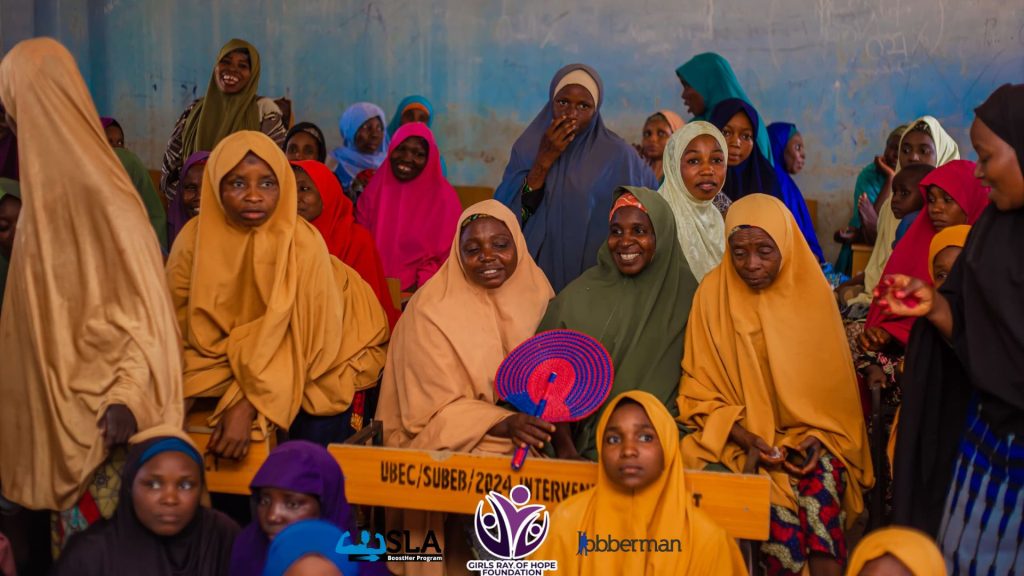
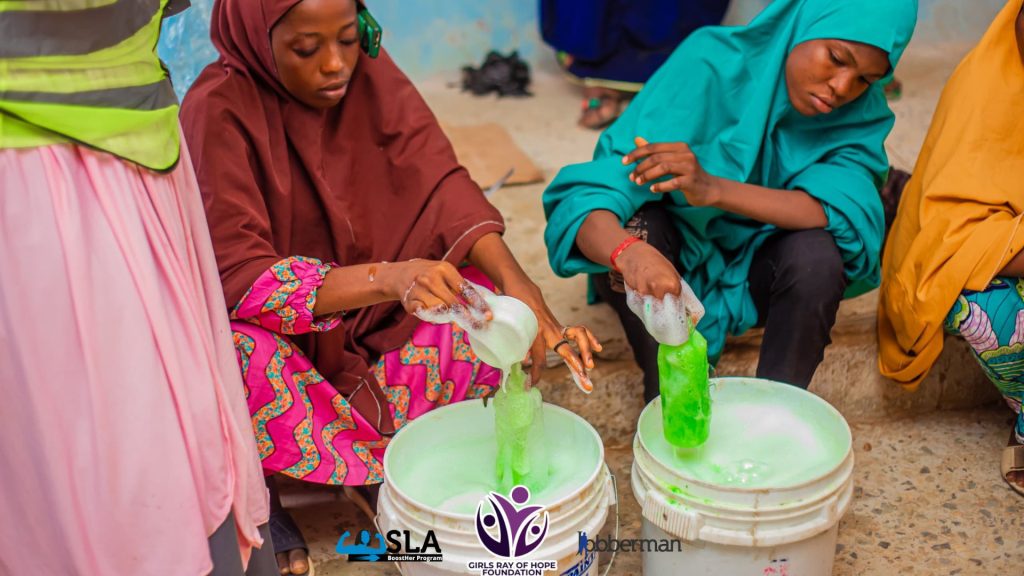
For women in IDP camps and other underserved communities, the program delivered soap making and financial literacy training, practical livelihood skills that could generate income immediately, without a smartphone, a laptop, or an internet connection. These courses were not an afterthought. They were a recognition that workforce development, to be truly inclusive, must speak the language of the community it is trying to serve.
Across all tracks, the shared principle was the same: every course was a direct pathway to a specific income-generating opportunity that participants could activate immediately after completion.
What the Data Revealed
Of the 13,709 women trained between May and December 2025, follow-up reporting before year’s end captured 2,750 with verifiable income improvements. This 20.1% documented outcome rate, achieved within the same calendar year as training, is a significant indicator for a program of this scale and reach.
When broken down by pathway, the outcomes tell a rich story. Of the 2,750 recorded improvements, 817 came through the Professional Pathway. Of those, 663 participants secured new jobs and 154 recorded promotions within their existing organisations. The remaining 1,933 outcomes came through the Entrepreneurial Pathway: 1,561 participants recorded direct product or service sales traceable to skills gained through the program, while 372 secured paid freelance gigs. Together, these figures confirm that both pathways delivered real, measurable economic value within the same year of training.
The program’s reach also reflected geographic and demographic breadth, with participants drawn from across Nigeria with varying levels of prior education and digital exposure.
Professional Pathway 817 outcomes (29.7% of total) 663 new jobs secured1 54 promotions recorded
Entrepreneurial Pathway 1,933 outcomes (70.3% of total) 1,561 recorded product/service sales 372 freelance gigs secured
“I recently got a new job as an executive assistant, and the certificate from She Leads Africa was one of the credentials I presented.”
Oluwatoyin’s story is representative of a pattern observed across the Executive Virtual Assistance cohort: women who already possessed the instincts and work ethic for high-performance roles, but lacked the formal vocabulary, the tools, the certification, the confidence to unlock them. The BoostHer Program provided exactly that bridge.
“It wasn’t just about learning how to use SQL, Power BI, or Excel; it was about gaining the confidence to look at a messy pile of numbers and actually see the story they were trying to tell.”
Teniola Oladunni Oluwole, Data Analysis Graduate
Teniola, who completed the Data Analysis track in July 2025, captures something that aggregate numbers cannot fully convey: the transformation that happens when competence meets confidence. She did not come to the program as a beginner. She came with existing intelligence, existing drive, and an existing career. What she lacked was the technical scaffold and the structured environment to put it all together. She leaves the program better equipped for graduate school, for the workforce, and for the digital economy at large.
At She Leads Africa, the measure of success is not just the number of women trained. It is the number of women whose lives change as a result. Every outcome report received is a reminder of why this work exists and a challenge to reach further. That is the standard the organisation carries into every phase of this program.
Inclusion by Design: IDP and PWD Participation
One of the commitments made at the outset of the BoostHer Program was that scale would not come at the cost of inclusion. Reaching 13,709 women meant nothing if the most vulnerable among them were left behind. From the beginning, SLA set a target of ensuring that at least 5% of total participants trained and placed would be Internally Displaced Persons (IDPs) and Persons with Disabilities (PWDs) respectively.
The Year 1 data tells a story of progress, and of work still ahead.
Internally Displaced Persons (IDPs) Trained: 2,177 15.9% of total enrolment Placed: 132 4.8% of total placements Year 2 Target: 5% of total
Persons with Disabilities (PWDs) Trained: 304 2.2% of total enrolment Placed: 56 2.0% of total placements Year 2 Target: 5% of total
On the IDP front, the program significantly exceeded the training target. Of the 13,709 women trained, 2,177 were internally displaced persons, representing 15.9% of total enrolment, more than three times the 5% benchmark set at the start. A substantial part of this outcome was driven by direct field presence: SLA went into two IDP camps and trained approximately 1,500 women on-site in soap making and financial literacy, skills chosen specifically because they could be applied immediately within the constraints of camp life, without requiring devices or internet access. This deliberate outreach is what made the IDP numbers possible. Displacement did not become a barrier to access because SLA chose to remove it. In terms of placements, 132 IDP participants recorded income improvements, representing 4.8% of all 2,750 placements recorded. The trajectory going into Year 2 gives SLA confidence that the 5% placement target is firmly within reach.
For Persons with Disabilities, 304 participants were trained in Year 1, representing 2.2% of total enrolment. While this falls short of the 5% training target, it represents a meaningful first step and an honest baseline to build from. Of that cohort, 56 went on to record income improvements, representing 2.0% of total placements. The data indicates that when PWD participants complete the program, they convert to outcomes at a rate comparable to the broader cohort. The challenge is not conversion. The challenge is access, and that is precisely where Year 2 design improvements are being focused.
Inclusive workforce development is not a checkbox. It is an architectural decision that has to be made at the program design stage, reflected in outreach partnerships, accessible learning formats, and dedicated follow-through. Year 1 showed what SLA got right and where it needs to go further. Both matter equally.
The Lesson That Changed Year 2
No Year 1 report would be honest without acknowledging what did not work as planned. The single most significant challenge encountered was course completion. When the program launched on a self-paced Learning Management System (LMS), a pattern familiar to online education providers globally emerged: high enrolment, low completion. Participants were joining the platform, beginning modules, and then disengaging before finishing.
The instinct in many program teams would be to treat this as a participant motivation problem. However, SLA chose to treat it as a design problem. The introduction of live classes via WhatsApp, meeting participants on a platform they already used daily and in a format that demanded real-time engagement, changed the dynamic entirely. Attendance grew. Completions improved. Community formed.
The insight this revealed is deceptively simple but operationally significant: African learners, like learners everywhere, do not prefer isolation. They learn in community. Self-paced learning, absent peer accountability and human interaction, is a friction-heavy format for adults managing competing demands. The data said what participants could not always articulate. They wanted to learn together.
Building on What We Learnt: Year 2
Year 2 of the BoostHer Program launched in February 2026 with a significantly elevated ambition: 30,000 women trained and 15,000 in active placements. These are not aspirational figures plucked from a strategy document. They are targets anchored in what Year 1 demonstrated is achievable, with the structural adjustments that Year 1 made necessary.
As of the publication of this report, the program is tracking close to 10,000 trained participants and approximately 5,000 in active placement pathways, a pace that puts Year 2 targets firmly within reach. The live class model, refined from Year 1 learnings, is already producing stronger engagement rates. The curriculum, validated against real economic outcomes in Year 1, is being delivered with greater confidence and precision. The inclusion targets for IDP and PWD participants are also being pursued with more deliberate outreach from the outset.
A full review of Year 2’s first quarter performance will be published separately, with the same rigour and participant voice that defines this report.
The Larger Argument
The BoostHer Program exists because data alone does not change the condition of young Nigerian women. Policy does not, by itself, change it either. What changes it, consistently and measurably, is the intersection of relevant skill, accessible format, and systemic follow-through.
She Leads Africa believes workforce development for women in Africa must be treated with the same strategic seriousness as infrastructure or financial market reform. The 2,750 women who generated income in Year 1 are not just individual success stories. They are evidence. They are the argument, made in numbers and in names, that with the right investment, Nigerian women do not just enter the workforce. They transform it.
The BoostHer Program, in partnership with Jobberman under the Young Africa Works initiative, is one answer to a question Africa keeps deferring: what would it look like if we actually built for women’s economic power?
Year 1 showed what it looks like. Year 2 is showing how far it can go.
Digital Skills Training: The Key to Africa’s $59 Billion Creative Economy
Training Was Just the Beginning: How SLA Is Building a Placement Engine for Nigerian Women
AI Didn’t Take Her Job — It Gave Her a Raise
The 25-Year-Old Shaping Africa’s Place in Carbon Removal