
Effectively handling multiple jobs like a pro
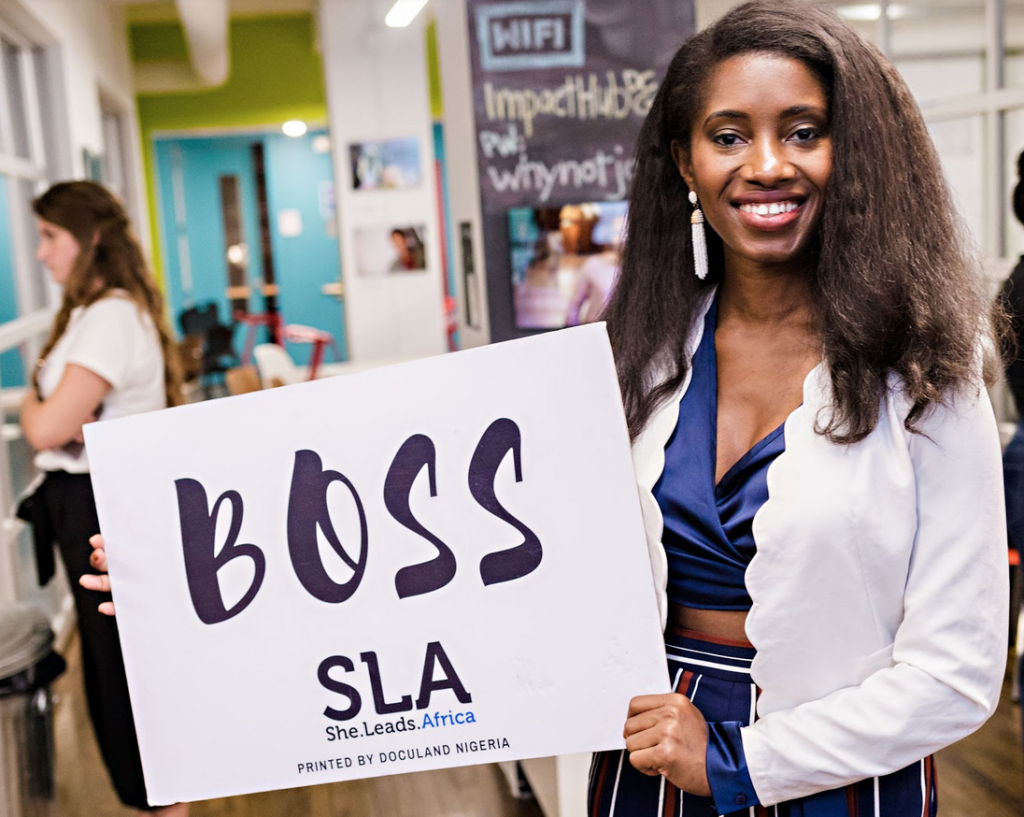
[bctt tweet=”Reading to be a professional job juggler? Here’s how to balance your 9-5 and your hustles ” via=”no”] So you got the gig! You are excited because you are finally on your way to doing something you really love. You spend endless hours on your side gig all in the hopes of being successful. But your job becomes a distraction and starts to keep you away from your hustle. How do you balance it all? Below are some of my tips for being a professional job juggler. Develop a work routine The biggest problem with holding multiple jobs especially if you already have a full-time job is falling into the trap of thinking you don’t have to work as hard as you would a regular job. Sorry to burst your bubble but having a freelancing gig may mean working twice as hard just to get a little bit of success. Therefore, a work routine needs to be developed for your multiple jobs. If you have set aside 3 days a week to work on your side hustle do it! Treat your gig just the way you treat your regular job. If you can’t imagine slacking on your regular job then you sure can’t slack on your side job. [bctt tweet=”If you can’t imagine slacking on your regular job then you sure can’t slack on your side job” username=”SheLeadsAfrica”] Talk to others The good part about the year being 2017 is that plenty of people have lived in on this earth. Chances are there are plenty of people doing what you are doing right now. Talk to other freelancers and pick their brains on issues that you may be having. Also just ask them general questions about how they operate. Learning from others will help you avoid the mistakes they made and save you a whole lot of time and money. Be organized Being organized doesn’t always have to mean you have a physical space to call an office for your business. In these times, few businesses have that. Regardless always make sure you have your business cards, company profile and pitch ready. This will significantly reduce your turnaround time with potential clients. Getting even one potential client is a good feat for a gig so you don’t want to scare off any. Additionally, you always want to feel ready to conquer what’s thrown at you. [bctt tweet=”Being organized doesn’t mean you have a physical space to call an office for your business” username=”SheLeadsAfrica”] Take time for yourself Seriously, take a break. When you feel overwhelmed by your multiple jobs it is okay to have a time out to just think. Watch your favourite 90s movie (cue in Pretty Woman), take a bath, go out for drinks, read a good book the list is pretty endless. The goal is to rejuvenate yourself so you can focus on your work. Create goals for yourself. Look! Goals give you direction period. If you do not set goals for yourself and your work you are most likely going to get overwhelmed. Additionally, you will be working but not adding impact. Every morning when you wake up ask yourself, “What single task can I do today that will take my business forward?” It’s all about creating purpose and everything will fall into place. Celebrate!! Celebrate every little milestone you achieve while working multiple jobs. You will automatically psyche your brain into doing more and before you know it you’ll be a master of your craft.
Transferable skills: What they are and how you can detect them
[bctt tweet=”So many of us want a change of jobs and we feel our skills will not fit. That isn’t entirely true” via=”no”] Have you looked through a job application and your initial thoughts are that you haven’t got any required or essential skills necessary for the job? Don’t panic just yet, we have the scoop to calm your career nerves. What are transferable skills? Transferable skills are talents and abilities you can take from job to job or career to career. They are skills you have acquired and can implement in any future career settings. They are categorized of more soft skills than technical skills. How are they acquired? Transferable skills are acquired through volunteering, internship opportunities, apprenticeship, training (formal and informal), hobbies and any job, task or role you were or still involved in including parenting. [bctt tweet=”The key thing is that you have every opportunity to develop your skills & learn new ones” via=”no”] What set of skills are transferable? Interpersonal and people skills Simply put, it is a skill that shows how well you relate to others. Top tip is how you communicate (written and verbal), empathy for others, conflict resolution and willingness to get along with others (team player), to ensure a common goal. Organisational skills This set of skills requires the ability to use your energy, resources and time in an efficient and effective way. Top tip is how you are able to follow through, manage your time, prioritize your work, planning and of course, meeting deadlines. Leadership skills The ability to influence a set of people to achieve a goal or move to a particular direction is essential as a leader. This set of soft skills is developed over time. Top tips are how you can effectively communicate, indispensability, integrity, commitment, problem-solving, initiative, decision making, evaluating, delegating and managing. Communication skills This set of skills cannot be overemphasized enough. They require the ability to articulate, explain, persuade and speak in public settings (meetings, work presentation or informal settings). Top tip is how well you are understood either through an email or letter or through your speech. Information technology skills The use of I.T skills is more than essential in our everyday life. However, you need to show an ability to use formal I.T skills in a work environment. Top tip is having the ability to use Microsoft Office packages. Research and analytical skills This set of transferable skills has the ability to search or look for information or data, organise them, interprete and make inferences, theories and decisions or solutions based on your findings. Top tip is the need to want to solve problems, by thinking, creativity, and curiosity. [bctt tweet=”You already have transferable skills. You just need to list them out now and apply them” username=”SheLeadsAfrica”] How do I know if I have them? Get out your pen and a paper and begin to make a list of skills and talents you have acquired thus far. Reflect on the roles you have done in the past (even in an educational environment) and as you go through this set of skills, create a list of your own set of transferable skills.
How to mission travel

[bctt tweet=”The best trips are those that are the most demanding, socially and professionally! ” username=”SheLeadsAfrica”] I am sitting in the middle seat of an empty row (great when you need to catch up on some sleep), and we are a few hours away from final destination: Dakar, Senegal. Since July last year, my world has been turned upside down in ways I never thought possible. I exited two years of post-bachelor unemployment (forcing myself to confront my aggravated social anxiety) to join an agency where I am in the air for what feels like 3 weeks every month. Though it has been exciting to discover everything business travel has taught me, oh boy has it been tricky and downright scary sometimes. It’s that fear of the unknown I suppose. I cannot tell you if it will ever leave me. But I don’t intend on wasting these travel opportunities by focusing on my fears. So I have mapped out a way in which I could be better prepared for mission travel, therefore less stressed, and more likely to take in as much as I can from these travels. If you are interested, and especially if you will be going on your first travel missions soon, I hope you stick around and enjoy the read. Step 1: The pre-travel prep In the week preceding your travels, take some time to research not only your final destination but also the countries in which you will be transiting. Make sure you have the travel and transit durations right (those can get so confusing, I mean is it just me?). Check the weather, the currency used in these countries and the predominant culture/religion for acceptable dress codes. You may want to calculate how much money you will need for the time you are away and take the appropriate amount of money beforehand; carrying dollars is very often the most appropriate. If you are not carrying cash, check for available banks and ATMs where you will be landing. Let me give you an illustration of what went wrong when I didn’t research my travel destinations. Last month, I embarked on a trip to Abidjan via Addis Ababa. I was so excited because after my mission I would be discovering Abidjan with some friends who have their parents there. All I could think of was the heat of Côte d’Ivoire and I imagined myself lying on the beach, sunnies on and all. I didn’t bother to check the weather in Addis where I would be spending the night and let’s just say, it was a pretty cold and uncomfortable night. The same goes with transit durations. I once confused an overnight layover for one that would only last a few hours. I encountered a lot of stress finding a hotel to spend the night in, and I thank the heavens I hadn’t given in to the temptation of spending all my remaining cash. Step 2: Pack appropriately and as lightly as you can This is where, till today, I binge watch “how to pack lightly” YouTube videos like they’re going out of style. Yesterday I think I hit the mark when an airport officer remarked: “Your suitcase is so light for a lady, you always feel the need to pack everything.” Needless to say that as a compulsive over-packer, I felt great. In all seriousness, it is important not to pack too heavily. If you pack light, you lose fewer things and you move faster. Packing light, however, doesn’t mean you leave the things you do need behind. Other than clothing, make sure you pack all professional material relating to your mission travel, and then you’re good to go! Learn how to pack like a pro here! Step 3: Keep your eyes on the prize So you’ve made it to your destination. Now what? If you are traveling alone, contact your boss or supervisor and make sure they know you’ve arrived safely and are ready to get moving. This serves two purposes, 1. Someone from your organization will know where you are and can assist with any urgent queries. 2. By calling when you get to your destination you can find out as soon as possible what you need to do and how you can get ahead on certain tasks. Mission travel is often very short and we can use all the time we have. [bctt tweet=”How do you ace travelling for work when you have social anxiety? Read this!” username=”SheLeadsAfrica”] Step 4: Take care of yourself Indeed, mission travel can be pretty fast pace. So remember to take care of yourself whenever you have the time. During travel, we often end up in surroundings we are not used to with people that may have completely different cultures than ours. The change in scenery can be exhausting all on its own. So take some time out for you. Call your friends or a family member -yes, even if you’re only going to be away for 4 days- wake up a little earlier for some prayer or meditation time, or get to bed earlier if you can. Step 5: Take in the travel and loosen up! I recently read “Daring Greatly” by Brene Brown from which a sentence struck out to me. I turned into an everyday prayer, and I am paraphrasing here, but it goes a little something like this; “let me have the courage to show up and let myself be seen”. All this to say that you should expect that despite the stress of the travels, your colleagues are going to be a lot more relaxed, and it’s an opportunity to show your personality and get to know on a deeper level those with whom you work. [bctt tweet=”Travelling for work is a great opportunity to get to know your colleagues on a deeper level ” via=”no”] You’re going to get some FOMO too, sometimes you’re going to get an entire afternoon to yourself after work to visit your surroundings and sometimes you’re
Writing cover letters for jobs in media or communications
[bctt tweet=”Remember, it’s not about you, it’s about what you can do for them” username=”SheLeadsAfrica”] The media industry is a very cutthroat place driven by extreme timelines and deadlines. That being said, most media professionals will not have time to read through pages of a cover letter explaining every single job you have ever had or what clubs you chaired in high school. They simply want to know these five things: Who are you? Why should we hire you? What do you know about us as an organization/company/institution/publication? What sets you apart from the rest? How do we find you? Put all this in a cover letter and you’re on your way to getting that interview call back you are hoping for. How to go about this though, is where most of us get it wrong. The world changes every day with each passing day, hour, minute and second, therefore it is imperative to keep up with the constant changes going on. What worked as a cover letter say 5/6 years ago, is definitely not the case today in 2017. Check out the dos and don’ts below which I hope will be a quick guide to writing a great cover letter. DO: Start off with a very intriguing first sentence The media/comms industry is all about being creative and thinking of different angles to put points across. Do not just say, “I’m applying for this position because I really need a job and I feel this would be it”… Let’s avoid the tired cliches, shall we? Start with what you know, which is your field, where you saw this vacancy and that you are interested in the position. This, first of all, gives them an assurance that their ads are being seen. Secondly, it tells them you know you fit the description by saying what you do already and lets them avoid wasting time reading the entire letter only to find out you don’t even know what you are applying for. DON’T: Start writing out a detailed description of your resume or LinkedIn profile By the time an editor, HR officer or head of department is receiving your cover letter, he/she has already looked at your resume. Do not waste time filling cover letters with repetitive content. DO: Tailor your cover letter to the job description Generic cover letters are a lazy way of applying for a job and they can be sniffed out from a mile away. A good example during my time working at an NGO, I was tasked with the job of going through various applications that had come in and had to cut them down to at least seven from 30 files. Out of the 30, half the group had exactly the same cover letter, copied and pasted from a popular career website, just different names and sent on different dates. That saved me a lot of time in terms of evaluation but it cost those candidates a job because they did not bother to actually write a detailed cover letter. Answer the questions they are asking by saying exactly how you fit the job requirements and you can provide one or two examples of what you have done in relation to the position. [bctt tweet=”Applying for a job in media/communications? Here are tips to write a stellar cover letter ” username=”SheLeadsAfrica”] DON’T: Go overboard with selling yourself Remember, it’s not about you, it’s about what you can do for them. Focus on that. Don’t talk so much about where you went to school, or the accolades you achieved. In this industry particularly, your honours, summa cum laude nod, distinction… aren’t prioritized as much. Someone with a Ph.D. can just as easily be outshone by a freshly graduated senior from college, it all boils down to efficiency, skill and how badly you want this job. Show them you are worth the investment, don’t tell them what they could have easily looked up on Google. DO: Your research Find out all you can about the place you are applying to. Talk to them about their visions, their values, their goals. Show them how adding you to their team will contribute to bringing about even better communication campaigns or how efficient of a designer/copy writer/editor you are thus providing a fresh approach to their brand/publication/business. Show them you know them and that you are ready to not change things around, but contribute to an already well-established organization. DON’T: Have grammatical errors None whatsoever. Cross all your Ts, dot all your I’s, have every comma, period and apostrophe properly placed. Proof-read your letter once you are done writing to make sure there are no typos, spelling errors etc. Have someone else check it as well to have a fresh set of eyes on it. There have been cases where an entire application has been cast aside due to one single typo in the cover letter. This industry is very detailed in the work they do and a simple mistake such as wrong spelling or a missing piece of information can cost them millions in the long run. A cover letter with grammar mistakes shows you are not meticulous and are sloppy with your work thus a liability to the company. DO: Be brief I’ll reiterate the concept of time. Most people in these industries will most likely skim through these applications than actually read through them. They will look for the five things mentioned above and tick off or cross out where appropriate and move on. Anything more than a page will not be considered at most organizations because again, no one has time to read through all that. Do be brief and concise yet include every detail you deem important to you and them on there. The art of paraphrasing comes in handy when applying to fields such as these. [bctt tweet=”A cover letter to the UN will be very different from a cover letter to a travel magazine” username=”SheLeadsAfrica”] DON’T: Forget to provide contact information If
4 principles to follow for a meaningful career

[bctt tweet=”How do you actually find meaning and purpose in your career? Start here ” username=”SheLeadsAfrica”] We all aspire to find meaning and purpose in our careers, whatever our line of work maybe, but the question is how do you actually do that? I feel like somewhat of an expert on the topic having explored different fields of study from Physics to European studies. In addition to that, I have considered going into the business world but eventually ending up working in development. I do feel that the work I do now is more in line with my long-term goal which is to work in the intersection of educational development and girls/women’s issues. Had I taken the time to ask myself some key questions years ago and really try to answer them based on a true understanding of my want, needs, and aspirations, I may have arrived at this finding a long time ago. Through this post, I’d like to share with you some practical steps you can take to make sure that you don’t stay stuck in a career that’s not meant for you but rather you are empowered to find a career that allows you to do the things you genuinely care most about. 1. Define what “meaningful” looks like to you Conventional wisdom may indicate that a meaningful and successful career is one that brings loads of money, recognition, and fame. And maybe that is true for some people, but is that true for you? You need to take a moment of self-reflection and truly consider what a meaningful career looks like for you and how that fits into the context of a meaningful life. Personally, when trying to decide what a meaningful career looked like, I tried to consider how my intended career weighed against the following factors: legacy, mastery, freedom, and alignment Legacy Look at the list of things you will have to achieve on this job and ask yourself if these are things you enjoy doing and can see yourself doing for an extended period of time. It’s not always going to be rainbows and roses, and so even on the mundane days, you have to ask yourself if you would be willing to stick it out). Are you creative and like to think outside the box? Do you like to follow rules and preserve order? How well do you handle uncertainty? Do you like being told what to do or do you prefer to be left to your own devices most of the time? Are you good at convincing others to do things or do you prefer to let the numbers do the talking? Will your career allow you achieve the things you want to professionally while allowing you to stay true to yourself? Mastery Make a list of all the things you know you kick-ass at and totally dominate. Are you a good writer, speaker, convener, motivator, team player, thinker? Does the career you’ve chosen put you in a position where you can display your mastery of these skills? Are there other skills that you have a feeling that if given the opportunity to do so you could master easily? Would this career afford you that opportunity? [bctt tweet=”Does the career you’ve chosen put you in a position to display your mastery of your skills? ” via=”no”] Freedom I think we all know intuitively what this means. Whatever career you choose, it’s going to come with some constraints i.e. salary, benefits, vacation days, perks, how much you get to travel etc. When you imagine yourself living your best and freest life, what does this look like? Will this career allow you to achieve that vision of freedom that you have? Alignment When it comes to alignment, the question you have to ask yourself is whether your chosen career is in line with your personal values and the type of work culture that you value. This requires a bit of research and digging to find accounts from people who have worked there. For instance, a company might be well-known for fostering creativity but also condoning a culture of misogyny (Uber anyone?). You need to be able to determine for yourself whether the culture that exists is one you see yourself fitting into seamlessly or whether it is one where you are willing to change to adapt to. 2. Think long term Thanks to advances in modern medicine, people are living longer which means that for our generation, retirement age is probably going to increase. Chances are whatever career you do commit to you’re going to be in it for a long time. So rather than thinking “What job do I want right now”, think “What life do I want 50 years from now”. And then find the career that fits into that. Find a career that you can see yourself doing 10, 20, 30 years from now. One that excites you and you feel will have room to allow you to grow in the direction of your long-term goals. [bctt tweet=”Think about the life you want 50 years from now and find a career that fits into that ” username=”SheLeadsAfrica”] 3. Be honest about your finances One of the main reasons that people stay stuck in a job or career that they don’t love is because of money. Either the money is too good to leave or the money is so bad they can’t afford to leave. But know this, you deserve to find a career that you find meaningful and fulfilling. So start today, start with what you have and create a “financial cushion” that will enable you to get started on that journey towards career bliss and psychological freedom. Make a budget and stick to it, give yourself a timeline, start exploring other opportunities and when the time is right, make your grand exit and follow your dreams. 4. Give time some time No one likes to hear this, but things take time and as the saying goes “Rome wasn’t
5 things to do to get the corner office

[bctt tweet=”Working your way up the corporate ladder? Take a look at how to get there with ease!” username=”SheLeadsAfrica”] After reading the book, “Nice Girls Don’t Get the Corner Office 101” by Lois P. Frankel, I felt it was only best to share some of the best tips that I learnt from this book! The book offers a bunch of no-no’s that we tend to overlook but actually, play a huge role in our professional careers. As Black women, it is already an uphill battle as it is! We all know the steps we need to take to be successful, but how about we look at it from a different angle? Let’s take a look at what a Motherland Mogul should NOT be doing in order to reach the top. 1. Asking permission It should be clear to people from the get go that you do not need approval from anybody! Go after what you want and be confident. If you are asking for permission, especially for simple things, you downplay the position you are in to make decisions. Instead of asking your boss, “May I work from home today?” rather say, “I will be working from home today, I will be available via email or cell”. This shows that it is important for your boss to be informed, yet you can make your own decisions when it comes to yourself and your work. 2. Needing to be liked Everybody wants to be liked and it can play a huge role in your success but, you have to strike a balance. If you are overly concerned with being liked, that means you are easily swayed by stronger personalities. I was thrown into an industry I knew nothing about. I knew I was capable of doing the job, but I felt I needed to be liked because it was my first time at the rodeo. I became a “yes” woman and ended up doing other people’s work. I learnt that I need to stand my ground – new or not. Not having a backbone meant that nobody was giving the respect I deserved, but at the same time, I was not showing anybody that I deserved it because I wanted to be liked so badly! [bctt tweet=”Click here to see what you should NOT be doing to reach success in the office. ” username=”SheLeadsAfrica”] 3. Holding your tongue Society has been conditioned to believe that if a woman is being assertive, she is being a bitch and many women do not speak up as a result. This happens not only at work but in our personal spaces too. A friend of mine told me about a superior who shoots down all her ideas, yet uses them as his own in important meetings to take all the credit. She let this happen for a while, but this made her realize that her boss is only stunting her growth in the long run. My friend kept all her ideas to herself until it was time to brainstorm in a meeting. She received some great feedback and because of all the great work she put in over time, she was promoted. This also allowed her to gain the respect of her superior, keeping him from stealing any of her ideas! It is ok to disagree, and being assertive means people will respect you, not walk all over you. 4. Minimizing your work or position Women tend to downplay their positions at work. Often you will hear, “Oh, I’m just a secretary, nothing special”. This is wrong! Whether you are a secretary or manager, each position plays a role in the growth of the company you work for. My new transition into the finance industry was not the easiest as I learnt about everything from scratch. This made me downplay my role when people asked “what do you do?”, I just wanted to avoid the topic completely because I was ashamed of the fact that I was not in the field that I worked hard and studied for. People did not take my expertise seriously because of this. I taught myself to snap out of that habit and acknowledge the fact that I am amazing at what I do and I should be proud of it. If you act like your job is not serious, then people will not take you seriously. [bctt tweet=”Check out how these office faux pas can stop a #MotherlandMogul from getting that corner office.” username=”SheLeadsAfrica”] 5. Failing to define your brand Personal branding is all the rage, and for good reason! Ask yourself how you want people to see you, what your expertise is and what you want to be known for. You may be working in finance, but ultimately you want to be a writer. What are you doing to make sure that people know you as a writer? What are you bringing to the table to make sure your expertise is communicated well? Ask yourself these questions. A lot of people make you feel like you should be following one path. But as a Motherland Mogul, it’s ok to be a jack of all trades or take on many interests. Show people what you got and you’re well on your way to success.
Elizabeth Akanbi: Make mistakes, learn, grow and do better

[bctt tweet=”We aim to reach women that have a passion to become game changers” username=”SheLeadsAfrica”] If there’s something she’s known for, it’s adding value to other women’s lives. With over 7 years experience across different industries, Content creator and Marketing communications professional, Elizabeth Akanbi is Founder and Managing editor of For Working Ladies, an online career lifestyle hub for women. With a strong passion of understanding people’s journeys to success she uses this knowledge to inspire, empower and motivate individuals. Asides equipping women with inspiring and motivational content Elizabeth is passionate about sharing the African culture through art, food, music and social events. As such she co-founded a lifestyle brand, The Social Bloc which runs periodic social events in the UK to highlight the African culture. What inspires For Working Ladies? I have always desired a mentor, someone to tell me how to make decisions, someone to give me career advice, tell me the risks of starting a business, I’m sure you know what I mean right? But I have never been fortunate to have one. I would search the internet day and night looking for answers to my questions, read loads of articles, career profiles and then draw a conclusion on the topic. I knew I wasn’t the only person going through this and needed to create a platform where you could get career/entrepreneurship tips, read about other women that have taken your path and just daily lifestyle content. Why an online platform? Because the world is going digital and people are constantly on their phones so I saw this was the best place to share content and reach our audience. For Working Ladies is a career lifestyle hub for women created to motivate, inspire and give guidance. What kind of content do you provide and what women does your business aim to reach? Our content mainly focuses on career and entrepreneurship, however, we also share lifestyle content also. We aim to reach women that have a passion to become game changers, we want to equip them, motivate them and be that big sister that says we have your back. What innovations and future plans are you looking towards for your business? 2017 is the year that I hope to take For Working Ladies offline and create interactive events. Things are still in the pipeline; I am excited and currently looking for speakers and brands to partner with for our first interactive event. Asides from events we hope to start delivering content in new and fresh ways as the behavior of people are changing and they want more than just written content. Tell us about your greatest challenge as well as your greatest achievement so far? My greatest challenge has been creating content that is new, fresh and relevant on an ongoing basis. There is so much content out there that it is necessary to give people a reason why they should read yours. Luckily I have an amazing team of contributors who are constantly creating fresh and relatable content for women. My greatest achievement so far has been keeping this content-based site going for over a year, being the only editor, managing the digital marketing, overseeing over 15 contributors whilst working. It takes a lot of time and dedication; there have been times where I have gotten so tired of proofreading and writing that I just want to give up. I am working on building a team so that as a brand more can be achieved. What business tools have helped you in running your business successfully? My daily tasks consist of sending emails, a lot of emails! mainly to contributors and also to people I am interviewing. I am literally always stuck to my phone/Mac refreshing my inbox, it can be a headache but it has to be done. The best tool that has helped me in managing emails is Boomerang for Gmail, it allows you to schedule emails, receive notifications to follow up on an email and also receive a notification when they have read the email. It’s a really user-friendly plugin! There are so many great features, we have an article on our website about it. [bctt tweet=”Learn from every mistake, because every experience and encounter is there to teach you” username=”SheLeadsAfrica”] What personal values have guided you as an entrepreneur? Hard work and consistency. Results don’t just come; you must be intentional and put the work in. The first step is making the commitment but the next, which can be the hardest is consistency coupled with hard work. Also as Oprah said, “Learn from every mistake, because every experience and encounter, particularly your mistakes, are there to teach you..” It’s okay to get it wrong, it’s okay for that partnership to breakdown, it’s okay for that idea not to work out, but in all of that experience what did you learn? I try my best to analyse every experience I have had and learn from it. Without mistakes how would we learn? Make mistakes, learn, grow and do better! From your business name, it is safe to say you have nothing for the unemployed ladies? We have something for every female, whether employed or not. Our main focus is career and entrepreneurship, however, we touch on lifestyle, fashion and much more content that is relevant to all ladies. Everyone has something they want to achieve in life, a dream they want to pursue, something they are working on and we want to be part of that journey in inspiring, encouraging them that they can achieve whatever they set their mind to do. [bctt tweet=”Don’t allow the distance between where you are and where you want to be scare you” username=”SheLeadsAfrica”] Advice for entrepreneurs about to throw in the towel? Why did you start in the first place? Sit down and have a deep think. Remember your why at every low point and allow it to push you. Don’t allow the distance between where you are and where you want to be scare you,
Laying the foundations of your business while holding down your day job

[bctt tweet=”This been the hardest undertaking of our lives thus far, but also the most rewarding ” username=”SheLeadsAfrica”] In August 2016, my friend and I took the plunge and decided to launch our very own social enterprise. Born out of many long conversations and brainstorming sessions, we finally settled on creating an organization that could help address some of the challenges Nigerian girls are facing stress-induced their educational development. That was how Give Girls A Chance came about. We were giddy with excitement as we embarked on the process of registering the organization and launching a fundraising campaign. In January 2017, we had raised enough money to sponsor the first group of girls in the program with full scholarships including tuition, fees, books, and uniforms. We also recruited five amazing volunteers to serve as mentors through our dedicated mentoring program. With all of this in place, we set to work running the organization like the bad-ass boss ladies we are. Half a year later, we can honestly say that this been the hardest undertaking of our lives thus far, but also the most rewarding thing we have ever done. Mind you we both decided to do this right at the moment when our other professional careers were taking off. I had just joined the UN in August and was posted to Zambia. My partner Hauwa was wrapping up her youth service and about to start working as a full-time doctor. But this idea was something that had been on both of our minds for a long time and we did not want to wait any longer. We are both deeply passionate about public service and believe that it is our duty to contribute to the development of Nigeria. What better way to do that than by training up the next generation of women and future leaders of our country? So, we took the plunge, and for better or worse, we have survived to talk about it. For every success that we have had, we have had twice as many failures and faced countless roadblocks. When it comes to laying the foundations for your businesses while holding down your day job, here are some of the experiences we’ve had and advice we would like to share with the readers. Say goodbye to sleep…at least for the time being Before you take this flirtationship any further, imagining the idea of starting a side hustle, business or organization while keeping your day job and still managing to get 8 hours of sleep, stay fit and avoid stress-induced acne, let me stop you right there. Unless you are Wonder Woman (and who knows some of you very well may be), you should know now that you’re going to have to make a choice between bringing your business to life or getting the daily recommended 8 hours of sleep. I can’t tell you how many sleepless nights we’ve had and how many things we’ve had to miss out on because we choose to invest our waking hours and our resources into growing our organization. There is so much research, planning, and coordination required to grow a business and if you have to do this alongside a job that demands the 8 hours of the day when most people are typically productive, it simply means you’re going to have to cut into your sleep and leisure time to stay on top of everything. The good news is that the joy of seeing your idea come to life is unparalleled. Nothing beats that feeling of satisfaction and accomplishment you will have when you start to hit your targets. And if all it takes is skimping on sleep every now and then, that’s a small price to pay, right? You can always make it up later when your name is up in flashing lights and you’re rolling deep in that moolah. [bctt tweet=”You’re going to have to make a choice between bringing your business to life or sleeping” via=”no”] Budget, budget, budget I grew up with a banker for a father and he tried his best to instill in me the spirit of budgeting and saving. But I like shiny things too much and I’m always ready to take on the challenge of seeing how much stuff I can get for all the money in my account. I am so thankful that Hauwa is in charge of the finances for Give Girls A Chance. We managed to raise a significant amount of money when we first launched and true to form I wanted to go big and sponsor as many girls as we could but Hauwa talked sense into me. We decided to start with 11 girls, put some money into savings so we could pay for events and plan for the future. We knew that it would not be cool if we sponsored 200 girls for one semester or two, but then had no money to keep on going. The girls would end up right back where they started, having to drop out of school because they could not afford to go. Instead, we decided to take things step by step, prudently accounting for every kobo and making sure we were getting the best return on our investments. As the new school year approaches, we are thrilled as we can now comfortably take on more girls for an extended period of time. My advice is to use the resources you have wisely and always have some money left in the bank. [bctt tweet=”Use the resources you have wisely and always have some money left in the bank ” username=”SheLeadsAfrica”] Be consistent Because we both have full-time jobs, the only times we are able to work on Give Girls A Chance related activities are in the evenings and on weekends. In fact, that’s not true. We end up replying to emails, texts, and requests during our lunch breaks at work too! Saturday mornings at 9 AM are set in stone for our weekly check-in meetings and Sundays
Being your own boss as a freelancer

[bctt tweet=”You need to fully get your hustle on and sell yourself whenever you get the chance.” via=”no”] Welcome to the freelance life. First off, I’ve noticed a Nigerian trend where too many young people are obsessed with the title of CEO on their name cards, and less committed to undertaking the hard work that comes with working for oneself. In an economy that may or may not be in a recession, the conventional employment sector is overburdened as too many people clamor for scarce resources. For some others, the strings of a 9-to-5 or round-the-clock job working for someone else is just not appealing. Let’s be straight up, here. Freelancing is not an easy path to navigate but there are serious perks to it if you’re actually good at what you do, and if you’re prepared to put yourself out there. There is such a wide range of freelance occupations which includes writers, graphic designers, animators, accountants, MUAs, hair stylists, recruiters, lawyers, models, real estate agents and more. Statistics tell us that about a third of all working Americans are freelancers. In several parts of Africa, we can expect that more people are also taking up freelance work. There are several perks to working as a freelancer: Your time is flexible You’re your own boss You get to select the projects that interest you All that sounds super great, so let’s balance it out. There is a downside…there is no guaranteed income stream. This is true especially when you’re just starting out. It means you need to fully get your hustle on and sell, sell, sell yourself whenever you get the chance. Some periods may be a lot better than others. Sometimes, you’re absolutely swamped with work and at other times, you’re almost begging for work. How to boss it? Network! Whenever you meet new people or talk to old friends, tell them about what you do. People are always looking for freelancers but you wouldn’t know if you don’t spark up the conversation. Be super organized It’s important to respond to clients in a timely manner and to keep adequate records. It helps to have a to-do list and to set hours when you must get things done. Brand yourself online and offline Use social media to showcase your skills and highlight your personal brand. Work on a splendid offline portfolio too, get all your marketing tools in check. Look for opportunities on social media Forget looking only at the traditional sources! I personally have been exposed to more opportunities on social media. Twitter is a great tool to find work and engage with other freelancers as yourself. I personally love the freedom that comes with being able to plan around my own time, to travel while I work, to work at odd hours. Just remember, you need to be practical about your goals and expectations, and you need to put considerable time and effort in to get to your ideal place. Kindly share your tips and experiences from working as a freelancer with us.
Webinar with Odunayo (PushCV): Writing your cv and cover letter for your dream job (July 13)

What do the first six seconds of your CV say to a recruiter? If you’re attending many job interviews but never get a call back from employers, we’re about to solve your job hunt misery. It doesn’t matter how smart you are, or how much skills you possess, having a bad CV and NO cover letter can end your chances for a job in no time. [bctt tweet=”Learn all you need to know from @OdunEweniyi about rewriting your CV and cover letter. (July 13)” username=”SheLeadsAfrica”] Now, whether you’re planning to write your CV yourself or get a professional writer, you also need to understand the difference between your CV and cover letter and know how to construct and present both to potential employers. We’ll be chatting with tech founder and Chief Operations Officer of PushCV – Odunayo Eweniyi on Thursday, July 13th, about how to get the attention of recruiters, through your CV and cover letter. Odunayo launched PushCV for both employers and job seekers – to fully harness the power of technology in the search for the perfect candidate or the perfect job. Register for this webinar below. Some of the topics we’ll cover Techniques for Job application Rewriting your CV and cover letter How to get the attention of a recruiter in 6 seconds (Presentation) Interviewing processes every job seeker must know of Webinar Details: Date: Thursday, July 13th, 2017 Time: Lagos 1pm // Joburg 2pm // Nairobi 3pm Place: We’ll send you the link to watch once you register Watch here: About Odunayo Odunayo Eweniyi is the Chief Operations Officer of Sharphire Global Limited – which owns subsidiary companies like PushCV, Piggybank.ng and FrontDesk. Odun, as she is called, is very passionate about education, employment and most importantly, female empowerment, which enabled her to work with her team to build products to achieve that goal over the past 4 years. She graduated with a first class degree in Computer Engineering from Covenant University. She loves to write a lot, and when she’s not working or eating, she’s watching TV shows.