
Standing up for yourself: Having more confidence in the workplace

[bctt tweet=”There is power in being proud of what you do, especially when you’ve worked hard” username=”SheLeadsAfrica”] Have you ever noticed yourself submitting work to your supervisor and uttering the words “I hope you like it”? I know I have and as the words came out of my mouth I hated it. Why? It sounded as if I was unsure of the quality of my work and above all, myself. The truth is I was confident, I had done the research and written multiple drafts but I felt lowering expectations would make my supervisor like my work more. But ultimately I was cheating myself under the guise of humility but rather I was showing a lack of confidence in my work. I knew I had put in the work but I didn’t feel that it was good enough or that no matter how good I thought it was my supervisor wouldn’t feel the same. So feeling and showing uncertainty was the better option to feeling great to only receive disappointing feedback. Confidence is key Basically, I was scared to show pride for my work in case it was not well received. I’ve come to realize there is no room for that in the workplace, confidence is key. There is power in being proud of what you do, especially when you’ve worked hard. Supervisors are more receptive to work that is submitted without a doubt on your behalf. Their reliance on and expectations of you rise, and that’s a good thing. This is great when you are gunning for a promotion or raise. Your actual work will speak for you but your presentation is just as important. Sell your work as well as letting the work sell itself. There is no shame in promoting your game. It is a lesson I have come to learn. But knowing isn’t as easy as putting into action. It takes small steps. So when it comes to talking up in meetings, I no longer shy away. If you’ve got a good suggestion, don’t hesitate. Speak. It’s important that we speak up in meetings with clients or colleagues when you know the work. It will push you further and build stronger bonds with your client and show your boss exactly why you are in the position you are in. Speaking up can lead to standing out. Don’t shy away from raising your voice, especially when it counts. [bctt tweet=”If you’ve got a good suggestion, don’t hesitate. Speak.” username=”SheLeadsAfrica”] Changing your language Confidence is also necessary when you have to defend your work. We all have that one colleague who likes to push and challenge you. That shouldn’t back you into a corner. You know your work, there’s no reason to shy away when challenged. This doesn’t only make you a force to be reckoned with, it will also bolster your ability to address tough situations when the need arises. Another small step? Changing your language. Take out phrases such as “I would just like..” or “I wonder if” and replace them with stronger more self-assured words. The point of this is to come across as more self-assured with regards to your request. People are likely to respond positively to a statement that is said confidently. When sharing an opinion say it with conviction, “I would like to talk to you about..” or “I suggest that…” This enables you to get what you want when you say what you need. It yields better results in terms of ensuring efficiency from colleagues and getting your point across. Being more confident isn’t just to gain the respect of your colleagues of supervisor, it is also great for your personal and professional development. When you believe in yourself, it will show in the way you carry yourself, and your professional outputs. The more you feel this way, the brighter you will feel and that will reflect in everything you will do. Accepting compliments Accept compliments with pride. When you hear the words “Well done”, what is your immediate reaction? Shonda Rhimes states three reactions to receiving compliments in her book Year of Yes; dismissal of the compliment; shyness; and laughter/embarrassment at being complimented. At the root of this is the little voice saying, “not me, I don’t deserve this. I was just lucky”. Humility is great and all that but it honestly doesn’t hurt to show your pride when someone recognizes your awesomeness. It is not overconfidence when you accept a compliment with a thank you. We have internalized the fear of appearing confident because it appears cocky. But you’re awesome and that is okay, actually, it is better than okay. It is pretty damn great and its okay to stand in your shine. You’ve worked hard and being recognized for putting the work in is a great feeling so don’t shy away from it. [bctt tweet=”Humility is great but it doesn’t hurt to show your pride when someone recognizes your awesomeness” via=”no”] So what does it mean to be a confident woman to me now? It means speaking up when I know I have something valid to say. It is being able to back up my work when challenged. It is me acknowledging that I have reached where I am, not by default or mistake but because I am genuinely smart and talented. You are exactly where you are because you deserve to be, don’t ever doubt it.
Wana Udobang’s guide to balancing side and main hustles

[bctt tweet=”Working in full-time employment helped in many ways – @MissWanaWana” username=”SheLeadsAfrica”] Wana Udobang is a producer and director of the documentaries; “Sensitive Skin” a documentary film about the skin condition Psoriasis; “Nylon” a short documentary on memory, trauma, and loss; and the documentaries-series “Warriors” exploring the lives of people with sickle cell disease. She also is the creator of the poetry series “Words and Inspirations” and the interview series “Culture Diaries”. Wana wrote and directed the web series “Room313” and the short film “Shrink”. She plays Visha in the award winning Burkinabe film “Frontiéres”. Wana has worked with the BBC Radio4, BBC world service, 92.3 Inspiration FM and Resonance FM. Her work has appeared on Aljazeera, Guardian UK, Guardian Nigeria, Index on Censorship, and Brittle Paper. She graduated from the University for The Creative Arts with a first class degree in Journalism. Wana is creative director of WanaWana productions and hosts the television show Airtel Touching Lives. Interested to know how this media lady keeps all her creative work in equilibrium, SLA contributor Anuli interviewed Wana for some insider tips. [bctt tweet=”I don’t think I ever saw myself as a celebrity and I still don’t. I have always focused on the work and that is what I continue to do” via=”no”] Tell us how your journey began? I wrote poetry as a teenager. It became a source of catharsis for me. I studied journalism at university and I always enjoyed cinema and documentary so I decided to try my hand at it as opposed to talking about it so much You have been in employment before launching out to create your own niche. Would you say employment helped hone some, if not most of your skills? Working in full-time employment helped in many ways. Whether it was pitching ideas or having a 360 view of how the media worked and of course the general discipline of managing your time. On Air Personalities (OAP) in Nigeria are seen or celebrated as celebrities. How do you keep evolving and stay relevant? I don’t think I ever saw myself as a celebrity and I still don’t. I have always focused on the work and that is what I continue to do. Make sure that my work is getting better, I learn more interesting ways to engage and connect with audiences but I think what drives me stays the same. Which is how I can tell powerful and meaningful stories that can make an impact. While working as an OAP on Inspiration FM, where you also doing other gigs? Please tell us what they are. I was mostly writing and performing poetry. So I was a columnist at NEXT newspapers, wrote for Bella Naija and other platforms. I was also hosting events and moderating panels and discussions at conferences. Also, I worked with brands on marketing campaigns as an influencer. I did a bit of TV presenting but none of it was a conflict of interest to my full-time job You currently host Airtel Touching Lives. Were you holding down a day job when this opportunity came? What would you say was the x-factor that made you the preferred choice to host this show? Yes, I still worked on the radio whilst I shot both the first and second season. I really can’t tell you if there was anything special but I hope that my genuine interest, commitment and need to connect came through and fingers crossed that was something that stood out So which of your roles or jobs would you say are main and side hustles? I think hosting events are a side hustle but everything else is part and parcel of my career. I think when you see things as a side hustle then they become that. [bctt tweet=”I think when you see things as a side hustle then they become that – @MissWanaWana ” username=”SheLeadsAfrica”] How do you give your all to your hustles and still deliver top quality work? I don’t really approach anything as important from the other. I see it all as one entity with myself as project manager. This for me means that adequate planning, time management with expectations and deliverables go into everything that I do. You just aired a Youtube Series called Warriors. Before that, you aired Culture Diaries and Room 313. Tell us about any challenges or obstacles in shooting these series and how you overcame them, please? Money is the main obstacle. These projects have all been self-funded which means a lot of the time, you are pulling in favours so you have to work around other people’s time as they are helping you out. So you don’t have as much control as you would like because you are working around other people’s schedules and dependent on their goodwill. Now, let’s talk finance. How have you been able to get your work (side and main hustles) out to the world without going bankrupt? I really take advantage of the internet and social media. It has been quite revolutionary in helping to not just share my work but in building a community and audience for the work. And most of that takes my work than money. I literally live online. Please share 3 quick rules in ensuring one stays on top of their hustles I would say Planning, Time Management and Create value (be the best at it) If you’d like to share your story with She Leads Africa, let us know more about you and your story here.
Public Relations vs. Advertising

[bctt tweet=”In PR, The “public” is anyone who ever has/will form an opinion about the client” username=”SheLeadsAfrica”] What is Public Relations? Public Relations is a strategic communication process that builds and manages mutually beneficial relationships between Organizations and the Public. The “public” is anyone who ever has or ever will form an opinion about the client. These could include clients, potential clients, members of the community, the media, online fans etc. Public relations success requires a deep understanding of the interests and concerns of each of these and how to effectively address them through Publicity. What is advertising? Advertising is the act of announcing, praising or drawing attention to a product, service or event in a public medium in order to promote sales or attendance. What are the similarities between Public Relations and Advertising? PR agencies and advertising agencies share the same goals: promoting clients and making them seem as successful, honest, important, exciting or relevant as possible. But the paths to achieving this are different. [bctt tweet=”PR & advertising agencies share the same goals but different paths to achieving them” username=”SheLeadsAfrica”] How is Public Relations different from Advertising? Newspapers, radio and TV stations (especially local ones) are always looking for fresh story ideas, particularly those with a “human interest” angle. A PR professional crafts press releases resembling a compelling news story, making it clear why his client’s product, service or personal history is important. The goal is to fulfill the journalist’s requirement for news while enhancing the client’s image in the public eye. PR agencies, as opposed to advertising agencies, promote companies or individuals via editorial coverage. This is known as “earned” or “free” media stories appearing on websites, newspapers, magazines and TV programs as compared to “paid media” or advertisements. Since advertising is paid for by the client, it is thus viewed with skepticism. Articles or TV appearances in respected publications have the advantage of third-party validation and are generally viewed more favourably. Another huge difference is the price. Public Relations in the media is free if done directly by the company. PR firms also charge monthly retainers or can be hired for specific projects. Advertising can be very pricey when you figure the cost of the space or time plus the creative designs and production costs. And most advertisements need to be repeated several times before the consumer can be influenced. Publicity has greater longevity than advertising. An article about your business will be remembered far longer than an advert. Publicity also reaches a far wider audience than advertising generally does. Sometimes, your story might even be picked up by the national media, spreading the word about your business all over the country. [bctt tweet=”An article about your business will be remembered far longer than an advert” username=”SheLeadsAfrica”] Advantages of Public Relations over Advertising Advertising builds exposure whilst Public Relations build trust. Advertising leaves a sceptical audience whilst public relations because of its endorsement by the media, validates and legitimises the audience. Because it’s in their best interest to sell you more ads, advertisers tell clients what they want to hear whilst PR people who deal with crises, image enhancement and creation of long-term relationships, where your story often must be accepted by others (the media) before you obtain recognition, will tell you what you need to hear. Advantages of Advertising over Public Relations Advertisers maintain creative control of output whilst Public Relations has no final say in output which rests in the hands of the media. Advertising uses visuals whilst Public Relations use language for persuasion. With Advertising, you are guaranteed of a placement in the media platform but with Public
How to land a job in the (Kenyan) public sector

[bctt tweet=”It’s easy to get a job in the public sector, provided you’re is confident, a go-getter and have experience ” via=”no”] When it comes to landing a job with the government, many people think it is a tall order that can’t be achieved by common citizens. According to Aziza Said, a communication professional working under the presidency, it is easy to get a job in the public sector, provided one is confident, has a go-getter mentality and experience in a related field. Here’s a summary of what the young Kenyan lady believes propelled her into getting a job in the public sector and keeping it so far. Confidence and immeasurable experience Working in the public sector is like working in any other job. As such, an interested candidate should have the common and necessary qualities such as relevant education and experience in the field. Above all, one needs confidence and a belief in self- qualities that push one to seek opportunities that will help them to grow in that field. Prior to working with the government, Aziza was a radio program host for two local stations. Here, she had an opportunity to put into practice her acquired skills. She expanded on people skills, a quality that is crucial, especially, while working in a government office. Excellent communication skills It is Aziza’s duty to ensure that information from the government reaches the public. Information is important in improving the lives of the citizens. “I am also keen on informing Kenyans about the country’s performance in the global market,” she adds. Communication skills are vital when it comes to performing these duties, as well as interacting with the public. This does not apply to communication professionals alone. All public servants should be able to communicate and interact well with colleagues and the general public at large. [bctt tweet=”All public servants should be able to communicate and interact with their colleagues & the public” via=”no”] Know what the Constitution says about your duties as a public servant The Constitution stipulates what public servants should and shouldn’t do. It is therefore important for government officers to know what the Constitution says about their field of work. As a media practitioner, the constitution has separate clauses that inform us how information should be collected, reviewed and shared with the public. Articles 31, 33, 34, and 35 of the Kenyan Constitution give a guideline on how to handle and disseminate information. [bctt tweet=”The good thing about the government is that there are training opportunities for every employee” via=”no”] Be on the lookout for opportunities to advance self The good thing about the government is that there are training opportunities for each and every employee. It is the duty of the particular public servant to identify and attend such training opportunities to increase their knowledge on a specific area. Public servants are also encouraged to go back to school for higher education. The good thing is when there are promotions; those with more experience and education are considered and rewarded. Aziza believes she’s grown immensely in the past two years since joining the government. She advises citizens to be on the lookout for job adverts in the Kenya Gazette, local dailies, and relevant websites, as well as keep tabs with those working in such offices, also known as networking. “Look at the requirements for every posting and avail all the necessary documents, as this is where the initial short-listing process starts,” Aziza advises.
How to balance multiple jobs

[bctt tweet=”Be honest with yourself and what you can and can’t handle” via=”no”] These days, side hustles are the new hobbies and working more than one job is pretty much expected. Between paying off student loans and getting the rent check in on time, it’s no wonder more working class people leave their 9-5’s and clock in for a 5-9 right after. Although working those long hours can be vigorous, it’s commendable. One trait that highly successful people share is that they’re persistent, meaning grind until your goals are reached by any means. Oprah didn’t become Oprah by showing up to work and then kicking her feet up afterward, so why should you? Stick to a schedule Since your time is now limited and especially precious, every minute counts. Staying on schedule will make your tasks flow more easily and relieve you of the stress of forgetting to complete something. Although it seems obvious, keeping a calendar with your tasks detailed by day will be extremely helpful. Keep your calendar in a place where you are productive and visit often such as your desk. Prioritize If you’re busy at job 1 planning an annual fundraiser, it’s probably not the best time to pick up an extra shift at job 2. Be honest with yourself and what you can and can’t handle. [bctt tweet=”Staying on schedule will make your tasks flow more easily ” username=”SheLeadsAfrica”] Be realistic with your time Stretching yourself too thin isn’t beneficial if you work a full-time job and have clients to please for your personal business. Therefore, be realistic and don’t sacrifice sleep in the meantime. Know when it’s time to throw in the towel Letting something go doesn’t mean you quit, it means you’re changing strategy. When one job doesn’t fit your lifestyle don’t be afraid to move on. Be honest with your employers By not being upfront with your employers about other jobs, you welcome easy opportunities to cause a rift in the workplace. Chances are, after being open with your boss they’ll understand and be receptive to why you’re drinking 3-4 cups of coffee a day. [bctt tweet=”Be realistic and don’t sacrifice sleep in the meantime ” username=”SheLeadsAfrica”] How to plan a productive day with multiple hustles Wake up on time Every second counts when you’re attempting to balance multiple gigs. This means the snooze button is no longer an option. Set your day up where every moment is valuable. Meditate/Set your intentions Whether you do this in the morning or before you go to bed, it’s important to take time to centre yourself and stay focused in the midst of being busy. There are several apps that make meditation easy whether you’re at home, on your lunch break, or on the train home. Both Simple Habit and Headspace provide users with free customizable opportunities to wind down with meditations ranging from 5 minutes to half an hour. Make your lunch productive Although it’s important to take a break during your lunch time, if your mind has been focused on multiple projects, take your lunch to hash out your thoughts or get some work done. Also, make sure you’re eating a healthy lunch that will give you energy. Keep a notebook throughout your day You know that thought that pops into your head about job 2 while your at job 1? The same thought you forget about once you actually get to job 2 and now it’s driving you crazy? Avoid the hustler haze and carry a notebook to write down your random thoughts throughout the day. [bctt tweet=”Instead of getting flustered with everything you need to get done, plan out each task one by one” via=”no”] Schedule your post-work personal tasks It can be overwhelming working several jobs and still having to be concerned with making dinner, washing your hair, or cleaning the bathroom. Instead of getting flustered with everything you need to get done, plan out each task one by one. Wind down Always take time to yourself. Whether it’s having a glass of wine, watching an episode of your favorite show, or taking a nice bath. It’s crucial to maintain your sanity and mental health while you’re busy. Practice Gratitude Writing down everything you’re thankful for will ground you and put everything in perspective especially if you’ve had a bad day. When you visualize what you’re grateful for you’re able to appreciate everything you have and stay motivated while you grind. Get a good night’s sleep You can only be so productive without a healthy amount of sleep. It’s a fact!
How to effectively manage contracts in freelancing

[bctt tweet=”3 tips on how to beat procrastination as a freelancer” username=”SheLeadsAfrica”] Once in a while, a freelancer finds herself under the obligation of completing contracts for a period of months. Usually, emotions go from really excited (about that money of course) to interesting, to daunting and finally, to lethargic. As is human nature, procrastination creeps in, like a thief in the night. (Okay, that last bit was too much, but you get the point). So, below are tips on how to crush your contractual freelancing gig like a #MotherlandMogul. Bullet journals Yes, I know, journaling is a task on its own, but bullet journaling helps greatly when it comes to actually doing your job. It basically consists of to-do lists organised on a daily basis. All you need to do is tick off each item on the list at the end of each day. This helps you cover every detail on the job. It also forces you to think about the development process of the task ahead. Think I am kidding? This is one of the most agreed upon activities to increase productivity. Set an agreed time to update your client Usually, a client that has no time during the entire contract, or one that has no idea of what is required, will start pushing you around at the last minute. They will then get to asking the most ridiculous questions, which can turn into a circus, to put it gently. We also cannot fail to discuss a particular nagging client that lives to terrorise your sleep, and operates in opposite time zones. For such clients, it is necessary that you provide updates as regularly as possible. Agree upon a date that works for both of you. This way, if you go off-track from the results expected, your client can easily guide you to what is required. [bctt tweet=”Contractual jobs in freelancing should not cause chaos, handle them by managing your time & client” via=”no”] Money upfront Usually, you will not miss a particular client that will ask that you complete a portion of the work without pay ‘just to see how you would fare’. What happens is that such a client will take your work, approach another freelancer, and go ahead and ask her to ‘show him/her what they can do’ without pay as well. If such a client approaches you, provide a sample of previously done work that is similar to what is required. Always agree on being paid a portion of money before you start off. Alternatively, have a third party withhold the money until various obligations are met. Other than managing your time and client, contractual jobs in freelancing should not cause chaos. These are actually some of the most envied jobs in the freelancing world so, eat your cake Mogul.
Twitter Chat with Shade Ladipo: How consistent career development helped me become a better leader (Aug. 9)
In case you missed this Twitter chat, see the oh- so-good moments below! Have you ever thought of starting a management company and growing it into a profitable business? Or becoming that Motherland Mogul in management with a six digit salary? If you think it, act on it! As young African women, you need to equip yourselves, plan for your future, and prepare to scale up that ladder of success, even when you’re starting from the bottom. Join us on Wednesday, Aug. 9th for a Twitter chat with travel/media entrepreneur & the country director for WEConnect International – Shade Ladipo, as she enlightens young African women interested in management, on how consistent career development has helped her grow and become a better leader. Shade who founded a destination management company from nothing at age 25, believes that education and career development is the most important driving force for every aspiring Motherland Mogul. Follow She Leads Africa on twitter and use the hashtag #SLAChats to ask your questions and participate in the discussion. Topics that we’ll cover: Why women in management need education and career development Gender bias, feminism and gender roles in today’s society 5 reasons why consistent career development is critical to leadership Twitter chat details Date: Wednesday 9th August Time: 12 pm NYC // 5 pm Lagos // 6 pm Joburg Location: Follow She Leads Africa on twitter and use the hashtag #SLAChats Here are some moments from the chat: About Shade Shade Ladipo is the Executive Director of WEConnect International , a travel and media entrepreneur and a social activist. At the age of 25, Shade founded Avienti Limited – a Destination Management company with three offices in Nigeria. She has also worked with the United Nations Volunteers Nigeria and several advertising agencies where she specialized in event management, account management, and client services and strategy. Shade has been recognized by several platforms for her work as a change agent and businesswoman. She has been nominated for the Future Awards Africa Awards, chosen as 101 Young Achievers at the African Business Forum in Accra Ghana in 2008, and selected as a Goldman Sachs fellow. Shade regularly appears on radio programs and at live events to talk about everything she is passionate about, including leading a successful business in Nigeria.
How to start/run a fashion label with no money and no clients

[bctt tweet=”No money or client at the outset poses a challenge but doesn’t render the situation hopeless” via=”no”] No money? No Clients? …No Problem! In business as in love, it is not always the individual with the ‘deepest pockets’ and the best connections that wins. In most cases, it’s the individual who applies their imagination and creativity that wins the deal or the girl. Starting a creative business of any kind with no money can seem like a daunting task, regardless of what industry you might be trying to break into. Despite the challenges you will have to face on this journey, a lack of money or a lack or clients need not be an impediment to your pursuit of this lofty goal. With these five essentials in mind, you should be well on your way to securing your first client with absolutely no money in the bank! Label DNA Before you call all your friends and family to tell them you are finally starting your very own fashion label, you need to understand your label’s DNA. What kind of clothes will you make? What type of clients will you cater to? What is your style? What sets you apart from other fashion labels…what is your DNA? Many aspiring entrepreneurs do not figure this out at the very beginning and then find themselves swept from corner to corner by the various fashion trends constantly emerging. Your label DNA lets the world know what you are about. Are you an eco-friendly fashion band? Do you specialize in street wear? Are your clothes only meant for A-list Africans or are they meant to make the hard working career woman feel powerful as she chases her dreams? Your label DNA tells you and all your potential clients what your brand actually stands for, thereby setting the tone for the type of clients you are likely to attract. [bctt tweet=”Your label DNA tells you and all your potential clients what your brand actually stands for” via=”no”] Chutzpah The fashion industry is cut-throat, with more and more brands coming into the industry, not just in your country, not just in Africa…in the world! With all this competition, an entrepreneur must have what the Jews call ‘chutzpah’, which roughly translates to audacity, nerve, supreme confidence. You must be able to stand by your choices- especially your creative choices- even when only one person gets it. The biggest fashion trends were not started by shy and timid people or the companies they run. The world’s trends are started by those that a willing to tap into the very core of their beings and dig out bold ideas, radical ideas, ideas that the rest of the world has to catch up to. Think Levi’s denim jeans, Chanel’s ‘little black dress’ and others that gave those then tiny brands, the chance to truly contribute to the world. With no money and no clients, a brand with a little chutzpah can go a long way in carving out its very own piece of the delicious fashion pie that is up for grabs. [bctt tweet=”You must be able to stand by your creative choices even when only one person gets it” username=”SheLeadsAfrica”] Guerilla marketing The concept was first promoted in 1984 and has never had more significance than in the 21st century with all our smart phones and social media platforms. Never has there been a time where the small, barely recognized fashion label can give huge and well-established brands a run for their money. Guerilla marketing is suited to small brands that do not have the financial resources to create expensive advertisements for their products. Guerilla marketing is all about creatively gaining the attention of your target audience with bold and most times unconventional marketing strategies that cost close to nothing. This will mean going against the grain and catching your target market by surprise through your clever marketing. It might cause you to step on a few toes, maybe a few people will instantly dislike it. One thing for sure though is, you will become the talk of the town which will eventually ring the cash register. Like Oscar Wilde once wrote, “There is only one thing in world worse than being talked about, and that is not being talked about.” The recipe for a perfect guerilla marketing strategy; little or no money, a fresh target market and a tonne of creativity and imagination. Social media The age of social media platforms is upon us and it would be remiss to ignore what a great impact setting up a social media page for your fashion label can have on your growing business. However, a note of caution must be given at this point; when setting up and running a social media page for your fashion label, it is very important that you have a clearly defined strategy. Your social media strategy includes all the things you will ‘post’,’ like’ or ‘reblog’ as well as those that you will not include on your professional pages. Your fashion label’s social media pages are an extension of your brand DNA, in fact, they help communicate your brand DNA more effectively, they re-enforce the lifestyle and mindset that your fashion label promotes through the clothes and accessories you create. With a lot of creativity and no money, you can set up a page for your fashion label that will see you rise from zero followers to thousands, or even millions of followers by staying true to your brand DNA and being creative with the content that you put up on the page. No money down and yet you can be assured of scoring a few great clients if this responsibility is handled with care and precision. Skills The lack of financial resources or clients at the outset poses a challenge but doesn’t render the situation hopeless by any means. The lack of the required skill set, however, can mean that even if an individual found themselves with a huge reserve of financial
Fikile Skhosana: I help victims to become survivors
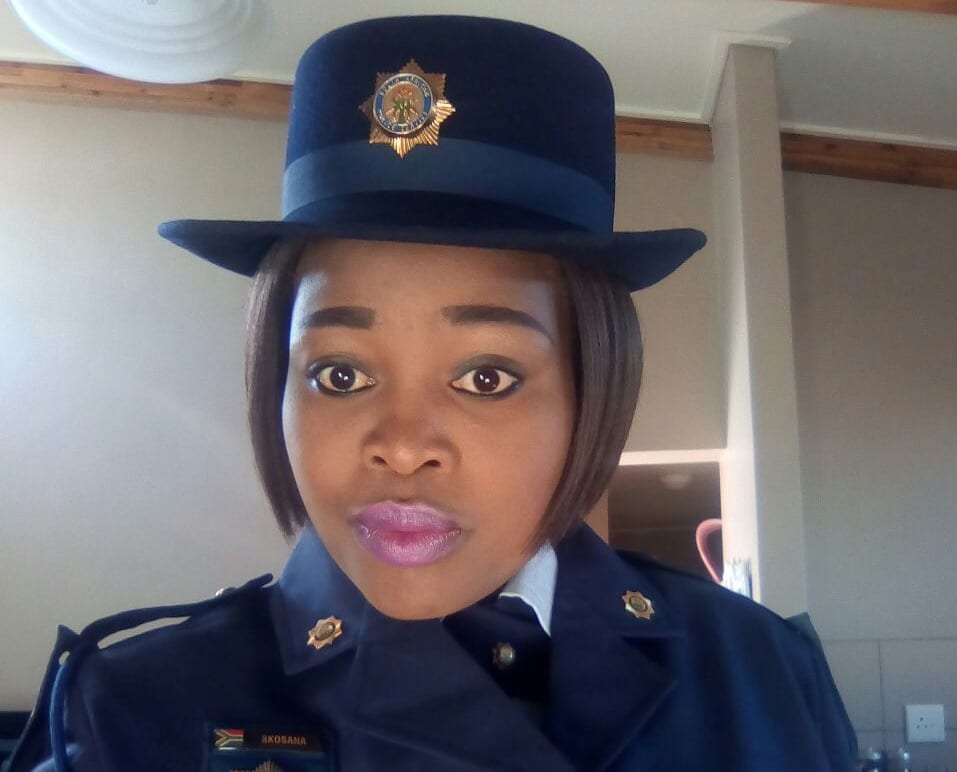
[bctt tweet=”I became a police officer because I like challenges, protecting others, and solving problems” username=”SheLeadsAfrica”] Fikile Skosana is a Detective Constable and Investigator employed by the South African Police Service, under Family Violence, Child Protection, and Sexual Offense Unit. She is constantly solving critical cases related to women and child abuse and assault. Fikile is giving women, whose rights are violated, the freedom to speak out and find justice and closure for their ordeals. This brave and compassionate 33-year-old always finds it rewarding when she solves a case and turns a victim into a survivor. When most young girls dreamed of being nurses or working in other ‘feminine’ jobs, you chose to be a police officer. How did you come to that decision and what did your parents say about it? I became a police officer because I like challenges, protecting others, and solving problems. My parents were not happy at first but now they believe in me. Police work is seen as a field typically better suited to men, what has been your experience with working in a male dominated field and have you ever felt incompetent because you are a woman? The job is not gender-specific, ultimately police officers have to be the same regardless of gender. As a woman, I don’t go out to fight but to calm the situation. I always feel competent, especially after solving a case. For women who feel guilty or responsible for their rape ordeal, sexual assault or abuse, what do you say to them or how do you act in such circumstances? How do you create that safe space for them that allows them to speak up freely and be heard? Some kids feel more comfortable talking to a mom-type person, same as rape victims, they feel free and safe talking to women. I listen to them, I tell them they are safe, I help victims to become survivors. What is your motivation every morning that keeps you going to work in a challenging and potentially risky field? Helping people and stopping other people from becoming victimized. The difference I make in someone’s life is what motivates me. [bctt tweet=”The difference I make in someone’s life is what motivates me – Detective Constable Fikile Skhosana ” username=”SheLeadsAfrica”] What is the most fulfilling aspect of what you do? The most fulfilling is when offenders get higher sentences. Solving cases and giving victims some type of closure is what I find most rewarding. How can young women wanting to enter police-work mentally prepare themselves for work in such a field? How does one know that they are a good fit for this type of career? I encourage women to consider law enforcement as a career if they are willing to put in time and hard work. They shouldn’t be discouraged and think that this is a male dominated world. They can do anything that a man can do. [bctt tweet=”I encourage women to consider law enforcement as a career if they are willing to put in time & hard work” via=”no”] Being a police officer, do you enjoy action movies or dramas on TV and if you do, which one is your favorite and why? I watch ID Extra channel 171 on DSTV. The shows on that channel are all about crime solving. I actually learn different tracing techniques there. If you’d like to share your story with She Leads Africa, let us know more about you and your story here.
Financial affairs in freelancing

[bctt tweet=”Like any business, freelancing has its peak seasons and its low seasons. Know them” username=”SheLeadsAfrica”] So, you delved into freelancing. You jumped head first (or first dipped your toes, whichever works for you) into being your own boss and now nothing can stop you from working in your pyjamas. First of all, big hearty congratulations. Not many make it past opening a freelancing account somewhere, let alone enlist clients. And now that we have gotten the pleasantries out of the way, let us get into the nitty gritty. The big girl stuff. Mogul business. It is essential that you realise that like any business out there, freelancing has its peak seasons and its really, and I mean, really low seasons. This being said, it is essential that finances line up throughout these seasons. Let’s get to it. Know your market This is the basis of any business, and it applies even in online businesses. Knowing when the seasons’ peak and when they fall is essential in managing your money. In academic writing, for instance, seasons pick at around March-April, August-September and in December, which is the end-of-semester months. If one is freelancing designs for say, at a corporate company, it is essential that you understand their fiscal year and how they pay or contract employees then. Know your worth Some people may have you believe that since you are freelancing your services, they have to pay less that is required. Knowing the pricing on your product and service is crucial in you making profits, in the long run. So, do not undervalue or overvalue yourself. [bctt tweet=”Know your worth as a freelancer, do not undervalue or overvalue yourself” username=”SheLeadsAfrica”] Factor in your expenditure Granted, there is not much revenue that you put in when freelancing unless you are renting office space. Your internet plan, however, will straight out flatten your morale if you are not careful. Choose an internet plan that is affordable for you, and that you know you can easily manage even when literally no clients are coming through because it will happen. Ride the wave High seasons in freelancing are really high, and what goes up will hit rock bottom with the same momentum. When that tide comes in, ride it like your life depends on it. Work through the day and night, stock up on coffee or energy drinks, never see outdoors, whatever it takes, stock up on that money (just remember to factor in self-care, of course). Stock up on some emergency cash Yeah, things happen. Your regular client finishes school, your contract ends, life goes on. Set aside some money for an emergency just in case your bank account is depleted. This actually goes for all businesses. It is standard. Follow the 50/30/20 rule on cash Personal financing is basically what will take you through freelancing. Know what you are spending your money on, track your receipts, cut down on the ‘for show’ products, and follow the 50/30/20 rule. 50% of your income is used on basic expenditure (like rent, food), 30% settle your debts and maybe a few luxury products, and invest with the 20% that remains. Or, follow this SLA guide prepared to cushion you from spending everything. Network, network, network Even in the low seasons, remind your clients that you are available, and ask them to refer you to other clients. Networking and good service are crucial in this business. If you are working in your pyjamas and at the convenience of your home all day, something has to give. [bctt tweet=”Even in the low seasons, remind your clients that you are available” username=”SheLeadsAfrica”] That said, like in any business, consistency and good product/service will bring you the money. Personal financing will ensure that the money sticks with you. Happy freelancing #MotherlandMoguls!!