
The Queen Bee Syndrome: When women put other women down in the workplace

With the steady increase and calls for equality in the workplace, some questions have been raised. Does the so-called “Queen Bee Syndrome” really exist? Or are we simply so predisposed, we make assumptions on women not working together as harmoniously as men? In the South African context, the Queen Bee Syndrome describes a woman in a position of authority who views or treats her female subordinates more critically than their male counterparts. You know who we’re talking about. That boss who is extra strict with her employees…but only if they are women. The one who bypasses qualified women to give the lucrative positions to men. She is basically the workplace equivalent of the woman who says, “I don’t have girl friends, women are too much stress.” Academics weigh in on the Queen Bee Syndrome According to Dr Babitha Mathur-Helm of the University of Stellenbosch Business School, who lectures in diversity management, leadership and gender studies defines the Queen Bee Syndrome as women executives’ reluctance to promote women. Dr Babitha further goes on to explain that the Queen Bee Syndrome is a way in which women in executive positions actively alienate and prevent the promotion of their female subordinates. Grant Thorton’s 2016 Women in Business Report shows that gender advancement in the South African workplace has slowed down in the past decade. Can we really attribute this recorded decline entirely to the Queen Bee Syndrome? Of course not. There is no direct correlative data which would support such an assertion. Furthermore there are other challenges which women face in the workplace. Despite this, we cannot shy away from the existence of the Queen Bee Syndrome and its impact on the advancement of gender equality in the workplace. Is it a form of discrimination? There has been much debate about whether the Queen Bee Syndrome is a form of gender discrimination. It could merely be the effect of gender discrimination in the workplace. More often than not, in an effort to be more socially acceptable within authoritative positions in the workplace, women tend to exhibit “masculine” traits of leadership. As we live in a world where “feminine” traits are viewed as a weakness, that women executives react this way is not surprising. If the Queen Bee Syndrome does exists and women find themselves having to strip themselves of their femininity in order to not only climb up the corporate ladder, but to stay there, is there a solution in sight? I say yes. In a corporate world which continues to push for equality, women who are vying for leadership positions need to learn how to compete in a healthy fashion. This concept can be a very foreign to us, when we have been taught to be “nice girls” from childhood. The implication for most of us is that competition is bad. Competition makes us mean as it is not perceived as nice. Healthy competition However in order for healthy competition to thrive, we need to create an environment that cultivates it. If there are no workplace policies to this effect, the only viable solution is to start living it out in the workplace. Are you a woman in a senior position who gets to sit at the table? Try inclusive leadership with your women subordinates. Are you helping them navigate the corporate world? Are you mentoring them? Are you championing for policy development and execution that speaks to the development of women in your organization? If you are a subordinate, stop being scared. Continue to push yourself and test your limits. You should work towards developing yourself so that you become a feasible candidate for career advancement. Are you taking the initiative to work with women in senior positions? If there are no women in positions of authority where you work, how about looking outside? Our challenges as women remain the same whether we are in the same workplace or not.
You don’t have a career strategy? Seriously?

I completed another course in leadership & management earlier this year (boooyar!) Much of the work involved researching and understanding the purpose of business and decision-making strategies. I won’t lie, some of it was boring as hell and I found myself browsing Facebook when my assignments were due in. But in true fashion, I slayed that course! Whilst busy slaying, the course reminded me of the importance of strategies in our lives overall. The word ‘strategy’ sounds so serious. It sounds like something connected to business plans, maybe world domination, but let’s break it down and keep it real. A strategy is a plan or path as to how a certain goal or objective will be fulfilled. It’s a plan that takes you from A-Z. What is a career strategy? Your career strategy outlines the steps that you’ll take in order to achieve your career goals. Simple! It starts with your vision A career strategy starts with what you see yourself doing in x number of years. It then goes on to outline the steps that you’ll take in order to realise your vision. These steps may involve practical things such as gaining relevant qualifications. It can also cover intangible areas such as, dealing with any negative beliefs you hold about your progression and re-evaluating your values. Your strategy doesn’t have to be perfect You might not know each and every step that’ll get you from your current role to the one you desire. Yet, as you begin to pull it together, you’ll see where there are gaps, which are areas where you may need to call on others for support. For example, if your main goal is to progress into a management role within your organisation, your initial strategy may look something like this: Pick up a current job description for the role or similar. Carry out a self-assessment of where you are right now, in relation to the requirements of the role. Recognise your strengths and be honest with yourself around areas you need to develop. Identify your transferable skills. Check this article to learn how to do this if you’re unsure. Discuss your career progression goals with your manager to identify potential ways that you can develop any skills that may be weaknesses right now. This may include on the job training, taking on additional responsibilities or other development opportunities. Consider external influences that may have an impact on your career, e.g developments in industry standard qualifications. Consider realistic timelines for reaching your goal. Invest in yourself. Hire a career coach or mentor who can support you in your development & help you stay on track. Why go it alone when you can make progress far quicker with someone unbiased, who’s 100% in your corner? Practice working on any self-limiting beliefs daily Find opportunities that will enable you to develop supervisory/management skills, such as leading a team. Learn about different management styles and motivating others. Review your progress within a realistic timescale. Seek feedback from those around you, especially your manager. When you feel you’re ready, apply for supervisory/management roles. If opportunities for progression within your organisation are scarce, look at other employers in your field. Be proactive in seeking feedback on your applications. It can be this simple. As with business, your strategy may change as things change unexpectedly. Life happens. The main thing is not losing sight of your overall vision as this will inform just about everything that you do, work-wise. Why you need one It can be so easy to get caught up in the day to day routine of going to work and trying to have a life outside of work, that time just passes you by. Before you know it, a year has passed and you’re exactly where you were 365 days ago. Having a career strategy helps you: To focus on your end goal To get through those trying days where you wonder why you bother To recognise just how much progress you’re making To actually fulfill the vision you have! Having just one of these benefits is great but create your own career strategy and you can have them all. Go ahead and be the CEO of your career.
Slash your Way to Career Diversity: 4 Tips on WHEN to turn that ‘side hustle’ into a full time gig whilst keeping your full time gig

‘Just because you love doing something doesn’t mean it’s wise to do it all day long. I love coaching but the intensity of personal connection also makes it quite draining for me. I find writing extremely fulfilling but as an extrovert I need to balance it with human interaction and external stimulation. Speeches and interviews are a joy, but after a certain number of hours on stage I have nothing left! I couldn’t do any of these things as solitary endeavour, but when I combine them in the right proportions each enables the others.’ – Michela Lecher career coach/writer/speaker Last time, I tried to provide some guidance on embracing your slash life by looking at the questions, What and Why? What does one slash and why would one choose to do so? Hopefully you found the insight helpful and are fully ready and positioned to embrace the slash life that awaits you. In continuation, today I want to discuss the ‘When’. As Motherland Moguls I’m sure you are all used to your passionate mothers saying over and over again that, timing is everything. Yup, Mama knows best! This is a crucial concept when it comes to the slash life. The timing of your slash is enough to make or break it. I believe having the correct strategy is half the battle won, and a big part of strategy is timing. The first question you need address is: What is my anchor slash at this point in my life? The reason I say this is simply because it is not possible to add a slash to something that is not there. Take this simple visualisation of a slash life, ‘A/B’. If the ‘A’ was unstable or not present then it will read ‘/B’ which is not a slash life at all. The first part of the slash has to be stable for you to ‘add on’. So that been said ladies let’s get in formation! Here are 4 tips on when to embrace your sLASH (in other words that other thing you do)… 1. The Anchor vs Orbiter Dynamic Spend some time making sure that that the ‘anchor’ is solid before you add anything else to it. Any good career adviser will tell you that to get a new job, you need to be killing it at your current job. This demonstrates the capacity to do something well. For your slash life, it is the same. Invest the time in getting your ‘anchor’ slash correct before moving on to embracing something new. I really think this is crucial. For me, my anchor slash is my job in finance. The moment that begins to slip, everything else slips as well. This is simply because this aspect of my life currently takes up most of my time, so the longer it takes for me to sort that out, the less time and energy I can give to my slashes. Think of it as solidifying the base and creating a pretty strong platform for the other skills to nicely orbit around. 2. Have Clear Goals A slash is not something that you just pick up randomly. You have to make a slash goal. Now guys, this language around ‘slashing’ is just a mechanism for you to address a process I believe is very natural to all of us. In other words, it is nothing new. A good slash is a well thought out slash. Before I knew what job I would do, I always knew I wanted to write and speak. The wisdom is not in knowing what your talents are and planning for them, it is knowing WHEN it is the right time to do so. For some of you this is the time to begin to plan your future slash once your anchor is solid. For some, it is time to put those very detailed plans into action and ‘work smart’, for some it is time to reduce the amount of time your anchor slash takes because it has achieved its goals and begin to actively develop your slash. Everyone is different. The key here is to understand where you personally are on the journey, and do not compare! The only person you should try to be better than is who you were yesterday. 3. Double or Triple Time Okay so let’s assume you are a total badass at this and your anchor is solid and strong and you have taken up a slash. How much time should you spend on each? I put it to you ladies that it is not really about the amount of time you put it, but the amount of energy and focus it extracts from you. If you have three slashes, your energy and strategic efforts should be divided amongst the three equally, even if your time is not. So for example, I have three slashes currently. Work, my website (a platform for guidance and inspiration) and my charity. They all take up the same amount of energy, even though they occupy different amounts of time. A slash should be able to stand shoulder to shoulder with another one in terms of your commitment to it. If it cannot, then please down grade it to a side gig or side hustle which you can start and stop at any time. 4. Seasons of Life One of my most treasured books in the world explains how there is a time for everything. A time to slash and a time to wait. A time to let an old slash go and a time to embrace a new one. I really believe this is true. Sometimes a slash is not meant to be for the long haul -some slashes are seasonal. It may have seemed like the best idea to start a company when you were younger, and now it looks like the vision has evolved and you need to re-brand it. That’s fine. Or, your company might be going through downtime, which means you need to increase
Navigating cross-cultural relationships in the workplace

After years living in France and the United States, Aminatou, an experienced business development consultant, arrived in Abidjan to work for a local social enterprise. Despite the logistical hiccups of working on the continent, she didn’t think the transition would be that much of a problem. After all, she grew up in Saint-Louis, Senegal, and spoke fluent French. She’d worked across Africa for leading multinationals and smaller start-ups for the better part of a decade. But after a few months, she was struggling with her team and considering returning to her job in Paris. What was the problem? Cross-cultural training isn’t just for the West. As many young African professionals contemplate moving back to the continent —to their home country or somewhere else in the region, they can suffer from the shock of navigating cross-cultural dynamics in the workplace. It’s no secret that business leaders need to understand the cultural nuances of the different regions where their business operates. Yet, aspiring Motherland Moguls returning home might underestimate the need to orient themselves to the minutiae of workplace dynamics across Africa, especially as the continent rapidly transforms. The Ghana, Kenya, or Zimbabwe of 2008 doesn’t look the same in 2016. Avoid clichés Clichés and stereotypes can lead to faulty assumptions. While generalizations can be useful, culture is complicated and can’t be measured by one or two factors. Individual people might not fit these generalizations. Even as we advocate for pan-Africanism, we should recognize that each country or region is unique. For example, there is a prevailing stereotype that Africa is a sexist place and that men will be condescending to women in the workplace. This is not always the case. Assume best intent until proven otherwise, and ask questions to immediately clear up miscommunication. Overemphasizing stereotypes can have a real cost — misplaced fear of encountering workplace sexism may scare talented female professionals from taking positions in Africa. As you enter the workplace, you might encounter differences along these four major areas: 1. Different Communication Styles Across cultures, people communicate differently when it comes to verbal and non-verbal communication. Messages aren’t always explicit — more often than not, you’ll have to read between the lines. Words and phrases that are common in one place might leave people looking at you in confusion in another. In some countries, there might be more of an emphasis on hierarchy than in others. In Francophone Africa, for example, there is more of an emphasis on formality than in Anglophone parts of the continent. 2. Different Conflict Resolution Styles Not everyone always gets along. Some cultures approach conflict directly while in other cultures differences are worked out quietly. Feedback might be frank or more diplomatic. 3. Different Approaches to Time Management Some countries, like Germany and Switzerland, are famous for their strict adherence to clocks. However, in most non-Western cultures, time is better viewed as a polite suggestion. Nevertheless, time management views can defer depending on the situation. People tend to have short-term or long-term orientation when comes to time. In parts of Southern Africa, for example, some people differentiate regarding the urgency of a project by saying “now” (sometime soon) vs. “now now” (right this minute). 4. Different Decision-Making Styles A cultural frame of reference often shapes expectations about how to make a decision. Does what the boss says go? Is there room for dialogue? The roles individuals play in decision-making can depend on the egalitarian or hierarchical nature of a culture. This determines whether or not decisions are made unilaterally or by consensus. To successfully navigate cultural differences, follow the three L’s: Listen actively and empathetically to assume best intent, Learn from generalizations, but supplement these with your own observations and, Look at the situation from both the insider and outsider perspectives. Arm yourself with these tools, and you’ll avoid misunderstandings and conflicts that can cost your team profits or productivity.
5 skills your new team needs right away

So, you’ve got a new team on your hands. As a savvy manager, you’ve studied your team and decided that they need to work on some new skills. But you’re having a tough time making a choice on which skills are the most useful to ensure your team operates smoothly. Don’t worry, we have your back. Communication The importance of communication cannot be overstated. You have a new team of people, some of whom may have never worked together before or have never worked with you. In this case, clear verbal communication is essential for success. Your team should be able to easily communicate within themselves and also with you as their manager. Then again, excellent communicating ensures effective meetings, respect towards others and little misunderstanding during team work. Being open-minded Your team is going to have to learn to be open-minded and be willing to listen to new and diverse points of view without jumping into conclusions. You can’t have one member talking over the rest of the team or shutting down other’s ideas. As a manager, you want your team to work together and be supportive of each other. For that to be achieved, it is essential that everyone is open-minded. Problem solving Each member of your team should be able to problem solve on their own. Poor problem solving can lead to failure of the team, and your brand in the larger picture. As a whole, your team should easily identify problems and come up with different solutions. They should be able to take the initiative with coming up with new ideas. If they are having difficulties making a decision, they should know to notify you. Management and organisation Any efficient team knows the basics of project management. They know how to plan, manage tasks and schedule their time. It shouldn’t be the responsibility of just one person to ensure meeting and team goals are set. The whole team should possess management and organisational skills, this way everyone can remain focused on achieving tasks. Questioning Now this is an often overlooked skill, but it is extremely important for everyone. A good number of us are scared to ask questions, we don’t want to appear lacking especially in front of a new group of people. Your team will likely not be any different. Learning questioning skills encourages curiosity and knowledge seeking. If you’re working with a team where roles need to be divided, consider having a rotation so this way your team’s skill sets are continuously growing and expanding. Have you managed a new team recently? What skills did you encourage them to learn? Please let us know your answers by leaving a comment below.
3 ways to connect with your dreams as a young African

When I first talked to Khadijah Oyerinde, a 14-year-old high school student in Osun, southwestern Nigeria, I was able to see her dreams clearly. This was because of the confidence and passion with which she conveyed them to me. Within the first two minutes of our conversation, the young and inspiring Khadijah had mesmerized me. She’s got guts, no doubt! When I inquired about her greatest dream and the likely stumbling blocks, she gave me a sharp response. “I want to become a caterer that would be known all over Nigeria and Africa for excellence,” she said. “And only death can stop me. I cook well and I’m working on myself every day.” She was one of the participants at Leadnovation 2016, a flagship initiative of Hope Rising Foundation (HRF) Nigeria, a NGO I co-founded to raise responsible and innovative young leaders in Nigeria. Having been impressed by her clear vision, I quickly asked how she hopes to reach her destination. Khadijah stared at me with some discomfort, and said; “Well, I just know I’ll get there. I haven’t seen anyone on TV to look up to as far as my exact dreams are concerned. But I’ve just learnt from this leadership training that I can get help on social networks.” More often than not, I have come across many Khadijahs in Nigeria. I have met and interacted with numerous young Nigerians who are brilliant and ambitious. They are high school students, undergraduates, or even graduates eager to shape Africa with their lofty dreams. But as much as they are passionate about their dreams, connecting with them remains the big challenge. So as a young African, how can you connect with your dreams? Believe in your dreams In reality, no dream is too big to be realised as long as you have a “can-do” spirit. As a young person, it’s good to have a clear vision of what you hope to achieve, and start working towards it. You shouldn’t be discouraged by what other people say. People don’t really care about your dreams, they only care about results. Once you reach your destination, everyone will want to associate with you. So, get on the wheels and start driving into the kind of future you desire. “Don’t let the noise of others’ opinions drown out your own inner voice” These were the exact words of Steve Jobs, the legend who must have had YOU in mind when he was crafting this beautiful sentence. Take advantage of MOOCs Right now, education has moved beyond the walls of a classroom. And the effects are magical. That you don’t yet have the opportunity to receive lectures within the walls of your dream school shouldn’t deter you from working on your dreams. Start from where you are and with what you have. You can sit in your village, so far you are connected to the internet, and learn from the best professors in top universities in across the world at no cost. Yes really, at no cost! So far, I’ve taken over fifteen Massive Open Online Courses (MOOCs) from some of the world’s best universities in the last three years or so. There are a number of sites offering courses to help you get the expertise that would move you closer to realizing your big dreams. Get a laptop, tab or smartphone, connect to the internet and start learning.There are many MOOC websites available, including Future Learn and Harvard. Choose the course(s) that best fit the kind of skills you’d like to acquire. There you go! Use social networks effectively For me, social media remains the next greatest invention after the discovery of electricity in the 17th century. With the effective use of social media, you’re not only able to expand your network but also able to connect with the people that matter, as far as the realization of your dreams is concerned. Facebook, Twitter, Instagram, Skype, YouTube are fantastic social networks you can leverage to connect with your dreams. You should find role models and people who can help you believe more in your future, and then connect with them via these networks. It’s that simple. SheLeadsAfrica and a few other platforms also offer the unique opportunity to connect with mentors who can help you better navigate your life’s journey. What are you still waiting for? You can go the extra length to connect with your dreams by believing in yourself, taking advantage of MOOCs, and making effective use of the various social networks. No matter how short it is, just take a step. Keep moving! I have discussed just three of numerous useful tips. You can add one or two tips of your own in the comments section as well. I’ll be glad to hear from you.
Competition, what competition? Why collaboration might just be your strongest asset

Collaboration is a game where everyone wins. You build your network, expand your audience and strengthen your brand. As ambitious women, chasing our dreams is part of what gets us up in the morning. While it is important to protect our ideas, we have been taught to keep our distance from the competition while studying their progress. It’s easy to believe that ‘there can only be one’ and do everything humanly possible to be That One. But actually, there isn’t only room for one. There’s room for everyone who is tenacious and passionate enough to pursue their goals, and collaboration plays a huge role in that. Still not convinced? Read on to find out why collaboration might just be your strongest asset. Collaboration is a source of inspiration and support Even the smartest, most connected and experienced people in the world don’t know it all. Through collaboration, you get to bounce ideas off people who truly understand your industry. It’s a “great way to make sure that we all keep moving forward and nobody gets left behind”, fashion-travel blogger and life-stylist Fisayo Longe tells us. Building a business or high-powered career is definitely not for the fainthearted, and even the toughest of us can benefit from support from other people who get it. Collaboration strengthens your skills and expands your network Collaboration also helps build your technical skills by sharing knowledge with those in your field. My fellow writers and enterprise enthusiasts constantly share videos, articles and books aimed at improving skills from strategy to copywriting. But if you keep all your aspirations under wraps, people won’t know that you may benefit from what they have to give. Sharing educational resources creates a ‘pay it forward’ culture that leaves you better off in the end. Collaboration also brings you closer to people that it might have taken you years to meet. After all, “people who know talented people are always more useful than a single talented person with no connections,” says producer, writer and radio presenter, Phoebe Parke. In my experience, I’ve met CEOs, entrepreneurs and leading creatives through people in my industry, such as life-coach and business manager Seun Awolowo. Collaboration enhances your brand and grows your audience One key challenge that all businesses face is expanding their customer base/audience. Again, collaboration is part of the solution. It’s one thing to present your own product, but when another brand or business is doing this, you become even more legit. It “adds to your reputation as someone who knows what they’re talking about”, Phoebe says. In blogger Fisayo’s experience, her audiences have grown through friendships with fellow bloggers like Melissa Holdbrook, and “Freddie Harrel [who] invited me to be part of an event she was organising recently that made me almost a thousand pounds. My presence there pulled a bigger crowd which was also great for her”. Collaboration creates scenarios where everyone’s a winner and gets a share of success. “Think about what you have to offer, not what you have to gain and collaboration will come easily”, Phoebe advises. Even those at the top of their game collaborate. As Fisayo points out, “life coaches like Brendon Burchard and Ariana Huffington have grown their audiences significantly and made millions of dollars through collaborating with each other.” If collaboration works for them, it’s probably going to work for you too. Collaboration celebrates your uniqueness Finally, never forget that you have something unique and distinct to bring to the table. The truth is, you are your only competition and you owe it to yourself to improve with each day. No one has walked the same path as you or thinks exactly the way you do. This is a principle that Seun applies across all her areas of her career from life-coaching to the corporate world. As the saying goes, “no one is you and that is your super-power.” Have confidence in yourself, your abilities and what you have to offer. Fisayo puts it like this, “when you are proud of what you have created and you really believe in your content”, collaboration becomes second nature. How has collaboration helped your career or your business? Let us know in the comments section below.
Bob Collymore, CEO Safaricom: Women are high achievers
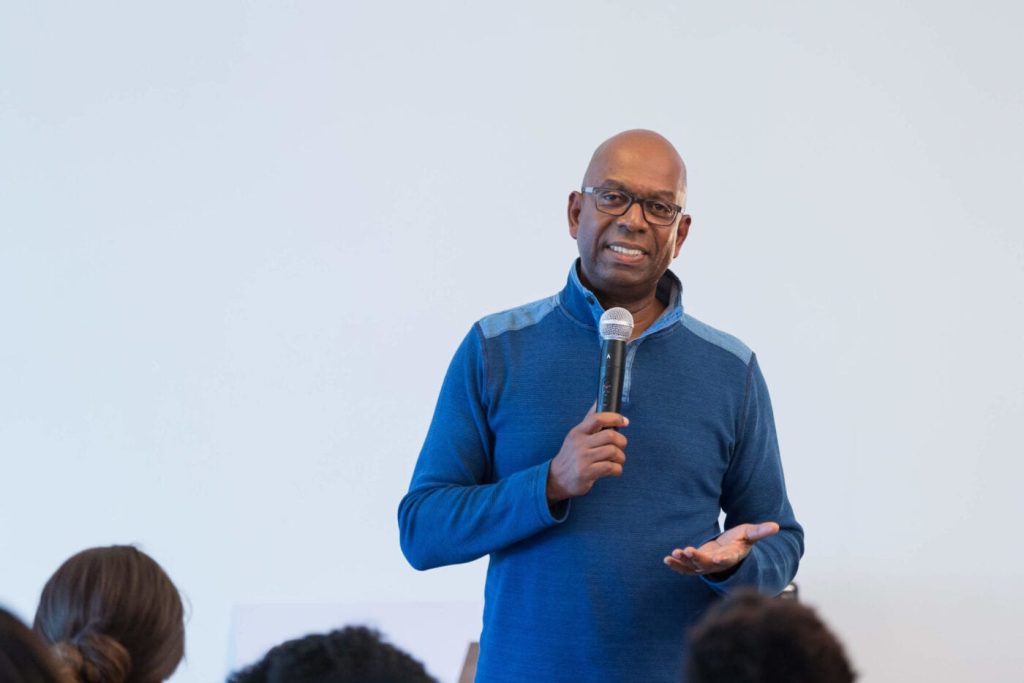
Bob Collymore is a man many people admire. It’s in the simplicity and efficiency with which he runs the fastest growing telecommunications firm in East Africa that draws people’s attention. But just what is his secret in running such an organisation in East Africa? At the recently concluded SheHive Nairobi, Bob dished out some of his secrets. – I pay attention to the micro-inequities to make a significant impact in my organisation by articulating and ensuring that diversity and inclusion is acclimatized for by the organisation. Sadly, after years in the corporate industry I have noticed that women don’t step up for gender roles. The African culture plays a gender bias in the African work place. It’s not that women are few; there is significant gender balance at the workplace. It’s just sad that women didn’t vote for other women. Is it because we don’t trust other women with leadership? I don’t know. – Currently in Africa there are few women in the tech space and in leadership. Imagine you were challenged to list the top 100 women in leadership you know of within five minutes. You would probably start by churning out names fast but by the 25th name, I bet you start scratching your heads. It’s not so obvious. – My disappointment with women in leadership is that the more they ascend the ladder; they tend to adapt masculine behaviour. I already have men around me. I certainly don’t need women acting out as men. I would appreciate women being women. They should maintain their femininity when they hold these positions. – The company’s advertising strategies are geared towards diversity and inclusion. Nowadays we have Kenyans of Indian, Asian, European and American decent in our ads. Unfortunately we have live in a misogynistic society and it’s a shame that in 2016 we still thrive on the same. Women should stop playing the victim game. The society is harsh towards women but the best women can do is to always win. – Safaricom thrives in East Africa by empowering women in all frontiers. We have a nursing home that caters for children of our staff between ages of one and fourteen. Women at Safaricom get more leave days and they get less hours of work after the leave is over. – I am happy that when one of our regions was facing stiffer competition for a fierce competitor, I appointed a lady to head the region. So far she managed to turn things around and that’s the best performing region in the entire organization. I am proud of what she has been able to achieve and if she could do it better than the men then it’s a validation to you women that you are high achievers. My advice to everyone is that you find your purpose and you won’t have to work forth rest of your life. Also acknowledge that where you come from doesn’t define where you will end up in. What drives you?
5 things you should be doing after work hours to be successful

If you don’t know that the time you spend outside the office has a big impact on your career, you really need to. When you return home after closing at work, the first thing on your mind may be rest, food or curling on the couch to watch reruns of “Grey’s Anatomy”. Don’t do it. Time is very precious and if you’re aiming to be highly successful in your career, every minute counts including the time you’re not in the office. We’re not saying you should have work on your mind 24/7, but what you do after office hours can either build your career or hold you back. Highly successful people know this and that is why they engage in some of the following activities when work is closed for the day. 1. Work Out There is a reason some Japanese companies host exercises for their staff. Working out keeps you alert and is a great stress reliever. It’s also a great way to regain the energy that literally drains from you while you’re seated at your desk for hours on end. Exercising helps to increase your productivity which ultimately gets you working towards your career goals. 2. Network & Connect Networking is an important after work activity. But there’s good networking and there’s not so-good networking. The former gives you the chance to engage in deep, meaningful conversations with others. We’ll leave you to guess what bad networking looks like. If you have the opportunity to network after work, grab it with both hands! Connecting with colleagues, friends and/or mentors may even lead to brilliant ideas that could positively impact the course of your career. 3. Unplug Turn off everything, your laptop, your TV, your phone, your iPad too. You need time away from devices and the Internet to renew your mind, body and spirit. The close of a work day provides a great opportunity to unplug and ensure work is left behind at the office. If you find yourself bored while unplugging, meditate or read. The most successful people are known to always read books, fiction and non-fiction alike. 4. Make plans for tomorrow It’s best practice to plan ahead for the following day. Review your calendar every night and ensure you have everything ready for tomorrow. Check through so you have enough time to notice if anything is missing and then get things in order. This saves you the stress of panicking in the morning because you forgot something important. 5. Don’t forget to sleep Highly successful people sleep for more than eight hours. It’s true. Don’t be under the false impression that staying up late is good for you or your career. Adequate sleep is a wise career choice, if you’re not getting enough sleep it could affect your judgement and mood. Even worse, chronic sleep deprivation can lead to serious health problems. What do you spend your time doing once you’ve closed from work? Kindly share them by leaving a comment below.
SheHive Nairobi Exceeded My Expectations

She Leads Africa opened its doors to Nairobi on June 30 to hold the first edition of SheHive Nairobi at Nairobi Garage, Westlands. This marked the beginning of what was to be four days of great insights from badass entrepreneurs and professionals in Kenya. Bootcamp sessions The first two days saw the All Access ticket holders being taken through training sessions by SLA co-founder, Yasmin Belo-Osagie. These were intimate, personalized round-table sessions that gave lessons on entrepreneurship and looked into each participants’ area of business while giving tips on how to improve it. Yasmin gave us an exercise that involved coming up with questions we would ask potential customers. This was an eye-opener to most of us on the direction we should be taking. Day two had the same set up as day one; round-table, intimate, one on one, Q & As, a few exercises here and there. We also had a surprise guest speaker to start us off: Ory Okolloh, co-founder of Ushahidi. Ory took us through her journey in entrepreneurship and the challenges she faced while starting out. She gave us insights on how to balance being a mother, a wife and an entrepreneur. She was quick to add that not everyone you expect to help you will do so, and recommended surrounding yourself with people who support your dream to make your journey bearable. Getting into business Day three saw a shift in the set up. We had the weekend pass ticket holders come in, more speakers, a move to a bigger room and more activities on the program. We started with a team-building exercise that saw the winners getting hair products – I can’t deny that it felt good to be on the winning team. Maureen Murunga, Founder & NEO of Amadiva was the first speaker on the list. It was while she was speaking that something hit me about getting into business; you never know what to expect. You just don’t know. One day you will be rearing to get your business off the ground, armed to your teeth and ready to face any obstacles head on, only to be forced to relocate for one reason or another. Or only for you to realize you are pregnant and need to take it slow. Maureen and Ory brought out one point crystal clearly: nothing is predictable in business. For you to succeed, you’ve got to learn to roll with the punches. When the petite Hilda Moraa, founder of Weza Tele came to speak about her journey in the tech industry, she stressed the fact that surrounding yourself with like-minded people will help your journey in the business world, something she attributes her immense success to. Winnie Mwangi who is an Investment Manager-LGT, took us through retail business. She talked about the importance of location and the expectation of investors when they choose to invest in your company. She mentioned something that surprised me; just like a marriage, the chemistry between the investor and entrepreneur should be right otherwise the relationship will not work. Chemistry people! Who would have thought. When Dr. Hellen Gichohi (who is not so keen on being referred to as Dr.) took the stage she dished out punchline after punchline; accountability and transparency, funds follow function, knock doors and seek opportunities. Hellen who is the CEO of Equity Foundation, is witty and very engaging. She stressed the need to have a functional system in place that will ensure that your business runs smoothly through and through. Any loopholes in the system could be to your detriment. This was echoed by Andreata Muforo, an Investment Director at TLcom capital partners who talked about women as funders. The entertainment industry and importance of gender equality Four speakers done in day three and the last day of SheHive Nairobi came so much sooner than I expected. There was nothing easy about our Sunday morning as we started off on a high note. High because Wanjira Longauer is energetic, bubbly, witty and oh-so-humorous! Easy to see why she excels in the entertainment industry. Wanjira is a Radio host at Capital FM Kenya and a Television Host at Ebony TV’s ‘Moments Kenya’. The takeaway I got from her session several laughs later was the need for women entrepreneurs to always trust their gut because it never misleads you. I can vouch for that since I am a big believer and follower of my instincts. Lindsay Caldwell took us through her journey in the different business ventures she undertook before settling on Angaza as Director of East African Operations. Lindsay stressed that a true entrepreneur is a doer and not a dreamer. We now had three more speakers to go, two of whom were male – the only male speakers we had. Shamim Ehsani, Marketing Director of The Tribe, talked about the deliberate branding that they envisioned for the hotel from the beginning. How they ensured that it stood out from other hotel establishments, not only in the country, but in the world. Something that has given them bragging rights of being among the top 100 hotels in the world. Bob Collymore, CEO of Safaricom, followed hot on the heels of Mr. Ehsani. He addressed gender equity and its importance not only to the economy but also to the company. He noted that a company does well if it is aware of the importance of gender equity. We were then to close the session with Eunice Nyala, Founder & CEO of Etiquette Xllent. Eunice took us through the do’s and don’ts of professional etiquette from dressing to poise to body language to tone of voice to demeanor. It was interesting to note that we sometimes communicate negatively – unintentionally so – by the way we dress or by the tone of voice we take. It was a bit sad to see SheHive Nairobi come to an end. We had networked and learned so much in four days, we did not know what to do with ourselves now that