
Sonya Sandra Toukam Inah : Tips for taking up a banking career in Cameroon
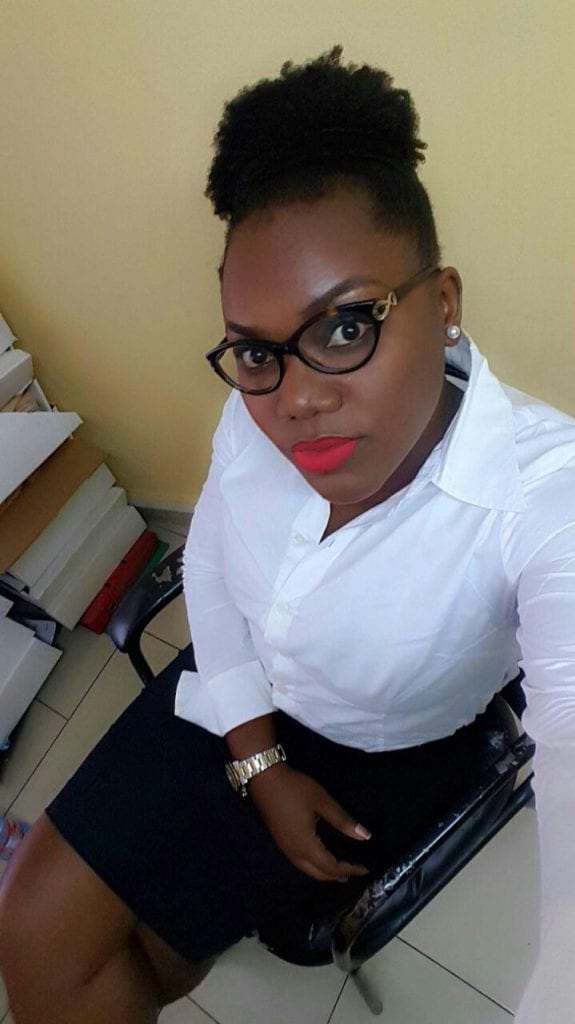
In Cameroon, a banking career is every girl’s dream job. For one thing, working in a bank comes with a glamorous lifestyle, which most young ladies dream of; a well organised air-conditioned office, a safe place to work and obviously the glamour of dealing with money. But 25-year-old banker, Sonya Sandra Toukam Inah says being a banker takes a lot of hard work. There is no substitute for hard work, “you must be willing to work, to make a contribution and have a personal sense of identity”. Toukam has five years’ experience working with Union Bank of Cameroon. Throughout this time her humility, dynamism, and spirit have given her the opportunity to serve in several capacities in the bank. From an internship, Toukam has been able to accelerate all units of the operations department ranging from customer service, fund transfer agent, clearing officer and personal assistance to the General Manager at the prestigious bank. Toukam told SLA contributor Marriane that, even though dynamism and humility propelled her career, what really did the trick for her was hard work. She equally advocates for a great degree of clarity and purpose. “I think having clarity of where you are headed, is important. It is important to know where one is headed.” [bctt tweet=”having clarity of where you are headed, is important. It is important to know where one is headed.” username=”SheLeadsAfrica”] When asked for her advice to other young ladies who dream to take up banking as career, Toukam proposed the following tips: Ladies…you have to be clear on what your goals are and how important they are to you. When this is known, you have to go for it. But remember, nothing comes on a silver platter. Choose your subjects rightly and remember hard work is key. As an aspiring banker, you have to be confident, smart and above all well groomed. A good banker should be very optimistic. This is because your positive attitude is a pulling factor to all potential customers. A bank is a confidential institution; every potential banker should be of good morals and integrity. Lastly, you must be smart and willing to learn from your superiors and colleagues. Do you have a career in banking? What other tips would you offer aspiring bankers? Let us know here.
TV Role Models Every Motherland Mogul Needs
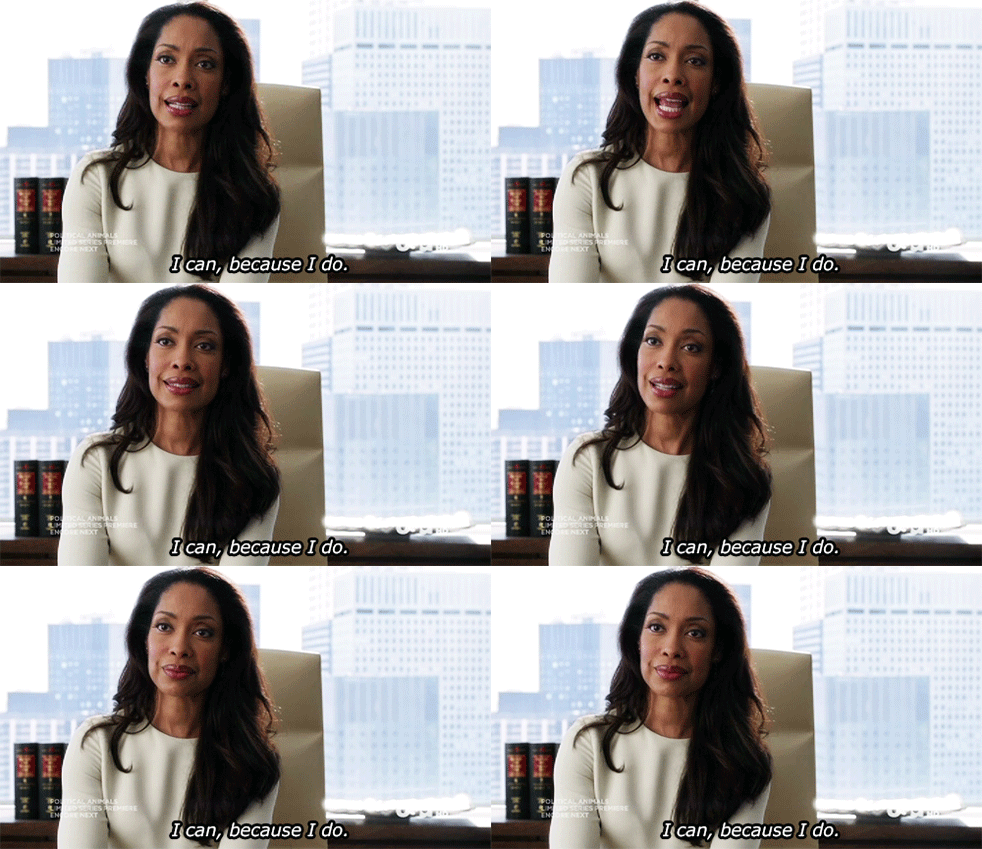
T.V. has become more than a pastime after work, recently shows have moved from solely entertaining to also providing commentary on key social issues. Shows that are brave enough to address race, gender, family and relationship issues have sparked conversation that we so need in today’s society. Women are leading more t.v. shows, especially women of colour which is so important for representation. So here’s my list of T.V Role Models who inspire me to be a flawsome, hardworking and yet still witty Motherland Mogul. Oprah Winfrey, the Oprah Winfrey Show and her own television network HARPO We all grew up watching Oprah. Seeing her ask the hard questions, share her story and watch her rise as one of the most powerful figures in television history. When in doubt, I always ask myself ‘What would Oprah do?’ If there is any inspirational figure to look up to, it’s her. She shows the power of determination, hardwork and most importantly not leaving anyone behind. Her dedication to telling the stories of the marginalized and giving back shows that no matter how high you rise, you don’t have to do it alone. Gina Torres, Jessica Pearson in Suits Where do we even start: her impeccable dressing, her sharp one liners, or maybe the fact that Jessica was the managing partner of her own law firm. Her confidence is calm and elegant, with a sharp sting when she is tested. Feel inspired by her ability to always be calm even when things are unraveling and how she always manages to rise above the mess. Tracee Ellis Ross, Rainbow Johnson in Blackish I consider Rainbow the coolest and funniest mom on t.v. Blackish is one of the most intelligent shows, that deals with the dynamics of race, politics and society, in a way that isn’t lecturing but, rather starting the necessary conversations. She balances her work and home life, showing us that sometimes doing things the unconventional way may at times be the best way. Yvonne Orji, Molly in Insecure Now listen up, Motherland Moguls, if you have not watched Insecure you will be disowned. My love for this show aside, Molly is one of characters on t.v who is career driven and won’t let her hard work go unrecognised. When her bosses fail to show appreciation for her abilities, she doesn’t sit in a corner complaining, but instead, shows initiative by taking up more responsibilities; and when that still even is not enough, she seeks to have her talents appreciated elsewhere. She pushes her own career boundaries and so should you. Don’t be afraid to ask for that raise or promotion when you know you deserve it. It also doesn’t hurt to take on more tasks and various projects, as this indicates you are a team player. The biggest lesson we can learn from Molly? Your career is in your hands, the choices you make, and how you react to adverse situations will determine how you’ll move forward and succeed in your journey to the top. Naomi Campbell, The Face, Empire, Star Naomi is well known for being one of the world’s most famous supermodels. So having her on this list may be confusing but, she’s also a t.v. diva. Naomi has an attitude and she owns it. A lot of people may see this as a questionable trait, but I believe that a little attitude ‘ain’t never hurt nobody’. Naomi is inspirational to the Motherland Mogul who is told her brazenness is intimidating or unfriendly. She also doesn’t sleep on herself; know your worth and make it work. Kerry Washington, Olivia Pope in Scandal This one is for the entrepreneurial Motherland Moguls because: let’s admire Olivia’s business acumen; she is smart, outspoken and when push comes to shove, she stands firm. Her loyalty to her team is admirable, the gladiators stick together and they know they can rely on Olivia. Questionable life choices aside, her white coat and hat are untouchable; her clients come first and she always goes the extra mile to get things done. Plus we all want a piece from her enviable wardrobe. Gabrielle Union, Mary Jane Paul in Being Mary Jane I think anyone who watches the show has a love hate relationship with Mary Jane. She tests our patience often but you cannot fault her ambition or her confidence. The show does not gloss over her complex relationships and friendships and navigates around the ideas of suicide, infidelity and infertility, topics that are taboo in black communities. So how is Mary Jane inspirational? She takes risks at work showing that sometimes to propel yourself forward, you have to throw caution to the wind. It is completely okay to be invested to your career, set goals and be determined to make it work. Your professional ambitions are a character strength, and you have the right to make them your focus. Who are your T.V Role Models and why? Let us know here.
Women at Wave: Empowering Young Africans Beyond the Limits
Wave Academies is a vocational training platform which aims to empower millions of disadvantaged West African youth. With skills that transform their mindset and employment opportunities that enhance their social mobility. Misan Rewan is the founder of WAVE Academy. Born and raised in Nigeria, Misan plays a vital role in the transformation of Nigeria’s education and skill development sectors. She has worked in management consulting with The Monitor Group on a wide spectrum of projects in both the private and public sector. She also supported aspiring Ivoirian entrepreneurs through, TechnoServe’s Business Plan Competition; and developed a scholarship administration model as a consultant with the Center for Public Policy Alternatives in Nigeria. Misan supported Bridge International Academies’ international expansion strategy, and is a Draper Richards Kaplan Social Entrepreneur. Noella Moshi is the Programs Lead at WAVE. She was on the founding team of African Leadership University (ALU) Education where she directed Marketing, and worked on the curriculum. Noella co-developed Goodbye Malaria, a social impact venture that works with private and non-profit organisations to eliminate malaria. She is a Mandela-Rhodes scholar, and a Praxis Fellow. Ifeanyi Okafor grew up in Lagos, Nigeria. She is passionate about helping young people discover themselves. Aissatou Gaye is a Senegalese citizen who works as a Finance Coordinator at WAVE. She is currently helping the organization draft its way towards financial sustainability through various revenue diversification and cost reduction strategies. Aissatou is also the co-founder of YAWcamp, a summer camp that focuses on developing critical, creative and proactive thinking among Senegalese youth. Amina Lawal is the training operations coordinator at WAVE. She is skilled in communication, research and creative writing. She firmly believes that having the balanced 360 degrees life is possible and steadily strives to have such balance. When she is not working, Amina writes for various blogs. We share the amazing story of these great women and how their awesome work at WAVE is creating the next generation of change drivers. What was the driving force that lead to creating WAVE? Lifting John Stott’s definition of vision as: a deep dissatisfaction with what is and a clear grasp of what could be, I’d say the driving force behind starting WAVE was a deep dissatisfaction with the state of affairs for West African youth. There are over 40 million unemployed youth in West Africa, but beyond the statistics are real faces, people like you and I, whose reality is chronic unemployment, disillusioned poverty and a loss of dignity that leads to growing levels of frustration across the region. WAVE was an attempt to stop complaining and to do something about it. So a few friends got together in a room and started designing a solution. Enter WAVE – an attempt to level the playing field for hardworking young people by teaching them the skills required to get a good job, increase their incomes and build a brighter future What has been the biggest challenge(s) you’ve faced and how have you crossed each hurdle? Biggest challenge faced has probably just been me dealing with my own insecurities (imagined and real) and coaching has been helpful in crossing the hurdle. I don’t hear enough leaders in this part of the world talk about their shortcomings and how they’ve built support networks to deal with them, and I’m no different. So overcoming has been through everything, from having a coach who helps bring self-awareness to my “automaticities” (my default way of responding) and helps me generate my best self, to family and friends who “hold the space” for me to JUST BE (rather than DO), to the serenity prayer that helps me discern where to focus my brain cells, effort and anxiety. I could give you a laundry list of other challenges faced but the critical challenge/hurdle is dealing with me first so I can see most other challenges as opportunities for learning and growth. [bctt tweet=”I see most challenges as an opportunity to learn and grow” username=”SheLeadsAfrica”] What values have been crucial to your success in the business world? Inclusiveness – Most of what drives me comes from a simple notion I’ve had since I was a kid, of not wanting poor people to be poor. At WAVE today, this value translates as “Putting People First” – from the people we exist to serve, to our team who does the serving to our partners who support our service. Our clients see how we have designed our model, service delivery and feedback culture to put them first and so are able to be very forgiving when we slip up, give us feedback and grant us a second chance to make it right. What principles and skills are necessary for young people to possess in order to excel in today’s world? There are three things I think are important for success: Knowing your “why”: Understand what motivates you, and connect it to whatever work you are doing. For example, I care about learning for the sake of personal growth. That’s my “why”. As long as I am doing work that pushes me to stretch beyond my current capabilities, my “why” is being fulfilled. Learning from everyone: Everyone has something to teach us, and if at any point we aren’t learning, then we need to look harder for the lessons. One of my favourite things about working at WAVE is that each person brings insights from their unique experiences; from the driver to an intern, to the people we serve. Trusting yourself. No one knows you better than you know yourself. Take advice from everyone, but at the end of the day, whatever decision you make must come from you, so that you can stand by it. That way you avoid regret, and you avoid living someone else’s life. What innovations have helped in achieving the set goal at WAVE, and how exciting is it to train young people of diverse background and see them become more equipped Africans? Our goal at WAVE is to increase income for unemployed youth. We do
Why Sustainability Makes Good Business Sense
You’ve likely heard of business “going green.” From installing solar panels on rooftops, utilising recycling bins, and switching off lights after hours, there are a number of ways both employers and employees can adjust their behaviour to operate in an environmentally responsible way. But that’s just one part of building a sustainable business. Along with environmental well-being, it’s also about social impact and economic viability. This could include skills training for employees, and improving the quality of life in the communities in which you operate in. Sustainability at What Cost? There’s often a misconception that sustainability initiatives are expensive and will erode profits. On the contrary, it has shown to be beneficial for business owners from the bottom-line up. Using the example of Egyptian agri-business SEKEM, that used biodynamic agricultural methods to start Egypt’s first organic farm in the middle of the desert forty years ago, a Harvard Business Review article titled ‘Making Sustainability Profitable’ offers three approaches for companies to ensure their environmental efforts pay off financially: Many, like Sekem, took a long-term view, investing in initially more-expensive methods of sustainable operation that eventually led to dramatically lower costs and higher yields. Others have taken a ‘bootstrap’ approach to conservation: they started with small changes to their processes that generated substantial cost savings, which they then used to fund advanced technologies that made production even more efficient. Some have spread their sustainability efforts to the operations of their customers and suppliers, in the process devising new business models that competitors find hard to emulate. You don’t need to incur high costs upfront, but rather adopt a model that works with your available resources, and adapt it to your sector. That’s exactly what AccorHotels set out to do when they launched their internal sustainability management system, dubbed Charter 21, which recommends over 60 actions hotels can take to reduce their environmental footprint. The French hotel chain group, that operates in over a dozen African countries, commissioned two independent studies to assess the financial return on a number of their sustainability initiatives. The first study focused on the corporate social responsibility expectations of the hotels’ B-to-B customers, while the second provided a statistical analysis of the influence of several sustainable development indicators on profitability and guest satisfaction. Both revealed that the more a hotel invests in initiatives that reduce their environmental footprint, the more positive its paybacks are, both in terms of (1) reducing costs of water and energy for example, and (2) increasing revenues partly due to enhanced reputation and guest satisfaction. Other key takeaways: Sustainability should not be viewed as a cost to the business. Highly visible sustainability initiatives can be a very effective way to differentiate a company in the minds of customers and strengthen customer relationships. Formal programmes that include specific, measurable objectives and a framework for managing progress towards achieving them are critical to making sustainability a core part of doing business. Another core part is getting the buy-in from staff members. One of the key actions of AccorHotels’ Charter 21 is training employees in environmentally friendly practices. Fostering a Culture of Sustainability By encouraging employees to follow sustainable practices, it could soon become a norm that has a lasting impact in the workplace and in their private homes. Think about something as simple as using energy-saving bulbs at office desk lamps, or utilising reusable glass instead of plastic cups at the water cooler. Consider the possible knock-on effect if this results in a conscious behavioural change where the employee now turns the household water geyser off when not in use, or ploughs biodegradable kitchen scraps back into the garden instead of disposing as waste. It’s this way of sustainable thinking that lead a turtle conservationist at Cape Town’s Two Oceans Aquarium to start an eco-rooftop garden. Initially meant to feed the facilities’ green sea turtles, it soon evolved into a lush garden of waterwise indigenous plants and herbs that is shared among employees. Not a drop of water is wasted here, with the vegetation being nurtured by the condensation from nearby air conditioners. The sustainable rooftop garden now also functions as an oasis for employees during break time complete with recycled artwork, and a worm farm that feeds off lunch scraps which in turn becomes fertilizer that can be ploughed back into the garden. Nurturing Community-Based (Business) Partnerships Sustainability relates to the future of your company and the broader community. Consider the impact of procuring goods and services from local businesses, or spreading your sustainability efforts to the behaviour of your suppliers and customers. Kenya-based ICOSEED (Integrated Community Organisation for Sustainable Empowerment and Education for Development) have successfully nurtured a mutually-beneficial relationship with local farmers. Winner of the 2017 SWITCH Africa Green-SEED Awards, they buy banana stems from farmers, process it into balls of fibre, and then use them to produce (biodegradable) products such as bags and table mats. They even take it a step further by giving the by-product (slurry) back to the farmers to use for biogas or compost. ICOSEED factors in all three key tenets of sustainability in that they’ve accounted for environmental well-being by producing environmentally friendly products and promoting the use of slurry for compost and biogas digesters; social impact by providing job opportunities for stem transporters and extractors along with an alternative source of income for hundreds of farmers; and economic value. The company now plans to Increase the number of farmers supplying banana stems from 400 to 9,000 by 2018, scale up the production capacity of banana fibre by buying new machinery, diversify the product range, and establish two new production sites in key banana growing areas. ICOSEED has adopted a sustainability model that works with their available resources. They’re now able to reap the rewards by funding the advanced technologies that will increase their production efficiency, while also spreading their sustainability efforts to the operations of their suppliers. They encapsulate the ideal of a sustainable business, where environmental well-being,
Dr Enibokun Orobator: Understand your workplace dynamics
Dr Enibokun Theresa Orobator is a young African doctor, a visionary and public health enthusiast. She works as a Medical Science Liaison officer in a multi-national pharmaceutical company. Dr Orobator is also a student at the University of Edinburgh, a Young African Leaders Initiative (YALI) 2016 fellow, a KECTIL colleague and member of the Kectil youth leadership Council, and she was also a finalist for the McKinsey’s 2017 Next Generation Women’s leaders Award. In this article, she shares insights about getting an entry level job and distinguishing yourself. How did you get your first job? I got my first job in a very interesting way. I had just rounded up my national youth service and, I got a call from a colleague I had interned with, about a job opportunity. I took it, and had only worked for about 4 months before I got another call, from a recruitment agency, inviting me to come in for an interview in a pharmaceutical company, for my present job. The interview went very well and I was offered the position. Did you meet resistance in the new workplace? Oh yes I did. Quite a lot of resistance actually. Do you think it was because you were a young woman? I was considered quite young and fairly green and thus, I did not come with much experience. This meant that I had to learn a lot on the job, gradually gain the respect of my colleagues, and earn my seat at the table. I don’t think the resistance I met was as a result of the fact that I was a woman, although this may have also played some role. The ratio of male to female colleagues in the workplace is still disproportionate, this is why it has become necessary for young women to build themselves for success in the workplace. How did you handle the resistance? Well, truthfully, I was not prepared for the kind of resistance I encountered. I was brilliant and quick to learn, and ready to perform at my job, but, that was not all that was required. I had to go back to the drawing board, step back from myself and began to study both my work environment and my colleagues. I began to understand what made my colleagues tick, what their interests were and how best to work with them. It required a lot of focus on the task to be accomplished and less on the personalities of those involved. I read a lot, and took counsel from older colleagues. I prayed a lot for wisdom too. Basically, for me it was building emotional intelligence, improving my leadership skills and capacity to handle stress and still produce excellent results. [bctt tweet=”Go the extra mile. Seek to be the best in your area of interest” username=”SheLeadsAfrica”] What would you advise female job seekers? My advice to young female job seekers is to build capacity. Opportunities always come, both to the prepared and the unprepared, but, only the prepared can make the most of the opportunity presented to them, to climb to the next level. Go the extra mile. Seek to be the best in your area of interest. Keep learning, constantly seek to develop your skills set and your knowledge, so that when opportunities come, you will invariably make the most of it, because now you are prepared. Also, do not limit yourself, search for opportunities actively, apply for the jobs you want, put yourself out there. It is also great to volunteer. You get to build your skill sets and build experience. It is also important to make the most of your online presence. These are not the times to make posts on social media that you would regret later. Build your LinkedIn profile, take online courses, some of them are free, and network! Let people know what you have interest in, you may never know who would be linking you to your next opportunity. Be resilient and persistent, be dogmatic and hold the faith. [bctt tweet=”Be resilient and persistent, be dogmatic and hold the faith.” username=”SheLeadsAfrica”] How can young women distinguish themselves after securing a job? First of all, note that you may not get your ‘dream job’ in the first few years of your career. You make your current job your dream job, because, it is only when you can do your best at your present level that, you can either get promoted or be built up enough to establish your own business. Work hard, work smart, and give your best. Work well with your team, understand your workplace dynamics and organisational structure to see how you can progress in the organisation. Always continue to develop your skills, experience and your knowledge and lastly, trust your process. What can more young women do to position themselves rightly for future opportunities? To position yourself rightly for opportunities, be thankful for all you have achieved. But, constantly appraise yourself and seek to always become better. Do your work well, and don’t stop learning. Realise that every achievement you have conquered is a step on a ladder. There is more, so never restrict yourself. Any final words? Trust your process. Every experience has a lesson in it, learn it so you don’t have to repeat the lesson again. Learn from others, both their successes and mistakes, remain teachable and know that with God, success is inevitable. Do you have any tips on how to stand out and progress in the workplace? Let us know more here.
Dorcas Tshuma: Making Every Women Count
Dorcas Tshuma is the South African founding member and programme director for Triumphant Hand of Mercy Initiative (THOMI Africa). THOMI Africa empowers women and girls, who are helpless or homeless, with the skills and confidence necessary to secure a job, create a healthy lifestyle, and regain a home for themselves and their children. Dorcas has participated in prestigious events across the globe: The UN Global Compact Leaders Summit in New York, the Civil Society Policy Forum in Washington DC and as the guest speaker for NIMSA (Nigerian Medical Students Association) on their Empowering women to Empower Humanity female international summit. Please briefly highlight what THOMI Africa is about? We are a non-governmental organization which support the UN Women’s flagship programme of ”making every women count”. We look at challenges women face, and suggest different solutions. We equip women with the knowledge that will enable them to be skilled at all levels, irrespective of their geographical location. THOMI Africa is against the abuse of women and children. We also campaign against the abuse of drugs, alcohol, and form of substances. We raise awareness pertaining to breast cancer, TB, HIV & AIDS, including the care and counsel of victims dependents. Additionally, we make every women count by assisting the elderly, disabled and widowed in our community. Why and when was THOMI Africa founded? I founded this organization a long time ago, but it was officially registered in 2015; due to my natural passion for gender equality. It used to sadden me every time I saw girls and women suffering, begging on the streets with kids on their back, starving, being raped, abused and murdered. That is what triggered me to be involved in making every women count, through empowerment programmes which equip women and girls. As a Programme Director what does your role entail? I oversee the administration of policies and programmes; and I monitor and report on the economic empowerment portfolio and provide assistance when needed. I also communicate with all project/programme partners at all levels, and ensure that the organisation strategy is developed across all areas. I play a role in in decision making and provide financial analysis, and provide guidance on all activities, plans, targets and business drivers. What is the best book you have ever read? Animal Farm by George Orwell. Since its inception what are some memorable THOMI Africa achievements? Attending the UN Global Compact Leaders Summit (New York) in 2016; Being part of the World Bank/International Monetary Fund Annual Meetings as part of Civil Society Policy Forum in October 2016 in Washington DC,USA; Being guest speaker at NIMSA Female International Summiton on the topic, “Empowering Women to Empower Humanity”. We also participated in the Anti Female Genital Mutilation Campaign which took place on Saturday, 19th of November, 2016; and were nominated by United Nations women last year, as a 2016-2017 Global Champion for change. Any challenges? Being unable to secure adequate funding to execute programmes and campaigns. But, every organisation face challenges and they differ depending on the circumstance at hand. For anyone who would like to contribute to ‘making every women count’, which qualities are you looking for? Someone who will contribute to ‘making every women count’ must have, among other qualities, a natural passion for helping the underprivileged. That individual needs to be able to listen, give appropriate counsel and mentoring. They need to have a strong sense of compassion and empathy for people. In conclusion they need to be able to meet deadlines and interact effectively across many levels of management. I have developed multitasking and prioritization abilities, and willingness to do whatever is needed to empower women. And a positive attitude! Do you know of or run an organisation which positively impact women? If you’d like to share your story with She Leads Africa, let us know more here.
Chika Ilang: You Need A Clearly Defined Life Vision
Chika Ilang is a civil servant during the day and the founder of Chika Ilang International; a personal development hub, with an interest in helping women build a life and career they truly love. A lot of young people feel dissatisfied when working with government agencies. What is your winning tip to stay motivated? Most young people may not like it here. But if you have a clearly defined life vision, I believe you can succeed in any type of job. For instance,some people might not like their current job, but cannot make the move as yet, for financial or other reasons. I would advise that, you have no choice but to try love that job, because it brings in the money ( resources), so you can use it to fund your dream. Now, not liking your job doesn’t mean that you should do shabby work, no, you should be your best at it, gather experience, and move when the time is right. So for me, I’d say my winning tip is, my clearly defined life vision. I don’t see my job as a setback, because through it, I’m moving forward to where I want to be in life. [bctt tweet=”if you have a clearly defined life vision, I believe you can succeed in any type of job” username=”SheLeadsAfrica”] What would you suggest to a young woman who wants to build a viable business while still holding down this career path? Entrepreneurship isn’t a fashion trend. Don’t jump on it because everyone seems to be on it. Have a clearly defined vision. Set a target for yourself; a business target you can meet, before you can comfortably take a bow out of your job, if you’d ever want to. It’s dangerous to get a business idea and “sack your boss” tomorrow, because of this idea. Test it, ensure it’s profitable, then create a game plan that you’ll follow through as you progress. Don’t move blindly. There are certain perceived limitations about working in government agencies. How can young career women strive to get quality work done? I believe in giving my best wherever I am. If you’re there, be all there. I wouldn’t do this because of XYZ, I’d rather do it so it represents Chika, because that’s all that matters to me. So, be intentional about being an awesome employee. What you wouldn’t want another to do with your own business, don’t do it to your boss as an employee. [bctt tweet=”Be unforgettable. Be the light in that space. It is the era of woman rising.” username=”SheLeadsAfrica”] What can women who want to work for government agencies do to stand out? Be unforgettable. Be the light in that space. It is the era of woman rising. Remember, you’re already expected to perform poorly at work because you’re a woman- disappoint everyone and be exceptional, just because you are a woman! What would you like to be remembered for in your work? At work, I’d like to be remembered as that Chika that led others to do right. The one that shone her light on everyone. That one that led a good life, which inspired others directly or indirectly to do good. The game changer that always asks others the way forward. The bubbly foodie that doesn’t joke with her lunch. Are you a civil servant? We’d love to hear your story and career tips. If you’d like to share your story with She Leads Africa, let us know more here.
Dr Yabome Gilpin-Jackson: My work is about developing our human capacity to be, think and do things differently and better
Dr. Yabome Gilpin-Jackson was born in Germany, grew up in Sierra Leone, and completed her studies in Canada and the USA. She is a social scientist, organization consultant, academic and writer. Dr Yabome Gilpin- Jackson considers herself to be a global African, dreamer and storyteller – a curator of African identity and leadership stories. She’s been named International African Woman of the Year and Emerging Organization Development Practitioner 2017. The author of Identities: A short story collection, and initiator and co-editor of We Will Lead Africa, Volume 1. Best known for: Her laugh. Yabome, who is married and the mother of 3 children, has also published several journal articles and book chapters and continues to research, write and speak. Most recently at Princeton University – on the importance of holding global mindsets and honouring diversity and social inclusion in our locally global world. What is We Will Lead Africa? We Will Lead Africa is a platform for inspiring continued change and transformation on the African continent, in two ways: First, we collect, curate and share the stories of everyday African leaders who are making a real impact on the progress of the continent. Second, we encourage networks of everyday leaders to gather in their communities to share, learn and inspire each other to continue taking actions that make a difference. At our root, our work is about sharing inspiration and action, through the power of storytelling. We know that the personal narratives of ordinary everyday leaders are in fact extraordinary. Our first volume shows this powerfully. It reminds us everyday that Africans are taking charge of their destinies and futures, despite popular opinions. [bctt tweet=”Africans are taking charge of their destinies and futures, despite popular opinions” username=”SheLeadsAfrica”] What inspired you to create We Will Lead Africa? My inspiration came from a deep desire to be part of the movement of Africans reclaiming our own narratives. When you live in the West/Diaspora, you are bombarded by news, images, and everyday negative stereotypes, that imprint the challenges and deficits of the continent on entire populations that don’t know any different. As this is perpetuated, Africans ourselves become hooked into a sense of helplessness and hopelessness, even when we know that the dominant view is an incomplete one. We do not hear about all that is going well, the innovations occurring, the industries emerging and expanding, the people and groups who are no longer waiting for our political leaders and foreign aid to fix all our problems. As we lose hope, our conversations become like the very dominant Western narratives we are subsumed in. For example, I received a call for submissions to the Kwame Nkrumah International conference a few years ago and the list sparked a deep desire for change in me. The list was focused on all the historical issues that have led us to the political leadership challenges we face on the continent. Then, I thought what about leadership NOW and into the FUTURE? What does that look like? That was what sparked the idea for We Will Lead Africa. When I met my co-founders and co-editors, Sarah and Judith, they shared similar thoughts and sentiments and off we went. It’s important to say also that we are not interested in a one-sided view or only the positives…we want to know and be inspired by the fullness of stories of everyday leaders. How do they navigate and overcome the challenges they face everyday, to solve complex problems on the African continent? [bctt tweet=”My inspiration came from a deep desire to be part of the movement of Africans reclaiming our own narratives” username=”SheLeadsAfrica”] What one story had the most impact on you? This volume is so full of inspiration and examples of courage! I was impacted by all of them in different ways. But, the one that I keep remembering though is, Chris Mulenga’s story about starting a program to help get street children recognized for their resilience and innovative capacities and reunited with their families. Chris describes how he has done this work that has a 90% success rate. He describes himself as poor when he started and says he is still poor. Yet at the time of writing the book he had helped over 6,500 children and has been recognized with international humanitarian awards. He attributes his inspiration to the value of being hospitable-which he learned as a child- whereby his family would share what they had no matter how little; and to the orientation of service to the poor that comes from his Catholic faith. I just keep thinking about the resources available to so many of us, and yet, we are stopped by the myth that we do not have enough to make a meaningful difference to the lives of others. What if we just tried? What if we just started now, with whatever we have? What are the 3 main steps you’d advise for an aspiring author ? 1. Get clear what story you are passionate about telling and why 2. Get clear who you want to tell it to 3. Be focused and determined…and just start writing. There really is no magic to it – it’s 90% determination and the willingness to make time to do the work needed. Growing WWLA brand… Our priorities are growing We Will Lead Africa networks and encouraging other African leaders to take on editing volumes as well. The three of us have identified a volume we will work on next, and we are documenting our process, which we will make available to others interested in editing a volume as well. For now, stay tuned in the next 18months to 2 years for the following volumes: We Will Lead Africa: Technology; We Will Lead Africa: Women; and We Will Lead Africa: Governance. Our priority is in growing our impact in inspiring everyday Africans to take action for the change and transformation of the continent. We are in this for the long haul and are choosing to go
6 Characteristics Exhibited By Exceptional Business People
[bctt tweet=”Great people are willing to do what a majority of people are not most likely to do” username=”SheLeadsAfrica”] Great people are willing to do what a majority of people are not most likely to do. Every great achievement in history came from exceptional thinking and perseverance. Every start up to ever rise to the pinnacle of the business world exhibited some exceptional qualities that propelled them to where they are. To attain such heights of glory and acclaim, there are certain characteristics you may want to consider adopting straight away. Say good bye to the old days of laxity, procrastination and disorganization, its time to embrace focus, doggedness and persistence. Without further ceremony, here are 6 qualities you should exhibit if you want to see your nameplate next to Mark Zuckerberg’s and Dangote’s. Self-Respect Outstanding business people do not rely on others for their drive for success. They continue to operate with a sense of composure and self-confidence when tough challenges spring up, they are willing to take calculated risks. That’s because they believe in their worth, their objectives and never they forget the importance of their business quest. Self-Control Outstanding business people are self-driven, confident and in control of their emotions. To them rejection is an opportunity to be better and view risk as a rewarding attempt. Therefore they don’t back down in any difficult situation. They remain sanguine about prospects of their nation’s economy and are passionate about their dreams in the business realm. Discernment Great business persons are conscious of the company they keep and try to shrug off any form of negativity. They surround themselves with positive and forward thinking minds and only associate with those who build them up. And create time for leisure, exercise and fun. These people have a mindset development routine and maintain personal relationships to achieve their business pursuits. Simplicity According to Ward Cunningham (2004), “Simplicity is the shortest path to a solution”. This denotes that outstanding business people find straightforward means of solving problems, by creating products and rendering services which would seem understandable to nearer society. There is beauty in simplifying innovative ideas. Sometimes, its not about providing multiple solutions, it could just be about providing “the” solution to a “specific” but “nagging” problem. Giving Generous business people do whatever it takes to rise in the morning to feed and nurture their children, pets, partners, career and themselves. They display the great power of giving and always carry out giving-oriented CSR in some communities. Giving back to the public is of utmost importance to them. Determination Interview 5 successful people and they would all tell you the same thing – They kept at it. It’s not about how many times you got turned back, but more about how many more doors you knocked on. Powerful business people are sharp-witted, focused and determined. They keep their eyes on the prize regardless of the competition and distance required to travel to fulfill them. Feeling inspired already? then get cracking. No one says the change is going to take place over night, it could take quite some time. Like the saying goes, “make a conscious decision to be that change you wish to see.” Do you have any more tips about being an exceptional business person? let us know more here.
From MIT to Harvard to McKinsey, Carolyne Njeri Gathinji Credits Her Success to God and to Going after her Goals with Undivided Attention
“God’s fingerprints are evident in the people He put on my path” says Carolyne Njeri Gathinji. Carolyne is an MIT and Harvard graduate who currently works at McKinsey & Company. Njeri has excelled through life, whether it was at the Alliance High School in Kenya, a prestigious all-women boarding school, or at UBS after MIT. She is a consultant who loves traveling the world. Her best self-care tips? Same as Kerry Washington’s: getting her nails did. No wonder she is such a gladiator! Who is Carolyne Njeri Gathinji and what gets you out of bed every day? Give us a brief tour of your life. She is a simple, light hearted lady who is living a life she had never envisioned for herself. An optimist with a disproportionate share of joy, seeking positivity and positive energy. She is an extroverted introvert who enjoys bringing people together and forging connections. She is a Kenyan (from Nakuru) living in Boston and working as a management consultant. Many people have been part of my journey. I could not get to where I am by walking alone. I am motivated by their belief in my strengths, their support along the way and the ability to inspire others. Secondly, my job gives me the opportunity to work with brilliant, ambitious and interesting people to solve clients’ problems. Getting to the solution becomes fun when surrounded by great teammates and clients. I spend most of my time in Boston with one or two trips to Kenya every year to visit my family. I love traveling so I’ve also established a tradition for a week-long summer vacation trip. During the rest of the year when I am at work, Monday – Thursday are spent at the client site, working with them to solve the problem. Given most of my clients are not in Boston, I find myself away from home most of the week. I get back to Boston most weekends and spend the weekend relaxing and catching up with friends. I am also currently helping a local Boston business think about its growth strategy. You are incredibly achieved – Alliance, MIT, UBS, Harvard, McKinsey- what’s your secret? Is there really a secret? If someone has discovered one please share… As I said earlier, it really has taken a village! I wish I could say all this was part of a master plan that I worked on, crossing one thing off the list after another. The only one of these institutions I really thought of for years was probably Alliance. I had that dream growing up, probably from the age of seven; given the caliber of strong women I knew who had attended the school. MIT only became an option in 12th grade when my physics teacher prompted me to apply to American colleges, and about a year later, I was packing my bags and leaving my family at 18 and taking my first flight of the country to Cambridge. Having said that, when I decided to go for any of the opportunities, I worked with undivided attention on the goals I had set and tried to leave no stone unturned. In the moment, it was a lot of hard work and a matter of sacrifice, but if your eyes are on the prize, you barely feel it. In The Alchemist, Paulo Coelho talks about the fact that when you want something so bad, the universe conspires to make it happen. I believe this, but for me, it misses one crucial piece – the work you and the universe have to put in. What I have found is that if you decide you will pursue something and put in the work, and make sure the relevant people in the universe are aware, they will work with you to make it come true. Of course, this presupposes that these relevant people are bought into your success and want to be helpful. Although, I didn’t have the master plan, I believe someone did, and if I reflect on my entire journey, God’s fingerprints are evident in the people he put on my path, the strength and resources He provided and the favor upon my life. Steve Jobs said you can only connect the dots looking backwards, and even in my short life so far, I have had to trust that the dots will connect in the future and given my all to what is happening in the moment. You travel a lot. What’s the best place you’ve ever visited? Each place is different and I find that there are always unique experiences to enjoy and cultures to learn from. If forced to pick, I would say Thailand is at the top, because of the breadth of experiences it offers. You studied Mathematics and Management Science in undergrad, do you apply what you learned in Math in consulting? Any advice for younger women looking to study in the field? Even though I do not use most of the complex Math that I learned, logical and critical thinking skills gained are very applicable in consulting. Inherently, we are solving a client’s problem, which is what a Math major does daily. You need to break the problem into structured bit-sized pieces that lead to the final answer. You need to apply certain known theorems and assumptions along the way. That is what consulting is about. Additionally, we do a lot of quantitative analyses for which a love for manipulation of numbers fits well. Advice: First, let no one tell you that you cannot pursue or do math…refer them to Hidden Figures! Secondly, think of how you want to use your Math degree. There are many ways you could directly use it; as a professor, statistician, actuary etc. However, there are many other professions that would value a math degree and you have to figure out if you need to pair the degree with another to pursue a career in that field. I combined my Math degree with