
“Be realistically audacious” : Teniola Adejuwon on the 500 StartUps accelerator experience
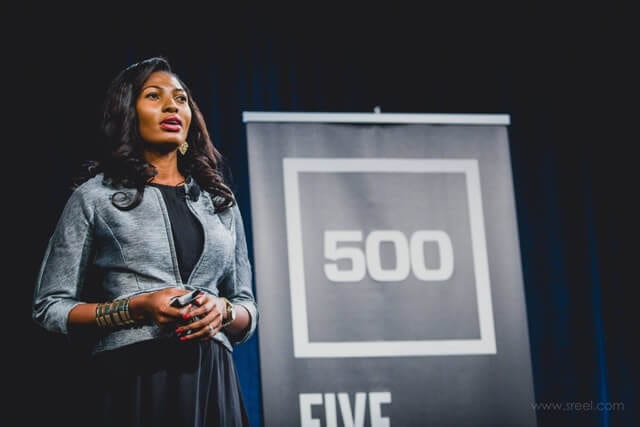
Podozi.com is a beauty ecommerce platform that gives African women access to both local and international beauty brands. Co-founders, Teniola Adejuwon and Wale Babatunde, recently completed a 4-month accelerator programme with 500 StartUps, a leading venture capital fund in Silicon Valley. To date, 500 StartUps has invested in over 1,500 businesses across 50 countries worldwide. Every year, thousands of businesses apply either through a formal application or referral, and after passing 5 or 6 rounds of interviews are accepted onto the programme. Podozi was one of 50 startups accepted for the most recent cohort ‘Batch 16’. With the programme, Podozi worked in Silicon Valley, learned how to take their business to the next level and received a net investment of $100k. In this interview, Teniola shares her experiences with 500 Startups and gives some advice for aspiring entrepreneurs. How did you get involved with 500 Startups? It came as a total surprise. Last year, we were introduced to 500 Startups through an investor who was a personal contact. As my mentor Tara Fela-Durotoye always reminds me, your network is your networth. Previously, the investor had mentioned that although they typically focus on Series A funded businesses or higher, they really liked the Podozi business. So we agreed to keep in touch for when the business grew bigger. Applying to 500 Startups was an aspiration of ours, which we planned to pursue in the future. About a year later, we got an email introducing us to 500 Startups, and that was it. How has being part of the 500 Startups programme helped develop Podozi? We recently completed the programme, so it’s still very early to articulate the full benefits, but being part of the 500 network is like being part of a global family. It’s a lifetime thing, where you grow and evolve. We were exposed to people and ideas from across the world. While we have formally finished the programme, we continue to keep in touch with our batch and the other businesses in the community via a group email. We have a well of resources to draw from and access to mentors who we can reach out to for advice. Throughout the programme, we had opportunities to pitch to hundreds of investors and peers in the startup ecosystem. One of our pinnacle moments was presenting Podozi during the closing ‘Demo Day’. Being able to articulate our brand raised our profile with international peers and investors, which also helped our profile in Nigeria. Also, to be eligible for the programme, we had to (re)incorporate as a U.S. company which gave us access to U.S. specific venture networks and investors. Tell us more about your experience in Silicon Valley as part of 500 Startups Batch 16? Living in California was an interesting experience. Given the 8-hour time difference, we were working from 9am to 7pm U.S. time, then worked after hours to service Nigeria alongside our colleagues back home. It was a demanding but authentic experience of what it means to run a truly international business. All businesses in our batch worked from the same office in San Francisco. This helped develop a spirit of camaraderie, collaboration and shared learning, which is not always a given in most accelerators. We travelled to Los Angeles, New York and other cities across the U.S. which gave us exposure to international best practices and processes. Once you get established processes in place, you’re able to serve your customers better. I’ve always been an advocate of this and Podozi advocates this too. While it’s not always possible to please everyone, I remind my team to put themselves in the customer’s shoes. Empowering the customer is crucial, and something businesses on the continent tend to miss. What advice would you give to aspiring startups and entrepreneurs? Cultivate an attitude of excellence. Being entrepreneurial isn’t about calling yourself the CEO, you need to have a long-term mindset. My first company, Beauty by Nature, ran the Beauty Business Masterclass series. We would teach attendees that no matter whether you’re a nail technician or a self-taught makeup artist, you need to develop your craft and put the right structures or systems in place to support it. That is the difference between a sustainable business and one that burns out quickly. Also, it is not only about funding. Successful entrepreneurs are convinced beyond reasonable doubt about what they are doing. In the past I’ve seen African startups get deterred early on by investor questions about about basic things like their business model or business numbers. If you are not convinced about your product, it will be difficult to enter in, let alone survive in Silicon Valley. It can become quite distracting when your brand gets bigger and your profile increases, so you need to keep focused. As one of my mentors says, ‘the media, awards and accolades will come; just do your work’. What tips would you recommend for making a successful application to an accelerator? Firstly, do your homework. There are funds and accelerator programmes that may be targeted to your industry or geography. Be aware that while some of them are global, their funds might be localised to specific regions. Then, develop a proof of concept. Ideas are a dime a dozen, so don’t just go about touting ideas. Don’t simply try to replicate an idea that works in another country, ensure that it’s relevant to your market. My mentor, Mrs Ibukun Awosika says, “Be the expert of your business – know your numbers and keep your books tidy”. Businesses sometimes rush to launch an app without considering the consumer behaviour in their locality or whether they have the capacity in-house to maintain such. In e-commerce the big question is traction! It’s all about your metrics. Third, be humble enough to admit what you don’t know and be ready to learn quickly. Utilise your resources, prepare in advance and ask as many questions as possible, there’s a wealth of resources out there like Quora to keep you
Kah Walla: Starting a business in Cameroon is easier than before
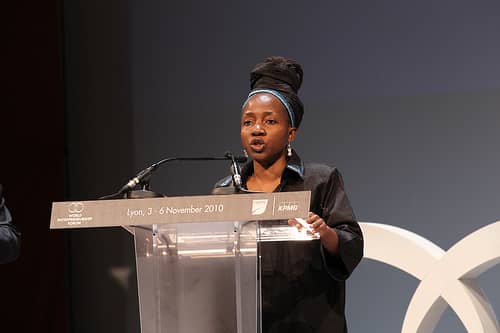
Kah Walla is one of Cameroon’s most successful female entrepreneurs. When she started her consulting firm 20 years ago, she says she never stopped to consider how unusual, and challenging, it would be for a woman in her 20s to begin a business in Cameroon. Despite being a woman and facing the hurdles of the Cameroonian tax system at the time, Kah successfully established her consulting firm. Her company; Strategies is now across the world, serving both domestic and international clients, and draws in an average annual revenue of $500,000. Kah’s consulting firm, which makes over 90 percent of its turnover outside Cameroon. It offers services in leadership, strategy and organisational development to multi-national firms and development organisations. Kah’s business reach and outstanding impact throughout Africa, Europe, and the US, has given her recognition and many awards. In 2008, she was recognised by the World Bank as one of the seven women entrepreneurs working to improve the African business environment. Today, Kah says now is the best time for entrepreneurs, especially women, to start a business in Cameroon. This, given that Cameroonian laws now grant women new rights, such as travelling without male companions, opening bank accounts and registering businesses on their own, without their husbands’ consent. This is something which didn’t exist before. In the following excerpt, Kah shares more tips on starting a business in Cameroon. Do research: Know the country’s laws and what the people need Any entrepreneur willing to start up any business in Cameroon has to do some professional homework regarding the country’s business and tax laws, including general marketing analyses. You also need to know what the people really need in a bid to understand if your business project will be people-friendly. Cameroon’s business law is harmonized under the OHADA treaty like other countries in West and Central Africa, and is at face value gender neutral. But there are customary laws and traditional practices which sometimes disadvantage women in business dealings. So knowing the laws is a salient point to consider before starting out. Put down your plan on paper The next step in starting businesses at any level is creating a plan. You must create some kind of plan before going into business. Putting something down on paper will remind you of your objective and goals. Then you can continually develop this plan, but make sure to always have one from the get-go. At some point –even after you’ve started a business, return, rearrange things, and reflect. Just put your plan together first! Be proficient in the country’s two languages. Cameroon is a bilingual country with English and French as its two official languages. Any young entrepreneur who wants to succeed should know how to manoeuvre between English and French. Get the right information, meet and create the right network “Meeting and creating the right network is very important. There are many businesses that have not seen the light of day simply because they didn’t get the right information. Connect with people who have different strengths but are like-minded in their entrepreneurship and development interests. Being a business owner or entrepreneur can sometimes get lonely, particularly in the start-up phase. The government of Cameroon has been striving to assist entrepreneurs in setting up and running their own businesses in Cameroon through the One-Stop Pilot Centre. The Centre is one of out of the many other investing paltforms in Cameroon. These centres unite all administrative services for creating a business –including taxation, insurance, treasury and customer service. There are places where people can find out what documents they need to prepare and fees they need to pay in establishing their businesses. Any person willing to start up a business should go to these places to get the right information. These centres have eased the process of creating businesses in Cameroon, which now is supposed to take between three to five days.” Have the right mind-set There are certain basic mind-sets which are critical to becoming the ultimate entrepreneur. They include: Everything is possible, Passion first, We are connected, 100 percent accountability, Attitude of gratitude, Live to give, and The time is now. All challenges have solutions “All challenges and problems have solutions, and in order to be successful, one has to be innovative and creative. Successful business women must remember that everything is possible. When I started out in my 20s, I didn’t realize that the markets would be a challenge for me. But what I had was the will and desire to make it and to start my business venture. With that alone and my passion, I think I have been extremely successful in my life. Summarily, I will advise entrepreneurs to create businesses that provide what Cameroonians need and to welcome any challenges as added motivation for innovation. The keys to success are sticking to a plan, being creative, remaining optimistic and doing one’s homework. The Cameroonian government has made starting a business faster and easier here. So the time to start-up is now!”
Nneka Offor: Digital publishing can transform learning in Africa

The digital revolution doesn’t start and end with social media. Some entrepreneurs are pushing the revolution into other parts of life. Take education and reading for example, 20 percent of Nigerians who go online do so to read something new. Nneka Offor is at the forefront, pushing eBooks and eLearning to change the way Africans learn. Nneka is the founder and CEO of WhiteLeaf Digital, a digital publishing company based in Enugu, Nigeria. Here she explains how the digital revolution will affect reading and learning. Is there a market for eBooks and eLearning in Nigeria? There is a huge untapped market for eBooks and eLearning in Nigeria and Africa at large. The concept of an eBook is an electronic version of a printed book that can be read on any smart device. eLearning involves utilizing electronic technologies to access educational curriculum outside of the traditional classroom. At the close of 2016’s second quarter, the number of internet users on Nigeria’s telecoms networks hit 97.21 million with 85 percent accessing the Internet via mobile devices. On exactly what these people do online, 22 percent spend their time on social media, 20 percent opt for reading, 19 percent spend their time reading and sending emails. Movies and music enjoy a 13 percent share of the Nigerians time online while shopping gets a 5 percent cut. These statistics show that Nigeria already has the enabling platform for eBooks and eLearning. The overall growth rate for self-paced eLearning in Africa is 15.2 percent. Senegal has the highest growth rate, followed by Kenya and Nigeria. Selfpaced elearning revenues in Africa reached $ 250.9 million in 2011 and will more than double by 2016. Research analysts forecast the eLearning potential will get tripled largely in South Africa and Nigeria. Why start a technologically driven business considering high data costs across Africa? eBook or eLearning does not consume data. Online readings consumes between 380KB and 1MB depending on how long you spend online. Downloading a book from an eBook server archive needs 800KB. The longer you read, the more data it consumes. After you have downloaded your eBook and have them saved on your device, subsequent readings will be done offline and does not require data. Data is only spent when you’re reading online or downloading from the server after which you will no longer require data to read. Video or audio take more data. Online video streaming can take as much as 1GB in an hour. It takes between 3MB to 160 MB to download a 17-hour video. What steps are you taking to transform African educational sector? Our first point of call is Nigeria. Presently we are in talks with Nigerian based educational publishers over integrating digital publishing. Not only is this technology driven, it is also cheaper to publish eBooks as there are no distribution or warehousing cost. We’re also working towards getting institutions and corporate organizations to have eLibraries and eLearning platforms so as to encourage students/employees to read at their own pace anytime and anywhere. The other thing which is undoubtedly the easiest way to transform the educational sector, is awareness. Publishers and book lovers need to be aware of the transformation. That is why we are currently organizing a digital publishing summit scheduled to hold by the last quarter of 2016. The details are not in the news yet but it will attract traditional and digital publishers all over Africa. We will be discussing pertinent issues on how to convert and integrate traditional prints into digital formats, especially for educational purposes. How will digital publishing revolutionize learning? Digital publishing creates interactive learning. Studies show that interactive content can boost learning retention and students prefer to learn by doing, versus seeing or reading. When they interact with videos, charts, and graphs, they retain more information. Digital publishing can help transform passive learners into active participants. Also, learning materials are more accessible and affordable, and it reduces traditional book printing and distribution cost. By producing digital versions of educational literature and publications, you can substantially cut printing costs. This leaves you with more budget for other learning and marketing activities. Distributing heavy printed text books can be very expensive, not to mention slow. Using a digital distribution channel you can get your message out to a wider audience immediately, with no postage costs. Access to eBook is also quicker, cost effective and friendlier on the environment. In many cases, content can be created once and delivered to multiple platforms and operating systems, reducing the cost of publishing while simultaneously reaching broader audiences. Have you faced any challenge in setting up a digital publishing company outside Lagos? We have not faced any technological challenge setting up our business in Enugu. The only challenge we have faced with is delay in working with the traditional publishers. Most of them are based in the west while we are in the east. On many occasions, we have to go travel to meet with publishers for meetings. This has prompted us to start making plans to setup an office in Lagos precisely so we can be closer to the publishers. How would you like to be remembered? I would like to be remembered as a transformational leader who created value and made a significant positive impact in the society I lived in. If you’d like to share your story with She Leads Africa, let us know more about you and your story here.
6 key points to consider when writing an elevator pitch

In this day and era of being an entrepreneur, you may find yourself writing an elevator pitch over and over again. They say collaborations are the best way to engage in business. There will be different organizations, brands and personalities you would like to collaborate or work together with on a particular project. It’s key to identify a brand/organisation that is in line with what you believe in and shares similar values, and goals with you. Today, we will be sharing 5 key factors to take into consideration while crafting your elevator pitch. This does not only work for business owners, entrepreneurs. Even those in employment looking to partner with other companies on different projects may find this useful. Keep it short and simple An elevator pitch shouldn’t be too long. You want to pass your message almost immediately in the first few sentences. So keep things short, clear and precise. State who you are, what you want from them, what you are offering, why you chose them and how you can work together moving forward. Get down to the nitty-gritty This is your introduction, where you sell your brand and yourself or what you do. At this point try to be very specific with the information that is required to get to know you better. Sell yourself and/or your product/ brand. Emphasize the value you offer After introducing yourself, you now need to explain or reveal more on how you do what you, and why they should work with you. This is where you clearly define your qualities, strength and your passion for your career. Also show the value it comes with. Include links and Photos This is quite important especially if you are using your products as a selling point. Have the images attached where necessary. You can even links to your website where more of what you do can be seen and assessed. Mention any huge achievements Here is where you state all that you have achieved in relation to what you are proposing to offer. The value will then be easily aligned with your achievements, depending on the person receiving your pitch. Follow up After sending in your elevator pitch, give 3-5 days before you send a quick email to touch base. They may missed your mail or are holding back on their response. This can happen easily as they receive many emails, and depending on schedules, emails can be overlooked. A kind reminder to check your mail is necessary. You can even forward your initial email again so they don’t have to search too hard and can see you sent it earlier on in the week.
Tshepy Matloga: Recognition is the best motivator

South African journalist Tshepy Matloga started making frequent visits to Malawi in 2014 when she noticed the lack of business magazines with Malawian content. Tshepy jumped at the chance to address this gap by launching Inde, a business and lifestyle magazine aimed at Malawian women. Here, Tshepy shares tips on setting up shop in another African country and speaks on being voted a top South African inspirational youth. You’re South African, why did you decide to start a publication in Malawi? More than a year ago I became a frequent visitor in Malawi. I was charmed by how serene and peaceful the country is compared to the hustle and bustle of South Africa. As a journalist by profession myself, some of the things I collect are magazines and it baffled me that I could not find a single publication that was about women and the business landscape in Malawi. Yes, there are so many publications in Malawian shops but they are all South African publications coming here packaged with South African content. I also met my partner here who happened to be in the media too. When I ran the idea past him, we both decided to bring to life Inde magazine in March 2016. “Inde” is a Chewa word meaning “yes”, Inde Magazine is Malawi’s only business and lifestyle magazine. What is the business climate/culture like in Malawi and how is it different compared to South Africa? The business landscape in Malawi is extremely different than the one in South Africa. I am used to a fast paced business environment and I have found Malawians to be very relaxed, there’s no hurry here whereas in South Africa time is money. With that said, I think my biggest challenge was having to slow down my normal work pace so that I didn’t become too overwhelming. I however like the Malawian walk-in policy, you can just rock up at a company with no appointment and request for a meeting and if the person is available they will make time to hear you out. That part has made things easier for me because I came here with no business contacts. What tools do you use to extend the reach of Inde magazine? Social media has been very helpful in this regard. Then, Malawians are generally friendly people and it being a small community, word of mouth also goes a long way. I have also been trying to partner with local events so that the brand is exposed even more What other projects do you engage in outside Inde? My public relations firm, Chronicles Media Group is present in both South Africa and Malawi. Outside Inde, Chronicles Media group also offers PR services such as corporate communications, social media management, brand management and events. Besides PR and the magazine, I blog for a South African organization called Leadership2020 where I write about my life journey, from growing up in the village of Botlokwa in the northern part of South Africa to running my own company. You recently made Youth Village’s list of the top most inspirational youth in South Africa, how does that feel? Recognition is the best motivator. To be young and know that in the few years that you have been on this earth you have impacted lives is a sign that you are going into the right direction. Everyone who knows me well knows that I have struggled to get to where I am today. From Botlokwa, packing my bags and going to university even though I knew very well my mother could not afford the fee; to struggling to find employment, and when I eventually did find one I did not like it; to starting my business with a few thousands I have saved from freelancing jobs. I have to admit it was a curvy road. So with that said, it is things like such recognition that remind me that the journey was and is worth it. What advice will you give to young African women looking to start a business in another African country? I’d say the beauty of venturing into another country is that you are new there so it makes it easier for you to identify gaps and thus fill them up. Africans are generally friendly people therefore making it easier for a new person to just get lost into the communities and be part of them. But, I have to say markets are not the same. In another country you might find yourself having to adjust your prices and make them lower to make your services/products affordable to the locals. If you’d like to share your story with She Leads Africa, let us know more about you and your story here.
Key steps to creating your business with Sharon Beason, Founder of Womeneur
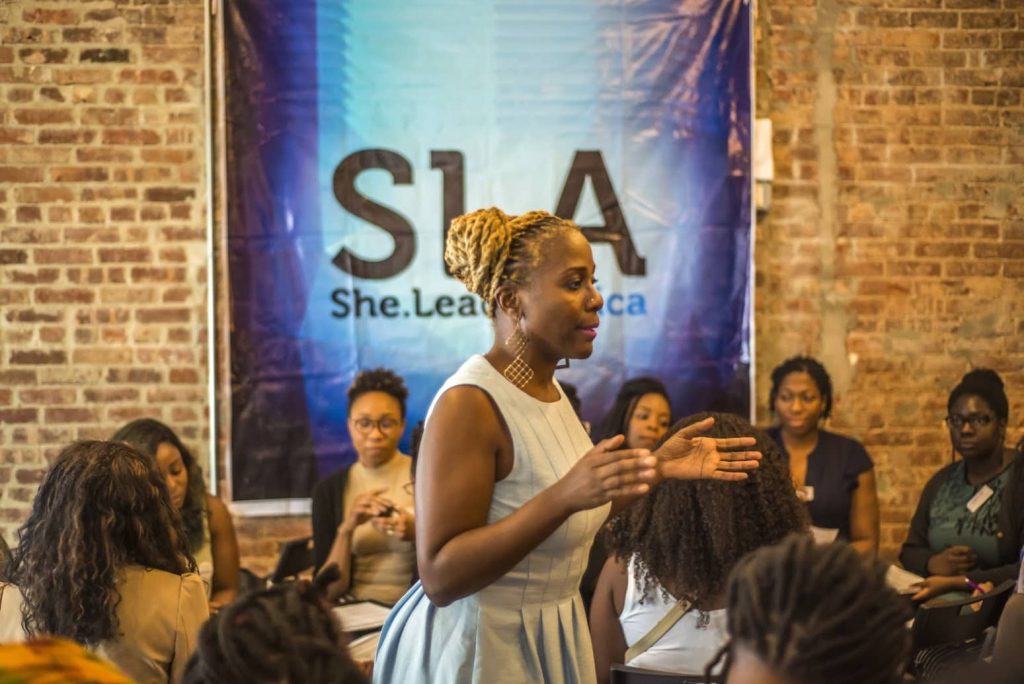
Creating a business model can come with its challenges, it is not always easy and requires significant strategy. Womeneur is a platform for women to develop their businesses professionally. During She Hive NYC 2016, Womeneur Founder, Sharon Beason went over the initial steps needed to develop a business. In this workshop, attendees learned that paying attention to detail can make all the difference in the trajectory of a business. Here are some of Sharon’s strategies on developing a business professionally. It has to make sense Think about how viable your business is. No matter what business you are in, you are always in the business of solving problems. Ask yourself, am I solving a problem? Do your research and know who your competition is. You must see where your competition is slacking and solve the problems that they are not. For example, if they are not responding to customer phone calls make sure that you are. If they are low on merchandise, make sure that you are not. Aim high Within the industry that you are looking to get into, see who on a grand scale is doing what you aspire to do. For example, if you are looking to make handbags, look at who is currently the most successful at doing it. Study the strategies that the company uses. Have a well-defined niche and target that audience. Create a customer profile for that niche. Be as meticulous as possible when defining your target audience, this allows you to make better customer-centered decisions. Ask yourself, what do they look like? How do they speak? What are their interests? Listen to your audience You have to actively listen to your target audience’s needs and go where they are. For example, if most of your target audience uses Instagram to communicate go there and read about the discussions that they are having on that platform. Sharon explained that people’s commentaries give you a snapshot into their mindset. If you have a well-defined understanding of their problems, you can more readily provide solutions. Workshop participants went home with the key takeaway that if they set up their business models effectively, they can become agents for change within their respective industries. In order to become an agent for change you must listen to the people that you want to serve and always make it your priority to fulfill their needs.
You’re now a Motherland Mogul, have you thought about safety?

A light bulb just came on and you’re already smiling at the money you’d be making from the business idea… You just slammed a pitch and you’re already practicing the speech you’ll be giving other young people on how you made it… You’ve launched your website and have snagged a client or two, business is looking promising… Your business is expanding, income is rolling in, your reputation is soaring, you’re making impact… You are now a known brand… Pause. Hold up. Wait a minute. Have you given any thought to safety on the job? Chances are you haven’t thought about the safety of both yourself and your employees. Yet, whatever stage you are on your entrepreneurship journey, it is important to consider the health and safety of everyone involved in your operation and invest in it. A safety management system (SMS) is a proactive and systematic process of safety. It involves developing a safety culture that ensures your organisation/business remains safe from loss of any kind. There are numerous benefits to incorporating a SMS in your startup. It reduces business costs and increases efficiency. With a SMS in place, you won’t have to worry about spending limited resources addressing the fallout of accidents and other incidents such injury, loss of goods, damage to business property, even death. Financing Banks and investors are more likely to invest in a business that is set up on a right foundation. No one wants to lose hard-earned money to accidents that could have been averted. Employee morale In business, word of mouth travels faster than any advertising. Employees do not want to leave a job worse than when they got into it, broken bones, injuries or ill-health. A safety system boosts their morale and lets them know that their employer is interested in their overall well-being. This morale of staff is inadvertently manifest in improved client relations and that is a plus to a business. Business confidence Big companies in construction, aviation and oil and gas seek credible businesses with a safety culture to work with. This singular investment in a safety culture could set you apart from other business owners Legal compliance And of course, using SMS means you would be complying with relevant laws in your country of operation. They say, train a woman and you train a nation. Here is to building safer businesses and workplaces as we become Motherland moguls.
The 4 minute guide to SME marketing

The average human’s attention span is… oh look, a notification on my cell phone! According to scientists, the age of smartphones has left humans with such a short attention span even a goldfish can hold a thought for longer. As such it is no longer surprising when people complain that a 1000 or 2000 words post/article is toooooooooo long. So I asked a couple of friends and acquaintances; “What’s the most amount of time you would be willing to spend to carefully read an article that piques your interest?” The answers varied between 2-7 minutes and at the end of the day I arrived at an average of well, 5 minutes! And this was one of the considerations that inspired “The 4 Minute Guide to SME Marketing” series. What I hope to do with this series is help start-ups and small/medium business owners navigate the rather murky waters of marketing. Because I understand the time constraints we all face as busy professionals and business owners, I plan to keep every article interesting, informative, and most importantly, concise. Pinky swear! I chose to do a series specifically on marketing because, to be honest, I absolutely love the profession and practice. I always tell people that marketing found me (a story for another day). After spending years in the advertising industry as a brand and marketing strategist and working on a number of brands across different industries, I’ve gained insights that I believe would be useful to small business owners. It can be difficult to access ready and affordable marketing consulting services so That said, I guess we can all agree that starting a business is exhilarating. Unfortunately, the “build it and they will come” theory doesn’t hold much weight anymore because while you might have a fantastic, the greatest thing since sliced-bread product, if people do not know about it, who you epp? The process of letting people know about your product or service is a deliberate one hence an entire academic and professional field called marketing. Again, unfortunately, a lot of startups and SMEs have a flawed mindset with respect to marketing (what it entails and what it can do for their businesses) and this is why most of them do not scale or eventually live up to their full potentials. I mean in today’s business field, battles are won or lost in the market arena and a good product/service alone would not sell itself. As such, marketing imperatives are no longer an option, but a MUST! You can choose to think about it this way. Your product or service started as an idea and we all know that ideas need momentum. LaunchSquad’s Jason Throckmorton said “you can have the best idea in the world but if you don’t couple that with a strategy to spread your story, your idea isn’t going to go very far.” I couldn’t agree more. Still in doubt? You can also choose to think about it this other way. As a start-up, as a new business, nobody knows you yet so you need to get people to care enough to try what you offer. And this is when marketing becomes a smart investment because it can help you legitimize your business, create excitement, engage potential clients/customers, encourage trials and repeat purchases and even inspire loyalty and advocacy. You see where I am going with this right? 😀 I’d conclude today’s post by saying SME marketing shouldn’t be a flimsy afterthought. Just as you have been very deliberate about creating a top notch product or service, you need to be equally deliberate in creating demand for that product or service. Until next week SLAyers! Cheers!
I come from strength: What my mother and Africa taught me about entrepreneurship

“I come from strength.” Those are words that I often utter to myself when it is late at night, I am tired, and I am still working. The reason why I remind myself of my foundation is because during those same hours I know that over 100 miles away there is an African woman who is just starting her work shift. She is my mother, a Nigerian woman. The work ethic, resilience and fortitude of African women is nothing short of amazing. When I think about the fact that my mother completed her nursing schooling in Nigeria, moved to the United States then returned to school to become a nurse (again), I am in awe. And she is just one of many African women with stories of sacrifice and determination that ultimately led to them achieving their personal and professional goals. It’s almost as if the continent breeds women who innately do what it takes to survive, adapt, and push past obstacles time and time again. Long hours and late nights are just one of the many things that come with entrepreneurship. I accept it because it is the path that I chose. And as the daughter of an African woman I know that I am built for it. So… how did I get here? How did I become this “Legally AMBITIOUS” entrepreneur? Let me share… Growing up, I was always considered the creative and outspoken one amongst my siblings therefore all roads seemed to point to me pursuing a law degree. However, I never made it to law school or pursued my interest in entertainment because when I got to college, I realized that I was strong in science and math so I decided to pursue a degree in Computer & Information Sciences. The course work was rigorous but in the end pursuing a STEM degree was the right decision. After graduation, I immediately began working in the corporate world. I worked as an application developer and systems analyst for years but I still desired a creative outlet. Eventually, I began networking and I realized that many of the women that I encountered were similar to me in that they had full-time jobs but other interests. I realized that there was a need to connect women to resources and each other so when an opportunity presented itself, I launched Signature RED. Signature RED began as a company focused on women-targeted marketing. I built an extensive portfolio of events for clients and created the “Legally AMBITIOUS” brand: a series of fun yet educational networking events for women. The purpose of the events was to equip women with different skills to help them make transitions in their careers and personal lives. Each event taught women a skill and provided an opportunity for networking, some of the events included Golf 101, Cars 101, Networking 101, Building Mobile Apps 101, and more. In 2013, I began to make a transition of my own when I attended a tech event for women and it awakened my inner geek. During the event, emphasis was put on the need for more women to pursue STEM degrees and work in the technology industry. The event was pivotal because it allowed me to realize that I could merge my computer science background, marketing skills, and my love for working with women into services for Signature RED. It hasn’t been an easy road to navigate but today I provide technology consulting to companies and reinvention marketing strategies to women. Additionally,“Legally AMBITIOUS” events have more of a focus on women interested in tech. Some of my forthcoming projects include creating resources and tools for women like TechWomenNetwork.com and TechiesWhoBrunch.com. My workday usually consists of managing tech projects during the day and working on everything else at night. Entrepreneurship with all of its ups and downs is not for the weak or lazy because it requires a good work ethic and strength in many ways. My mother is not a businesswoman therefore she didn’t teach me about business but what she did teach me is to keep going. Pivot, start over… do whatever I need to do, just keep going. I always reflect on those lessons and values. As the daughter of an African woman who walked miles to go to school at times carrying large items (on her head), I come from strength. Therefore when it comes to fatigue or handling all that comes with entrepreneurship, I will always do what it takes to move forward.
8 things they don’t tell you about having a side hustle

Folayemi Agusto is a Business Development Manager for an online media company. When she’s not identifying business opportunities, she’s busy running The Artisan’s Gift Company, a retailer of handcrafted favours. You can also find her on Eat.Drink.Lagos, where she is one half of the no holds barred restaurant review blog. Folayemi shares her 8 untold truths of having a side hustle. Depending on the nature of your side hustle, the experience is different for everyone. When I first started my business, I wasn’t working and ran it full time. THEN, I went back to work *cue dramatic music*. I thought to myself, “This shouldn’t be too hard, everyone in Africa has a side hustle…even Lupita.” Simply put, I was wrong! Here are 8 things people don’t tell you about having a side hustle! 1. Having only one to-do list is for learners. You should have three separate to-do lists. One for your day job, one for your side hustle and one for your personal life. 2. Working in the evenings can be a trap You’ll plan to do work in the evenings, but most times you won’t. It goes something like this: get home, have dinner, unwind and then midway through an episode of Blackish you look up and it’s 10 pm! To avoid this trap, you must remind yourself of the goals you’ve set. It’ll help do away with procrastination and keep you disciplined. 3. Social media planning is a major key. If you manage social media accounts for your business, you’ll need a social media schedule. This way, when your boss is on your neck over a report and your creative juices aren’t flowing, you won’t have to worry about coming up with a witty Instagram caption. 4. Streamlining saves you from excessive social media promotion Use IFTT to cross share updates across all social media platforms. 5. You’ll have to pass up on weekday events There will be some professional development programs/seminars on weekdays that you won’t be able to attend. Don’t be too disappointed; there are good programs that happen on the weekends as well. 6. You are immobile during business hours Have supplies to pick up in Lekki but you’re stuck at work in Ikeja? You don’t have to have a driver or wait till Saturday to run errands. There are tons of pick-up and delivery companies popping up in big cities across Africa and you should have ALL of them on speed dial. 7. Lunch break is everything! You will surprise yourself with how much you’re able to cram into your lunch hour. Your coworkers may think you’re a bit of a phone addict but little do they know you’re actually getting your work on. 8. Once you get it, you get it When you finally achieve the perfect side hustle/9-to-5 synergy. You’ll feel like you’re on autopilot and nobody will be able to stop you! Running a side hustle is difficult but can also be an extremely rewarding experience. Along the way, you’ll discover talents you didn’t know you possessed and develop a newfound appreciation for time-management. As a generation of risk-takers, we’re often encouraged to strike out in hopes of launching the “next big thing”. However, we mustn’t downplay the value in having a safety net while nurturing a business through its early stages. Do you have a side-hustle? Share your side hustle tips with us in the comments!