
Nengi Omuku: They are surprised I’m a small girl showing large canvases
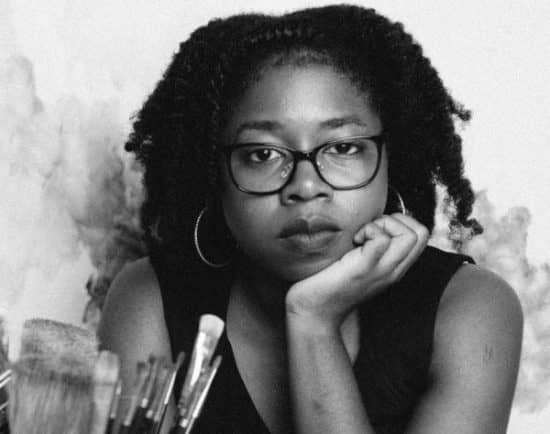
Nengi Omuku is an emerging Nigerian artist making her mark in the contemporary art world. After attending the Slade School of Fine Art, University College London, she’s gone on to showcase her work in exhibitions across the globe including the prestigious annual Armory Show in New York as part of the 7th edition of the 2016 Armory Focus: African Perspectives, an invitational section on Pier 94. She has received multiple awards for her work including the British Council CHOGM Art Award, which was presented to her by Her Majesty Queen Elizabeth II in 2003. Nengi shares with us her favorite artists, proudest moment in her career and her hopes for the future of African art. Who are some of the artists you admire most? Who did you look up to when studying art in school? Ben Enwonwu was an inspiration for me at art school. He was a role model and an alumnus of the Slade School of Fine Art, which inspired my decision to also study at the Slade. I admire Wangechi Mutu’s work, which highlights themes related to women. Yinka Shonibare has an incredible body of work, which flawlessly captures his sense of humour. Then there’s Chris Ofili; there’s a simplicity and sensuality about his recent paintings that I relate to. When do you feel like you create your best work? What setting is it? Are you at home or in a studio? Painting at home has never really worked for me, because a lot of my paintings are quite large. I work best in a dedicated studio space, surrounded by paint and pigments. Alternatively, a garden would work just fine. When it comes to a geographical location, I could be dropped anywhere in the world and I will be inspired to make. All the work that I make comes directly from experiences that I have had and every space offers new experiences. How is it being a woman in the art world, would you say that there’s some gender inequality or are there some challenges that you would say only female artists face or is it not as bad as other industries? A gentleman came to the first solo show I had in Nigeria and was genuinely surprised that I was a ‘small girl’ showing large canvases. He expected to meet a man! There are lots of articles being written about gender inequality in the global art world about how female makers aren’t as recognized as their male counterparts. There’s no doubt that men have dominated the art scene in Nigeria and elsewhere, but at the same time I don’t find that daunting. We are all just players in the same game. So I’ve thrown myself into the pond like everyone else, because our limits are only imagined. What has been your proudest moment in your career? Winning an art competition and getting to meet the Queen of England was an amazing experience. She encouraged me to continue with art and as a young person, that’s just something you don’t forget. The other awards that I have received as a result of my work have also been very encouraging. There’s no better feeling than being rewarded when you push for more from something that you’re passionate about. What are your hopes for the future of African art? I look forward to increased visibility for artists that live on the continent alongside the proliferation of art spaces. Another hope is that the concept of ‘African Art’ grows and expands to reflect the dynamic and diverse work of artists who live and create on the continent and its diaspora. You can follow Nengi on Instagram @nengiomuku to learn more about her work and travels through the art world.
Diarra Bousso: It’s hard to be taken seriously in the beginning
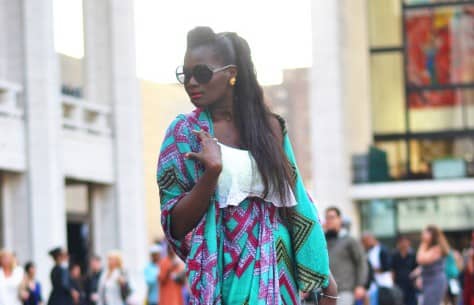
Diarra Bousso is making significant waves in the global fashion industry with her bespoke luxury brand Dakar Boutique Group. The brand houses DIARRABLU and Diarra Bousso target swanky and contemporary consumers. Her work has been featured in The New York Times and The Huffington Post among others., and was showcased at New York Fashion Week. Diarra has gained recognition and acclaim from the global business community. She was a panelist at Harvard’s Africa Business Conference last year where she discussed the evolution of Africa’s consumer growth story. We caught up with her to talk about her journey. Tell us a bit about yourself I was born and raised in Dakar, Senegal and moved to Norway at 16 to finish high school. Upon graduation, I moved to the States where I attended Macalester in Minnesota for a B.A. in Maths, Economics, and Statistics., before moving to New York and starting a career on Wall Street. Two years later, I resigned and returned to Senegal to found Dakar Boutique Group, a luxury holding company that celebrates ‘Made in Africa’ through my various brands: Diarra Bousso and DIARRABLU. The Dakar Boutique Group – what does it do and why did you decide to start it? I always knew I was going to end up in fashion and for me. And it only made sense to do it in Africa, because I wanted to also focus on development and rebranding the continent. Dakar Boutique Group is a luxury holding company and basically owns other companies such as Diarra Bousso and DIARRABLU. Each subsidiary has a particular focus but they all share the ‘Made in Africa’ signature. Diarra Bousso focuses on premium leather goods whereas DIARRABLU focuses on womenswear in geometric cut. Coming up with an idea is the first step. What did you do next? My next step was to raise awareness. We launched at a big party on a private island and followed it up with a traveling fashion show in June 2013 titled African Voyage. This allowed us to get a lot of attention, both in Senegal and abroad. It also marked our first appearance in the media. Talk us through the first 6 months of starting up DB. What were your priorities and how did you determine them? My main priority was visibility. I was focused on the African Voyage event production and PR and put all our energy on it. I have no background in fashion but I definitely knew that I needed to set a high standard for the brand’s image. For me, the best way to achieve that was through a high profile original event. What were the key challenges you faced when you first started? How have they evolved over time? I think it’s always hard to be taken seriously in the beginning, especially when you are not trained in the industry. I was always confident about my vision and so I didn’t let anything discourage me. I focused a lot on communicating aggressively on social media and sharing the essence of my brands in a very transparent manner. I believe this makes you more credible and engages your audience. You’re a fashion designer but you also run a fashion business. How do these roles interact? Is there ever a conflict? The two roles compliment each other very well actually. My background is in finance so business comes naturally. That said, I spent all my free time growing up daydreaming, drawing, painting and designing. This job now allows me to align what I learned in school and what I am naturally good at, which creates the perfect balance. In the fashion business, making beautiful clothes is one thing, getting them to your customer is another. Tell us about your distribution strategy We are available online on the main website, www.dakarboutique.com, where customers all over the world can shop at their convenience. We are currently working on a few in store placements, especially in New York, and will be announcing that very soon. Our strategy focuses on distributing to areas we have customers. You created two lines DIARRABLU and DB . What was the business rationale of creating two separate labels? I wanted to reach two different demographics: DIARRABLU is a very trendy womenswear brand priced under $500. The brand focuses on daydreams which is something accessible to everyone and suits the bold, fun and modern shopper in major cities such as New York, Lagos, Paris, Rio etc. It is therefore only natural for us to aim for distribution in such places. Diarra Bousso is more exclusive and focuses solely on leather accessories. Everything is limited edition, so the customer has to find us, create a relationship, live the experience and then get their bags made to order. It’s a completely different business model as well as a different customer. How have you funded your business growth and what was the fundraising process like for you? Any specific tips and tricks for startups out there? We have been self-funded so far which has been challenging and rewarding at the same time. I think it is important for startups to first try on their own and show what they can deliver before approaching investors. It’s a good test of the viability of your business and definitely makes you more credible when it’s time to raise capital. Can you talk to us about some of the specific marketing strategies that you have used? We have a very strong marketing team that’s very focused on the digital space. Our customer is modern and online, thus it is important to focus on high quality images alongside strong social media fluency and transparency. Lifestyle marketing has also played an important role, and we achieve this with the African Voyage concept which we share on social media through photographs and videos. You’ve managed to get over 12,000 followers on Instagram. What role does social media play in your overall strategy? How have you grown your following? We have grown our following in a very organic manner. I think our audience likes to
Louisa Kinoshi: Be OK with failure, that’s how you learn
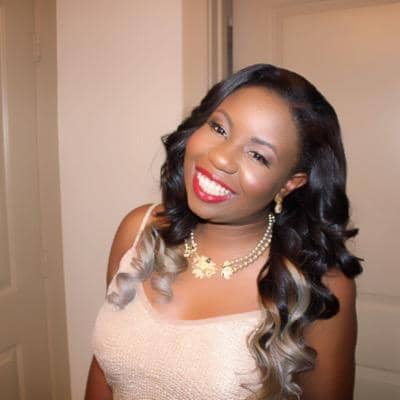
Louisa Kinoshi created BeautyRevNg to celebrate the diverse beauty of African women. The Nigeria-based company, which officially launched in April 2014, aims to revolutionize the beauty shopping experience in Africa. It seeks to put brands that cater to the needs of African women in its clients’ hands at the click of a button. BeautyRevNg also provides an online space for African beauty enthusiasts to gather and learn from each other. “It is more than just selling makeup,” said Louisa, who is also a fashion and beauty blogger, and has written for various online publications. Before relocating to Nigeria to work on BeautyRevNG full-time, she worked for Clean Line Energy in Houston. Prior to that, she worked in corporate public relations and marketing for seven years. Her clients included Starbucks, Pepsico and Pfizer, among others. I caught up with her to talk about her entrepreneurial journey so far. Light-bulb moment The idea to start a beauty business came about when Louisa was at Carnegie Mellon University. As a student, she often travelled to Nigeria for holidays. During one of her trips, she lost her makeup bag. “It was a surprise that there was nowhere I could go to replace its contents at an affordable price,” she said. The few places that she did find sold the makeup that she wanted at exorbitant prices. She realized then that there was a need in the market for reasonably priced beauty products that compliment African women’s skin. “I also heard from family, friends and blog followers that this was something African women want to see,” she added. As a blogger, Louisa spend time figuring out what was missing in Africa’s beauty and fashion industry. She talked to people on the ground who shared their beauty wants and needs with her. She also cultivated relationships with beauty influencers, who included celebrity makeup artists and bloggers, in Nigeria. It is through this research that she was able to find out the type of products that her company would initially feature. The relationships she had built came in handy when the business started. It was easy to get people to join the beauty revolution because they had heard about it from these influencers. Louisa wanted to start small. This approach would give her leeway to make mistakes as she worked out the kinks of her business and tested to see if it was something that people really wanted. Armed with personal savings and a little bit of investment from family and friends, she embarked on turning the idea into reality. The first order of business was getting inventory. “We live in a society where there is scarcity of product so whoever has the most inventory is queen,”she said. “If you don’t have anything to sell then that’s a problem.” She then had to develop a website for the company. “I didn’t have to spend too much money on this,” she said. “I have web and graphic design experience so I did a lot of the web development myself.” Louisa had also fostered relationships with photographers and designers who agreed to work with her at a reduced cost. Growing the brand Louisa and her team, which consists of herself, a creative director and logistics manager, identify beauty companies to partner with through research and crowdsourcing. They first find out the brands that African women like, want and respect. “Respect is a really big factor,” Louisa said. “Then we ask, ‘Do these brands have products that cater to us?’” They then reach out to the brands to find out if they are willing to work with BeautyRevNG and have a foot in Africa. Louisa also travels to Los Angeles and attends trade shows where she can meet with the brand representatives in person. She lets them know about her company and her mission and vision. “Once we have an agreement with them, we bring the brands to our site and market them to our customers,” she said. Fostering these business partnerships has not been without its challenges. Some of the brands that customers desire don’t understand the opportunity in Africa yet. Others aren’t quite ready to have a presence in the continent. As such, they are not willing to form a wholesale relationship with BeautyRevNG. “There are also some popular indie brands that are owned by small businesses, but they are struggling to provide inventory for America so they can’t quite expand,” Louisa said. “It’s not their priority.” This doesn’t deter her because the beauty industry has so many options. “If one brand says no, it definitely doesn’t kill your business,” she said.“There are also new players coming in.” “If one doesn’t work there is always the next one,” she added. The company has also dealt with logistics challenges. Initially, it was tough to get the product from the website to the customers hands. “It would take almost three days in the same city,” said Louisa. She worked closely with her delivery partners in order to tackle this. “Now we are at a point where it takes 24 hours for most deliveries within the city.” Her goal is to cut down the product delivery time to 3 to 4 hours. “That would be the sweet spot,” she said. Powering the beauty revolution The startup sets itself apart from its competition by actively engaging with its clients. “From day one we have focused on building a community,” said Louisa. “So our brand voice has always been very inclusive.” Customers participate in the company’s story. They share pictures of products they have purchased from the store as well as beauty finds they are interested in. Through this online community, clients can also access tutorials and get beauty advice. “We are their friends,” said Louisa. “We are who they go to when they want to have conversations about beauty.” “Even if you aren’t purchasing at the time, we still want to engage you.” she added. This online community keeps Louisa going in the face of challenges. “People are always encouraging me
Kasope Ladipo-Ajai: Building Omo Alata for the next generation
The desire to work on a business that would showcase her creativity led 2015 SLA-Entrepreneur Showcase winner Kasope Ladipo-Ajai to starting her food processing company Omo Alata. The Nigeria-based food service brand, launched in 2012, is focused on the production and sale of hygienically processed and packaged Nigerian soups, spices and peppers. It aims to promote healthy eating and to make cooking easier for busy people. Kasope, with a degree in Computer Science, resigned from a full-time job to pursue her entrepreneurial ambitions. She worked for 4 years at Virgin Nigeria in various roles including IT Service Engineer, Project Coordinator and Business Process Analyst. She also handled core IT project implementation for Taytom Group. I caught up with the food production entrepreneur to talk about her startup journey. Inspiration from travel Travel, particularly to advanced countries, exposed Kasope to the possibilities of quick and convenient meal preparation. While on her trips, she went to various African stores and realized that many of the ingredients for cooking Nigerian meals were not produced or packaged in Nigeria. This is largely due to packaging issues in the country which rules out the exporting of some its food products. Kasope: “We have all these products but why can’t we package it properly? If we package it properly then we can export it.” It was with this realization that the idea for a food service brand was birthed. Kasope decided to start by packaging pepper. “It is a produce that is basic to us in Nigeria.” Once she had the concept for Omo Alata in mind, she solidified her decision to venture into entrepreneurship by registering the business. Kasope then carried out research on the product she was trying to launch. She looked into sourcing fresh produce, and best practices for cleaning, processing and packaging it. She also solicited advice about brand development from knowledgeable people in her network. A lot of work was put into the graphic and package design aspect of it. Kasope knew that she had to come up with something that would both look right and catch people’s attention. The package itself, too, had to be functional. Personal income Kasope and her partner leveraged their personal income to get the business off the ground. “We had limited funds to play with. We asked ourselves, ‘What do we need to do?’ and ‘What’s the best way to do it?’” There were essentials for their company that they couldn’t avoid spending money on. These included securing a factory space as well as the necessary equipment for production. They had to get creative when it came to spending money on professional services that they really needed. “We leverage on our family and friends expertise for such,” Kasope said. “We told them our vision and asked them to work with us, and we pay them in kind or later.” The process The produce that is used in making the pepper mix —Omo Alata’s flagship product— is sourced from local markets. “We have relationships with suppliers who already know that we want the freshest products,” said Kasope. The company organizes delivery of the tomatoes, onions and peppers from the suppliers to the factory. Contract workers at the factory sort the produce and remove any unsuitable ones. The remaining products are then thoroughly cleaned and all the stalks taken out. The next step in the process is to blend the produce to the finest mix. This is then boiled to preserve the mix better and reduce customers’ cooking time. The company’s quality control specialist checks to make sure that the mix is being boiled at the right temperature and to the appropriate consistency. It is then left to cool and packaged using the company’s special sealing technology. Each resealable bag is then labelled and frozen until the product is shipped to retail store partners for sale. The pepper mix is purely organic. It doesn’t contain any food coloring or artificial preservatives. A testament to the startup’s commitment to providing its customers with the freshest products that have a natural taste. Throughout the process, Omo Alata adheres to a strict quality assurance policy and hygienic processing methods that have been certified by Nigeria’s National Agency for Food and Drug Administration and Control (NAFDAC). Growing pains Kasope has had to tackle several challenges that come with running a business in the food industry. For starters the raw materials that are used for making Omo Alata products are seasonal. “The produce gets expensive when it is out of season,” she said. “The suppliers will try to exploit you.” “You have to be on your toes checking to make sure suppliers are not taking advantage of the fact that you have a relationship with them,” she added. Farm produce does not have a fixed price. Kasope constantly checks the market to make sure that she is being charged the correct seasonal price. Local interruptions The company also has to deal with the lack of constant electricity supply. This affects the business from processing to product sale. “The only way to cool the mix fast is in a cold room which requires electricity,” said Kasope. Once the mix cools, it is packed and frozen. Again, electricity is required for this. Having an unsteady supply of electricity significantly slows down the process. It creates a lag time between cooling and packing and freezing. The startup has invested in generators in order to overcome this. Some of the retail stores that they have partnered with don’t pay for the products until they have all been sold. “Others have policies like ‘We won’t pay until 60 days after delivery,’” she said. “This ties up our cash all the time.” As such, Kasope and her partner end up having to take money from their own pockets in order to keep the business going. Kasope pushes through all these, thanks to support from family, friends, fellow entrepreneurs and clients. She is also driven by her ultimate vision which is to grow Omo Alata into a brand that will
Ngozi Opara: Breaking through the $500B black hair market
Ngozi Opara started Heat Free Hair to provide women with high quality protective styling options that wouldn’t damage their natural hair. The Washington D.C. based company, launched in 2012, specializes in 100% virgin hair extensions designed to perfectly match one’s natural hair texture and curl pattern. Heat Free Hair was a pioneer in the natural hair extensions market and quickly carved out a niche in the $500b black hair market. She Leads Africa quickly caught up with Ngozi to learn more about the entrepreneur who didn’t just create a brand, but a movement. Who is Ngozi Opara? I graduated from North Carolina A&T State University with a degree in Finance and Accounting. Keeping with my field of study, I worked as a financial analyst once I graduated although I always knew I wanted to be an entrepreneur. So I opened up a small hair studio in DC to tend to clients after work each day. Prior to opening up my own business, I worked for eight different entrepreneurs to gain experience in business ownership and management. My interest and passion for the world of natural hair sparked from being natural myself, as well as working as a manager for natural hair care industry lead, Carol’s Daughter. What inspired you to start Heat Free Hair? I owned a hair studio in Washington, DC. For a while back in 2011, 90% of my customers were using extensions to protect and grow out their hair. A majority of them also wanted to transition to free their hair of chemical processing and wanted to be natural. When I noticed that during their transition with extensions they were reaching tremendous success in hair growth, but inherently experiencing breakage from heat on the portion of their hair left out, I felt like I was becoming an agent in one of the many issues surrounding black hair care, breakage. I started thinking that there had to be some type of way for women to wear extensions as their protective style of choice, while also protecting all of their hair. Thus, the initial idea for Heat Free Hair was born. Once you decided that you are going to embark on the entrepreneurial journey, what steps did you take? I started to really save up for the launch of my business and budget my living expenses. I did this by keeping my personal expenses at a minimum while I was trying to reach my goal. To get in the right mindset and gain motivation, I started to read a lot of success books and attend different conferences in order to learn, as well as to network with like-minded people. I used my savings from my finance job to launch the business & lived completely off of the money I earned doing hair. How do you prioritize what to spend the money raised on? At first I needed people to believe in something they hadn’t seen so I invested in good images of the product and a website. I didn’t have enough to fully stock the product so I initially offered it for preorder and eventually kept investing back into the business’ inventory.” What are the marketing tools/strategies that you use to promote your business? Word of mouth is the greatest marketing tool. Organic marketing has worked really well for us as well as influencer marketing and social media. What is the one thing you know now that you wish you knew when Heat Free Hair launched? There really isn’t anything I would go back and tell myself. I really do believe I was where I needed to be in life when I needed to be there. I learned the right lessons at the right time and because of that, I can stand comfortably and happily where I am today. Obstacles along the road I traveled served as building blocks and I’m truly thankful for my journey and the development of my business.