
By She Leads Africa | 22nd June, 2026
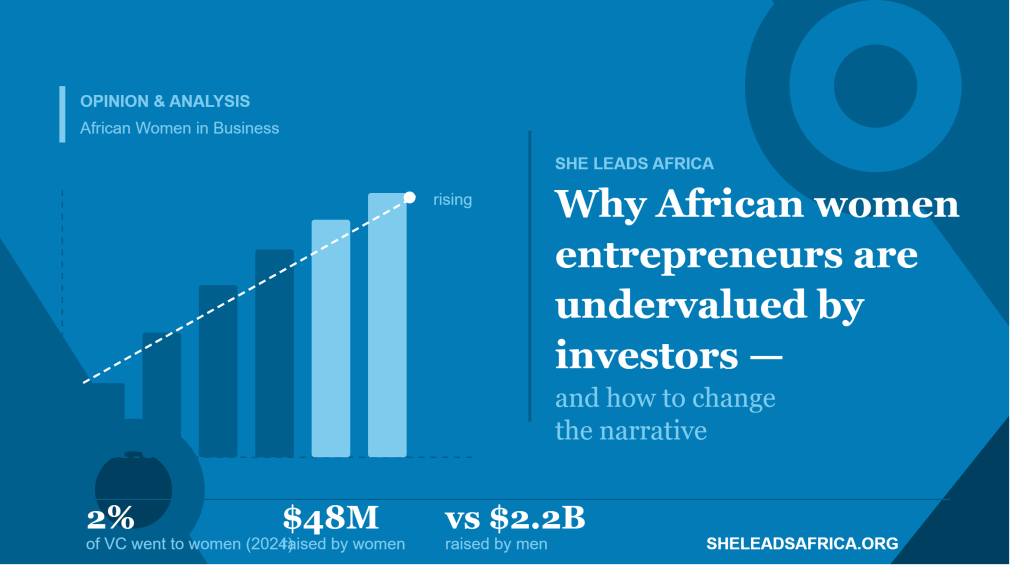
Here is a number worth sitting with: in 2024, female-led startups across Africa raised just $48 million. Their male counterparts raised $2.2 billion. That’s not a gap. That’s a canyon.
And it’s getting worse. Women-led startups received only 2% of total venture capital deployed across Africa in 2024 — the lowest share recorded since data collection began. A year later, despite a 40% rebound in overall African startup funding, the situation barely moved. Less than 10% of all venture funding in 2025 went to companies with even one female founder.
If you are a woman building a business on this continent, these numbers are not news to you. You have felt this. In the rooms you weren’t invited into. In the pitch feedback that focused on your risk rather than your runway. In the investor who asked who else was backing you before deciding if he should.
The question isn’t whether the gap is real. The question is: what do we do about it?
First, let’s name what’s actually happening
The funding gap is not an accident. It is the output of a system that was never designed with African women entrepreneurs in mind.
Bias shows up before you even walk in the room. Research consistently shows that investors — the majority of whom are men — tend to back founders who look, sound, and network like them. This “homophily” effect means women-led ventures are evaluated through a narrower lens, often before a single slide is reviewed.
The sectors women dominate are undervalued. Women-led startups are disproportionately concentrated in education, health, agriculture, and social impact — all sectors that attract lower valuations and smaller check sizes than fintech infrastructure or enterprise SaaS, where male founders dominate. It’s not that these sectors matter less. It’s that the ecosystem has decided to value them less.
The “market potential” question is rigged. Women entrepreneurs frequently report being questioned about the size of their addressable market — even when they are explicitly serving African women consumers, one of the fastest-growing and most underserved economic groups on the continent. A $2.5 billion funding gap has accumulated over five years while investors simultaneously missed the explosive growth of women-driven markets in e-commerce, mobile finance, and agri-food.
Grant dependency is a trap, not a solution. Women receive around 52% of Africa’s grant funding — which sounds like progress until you realise that grants don’t build the equity runway needed to scale. Overreliance on grants keeps businesses in a perpetual “startup” phase and reinforces the perception that women-led ventures need charity, not capital.
What this costs all of us
This is not only a women’s issue. It is an economic one.
The McKinsey Global Institute estimates that closing the gender funding gap in Africa could unlock $316 billion in additional economic growth. The $42 billion financing gap for women entrepreneurs isn’t just a missed investment opportunity — it is economic value being left on the table, every single year.
Women in Africa represent one of the highest rates of entrepreneurship in the world. They are already building. They are already selling — On the Jumia platform, over half of sellers in Kenya and Nigeria are women, according to IFC research, a signal of just how actively African women are driving digital commerce. They are already creating employment, driving household income, and sustaining local economies. The infrastructure of care, food, learning, and trade in this continent runs largely on women’s labour and ingenuity.
Choosing not to fund them is not a neutral decision. It is a choice — and it has compounding consequences.
What you can do — right now, as a woman entrepreneur
If you’re building and you’re frustrated, you have every right to be. But here is what we know works.
Get clear on what kind of capital you actually need. Not every business needs venture capital, and chasing VC before you’re ready — or when it’s the wrong structure for your model — can cost you equity and momentum. Revenue-based financing, development finance institutions (DFIs), blended finance instruments, and targeted grant programmes are growing. Know your options before you walk into any room.
Build your evidence base obsessively. Investors claim to be data-driven. Give them data that’s hard to argue with — unit economics, retention metrics, market size research, customer testimonials. Don’t let anyone tell you your market is too niche when you can show them exactly who your customer is and how much she’s willing to pay.
Invest in your investor network before you need it. The single biggest predictor of who gets funded is who already has warm introductions to the right people. This is unfair — and it is also true. Find the female angel networks, the gender-lens funds, the investors who have a track record of backing women founders. In Kenya, for example, a robust network of female angel investors has measurably increased funding rates for women entrepreneurs. That’s replicable.
Document your story with precision. Your impact, your growth, your team, your vision — all of it needs to be articulable in three minutes and defensible in an hour. Work on your pitch the same way you work on your product. Ruthlessly.
Find your community and stay in it. Isolation is the enemy of ambition. Connect with other women who are at the stage you’re trying to reach. They will open doors, share intelligence, challenge your assumptions, and remind you — when the ecosystem fails you — that the failure is not yours.
What needs to change at the system level
Individual preparation matters. But let’s be honest: the burden of fixing a structural problem should not fall entirely on the people being excluded by it.
The ecosystem needs to move. Specifically:
Gender-disaggregated data must become standard. You cannot address what you do not measure. Every fund, accelerator, and DFI operating in Africa should be required to track and publish funding flows by gender.
More women need to be in investment decision-making roles. When women sit on investment committees, more women get funded. This is documented. It is not a coincidence — it is causation.
Capital needs to follow where African women consumers and entrepreneurs actually are. Not just the sectors that look like Silicon Valley transplants.
And large institutional funders — DFIs, foundations, corporates — need to deploy first-loss capital and gender-lens vehicles that de-risk investment in women-led businesses, especially at early stages where the gap is most acute.
The narrative is already changing — we are changing it
The numbers are bleak. But across 35+ countries, African women are building businesses that are outperforming expectations, entering new markets, and creating the evidence base that forces the ecosystem to pay attention.
At She Leads Africa, we see it every day. Women who bootstrapped to profitability, then used that proof to negotiate from strength. Women who found each other, built together, and collectively moved into rooms they were previously excluded from. Women who refused to accept that the problem was them.
The valuation gap will close — not because investors suddenly become enlightened, but because the evidence will become undeniable and the cost of ignoring African women entrepreneurs will become too high.
Until then: build anyway. Document everything. Find your people. And know that the undervaluation is not a reflection of your worth — it is a reflection of a system that hasn’t caught up yet.
We’re not waiting for it to catch up.
-
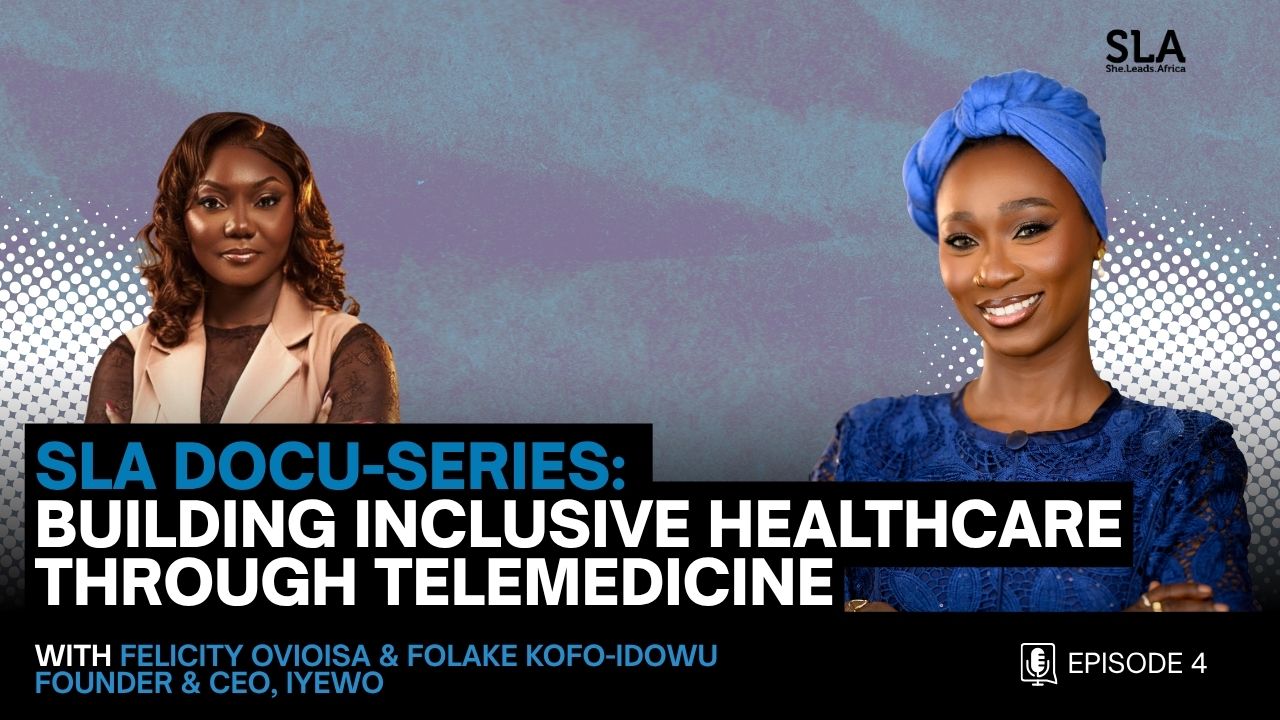
Inclusive Healthcare in Africa: How Telemedicine Is Closing the Gap for Women
-

Digital Skills Training: The Key to Africa’s $59 Billion Creative Economy
-

Training Was Just the Beginning: How SLA Is Building a Placement Engine for Nigerian Women
-

AI Didn’t Take Her Job — It Gave Her a Raise