
Peggy Ballou: Young women should create vision in their career

Sometimes, busy professionals need specialised one-on-one training to boost their businesses. That’s where the boutique coaching comes in. Boutique coaching is the art of discovering the best in people and getting them to utilise it. In Ivory Coast, Peggy Ballou is at the forefront of talent management and human capital. She is the founder of Social Achievers, a non-profit organization which aims to develop personal and professional skills in high school students in Ivory Coast. Peggy spoke to SLA about young women creating vision in their career while sharing top tips on improving career skills. What does it take to run a boutique coaching and human capital firm? Running a boutique coaching and human capital firm in Ivory Coast is a challenging experience. Especially when only a few have basic knowledge of the services you offer. A boutique firm is one of a small size and/or narrow line of service. In our case, we specialize in career coaching for professionals in their mid-career, on one hand. On the other end, we help SMEs strategically plan and manage their human resources. Our ultimate goal is to provide advisory services on the strategic function of HR as opposed to the traditional view of staff and payroll administration most business owners have. Managing a business of this sort requires experience, innovation, perseverance and excellent communication skills. I personally work from home and my team consists of a virtual assistant and a community manager. Sometimes, I work in a client’s office with other independent consultants. The biggest challenge is to get the first clients, especially corporate ones. I spend most my time educating and nurturing the prospects on the importance of our services to improve the results and performance of their staff. I do this by networking, writing articles in HR Magazines and doing public speaking. How have you sustained your business through the years? I have been in business since September 2013. I started while I was still living in Canada. I was running it in parallel with my corporate job, at nights and during weekends. I a humble beginning, and in 2015, I took a leap of faith, quitting my job. I went back to school to obtain my coaching certification and started working on my business full-time. I am still at the beginning of my entrepreneurial journey and still have a lot to learn. However, I have personally grown considerably over the past few years and learnt a lot on the do’s and don’ts in the process. For 2016, my main focus is to systematize and streamline my business in order to scale it and make it sustainable. What is your model for human capital development? I see the human capital (talent) management as a 360° integrated process as the image below: Very often, organizations, especially SMEs, don’t strategically plan and align their staff with the business objectives. They place less emphasis on employees development. We are here to help in different aspects of the human capital management from the workforce planning to the talent acquisition; from training and development to succession planning. Our vision is to make human capital the most important asset of organizations by maximizing the potential of each individual contribution in meeting the business objectives. Why is human capital the heart of a business? How can young entrepreneurs leverage human capital? Human capital is the set of knowledge, experience, and talent that people have and can benefit an organization. As entrepreneurs, we know how important it is to hire the best employees and put the right persons in the right position. When starting out, entrepreneurs don’t have enough resources to invest in the human capital. But they could leverage human capital by identifying and selecting staff according to the potential and natural talents of each person. They don’t need to rely solely on just past experience. To attract the best people, young entrepreneurs should think of career development and advancement opportunities in their companies. It’s also recommended to invest 1% of the revenues in staff training and development. That investment will improve the overall performance of the organization. How can young women improve on their productivity at work? For me, productivity is the ability to produce the best result possible in the shortest amount of time. As young women, we often have to balance work with family duties. Hence, it’s important that we are organized and focused on productivity. At work, it’s crucial to identify what are the main priorities and focus on what matters the most. It takes discipline and dedication. Productivity also implies systematization. Whenever possible, young women should create systems in their work and personal life (checklists, templates, various spreadsheets, automated email responses, menus, pre-made grocery lists etc.) and establish routines. Finally, it’s important to note that motivation is a driver of productivity so young women should find purpose. They should create a vision in their career and life to stay motivated and keep their productivity level at his best. If you weren’t in your current profession, what would you be doing? I would be a diplomat or an ambassador! Did you enjoy this article? Sign-up for our newsletter to get even more amazing content directly in your inbox. Click here.
Job Opportunity: Aspen Management Partnership for Health in Sierra Leone
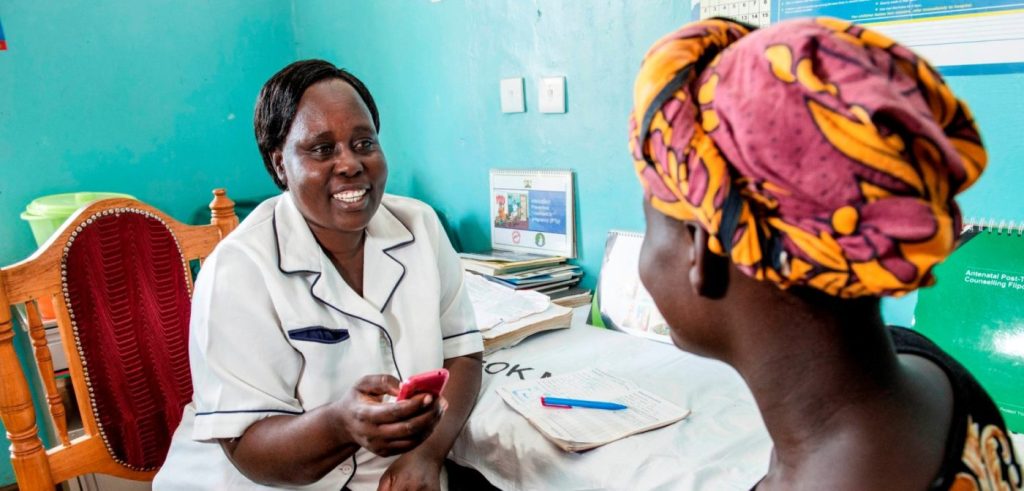
Interested in global health and big systems change? Up for an entrepreneurial challenge and making things happen from within Ministries of Health? Believe that management and leadership are essential for lasting impact? Eager to apply your private sector experience to social problems? Join AMP Health for an exciting two years! An emerging consensus among global health leaders is that stronger health delivery systems are required to ensure preparedness against future epidemics like Ebola, to continue the fight against the top killers of children and mothers around the world, and to handle the growing burden of chronic, non-communicable diseases in low-and-middle-income countries. To strengthen health systems, governments need not only technical expertise, but also robust managerial and leadership skills, and a strategic understanding of the interplay between private and public sector roles. Aspen Management Partnership for Health (AMP Health) is a program of The Aspen Institute that was formally launched in September 2015 at the Annual Meeting of the Clinton Global Initiative. AMP Health offers managerial and strategic support to Ministries of Health (MoHs) in low-and-middle-income countries to facilitate community health system strengthening. The program features include (1) two-year placement of mid-career professionals with private sector experience (Management Partner, MP) within the MoH’s community health department, (2) leadership and management training for the MP and MoH counterparts, and (3) cross-country sharing of best practices and joint problem-solving. AMP Health currently operates in Kenya and Malawi (Sierra Leone to launch in fall 2016) in conjunction with a growing partnership network that includes USAID, Office of the UN Special Envoy for Health, GSK, Merck, the Margaret A. Cargill Foundation, the Goldsmith Foundation and the Bill & Melinda Gates Foundation. Current AMP Health work: The inaugural cohort of MPs was selected in late 2015 and is embedded in the ministries of health in Kenya and Malawi. The MPs bring experience from working at McKinsey, the Clinton Health Access Initiative and other global private sector organizations. In Kenya, implementation began in February 2016 and the AMP Health country team is currently working on strengthening data use so that it can be used for analysis and advocacy to address the impact of Kenya’s recent devolution of government. In terms of engaging with partners, the team is collaborating with the local private sector and other donors as part of measures to strengthen investments in and implementation of community health. Part of this includes the creation of effective investment cases for the financing of community health. Implementation in Malawi kicked off in July 2016 where the team is working with the MoH to act on retention, productivity and performance issues – such as supportive supervision and mentoring – affecting their CHW program. In addition, the team will work to standardize services provided by CHWs, who deliver many of the interventions addressing preventable maternal and childhood diseases. The team will also develop investment cases for the Ministry of Finance and other partners to increase funding for community health. Management Partner Role: AMP Health seeks highly capable leaders to join MoHs as Management Partners. Each MP will serve as a problem-solving partner to national and regional leaders on high priority initiatives related to strengthening a country’s community health system. Based within the MoH, the MP will work closely with the head of the community health department and will report to a senior official in the MoH as well as to the AMP Health team. Specific MP work will be determined in collaboration with MoHs but could include, for example, industry analysis, program design, strategic planning, financial modeling/investment cases, operations, organizational development, marketing strategy, and/or stakeholder management. AMP Health believes in the power of strong leadership and management for systemic change. Accordingly, the MPs will benefit from personalized best-in-class leadership development training that will help them grow as leaders and effective change-makers within MoHs. MPs and their MoH counterparts will also participate in needs-based trainings and work closely with MPs from other countries and a network of local and global mentors from the public and private sectors. These events will serve as a collaborative platform to promote dialogue and best practices in leadership, management and community health systems strengthening. Qualifications: This role will require motivation, flexibility, patience, and a business-minded attitude. The right candidates will balance their proven business skills and results-driven approach with creativity, savvy, and humility. MPs should have an entrepreneurial spirit as well as a passionate interest in – and commitment to – the strengthening of health systems in low-and-middle-income countries. It is expected that the desired candidate will have the following qualifications: Advanced degree in business management (MBA) or other relevant field preferred; Fluency in English (speaking, reading, and writing); 5+ years of private sector experience, preferably with a top-tier management consulting firm; Excellent analytical and problem-solving skills, with an ability to use qualitative and quantitative data; Ability to work under pressure, respond to deadlines, prioritize competing deliverables, and be productive while working both independently and as part of a team; Demonstrated success in establishing and maintaining effective working relationships in a multi-stakeholder environment with varying levels of authority, experience in government and the NGO world would be an added advantage; Advanced skills in Excel, PowerPoint, and Word, with experience in standard statistical or costing packages a plus; Positive attitude and sense of humor; Willingness and ability to live and work in a low-or-middle-income country for two years, with national and international travel up to 25% of the time; and African nationality preferred. Benefits: The MP role offers a direct, meaningful, and high visibility path to public or private sector healthcare leadership, along with structured support from AMP Health’s partners and mentorship networks. This is an outstanding opportunity to drive dramatic health system improvements and strengthen leadership and management capacity within MoHs. The MP will be paid a competitive all-inclusive stipend. To Apply: (1) Submit the short biographical questionnaire located at http://bit.ly/1GER2eF and (2) submit a cover letter and resume by email to recruitment@ampforhealth.org. Applications for the positions in Sierra Leone due by September 02nd, 2016.
Leave or Remain? Lessons to take away from BREXIT

This year has been a huge year, politically. From the UK voting to leave the European Union to the US elections, we are in for a year on continued market volatility as a result. Through all the apparent doom and gloom, there are always lessons to learn! In this case, an interesting dynamic is emerging and all women must take note! Women are increasingly taking on dynamic political positions. As a politics student and resident of the UK, the Brexit week had me really in my feelings. The only positive thing I could take away from it was a better understanding of female leadership and the role we can play. What better way to look into this than to call out the top 4 women in the Saga? Let’s take a look at them closely, shall we! Ladies, a round of applause for Angela Merkel, Andrea Leadsom, Nicola Sturgeon and Theresa May. These women all have preference for short hair in common. (Sidebar- why do most women in politics have short hair??) Angela Merkel – She ain’t sorry ‘Madame-Non’ as she is known in France for her steely resolve and firm approach to politics, Angela Merkel is a woman who embodies the small but mighty leadership style. She is the Chancellor of Germany and the leader of the European Union in terms of GDP. Madame Merkel has been under a lot of scrutiny for her approach to Syrian migrants and her pro-EU stance and policies. Ladies, we can learn a lot from her. Through the Brexit debacle, Madame Merkel has said the same thing consistently: no entry into the single market if you will not uphold free movement of people. Her no is no and her yes, yes and she ain’t sorry! In other words, she is a principled woman who upholds the values she believes in without deviating from them. She is said to defend the four freedoms of the EU fiercely. She is also willing to allow the UK time to find its feet before making any drastic decisions. As a leader, Merkel shows us that you need to know what you stand for and defend it. Andrea Leadsom – Know when to fold Ms. Leadsom’s rise to the post-Brexit stage was incredibly unassuming. She emerged as the other top Brexiteers seemed to collapse. Gaining fame in her pro-Brexit role and making convincing speeches during the campaign, she seemed a natural choice for Prime Minister. Especially when both Boris Johnson and Michael Gove were engaged in a modern Shakespeare tragedy. It was almost as if she was the last (wo)man standing. She stood well for a couple of days but as time passed, she found herself putting her foot in her mouth a couple of times. Ms. Leadsom finally decided to graciously bow out of the race. Allowing someone with more experience take the role even when they were on opposite sides of the vote. In life and leadership, it is just as important to know when you cannot perform a role as it is to know when you absolutely can. Leadsom was smart, she understood very quickly that she was not equipped to shepherd the UK through a very difficult reality. And that if she could get overwhelmed by a simple scandal, there was no way she could live peacefully at No. 10, so she stepped down. Are you fighting for a position you are not certain you can handle? Perhaps you need to re-think this. You need to understand that leadership is just as much about stepping down as it is about stepping up. Nicola Sturgeon – Don’t just roll over Nicola Sturgeon became a headliner through the Brexit saga. She proactively denounced the results of the referendum and quickly went about the business of securing Scotland’s interests. Some of you may remember that there was a Scottish referendum in 2014, where Scotland voted to remain in the UK. The main reason they did so was to remain in the EU. UK politicians had threatened that Scotland could not hack the big EU outside of the safe UK. Well friends, two years later, Scotland has been dragged out and Nicola Sturgeon is doing everything in her power to ensure her people still have a voice. She proactively met with EU leaders post the vote. She gave an incredible speech encouraging her people that she would indeed lead in their interests. Ms. Sturgeon emerged a total bombass: proactive, clear and firmly defending her people. Sometimes leadership is about proactively having the difficult conversations. It’s about taking advantage of the moment to voice your concerns for your people! Theresa May – The patient dog indeed gets the biggest bone Of all the ladies discussed above, Madame Prime Minister Theresa May won BIG through the Brexit Saga. She emerged as the only stable choice for Prime Minister as it became clear that all other options were like ticking time bombs. Mrs. May remained very low-key throughout the Brexit campaign. A solid remainer, she was wise enough to hedge her bets and go underground. She remained largely silent until the cards started to crumble and she emerged as a dark horse. Mrs. May is very direct and straight talking and has established herself as an outsider to the rich boys club in the conservative party. Of all the politicians who were so vocal in the campaign, she remains sturdy and silent and this approach paid off heavily. She ended up being viewed as a steady pair of hands who could rationally lead the UK out of the EU. She definitely practiced waiting her turn and when the time was right, stepped up loud and clear. Leadership is sometimes about timing and Theresa May understands this very well. So there you have it Motherland Moguls, four examples to learn from. A time of crisis will show you who you really are. So much more than a time of calm ever will. How would you handle it?
How well are you balancing work and life?

Remember my article on being a career woman and balancing relationships with mum? Now, because all good things come in pairs, (pause for a dramatic effect while you reminisce over your favourite pair of things… mmm double scoop pistachio gelato), I figured that one more stab at this topic was exactly what was needed. Yes, we need to lengthen, then conclude the discussion – cue memories of Goldilocks. Let’s talk balancing work and life this time. Right, you now know how I stumbled my way into an acceptable balance of a career, dealing with family members and still kept my mom largely proud of me. But how about we talk about you? How well can you do all I’ve been able to do without going through my very unorthodox methods? Well, hold your horses, people, ‘cos it’s Christmas and I come bearing gifts! Priorities matter. When I first realized I was finally living a life that overwhelmed me, the first thing I did was to immediately decide what my life’s priority was. For me, it was my job; I could deal with everything else in life if my job situation was fine. So, I paid very close attention to how I felt about my job. I knew that if my feelings changed from liking it to being frustrated, it would have a run-on effect on every other aspect of my life. So, it’s really simple, you have to center your world around something. It helps you with a constant point of balance when things go wildly out of sorts, ‘cos, truth is, they will. You know, life is nothing if not an unending series of ridiculous events. Carry your life along with you When we think about priorities, we often think of them as zero-sum games. I never thought of mine as that. See, I unconsciously realized that there were lots of little ‘good’ choices involved in deciding one’s priorities. So, though work was my primary priority, I still dedicated time to being social with my aunts and participating in their lives. I still shared life experiences with my mom and the rest of my family. There are only so many times you can miss plans before people begin to wonder if you really care about them. This can really hurt if this sentiment comes from those you hold most precious. To avoid this, it’s important that you carry everyone along with you and your life. Now, this doesn’t mean talking shop at dinner but letting them in on your life would help them understand your situation. They’ll understand that you’d spend more time with them if you could. (Don’t take the piss, though. Nobody likes a piss taker) Don’t be afraid to admit that you’re overwhelmed You’ve carried your folks along and they understand, but now nothing is going according to plan. You don’t want to come off as complaining because they’d think you’re just bad at managing things and you don’t deserve nice things. Sounds familiar? Don’t worry, this is very normal. Don’t laugh but I apparently missed school when this was taught. I kept trying to put on a brave face for everyone. But once I began to falter, I realized that it was okay to sometimes, not have things go as planned. Sometimes, you plan to the minutest detail (seriously, you need to plan! There are not enough hours in the day) and somehow things still don’t work out. You miss your mom’s birthday, your friend’s graduation and that deadline at work. You may feel like a failure on all fronts, which is fine. But instead of getting overwhelmed, struggling, and crying on the kitchen floor in your work pants like I used to do, admit it to yourself. Talk to a trusted person (preferably, someone you know has more on their plate than you do). Tell them what you’re going through and ask for advice on how to deal with them. I called my mom pretty much every day to moan and cry on the phone. I listened to her make light of my ‘giant’ issues and that helped. And always remember to take meaningful breaks Now, this point is very rich, coming from me. I’m the reigning champion of team ‘No Leaves’. 5 years! No, really I need a GoFundMe account for this, it’s no longer a joke. Of course, because how else can I afford an all-expense paid walking vacation to south-east Asia? No debates on this. You need breaks. Lots of them. I may not have been able to go on my dream walking vacation but I try dedicating some time during the week for myself. My current set up makes Saturdays free for me. I clean my house on Wednesdays so I can take the trash out on Thursday morning. This means that by Saturday, I can wash my hair, exfoliate my skin, put a mask on my face, do my nails, watch terrible movies, call my friends, cook and go out. Most Saturdays, I do all of these and more but on some others, all I manage is a cup of coffee as I sit at my laptop working. I work in a start-up, and so these things happen. However, even when I’m unable to do personal stuff during the week, I try to have a day to check in on myself. Because at the end of the day, it’s called work-life balance, right? There’s more to you than just work, family, and friends. You definitely need to take care of you because if you don’t, no one else will. Now that you know what to do, create a balance Finally, I know how hard it is being a young career-driven woman in this economy. But in our pursuit of success, let’s remember that the whole point of life is enjoyment and beautiful memories. Now I leave you with these ever charming words my father once said to me – “Your colleagues will only observe a minute of silence”.
Nthabiseng Nkosi: Working from home is the norm now in South Africa

Ah the dream. Managing a business and team successfully from your home. Nthabiseng Nkosi is living it. Together with her husband, Nthabiseng built and now runs a proudly South African design agency called Jutsu Design. Even though Jutsu’s first clients were friends and family, the agency now offers services ranging from web design, digital solutions, mobile apps to photography. SLA caught up with Nthabiseng to learn more about Jutsu and managing a business from home. Nthabiseng, tell us, how did Jutsu Design come about? Jutsu Design started out as a concept to build a small design agency that would offer affordable designs through the line services for SMME’s. My then boyfriend, now husband, and I worked on building a name for us – Jutsu. The name ‘Jutsu’ came about as a result of the team being avid anime fans. ‘Jutsu’ is a Japanese word meaning technique or skill. Once the name was decided on, the company was then officially registered in 2011. Friends and family were our first clients and we grew from there. Fast forward to five years, the company offers web design, digital solutions, mobile apps as well as photography. Jutsu also developed our first two title sequences for e.tv’s Heist and SABC 1’s Dreamworld. How large is the Jutsu Design team? What are the challenges of managing your team? Jutsu Design is a team of a husband, wife, web developer, PR manager, freelance writer, and photographer. The team was initially made up of four members when we started out in 2011. Two members left to pursue other career paths and the rest of us continued with business. One of the major challenges we face at Jutsu is keeping up with the workload. Most times, it gets a little too much to handle, but we try to meet deadlines. In the earlier years, it was difficult, but every project has been a learning curve. Did work from home from the start? How did you manage that? Being a micro- enterprise, Jutsu Design has always operated from home. We are able to save money that would otherwise have been used for rent. We keep costs at a minimal because our company is small. How do you create awareness or reach clients for Jutsu ? The funny thing is, we don’t. We get new clients through word of mouth from our loyal clients. We have a website up and that too has been working for us. Active promotion of our company might mean getting extra hands and moving to bigger premises. How do people react to your working from home? I think working from home is the norm now in South Africa. Some people can be a little envious, but it takes a lot of self-discipline to be self-employed. You may think you have all the time to just chill and work later, but you actually don’t. How do you draw the line between work and running a home? At first, it was extremely difficult working from home. I used to want to make excuses with that, but with deadlines closing in on me, my head would spin. So, I have learnt to be a lot more disciplined. If possible, I work half days on Mondays to Wednesdays. Thursdays and Fridays, I do house chores; laundry, cleaning etc. This schedule works for me as I do not have a housekeeper. But if things get too hectic, with meetings and events to attend, I leave house chores to the weekend. What’s the best way to unwind when your office is also your home? My husband and I sometimes, go on dates, engage in fun activities and fetch our little one from the crèche. I have my spa days and he has his boy’s night outs with his friends. We try to do this once or twice a week. If you’d like to share your story with She Leads Africa, let us know more about you and your story here.
Upgrade your PR Game: Lessons from Wimbart Global PR & Media #SheHiveLondon

Jessica Hope, founder and managing director of Wimbart PR joined us over the weekend at #SheHiveLondon. With over a decade of experience at places like iROKOTv, Jessica launched Wimbart Hope earlier this year. No matter the size of your business or brand, PR can help upgrade your business. In this installment of the #SheHiveLondon catch up, we share key takeaways from Jessica’s sessions on how to master the PR game. On the importance of PR for African businesses PR can help your business or brand majorly by giving you that all-important exposure. It expands your audience and helps prove that you are legit: it’s one thing to tell someone that you’re great, but when other publications or news outlets do it, it’s another level. Someone reads about you, they get curious and start to build trust in your product. That’s what brings you one step closer to closing a deal or making a sale. On starting her own business After over 10 years of building and honing her PR skills, Jessica Hope stepped out to launch one Wimbart PR. Wimbart found it’s niche: African Tech startups and it is flourishing. She never let any social challenges get in the way – recalling one time she went to an industry event six months pregnant and still managed to close multiple deals. She recognised that business is about making that personal connection. So by putting your real authentic self out there, all sorts of opportunities jump out at you. Mentoring also helped her to make the move from employee to M.D. Having worked for university friend turned iROKO TV CEO Jason Njoku, he encouraged her to take the plunge. On developing the right PR strategy Start to build your own narrative. Your narrative is the story of your brand and how your product is going to help customers. It’s what makes you unique and interesting. It’s not just about the story though, if you can back it up with good data and already have endorsements from other people, your story gets stronger. When you’ve crafted your story you can pitch it to publications, to in-house journalists and freelancers why can then feature your work to their audience of thousands (and maybe even millions if you’re lucky). On working well with the press Creating the right narrative isn’t the only important thing to do, you have to be a careful planner. Everything in publishing works on schedule, so if you’re interested in getting a story in for Christmas, you should be pitching it to publications months in advance. Ask around, go to industry events to meet journalists and get to know what they want. (That’s right networking is unavoidable, no matter how awkward it might seem at first). Remember many businesses are trying to do what you’re doing, and sometimes being one of the first to reach out to the press will give you the upper hand. Journalists are on strict schedules and also quite cynical make sure your pitch is high-quality, interesting and timely. Remember while the goal is to build your media presence, it doesn’t always happen overnight. Be patient and be prepared to get ignored at times, don’t worry, it happens to the best of us. Just stick with it, persistence pays off. On embracing the quirks of your brand or business To put it frankly, the fact that you exist is not news. When pitching your brand or business you need to think about what your ‘so what?’ is. News outlets get hundreds of stories a day, what is it about you that is specifically interesting? Jessica used the example of AfroEmoji. While the app was relatively simple, it was pitched to the international market as ‘Africa’s first Emoji brand’.The app got featured on CNN and the Huffington Post which led to thousands of downloads. Even though there were a few side-eyes about how the African Emojis all looked suspiciously Nigerian, the controversy helped the buzz and put it on the map. Embrace your quirks and let your personality come out. You can’t please everyone, no matter how hard you try. On building partnerships with the press The African business ecosystem is still being figured out by international media, this means that it can be tough to get noticed. You can help journalists out by giving them context and a full backstory around your journey so far. On the plus side, unlike some African publications, Western publications don’t usually charge for editorial features (nothing better than saving some $$$). Never forget that relationships with journalists can move from purely business to a more personal connection in the long-term. When you think of this as a journey, not just a one-time goal, developing PR partnerships comes right into your reach.
A day at SheHive – #MotherlandMoguls are slaying
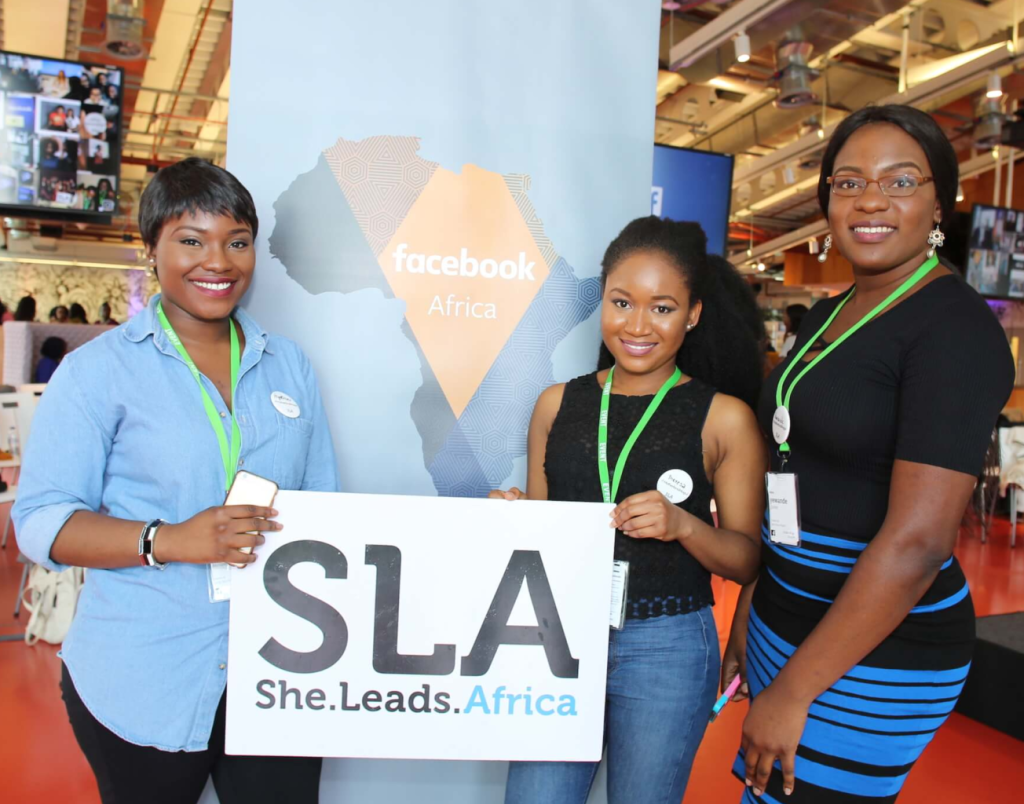
7:15am: I am not a morning person…This kept ringing in my head as I headed towards the station. It’s the first day of SheHive London and I was determined to arrive at Facebook on time. 8:43 am: After a quick brekkie at Itsu, I took out Google Maps feeling all savvy that I could find my way through the busy Euston area…WRONG! I cycled the area about 3 times before giving up and going old school. 9:05am: A 6min walk turned to 20 but here I was in this giant space. All I kept saying in my head whilst tryingto act cool was, “OHMYGOD I CAN’T BELIEVE I’M AT FACEBOOK…calm down Rabi, calm down!” I signed in using an iPad (very techy) and was asked to sit in the lobby. 10 minutes in, I realized I was the first one there! People started arriving afterwards and I got to meet a food blogger, a PhD student studying Business Incubation, a chemical engineer and an intern at IBM. This was all in the space of half an hour. Networking toh bahd! 10:30am: We were all signed in and taken upstairs to the space for SheHive London! The session started off with a rap battle. The challenge was to come up with an epic rhyme about what #MotherlandMogul represents. Team names included United Melanin, The Original Motherland Ballers and Amazon. Words to describe #MotherlandMoguls were; slaying, boss lady, beacon of hope. I couldn’t agree more #blackgirlpower 11:15 am: By now, the first session is underway and BBC Africa is live streaming the event on Facebook —better smile for the camera, 2 million people may be watching! First up was, ‘Building winning partnerships’ with Afua Osei! Afua split the participants into groups and got the teams to perform live case studies about creating a bath and body products business. So brand name, targets, potential partnerships and investments —you know the 101s— were covered. The participants then pitched their business to Afua and she gave them feedback straight away. More on Afua’s talk later on SLA so stay tuned! I managed to catch a quick shot of the co-founders of She Leads Africa or as I nicknamed them the ‘Pikachu and Charizard’ of SLA. Get it? #Pokemongo #Okbye Next up was Nieros Oyegun, co-founder of W8 Advisory who spoke about navigating the entrepreneurial roadmap! She gave us the five step approach to kick starting your business —in other words the do’s and dont’s. 12:45pm: LUNCH! Well turns out my quick brekkie at Itsu and walking it off lead to tummy grumbles. Okay, maybe that’s TMI. Facebook laid out a yummy spread for us. Hold on, I didn’t mention how amazing the space we were using was right? Well for starters, Facebook has redefined what snack time means. There were racks of various snacks and drinks from healthy to choco-mania. So lunch was no different! We had an hour for lunch and networking. For me this meant finding out what people had to say about their experience so far. Check SLA Insta for all of that action…you’re already our Insta bestie right? I met more cool #MotherlandMoguls with brilliant ideas and it felt very reassuring to see what talent the continent has. I also had the chance to chat with our speakers and even found out one of them shares a mutual love for Korean food! 2pm: We got introduced to “Chale” of Move Me Back. He shared with us some tips about the right attitude to moving to Africa, the possibilities and the challenges. He fittingly used images and gifs to illustrate his presentation —this became a theme of the event as well with the other speakers. We also got to hear from one of the users of Move Me Back about her experience working in Africa. 3.45 pm: Yvonne Haizel, a lead African investment strategist gave us pointers on how to get investors by teaching us the 4 M’s to get your business through the door. She invited the women behind Bahati Books to demonstrate to us how to pitch your business to an investor using the 4 M’s. She then gave an opportunity to 2 participants to pitch their business to the room. This was similar to Afua’s live case study at the morning session. 5.00 pm: The sessions came to an end but not before Afua initiated a speed networking session —yeah, it is kinda like speed dating! You get 5 minutes to chat with someone and after you hear the sound of a bell you switch to the next person! Talk about a #MotherlandMogul crash course. And this was just one day. There’s more because Sunday was just as epic! Hint: there’s more Queen Bey news, JDunn and IrokoTV.
Princess Odiakosa: I’ve dreamed of becoming a chocolatier

The cocoa bean may be indigenous to the Americas but these days its home is in West Africa. West Africa produces nearly 70% of the world’s cocoa yet we’re not renowned for making luxury chocolate ourselves. Princess Odiakosa wants to change that. She is a chocolatier that works exclusively with Nigeria cocoa and has plans to make Nigeria “the sweetest place in Africa”. Here, she shares with SLA the challenges of being a Nigerian chocolate maker and why her company is called Kalabari Gecko. How did you find your way into making chocolates? I have always had this love for chocolate. I think it was as far back as when I was a little girl and being ascribed to as having a chocolate complexion. Also as a child, my sister planted a cocoa tree in front of our house all on her own. There is something very compelling about the visual structure of chocolates and its formation in a box. There is the mystery embedded in the interiors of its inner cavities, and the burst of polyphenols, a reward your brain is always thankful for. Whenever I travelled outside Nigeria, people would request I come back with chocolate. That used to get me upset. My response sometimes would be, “But we have cocoa, why don’t we make ours?” It was even sadder when visiting friends or family abroad, I had nothing to offer as gifts from my beloved Nigeria. So, you can say it was a two edged-sword. Thinking about Nigeria and the cocoa we have motivated me to stop talking and start creating. I’ve had this dream of becoming a chocolatier since 2010, but didn’t know how to go about it. There were no chocolate making schools or classes available anywhere in Africa. I had to head North of Europe to learn the art of bean to bar. My passion is for the Nigeria cocoa bean. You probably don’t know that our cocoa gets a lot of bad press for its distinct character. My Kalabari Gecko is 100% single source Nigerian chocolate. My chocolates are made from our locally farmed cocoa bean into tasty, satisfying treats. I want to change all that and make Nigerian chocolate an acquired taste. Something we can call ours. Why Kalabari Gecko? What’s the story behind the name? Initially, I had another name for my company. But one day I was conversing with a friend’s brilliant mum about my plans for the business and she advised me to change the name to a more Nigerian one. It was from there, the name Kalabari Gecko emerged. Every time the thought of my chocolate business came to mind, I always had a picture of this pretty rampant gecko in my head. This image started invading my dreams and I chose it as my logo. What do you do for a living? Do you have any plans to move towards making chocolates full time? I work full-time at a financial consulting firm, dbrownconsulting. We are into financial based training, consulting and outsourcing. I manage the Training and Marketing department. I love my job so much, and my boss has been really supportive of my business. It can be really hectic juggling both, but for now I try to find time in the early mornings to make chocolate, or after work, most especially weekends. I try to make my passion fuel me, and my dreams take me there. I would love to make chocolate full time and I am working towards that goal. How do you plan to take your chocolatier business to the next level? I have often heard about the difficulty of acquiring a start-up loan from the banks; that it’ll be easier bringing Steve Jobs back to life, than get a loan from one of the banks. So, I am investing most of the money I take home to my chocolate business. I see my factory producing high quality affordable chocolate for Nigerians and the people they love all over the world. I want to make Nigeria the sweetest place in Africa. To get there, I am taking things one step at a time and right now, trying to put everything in place. If you could eat only one kind of chocolate for the rest of your life? What would it be? It would be the darkest of the dark, or any flavor enrobed in dark. I love the honesty the dark chocolate has. I even find myself popping freshly roasted cocoa nibs into my mouth whenever I roast. If you’d like to share your story with She Leads Africa, let us know more about you and your story here.
Beyond the passion – What you need to get into the caregiving business

Are you a woman who wants to ensure that her family and community is well looked after? Are you passionate enough to sacrifice time and energy? Do you have some basic administrative, managerial or business skills? Maybe you’re thinking none of these requirements apply to you, but are you ready to be spat on, clean washbowls or change thousands of soiled diapers? Then the caregiving industry might just be the revolutionary business idea that you have been seeking. Mind you, it’s painstakingly hard but it is one way to give back to society whilst paying the bills. Interestingly, a famous African saying says, regardless the source of the income, money is money. I am sure that at this point your heart might be doing cartwheels at the thought of the coolest business idea ever. The fact is that home care is one of the fastest-growing businesses in the world. You can be rest assured that without a large capital and clients, you can feed your passion by starting a daycare for children or a nursing home for the aged. Location If you have a roof over your head, then you have the space to start and work with. Is your child in preschool? Are you a divorcee living alone? Or are you an elderly couple with kids off to university? You can always make space with what’s available. It could be a nursery turned into storage, a den that no one sits in anymore, an empty garage or a basement without piles of laundry. It will surprise you just how well, using the right colours, textiles, paint and partitioning can transform a space. Furniture and equipment Getting your initial set up furniture and equipment can be as easy as reaching out to friends and family, A lot of times, families hoard furniture in the hope of re-using them, but most times, they don’t. If you have a network that is accommodating, reach out to them for their old stuff. Most of these items are barely used and have minimal damage. They can be repaired at little cost. Staff Hire retired nursing aides, nurses, and early-year teachers because, with their experience, they are typically patient, may have less responsibility or financial needs and will be willing to help you grow your business. Recruit young people who are willing to work as volunteers for the first couple of months till you settle your financials. Acquire knowledge The worldwide web has a multitude of free resources and courses for business owners in the caregiving industry. Sign up for these courses as often as you can, acquire knowledge on creating a business plan, new trends and best practices in the caregiving industry. Research successful businesses in the industry, you can target studying one business a day. Learn new skills to minimize calls to experts for help with things as basic as installing a nursing station. Train your staff on acquired skills. Create a dynamic team. Give yourself space to grow! Your clients are right here Your clients are never in space or in the next city. They are the people you meet within the marketplace, at the hospital and at your place of worship. Familiar people will feel more relaxed because they think they know your story and can relate to it. They will feel safer around you than some savvy business owner who launches a similar start up in your area. These are your clients; be sure to invite them to your open house. Seek their ideas before implementation. Also, find out what their immediate needs are. Would they work full time or would they prefer a full day care? Are they more focused on the social interaction a group setting will offer? Furthermore, the elderly might just need to be tended to at different times or a group where they meet and discuss. That cozy setting might be your house. You can set up games and make homemade goodies, to create the perfect setting for old stories of love and war. Marketing and advertisement Design and print catchy flyers. Distribute them at supermarkets, playgrounds, schools, and hospitals. Also, volunteer for community engagements. These will increase your visibility and increase your trustworthiness. Remember that your most valuable marketing tool is word of mouth communication. This will get people talking positively about what you do. Registration and legal requirements Always ensure that you do a research on the requirements of registering a business in your country. You would want to create an atmosphere that is loving and devoid of stress. Seek advice within your network. You might just know a lawyer willing to assist with the registration procedures at a discounted value.
How to start a PhD with no money

We understand that some Motherland Moguls are working towards a career in academia. It could be because you’re looking to add Prof. before your name or you just want to further your studies. Chances are you’ve looked up the cost of studying a PhD and balked at the price tags. Because SLA always has your back we spoke a self-funded PhD student. Oreva Olakpe is not only studying for a PhD in international law focusing on African migrations, she’s also an entrepreneur and a hustler. She’s self-funded her way through school so we knew she’d give some great tips. Why self-fund a PhD? Finding funds for a PhD is hard. Most of the funding out there is based on the interest of people that have the money. If they are not interested in what you are doing, there’s nothing for you. If you’re from a country that doesn’t have the money to fund research on their particular field. Don’t feel too bad though. Well, the issue with funding is that it can suck out the creativity of your work. Especially when funders want to dictate where your research goes (and if they can, they will). When you self-fund, your research is in your control and you can go wherever you want with it. Don’t get us wrong, it’s very difficult to be self-funded. In Oreva’s program, there’s just one other self-funded girl. And guess what, both of them are African. There’s nothing Oreva didn’t do to pay for her living costs. She says, while there is a joy in knowing that your efforts are paying for your research, it’d be wrong to glorify it. So if you’re ready to walk down the self-funded path, be ready to do all sorts of things to make money… Save up First of all, don’t jump straight into your PhD from your masters. Have a year to figure out things financially. Find a 9-5 that pays well and start saving ahead of school. “For me, I only managed to save up a bit of money. What was able to help me get through the stress was doing entrepreneurial activities.” Apply for (small) grants Any PhD student is familiar with the grant application process. Grants can be very competitive and the trick to get through them is to apply for many. “I got tiny grants from different organisations as opposed to the big funding that most people get.” Small amounts pouring in from different organisations can come up to a lot. For Oreva, grants paid for all her international flights. For her fieldwork, she spent a couple of months in China and grants paid for all that. When money comes in from different sources, you can take care of annoying things that suck up your funds without you knowing (like transport and food). There’s no shame in applying for all the grants. Also consider applying for a scholarship. A fair warning though, there is not much out there for Africans in social sciences. Have a support system “The most important thing that helped in cases of emergency, was family members.” Just because you’re self-funding doesn’t mean you shouldn’t ask for help when time calls for it. For Oreva, family came through when she needed her tooth removed and did not have cash at hand. Her mom and sisters are deep in the entrepreneurship vibe and this supported and inspired her hustle. Oreva credits them as her motivation to try business ideas as a source of financial and intellectual freedom. Friends came through when someone smashed her laptop screen —the most important thing for a PhD student— and she needed to repair it. Another way family and friends pull through is with connections. If you need to do fieldwork in certain locations, they can help make things easy for you. The important thing is to have a support system, whether its your family, friends or the investment your parents put in your name. Get your hustling gear on Oreva has sold clothing (ankara), artwork and jewellery that paid her a lot. In addition, she does a lot of freelance writing and has worked with blogs while also writing academic articles for companies. While she lived in China, Oreva was also an IELTS tutor and French tutor. It seems if there’s one thing self-funding a PhD will do, it’ll improve your entrepreneurial spirit. Academics are associated more with the library than the marketplace but the truth is entrepreneurship fits into any career. Academics can also be entrepreneurs. “A lot of the African students I know are hustlers.” In SOAS, where Oreva studies, there’s a market for students. Maybe it’s unsurprising that most of the people selling at the market are African students. Some sell jollof rice, buns and chin-chin while others sell jewellery, bags, homemade beauty products, soaps. Find ways to cut cost “I don’t stay in London but in my family home in Nigeria. This way I don’t have to pay that high rent.” You don’t have to be physically present at campus for most PhD programs. To cut costs further, you may also consider studying something that relates to you or to your country. Oreva’s case study is focused on Nigeria. Pick research topics that will be cheap for you. This way your networks will come through. For example, when you have to travel to conduct research in your home country, chances are people will be more willing to help you. And it doesn’t have to be people you know. It can be local universities coming through because they see the value of what you’re doing. Did you enjoy this article? Sign-up for our newsletter to get even more amazing content directly in your inbox. Click here.