
Jessica Layado: I had to tough up and take it like a woman

I was barely done with my secondary school education when I found out I was pregnant. I clearly had no business having sex. Yet there I was, at the start of my long holiday, finding out I was pregnant. My first stop on finding out, was the house of the responsible other party. I got the shock of my life when he frankly told me that he wanted no part in the drama of unexpected parenting. So, here I was, fresh out of secondary school with no idea what was next for me. Watching people parent was one thing but being a single, young parent was a whole other thing. I could either decide to be a child and cry about how unfair the world had been or tough it up and take it like a woman. I cannot dispute the fact that I was very scared but one of us had to be the grown up and seeing as this miracle was growing in my womb, that person had to be me. I found a job and started to plan for both of my baby and I. Fast forward to a few months after, my dear little princess was born. Working with Family Life Network After that, I decided that I wanted to work with NGOs that focused on family planning and sexual awareness. That was how I got started with the Family Life Network. Five years and so many workshops later, I cannot even begin to say how remarkable a journey it has been to impact the lives and choices of youth. We encourage kids to know and understand their individual worth at such a crucial stage that is often subject to peer pressure. It is very rewarding for young girls to look up to me for mentorship, guidance and counsel. It is such a big deal to have the kind of power to influence their choices for good, to cry with them in their hard times and assure them that despite the storm and the pressure, in a little while, they will be just fine. Moving on to Lamera Over time I realized that my circle of influence was growing and a lot of the would-be young girls had grown into fine young women in the work force. Now, my focus has also grown to helping them maximize their financial ability and as much as possible, learn to be independent. A year ago, I started Lamera, a project that seeks to empower young women with as many necessary skills as they need to survive in this era. Some of the practical skills include jewellery making, knitting, cooking skills particularly making and packaging peanut butter better known as odi in Northern Uganda. The essence of Lamera is to empower women to know that their worth is determined by them and the world will only value them based on how they value themselves. I strongly believe when a woman realizes this fact, the world then becomes her stage. She becomes a force to reckon with and can do pretty much anything that she sets her mind to! Balancing my initiatives with being a single mum Starting Lamera is a dream come true for me. My biggest challenge was and still is breaking through to the woman at the grassroots. A lot of the women that have zero access to these skills are hidden in rural Africa. To work my way around this, I am building relationships with churches and individuals who have access to these women so I can assess their needs in order to be relevant to each set of women. None of my passions were negatively affected when I chose to have Stephanie. If anything, being a mother awakened my creative juices causing them to flow much better and faster. I kid you not! Amazingly, Stephanie is the split image of me. She loves singing, dancing, reading and always actively participates in her school productions. She is such a brilliant child! She recently reached the finals in her class spelling bee competition and I cannot begin to tell you how proud of her I am. Never give up I reckon my work is cut out for me and I’m enjoying the thrill of the challenge. I have been told that I cannot be relevant to all women but I believe in starting one woman at a time and that ultimately is my strategy. To work with one woman at a time and knowing how much women like to share, the knowledge will spread one way or the other. My biggest belief is that to start a thing is more important than to say you want to start it. Sometimes you’ll be the only person who believes in what you’re doing but keep right at it. If one way doesn’t work, don’t quit! Try it another way and if that doesn’t work, try another way! Keep at it until you find your way to what works for you. Believe in yourself even on the bad days, especially on the bad days and keep your head up knowing that it only gets worse before it gets better and surround yourself with positive people.
Rosie Mashale: Life in the townships is filled with entrepreneurial energy
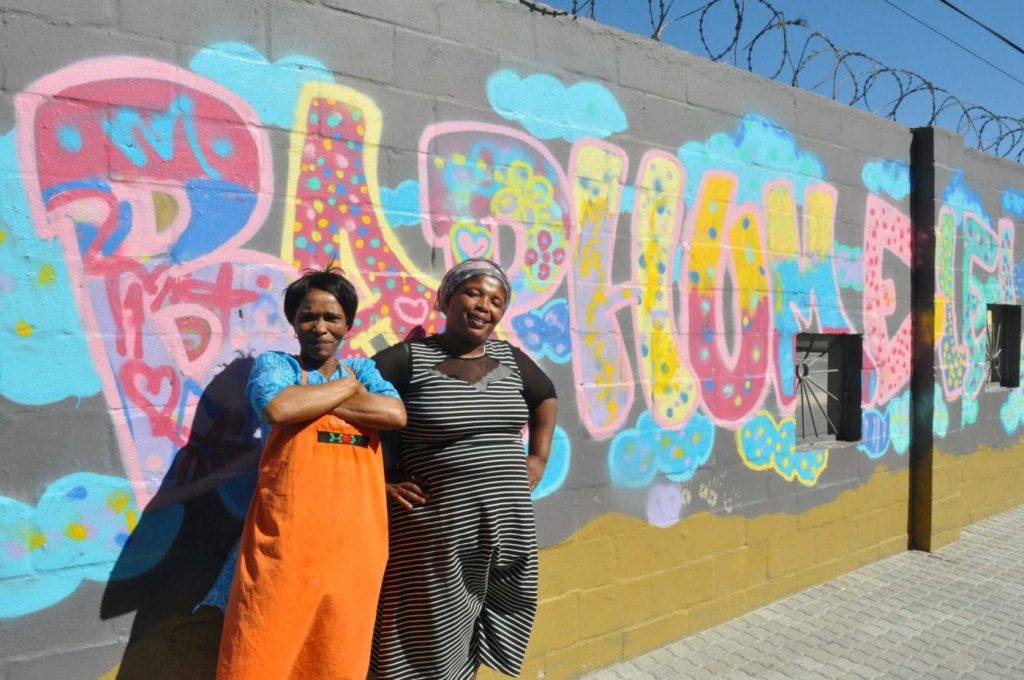
Rosalie “Rosie” Mashale was born in a small village called Kgubetswana, Matatiele in Eastern Cape. There, she studied and trained for thirteen years before moving to Khayelitsha. Trained teacher and care worker, Rosie founded a community-based project Baphumele, a crèche along with a group of women from her community. Writer Megan Gieske visited Khayelitsha and spoke to Rosie about Baphumele. She shares what she found with SLA. Langa Township is the oldest township in South Africa. Langa is a suburb in Cape Town established in 1927 after the Urban Areas Act. It is one of the many townships in South Africa designated for Black Africans during the Apartheid era. Since the 1960s, when the forced resettlement of the Apartheid era began, the people of Langa have wanted privacy and a sense of ownership. Rosie remembers being disturbed by seeing township kids sorting through rubbish dumps in search of food while left unattended by their parents. As life in the townships is filled with entrepreneurial energy and community spirit, Rosie knew she had to do something. Born and raised in Kgubetswana, Rosie was described feeling very shocked and puzzled when she arrived in Khayelitsha. “I opened the doors to take care of the orphans, for me it is a calling to do what I am doing”, Rosie says. She responded by taking children into her home, and together with a group of women from the community, began looking after these unsupervised children. This group later went on to found Baphumelele Educare Centre after moving to Khayelitsha in 1989 with the aim of providing a safe environment for township kids. From the first week, Rosie and her partners cared for thirty-six children. The name given to this project was Baphumelele, a Xhosa word meaning “you have progressed”. From these humble beginnings, Baphumelele Educare Centre was founded, which today is an established community crèche and Grade R (preschool) caring for roughly 230 children aged three months to six years. While the Educare Centre had developed a reputation for looking after children, Rosie also felt a calling to reach out to orphaned children in the community. To that end, Baphumelele Children’s Home was created as a place of safety for abandoned, abused, neglected or orphaned children, many of whom have been affected by the HIV/Aids pandemic or have HIV/AIDS themselves. Now, Rosie acts as Baphumele Organization’s managing direction and founder. From her initial idea, Rosie now permanently employs 204 people while 60 earn stipends as paid volunteers. Rosie aims for Baphumele to be a beacon of hope in Khayelitsha. Even though Rosie has received 28 local and international awards —and been visited by Nelson Mandela—, she says her greatest reward is the kids she works with. “The children who have been here at Baphumelele are progressing. Some are social workers, accountants, etc. They do not forget where they come from. My real motivation is that. At heart, I am very gentle, impressionable, receptive, a dreamer and visionary.” On the high wall that surrounds Baphumele’s many Educare centers, there’s a world map painted in bright colors. Many of the buildings on Baphumele’s campus have plaques recognizing local and international support. Baphumele Children’s Home is a demonstration of what a community, local and international, can achieve when everyone works together. “I am a person who supports change, innovation, and human advancement,” Mashale says, “I am strongly committed to a humanitarian cause and social improvement. I wish to contribute something of value to the world, or at least to my community.” You can read more on Mashale’s “success” on the website: www.baphumelele.org.za
The 4 minute guide to SME marketing: Everything na packaging

This article in the on-going series was largely borne out of a personal experience. Did I mention that I am testing the entrepreneurship waters myself? To digress a little, I think there is a side-gigging bug making the rounds, especially in the city of Lagos. Let’s do a quick poll if you currently work a 9-5 job but still want to take charge of your working life, do what you love and not be dictated to by corporate rule, say Aye! Well, my business partner and I had a mini-debate about how products should be packaged for potential customers. My stance was a very practical and cost minimizing one seeing as ‘affordable’ was at the core of our proposition to customers. But she, on the other hand, believed in making an impression because from her perspective and quite truly, packaging can make all the difference! Let me quickly explain why this is so. Remember that saying about dressing how you want to be addressed? The same can be said of product packaging. Humans are largely visual beings and can form lasting impressions based solely on what they see. Also, seeing as we live in a cluttered world, you want to be able to, with your packaging, get people’s attention and inspire them to take action. Now I am not going to over-flog the “Packaging Matters” discourse because I am almost certain that as a (potential) business owner this is something you are definitely aware of. But while you do the needful, there are 2 things I think you should keep in mind: What’s your business model? As a new business, especially, one playing in an already saturated field, one way to win would be through your pricing model. You should actually aspire to deliver the lowest cost to your customers in the form of lower prices. This can guarantee you a spot on customers’ purchase considerations. I mean who doesn’t want to pay the lowest price for the best quality, right? If your promise is the lowest cost, perhaps you shouldn’t spend so much on the packaging of your product seeing as every cost you incur would have to be taken care of in your selling price. Of course, you should consider this if you intend to make a profit and remain in business. Going minimalist (please do not read this as tacky!) with your product packaging shouldn’t bother you at all if your proposition to customers clearly explains why that is necessary. So for example, ever noticed the difference in packaging when you shop via Jumia or Konga (proposition: lowest price guaranteed) as against shopping at a Montaigne Place (proposition: luxury at its best)? Packaging versus Product Quality I am sure we’ve all had this experience before. You go to a fancy restaurant with the most fantastic ambience and the food turns out absolute crap. Mind you, this is after much pomp and pageantry. Or you pick a pack of biscuit off the supermarket shelf because of a package design too catchy to ignore and discover that it tastes like sawdust. In both aforementioned instances, you’d have to be a masochist to want to relive that experience. The learning, therefore, is this: you can inspire an action (purchase) with package design but if the product/service experience does not meet expectations, there would likely be no repeat purchase. More important than the package design is the product/service quality because that’s what ultimately delivers value. There is the need to fully understand how your desired customers define value and give them that, else any other thing you do would be counter intuitive. So you start a hair salon business, what would your ideal customer appreciate more; gold-plated mirrors from Dubai or gifted and experienced hair stylists on your payroll? This is the ideal process: Know your intended customers. Understand their needs. Create a product/service that fully satisfies those needs. Then properly package that product or service. Do not attempt to prioritize no. 4 over no. 3. There’s so much more we can say about packaging but this is still the most important thing: “Packaging is a substantive aspect of your marketing strategy that you should pay keen attention to ”. Cheers!
Make yourself stand out: How to build your public profile with Imad Mesdoua

Big news, our first #SheHiveLondon event took place over the weekend. As with all our #SheHive sessions across the world, we were joined by inspiring speakers who are making waves in their industry. One of those speakers was Imad Mesdoua, a political risk analyst, senior manager at Africa Matters, TEDx speaker and the list goes on. He’s spoken on major channels like the BBC and rubbed shoulders with some of Africa’s most influential policy makers. Safe to say, he’s mastered the art of building his profile and becoming a known name in politics. If you missed Imad’s session in the flesh, we’ve summarised his top tips on how to make your public profile stand out like his. You’re welcome. 1. Twitter and LinkedIn are your friends Social media is one of the most powerful tools of recent generations. The question is, are you using them well? For Imad, engaging in social media opened up opportunities to speak to politicians, journalists and other influencers who may have been difficult to contact in the past. It even landed him a mentor -all he did was reach out and express his desire to make an impact in his field. Imad reminded us to never underestimate the power of Twitter. Instead, follow the movers and shakers in your industry and share your opinions on trending topics. Embrace popular hashtags, be fun and relevant but remember to keep it professional. Stay away from Kanye-style rants and you’ll be fine. Remember, at the end of the day it is all about trial and error, so don’t be afraid to experiment. LinkedIn is a powerful tool for making those all-important professional connections. It gives you the chance to showcase your education, your work achievements and your interests all on one page. It’s the perfect way to make a strong first impression online, so make sure it’s up to date and includes enough detail to keep people interested. 2. Be a social butterfly and become a familiar face at events This one isn’t just for the extroverts of the world. Even if you’re a little more introverted, heading to events specific to your sector or industry can do wonders for your public profile. Getting out there to events like #SheHive and others is the best way to learn from industry leaders, gain knowledge and establish lasting relationships. If you go to enough events, you’ll start to see familiar faces and become known as someone who knows what they’re talking about. For every person you meet, think of how you’ll describe yourself in 20 seconds and how you can add value to your new found contact’s life. We know, we know, networking can be scary, so here’s how you can make the most of it. 3. Be a student of life and escape the comfort zone Never rest on your laurels. One thing Imad noticed is that sometimes we establish our skills and talents and then get too comfortable. We stop learning and adding to our experiences, which can be a disadvantage in the competitive world of business. One way to overcome this is to dive out of your comfort zone. For Imad, this meant getting a job outside of the Africa-focused political industry. While doing something different might feel strange, it makes us ready to take on new challenges. Let’s admit it, looking for a new opportunities is never easy and sometimes you have to think out of the box. While looking for his ideal job, Imad himself got creative and took on speech writing and consulting roles which helped him meet his long-term career goals. 4. The one thing you can’t forget… You can be a social media pro who is at every event and who always builds on her skills, but without this one thing it all falls apart. That one thing is professionalism. Professionalism ties all your efforts together. Professionalism means being consistent and going the extra mile to hone your craft and personal brand. In Imad’s case, that meant ‘overdress, overspeak and oversabi’. Remember to have fun with it though, find what drives you, pursue it and be open to making changes along the way. While #SheHiveLondon might be over, don’t worry, the world tour continues. Lagos and Jo’burg, we’re coming for you!
Christine Kanana Mukira: Passion, the secret ingredient for a yogurt-making startup

Christine Kanana Mukira is a young entrepreneur with an academic background in law, business administration, and office management. Kanana quit her NGO job to start a yogurt-making business in Nairobi, Kenya. Maureen Murori, our SLA contributor paid a visit to an enthusiastic Kanana who shared her dream of having a one-stop shop for fresh, natural, products straight from the farm to her clients’ kitchens. It’s early Saturday morning. After beating the Nairobi traffic, I head to meet a lady whose yogurt business is gaining roots. She had promised to let me in on what keeps her going even when business goes south. Christine Kanana Mukira meets me at the entrance to an estate in Ngara. It is situated on the outskirts of Nairobi central business district. We sit outside her shop, which she co-owns with another business owner. While Kanana’s specialty is the production of natural yogurt, her friend makes fresh fruit juice. “I don’t think I’m an entrepreneur,” Kanana worriedly tells me as she settles into a chair opposite mine. After pleasantries and small talk to break the ice, she relaxes and takes me through her entrepreneurial journey. Kanana had always had an entrepreneurial spirit, way before her current yogurt business. Back in 2013, she used to own a poultry business but had to leave Nairobi when she got a job with an NGO. She worked in the social development world and enjoyed helping community members. But this was not to be for long, she wanted something different. “I needed a new challenge”, Kanana told me. After three years, she had had enough of being an employee. She quit and went back into running her own business. This time, it was yogurt making. Why yogurt? “After some research, I was concerned about the ingredients used in making yogurt, things easily found in supermarkets like milk powder, lots of sugars and flavours,” Kanana says. “I wanted to create a product that used purely natural milk and natural sugars.” According to Kanana, her yogurt is made of pure milk, natural vanilla plant, strawberries, and natural sugars. Her six-month-old business which started with just three litres of milk has since grown to over forty liters a week, and demand is still growing. ”To get to forty liters a week was not easy”, Kanana admits. She said were it not for her passion, she would have given up a long time ago. When she first started out, she was fortunate to not only find a reliable and affordable fresh milk vendor but also customers who believed in her new product. Without prior knowledge or skills, Kanana says she had to practically do everything from sourcing for milk, collection, producing yogurt, and even sales. However, she learned quickly how to get some of the workloads off her shoulders. With the increasing yogurt demands, she was able to convince her vendor to deliver milk at her shop once a week, or as demand increased. The challenges so far No sooner had she tackled the delivery challenge than another popped up. She realized that sometimes, customers did not drink as much yogurt as she had produced. Because she didn’t use preservatives, by the end of a week, she had to give out yogurt for free before it could go bad. The weather can also be a challenge for her business. “When it is cold, as it is now, not many customers drink yogurt. They prefer hot beverages,” Kanana said. She has since reduced the number of litres she makes per week especially during the rainy season in Nairobi. Is she seeking to become wealthy from the business? Although she acknowledges that capital can be a challenge for some entrepreneurs, she quips “a business idea is capital in itself.” “Wealth is the ultimate goal for every entrepreneur,” Kanana states, “but passion is the driving force, and love for the business makes it even easier and more enjoyable!” She cautions entrepreneurs not to be in haste to make profit from a startup. Business is a risk and stability usually begins between the sixth month and the first year, and for some, even longer. Eventually, only the passionate and patient remain strong enough to watch their business take shape. Future plans Kanana wants to expand to the sale of more natural products so she can encourage people to adopt healthy lifestyles. Since her business is located within an estate, she hopes to be the source of all natural products for homes within the locality. “My dream is to have a one-stop shop where I can sell fresh, natural, products straight from the farm to my client’s kitchen,” says the enthusiastic entrepreneur whose inspiration comes from her entrepreneurial parents. Kanana believes that natural products will help fight some of the nutrition-related chronic diseases such as obesity, diabetes, among others. Kanana says that customers often ask for fresh milk, and she is thinking of diversifying into that direction. Although many supermarkets have introduced milk dispensers, Kanana says this is not a challenge for her. After all, the stores specialize in skimmed milk, while she will go for whole milk which she says has more nutritional values for children, pregnant women and the elderly. Advice for other entrepreneurs Kanana urges upcoming entrepreneurs to ensure the right location for their businesses. This way, customers can easily access your product. And also, you’d enjoy proximity to raw materials needed for production. As for friends, the young entrepreneur says, “in business, you will lose or gain friends. Some will support you, and others will not even want to be associated with you.” How it all ended One good thing about interviewing entrepreneurs is that you get to taste their products or to take souvenirs home. I was in luck today. I was served some natural strawberry yogurt. It was thick, smooth, fruity and delicious! Tell us what amazing entrepreneurial things women are doing in your communities here.
Negotiating your way to financial success: 4 essential steps to effective negotiation

Women often shy away from negotiations for fear of being perceived as aggressive or of losing the offer. However, we tend to forget that the people we negotiate with are, sometimes, merely doing what they are hired to do – secure a deal at the best price possible! Indeed, at other times, the negotiator may be just be sticking to a strict budget or testing the waters. For example, I spoke to a Ventures Capitalist who stated that he could not trust an entrepreneur who never attempts negotiating an offer because such a person would most likely attract a lot of “lemons”, i.e. deals that no one wants. As such, when a potential business partner or employer offers a seemingly ridiculous price, do not take it to heart. Instead, Pause. Breathe. Negotiate! The goal of every negotiation process should be to negotiate effectively. Effective negotiation involves these key elements: Research Before commencing on negotiating a price, it is imperative that you conduct a thorough research. For example, if you have been offered a new job, you should embark on a prevailing salary research on the said job role. This information would come in handy and serve as a backdrop during your salary negotiations. On the other hand, if you are negotiating with a potential business partner, your pre-negotiation research might focus on determining your potential business partner’s interest and positions in relation to yours. This would greatly help create value during negotiation. Understanding your best alternative to any negotiation This is a great tool for preventing an undesirable outcome to a negotiation and guaranteeing financial success. For example, have you ever had those moments when just moments after agreeing to something, you blurt out, “why did I agree to that?” or “what was I thinking?” While this may be okay when negotiating with your siblings about who should do the dishes, this (hopefully) should never be the case when negotiating with a new employer for that dream job or with that new business partner. To this end, it is critical that before any negotiation, you determine your options (i.e. substitutes to your ideal negotiation outcome). To begin the process, first, determine your minimum threshold for the object of negotiation. For instance, if you are preparing to negotiate a new job offer and you are not willing to accept a salary below the current one, then your current salary is your minimum threshold. Secondly, on identifying your minimum threshold, determine your alternatives in the event you are unable to negotiate this with the new employer. Write these alternatives down in an order of preference. Your best option on the list should be one you’ll be happy with. Active listening It is also critical that you show some flexibility during negotiation by making a sincere effort to understand the other party’s points. This is can be achieved through an active listening habit. Active Listening ≠Hearing. John M. Grohol states that, “active listening is all about building rapport, understanding, and trust.” Active listening requires that you understand and make a genuine effort to understand the other party’s point of views. It requires: (a) Rephrasing what you believe you heard from the other party: This involves using phrases such as “to make sure I understand, you would like…”, “I understand you feel…” and “to make sure I capture your concern…” (b) Seeking clarity: During negotiations, it is also imperative that you seek clarity on fuzzy points. For example, if the other party has drawn a conclusion and you are unable to determine the logical steps to such a conclusion, seek to understand the underlying assumption. Examples of helpful phrases include: “You concluded XYZ, please can you explain the rationale?”, “what factors did you take into consideration in reaching that decision? etc. (c) Acknowledge the other party’s effort: It is good practice to acknowledge the other party’s sentiments during negotiations. This can be captured by using phrases such as “I understand you feel…”, “it appears that you are…” By implementing the different elements of active listening, you will capture the other party’s attention and help break down resistance (if any). Growing the pie (a.k.a. problem solving or value creation) Indeed, despite showing off superb active listening abilities, negotiations could still end up in stalemates. Even with a lot of patience, this is usually the time where people throw in the towel. But wait, not so fast! Do not give up yet, not without injecting a good dose of creativity into the process. So what exactly does injecting a good dose of creativity mean? This means looking for creative ways to make an unattractive deal attractive. The key here is to determine other factors outside your negotiation points like factors that the other party may be willing to consider (and vice versa). For example, assuming you own a sports drink company and currently seeking investors. On evaluation, your financial statements reveal the need to raise $60,000 and based on valuations, $60,000 equates to a 5% equity stake. Of course, you’d be confident to offer a lower equity stake for $60,000 as the minimum threshold for that percentage of the equity stake. If during negotiations, your preferred potential investor, who owns a sports club, offers $60,000 for an 8% equity stake. This counteroffer falls below what you’d expect but you would really love to have this investor onboard. Rather than end negotiations immediately, you could consider asking if she may also be willing to make your sports drink one of the choice drinks at the sport clubs or introduce you to other sports club owners who might be interested in serving your drink in their sports clubs. This could create publicity and boost sales for your sports drink. Some good phrases for these starting conversations may include “what if…”, “suppose we were to…” The agreement Once you have successfully completed negotiations, it is imperative that you put your agreement in writing. Writing an agreement is an essential step in ensuring that all parties are on the same page (indeed,
Lillian Achom: Using technology to revolutionise report cards in Uganda
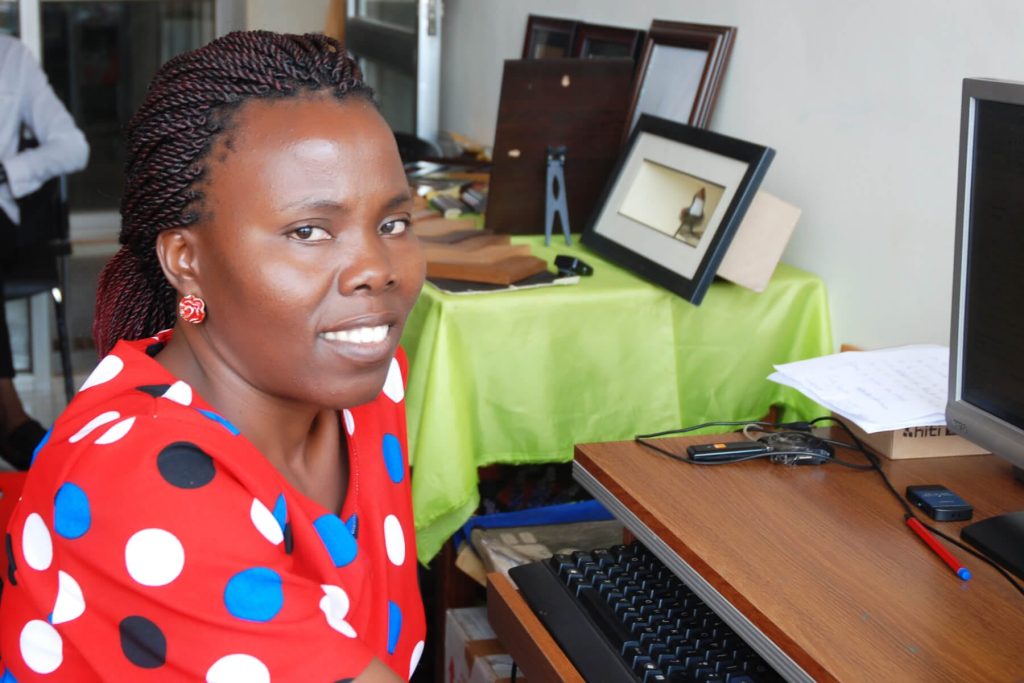
Say yes if you recall the days of paper report cards in primary and secondary school. It may not have been a big deal to some, but to Lillian Achom the inadequate procedures of schools cost her to enter university a year late. Information Systems was a new one for us. Yet there are even brilliant entrepreneurial ideas in the education sector. Lillian is one woman tapping into this is. Lillian is an Information Systems Professional that provides university information to students in and out of Uganda. Tell us about your startup. What societal challenges do you hope to address with it? Throughout my primary and high school, we used to be given hard-copy, class results to take to our parents. However, by end of the year two or even year one, there would be no records of all the previous results for comparisons with current results. As a result, it was difficult to rule out where my strengths and weaknesses were in the different subjects. When I joined Advanced Level, at the time for applying to join university, we were given information about the available universities courses, their entry requirements among others. I was seeing these for the first time so everything looked new to me. Besides, my performance in my subject combination at A level was way below the entry requirements I was seeing. The lack of prior knowledge of university entry requirements and poor choices I made affected my studies. I never got admitted in any university that year. However, I managed to join a tertiary institution one year later. What I experienced years back in my high school are what the majority of students are still experiencing today. Schools use manual systems to provide information about public universities to students. Students receive hard-copy performance results. Some students make changes and provide wrong results to their parents. Very few parents are able to keep track of the student’s results slips from previous years and monitor the child’s performance as the paper reports get misplaced. Some students or parents have to travel long distances to respective universities in order to access information on admissions to universities. After graduating with a Bachelor of Science in Computer Information System, I had the passion to startup something and put it out there for people. The above was what motivated me to focus on building an Information and Students Performance Evaluation Tool, GradeScore. What does GradeScore do? GradeScore is an online platform for evaluating high school students’ performance as they work towards joining university courses of their choice. It allows easy access to crucial information about all universities in one portal. Information such as minimum entry points for each course at university and subject requirements for each course at respective university. The platform is also aimed at providing an electronic version of students’ performance records. This is accessible privately by the student or his/her parent/guardian. Would you say you’re fulfilling your passion? Yes I am. To me, the input from users (teachers, students and parents) and the subscriptions are some of the indicators that there was indeed a gap and the product is much needed. How do you go about achieving your business goals? We involve the users, students, teachers and parents, who have greatly contributed to what the system is to-date. Also, we are in partnership with Education Secretariats who recommend our product to the schools. One of the challenges we have experienced in schools is where the teachers in charge of career guidance feel that the project will render them jobless. We managed to bring them on board when we explained that the system is for them to use. It actually simplifies the work guidance counsellors do, the existing manual system is tedious and time consuming. What has been the best moment of your career so far? When I got a scholarship to upgrade my Diploma in Information Technology to BSc Computer Information Systems at Africa University, Zimbabwe. You mentioned you volunteer. As a volunteer, what advice will you give other young women looking to start volunteering? Volunteering is not for people who place importance on financial gains. There are lots of passive benefits attached to it. It should not been seen or treated as if you are doing the organization a favor. Once you commit to volunteering your service somewhere, put in your whole because you just never know who is watching. What is your favourite life quote? This is one of them, “Keep away from people who try to belittle your dreams. Small people always do that, but the really great ones make you feel that you, too, can be great”. It’s from Mark Twain. Want to see women you know featured on SLA? Tell us what amazing things women are doing in your communities here.
Nontobeko Tshabalala: Working towards being a woman worth watching

Young people hold the answers to achieving sustainable development in Africa. These wise words come from Nontobeko Tshabalala. Nontobeko is from Swaziland, she is a journalist, blogger and social media extrovert. She believes that good writing enhances the experience of life and is working towards fulfilling that. Nontobeko is passionate about the youth and their involvement in making worthwhile contributions to the discourse around issues such as gender disparity, Afrocentricity. Nontobeko talked with our SLA contributor, Itumeleng Mphure on becoming a woman worth watching. How did you get into journalism? For the longest time, I wanted to be a lawyer but when I got to grade 12 I didn’t think that I would be happy as a lawyer in 30 years’ time. Then I had a conversation with my father and he told me that there can only be satisfaction in a salary if there is job satisfaction. So I applied for journalism at the Durban University of Technology because I love reading and writing. I went to a Technikon where they teach practical skills. What lead me into journalism is actually the reason why I wanted to be a lawyer for the longest time. It is because I can make strong arguments and find evidence to back it up. Which publications have you written? Before I moved to Ethiopia I was working at the Swazi Times as features editor and I am still a weekly columnist for Swazi News. I have also worked at the Sunday Tribune (Durban) and Soul Magazine (South Africa). What’s the best you have written so far? Every time I write an article I write it as though it’s the best I will ever write. When Lupita Nyongo had just won an Oscar and received a lot of publicity I wrote a piece about how it’s important to see dark girls in the limelight so that girls who look like that know that it’s okay to be dark. I wrote this article because there was a big debate over Lupita’s dark skin. Makila James who is the US Ambassador to Swaziland took that article back home for her family to read because she felt that it resonated with every black person. It is time for Africans to accept their different tones of their skin colour. What are you most passionate about? I want to lend my voice to the continued liberation of women. I don’t have a definite plan of where exactly I see myself in the future but I know that my passion will lead me to a place where I can advocate for women. What’s currently on your mind? Furthering my studies. My professional experiences surpass my academic qualifications and that makes me feel uncomfortable. Right now I am at the African Union (AU) and the tables I am sitting at require me to further my studies. What lead you to joining the AU? I have the constant desire to be better and improve myself so when the call for the African Union Youth Volunteer Programme came, I applied and now I am serving as the Special Assistant to the Chairperson of the African Union Commission. I was chosen as one of the Media Institute of Southern Africa’s (MISA) Women to Watch in 2014 but I am constantly working towards being a woman worth watching. What’s your fondest beach side memory? It was in Mozambique. I went to apply for a visa to France and I had lunch by the sea side. It was a very stressful day but I eventually got my visa. I had lunch at the seaside and also took a walk. It was so calming and that’s what I remember most about it. Want to see women you know featured on SLA? Tell us what amazing things women are doing in your communities here.
Getting comfortable with feeling like a fraud

Ever found yourself in the middle of a great moment —a graduation, getting a promotion, being praised by someone you respect or creating something new— and caught yourself feeling like you shouldn’t be there? Not in a nice, ‘Is this really happening?!’ kind of way. More like a, ‘I don’t deserve this, and I hope no notices I’m a fraud’ kind of way. Ironically, it is because of your greatness that you are more likely to experience feelings of being a ‘fraud’. This is commonly referred to as the ‘impostor syndrome’. Basically, if you attribute your success to everything except the fact that you really are that good, keep on reading. Categorized as “the domain of the high achiever”, Clance and Imes first coined the phrase after a study they did of high achieving women. They described it as feelings of, “phoniness in people who believe that they are not intelligent, capable or creative despite evidence of high achievement”. Instead of crediting success to ability, they attributed it to circumstances or charm. If you’re not sure if this relates to you, here’s a short test you can take to get a sense of where you lie on the spectrum. The concept really hit home for me when I read a quote by Maya Angelou. She said: “I have written eleven books, but each time I think, ‘uh oh, they’re going to find out now. I’ve run a game on everybody, and they’re going to find me out.” Listen, if Maya-Freaking- Angelou can ‘fess up to feeling what I felt and still be great, then there is a way to succeed in spite of it. So why is impostor syndrome so harmful? There are a few ways that this subtle form of fear could be holding you back from achieving career/business greatness: You don’t shoot your shots, and if you do they are less than they could be In her book Lean In, Sheryl Sandberg noted that impostor syndrome made people evaluate their qualifications lower than they should. In the long run, you end up only taking low-risk opportunities, or worse not taking them at all. It affects how you communicate Have you ever ended a well thought-out point with something like, “Does that make sense?” Or worse, do you find yourself apologizing all the time? Seriously, why do you start with “Sorry…” or “I just…” when you speak in a meeting? In an attempt not to be outed as a fraud, you actually can come off sounding uncertain of yourself. It affects your presence In the words of Amy Cuddy, “Impostorism steals our power and suffocates our presence. If even you don’t believe you should be here, how will you convince anybody else?” As with all questions of our ability, there’s no silver bullet to getting past it, but there are ways to not let it hold you back. Accept that you actually are a fraud The only reason you are so aware of how much you fall short is because you are brilliant enough to calculate how much you lack. Be aware of the deficit, but act anyway. Apply anyway, pitch anyway, write anyway. Everyone, brilliant or not, puts their best foot forward and there is nothing wrong with faking it a little before you make it. In the words of Queen Beyonce, “I have accomplished nothing without a little taste of fear in my mouth.” Communicate power Even if you aren’t completely comfortable with feeling like a fraud, at the very least stop sounding like one. Tara Mohr, author of Playing Big says, “I keep meeting brilliant women like you, with powerful ideas to contribute, important businesses and organizations to build, provocative questions to share. But so often, the way they communicate fails to command power. They equivocate, apologize, and look away as they speak.” Be aware of how you communicate. While there is a lot I could add, my one piece of advice would be, watch your cadence and don’t present statements as questions. Focus on delivering value Understand the value that you can bring to the table. We often assume that the skills we really excel at come naturally to everyone because we do them so easily. This then allows us to focus on the things that we can’t do, as we don’t see our skill set as valuable. Keep track of your strengths using tools like LinkedIn. But if you haven’t got it together like that (no judgement, I’m with you!), listen carefully to the feedback you get from colleagues. “I DID that” These three magic words, when said every time you do something awesome, are certain to gain you the respect of the only critic that counts, YOU.
What #MotherlandMoguls can learn from the Rio Olympics

The Olympics this year had us glued to our seats, rooting for our countries and supporting our favorites for gold. You can’t deny the emotions and sheer excitement that came about this Olympic season. They had us distracted from our everyday hustle! If you’ve been following, you’ll know that there are some awe-inspiring stuff we can pick up from the recently ended Olympics. Do you! From Ibtihaj Muhmmed winning a medal in a hijab, to China’s Fu Yuanhui being candid about her menstrual cycle, it’s pretty clear that women aren’t really conforming to a set standard of doing things. Sometimes we get caught trying to fit in to a mold about what we can do or say. Women in #Rio2016 proved and shattering so many stereotypes and boundaries. They unified even in competition and showed strong bonds of sisterhood. So forget trying to be like someone else, own your hustle in your own way and people will definitely notice. You are never too old or too young to kick butt! What was really amazing to me was seeing that age is no limit to passion, determination and just being on fleek. Uzbekistani gymnast Oksana Chusovitina, is 41 years old and wowed us with her gutsy performances. Meanwhile, Simone Biles the 19 year old gymnast, was snatching edges and gold medals dominating the Olympics and winning hearts. Both women show that you have absolutely no reason put a limit to achieving your goals. Sometimes we get caught up looking at the impossibilities, but when you start looking past them and pushing for your goals, you unlock your ability to start slaying. Be different Seriously, you don’t have to fit in. If the Egypt vs Germany beach volleyball game taught me one thing, it’s that you don’t have to do the same thing the same way. Cookie cutter solutions in business or your career will not always work for you. You have to find something that is unique and that will ultimately help you grow your craft and dominate the grind. Shaunae Miller’s controversial dive for the 400 meter race shows that you won’t always win the usual way. Having out of the box ideas to accomplish your goals and targets is necessary to get you that gold. There might be times that it will be risky and you do have to look at the cost, but the payoff might also worth it. So, start thinking about those opportunities that might set you apart, look beyond the difficulties, and be your awesome self while at it!