
Charlotte & Sheila Addison: Fulfilling the language needs of businesses
[bctt tweet=”Enlaza Global plays a pivotal rote in helping businesses transition to the global stage” username=”SheLeadsAfrica”] Sometimes, not getting to study what you’d like in university can be blessing in disguise. When the Addison sisters were offered a language course at university —a course that was not considered prestigious— they soldiered on. Today, Charlotte and Sheila are co-founders of Enlaza Global, a language translation service provider particularly focused on the language needs of businesses. Both sisters also work as translators at The Jeli, a literary publisher for black millenials. Here, they fill us in on why businesses need to use language as a tool and share what living in Cuba to perfect their Spanish taught them. What are the language needs of businesses? The language needs of businesses can be one of many things. There are untapped markets ready for products/services by businesses willing to operate across regions and markets. A language service provider like our Enlaza Global plays a pivotal role in helping businesses make that transition. Having international clients and business partners reveals the importance of having some level of communication in an international language. When working internationally, there will be a need to translate corporate and business documents to reflect in-country needs. Also, websites and social media sites can be translated in order to create diversity and reach a wider market online. According to the research survey, “Can’t Read, Won’t buy: Why Language Matters” by CommonsenseAdivsory, 52.4% of consumers buy only at websites when the information is presented in their language. [bctt tweet=”We create diversity by using the tool of translation to add value to technological products” username=”SheLeadsAfrica”] We help to create diversity by using the tool of translation to add value to technological products such as apps, software and websites among others. Why do you think you were offered a language course? Why was it not considered prestigious? We believe we were offered a language course because of our academic background. We studied Literature, Christian Religious studies, Government and French at senior high school. These would have definitely played a role in the choice of course we were offered. The notion of prestige when it comes to academic courses in our societies, we believe stems from the belief that some courses map out a clear-cut career path for one whiles others do not. Another reason could be that most people have not come to appreciate and understand the tool called language and its role in a global village. I imagine you’ve received some odd questions for studying a language course. What are some of them? Some of the funniest questions we have received for studying a language course are : Is that a subject within your course or is it your main course of study? Will you gain immediate employment upon completing the university? Do you want to be a teacher? What are you going to do with it? What is the relevance of your course in an office (working environment)? [bctt tweet=”Living in Cuba fanned our desire to honour and celebrate people who have given us their time” username=”SheLeadsAfrica”] Tell us about living in Cuba. What led you two there? Our reason for living in Cuba was to study and improve upon our Spanish skills. We also wanted to acquire cultural knowledge and sensitivity. The experience was as fun as it was challenging. There are vital principles that we learnt to imbibe from Cuba such as patriotism and loyalty to ourselves as Africans, to our nation Ghana, to always be supportive and to push people forward. It also fanned our desire to always honour and celebrate people who have given their lives, time, effort or money in building us as individuals, organisations and Africans as a whole. On the other hand, living in a socialist state like Cuba, came along with its challenges. These include internet limitations, a lack of opportunities for foreigners, the daily low productivity, a lack of ingenuity on their part and the subtle racism that stares you in the face everyday. Want to see women you know featured on SLA? Tell us what amazing things women are doing in your communities here.
Linda Mabhena-Olagunju: Entrepreneurs must learn to take calculated risks
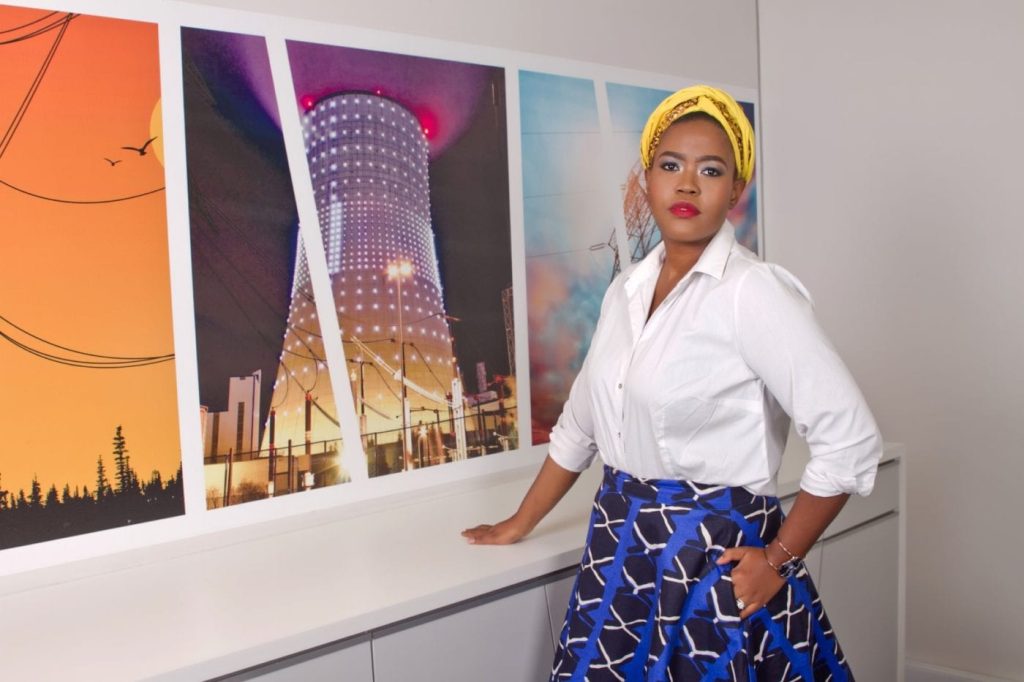
[bctt tweet=”If you really want to venture into business you have to risk looking stupid.” username=”SheLeadsAfrica”] At SLA, we are always super excited to interview young African women that are trailblazers, game changers, leaders and positive role models for other African women. Linda Mabhena-Olagunju has all of the above qualities and more. Linda holds two law degrees: an LL.B. from the University of Cape Town and an LL.M. from the University of Aberdeen. She is the Managing Director at DLO Energy Resources, a renewable energy investment and advisory company based in Johannesburg. She is also the founder of the Renewables and Energy Forum in South Africa. Linda has received a number of awards. She received the 2015 Forbes Women Africa Best Emerging Entrepreneur Award. She also recently received the 2016 Elle Boss entrepreneurial award and the 2016 All Africa Business Leadership Award (Young Business Leader of the Year – Southern Africa). Congratulations Linda! Linda shares with SLA contributor Abisola, her challenges in the renewable energy sector, her entrepreneurial journey and her advice for young African female entrepreneurs. Did your legal education and training prepare you for entrepreneurship? I have always said being a lawyer gives you an overview of how a transaction works so that you get to understand the business model of a particular sector industry. Legal practice, not just my law degrees, prepared me to an extent for business. However, lawyers also tend to be risk averse, as our job entails avoiding risk. My legal training made me more afraid to take risks but after a while in the entrepreneurial space I learnt to take calculated risk. For a lawyer, that means risks that have gone through two sets of thorough due diligence. What would you attribute your current success to? Maximized opportunities or sheer good luck? Hard work, coupled with God opening the doors that needed to be opened and placing me in places and situations I had never imagined. I also attribute it to a strong support system. I stress a lot and my parents have been great pillars of support during these periods. My father, especially, who believed in my vision when I had basically no support. My husband also has this innate sense of calm and wisdom. His counsel has been the difference between me quitting at times and staying in the race. [bctt tweet=”Linda Mahbena-Olagunju recently received the 2016 Elle Boss entrepreneurial award ” username=”SheLeadsAfrica”] What three things can help African women achieve their professional or entrepreneurial goals? Self – belief. God/Higher power belief. A real support structure, whether it be family or friends. What peculiar challenges do you face in the renewable energy sector, especially as you seek to expand to other African countries? A major challenge is regulatory clarity. Most countries in Africa need power but they do not create an enabling environment, at times, to encourage investment. Renewable energy projects are funded largely by banks and anyone that has ever borrowed money from a bank knows that lenders are averse to risk especially government risk and regulatory risk. [bctt tweet=”My husband’s counsel has been the difference between me quitting and staying in the race” username=”SheLeadsAfrica”] The other challenge which is particular to Southern Africa, is falling tariffs. We have seen tariffs fall rapidly due to competitive price bidding. This is great for consumers, but may be a challenge for new investors that have to raise funds to finance projects. If you could go back in time, what advice would you give your younger self? You may be going through tough times now, but God has an amazing life planned for you. What final piece of advice do you have for aspiring female entrepreneurs? Take the first step. It may seem like a stupid idea but if you really want to venture into business you have to risk looking stupid. Hey South African #MotherlandMoguls, the SheHive will be landing in Johannesburg from November 3-6. Find out more here.
Refilwe Kumalo: The South African content junkie
[bctt tweet=”We have so much to learn from each other but we lack the time to.” username=”SheLeadsAfrica”] Have you ever wondered what it takes to produce the content of your favorite television programme? Refilwe Kumalo is from South Africa and she is a content junkie who produces television shows that keep you both informed and entertained. Content is information and experiences which are directed to audiences or users. Refilwe’s purpose is to create content that will be consumed so knowledge can be transferred. She has to spark conversations that can inspire people to be better. She works hard at producing content that is entertaining and leaves one wanting more. Refilwe wants to be able to create memorable content that will leave a mark in society. What are you most passionate about? People… I believe that everyone has something to offer the world. Everyone has something good and remarkable to offer. My work has made me realize how important it is to treat every single person delicately. I studied Anthropology as a major for this very reason, which is to be able to study human norms and values in our society. We have so much to learn from each other but we lack the time to. People’s perspectives need to be documented so stories could be told and generations to come can learn from them. As vast and different South Africa is as a nation, it has many facets and molds. Every child, household, taxi driver, miner, men-in-service, artist has a story to tell. Who is your biggest inspiration? Funny enough a lot of people inspire me every day of my life. The ordinary person who wakes up every day to fulfill their dreams inspires me. There are many individuals in our country doing remarkable things in different fields. I’m inspired by people who work hard and who dream big. For me it’s not about how much money you make but how you change people’s lives through the work you do. It’s about creating jobs which will put food on the table and take children to school. [bctt tweet=”The ordinary person who wakes up every day to fulfill their dreams inspires me” username=”SheLeadsAfrica”] A few people who inspire me are Khanyi Dhlomo, Chimamanda Ngozi Adiche, Basetsana Kumalo, Dr. Precious Motsepe, Folorunsho Alakija, Isabel Dos Santos, Victoria Beckham, Oprah Winfrey, Mamokgethi Phakeng, Nunu Ntshingila, Thuli Madonsela and Serena Williams. These women are game changers and I follow their work. What is the most interesting television show you have worked on? Every show I’ve worked on in my ‘short’ career has been interesting and has taught me what I know today about television. From Diski Divas, which is a reality show about South African soccer wives to Mzansi Insider, which I am currently in production of. Right now, I have enough experience to conceptualise an entire episode on my own. It’s a process but one which I’ve grown to appreciate. I’ve been privileged enough to work with great producers who allow my voice to be heard. It is rewarding to see my work and ideas play out on the screen and also see viewer responses. What makes a great television show? These days television content is measured by how much it’s talked about on social media and if it trends. Well unfortunately, Twitter trends won’t get show ratings. What makes a great TV show is the experience and message it leaves the viewer with. A great show’s content is what keeps audiences tuned in and it will result in high ratings. A lot of elements go into putting together a great TV show and in my opinion, the team behind the show plays an important role. [bctt tweet=”What makes a great TV show is the experience and message it leaves the viewer with.” username=”SheLeadsAfrica”] Being in television production I am privileged to see a show from its conception. Therefore, there are many aspects to a great TV show. From the team which is pre- and post-production, the content which is the topics on the show and what message they drive which will of course, give you high ratings. Where do you see yourself in media ? Definitely in conceptualizing futuristic content. Content which will engage the youth to think better and be better people. Where will African media be in the next five years ? Firstly, we need to treat media as informative tool not just for entertainment. I see media in Africa being driven by young people in the next five years. The biggest voices we have today are the young people who use smartphones and social media to drive content. It’s amazing to see a lot big stories today being broken with the use of media platforms. [bctt tweet=”I see media in Africa being driven by young people in the next five years.” username=”SheLeadsAfrica”] In the same breath, all media platforms have to be monitored by stakeholders so that it can be used in the right manner and be preserved. What is the last thing I watched on TV and why? Botched! Hahaha I’m a sucker for reality TV. As I said, I believe that people need to tell their own stories which will in turn teach people lessons. Botched is an interesting yet daunting show that exposes you to body image alterations which people have done to themselves. With the rise of body image issues in Africa like skin lighting and back door plastic surgery, it is an informative show. We need to create content which seeks to engage these issues which our society faces and depict the long term results of altering or modifying our bodies in any form. If you were a mobile app, which app would you be? I would be Twitter, mainly because it drives a lot of content and allows users to be news makers. The simplicity of it is what makes it the number one go to for us content researchers. One is able to follow trending topics all over the world by
4 wellness tips for ladies with baby (or not-so-baby) businesses
[bctt tweet=”I know you are strong and independent and all that but babe, you aren’t 007 ” username=”SheLeadsAfrica”] Congratulations on starting your business, feels like a new baby, right? It’s really amazing to finally have the time and resources to start living your dream but with it comes the added stress of taking care of this new baby (assuming that’s the only baby you have. If not, double congrats to you!). In addition, there’s all the other roles you perform in everyday life as a woman, daughter, sister, friend, wife, mom… Here are 4 wellness tips that can make running a baby business (or any business at all) less stressful on you. 1. Get help At the start of your entrepreneurial journey, you might be tempted to do it all (like I was). You will most likely be the CEO, the liaison officer, the content manager, the cleaner (yes, cleaner if you run a shop alone), the accountant and so many other things. I know you are strong and independent and all that but babe, you aren’t 007 (even he has help from the HQ when needed). Please approach friends and family to help with some tasks you are not so good at so you can concentrate on what you know best. You can also try a service swap. If you are a budding fashion stylist for instance, helping a celebrity (or popular) friend with styling tips in exchange for a social media mention or dedicated post can help you with PR. It can also free up some hours you would have used sitting glued to your laptop sweating over online publicity. 2. Don’t forget to eat Drowning yourself in work all day and forgetting about meals is just, plain evil! As an entrepreneur, you need energy to function and the only (legit) way to get it is through healthy, nutritious food. [bctt tweet=”Drowning yourself in work all day and forgetting about meals is just, plain evil!” username=”SheLeadsAfrica”] Pack your meals or have a deal with a food vendor to drop off your meals if you work outside of your home. If you need to set the alarm for meal time, please do. I tell my coaching clients at My Figure 8 wellness that If you don’t eat properly, or skip meals, there’s a tendency for you to chomp on unhealthy, sugary snacks all day. Then over eat (most times too late into the night), when you finally remember food or worse still, become undernourished. 3. Get moving You know exercises are good for you but do you exercise? Exercising is not only good for your body (and that’s a story for another day), it’s also good for your heart, emotions and mental health. People who exercise often are said to be generally smarter, and happier than those who don’t. Remember what Elle Woods said in Legally Blonde? “Exercise gives you endorphins, endorphins make you happy and happy people don’t kill their husbands, they just don’t!” Start with simple workouts like a brisk walk or jog, aerobics and strength training, skipping, racing up and down the stairs and intense dancing. Doing this for 30 minutes, at least 3 times a week will work wonders in the strength and energy department. Don’t forget to warm up before and stretch after your workouts. 4. Chill It’s okay to take a break, seriously! Take one day off work weekly or every other week. An annual vacation to engage in activities that make you feel relaxed and happy is a good investment in your sanity as an entrepreneur. Go to the movies, a spa, go bowling or skydiving (my dream vacation activity), whatever catches your fancy. Drowning yourself in work, taking care of everything and everyone else but yourself will take its toll. Take it from me, I’ve been there done that. I was recently so immersed in learning all I could from my opportunity as a Tony Elumelu entrepreneur, running my business, home (I have two children who ask 1 million questions per minute) and working on starting another business, being a leader and all, that I totally forgot I exist and girl, did I pay for it? I had to stay home for more than a week taking some prescription pain and sleeping meds.
Lanji Ouko: I believe in second chances

[bctt tweet=”Our objective is to build strong, independent, empowered and self-driven women” username=”SheLeadsAfrica”] Crevit Mulier is derived from a Greek word ‘Creverit Mulier’ which means grown woman. Here at SLA, we take pride in celebrating grown women being the best version of themselves and Lanji Ouko is a perfect example of just that. A published author, legal consultant and entrepreneur, her company Crevit Mulier, is just one of the very many achievements she has under her belt at the tender age of 25. SLA contributor Diana had a quick chat with Lanji about the come up of her networking society. What is the inspiration behind Crevit Mulier? A rough patch in my life inspired it actually. I dropped out of law school in 2012 after failing a series of modules. After failing contract law again, during my re-sit, my degree was downgraded to a BA in Legal Studies. Being the go-getter I am, I quickly acknowledged my mistakes in the past and dropping out was the only way to continue the story about my journey as a lawyer. Between the period I dropped out and graduated from a totally different institution, a harsh reality hit me. Friends stopped talking to me, there were a lot of whispers within my family and generally a lot of voices in my head causing a lot of personal conflict. By not having a strong group of women surrounding me, to uplift me, root for me, I felt lost and lacked motivation. The idea came about exactly two months after graduation. I thought I should try a one-off event in Nairobi and see what would come out of women below the age of 25 coming together to root for each other. Upon it being a success and noticing a few pitfalls here and there, I decided to make it a members-only club, in order to ensure women involved are on the same wavelength and are equally thirsty for success and to better themselves and their community. How has it contributed to young women’s lives in Kenya? Crevit Mulier has positioned itself as the only ladies club that provides a safe haven for women to brainstorm, think critically and nurture healthy female relationships, which tends to be quite difficult the older we get. The members have become more confident, more powerful, more ambitious. It is a safe haven where people openly discuss rape, bad relationships, financial issues and much more. The goal-friend aspect in the membership has encouraged women to start a number of projects they were procrastinating on. Women have started charities and businesses thanks to the message within the open sessions we have. What sort of activities do you get up to within the group? We pride ourselves in giving women a vibrant and friendly atmosphere. Here, they meet ladies of all ages and from all walks of life, for formal or informal talks on day to day life issues. We recently introduced a co-working space at very affordable rates. This is for young ladies who cannot afford the expensive market rates of hiring meeting rooms or having monthly office space. In addition, we offer a diverse programme of events which has helped established a valuable means of access to top institutions, museums, colleges, corporations and well known retailers. The ladies enjoy spa treats, hair and beauty services from our very own door to door spa company. We also provide wine and cheese tasting, flower arrangement parties, cooking classes, financial classes, mentorship from investors among many more. The club-owned owns an academy, The William Hobsons Academy: School Of Etiquette, Social Protocol and Culture. The academy aims at empowering both boys and girls and training them on African culture and language too. Crevit Mulier believes in empowering the boy child too. This is to have a generation of men who can co-exist with the empowered woman, without feeling threatened. What do you want to ultimately achieve with Crevit? Our objective is to build strong, independent, empowered and self-driven women. We enable ladies to identify, address and resolve certain issues in their day to day lives. We want to position a new example of women for generations to come. This club will soon expand across the continent to work towards giving second chances to women of different tribes and backgrounds. I believe there are more important things in life than just being a beautiful woman. We therefore want to recreate and redefine the renaissance woman. In the future, I hope to establish a second-chances institution in partnership with various safe houses. This is in order for women fleeing from gender-based abuse to have a place to start over. I am what I am today because my family and society gave me a second chance. Inspire us with your story! Let us know how you’ve bounced back and done amazing things here.
Vera Adu Amani: How I found creative ways to build my brand
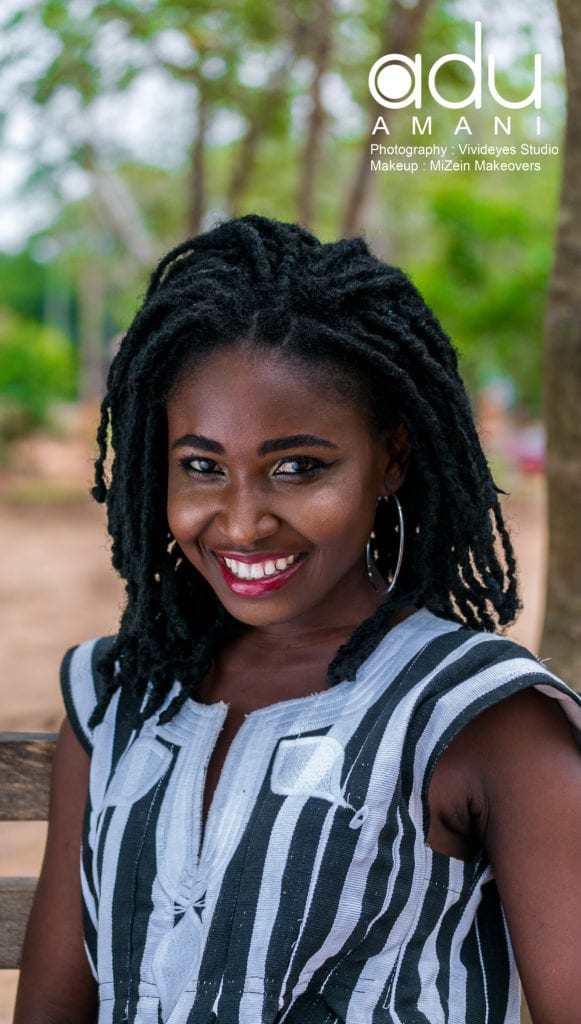
Vera Adu Amani started her fashion company with no capital, no showroom and no PR services. All she had was a vision, talent and a voice which she used as a strong marketing tool on social media to build her brand. As the face of Adu Amani Klodin, she used her hairstyle (popularly described as Adomi bridge) to promote her brand at the 2015 Chalewote Arts Festival. This hairstyle went viral and led many clients to her company. After this great exposure, Vera’s brand story has been used as a case study in Professor Ato Quayson’s book “Globalization of Oxford Street”. She also won the 2015 urban designer of the year at the West African Fashion Awards; has gained recognition as influential designer in Africa and is currently a mentor/judge at the Ghana Coalition entrepreneurship leadership challenge. How did you discover social media as a great marketing tool? When I started the company, I had nothing! I had no money, no showroom, no team of marketers working for me. All I had was a vision, talent and a voice so I started sharing my work online just to showcase what I could do. As I connected with many people who reacted positively to my work, I became more active on the social media platforms. That was when I realized that social media is easy and a cheaper way to reach more people. After this realization, I equipped myself by reading and researching on digital marketing strategy and other social media materials to brand my company online. I then created my own style, my own platform to inspire, educate my followers and promote other brands. After your discovery, what steps did you take to use social media to build your brand? The only way your work speaks for itself is if someone is listening. When it comes to business you need to make some noise to get your message across so I started making so much noise about my work to get the attention needed. The steps I used to build my brand are as per below; I chose a memorable brand name which is easy to remember, pronounce and spell. I used the name on all of my social media networks. This makes it easy for followers to search and find my company. I repositioned myself, developed my voice and built my social media presence. I focused on one network (Facebook) which worked for my brand from the beginning since I didn’t have a team working for me. I adapted a social media marketing strategy plan. Thus a monthly calendar list where I created features like Facebook trade. I used visual marketing like videos and photos to promote my work. I engaged storytelling which has always been my number one key. It is one thing describing a product and another selling a product. I shared and commented on interesting articles, works by other people and trending issues. I asked questions; read and learnt from others especially brands/people I look up to. This was to help me distinguish myself from the others. I also engaged my followers, answered their questions, expressed my gratitude to them and sorted their opinions on things. I used their opinions to create content which they shared with their friends. I learnt to communicate with my followers effectively. For instance; I can’t use the same language and tone [contents] I use on Facebook /Instagram for Linkedin followers. What you say on social media will go a long way to affect you so I learnt to let certain comments roll off my back. You should know when to shut up. Which marketing tool skyrocketed your brand? I will say my hairstyle to the 2015 Chalewote Arts festival popularly described as Adomi bridge skyrocketed my brand. The plan was to look different, unique, to stand out, and have fun. As the face of my brand, I take every opportunity to promote my brand so the Chalewote Arts festival was a great place to showcase my work. I did not think the hairstyle will get such attention but it did and since then, my brand has been on the lips of many people. How has social media affected your company’s growth? Everything that I am now and have now was gained through social media. Through social media, my brand has gained exposure, income, clients, jobs and followers. Social media boosted my brand visibility, and boosted my self-esteem personally. My brand was unknown but now I don’t have to introduce myself anymore, there is this phrase I usually use; ‘Google my name’. Social media has connected me to people that I wouldn’t have been able to meet in real in life. Now that your brand has gained the exposure you wanted, what is next? Well, my brand has gained digital exposure but not physical exposure so my team and I are working on traditional marketing and building relationships outside the internet. I also want to develop, expand and own a successful fashion design business. Not just a onetime wonder but a sustainable, profitable fashion design company. I am hoping to rewrite the African story. When a person thinks of Africa, it shouldn’t be a story of slaves, monkeys, ugliness or violence, it should be positive. Beautiful kente shoes/bags by Adu Amani should come in mind. So I will say I am working on making the brand a vehicle to communicate the beauty of Africa to the world through fashion. I want to leave positive digital footprints. What is the most outrageous marketing tool you had to use to get your followers attention? I have used many funny strategies but the funniest was the one that skyrocketed my brand. This is the Adomi bridge hairstyle. I knew I would get some attention but did not expect the photos going viral. The hairstyle attracted both positive and negative reactions. I was made fun of when the photos went viral. Some comments were very mean and hurtful but I joined in
Against all odds (bouncing back after a failed business)

I recently experienced a failed business and it would have been devastating if not for my support team. The good thing about failure for a positive minded person (which should be the mind set of an entrepreneur) is the ability to use the experience as a learning process. When a business venture fails there are two most likely reactions from the entrepreneur. You either give up or dive back in again, trying to make it right this time around. From my own experience, here are some helpful tips on bouncing back from a business failure. 1. And the blame lies… A whole lot of things could have gone wrong. The first step is to take an introspective look at your business journey and without been biased. Analyse the venture and pinpoint where things went wrong. You can ask the people who had interactions with your business for their opinions. Be sure to let go of the hurt that comes from failing at a venture. The altruistic ones will prefer to blame themselves and this might be harmful if you cannot get over the blame game. 2. Decide… Next, decide if you are returning to that venture or starting a new venture. This is important as it will determine your next moves. The decision to continue a failed venture will rest solely on you. Consider the reason you started the venture. Was it just a business or a deal with a goal? An ordinary business idea (not that there are ordinary business ideas, but some are conceived based on needs as opposed to those based on passion), is easy to let go of. With this idea, you can venture into a different line of business, responding to another need. However when your idea is part of a dream, it is harder to dump it and move on. 3. Restore This is usually the hardest. If your business was loan funded, it is always a source of grave concern. Many business owners suffer huge financial losses after a failed venture. Although not easy, making efforts to restore/refund loans can give a sense of fulfillment. This is not to say that inability to do so should lead to depression rather a well laid out plan for payment may inspire hope. It is absolutely necessary to avoid any form of self deprecating thoughts. 4. Plan Now that you have decided, begin to make plans in line with your decision. If you have decided to move on. You will need a fresh new idea and plan according to the idea. In the event that you want to continue with your previous idea, make further research using your previous mistakes as key points. Go back to the drawing board. Your drawing board will hold your idea, its concept, theme and any previous mistakes. It is time for a new flow chart which will utilise the information gathered from the research you have done. Tip: If you really need funds at this point, consider crowd funding. 5. Take your time It is tempting to want to dive right into the deep end when you have found the solution or something new. Don’t do this. It’s not advisable jump right in. And no, this is not saying you should procrastinate. On the contrary, take time to set out a pace that will allow you notice changes and progress. 6. Laying the ground work Now you work, and I must add with a vengeance. Going from the drawing board to the work table is literally a huge step. This is where every past lesson is put to the test. 7. Faith Having a strong belief in the success of your venture helps to pad all the hard work you have done. Praying about your moves and asking for directions divinely can go a long way. Also a positive mind set is required. Always. 8. Be patient When you start squatting at the gym, there is a tendency to look at your butt for signs of growth. Disappointment quickly follows when the expected immediate transformation is not seen. Like squats, your business will need time and constant, continuous efforts to grow and begin to show signs of growth. Be patient. Continue to work at it. To avoid working blindly, take constant review of your progress. It may be quarterly or monthly but alway take stock. Mark areas that might need improvement or changes. Make necessary upgrades. Get customer feedback. You cannot know too much. Even after the initial research, always seek expert opinions at every stage. This will serve as a guide along and also a yard stick to measure your progress. In the long run. Your perception of a failed business is vital to your entrepreneurial life. If you develop the habit of not giving up and taking every failure as practice and a lesson, you will find yourself very soon in a successful venture with lots of stories to tell. Remember
Sandra Lopez: Value extends far beyond money

Group travel is in at the moment and X-Plaw Travel is one group-based travel company aimed at taking young South Africans outside their borders. Sandra Lopez is the Founder and Managing Director of the Pretoria-based company, A firm believer in the power of “Africa by Africans”, through X-Plaw Sandra focuses on African destinations first for tourism and travel. Although it took a while to discover her passion, when she found it Sandra would work 9 hours after her day job building X-Plaw. As Sandra grew up in an organisation for orphaned and abandoned children, she’s also passionate about giving back through her travel initiatives. Read on to find out how Sandra’s grooming a generation of travel-hungry South Africans. How do you think X-Plaw Travel will disrupt the African travel industry? By bringing great affordable quality valued tours and experiences to our customers. This is and has always been our mandate. I believe that value is something which extends far beyond the monetary. It includes but is not limited to the type of service you give to your customers, how much you engage with them, how much you allow them to feel part of what you are building and how much you allow them to connect with the people they meet on these journeys. Education is also a key factor for us, most of our travellers have not travelled outside of their home towns or outside of South Africa. For them to experience going out of the country for the first time with us, is an experience that even we get to appreciate with them. In most instances, they return from these tours richer in knowledge having learnt something totally new about a different country and its people. Why do you think young people should explore Africa more? I am a firm believer of “Africa by Africans”, we are the only ones who have the power to change how our continent is perceived by the outside world. We are the only ones who can tell our stories better. I feel that in many ways, Africa is being misrepresented by the global media. Half the time, this forces people to forget the beauty that surrounds us, sometimes even by ourselves. Travelling thus gives us an opportunity to understand ourselves better as a people, our roots, our cultures, our heritage. It also paints a picture which allows us to understand vividly that we are all connected as Africans and as a human race in some way or the other. Only when we are fully comfortable and confident with who we are, will it become much easier for us to invite other young people from other countries to experience this diversity with us. How have you combined giving back initiatives with your travel company? Giving back has always been at the fore of what we do as a company. It is actually something that is very personal to me. All our tours have give back initiatives tied to them. On a 5-6 day tour for example, one day is dedicated to enriching the lives of the less fortunate. In countries where we are not able to actively engage in these initiatives due to certain constraints, we pledge the funds to local projects in South Africa. We have also just launched the “One Traveller, One Child” initiative. Where for every traveller who tours with us, we will send a disadvantaged kid on a weekend camp educating them about nature, travelling and most importantly about themselves. Hopefully in a few years, we would be able to look back and realise that we have groomed a generation rich with an appetite for travelling. What did you have in place before you quit your engineering job to focus on X-Plaw? A lot of things actually. An idea, passion, a sketchy plan and a few Bible verses, but mostly I had will power & determination. Nothing beats the will to want to succeed and see something grow from an idea into something tangible. Every day after my 9-5 job, I would get home to read, research and work on X-Plaw for an additional 9 hours. This went on for a full year until I decided that I was ready to let go of one. In what ways has your childhood shaped your passion today? As a kid I was an all-rounder and an overachiever, which meant that with most academic subjects or activities I participated in, I excelled. This actually made it quite hard for me to discover what I truly was passionate about. I grew up in an organisation called the S.O.S Children’s in Ennerdale, south of Johannesburg. It’s an organisation for orphaned and abandoned children. As ironic as it sounds, we were raised to believe in ourselves and to always extend a helping hand to others less fortunate. We were extremely fortunate growing up at the village. After school we were kept busy with sports and extra mural activities. During school holiday we were fortunate enough to travel or go out camping. This, in many ways is how my love for travelling started. However, I only truly discovered my passion for it much later in life. In your opinion, what is needed to successfully travel in a group? An open and curious mind. Travelling with an open mind gives you perspective, you see the world through different eyes, you appreciate things more. In some instances, you get to understand how little others have. You also learn to be patient, as time almost no longer defines your schedules. You get to slow down and enjoy the moments. Stay curious, by doing so you learn to expect the unexpected. And most of all, you learn something new every day. Hey South African #MotherlandMoguls, the SheHive will be in Johannesburg from November 3-6. Find out more here.
4 lessons we can learn from DJ Cuppy and Rona Wigs

Well, everyone knows or should know Florence Ifeoluwa Otedola aka DJ Cuppy. If you also do not know Sharon Adeleke aka Rona Wigs, then you should know the Adelekes, that is Davido’s family. So what do these two women have in common? Daddy is stinking rich, yes, but that not withstanding, they work and they are really good at what they do. Now, these ladies have a couple of things to teach us about business and life in general. 1. Daddy’s money is not necessarily mine When asked why she was making wigs, Sharon replied; “Yes my daddy has his money but it is not my money. My daddy has his own money, Davido has his, I want to make mine.” It is quite accepted to see a rich kid live off trust funds and have an enormous social life. They do not necessarily have to work, I mean who has to work when the money is there, right? No. Here are two women, daughters of some of the richest men on the continent slugging it out. Well not really slugging it out, but the hustle is real baby. Sharon and Cuppy do it normal way, starting something sustaining the drive, making a name and creating a global brand. 2. Passion drives Anybody who knows Cuppy personally, knows she loves her music production. She is crazy about what she does and takes time to do it right. No half-bakes for the eclectic DJ. Sharon gushes over her wigs like they are the new definition of bae. It is evident that she enjoys what she does and she has turned it into a business. They work their passion and make money from it like no (wo)man’s business. Their businesses show the depth of their dreams. This is not just mere working to show that they can work, no, this is a dream. You see this in the hands-on way Sharon handles Rona wigs. She uses social media to advertise herself and is fully involved in the entire wig-making process. And well, it’s not like Cuppy can give out the spin table to someone else to “help” her spin. 3. Know what you do Cuppy can hold a crowd’s rapt attention with her music. She remixes almost everything and puts the “DJ Cuppy” spin on it. You see her right there on stage making new sounds out of old songs. This is not just someone who can DJ, this is a lady who can spin. Sharon said “I love making wigs and I am good at it”. Nuff said! These are not rich kids pretending to work , nah, these are Motherland Moguls who work! And there is no stopping them. 4. Playing the daddy card Well, it might not be your daddy, but if someone around you has the fame and the money, make it count. We are not all children with rich dads even though we may know some. We cannot deny the massive boost that being Otedola’s daughter has given to DJ Cuppy or how being an Adeleke has and will influence Rona wigs. Sharon openly admits to having had a privileged life. Still, both women have something that could be watered. Yes, some people will get away with daddy’s money and position. But if Sharon and DJ Cuppy use “daddy’s” card, it’s to rake up the market, connect and build their brands.
Lessons we can learn from Lynette Ntuli’s success
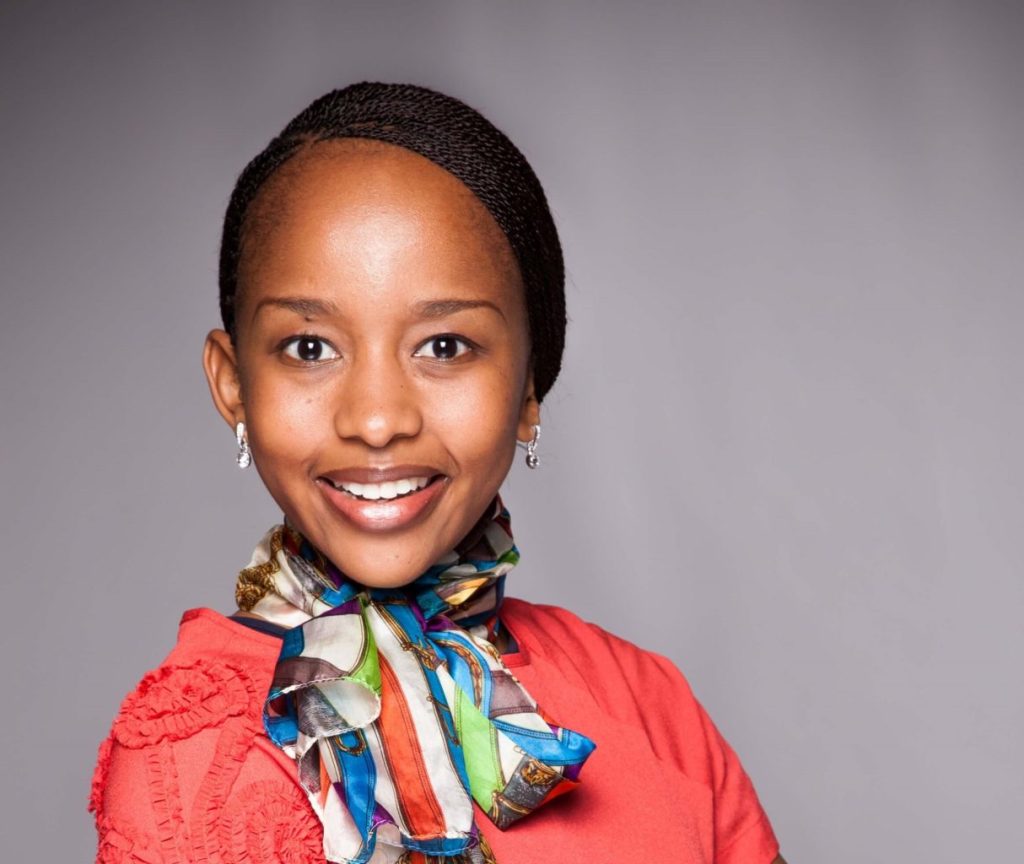
Many women in Africa and the world are making great strides in their respective industries. It’s also common that when you have someone you look up to, it’s usually someone in the field that you are in. Whether you’re in tech, construction, or engineering. We tend to overlook other women in other industries because we have that perception that our role models should be within an industry we’re familiar with. This doesn’t have to be the case. As a woman in the tech industry, my admiration for Lynette’s work ethic and passion was welcomed. I was introduced to Lynette Ntuli when I was previously at an incubator and accelerator and looking into which successful women we would approach to be a speaker at a conference. I’ve followed her journey since then. Lynette is in property, asset management and infrastructure development. She is the CEO of Innate Investment Solutions based in Durban, South Africa. She also has a passion for youth development and leadership and is also the Founding Director and Chairman of IgniteSA.com. She’s definitely a force to be reckoned with! Here are a few lessons we can learn from Lynette’s success and how she keeps making a difference: Be consistent For the past 11 years, Lynette has been a powerhouse in the making. One thing about her is that she does not stop achieving her dreams. From being the first black woman at the age of 24, to become the General Manager of one of Durban’s regional shopping centers to being the Co-Founder and CEO of a property, asset management and infrastructure solutions company. Tip: Lynette keeps consistent by focusing on not losing momentum. She believes that in anything you do, you will probably fall. Try and do things over again until you get it right. What is important is to keep your head high through all the trials. Help others grow In your pursuit of greatness and achieving your professional, personal and entrepreneurial goals, it is important to pay it forward. Some people make paying it forward their daily bread, and their passion. For others, you gain years of experience and want to share what you know. Sharing this knowledge will lead to making an impact in someone else’s life, whether the impact is big or small. At the age of 25, Lynette and 3 of her friends wanted to continue empowering others. This is where IgniteSA.com, a youth-oriented digital media and programme platform, grew. They had already grown their skills, and networks and wanted to share them with young South Africans from all sorts of backgrounds. From there onwards, they built an ecosystem in education, skills development and entrepreneurship. This initiative was to help change the future of South African youth. Work hard One may not work tirelessly, chase their goals and dreams, be successful and not have worked hard for it. Great work ethic and hard-work is what will get you where you want to be. This is evident in Lynette’s success and how she continuously pushes herself. Tip: When what you do on a day-to-day basis is your passion, it definitely is a bonus. It makes the hard work seem effortless so keep pushing #MotherlandMoguls! Stay true to yourself It’s important to also stay true to yourself when looking into grow into your career or business. This is one lesson that all women should keep in mind when on the road to success. Yes, we can look up to many people in our industries and in other industries. But staying true to who you are, and what YOU want to achieve will be key in continuing in your journey to success.