
Nthabiseng Nkosi: Working from home is the norm now in South Africa

Ah the dream. Managing a business and team successfully from your home. Nthabiseng Nkosi is living it. Together with her husband, Nthabiseng built and now runs a proudly South African design agency called Jutsu Design. Even though Jutsu’s first clients were friends and family, the agency now offers services ranging from web design, digital solutions, mobile apps to photography. SLA caught up with Nthabiseng to learn more about Jutsu and managing a business from home. Nthabiseng, tell us, how did Jutsu Design come about? Jutsu Design started out as a concept to build a small design agency that would offer affordable designs through the line services for SMME’s. My then boyfriend, now husband, and I worked on building a name for us – Jutsu. The name ‘Jutsu’ came about as a result of the team being avid anime fans. ‘Jutsu’ is a Japanese word meaning technique or skill. Once the name was decided on, the company was then officially registered in 2011. Friends and family were our first clients and we grew from there. Fast forward to five years, the company offers web design, digital solutions, mobile apps as well as photography. Jutsu also developed our first two title sequences for e.tv’s Heist and SABC 1’s Dreamworld. How large is the Jutsu Design team? What are the challenges of managing your team? Jutsu Design is a team of a husband, wife, web developer, PR manager, freelance writer, and photographer. The team was initially made up of four members when we started out in 2011. Two members left to pursue other career paths and the rest of us continued with business. One of the major challenges we face at Jutsu is keeping up with the workload. Most times, it gets a little too much to handle, but we try to meet deadlines. In the earlier years, it was difficult, but every project has been a learning curve. Did work from home from the start? How did you manage that? Being a micro- enterprise, Jutsu Design has always operated from home. We are able to save money that would otherwise have been used for rent. We keep costs at a minimal because our company is small. How do you create awareness or reach clients for Jutsu ? The funny thing is, we don’t. We get new clients through word of mouth from our loyal clients. We have a website up and that too has been working for us. Active promotion of our company might mean getting extra hands and moving to bigger premises. How do people react to your working from home? I think working from home is the norm now in South Africa. Some people can be a little envious, but it takes a lot of self-discipline to be self-employed. You may think you have all the time to just chill and work later, but you actually don’t. How do you draw the line between work and running a home? At first, it was extremely difficult working from home. I used to want to make excuses with that, but with deadlines closing in on me, my head would spin. So, I have learnt to be a lot more disciplined. If possible, I work half days on Mondays to Wednesdays. Thursdays and Fridays, I do house chores; laundry, cleaning etc. This schedule works for me as I do not have a housekeeper. But if things get too hectic, with meetings and events to attend, I leave house chores to the weekend. What’s the best way to unwind when your office is also your home? My husband and I sometimes, go on dates, engage in fun activities and fetch our little one from the crèche. I have my spa days and he has his boy’s night outs with his friends. We try to do this once or twice a week. If you’d like to share your story with She Leads Africa, let us know more about you and your story here.
Upgrade your PR Game: Lessons from Wimbart Global PR & Media #SheHiveLondon

Jessica Hope, founder and managing director of Wimbart PR joined us over the weekend at #SheHiveLondon. With over a decade of experience at places like iROKOTv, Jessica launched Wimbart Hope earlier this year. No matter the size of your business or brand, PR can help upgrade your business. In this installment of the #SheHiveLondon catch up, we share key takeaways from Jessica’s sessions on how to master the PR game. On the importance of PR for African businesses PR can help your business or brand majorly by giving you that all-important exposure. It expands your audience and helps prove that you are legit: it’s one thing to tell someone that you’re great, but when other publications or news outlets do it, it’s another level. Someone reads about you, they get curious and start to build trust in your product. That’s what brings you one step closer to closing a deal or making a sale. On starting her own business After over 10 years of building and honing her PR skills, Jessica Hope stepped out to launch one Wimbart PR. Wimbart found it’s niche: African Tech startups and it is flourishing. She never let any social challenges get in the way – recalling one time she went to an industry event six months pregnant and still managed to close multiple deals. She recognised that business is about making that personal connection. So by putting your real authentic self out there, all sorts of opportunities jump out at you. Mentoring also helped her to make the move from employee to M.D. Having worked for university friend turned iROKO TV CEO Jason Njoku, he encouraged her to take the plunge. On developing the right PR strategy Start to build your own narrative. Your narrative is the story of your brand and how your product is going to help customers. It’s what makes you unique and interesting. It’s not just about the story though, if you can back it up with good data and already have endorsements from other people, your story gets stronger. When you’ve crafted your story you can pitch it to publications, to in-house journalists and freelancers why can then feature your work to their audience of thousands (and maybe even millions if you’re lucky). On working well with the press Creating the right narrative isn’t the only important thing to do, you have to be a careful planner. Everything in publishing works on schedule, so if you’re interested in getting a story in for Christmas, you should be pitching it to publications months in advance. Ask around, go to industry events to meet journalists and get to know what they want. (That’s right networking is unavoidable, no matter how awkward it might seem at first). Remember many businesses are trying to do what you’re doing, and sometimes being one of the first to reach out to the press will give you the upper hand. Journalists are on strict schedules and also quite cynical make sure your pitch is high-quality, interesting and timely. Remember while the goal is to build your media presence, it doesn’t always happen overnight. Be patient and be prepared to get ignored at times, don’t worry, it happens to the best of us. Just stick with it, persistence pays off. On embracing the quirks of your brand or business To put it frankly, the fact that you exist is not news. When pitching your brand or business you need to think about what your ‘so what?’ is. News outlets get hundreds of stories a day, what is it about you that is specifically interesting? Jessica used the example of AfroEmoji. While the app was relatively simple, it was pitched to the international market as ‘Africa’s first Emoji brand’.The app got featured on CNN and the Huffington Post which led to thousands of downloads. Even though there were a few side-eyes about how the African Emojis all looked suspiciously Nigerian, the controversy helped the buzz and put it on the map. Embrace your quirks and let your personality come out. You can’t please everyone, no matter how hard you try. On building partnerships with the press The African business ecosystem is still being figured out by international media, this means that it can be tough to get noticed. You can help journalists out by giving them context and a full backstory around your journey so far. On the plus side, unlike some African publications, Western publications don’t usually charge for editorial features (nothing better than saving some $$$). Never forget that relationships with journalists can move from purely business to a more personal connection in the long-term. When you think of this as a journey, not just a one-time goal, developing PR partnerships comes right into your reach.
A day at SheHive – #MotherlandMoguls are slaying
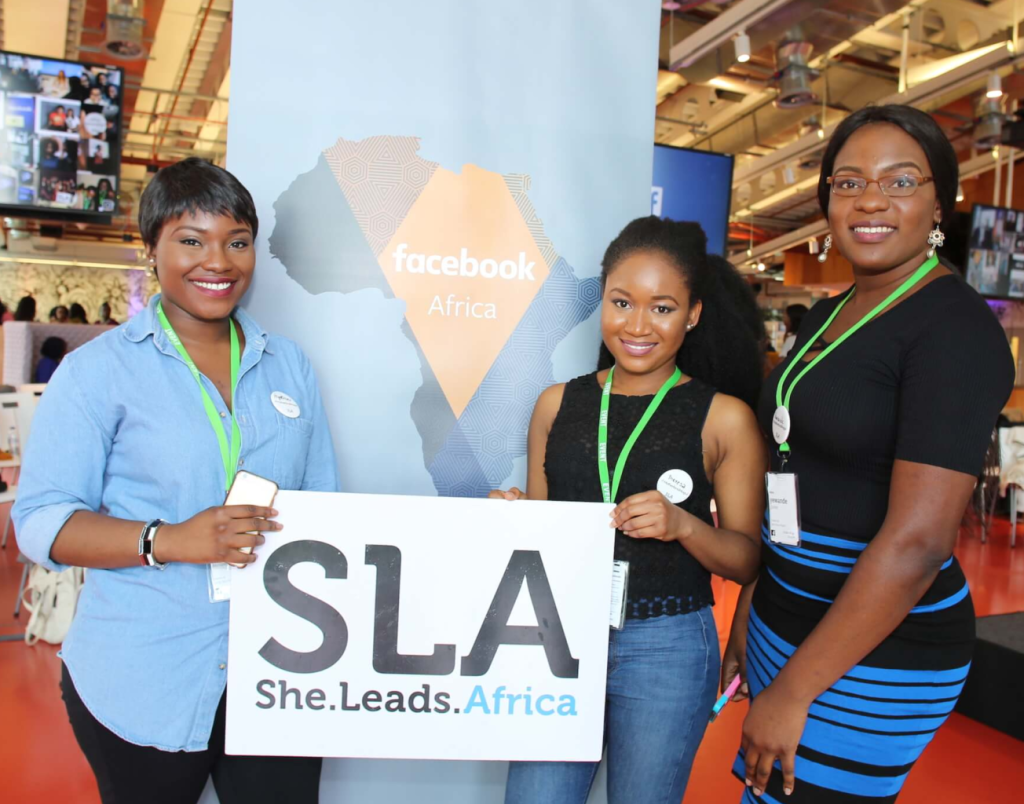
7:15am: I am not a morning person…This kept ringing in my head as I headed towards the station. It’s the first day of SheHive London and I was determined to arrive at Facebook on time. 8:43 am: After a quick brekkie at Itsu, I took out Google Maps feeling all savvy that I could find my way through the busy Euston area…WRONG! I cycled the area about 3 times before giving up and going old school. 9:05am: A 6min walk turned to 20 but here I was in this giant space. All I kept saying in my head whilst tryingto act cool was, “OHMYGOD I CAN’T BELIEVE I’M AT FACEBOOK…calm down Rabi, calm down!” I signed in using an iPad (very techy) and was asked to sit in the lobby. 10 minutes in, I realized I was the first one there! People started arriving afterwards and I got to meet a food blogger, a PhD student studying Business Incubation, a chemical engineer and an intern at IBM. This was all in the space of half an hour. Networking toh bahd! 10:30am: We were all signed in and taken upstairs to the space for SheHive London! The session started off with a rap battle. The challenge was to come up with an epic rhyme about what #MotherlandMogul represents. Team names included United Melanin, The Original Motherland Ballers and Amazon. Words to describe #MotherlandMoguls were; slaying, boss lady, beacon of hope. I couldn’t agree more #blackgirlpower 11:15 am: By now, the first session is underway and BBC Africa is live streaming the event on Facebook —better smile for the camera, 2 million people may be watching! First up was, ‘Building winning partnerships’ with Afua Osei! Afua split the participants into groups and got the teams to perform live case studies about creating a bath and body products business. So brand name, targets, potential partnerships and investments —you know the 101s— were covered. The participants then pitched their business to Afua and she gave them feedback straight away. More on Afua’s talk later on SLA so stay tuned! I managed to catch a quick shot of the co-founders of She Leads Africa or as I nicknamed them the ‘Pikachu and Charizard’ of SLA. Get it? #Pokemongo #Okbye Next up was Nieros Oyegun, co-founder of W8 Advisory who spoke about navigating the entrepreneurial roadmap! She gave us the five step approach to kick starting your business —in other words the do’s and dont’s. 12:45pm: LUNCH! Well turns out my quick brekkie at Itsu and walking it off lead to tummy grumbles. Okay, maybe that’s TMI. Facebook laid out a yummy spread for us. Hold on, I didn’t mention how amazing the space we were using was right? Well for starters, Facebook has redefined what snack time means. There were racks of various snacks and drinks from healthy to choco-mania. So lunch was no different! We had an hour for lunch and networking. For me this meant finding out what people had to say about their experience so far. Check SLA Insta for all of that action…you’re already our Insta bestie right? I met more cool #MotherlandMoguls with brilliant ideas and it felt very reassuring to see what talent the continent has. I also had the chance to chat with our speakers and even found out one of them shares a mutual love for Korean food! 2pm: We got introduced to “Chale” of Move Me Back. He shared with us some tips about the right attitude to moving to Africa, the possibilities and the challenges. He fittingly used images and gifs to illustrate his presentation —this became a theme of the event as well with the other speakers. We also got to hear from one of the users of Move Me Back about her experience working in Africa. 3.45 pm: Yvonne Haizel, a lead African investment strategist gave us pointers on how to get investors by teaching us the 4 M’s to get your business through the door. She invited the women behind Bahati Books to demonstrate to us how to pitch your business to an investor using the 4 M’s. She then gave an opportunity to 2 participants to pitch their business to the room. This was similar to Afua’s live case study at the morning session. 5.00 pm: The sessions came to an end but not before Afua initiated a speed networking session —yeah, it is kinda like speed dating! You get 5 minutes to chat with someone and after you hear the sound of a bell you switch to the next person! Talk about a #MotherlandMogul crash course. And this was just one day. There’s more because Sunday was just as epic! Hint: there’s more Queen Bey news, JDunn and IrokoTV.
Princess Odiakosa: I’ve dreamed of becoming a chocolatier

The cocoa bean may be indigenous to the Americas but these days its home is in West Africa. West Africa produces nearly 70% of the world’s cocoa yet we’re not renowned for making luxury chocolate ourselves. Princess Odiakosa wants to change that. She is a chocolatier that works exclusively with Nigeria cocoa and has plans to make Nigeria “the sweetest place in Africa”. Here, she shares with SLA the challenges of being a Nigerian chocolate maker and why her company is called Kalabari Gecko. How did you find your way into making chocolates? I have always had this love for chocolate. I think it was as far back as when I was a little girl and being ascribed to as having a chocolate complexion. Also as a child, my sister planted a cocoa tree in front of our house all on her own. There is something very compelling about the visual structure of chocolates and its formation in a box. There is the mystery embedded in the interiors of its inner cavities, and the burst of polyphenols, a reward your brain is always thankful for. Whenever I travelled outside Nigeria, people would request I come back with chocolate. That used to get me upset. My response sometimes would be, “But we have cocoa, why don’t we make ours?” It was even sadder when visiting friends or family abroad, I had nothing to offer as gifts from my beloved Nigeria. So, you can say it was a two edged-sword. Thinking about Nigeria and the cocoa we have motivated me to stop talking and start creating. I’ve had this dream of becoming a chocolatier since 2010, but didn’t know how to go about it. There were no chocolate making schools or classes available anywhere in Africa. I had to head North of Europe to learn the art of bean to bar. My passion is for the Nigeria cocoa bean. You probably don’t know that our cocoa gets a lot of bad press for its distinct character. My Kalabari Gecko is 100% single source Nigerian chocolate. My chocolates are made from our locally farmed cocoa bean into tasty, satisfying treats. I want to change all that and make Nigerian chocolate an acquired taste. Something we can call ours. Why Kalabari Gecko? What’s the story behind the name? Initially, I had another name for my company. But one day I was conversing with a friend’s brilliant mum about my plans for the business and she advised me to change the name to a more Nigerian one. It was from there, the name Kalabari Gecko emerged. Every time the thought of my chocolate business came to mind, I always had a picture of this pretty rampant gecko in my head. This image started invading my dreams and I chose it as my logo. What do you do for a living? Do you have any plans to move towards making chocolates full time? I work full-time at a financial consulting firm, dbrownconsulting. We are into financial based training, consulting and outsourcing. I manage the Training and Marketing department. I love my job so much, and my boss has been really supportive of my business. It can be really hectic juggling both, but for now I try to find time in the early mornings to make chocolate, or after work, most especially weekends. I try to make my passion fuel me, and my dreams take me there. I would love to make chocolate full time and I am working towards that goal. How do you plan to take your chocolatier business to the next level? I have often heard about the difficulty of acquiring a start-up loan from the banks; that it’ll be easier bringing Steve Jobs back to life, than get a loan from one of the banks. So, I am investing most of the money I take home to my chocolate business. I see my factory producing high quality affordable chocolate for Nigerians and the people they love all over the world. I want to make Nigeria the sweetest place in Africa. To get there, I am taking things one step at a time and right now, trying to put everything in place. If you could eat only one kind of chocolate for the rest of your life? What would it be? It would be the darkest of the dark, or any flavor enrobed in dark. I love the honesty the dark chocolate has. I even find myself popping freshly roasted cocoa nibs into my mouth whenever I roast. If you’d like to share your story with She Leads Africa, let us know more about you and your story here.
Beyond the passion – What you need to get into the caregiving business

Are you a woman who wants to ensure that her family and community is well looked after? Are you passionate enough to sacrifice time and energy? Do you have some basic administrative, managerial or business skills? Maybe you’re thinking none of these requirements apply to you, but are you ready to be spat on, clean washbowls or change thousands of soiled diapers? Then the caregiving industry might just be the revolutionary business idea that you have been seeking. Mind you, it’s painstakingly hard but it is one way to give back to society whilst paying the bills. Interestingly, a famous African saying says, regardless the source of the income, money is money. I am sure that at this point your heart might be doing cartwheels at the thought of the coolest business idea ever. The fact is that home care is one of the fastest-growing businesses in the world. You can be rest assured that without a large capital and clients, you can feed your passion by starting a daycare for children or a nursing home for the aged. Location If you have a roof over your head, then you have the space to start and work with. Is your child in preschool? Are you a divorcee living alone? Or are you an elderly couple with kids off to university? You can always make space with what’s available. It could be a nursery turned into storage, a den that no one sits in anymore, an empty garage or a basement without piles of laundry. It will surprise you just how well, using the right colours, textiles, paint and partitioning can transform a space. Furniture and equipment Getting your initial set up furniture and equipment can be as easy as reaching out to friends and family, A lot of times, families hoard furniture in the hope of re-using them, but most times, they don’t. If you have a network that is accommodating, reach out to them for their old stuff. Most of these items are barely used and have minimal damage. They can be repaired at little cost. Staff Hire retired nursing aides, nurses, and early-year teachers because, with their experience, they are typically patient, may have less responsibility or financial needs and will be willing to help you grow your business. Recruit young people who are willing to work as volunteers for the first couple of months till you settle your financials. Acquire knowledge The worldwide web has a multitude of free resources and courses for business owners in the caregiving industry. Sign up for these courses as often as you can, acquire knowledge on creating a business plan, new trends and best practices in the caregiving industry. Research successful businesses in the industry, you can target studying one business a day. Learn new skills to minimize calls to experts for help with things as basic as installing a nursing station. Train your staff on acquired skills. Create a dynamic team. Give yourself space to grow! Your clients are right here Your clients are never in space or in the next city. They are the people you meet within the marketplace, at the hospital and at your place of worship. Familiar people will feel more relaxed because they think they know your story and can relate to it. They will feel safer around you than some savvy business owner who launches a similar start up in your area. These are your clients; be sure to invite them to your open house. Seek their ideas before implementation. Also, find out what their immediate needs are. Would they work full time or would they prefer a full day care? Are they more focused on the social interaction a group setting will offer? Furthermore, the elderly might just need to be tended to at different times or a group where they meet and discuss. That cozy setting might be your house. You can set up games and make homemade goodies, to create the perfect setting for old stories of love and war. Marketing and advertisement Design and print catchy flyers. Distribute them at supermarkets, playgrounds, schools, and hospitals. Also, volunteer for community engagements. These will increase your visibility and increase your trustworthiness. Remember that your most valuable marketing tool is word of mouth communication. This will get people talking positively about what you do. Registration and legal requirements Always ensure that you do a research on the requirements of registering a business in your country. You would want to create an atmosphere that is loving and devoid of stress. Seek advice within your network. You might just know a lawyer willing to assist with the registration procedures at a discounted value.
How to start a PhD with no money

We understand that some Motherland Moguls are working towards a career in academia. It could be because you’re looking to add Prof. before your name or you just want to further your studies. Chances are you’ve looked up the cost of studying a PhD and balked at the price tags. Because SLA always has your back we spoke a self-funded PhD student. Oreva Olakpe is not only studying for a PhD in international law focusing on African migrations, she’s also an entrepreneur and a hustler. She’s self-funded her way through school so we knew she’d give some great tips. Why self-fund a PhD? Finding funds for a PhD is hard. Most of the funding out there is based on the interest of people that have the money. If they are not interested in what you are doing, there’s nothing for you. If you’re from a country that doesn’t have the money to fund research on their particular field. Don’t feel too bad though. Well, the issue with funding is that it can suck out the creativity of your work. Especially when funders want to dictate where your research goes (and if they can, they will). When you self-fund, your research is in your control and you can go wherever you want with it. Don’t get us wrong, it’s very difficult to be self-funded. In Oreva’s program, there’s just one other self-funded girl. And guess what, both of them are African. There’s nothing Oreva didn’t do to pay for her living costs. She says, while there is a joy in knowing that your efforts are paying for your research, it’d be wrong to glorify it. So if you’re ready to walk down the self-funded path, be ready to do all sorts of things to make money… Save up First of all, don’t jump straight into your PhD from your masters. Have a year to figure out things financially. Find a 9-5 that pays well and start saving ahead of school. “For me, I only managed to save up a bit of money. What was able to help me get through the stress was doing entrepreneurial activities.” Apply for (small) grants Any PhD student is familiar with the grant application process. Grants can be very competitive and the trick to get through them is to apply for many. “I got tiny grants from different organisations as opposed to the big funding that most people get.” Small amounts pouring in from different organisations can come up to a lot. For Oreva, grants paid for all her international flights. For her fieldwork, she spent a couple of months in China and grants paid for all that. When money comes in from different sources, you can take care of annoying things that suck up your funds without you knowing (like transport and food). There’s no shame in applying for all the grants. Also consider applying for a scholarship. A fair warning though, there is not much out there for Africans in social sciences. Have a support system “The most important thing that helped in cases of emergency, was family members.” Just because you’re self-funding doesn’t mean you shouldn’t ask for help when time calls for it. For Oreva, family came through when she needed her tooth removed and did not have cash at hand. Her mom and sisters are deep in the entrepreneurship vibe and this supported and inspired her hustle. Oreva credits them as her motivation to try business ideas as a source of financial and intellectual freedom. Friends came through when someone smashed her laptop screen —the most important thing for a PhD student— and she needed to repair it. Another way family and friends pull through is with connections. If you need to do fieldwork in certain locations, they can help make things easy for you. The important thing is to have a support system, whether its your family, friends or the investment your parents put in your name. Get your hustling gear on Oreva has sold clothing (ankara), artwork and jewellery that paid her a lot. In addition, she does a lot of freelance writing and has worked with blogs while also writing academic articles for companies. While she lived in China, Oreva was also an IELTS tutor and French tutor. It seems if there’s one thing self-funding a PhD will do, it’ll improve your entrepreneurial spirit. Academics are associated more with the library than the marketplace but the truth is entrepreneurship fits into any career. Academics can also be entrepreneurs. “A lot of the African students I know are hustlers.” In SOAS, where Oreva studies, there’s a market for students. Maybe it’s unsurprising that most of the people selling at the market are African students. Some sell jollof rice, buns and chin-chin while others sell jewellery, bags, homemade beauty products, soaps. Find ways to cut cost “I don’t stay in London but in my family home in Nigeria. This way I don’t have to pay that high rent.” You don’t have to be physically present at campus for most PhD programs. To cut costs further, you may also consider studying something that relates to you or to your country. Oreva’s case study is focused on Nigeria. Pick research topics that will be cheap for you. This way your networks will come through. For example, when you have to travel to conduct research in your home country, chances are people will be more willing to help you. And it doesn’t have to be people you know. It can be local universities coming through because they see the value of what you’re doing. Did you enjoy this article? Sign-up for our newsletter to get even more amazing content directly in your inbox. Click here.
Jessica Layado: I had to tough up and take it like a woman

I was barely done with my secondary school education when I found out I was pregnant. I clearly had no business having sex. Yet there I was, at the start of my long holiday, finding out I was pregnant. My first stop on finding out, was the house of the responsible other party. I got the shock of my life when he frankly told me that he wanted no part in the drama of unexpected parenting. So, here I was, fresh out of secondary school with no idea what was next for me. Watching people parent was one thing but being a single, young parent was a whole other thing. I could either decide to be a child and cry about how unfair the world had been or tough it up and take it like a woman. I cannot dispute the fact that I was very scared but one of us had to be the grown up and seeing as this miracle was growing in my womb, that person had to be me. I found a job and started to plan for both of my baby and I. Fast forward to a few months after, my dear little princess was born. Working with Family Life Network After that, I decided that I wanted to work with NGOs that focused on family planning and sexual awareness. That was how I got started with the Family Life Network. Five years and so many workshops later, I cannot even begin to say how remarkable a journey it has been to impact the lives and choices of youth. We encourage kids to know and understand their individual worth at such a crucial stage that is often subject to peer pressure. It is very rewarding for young girls to look up to me for mentorship, guidance and counsel. It is such a big deal to have the kind of power to influence their choices for good, to cry with them in their hard times and assure them that despite the storm and the pressure, in a little while, they will be just fine. Moving on to Lamera Over time I realized that my circle of influence was growing and a lot of the would-be young girls had grown into fine young women in the work force. Now, my focus has also grown to helping them maximize their financial ability and as much as possible, learn to be independent. A year ago, I started Lamera, a project that seeks to empower young women with as many necessary skills as they need to survive in this era. Some of the practical skills include jewellery making, knitting, cooking skills particularly making and packaging peanut butter better known as odi in Northern Uganda. The essence of Lamera is to empower women to know that their worth is determined by them and the world will only value them based on how they value themselves. I strongly believe when a woman realizes this fact, the world then becomes her stage. She becomes a force to reckon with and can do pretty much anything that she sets her mind to! Balancing my initiatives with being a single mum Starting Lamera is a dream come true for me. My biggest challenge was and still is breaking through to the woman at the grassroots. A lot of the women that have zero access to these skills are hidden in rural Africa. To work my way around this, I am building relationships with churches and individuals who have access to these women so I can assess their needs in order to be relevant to each set of women. None of my passions were negatively affected when I chose to have Stephanie. If anything, being a mother awakened my creative juices causing them to flow much better and faster. I kid you not! Amazingly, Stephanie is the split image of me. She loves singing, dancing, reading and always actively participates in her school productions. She is such a brilliant child! She recently reached the finals in her class spelling bee competition and I cannot begin to tell you how proud of her I am. Never give up I reckon my work is cut out for me and I’m enjoying the thrill of the challenge. I have been told that I cannot be relevant to all women but I believe in starting one woman at a time and that ultimately is my strategy. To work with one woman at a time and knowing how much women like to share, the knowledge will spread one way or the other. My biggest belief is that to start a thing is more important than to say you want to start it. Sometimes you’ll be the only person who believes in what you’re doing but keep right at it. If one way doesn’t work, don’t quit! Try it another way and if that doesn’t work, try another way! Keep at it until you find your way to what works for you. Believe in yourself even on the bad days, especially on the bad days and keep your head up knowing that it only gets worse before it gets better and surround yourself with positive people.
Rosie Mashale: Life in the townships is filled with entrepreneurial energy
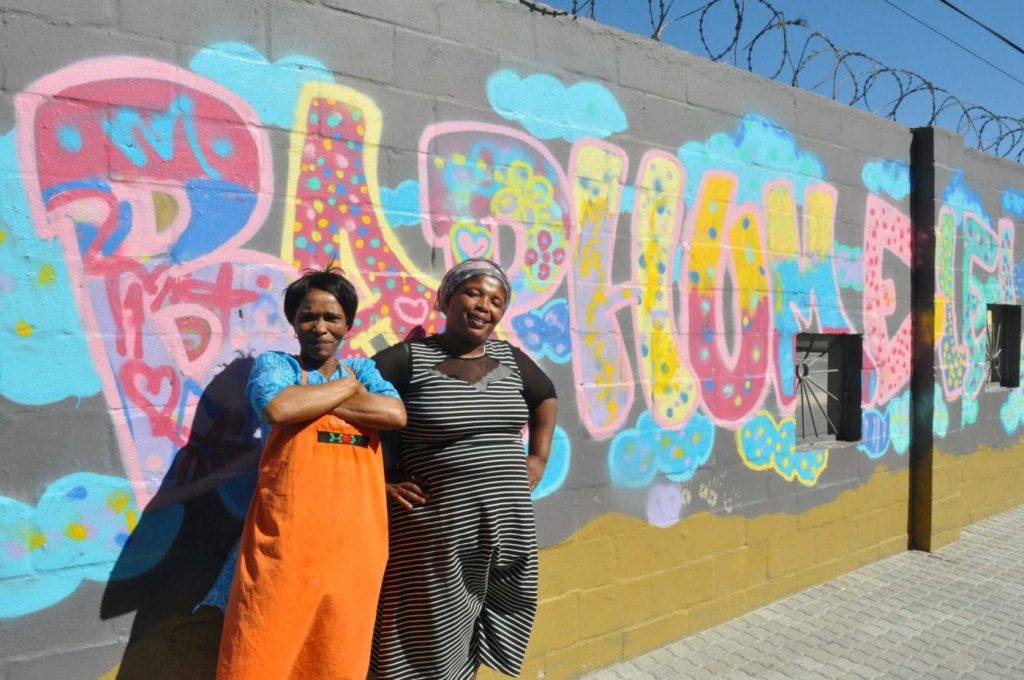
Rosalie “Rosie” Mashale was born in a small village called Kgubetswana, Matatiele in Eastern Cape. There, she studied and trained for thirteen years before moving to Khayelitsha. Trained teacher and care worker, Rosie founded a community-based project Baphumele, a crèche along with a group of women from her community. Writer Megan Gieske visited Khayelitsha and spoke to Rosie about Baphumele. She shares what she found with SLA. Langa Township is the oldest township in South Africa. Langa is a suburb in Cape Town established in 1927 after the Urban Areas Act. It is one of the many townships in South Africa designated for Black Africans during the Apartheid era. Since the 1960s, when the forced resettlement of the Apartheid era began, the people of Langa have wanted privacy and a sense of ownership. Rosie remembers being disturbed by seeing township kids sorting through rubbish dumps in search of food while left unattended by their parents. As life in the townships is filled with entrepreneurial energy and community spirit, Rosie knew she had to do something. Born and raised in Kgubetswana, Rosie was described feeling very shocked and puzzled when she arrived in Khayelitsha. “I opened the doors to take care of the orphans, for me it is a calling to do what I am doing”, Rosie says. She responded by taking children into her home, and together with a group of women from the community, began looking after these unsupervised children. This group later went on to found Baphumelele Educare Centre after moving to Khayelitsha in 1989 with the aim of providing a safe environment for township kids. From the first week, Rosie and her partners cared for thirty-six children. The name given to this project was Baphumelele, a Xhosa word meaning “you have progressed”. From these humble beginnings, Baphumelele Educare Centre was founded, which today is an established community crèche and Grade R (preschool) caring for roughly 230 children aged three months to six years. While the Educare Centre had developed a reputation for looking after children, Rosie also felt a calling to reach out to orphaned children in the community. To that end, Baphumelele Children’s Home was created as a place of safety for abandoned, abused, neglected or orphaned children, many of whom have been affected by the HIV/Aids pandemic or have HIV/AIDS themselves. Now, Rosie acts as Baphumele Organization’s managing direction and founder. From her initial idea, Rosie now permanently employs 204 people while 60 earn stipends as paid volunteers. Rosie aims for Baphumele to be a beacon of hope in Khayelitsha. Even though Rosie has received 28 local and international awards —and been visited by Nelson Mandela—, she says her greatest reward is the kids she works with. “The children who have been here at Baphumelele are progressing. Some are social workers, accountants, etc. They do not forget where they come from. My real motivation is that. At heart, I am very gentle, impressionable, receptive, a dreamer and visionary.” On the high wall that surrounds Baphumele’s many Educare centers, there’s a world map painted in bright colors. Many of the buildings on Baphumele’s campus have plaques recognizing local and international support. Baphumele Children’s Home is a demonstration of what a community, local and international, can achieve when everyone works together. “I am a person who supports change, innovation, and human advancement,” Mashale says, “I am strongly committed to a humanitarian cause and social improvement. I wish to contribute something of value to the world, or at least to my community.” You can read more on Mashale’s “success” on the website: www.baphumelele.org.za
The 4 minute guide to SME marketing: Everything na packaging

This article in the on-going series was largely borne out of a personal experience. Did I mention that I am testing the entrepreneurship waters myself? To digress a little, I think there is a side-gigging bug making the rounds, especially in the city of Lagos. Let’s do a quick poll if you currently work a 9-5 job but still want to take charge of your working life, do what you love and not be dictated to by corporate rule, say Aye! Well, my business partner and I had a mini-debate about how products should be packaged for potential customers. My stance was a very practical and cost minimizing one seeing as ‘affordable’ was at the core of our proposition to customers. But she, on the other hand, believed in making an impression because from her perspective and quite truly, packaging can make all the difference! Let me quickly explain why this is so. Remember that saying about dressing how you want to be addressed? The same can be said of product packaging. Humans are largely visual beings and can form lasting impressions based solely on what they see. Also, seeing as we live in a cluttered world, you want to be able to, with your packaging, get people’s attention and inspire them to take action. Now I am not going to over-flog the “Packaging Matters” discourse because I am almost certain that as a (potential) business owner this is something you are definitely aware of. But while you do the needful, there are 2 things I think you should keep in mind: What’s your business model? As a new business, especially, one playing in an already saturated field, one way to win would be through your pricing model. You should actually aspire to deliver the lowest cost to your customers in the form of lower prices. This can guarantee you a spot on customers’ purchase considerations. I mean who doesn’t want to pay the lowest price for the best quality, right? If your promise is the lowest cost, perhaps you shouldn’t spend so much on the packaging of your product seeing as every cost you incur would have to be taken care of in your selling price. Of course, you should consider this if you intend to make a profit and remain in business. Going minimalist (please do not read this as tacky!) with your product packaging shouldn’t bother you at all if your proposition to customers clearly explains why that is necessary. So for example, ever noticed the difference in packaging when you shop via Jumia or Konga (proposition: lowest price guaranteed) as against shopping at a Montaigne Place (proposition: luxury at its best)? Packaging versus Product Quality I am sure we’ve all had this experience before. You go to a fancy restaurant with the most fantastic ambience and the food turns out absolute crap. Mind you, this is after much pomp and pageantry. Or you pick a pack of biscuit off the supermarket shelf because of a package design too catchy to ignore and discover that it tastes like sawdust. In both aforementioned instances, you’d have to be a masochist to want to relive that experience. The learning, therefore, is this: you can inspire an action (purchase) with package design but if the product/service experience does not meet expectations, there would likely be no repeat purchase. More important than the package design is the product/service quality because that’s what ultimately delivers value. There is the need to fully understand how your desired customers define value and give them that, else any other thing you do would be counter intuitive. So you start a hair salon business, what would your ideal customer appreciate more; gold-plated mirrors from Dubai or gifted and experienced hair stylists on your payroll? This is the ideal process: Know your intended customers. Understand their needs. Create a product/service that fully satisfies those needs. Then properly package that product or service. Do not attempt to prioritize no. 4 over no. 3. There’s so much more we can say about packaging but this is still the most important thing: “Packaging is a substantive aspect of your marketing strategy that you should pay keen attention to ”. Cheers!
Make yourself stand out: How to build your public profile with Imad Mesdoua

Big news, our first #SheHiveLondon event took place over the weekend. As with all our #SheHive sessions across the world, we were joined by inspiring speakers who are making waves in their industry. One of those speakers was Imad Mesdoua, a political risk analyst, senior manager at Africa Matters, TEDx speaker and the list goes on. He’s spoken on major channels like the BBC and rubbed shoulders with some of Africa’s most influential policy makers. Safe to say, he’s mastered the art of building his profile and becoming a known name in politics. If you missed Imad’s session in the flesh, we’ve summarised his top tips on how to make your public profile stand out like his. You’re welcome. 1. Twitter and LinkedIn are your friends Social media is one of the most powerful tools of recent generations. The question is, are you using them well? For Imad, engaging in social media opened up opportunities to speak to politicians, journalists and other influencers who may have been difficult to contact in the past. It even landed him a mentor -all he did was reach out and express his desire to make an impact in his field. Imad reminded us to never underestimate the power of Twitter. Instead, follow the movers and shakers in your industry and share your opinions on trending topics. Embrace popular hashtags, be fun and relevant but remember to keep it professional. Stay away from Kanye-style rants and you’ll be fine. Remember, at the end of the day it is all about trial and error, so don’t be afraid to experiment. LinkedIn is a powerful tool for making those all-important professional connections. It gives you the chance to showcase your education, your work achievements and your interests all on one page. It’s the perfect way to make a strong first impression online, so make sure it’s up to date and includes enough detail to keep people interested. 2. Be a social butterfly and become a familiar face at events This one isn’t just for the extroverts of the world. Even if you’re a little more introverted, heading to events specific to your sector or industry can do wonders for your public profile. Getting out there to events like #SheHive and others is the best way to learn from industry leaders, gain knowledge and establish lasting relationships. If you go to enough events, you’ll start to see familiar faces and become known as someone who knows what they’re talking about. For every person you meet, think of how you’ll describe yourself in 20 seconds and how you can add value to your new found contact’s life. We know, we know, networking can be scary, so here’s how you can make the most of it. 3. Be a student of life and escape the comfort zone Never rest on your laurels. One thing Imad noticed is that sometimes we establish our skills and talents and then get too comfortable. We stop learning and adding to our experiences, which can be a disadvantage in the competitive world of business. One way to overcome this is to dive out of your comfort zone. For Imad, this meant getting a job outside of the Africa-focused political industry. While doing something different might feel strange, it makes us ready to take on new challenges. Let’s admit it, looking for a new opportunities is never easy and sometimes you have to think out of the box. While looking for his ideal job, Imad himself got creative and took on speech writing and consulting roles which helped him meet his long-term career goals. 4. The one thing you can’t forget… You can be a social media pro who is at every event and who always builds on her skills, but without this one thing it all falls apart. That one thing is professionalism. Professionalism ties all your efforts together. Professionalism means being consistent and going the extra mile to hone your craft and personal brand. In Imad’s case, that meant ‘overdress, overspeak and oversabi’. Remember to have fun with it though, find what drives you, pursue it and be open to making changes along the way. While #SheHiveLondon might be over, don’t worry, the world tour continues. Lagos and Jo’burg, we’re coming for you!