
Urban-rural migration and the weird city girl that dares it

While rural-urban resettlement may be the most studied human migration pattern, it definitely isn’t the only existing one. Considering the pros of urbanization and the excitement that the urban switch stirs, it is understandably confusing that anyone would want to spin the bottle the other way around. I’m talking about urban-rural migration. Yes. Packing up your valuables then taking a hike out of town, destination, some good old rural grounds with the intention to settle for a few months…or for good. Talk about a reverse trend. The question is, why? You know how when almost everyone gravitates towards something, it becomes particularly precious? Urban cities illustrate this best with their high cost of living and increased competition over limited resources. The basic structure of the urban system in itself is as magnetic as it is frustrating. As much as we love it, sometimes it gets too much and there is a yearning to shut out the noise of the city. This goes beyond taking days off work, or locking up and staying indoors. Rural life presents a picture of serenity, easy living and greater mental focus -which we like to call ‘clarity of mind’. It also suggests cheaper land and rent, a chance to work without constant disturbance of modern tools and to learn the art of human relations in its most basic form. Now for the soulful African woman who needs to find herself but cannot because of the confusing urban noise and pressure, ruralism may be a very bold step. Moreso if it involves living alone, as many African cultures still raise eyebrows at the single woman who dares to live alone. Yet, it just might work. Going rural may not be at the top of the list for most young women. But, when it does become a choice, it is always a good idea to start a business that will give financial security. Here are a few ideas; Go ruralpolitan Be that city girl that knows how to farm. Those who know this, know this, farming is good business. There is something strongly appealing about a farm girl. She’s a girl you do not want to mess with. Everyone loves to eat, even those who don’t eat much still need food. Cultivate maize, yams, vegetables, fruits…anything that works with available soil. There’s no shame in it. Farm and sell the produce within your community and find a market in the nearest city. Here’s a fact; because of the absence of chemicals and smoke from industrial chimneys, crops grown in rural areas thrive, look and taste better. Get into some animal farming too. Rear chickens and sell the eggs, add goats to the mix if you can. And if people like rabbits in your part of town? Do not hesitate. Set up a bakery We haven’t met anyone yet who doesn’t enjoy a good loaf of bread. Chances are the nearest bakery is a good distance away from your town and folks do not particularly like walking so far to get some flour in their diet. Bake breads, doughnuts, rolls, pies even sweets if you know how to and sell. Drum up some new confectionery when you can and introduce it. You’ll be shocked to find how receptive people are to the new. They won’t just want to see it in your show-glass, they will want to taste it too! Become a transporter At a reasonable fee, of course. If it’s high, you may very well just ride alone.This may be tricky because of the cost of the vehicle in question whether motorcycle, motorcar or van. If you have any of these, transporting would be good commercial enterprise to undertake. Don’t just ride that bike or car, make some cool cash out of it. Launch a convenience store Every town big or small needs a convenience store (guess that’s why it’s called “convenience”). Before you do this, find out about the people living in your area and what they gravitate towards. This way you don’t waste time trying to sell things nobody has any interest in buying. It does not necessarily have to be a big shop at first. You could start small then later expand to something larger and on and on. Stock up on products you know people cannot do without, things they like but can’t get because they have to go miles to find them. Save them the trouble and include all those things in your store. This business ensures a steady flow of income everyday! Start up a medical care/pharmacy Please be certified to do this. You don’t want law enforcement agencies knocking on your door one day out of the blue -that just smashes the whole idea of peace and quiet, don’t you think? Much as this is humanitarian, it is also a service provision that comes with a fee. People have headaches or illnesses they simply can’t explain, women get pregnant, children run, fall and get bruises. Every one of them needs to be treated. Every town or village needs a medical facility no matter how healthy-looking the environment is. Open a beauty salon People get tired of doing their own hair. Even those who didn’t give it much of a thought earlier will suddenly begin to find their way to your shop once it opens up. Beware, you need to be able to make that hair sing. A lack of skill will quickly bring an end to customers trooping in. Establish a guesthouse Why open a guesthouse in a rural area? It’s as confusing as it is simple. City dwellers may not always like to go to small towns or villages but they usually pass through. Whether they come alone or are accompanied by friends, city dwellers will visit family ‘back home’ for festivities. Most of them will require lodging so that they don’t inconvenience their hosts. It would be a great idea to establish a place where they can lay their heads for the night or for a few days
Nneka Offor: Digital publishing can transform learning in Africa

The digital revolution doesn’t start and end with social media. Some entrepreneurs are pushing the revolution into other parts of life. Take education and reading for example, 20 percent of Nigerians who go online do so to read something new. Nneka Offor is at the forefront, pushing eBooks and eLearning to change the way Africans learn. Nneka is the founder and CEO of WhiteLeaf Digital, a digital publishing company based in Enugu, Nigeria. Here she explains how the digital revolution will affect reading and learning. Is there a market for eBooks and eLearning in Nigeria? There is a huge untapped market for eBooks and eLearning in Nigeria and Africa at large. The concept of an eBook is an electronic version of a printed book that can be read on any smart device. eLearning involves utilizing electronic technologies to access educational curriculum outside of the traditional classroom. At the close of 2016’s second quarter, the number of internet users on Nigeria’s telecoms networks hit 97.21 million with 85 percent accessing the Internet via mobile devices. On exactly what these people do online, 22 percent spend their time on social media, 20 percent opt for reading, 19 percent spend their time reading and sending emails. Movies and music enjoy a 13 percent share of the Nigerians time online while shopping gets a 5 percent cut. These statistics show that Nigeria already has the enabling platform for eBooks and eLearning. The overall growth rate for self-paced eLearning in Africa is 15.2 percent. Senegal has the highest growth rate, followed by Kenya and Nigeria. Selfpaced elearning revenues in Africa reached $ 250.9 million in 2011 and will more than double by 2016. Research analysts forecast the eLearning potential will get tripled largely in South Africa and Nigeria. Why start a technologically driven business considering high data costs across Africa? eBook or eLearning does not consume data. Online readings consumes between 380KB and 1MB depending on how long you spend online. Downloading a book from an eBook server archive needs 800KB. The longer you read, the more data it consumes. After you have downloaded your eBook and have them saved on your device, subsequent readings will be done offline and does not require data. Data is only spent when you’re reading online or downloading from the server after which you will no longer require data to read. Video or audio take more data. Online video streaming can take as much as 1GB in an hour. It takes between 3MB to 160 MB to download a 17-hour video. What steps are you taking to transform African educational sector? Our first point of call is Nigeria. Presently we are in talks with Nigerian based educational publishers over integrating digital publishing. Not only is this technology driven, it is also cheaper to publish eBooks as there are no distribution or warehousing cost. We’re also working towards getting institutions and corporate organizations to have eLibraries and eLearning platforms so as to encourage students/employees to read at their own pace anytime and anywhere. The other thing which is undoubtedly the easiest way to transform the educational sector, is awareness. Publishers and book lovers need to be aware of the transformation. That is why we are currently organizing a digital publishing summit scheduled to hold by the last quarter of 2016. The details are not in the news yet but it will attract traditional and digital publishers all over Africa. We will be discussing pertinent issues on how to convert and integrate traditional prints into digital formats, especially for educational purposes. How will digital publishing revolutionize learning? Digital publishing creates interactive learning. Studies show that interactive content can boost learning retention and students prefer to learn by doing, versus seeing or reading. When they interact with videos, charts, and graphs, they retain more information. Digital publishing can help transform passive learners into active participants. Also, learning materials are more accessible and affordable, and it reduces traditional book printing and distribution cost. By producing digital versions of educational literature and publications, you can substantially cut printing costs. This leaves you with more budget for other learning and marketing activities. Distributing heavy printed text books can be very expensive, not to mention slow. Using a digital distribution channel you can get your message out to a wider audience immediately, with no postage costs. Access to eBook is also quicker, cost effective and friendlier on the environment. In many cases, content can be created once and delivered to multiple platforms and operating systems, reducing the cost of publishing while simultaneously reaching broader audiences. Have you faced any challenge in setting up a digital publishing company outside Lagos? We have not faced any technological challenge setting up our business in Enugu. The only challenge we have faced with is delay in working with the traditional publishers. Most of them are based in the west while we are in the east. On many occasions, we have to go travel to meet with publishers for meetings. This has prompted us to start making plans to setup an office in Lagos precisely so we can be closer to the publishers. How would you like to be remembered? I would like to be remembered as a transformational leader who created value and made a significant positive impact in the society I lived in. If you’d like to share your story with She Leads Africa, let us know more about you and your story here.
Aphia Sekyerehene: I design clothes for non-conforming women

Aphia Sekyerehene is an emerging fashion designer, choreographer, singer and event decorator who discovered her passion for fashion at age 14. However, she could not fully pursue her passion until her 20s. Even now after going through design school and establishing her brand, Aphia still feels unsatisfied. She believes that starting her career later in life has deprived her of opportunities she would have had if she had started at 14. Aphia shares with SLA her experience in fashion design and developments in the industry. Why do you think you would have gained more grounds in the fashion industry if you had started at age 14? Having an early start in a career offers you ample time and opportunity to try your hands on the various aspects of the job. This means more time to delve into related options and more time for trial and error. Starting at age 14 would have given me more experience and variety to explore but now, I have to first build a brand before I can try my hands on other options. What prevented you from pursuing your passion after your discovery? I would say lack of funds. This is because fashion designing is more of a practical course than theoretical. So you need to get materials needed for the course and this was something my family could not afford at the time. In order to keep my passion alive, I came up with alternative methods like connecting with fashion designers across the world through online forums. Were there any setbacks when you finally got into the industry? Yes! Raising capital was one of my major setbacks. I am glad I have crossed that hurdle. Now, I am very excited to achieve more and more. Now that you have acquired a certificate in Fashion Designing, do have plans of furthering your education? Yes! Certainly! There is so much more to see, learn and explore. I will never limit myself to just the basics. I have to expand my knowledge. I am looking forward to acquiring a Master’s Degree in Fashion or any other course which will add value to my work. I am hoping to get into the Parsons School of Design in New York. How does your designing process work? What are you currently working on? Every project I work on has its own procedures. But usually I sketch ideas as they come and do clone drafts before the actual design. Some projects take just a day to figure out, others are time consuming. The latter requires a lot of inspiration which I get from the various colours that surround me. I am currently working on my summer collection. It is a hip, fun, free, colourful, light, stylish and original for every woman. This collection depicts the African culture in a creative way. It will be out in July. What part of your job do you find most challenging and how do you tackle it? Working with indecisive clients is very stressful. I tackled this challenge by coming up with a very detailed order sheet that allows clients to vividly explain what they want. This way, we get a win-win situation. In one word, define your work. Unique. Who is your target audience? My main target is the woman who is not afraid to stand out in her own unique self. My designs require my breaking free from the usual expectation so I target those women who stay true to their nature and are non–conformists. Having a target group also creates a niche for you, making your brand easier to handle and be identified. Which African fashion designers do you admire the most? For one there’s Christie Brown, I admire her abstract, sophisticated and classy designs. Then there’s Pistis, her beading creates exceptional masterpieces. I also admire Oswald Boateng, his eye for clean cut is evident in his designs. I would love to work with Christie Brown. She is sophisticated and transfers that attribute into her work. She has a way of blending totally different styles into an admirable design. Her designs are modern yet traditional; contemporary yet antiques. This is something I will love to learn. What developments on the horizon could positively affect future opportunities for fashion designs? For an African designer, I would say the removal of cross-country trade barrier laws could be an opportunity. Though this would introduce more competition in the fashion market, it would also provide designers with the chance to diversify and expand their market. If you were to design an outfit for an African celebrity, who would it be and what would you make? I will love to design a fitted floor length backless lace gown with long sleeves and beading for Nigerian actress Genevieve Nnaji. Genevieve has an hourglass figure and a high front neckline fitted floor length dress will compliment her figure perfectly. The backless part will give her a sexy touch and an opportunity to show her amazing skin tone.
7 steps to starting your business with a full time job
I had at least 3 failed attempts at running a business with a full time job before I got things right. I often wondered how other people managed to do it. But now I finally got it right, I can let you know how to start right. For the last 4 years, I’ve combined my 9-5 job with starting and growing my business Deluxe Childbirth Services. Today I’ll share 7 simple steps with you that have helped me effectively manage this leap of ‘craze’. Be clear on how much you really want your new business Why exactly do you want to start your business? Is it because everyone your age has one? Or is it because you don’t mind having multiple streams of income? Do you want to exit the rat race? Or do you want to provide solutions to challenges around you? There really is no right or wrong answer. The important thing here is to know your real motivation and write it down. Write down why you want to start your new business, your first year goals and what you are willing to give to see it become a success. You’ll need it to keep you going when the tough times come calling. Take a break to clear your head for action Your current job might leave you working long hours. If you add in the long commute to work and back home, it’ll leave you totally drained. This is why when you want to start any new business while working, you may need some time off to clear your head! My idea of time-off is at least three full days with no distractions. You’ll spend the first day resting to refresh your body and brain cells. Then you start thinking up your launch plans from the second day. At the end of this much-need timeout, you should have a list of the key actions to launch and sustain your business. These actions should cover the first 1 year, at least. It should answer when these actions need to be completed by, which of the actions you will complete yourself and those you will delegate to others, and who you’ll outsource to when necessary. Understand your fears and destroy them Dreaming about an idea and how it will blossom into a successful big business can be a pleasurable experience. Sometimes I wish that’s all we needed to do to make money from our hustles. Sadly, when it’s time to start, reality sets in and some people get scared. I know I did when I was about to start my current business. Most of the women I speak to also get super scared! But guess what? It’s okay to get scared. It’s even okay if the fear sounds flimsy, I was scared of my name being out there. What is not okay is letting your fears rule you. To move ahead with your new business idea, you owe it to yourself to understand why you might be afraid and conquer that fear immediately. Turn the needed actions into small tasks; pace yourself and celebrate success I know you might be tempted to take your new business launch on like you take on projects at work. You know, with that ready to bulldoze it attitude. But when it comes to your business, you might need to go a bit slowly. Remember that you’ll most likely work on your business after your regular work hours. By that time, your body and head will most likely be tired. So pace yourself, give yourself more than usual time to complete a task. And, once the task is completed be sure to give yourself a small treat. Be ready to work HARD My friend, there is no escaping this! To be a success at both your job and business, you need to work hard and be disciplined. While at work, focus on your job and deliver your agreed priorities with as much excellence as you can afford. And when you get home, focus on your business full-time. You may need to tweak your work schedule to include working on your business on Saturdays. This may mean sacrificing a lot of time, sleep and outings to work your business but you can be sure you’ll be off on a great start. Get an accountability partner/coach and have regular reviews with her An accountability partner is someone with whom you can share your dreams and plans. This person will constantly remind you on agreed deliverables. She is someone you really would not like to see upset when your regular reviews reveal that you are behind on agreed actions. Your accountability coach must be someone who is genuinely concerned about you. She is someone who wants to see living your dreams, not someone who will kill those dreams. Recognize His grace and ask for help I believe we are nothing without God’s grace. As such, I always advice acknowledging this and asking for His help because really what you are about to go into is not an easy task. Once you are clear on your business ‘goals, it’s a good idea to ask God for the strength and capacity to do more. You want an environment free of obstacles and stumbling blocks so you can close out tasks faster. Most importantly ask for opportunities at work and in your business where you can shine brightly with little effort. So there you have them! Start out today and keep me posted on how it goes. If your job is flexible and not as demanding as most jobs…count your blessings and make it work in your favour!
5 lessons learned from not protecting my business idea

I am part of an entrepreneurial Facebook group (we’re now over 7,000 members strong). Let’s divide the group into two; techies and non techies. One of the most asked question by the non techies is, “I have an idea for an app and I’m looking for a developer. How I can I protect my idea?” In order words, how do I prevent a developer from running off with my idea, claiming it as his own, working on the idea himself and making millions of dollar off it? The response is usually the same; make him/her sign a non-disclosure agreement (NDA). This question always reminds me of my own experience with my second developer which I will share with you. I first met him in the summer of 2014. I got to know he was a developer during our introduction but I was still poking around my idea so I said nothing. Over the next few weeks, our friendship grew. When I had figured out exactly what I wanted to do, I gave him a call and discussed my idea briefly. I also told him I wanted to build a small team; no more than four -including both of us. He said he could help with this. The next time we spoke, he informed me that one of the developers he had available was going to work for Google and would not be available. The other developer was working on a project. He advised me that the best way was to get started with just the two of us . In the meantime, he wanted a one page Word document about my idea. I wrote a one and half page explanation of my idea and emailed it to him -without a non disclosure agreement. For many other reasons, it all fell apart. We never got started; neither did I ever speak with his developer friends. Here is what I have learnt since then; 1. Execution is all that matters Ideas are like opinions. Everyone has one. I know that’s not how the saying goes but you catch my drift right? Do you realize how many million people are in the world? Do you know how many million people are thinking of the same idea you are thinking of? Well, I’ll put it this way then. A person can steal your idea, but cannot steal your vision. Like the non techies in the group, I was afraid of my idea being stolen that I became worried sick, almost lost appetite and drove myself crazy with paranoia for no reason. Do you know how much willpower it takes to execute an idea? Even if your idea is stolen, the execution will be different. No two executions are quite alike. 2. You are the visionary As the non techie, if your idea holds any depth, meaning, you’re not looking to make a quick buck. You truly want effect change in a particular industry and change the world, you are the visionary. As the visionary, it is likely that you’re more committed than anyone else will ever be. As it is right now, I am mentally, physically, wholeheartedly committed to OneSavvyDollar and creating value for my readers in ways I cannot even begin to describe to you. 3. Domain protection I have always been an advocate of getting a good business name and buying the domain name. It is a relatively inexpensive way to protect your business. Most companies run domain name promotions periodically. Even if the developer steals my idea tomorrow, surely, it will never be named OneSavvyDollar. He is going to have to pick a different name. 4. Ideas change upon implementation Until you actually begin to implement an idea, you never quite know how it will turn out. What I wrote as a one page document does not even begin to surmount to the changes and challenges my developers and I faced the moment we started working on this. But an idea does not necessarily stay in its original form from inception. The interesting part, the idea continues to change because I let my users guide me to what they want (to a reasonable extent.). You can only understand this when you begin to match action to words. 5. A rule is only as good as its enforceability It’s one thing to have a non disclosure. It’s another thing to be able to be able to pursue it should there be any violations. We watch movies and believe the rules apply all the time. But it doesn’t quite happen that way. In the case of the Face book lawsuit between the Winklevoss twins and Mark Zuckerberg, the Winklevoss twins had the resources. Here are five fast facts about them: They were born in South Hampton and lived in Greenwich (read as ritzy areas). They attended Harvard. They are Olympians and competed in Beijing 2008. Their father is a professor at Wharton, an author and entrepreneur. He owns a technology and consultancy companies. They hired a high power law firm. Can you understand now what I mean by resources? Truthfully, you most likely do not have the luxury of the time or the resources to pursue developer should the idea become a hit; particularly, if you are the sole business owner. Don’t forget it’s a game of probability; an idea could either be successful or not. If Facebook wasn’t successful, they never would have bothered.
Olebogeng Sentsho: We must be Afrocentric in our approach to mining and the economy

The mining industry may not be first choice for a young woman looking to start a profitable venture. Not for Olebogeng Sentsho. Olebogeng is a one woman force shaking things up for the better in the South African mining and waste management industry. Her company Yeabo Mining is completely owned by black women but it doesn’t stop there. Through her initiatives, Olebogeng works towards improving rural communities and empowering women. Here she shares insights into the mining industry and why it needs to be Afrocentric. Strategic waste management? What lead you to that industry? As an investment analyst, I was exposed to many proposals in many fields. One of the proposals that came across my desk was for a tailings plant on one of the mines a client was looking to invest in. The plan was flawed and subsequently abandoned by the mine owners. I then requested their permission to improve their model and approach investors for funding. They agreed. Unfortunately, the project was capital intensive and any capital that was coming my way would take months to get to me. I had to make a living so my husband suggested we go pick up steel balls on an abandoned mine and sell them for cash. We did. We made R150 000. From there we approached other mines and realised that the service was in demand. That is how we started. How did you make the switch from waste management to finance? Once Yeabo Mining was up and running, we noticed a huge demand in requests for collaboration. This was not because we were the best at what we were doing, it was because our collaborators needed the funding an operation like ours could source. We are 100% black female owned and the legislation in South Africa is such that we receive preference when we apply for funding. There are also more funding opportunities for businesses that are owned by young, black women. Once we isolated this need, we thought it prudent to investigate and set up a fund that supports junior mining operations. We currently have four clients on our books who mine silica, manganese, gold and chrome. How can waste be converted into a revenue stream? Many of the products used in the mining process and the by products of mining still have value even though they have been used. For example, steel is used in the liners that line equipment in the concentrator plant. Once they are worn out; they are discarded and replaced. Each liner weighs 2 tons and there can be 18- 34 liners per plant. We retrieve the liners from the dump and sell them to a recycler for R1900 per ton. Combine this with about 300 tons of steel balls and you have a legitimate revenue stream. Also, when a specific mineral is removed from the ore, other minerals that are equally valuable remain. Most mines ignore these other minerals if they don’t form part of their core business. Yeabo Mining exploits these minerals and processes them. These are just a few of the ways we generate income from waste. Considering the sometimes tense nature of mining in South Africa, does social responsibility feature in your business? Social responsibility is a big part of why we do. Yeabo Mining supports female owned SMME’s (Small Micro medium enterprises) by giving them preference when we do our procurement. We also mentor several young people, many of whom are trying to start businesses in the industry. Mining is treacherous and having someone who is already in the business looking out for you is an advantage. Also, Yeabo Mining collaborates with community outreach programmes that educate and empower young people in the fields of maths and science. We are a proud patron of the Mining Innovation Initiative of South Africa (MIISA). You mentioned that you are engaged in other initiatives, tell us about them. MIISA is a holder of rights for several initiatives. There is “Let your light shine”, a renewable energy initiative that teaches women how to build solar lamps and sell them for cash. We also have Innovo Health Systems, which provides mobile hospital facilities for rural communities and the MIISA school for Mathematical Excellence and Science Innovation which are a series of pop up schools in the Sekhukhune area of Limpopo that facilitate maths and science clinics for secondary school learners. The primary goal of these endeavours is to create an industry where South Africa can beneficial its own minerals. We want to ensure that mining builds sustainable, well serviced communities in the area where the specific mines are based. Mines have to be catalysts for change and improved living conditions. It cannot be that Africa provides the world with wealth yet that wealth fails to translate into improved living conditions and lives of the Africans who live and work in these communities. We must strive to be Afro-centric in our approach to mining and the economy. All efforts must be made to ensure that wealth is not in the hands of a few. No one makes it if we all don’t make it. An inclusive mining economy that focuses its resources on social upliftment and education is a catalyst for an Africa that produces leaders and productive contributors to the country’s GDP. What advice would you give other young African women looking to make a change in their communities? As young women in Africa, our mandate is clear. It is incumbent upon us to provide skills and leadership for the improvement of our communities. We can’t sit and wait for opportunities to participate; we have to innovate, pioneer solutions for ourselves so that we can lead the agenda of a transformed and progressive African economy. These dreams cannot be achieved by a continent with hungry people. We must focus on the immediate needs of our people and find our own rhythm for the advancement of our continent. We must take responsibility for our future. This has been really insightful. Lastly, what was
You don’t have to see the whole staircase – just take the first step

It was apparently Dr Martin Luther King who said you don’t have to see the whole staircase, just take the first step. And as I sat with a group of 70 odd women global leaders at a meeting convened by Vital Voices in Johannesburg, I completely understood Dr King’s words more so than ever before. Of course Dr King was probably remarking on the civil rights movement which he led in the United States. He was probably saying that even though a dream may seem far off, our responsibility is to take the first step towards it. As I conferenced with these 70 remarkable global female leaders, it became blatantly obvious that each one had travelled a road. Each woman had travelled a road less travelled, and each had created a path rather than followed a path. For each of them had dreamed a unique idiosyncratic dream. A dream that rendered them weird and obtuse, but a dream that they could not help but pursue even though they may not have been able to see the whole staircase from the outset. The entrepreneurial staircase All of these women are doing remarkable things in their communities. They are making positive change in their societies, and some are doing so with tremendous danger to their lives as they tackle social and cultural taboos. In fact what they are doing in their communities is so peculiar and pioneering that their voices are vital in their communities and societies. Much in the same way that the Suffragettes were a vital voice the in late 19th century and Billie Jean King remains a vital voice in women’s sports and tennis in particular. All of these women stayed true to their own authentic voice and calling, even though they may not have been able to see the whole staircase. Even though they may not know the end of where they are going and how they will reach the destination. They carried on knowing that a desired destination had to be reached. Further, they have refused to stop until that desired destination had been reached. So it is in business. Sometimes as a business woman and CEO, you may not know how or if that dream is possible. You may not know how and even if you will achieve that dream. Yet you soldier on because you must, because it is only in throwing in the first pebble that the ripple effect begins. Therein lies the ingredient for leadership and legacy. When you dream an original dream or are gingered in calling to a new path, you begin a transformative journey for society and for yourself. The need to execute goals As the year draws on and we reach mid-year, many may be wandering how and if they will get to the top that business staircase. The one that they began climbing with clear goals at the beginning of 2016. But goal setting and goal execution is a journey and a process. It is not just an exercise completed in a workshop and which, as if by magic, comes to life without any disturbances. Setting the goal is one thing, it is in fact a very commendable achievement. Many do not even bother to do so, preferring to go with their ‘gut feeling’. However, executing the goal is another. The former speaks to the genesis of a thing. It speaks to an aspiration, an idea, a noble ambition. The latter, goal execution, to me speaks more to the hunger for achieving that aspiration. Just take the first step It is the ambition for an aspiration that keeps you working at 3am to deliver on a report even though the fees for the service may not be as appealing as you would like. Yet you understand that growth is a process, that this piece of work could potentially lead to the next bigger, project. It is this hunger and ambition that keeps you investing in your business and your brand through deliberate and meticulous attention to detail. In doing the work that you do and doing it to the best of your ability even though you may not see the fullness of the result that you would like yet. It is this hunger and ambition that causes some (and many later) to begin to notice and positively respond to your business service and product. Eventually leading them to becoming the net promoters of your business even as you pay less attention to the acclaim and focus of service and operational excellence. It is this hunger and ambition that keeps you climbing the staircase even though you cannot yet see the top of the staircase. Many of us may not yet see the whole staircase, we may not yet see the expected end that we desire, but we must be kind to ourselves. Rome was not built in a day and so long as we take the first step, the second, third, fourth and fifth step to the attainment of our business dreams and ambitions, we are making the necessary inroads. Have big dreams. You will grow into them
Ifedolapo Olayemi-Okewole: A woman should be happy on her wedding day

Here comes the bride! She may be looking kind of stressed but it’s her big day. Preparing for a wedding can be hectic but thanks to the Internet, brides can ease the burden a bit. Hadassah Bridals is a growing brand that delivers wedding gowns to brides through its website. Its founder Ifedolapo Olayemi-Okewole recently completed a World Bank-sponsored course at the Enterprise Development Centre at Lagos Business School. Here she shares tips on running an online business in Nigeria and how to make the most out of your wedding day. Who is the person behind Hadassah Bridals? My name is Ifedolapo Olayemi-Okewole. I’m the woman behind Hadassah Bridals, a business that came to being in December, 2012. The idea for this business was birthed in Manchester, UK in 2012, a year after I got married. I recall that it was my experience as a bride that was at the heart of this business idea. I had a very tight schedule during preparations for my wedding. When I was doing my wedding shopping, I didn’t have the luxury of time and resources to visit a lot of stores for wedding gown trials and the likes. I did most of my shopping online and I received all my packages in good condition, including my wedding gown. Our business idea then was to make wedding dresses of different varieties available to brides online and at reasonable prices. So we decided to offer bridal gowns of very good quality and designs to target this class of brides. We stock our gowns from other designers; we also have options for custom-made wedding gowns. Custom-made wedding gowns are made based on the specifications of the bride. This gives the bride the opportunity to add a lot of details to her dream wedding gown. We take such requests and forward to our designers. Why the name Hadassah? The name ‘Hadassah’ is from the Bible. Its one of Esther’s names (Esther 2:7) and it means Compassion. Tell us a bit about your experience with the World Bank sponsored program. The program is a Certificate in Entrepreneurship Management sponsored by the World Bank. I won the Women X scholarship last year. I took that step because I needed hone my entrepreneurial skills. I was not sure I was doing everything according to the books. A friend sent me the application details online and I applied. An interview was conducted and about 50 women were selected for my class, which was Cohort 4 in the Women X scholarship program. The 6 months in-class training changed my perspective totally on business and living a fulfilling life. I met women who were in different stages in business and this made me realise that I am not alone in the entrepreneurship drive. The school faculty was and is still highly supportive because they provide us platforms for business growth. As a Nigerian company based online, how do you make effective sales? Our idea is to understand our market sector and develop strategies online to reach them. Because we started online, we use a lot of the social media platforms for sales. This is complimented with an open cart-enabled website. We also use eCommerce stores like Konga and Kaymu to drive sales. What online platforms do you use to cater to your clientele? Have you had any challenges with them? Over the years, we have built a robust BBM channel. This has our largest followership and has become a critical platform for our business outreach. Customers place orders via our BBM channel or Whatsapp Social chat platform. We also use Facebook, Instagram, Twitter, Google+, and Pinterest for our social media campaigns. We have a physical store in Ifako, Gbagada, where we also attend to customers. Most online Nigerian businesses focus on Abuja or Lagos, how do you reach clients in other/smaller cities and towns? We can confidently say today that we have a clientele that is widely spread from Maiduguri in Northern Nigeria to Bayelsa in the South-South region and from Cuba to cities in Europe and South Africa. This has been made possible through our online platform and partnership with a leading courier company like Courier Plus. They handle our door step deliveries to all the states in Nigeria, and also our international shipments. How can a woman make the most of her wedding day? A woman should be happy on her wedding day. She is the center of attraction and she dictates the mood of the event. A vibrant bride makes for an enjoyable ceremony. One of the things I tell my brides is to ensure that they have light breakfasts on their wedding day. The wedding day is filled with a lot of activities and the bride often forgets that part. What old wives tale should all brides listen to at all costs? One old wives tale is, “don’t look at the mirror when dressing up on your wedding day”. Uh, how easy is this? A bride wants to know what magic the makeup artist is performing on her face but I think she’s better off being told that she is beautiful so she doesn’t get too conscious of her face on her wedding day. If you’d like to share your story with She Leads Africa, let us know more about you and your story here.
Tariro Makina: Billing per hour doesn’t work in Africa
Virtual reality is the world we’re living in. Tariro Makina knows this, that’s why she set up Twenty47 Virtual Assistant, a business that provides social media strategy and email management, among other services to clients. SLA contributor Glenda Makumbe caught up with Tariro in Harare, where they talked about starting a business in Zimbabwe while remaining grounded, the challenges of charging by the hour in Africa and the perks of being a virtual assistant. Tari tell me a little bit about yourself and Twenty47 Virtual Assistant. I am a 30 year old IT geek who is passionate about helping small business owners manage their businesses better. Twenty47 VA had always been an idea in my head until the end of 2013 when I actually gave birth to it. I had fallen out of love with my job and I did not want it anymore. So I just woke up one day, wrote a business plan and registered the business in early 2014. Soon after, I quit my job. I wanted more and I wanted to build on my passion. Currently, most of my clients are based here in Zimbabwe but I also have clients in South Africa, Zambia and the US. My main clients are in the services industry – forming a mix that is spread across various sectors. These include business consultants, event organisers, educators, technology and logistics companies and non-profit organisations. Why Twenty47 Virtual Assistant as a name I chose the name Twenty47 Virtual Assistant because I had a vision to create a global business that served clients in all time zones. I have no problem working evenings (sometimes) so it makes it easier for me to accommodate clients in different countries around the world. However, this has often been construed to mean I am available for every client 24 hours a day and 7 days a week **sighs** this is why you should be careful when choosing a name. What does your business entail? Twenty47 Virtual Assistant started as a one woman business and had been until 2015 when I was joined by one other person. I am involved in the general management of a client’s business online and this is usually the little things like administrative tasks that are considered not entirely important, brand awareness, customer service through various marketing and client engagement channels. Many small businesses shun investing in these areas as they are afraid it may be wasting money, time or both. Yet, they can have a huge impact on the success or failure of a business. I also take care of certain functions of a business or project for those focused business owners or professionals who understand that they cannot do it all by themselves and wish to take advantage of delegation. This way they have an opportunity to focus on what they do best whilst entrusting me to do the rest. I especially specialise in social media strategy formulation, implementation, monitoring and reporting. I do email management as well. Keeping up-to-date with the current industry trends and information plays a major role in social media so as to stay relevant to your audience. This requires a lot of research as well. So I do not have a structure of how a typical day in the life of a VA would look like, but, in a nutshell, it involves planning, lots of it, and staying on top of things. Is there anything in your educational background that helps you in managing your business? I have a Computer Science degree from Midlands State University here in Zimbabwe and that has been a great foundation for me. I have had to learn new things on the job like web and graphic design as my previous roles had nothing to do with design. I found there was a demand for this kind of work and it has helped increase my service offering. How have people received this type of business in Zimbabwe? Selling the idea of what I do to people is not hard, it’s the billing part that was initially hard. So I found that people received the idea of having virtual assistance as something really useful. I came with my approach of billing per hour based on research I had done in other markets. Little did I know that some approaches don’t work in Africa! And I say this with much respect for the continent – one size does not fit all. Because some clients were not time conscious, I still billed them for my time that they would have wasted. This would sometimes anger some clients and it was one of the things that would have made me give up on my business. The moment I changed approaches – put up value proposition packages – things improved. A value proposition package is in a sense packaging my services such that the benefits are clear. For each benefit I present, there is an associated value based on comparable market elements. A prospect can therefore be able to evaluate whether the value proposed versus the cost is something they would be interested in investing into. Many find it easier and clear to make that investment decision compared to when you just say “My services are $20 an hour”. This was a learning curve for me as I learnt that you have to be flexible in business, understand your market and model your business approaches to suit the environment you are in if need be. How do you keep fun in your business? If you spend time with me you are going to laugh. The nature of my work requires me to know my clients’ true personalities. I have to show up and be as authentic and original, as I require them to be. Why did you decide to stay in Zimbabwe? I have faith in the continent and in Zimbabwe. Whilst everyone is looking for a chance to run away, I want to stay and make my business work here. If I can make a business successful in
Quick ways to create awareness for your brand
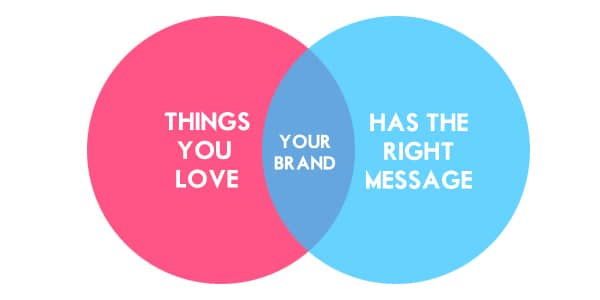
Owning a brand that is easily recognisable isn’t easy, at all. We can testify to that. That doesn’t mean making a strong brand is impossible though, with a few steps in the right direction, you could be on your way to brand heaven. Make good use of social media Hey, most social media tools are free you know. You might as well use them to your full advantage. Social media levels the playing field and also gives you a great opportunity to promote your business while increasing brand awareness. With the right approach you could be reaching millions of people across the world and turning some of them into clients. In Nigeria alone, 16 million people visit Facebook each month, you shouldn’t need more convincing when it comes to social media. Motherland Mogul tip: Start with a Facebook page for your business then a Twitter profile. Build them up by following conversations around industry-related topics and engaging with others. Offer prospective customers useful information that addresses their problems even if you don’t mention your brand. Remember that whatever social media channel you’re using, your message should be consistent and same tone. Press releases Sending press releases to newspapers and magazines are another way to raise brand awareness. Write compelling press releases that are up to journalistic and public relations standards. Your press releases can announce information relating to your business and/or products, or even just general events. Can’t think of any newspapers to send your releases to? Simple, upload them to your blog or website. If you can find other websites to carry your releases. Remember that interesting stories will generate publicity. Motherland Mogul tip: Consider other forms of advertising that may be unique to your country. For example, despite the huge numbers, most African still aren’t online. They are mobile though. Consider making use of SMS services to get your brand out there. Make use of established customers Coming up with campaigns targeted at gaining new leads is great, but while you’re looking for new customers you shouldn’t forget the ones that you have already. Brand awareness campaigns are a great way to keep your brand in customers’ minds and nurturing the relationships you have built already. If your customers constantly remember you, your business will remain relevant to them. Motherland Mogul tip: Need a campaign idea? Why not show your audience your business’s human side? Let your customers know your story. Show them who the person behind their beloved brand is. You can do this through your website or your blog through an “about us” page or personal updates that are relevant to your business. Stand out There are probably a thousand people offering the same kind of product or services you do. This is why you’ll need to stand out, what makes your brand different from others? Don’t ever be afraid to push the limits when defining your identity and looking for what makes you stand out. Consider alternative ways to uncovering the unique nature of your brand. Motherland Mogul tip: You can use customer testimonials to stand out from your competition. Here’s how. Ask yourself, what are your customer’s saying about your brand? Talk to them and use this to uncover your brand’s uniqueness. Videos are a great way to capture this, imagine your customers sharing what they enjoy about your products/services. You can also use this to build up your brand’s YouTube channel, go you! Make use of influencers Offering your most influential clients sweet deals is another way to create brand awareness. You can get customers to recommend friends and family, all through incentives. This is especially useful when these customers are very influential people. If you don’t have influencers in your networks, reach out to some. Influential people can be bloggers or other business owners in your industry. Motherland Mogul tip: You may have to consider offering freebies to your identified influencers. Yeah you’re dashing them things, but consider that well-connected people will very likely talk about your services to their followers. It’s a win-win. Partnerships When you’ve gone through the list of things you can do by yourself and are still lacking, it’s time to partner up. You can consider partnering with other brands to get your name in front of a new audience. With a partnership you’re tapping into your partner’s image and reputation, so you’ll have to be careful who you approach. Motherland Mogul tip: Another way to partner using social media is through guest blogging. This can create awareness for your brand when it is done with people who are popular in your industry. With brand awareness there is no shame in being everywhere in your niche. Just try not to get burned out.