
Do male ideas rock and female ideas suck? 10 things women founders need to do to get funded!

[bctt tweet=”The statistics on Venture capital funding do not favour women founders” username=”SheLeadsAfrica”] You are a young woman, you are innovative, you have many ideas and you just launched a tech startup! Now, you need to get funded to take your startup where you want it to be. You have applied here and there and even made submissions and connections to venture capitalists but you are yet to make any headway and you know the survival of your startup depends on some fresh cash injection. It’s not getting any better because the statistics on Venture capital funding do not favour women founders. You see your business drifting into the number of un-funded women startups and you desperately need answers. Hi babe, are you there? If this is your experience as a female startup founder or entrepreneur, take a deep breath, you are so not alone. It’s no news that Venture Capital funding gender gap swings against women big time as male startup ideas get funded at a 16 to 1 ratio compared to those of women. According to Venture Capital database Pitchbook, Venture Capitalists invested $52.2 billion in male-run start-ups while female-run startups received only $1.46 billion in 2016. This figure paled in comparison to the other years in the last decade causing us to wonder if funding for women-run startups will ever get better. And why is this so? Do male ideas rock while female ideas suck? What do female founders need to do to get their start-ups funded in a male-dominated tech startup ecosystem which tilts towards men statups? Here are 10 things women founders can consider doing to get desperately needed cash to push their start-ups to the next level; 1. Learn as fast as male founders As a female founder, how fast do you learn? Are you comfortable with the things you know year in, year out or do you push your learning barriers to exhaustive levels? When it comes to male founders, we have seen them take drastic steps to get their startups going even if it takes pushing learning boundaries over and beyond their usual capacities. Then a Mckinsey management staffer, Eliam Medina undertook a one month crash course to learn how to code to get the first iteration for his free wills and legal service startup, Willing, up and running. And it is no surprise that more guys learn to code than girls. Data from Girls Who Code shows that computer science learning among women has reduced from 37% in 1984 to 18% presently. And when it comes to venture capital funding, one thing is clear, strong technical teams with a major bias for a technical founder is a good first step to knocking on VC doors for funding and getting their attention. Learning also traverses reading about other startup ideas like your life depends on it and using the successes and failures of other startup founders to your advantage. Who best is adopting this technique to create exciting startups than male startup founders, from 99designs to 99taxis, 99bitcoins, etc. Nikki Durkin, founder of defunct startup 99dresses has definitely seen men transform her failure into breathtaking successes which are also foundational to catching the eyes of investors. As female founders learning about one new idea a day can boost your strategy direction which gives investors the impetus to go with your call. 2. Have an idea arsenal and pick the best Consider why you started your startup in the first place. Was it out of your own need or a real need? While this may be tough to evaluate, candidly, it is best to have an idea arsenal. Your idea arsenal should be full of ideas which not only resonates with you but ones with real and researched needs with an addressable market size. Go beyond the scope of ideas for start-ups meeting only the needs of women. While this is not bad in itself, the venture world is run by men and they sometimes get lost when it comes to women specific ideas and don’t know why they should be investing. From this collection you have created, pick the best and launch it first. By the best, I mean the one with the most validation from prospects, possibly millions of people who will find this startup useful to them on probably a daily. This means that people can pay for what you have launched and the possibility of this is exciting to any venture capitalists. [bctt tweet=”The venture world is run by men & they sometimes get lost when it comes to women specific ideas” via=”no”] 3. Fail fast by launching other startup ideas Far from what most people who go into tech may think, creating a successful startup is not a Disney fantasy tale. The best startup founders did not necessarily hit it big on the first idea they launched. To put it in clearer terms, a lot of them ran with more than one idea. Stackoverflow founder, Joel Spolsky and his team had Trello and FogCreek up and running alongside. He opined that by chasing multiple ideas at once, anyone of them could succeed into the big leagues. Female startup founders need this perspective and be ready to fail fast like most of their male counterparts. This is because, no matter how lucrative an idea may seem, the time may not be right for its mainstream demand. This happened with all the devices created prior to Apple’s iPod and that should be the target of any female founder who wishes to be trolled with funding instead of actually chasing after it. 4. Spy for the extraordinary Venture funding, no matter how scarce they may be to female founders, can never shy away from the extraordinary startups run by women. Why is this? We have been ushered into a world of constructive and collaborative disruptions across industries all over the world, mostly spearheaded by technology. From Uber to Airbnb, Snapchat, Convene, and Spotify, we have seen tech ideas break the
6 ways to improve your stakeholder relationships

[bctt tweet=”In business you need more allies than adversaries, keep your allies happy with these tips” via=”no”] For any business to succeed, stakeholders must be well taken care of. These are your clients, suppliers, partners, investors, employees and the broad community who have an interest in your business. When a stakeholder is not taken care of, the effects can be felt in various parts of the business. Building strong relationships with stakeholders and maintaining them takes effort, time and a well thought out action plan. Below are six tips you can use both to build and maintain healthy stakeholder relationships. 1. Actively build strong relationships from the start You know what you would like to achieve, and you know what it will take to achieve that vision. Share this vision with your stakeholders on a more regular basis than you typically would. Don’t wait for structured meetings, use every opportunity you have with them to get them on the same page. [adsanity align=’alignnone’ id=144658] 2. Involve your stakeholders Yes, it may be your vision but remember its execution and success depends on how enthusiastic your stakeholders are. Ask for their advice. A very powerful question you can ask is, “How can we best serve you…?” the answer is forward looking and guess what, you have a real chance of doing what is asked. 3. Schedule periodic touch-base sessions We sometimes underestimate the importance of staying top of mind, especially where clients are concerned. To support the first tip of actively building strong relationships outside structure, have a structure built in as well. Regular meetings keep you and your stakeholders on the same page and this means you are able to pick up on potential challenges before they even arise. [mailerlite_form form_id=14] 4. Keep your word Do you deliver on your promises? When you say you will call back, do you call back? When you say you will have something important finished by a particular time, do you do it? If you want to build lasting stakeholder relationships, do what you said you would do. Remember it is about your integrity, your trustworthiness and the respect you have for yourself and the other person. 5. Have an open mind When you are after win-win relationships, understand that the job of the other party is not to feed your ego. They will have contradictory opinions, they will say things you don’t like, accept that. It is actually a good thing because the last thing you want is to surround yourself with ‘ego feeders’ who don’t help you grow. Always have the big picture in mind and listen to suggestions, thank people for their inputs and genuinely consider what they have to say. 6. Address issues as and when they arise There is nothing worse than hearing about a ‘transgression’ months after the said event took place. Not only may you have forgotten about it, but also the fact that the other person brings it up says a lot. In keeping with positive relationship building with all your stakeholders, make sure you are open and transparent. If something is bothering you, talk about it and clear the air. When you approach all your stakeholder relationships with the view to continuously improve them, the other party will know it and this will set the bar on how they respond to you. In business, you need more allies and champions than adversaries. For your vision to be realised, you must constantly work on your relationships.
Isis Nyong’o Madison: The journey has to be worth it

[bctt tweet=”African founders have to actively create the environment needed for success – Isis Nyong’o Madison” username=”SheLeadsAfrica”] Isis Nyong’o Madison is a well-known media and technology leader in Africa who has held leadership roles at Asphalt & Ink, InMobi, Google and MTV. Over the past decade, she has made her mark scaling media and digital businesses across the continent. Isis holds degrees from Stanford University and Harvard Business School and is the CEO and Co-founder of Mums Village – an online start-up dedicated to enriching the lives of current mothers and mums-to-be in urban Kenya. Accolades awarded to her include being named a Young Global Leader by the World Economic Forum and one of Africa’s most Powerful Women by Forbes. She serves on the boards of two technology companies and can’t hurt to add that her family boasts of greatness with Academy award-winning actress, Lupita Nyong’o as her cousin. We’ve shared her lessons on landing a job in the media industry already, this article focuses on Isis’s start-up experiences and her lessons learned from challenges. Overcoming challenges faced in the startup field There are three types of challenges I have observed while working in this industry: Access to capital Access to capital is very different in Africa as compared to the US – there are a lot more types and forms of capital that are accessible, especially for technology-driven startups. Ecosystem Development Despite having a critical mass of people online now in Africa, unlike more mature markets such as the US, there’s more consumer education and ecosystem building. African founders have to actively create the environment needed for success. For example, a couple years ago if you had an app, you would have to tell people what an app was, where to go to get it and how to download it. In the US no one has had to do that for the last seven years at least. So that shows us that there’s still a lot more work to do here to just get going, particularly with the consumer. There’s similar challenges on B2B type businesses where you’re really trying to sell something useful for that particular business and that process is probably a lot longer than at other markets abroad. Team Building With regards to finding talent, the dynamics are just a little bit different. To get the talent that you want in a place in the west where every person has many options, you need to sell a more compelling vision or have deeper pockets. Here we just don’t have that depth of talent pool so you have to invest more time in identifying people who are problem solvers and then develop the other skills on the job. I look for talent in unconventional places and try make the work environment an inviting and enjoyable space to be in. In regards to ecosystem development, I focus on leveraging partnerships as much as possible. From an access to capital standpoint, I think that’s something that is still definitely a work in progress in terms of trying to be more open-minded to the organic ‘zebra’ growth versus the ‘unicorn’ approach. [bctt tweet=”Isis Nyong’o Madison: I focus on leveraging partnerships as much as possible” username=”SheLeadsAfrica”] Take the Imposter Syndrome as a sign of growth “This is something I have dealt with many times. I feel that it is probably just an indication of real challenge and growth where you feel almost not ready for something this is your chance to step up to the plate. I certainly believe it’s an inner belief that builds up over time, and I usually just internally calibrate and tell myself ‘you know what there are probably people who feel the same way here and if they haven’t felt it here then they’ve probably felt it somewhere else.’” On balancing life as a working mother… Isis is a mother to Juno (3) and Sky (18 months) and has been a successful entrepreneur in Nairobi, running both MumsVillage and Asphalt & Ink for close to four years combined. “You just have to be extremely organized and ensure that you build as much flexibility to your work and life as you can. It’s also about checking in to see if the way you are living your life has the values that you have. People make different choices, there are those who decide to take time off, others who don’t have a choice. It’s a careful calibration where one might adjust on a week by week or month by month basis. As an entrepreneur, it’s not such a super static thought process as my schedule is more fluid. The reality is though that most mothers don’t really have a choice and they just have to try and do their best to balance it out as there’s no magic formula.” Parting shot… My mantra in life right now is – ‘the journey has to be worth it’. Ask yourself, how much am I enjoying the journey? Versus looking to the end goal. This is a shift for me because I’ve been very goal oriented and so I think the journey in itself has to be rewarding as well. Another thing I’d add is, always have a long term view –that’s very much where I’m at right now.
Case study: How your business can stand out from the competition

[bctt tweet=”Competition is a “necessary evil” of doing business, here’s how to make yours stand out” username=”SheLeadsAfrica”] If you’re in business, competition is something you can’t do without. In other words, competition is a “necessary evil” of doing business. It does not, however, mean that competition in your business area is a bad thing. On the contrary, when there are several competitors in your niche, it shows that you’re on the right track and that there’s money to be made there. What you must do, as a business owner, innovator and Motherland Mogul, is figure out how you can stand out from your competition. You need to ask yourself: “If I must have competitors, how do I make sure I’m able to stand out? How can I be visible to my potential customers and clients? How can I meet my revenue expectations?” In this article, I’m going to share with you a quick way to combat that. I’ll be sharing two case studies of how companies were able to stand out from the competition by thinking out of the box. [bctt tweet=”Ask yourself the following questions if you want to stand out from the competition” username=”SheLeadsAfrica”] Guideline: How to stand out from the competition First things first, look at the top 10 companies/competition in your industry. Make sure you take note of the following: What are they offering? How do they offer it? What are their price points? How is their customer service? What is their packaging like? Then, ask yourself: What are their strengths? What are they doing that you should emulate? Do they have any weak spots? Is there something they are doing that you can do better? Finally, determine how you can leverage all this information to be different. Ask yourself: How can you do things differently without undermining the value of the products and services you sell? #MotherlandMogul tip: Sometimes, all it takes is improving the experience your customers and clients get doing business with you. Got it? Alright, now to the Case studies. Case Study #1: Rebecca Minkoff Stores I stumbled across an article about Rebecca Minkoff in Inc. Magazine. If you prefer the tl:dr version, here’s the story in a nutshell. Rebecca Minkoff launched her brand of ready-to-wear accessories, handbags, and footwear in 2005. From the start, she knew it won’t survive as a regular store. So, she set out to create the perfect shopper experience. When shoppers enter flagship stores, they are greeted by a digital touchscreen wall that displays the latest runway selections, offers style suggestions from Rebecca Minkoff herself and can even take drink orders. Then, each item contains an RFID tag that detects when a shopper enters a dressing room. When the tag is scanned, an image pops up on a mirror with suggestions for complementary accessories. Talk about innovative. Rebecca Minkoff really did create a unique shopping experience. [bctt tweet=”How to be innovative and come up with new ways to stand out from the competition” username=”SheLeadsAfrica”] Case Study #2: The Trunk Club The Trunk Club is a subscription service for male fashion. Here’s how it works. When you subscribe, a consultant gives you a call and talks with you to find out your “style”. Then, each month, you get a trunk box (miniature size, of course) containing selections for the month. Each item is packed attractively and have price tags on. As the consumer, you have the choice to take what you want and return the rest. Whatever you don’t return, they bill to you. If you can’t imagine how this would work, check out this guy here as he receives his first trunk box. Bottom line is this. The Trunk Club is another innovative way of standing out from the numerous online shopping sites out there. That’s it. Go through the guideline above again and begin to come up with new ways to stand out from the competition. One last thing. The two examples I gave happen to be in the fashion industry, but there are many companies out there in various industries being innovative and coming up with new ways to stand out from the competition. Now, it’s your turn to think outside the box. Go on, I know you can do it! #MotherlandMogul tip: What cool innovative ways have you seen companies use to stand out from the competition? How can you replicate them?
5 steps to developing business systems that work for start-ups

[bctt tweet=”@jeanette_nk summarises the lessons she learned building business systems for her start-up” username=”SheLeadsAfrica”] So, you finally have a concept and business plan finalised. You’re ready to begin operating but don’t know where to start? This is usually where consulting firms sweep in and offer help for a fee. Although outsourcing usually benefits most small start-ups, it’s also true that not every small business has enough money to exploit such services. If you ‘don’t know anything about business’, but don’t have the money to consult those that do, then you’d better whip out your notebook and concentrate. When I started my business I had no idea how complicated running a PR company was so I dived in, head first. Luckily for me, I snapped out of my illusion quick enough to save the company from myself. I took a step back and educated myself on the business systems that exist within a typical PR company. Below, I’ve summarised the lessons I learned in 5 very doable steps that can be applied to businesses in various industries. 1. Identify all existing/potential divisions Business systems are a strategic response to a chain of events that occur within different divisions. Let me make it simpler, using a chocolate cake for instance. Business systems would, in this case, be the oven for the cake and the different divisions involved would be the ingredients needed to make this cake. I know, I’m salivating too! Okay, let’s focus. These systems include payment policies, contractual agreements, marketing management, customer care etc. For example, if I got a call to handle a campaign for a company, between that call, the conclusion of the campaign and payment being transferred to me, I need to ask myself what divisions would be involved. There would administration for the signing of the contract and releasing of press releases and accounts to record the payment for example. When you develop your business systems, you need to consider how it will help make those divisions function well together, taking into account all other factors involved like employees within those divisions. You might want to pick up a business book or two to learn more about general business management if you are not too sure about the operational divisions. [bctt tweet=”Play office, just like you played house when you were a cute little kid” username=”SheLeadsAfrica”] 2. Play office Yes, play office. Just like you played house when you were a cute little kid before life put the world on your shoulders and no, I’m not mad to suggest this! Putting yourself in a real-life scenario will help you identify what works and what doesn’t work, it helps bring you down to earth. When I started out, I pitched for a partnership with a very big musician. I was excited for a little while because I could taste the big-time in my mouth. However, once I sat down with my notebook and laptop, I realised that I had no idea where I was going to start and what I was going to do. I sent out a few mock press releases to see how easy it would be to get word out there and after weeks of waiting, not one publication got back to me. Devastated doesn’t begin to describe how I felt when I sent the “I’m going to start small” email to that client. Yet, I understood that I needed to go through other processes before I got the handle of things. I realised things were a lot more complicated than I thought. In theory, your vision always seems a lot easier, that’s why it’s important to try and see how well it would work out physically. Believe me when I say, I literally played office. I set up a nice corner for myself in my tiny typical student room and every morning when I had nothing to do, I would go in, pretend to consult a client, hold staff meetings and so on. This helped me see how things would be if I were sitting across from an actual client. 3. Shadow other existing businesses Enquire with a similar business and take notes on how they respond to you. I promise you it’s not as shady as you might think. This step will allow you to, if you haven’t yet, come up with a niche/speciality for your own business. Once they respond to you, or if they don’t at all, you can spot what you can incorporate in your business systems to better serve potential clients. Think of it as industry research, because it pretty much is just that. For a month or two, I analytically and critically followed one particular PR firm. It was during that time that I started spotting trends on their Twitter timeline. I started learning about things like status meetings and press release drafting sessions, things I had never thought about. The whole shadowing journey guided me in the right direction, I began seeing exactly how you handle your clients as a publicist and how you navigate the different divisions around such an account or campaign. [bctt tweet=”Shadowing existing businesses in your niche is not as shady as you’d think” username=”SheLeadsAfrica”] 4. Develop an operating system This step isn’t as easy as you’d think, but it is completely manageable if you give it enough push. When developing your systems, think long-term, you want these systems to become a tradition and lifestyle for your business. Although it is referred to as one big system, the truth is, a business system is made up of many small systems that are tailored according to the different interrelated divisions you identified in step 1. No think about it, it’s really not as confusing. Let’s take a step back to the cake example, these small systems would be how you prepare your ingredients before you mix them in. Before you mix cake batter, you would have had to mix the liquids and dry ingredients separately. You also can’t mix the icing and
Lessons we can learn about building a social brand from Seatbelts&Openspaces
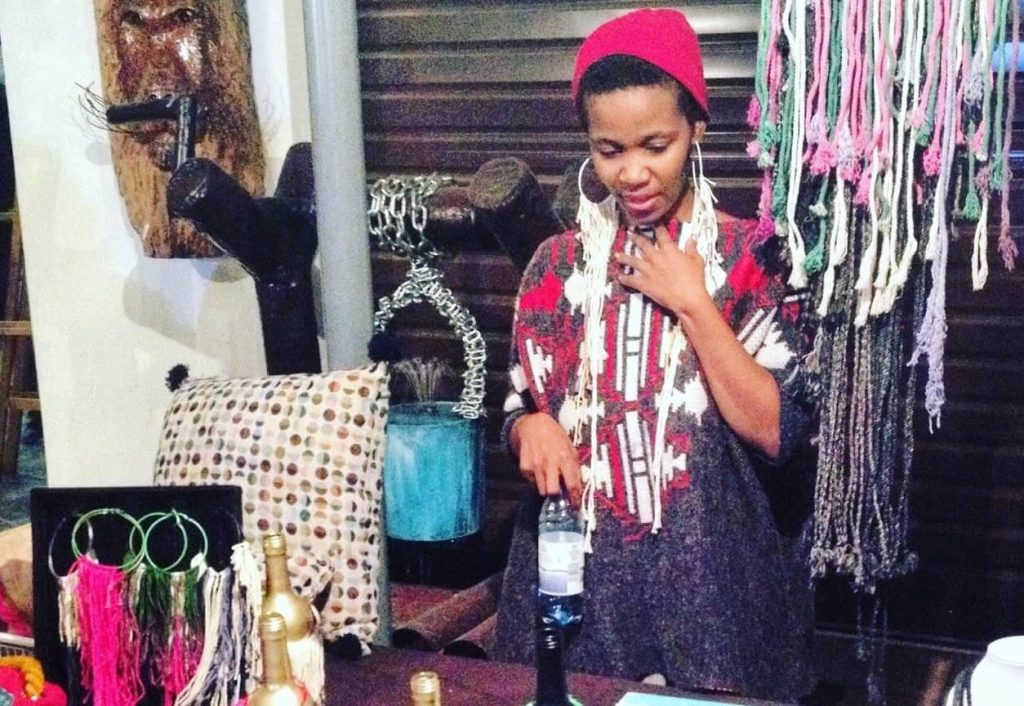
[bctt tweet=”It is important to incorporate a social issue that can be part and parcel of the story behind your brand” username=”SheLeadsAfrica”] Social branding is important in trying to build enterprises that are btoh sustainable and socially responsible. We can learn a few lessons from Seatbelts&Openspaces CEO, Thuto Sekate. Seatbelts&Openspaces is an ethically social brand which produces sustainable merchandise including up-cycled arts and crafts, clothing, and décor made from organic material, old clothes, trash and scrap material. 1. What influences your brand? For Thuto, a #MotherlandMogul making vintage clothing with environmentally friendly products, her influence is from her past. “Seatbelts&Openspaces is a result of an ethical father and mother. My dad once worked for an NGO that dealt with social issues, then moved on to work for a can recycling company. Later, my mother started a glass and paper recycling company while I was still a minor. So caring for the environment was naturally drummed into me.” In university, she had the experience to cover a topic of sustainable fashion. This exposed Thuto to her calling to address her social issue of choice through eco fashion. When building a social brand, it is important to incorporate a social issue that can be part and parcel of the story behind your brand. 2. Clearly define your brand Through her platform, Thuto directly addresses environmental issues, making clothing from waste or recyclable material. She also upcycles, with ethical practices such as using natural dyes like coffee and tea in her production. Thuto’s focus is incorporated in every fabric and material she makes which is clearly visible in whatever she sells. Through her style of fashion, Thuto reduces the carbon footprint by handcrafting her work. There is a conscious effort in her work to ensure that her brand clearly associates itself as environmentally conscious and friendly. [bctt tweet=”Thuto Sekate directly addresses environmental issues through Seatbelts&Openspaces” username=”SheLeadsAfrica”] 3. Learning from others “I am definitely following other social brands, both fashion for their trends and just eco brands for the information of staying eco conscious.” Thuto learns a lot from more developed socially responsible brands that help her find better ways to structure her business. This way, she can improve her process and technique as well as raising her integrity associated with being a “woke” brand. 4. There will be challenges still, SLAy In countries like Botswana, building a eco friendly brand is not common or well known as part of the business process. So not everyone will understand immediately your work. “Awareness of the cause is still building up in Botswana, so very few people understand the deeper meaning of the brand. The educational part of the need for such a brand needs to be built before we can successfully make a significant social impact. I guess that’s why Seatbelts&Openspaces is a need. Our attempts are to close that gap of understanding and rocking the brand while creating employment opportunities for the youth. Mostly the balancing of profit and good will.” Beyond looking to make a profit, your brand has to look at long-term sustainable solutions to ensure it meets its targets and impacts its community positively. [bctt tweet=”Building a social brand requires realizing that you improving your space in one way or another” username=”SheLeadsAfrica”] 5. Be a game changer Building a social brand requires realizing that you are different and improving your space in one way or another. Your platform can influence others on how they perceive social challenges around them, especially now in Africa. “The possibilities are endless for us, we are the actual future. With the amount of “woke” young people in my circle alone, my faith in humanity is restored daily. Photographers, weavers, bloggers, doctors, lawyers, accountants, online store owners are each tackling different social issues. From documenting poverty in photos, offering artisanal skills to the less fortunate, selling art made by locals all over the world at fair prices, giving locals an opportunity to grow beyond borders or awarding free medical services, with the help of crowdfunding. We do need to make profit, but it should not be at the expense of others.” Seatbealts&Openspaces does not shy always from realizing the task of changing the narrative on consciousness in business in the Motherland. Neither should you.
Why research in business should be a daily routine

One of the very first lessons I learnt about entrepreneurship, is that if I don’t do it, someone else will and that once you do it, everyone else will. Let me break it down. The first lesson is probably much easier —someone will, eventually, spot the gap in the market and attempt to fill it. The latter is the lesson a lot of start-up entrepreneurs don’t want to think about. That once you decide to fill that gap, soon everyone else (and trust me, some of them have been sitting on the idea waiting for someone to do it first) will. This is because you are their case study and now they know the idea does in fact work. A typical first response is usually, “that’s my idea!”, when in fact, we should be thinking about the opportunity that it presents. The good news is, if you’re already thinking ‘competition’ and ‘unique selling point’ then you are halfway there. The answer is research, constant research. From my early high school days, I was obsessed with research, particularly on the Internet. It started with me always wanting to have the answers, because I hate not knowing. Gradually, it became a very educational and growth-fuelling hobby. Research, although mostly associated with reading, isn’t limited to that. Depending on the industry and sector you want to operate in, it could include you physically getting out of bed and attending seminars or, chilling by the Mall of Africa, watching how people walk, talk, laugh or studying what they are wearing, which shops they visit first and how they arrived there or, stalking interesting people on Twitter. The business environment is ever-changing and to get with the times, you need to research. Whether you are an aspiring entrepreneur or an established one already, there is always room for growth and improvement. Research in theory You may not know it, but there are many forms in which research takes shape outside of Google and Yahoo, and these are three of the absolute favourites right now: Social media Yes, it’s not just about the number of likes on your latest pic. Facebook, Twitter and even Instagram can be a huge source of information. It allows you to tap into your (potential) ultimate client/customer’s mind. You will know what they are thinking and what they want —all of this is embedded in everything they complain about, decode it. It can also be a very good way to see how your closest competitors have positioned their products and services and learn from that. Trends grow on social media, if I see someone with a 10k followers wearing yellow jeans, I want to buy them. Keep an eye on people with huge followership and influence on societal behaviour, these are people commonly known as ‘twelebs’ and ‘felebs’. Blogs The beautiful thing about blogs is, the research is actually done for you (but be sure to verify, remember, if it’s my blog, I can put up anything I want). Bloggers usually bring the newest trends onto their blogs for their readers, if you comb through their content, you will find that they are communicating to you the gaps that are opening up in the market. Video driven sites like YouTube Although most people would instantly associate YouTube with music videos, there is a lot more to it. Tutorial videos and even more serious documentaries are put up there, it is a great source of information for when you’re looking to do something like write a book or even start a blog on a related subject. Research in practice Lerato wants to start an online channel but she doesn’t understand how it could be financially sustainable for her. Also, she has no idea what kind of content she wants to put up on her website/channel. What can Lerato do to help solve her dilemma? Correct, research! 1. Use the resources you have Lerato has a Facebook account, but now that she knows she has to research, she doesn’t know how Facebook can be used to do that. Easy, the answer is trends. First, she needs to zero in on a subject. Does she want it to be a health site, lifestyle, entertainment or news site for example? For that she can visit sites that already exist to see which she feels is more for her. Let’s say she chooses a self-help/DIY type of site. 2. Ask and answer the right questions That’s where social media comes in, what do people need help with? Lerato will now study the questions people post on Facebook or tweet on Twitter. She will also check how many of them get the answer they are looking for and how long it takes them to. Not only is this research in terms of content, but it also allows her to see if there really is a market for the site and if it will be more effective and efficient for the user to go to her site instead of asking for help from his/her friends on Facebook. Once she is done with her decision, she goes to Google and types in “start an online DIY site”. Voila, a link to an article about how to make money from such sites comes up. Of course she clicks on the link, now she knows where her revenues will come from. 3. Don’t stop researching A few months later, Lerato’s site, From Your Toolbox, is ready for action. It is an instant hit with her friends and followers, with amazing readership ratings. Soon she starts receiving requests for advertising space, nothing can stop Lerato now. One day, on her timeline however, she learns that her friend has started an entertainment news site and instantly she is shaken. What do you think Lerato does to deal with this development? Lerato doesn’t like fighting, so no. Instead, she uses the resources that are available at her disposal. And that is how she gets into the culture of research, following new trends and
Spinning straws to gold the Coco Chanel way

“Beauty begins the moment you decide to be yourself” – Coco Chanel Ever felt a scent so distinct, so exotic and yet so familiar that it makes your head spin? That is what Chanel number 5 perfume does to you. The best-selling perfume in the world, and yet so few of us know the story behind this liquid gold…or the mastermind behind it, Coco Chanel. Coco Chanel is one of the most influential entrepreneurs of all time, but very few people know the story behind the brand. And when they do, they do not approve of it very much. Nevertheless, her brand, which she started with meagre savings before World War II was an estimated $118 billion in 2015. That’s right, Motherland Moguls. That business has been tested through the worst times in the world, and it still came along with a lump sum. The backstory Coco Chanel, born Gabrielle Chanel to a poor French peddler and a shop girl. Her mother died, her father ran off, and she was raised in a convent. When she turned 17, nuns got her a job as a seamstress. But since she secretly wanted to be a singer, she went and tried that out but failed miserably at it. She later rejoined the fashion world after Etienne Balsan helped her out with a dress shop in Paris. She expanded the shops, and chose to dress women in her form of rebellious dresses, rather than the puffed up dresses ladies dressed in back then. It’s the classic Cinderella story. My mother always told me that there is nothing new under the sun. There are so many lessons we can learn from Coco Chanel’s marketing and branding skills, and how to tough it out in times of war (literally in her case). Here are some lessons I’ve learnt from Chanel’s legacy. Brand yourself early in your business Coco Chanel knew that she wanted luxury, but practical. And everything that she made carried her name along with it, with its simplicity and elegance. She started out with hats and putting her two relatives to strut on the street as a marketing strategy. Make it stand out If and when you do choose to have a distinct look or brand, make it scream so loud that it represents you despite your absence. Chanel made her looks using cloth that was originally used for men’s underpants. She made her perfumes unconventional from the flowery scent that was used by ladies then. She invented the little black dress. And with each one of her products, she made a statement without screaming to the world in words. It does not matter where you come from What matters is where you are headed. How many times have we heard this slogan, huh? Coco Chanel made it true. And to escape poverty, she worked herself off using everything that was thrown at her. What excuse could you give not to make a difference? It is never ever too late to make a comeback.. …and slay while doing it. Coco shut down her business for a while after her brand plummeted under allegations that she was harboring a German spy during the war. After a long time out of business, she decided she wanted to rejoin the fashion business…at 70 years old! Even though she failed that first year, she did not give up. She put her big girl pants on like the woman she was and conquered it…again, at 71. I think all women need to have this kind of rebellious attitude to succeed in business. There are no words that can put this woman’s actions and life into justice. We need to applaud women of the past that have shaped the world and learn from them. Women that knew themselves so well, that they span themselves into a legacy. Coco Chanel should be at the top of that list. Jusqu’à la prochaine fois, Motherland Moguls! “Everyday is a fashion show and the world is your runway” – Coco Chanel
Against all odds (bouncing back after a failed business)

I recently experienced a failed business and it would have been devastating if not for my support team. The good thing about failure for a positive minded person (which should be the mind set of an entrepreneur) is the ability to use the experience as a learning process. When a business venture fails there are two most likely reactions from the entrepreneur. You either give up or dive back in again, trying to make it right this time around. From my own experience, here are some helpful tips on bouncing back from a business failure. 1. And the blame lies… A whole lot of things could have gone wrong. The first step is to take an introspective look at your business journey and without been biased. Analyse the venture and pinpoint where things went wrong. You can ask the people who had interactions with your business for their opinions. Be sure to let go of the hurt that comes from failing at a venture. The altruistic ones will prefer to blame themselves and this might be harmful if you cannot get over the blame game. 2. Decide… Next, decide if you are returning to that venture or starting a new venture. This is important as it will determine your next moves. The decision to continue a failed venture will rest solely on you. Consider the reason you started the venture. Was it just a business or a deal with a goal? An ordinary business idea (not that there are ordinary business ideas, but some are conceived based on needs as opposed to those based on passion), is easy to let go of. With this idea, you can venture into a different line of business, responding to another need. However when your idea is part of a dream, it is harder to dump it and move on. 3. Restore This is usually the hardest. If your business was loan funded, it is always a source of grave concern. Many business owners suffer huge financial losses after a failed venture. Although not easy, making efforts to restore/refund loans can give a sense of fulfillment. This is not to say that inability to do so should lead to depression rather a well laid out plan for payment may inspire hope. It is absolutely necessary to avoid any form of self deprecating thoughts. 4. Plan Now that you have decided, begin to make plans in line with your decision. If you have decided to move on. You will need a fresh new idea and plan according to the idea. In the event that you want to continue with your previous idea, make further research using your previous mistakes as key points. Go back to the drawing board. Your drawing board will hold your idea, its concept, theme and any previous mistakes. It is time for a new flow chart which will utilise the information gathered from the research you have done. Tip: If you really need funds at this point, consider crowd funding. 5. Take your time It is tempting to want to dive right into the deep end when you have found the solution or something new. Don’t do this. It’s not advisable jump right in. And no, this is not saying you should procrastinate. On the contrary, take time to set out a pace that will allow you notice changes and progress. 6. Laying the ground work Now you work, and I must add with a vengeance. Going from the drawing board to the work table is literally a huge step. This is where every past lesson is put to the test. 7. Faith Having a strong belief in the success of your venture helps to pad all the hard work you have done. Praying about your moves and asking for directions divinely can go a long way. Also a positive mind set is required. Always. 8. Be patient When you start squatting at the gym, there is a tendency to look at your butt for signs of growth. Disappointment quickly follows when the expected immediate transformation is not seen. Like squats, your business will need time and constant, continuous efforts to grow and begin to show signs of growth. Be patient. Continue to work at it. To avoid working blindly, take constant review of your progress. It may be quarterly or monthly but alway take stock. Mark areas that might need improvement or changes. Make necessary upgrades. Get customer feedback. You cannot know too much. Even after the initial research, always seek expert opinions at every stage. This will serve as a guide along and also a yard stick to measure your progress. In the long run. Your perception of a failed business is vital to your entrepreneurial life. If you develop the habit of not giving up and taking every failure as practice and a lesson, you will find yourself very soon in a successful venture with lots of stories to tell. Remember
Let’s pitch your business, shall we

A pitch is a 30 seconds monologue of what you do, why you do it, and how your work is innovative or unique. People have short attention spans and busy calendars, so you want to have a clear, brief, and enticing pitch prepared. Your pitch will ensure that you make the most of every opportunity, and present your commitment and yourself in the best light possible. You may be wondering what an elevator pitch is. An “elevator pitch” is a concise,carefully planned, and well-practiced description about your business that your grandmother should be able to understand in the time it would take to ride up an elevator from the 10th floor to the ground. Wherever you are networking; meeting with funders, writing a grant application, or riding an elevator with someone you want to impress, you should have a pitch prepared. To create a pitch, imagine this… You meet Glenda on the 10th floor. Glenda is a potential partner and she asks you about your business, describe it in a way that is unforgettable and stands out. Now, follow these steps. Condense Select 4-8 specific keywords that describe your business. When you select, be authentic and original. Don’t try to be who you are not or use words with unclear meanings. Organize The simpler the sentence, the better. How can you organize your keywords into an idea in the least number of words? Inspire The sentence should remain at the heart of your pitch. However, to effectively engage your audience, start with a brief description of why.This can be useful if the issue you are seeking to address is complicated, the listener will understand why as you explain what you do. Expand (a little) You can add several sentences to your pitch that answer who, what, when, where, why, and how, but remember to be concise. Practice The only way to ensure that your pitch goes smoothly is to practice (a lot). Record yourself while practicing to make sure you’re presenting yourself and your commitment well. Practice with friends, in the end they should be able to echo the key points. Think about the questions people may ask, and prepare your answers. Now, here’s what to do when delivering a pitch. Audience/Objective The first thing you need to do is figure out who you are talking to and what you want them to do for you. Are they potential funders, volunteers, or partners? This will guide your pitch. Problem statement The challenge you intend to address is important, but you shouldn’t dwell on it extensively. Quickly outline the issue, then explain what you are doing about it and why. Competitive advantage Explain the aspects of your commitment that differentiate you from everyone else. Address how your commitment is new, specific, and measurable, and why you are positioned to tackle the challenge your business addresses. A business needs to clarify what sets it apart; its own “purple cow”. Something that is unique in a crowded market. Storytelling Humanize your work. Pick an inspiring and engaging story that supports your pitch, steer clear of jargon, and demonstrate why your commitment matters. Always have stories ready when networking. Next steps You didn’t spend all this time preparing for nothing. Ask for a business card, a follow-up call, or an opportunity to send along more information. Think of a way to continue your engagement after the conversation ends. Always follow up promptly, within three days at most. In conclusion, determine what success looks like to your business and leverage the right communication tools. Small businesses often think they need to be on every social media platform to keep up. Businesses should first define what it considers to be its success; and then pick the tool that best tells this success story. This tool may be a monthly newsletter, a slideshow of impactful images on your website, or a blog post or narrative video that can be shared on Twitter and Facebook. Don’t be caught without your pitch ready!