
4 genius business tricks to steal from Genevieve Nnaji

It’s obvious to every Nigerian it-girl and our African sisters that ignoring Genevieve Nnaji’s pristine and effortless beauty is a bad idea. This is regardless of whether or not you watch her movies! Luckily, there’s a lot to learn from her streamlined, hyper-organized disposition. Even if we never completely get it, as we’re mere mortals. Have fancy dinners with a view Yes, you heard right. Head to some trendy island, club or restaurant for dinner. It should have an amazing view and probably stocked with successful, inspiring, rich and maybe good-looking people too. The food might be a little pricey, but it’s the connections you’re paying for. It’s called networking, girl! Somehow, these celebrities seem immune to the business problems that the rest of us mortals are afflicted with. From me to you, there’s a shameless networking routine that they follow. Don’t head on starting that business without connecting with the people who are going to be instrumental to your success. Take it all off… the make-up I mean This is debatable, but it feels even better to take the make-up all off sometimes. This is especially useful when the Nigerian heat perpetually threatens to melt it all off anyway. Genevieve gives us the no-makeup look often enough to keep us envious and wanting for more. Being a celebrity or even the owner of that unique start-up may be a good reason to have flapping eyelashes, gold-toned smoky eyes, and perfectly done nails… you know for the optics. But how about you shake things up a bit and get us all confused by actually getting down to work? Like, if you’re not doing anything lucrative besides getting your face done, what are you even doing? Be authentic. It’s all that matters. I am really eager to know the stories behind movies with impossible titles —who decided that “Blackberry Babes” was a good name for a movie? Okay, my argument is —why spend much money scouring for classics when you can watch an affordable ‘sub-standard’ movie? Here’s the thing, as an aspiring or already established business woman, you’ve got to be authentic, otherwise, you’ll ruin your own magic in no time. You’ve got no business copying every new or trending business idea. Be real, girl! Be unique! Talk less, unless of course, you’re telling us about what you do Traumatic consequences aside, being a little secretive is a necessity . Especially, if you’re involved in ventures that don’t feature story-telling as a requirement for practical reasons (like being an OAP or writer). If your business is not one of those, the least you can do is choose to give us short, simple, or playful dozes of your life every other time, just to add a little charm to your image. Minimize that icky feeling that comes with people knowing too much, too often about your business. In summary, all you need is to devote yourself to learning/mastering your craft, tirelessly networking, being authentic and a little tight-lipped when necessary. It’s pretty simple and practical.
Helen Dausen: If used well, fear can be your propeller

There was a time when it wasn’t easy for Tanzanian women to find a skincare product that was 100% natural and meant for the African skin. That was before Tanzanian-made African beauty brand, Nuya’s Essence came along. Nuya’s Essence is a natural bath and body care brand that handcrafts natural products from botanical oils, butter, and herbs. The product is made from the purest botanical and non-toxic ingredients there is. Largely, the ingredients are sourced locally and from South Africa, Ghana, India, and Morocco. Njeri Meja, our SLA contributor spoke to former beauty queen and formulator of Nuya’s Essence, Helen Dausen. She found out more about how Helen’s beauty queen past helped her business and the steps Helen takes to improve her hustle. What motivated you to start Nuya’s Essence? I have always been so careful about how I nourish my skin. I think I got it from my mother. As a young girl, she would apply olive oil and pure coconut oil on my sisters and I. I had also been unemployed and needed to do something about my life. While in college, I wondered if I could get a quality soap to complement my beauty care routine. So I went looking and found some DIY ideas for soap. I started mixing stuff at home and sharing recipes with friends. I would also tell them what to apply or what food to eat and the like. The idea of Nuya’s Essence first gained root in my heart in April 2013. However, we didn’t start marketing it publicly until in June 2014. How did you start? I started small with support from my parents. I began with making handmade skincare products from the backyard at home. I sold to my mom’s salon, farmers market, pop-up shops, and friends. Did being a beauty queen help your business in any way? Yes, it did. As the crowned Miss Universe Tanzania 2010, people often asked about my skin and hair-care routines. That also fueled my decision to build a skincare brand. Who is your target audience? Actually, everyone can use my products. The marketplace is saturated with products made with harmful chemicals patronized by unsuspecting African women. I wanted to create something great enough to be an option to the mainstream skincare products. Nuya’s Essence is for women looking to go all natural and adopt a healthy lifestyle. Tell us more about your range of products Our natural skincare range is formulated to work with all skin types. The ingredients are carefully selected and suited for everyone. We do not add fillers, toxic chemicals or test them on animals. Our products are recyclable, bio-degradable, eco-friendly and safe enough to be used by kids. It can be used on sensitive skin, very sensitive and mature skin. We produce them in small batches with our customers’ satisfaction in mind and they do serve the purpose. Did I tell you that they also smell amazing? Oh yes, they do! Currently, our product range includes natural handmade soaps, body oil, body butter, body scrub, 100% pure coconut oil, and raw shea butter. However, we keep working at developing new products. How have you improved yourself as an entrepreneur? I just completed a Mandela Washington Fellowship program for Young African Leaders. The intense 6-week-long program ended on the 4th of August 2016. I worked hard at it and formed great partnerships and friendships. It was a great experience and boost for my personal and business growth. I look forward to better opportunities. I have also done some training in natural/organic skincare formulation in Johor Bahru, Malaysia. There, I learnt the basics of formulating a perfect product. I still study online, read lots of books on the subject and strive to improve my beauty range or create new ones. Any challenges? How do you mitigate them? My biggest challenge so far is getting customers to believe in our products, especially women. I started using my products long before I sold them. This made me more comfortable and confident to tell other women about them. Personally, I have experienced the healing powers of plants and I have been able to achieve youthful, flawless, glowing and evenly-toned skin. However, getting clients to believe in you is hard. To tackle this, I give free samples for trials and this has worked. They usually return with their friends and this time, they actually buy. Word goes round and we’ve done well so far. How would you advice a woman looking starting something like Nuya’s Essence? Fear will always be a constant factor but if used well, can be your propeller. You may never enjoy absolute support. Money may never be enough. But girl, you can rise above it all. The trick is to start with what you have at the moment and then grow in small paces. Last words? One of my favorite successful businessmen said, “The harder you work, the luckier you get.” I believe there are so many opportunities out there. You just have to be ready to take them. Be willing to take risks and accept failure as a learning curve. The only real failure is not trying at all. After all, what’s the worse that can happen? Always believe in something. Personally, my hope and faith are in God. I am at peace with myself, my work and the people around me and that helps. I set out to glorify Him in everything I do as a person or business woman. Always have something or someone to fall back on for support. You can never go wrong with this. Want to see women you know featured on SLA? Tell us what amazing things women are doing in your communities here.
Fatima Zahra Nassik: Treat your business like a rollercoaster
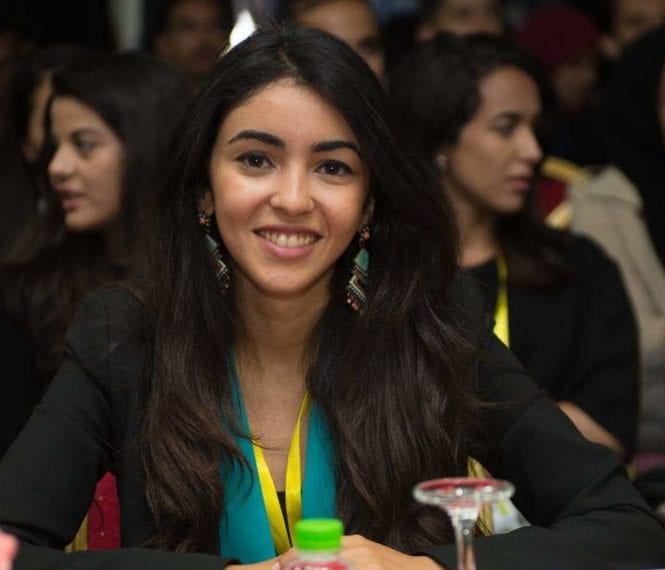
There’s nothing as inspiring to us as seeing students getting their hustle on. Talk about getting into things early. Fatima Zahra Nassik is a bomb-ass social entrepreneur from Morocco. While pursuing her studies, Fatima co-founded Enactus ENA, a platform for student and business leaders, with her friend. Fatima didn’t stop at Enactus ENA though, she also started Laymouna with Fatima-Azzahra Benfares. Laymouna is an initiative that brings fruits and healthy snacks to busy students and working people. She’s also involved in starting other ventures and still interns at the same time! Read on to find out how Fatima brings her academic savvy into her entrepreneurial life. Tell us about your organization, Enactus ENA. Why enter into social ventures? Through Enactus ENA, the idea was to show that architecture students can also have an entrepreneurial mindset. In our first year, this was basically our goal. We started organizing conferences and events like, ‘Find the leader in you’. At this event, we had interesting leaders and speakers give inspiring speeches. We also had the first edition of the Enactus Regional Summit. It gathered 8 teams from the region to share experience, knowledge and especially communicate on their projects. Through workshops where business tools and team building activities were taught, we had several on-field types of research where we spotted different needs. After many interactions on ideas that responded to those needs, Laymouna, TownOut and C-Home were founded. Tell us about your social ventures. How do you ensure that they achieve success? Laymouna is an enterprise that aims to make fruits and healthy snacks readily available to students and working people. The idea of Laymouna really came from a need that we, as students, faced in university. We decided to do something about it. We do this through innovative vending machines and stands that provide fresh and accessible choices for people who want to eat healthily. On a more ambitious level, we want to improve the food culture in Morocco. Then through TownOut, we organize trips to remote areas in Morocco. We promote them as new tourist destinations and therefore empower them economically. Finally, C-Home is an alternative construction method where we use lightweight cardboard for homeless people. The idea is to build at a lower cost and quickly too. To ensure our ventures achieve success, we give presentations of our project’s progression to an advisory board formed by many professionals and business leaders. We organize this approximately every two to three months. We also ensure our projects participate in as many competitions as possible to maximize feedbacks and improvement. Most importantly, we have Enactus Morocco as a constant counsel. What difficulty have you faced in founding and co-founding? What advice will you give other women looking to start a project together? Concerning founding and co-founding the venture, we discuss and respect each other’s opinion at every single step. Of course, final decisions are made by the CEO if a mutual agreement takes too long. I would advise women planning on starting a project together to view their ventures as rollercoasters. Ups and downs would be a recurrent feature. Aspiring entrepreneurs must see them as necessary challenges to reaching goals. Instead of being discouraged, see them as opportunities to show that things can be different and especially like you imagined. At the end of the day, you are here to create impact and value to the world. How has your organization grown since you started on it? What steps have you taken to get it to where you want it to be? The organization is growing pretty fast. Actually, we come top to mind when it comes to entrepreneurship in our university. We are looking forward to gaining more impact in the next year and to give birth to other projects. Professors and trainers have shown interest in coaching us. We’ve been contacted by many foreign partners interested in not only our events, but also our projects. For this year, we aspire also to have more projects in the field of architecture or urbanism, a domain that we master. Tell me about your experience at the Henry Ford Academy. What steps did you take to ensure that your project won the best pitch prize? My experience in the Henry Ford Academy (in partnership with IIHEM) was rewarding. Several entrepreneurs and business leaders came and we heard their inspiring stories. We had many courses from shaping the idea of a project to how to pitch it. And finally, how to finance a business venture. For three different prizes, a presentation of our project was to be made in just one minute. Since the training was in French and English, my colleague and I decided to pitch Laymouna in both languages in exactly one minute. I think the originality of the pitch is what made us win this prize as we caught the attention of the audience. Furthermore, Laymouna was the startup selected for the HFEA ICP program for a two-week consulting with IIHEM alongside VCU students who came from the US. As a freelancer and businesswoman, how do you manage all these projects? What do you do to unwind and relax? I think the answer to this question is actually passion. I am a super active person. I really believe that my actions can give a positive impact in this world. Freelancing is most of all, a way to help me gain experience in the professional field beside my studies. My passion has helped me find a way to manage these projects. It’s my strength especially in my lowest moments (rollercoaster, remember…). Personally, I believe travelling for a few days or spending time with family is the best way to unwind and relax. It helps me achieve a broader vision of where I’m going and how. Lately, I’ve started working on starting some dancing classes. I want a physical activity that includes fun. Are you still a student? Yes! I’m in my fifth year. Of course, this means I’m basically focused on internships.
Negotiate your way to financial success Part II: Negotiation mistakes and how to avoid them

In the last segment, we discussed the essential steps for negotiation. Of equal importance are things you should not do during negotiations. Mistakes during a negotiation can hinder its success. Don’t get emotional It is imperative that during negotiations you maintain a professional stance, even when you feel undermined. For example, bursting into tears and lamenting about the unfairness of an offer can prove counter-productive. Your tears won’t persuade your negotiation partners to give you a fair deal. Moreover, emotional persuasion will not help you win your negotiation partners’ respect. It will only get them to “pity” you. You never want to start a business relationship out of pity. Pity does not get you the deserved respect in the long run. Emotional outbursts during a negotiation will hurt its effectiveness and productivity. Tip: Rather than using emotional persuasion, use objective facts. Humanize the negotiation but do not personalize it. Don’t make unsupported assertions One could be tempted to make unsupported assertions when negotiations seem to go downhill. Don’t! Using fiction to support your bargaining point during negotiations will hurt your chances of success in that deal. Remember, you will likely be dealing with savvy business individuals who most probably have researched your assertion. They’ll definitely be able to spot a fictional assertion. There is nothing worse than being unethical during a negotiation and tarnishing your reputation in the business industry. News travel fast! Tip: Prior to a negotiation, gather as much hard data as possible to support your assertions. Where relevant data is unavailable, use comparable data. When using comparable data, be transparent with your business partners. Do not disguise the comparable data as one that speaks on the matter at hand. In the same light, don’t rely on spontaneous brilliance. Prepare! Do not make spontaneous decisions Do not feel pressured to make a decision on the spot. It is perfectly okay if your negotiations require a series of meetings before reaching a bargain. Tip: Ask for time to make a well-informed decision. Do not say “No” Yes! I really meant to say do not say “no” during negotiations. Never say “no” during a negotiation, even when declining an offer. Instead, positively decline the offer. You should be able to embed “no” into the kindest phrase your potential business partner has ever heard! For example, you have been recently offered a job with an unattractive salary. Rather than emailing the employer to say “Thank you, I have decided to decline your offer,” you could do it better. Consider calling and saying, “Thank you for the offer, I am excited about the position and the opportunities it will offer. However, after reviewing the compensation package, it would prove challenging to be able to meet my financial obligations. Nonetheless, I remain open to hearing about future opportunities that will match our mutual needs.” Such an approach will allow you to continue future conversations with your potential business partners, employers, or even schools. In fact, this approach helped a friend get more financial aid from a top law school. Tip: Bury your “no” in a positive statement. Make them feel good about your response so that they barely dwell on the fact that you just said “no”. Do not give an ultimatum During negotiations, your goal at all times should be to negotiate. Yes, simply negotiate. Avoid using an ultimatum during negotiations. It sends the wrong signal that you’re unwilling to further the negotiation discussions or find a win–win scenario. Moreover, an ultimatum will put your negotiation parties on the defensive. For example, saying “this is my best offer, take it or we have no deal” is wrong. It’ll likely to make the other party believe that a negotiation ends if your offer is not met. Never give the impression of foreclosing the possibility of finding a mutually acceptable bargain. Such aggressiveness will likely be counterproductive in achieving success. Tip: Rather than give an ultimatum, which focuses on the “I,” focus on the “we,”. Express your willingness to create value for all parties while also noting the need to meet a deadline. You may consider telling your negotiators that you would like to reach a decision by a certain deadline. Such timing should, however, be reasonable. This can help you pay attention to cultural nuances (as discussed below). Such an approach will allow all parties to focus on reaching an agreement within the stipulated timeframe. Do not ignore cultural nuances It is imperative to pay attention to cultural nuances during negotiations. This could play a vital role during the value-creation process. For example, direct eye contact with negotiation parties is strongly encouraged when dealing with US negotiators. This conveys sincerity and could enhance negotiations. In China, however, such a gesture could hinder a negotiation’s productivity. Direct eye contact is considered inappropriate or rude in China. Tip: Do not apply blanket tactics during negotiations. Research the negotiation parties and be sensitive to cultural idiosyncrasies. This will help you succeed in maximizing your negotiation potential. To summarize, avoiding these negotiation blunders will improve the likelihood of a successful negotiation. It would provide the ability to realize your desired outcome. If you would like insights on a particular topic, write to us! We are listening.
Delphine Groot: Your success as an entrepreneur is determined by your willingness to work hard
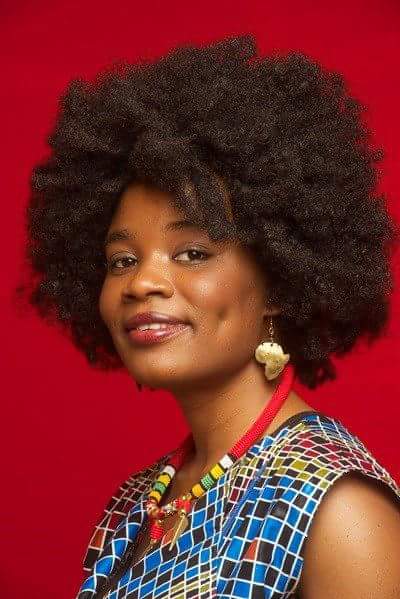
Delphine Groot had her big breakthrough into the African-inspired fashion scene in the Netherlands in 2015. That was when she had the opportunity to showcase her collection at the Locked & Loose event in Amsterdam in the summer of 2015. Organized by The Natural Hair Club, the event exposed her unique collection to a crowd of entrepreneurs, designers, sponsors, and consumers. Many of whom were impressed and this eventually generated publicity and sales for her brand, Bobo Couture. SLA contributor Uloma Ogba, spoke with Delphine on seeking alternatives to follow her passion and being a cultural ambassador for Africa in the Netherlands. How did you decide on the name “Bobo Couture”? I belong to the Bobo ethnic group, native to Mali and Burkina Faso. The Bobo people have a thousand-year-old tradition of handicrafts and textiles. When choosing a name for my fashion brand, I felt that Bobo was fitting. Bobo captures who I am and what I want to bring to the fashion industry. I bring with me well-designed and crafted clothing, and jewelry inspired by my rich African heritage. What was your motivation for starting your own business? I was born in Mali but grew up in the Netherlands and in several other African countries. So, I have seen a fair bit of the world and absorbed parts of the different cultures I have been exposed to. In university, I studied Human Geography and International Development because I wanted to understand the role of cultural exchange in global development. However, after graduation, I quickly realized that I was not suited for office work. And so, I decided to seek alternatives to follow my passion. I came up with the idea of starting my own business. I wanted to find a way to apply my studies to something that I find both practical and engaging. Through Bobo Couture, I am able to participate in the cultural exchange process. I do this by creating access in the West to the creations of local people in various African communities. For every item I sell and when I get a chance to tell the story behind its creation, I see myself playing a role as a cultural ambassador for Africa. What is the process like for you as a designer and an entrepreneur? First, I must give credit to my mother who is my business partner and provides a lot of creative input. Together, we decide on the right fabrics and designs for each collection. The goal is to showcase different aspects of our African culture that our customer base in the Netherlands can relate to and appreciate. My culture is very vibrant, colourful, exciting, playful at times, and very focused on community. I try to make sure each collection represents that in varying degrees. From reviews I have read and from your own accounts, your brand Bobo Couture is doing really well, exceeding even your expectations. How do you think you are contributing to the development of Africa as you say? All the fabrics and textiles that we work with, for the clothing and jewelry, are sourced locally. We also employ tailors and craftsmen in Mali, Togo, Kenya, and Ghana. By providing them with work on a consistent and growing basis, we contribute to their economic development and professional growth. We want our workers to take pride in the things that they produce. We also want them to know that our goal is to ensure that their work and the meaning behind it, reaches a wider audience. You recently expanded your business to set up a physical location. In addition you manage the online store and travel back and forth between the Netherlands and Kenya to import the clothes. How are you able to find balance in your life? To be honest, these days it seems like all I do is work. But I love seeing the efforts of my hard work come to fruition. In the first year of Bobo Couture, I had to give up my personal life. No going out with friends or going on vacation. Since we opened the store, even though we employ some local girls to help out, I still have to be present most of the time. The only things that keep me sane are using what little time I have to keep up with the gym and talking to my family. These provide me with the physical and moral support I need. Given your experiences, what would be your advice to aspiring entrepreneurs? If I could give one piece of advice it would be that hard work is the most important key to your success. There are going to be many challenging times ahead. But you have to try to view failures as part of the learning process to reaching your goal. Set big goals and dare to achieve them. When I started, a lot of people tried to discourage me. I heard the market was already saturated and it would be hard to stand out. Before I got an assistant, I had to transport all my clothes to and from events by myself. But I always believed in myself and in my ideas and that is what got me here today. Any final thoughts? I think a big part of why my designs sell so well is because they are a true reflection of who I am. I would never sell anything that I wouldn’t proudly wear myself. Whatever brand you choose, if it reflects you, then selling it to the public will never feel like hard work. Want to see women you know featured on SLA? Tell us what amazing things women are doing in your communities here.
Yoliswa Cele: To improve your career, absorb everything like a sponge
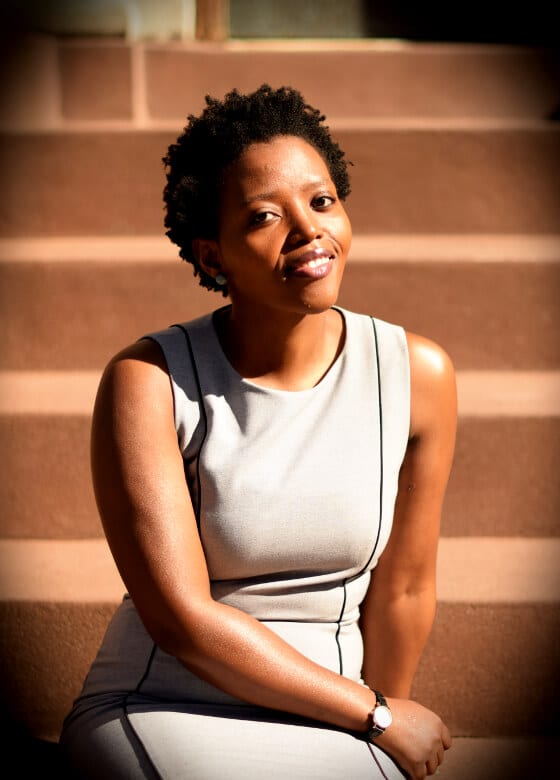
So, you want to know about working abroad, embarking on a new career or being a currency exchange entrepreneur? Look no further, we have someone who knows a lot about all three. Yoliswa Cele is a South African-born entrepreneur. She is also the co-founder and CEO of Ndosi Strategies, a start-up firm based in New York. Through Ndosi Strategies, Yoliswa provides accessible development services, curating partnerships, and international platforms. The firm presently enjoys relationships with partners and clients in the US, UK, and across Africa, specifically, South Africa. Here, Yoliswa answers questions on improving your career born from her years of experience. What challenges should one prepare for when venturing into either a known or new field of business? The spirit of self-sufficiency and triumph over adversity is the core of entrepreneurship. That spirit is innate in Africans, particularly its women. Jumping into a new territory will always require a certain level of research, strategizing and guts. These days, via social networks, and the general internet, we all have the capacity to research. Do a research on your field of interest. Learn about the dominant figures and trends. Attend related events to familiarize yourself with the network. Always be available for networking events, panels and receptions. Once there, interact with people on all levels within that space, from interns to Directors. During the learning process, everyone has something to offer. Make a strong impression by asking thoughtful concise questions that project your own interest in expanding in the industry. Most importantly, show the desire to learn. Follow up with emails, connect on LinkedIn, pay attention to the types of news/articles circulating around the field. Make contacts and seek mentorship if need be. Work to build a support network within the industry to ensure that you make the best decisions, and are included in any opportunity circulations that can further facilitate your professional development. What advice would you give a young professional woman looking to being a currency exchange entrepreneur and having to move to a different country? The international exchange rate is significant to doing business abroad. Benefits are real and most likely will be the incentive to move to foreign job markets. In that kind of situation, it’s important to maintain your awareness of the focus on bettering your circumstances. Make sure that your own goals or purpose for emigrating in the first place, aren’t lost in any romanticized fantasy about doing business abroad. Going into more wealthy economies can be distracting because the lifestyle and environment are new. But don’t get distracted with the flash. Be focused and committed. Business is subject to rules, regulations, and the financial terms that exist in each location. Internationally, you have to make yourself aware of the differences between African economies and foreign ones. This will help you take advantage of the ways they complement, or conflict with, each other. Use your purpose and observations, to strategize the best course of action for each stage of your business growth. Utilizing the huge amount of affordable/free businesses development resources at our disposal —from free social media marketing, to website domains that are the price of a Starbucks latté, to make real growth in your presence, profile, profit and notoriety. There are tons of stepping stones for aspiring entrepreneurs. Social media is a virtual bridge connecting all corners of the world. For example, if you are getting into the global market with the hopes of selling a product, a better first step economically, might be to opt for an e-commerce vs. attempting to rent a psychical shop, and taking on a hefty rent bill every month. Working around the currency difference takes a thorough analysis and resourcefulness. What should an intern or a professional pre-empt in terms of applying skills rather than just knowledge? I don’t know if there are exact or specific skills one should possess when starting out. But I would say, be a sponge. Absorb everything around you during your internship. Work hard, but also work smart. This means asking questions, showing interest, and being consistent in your work. Go over and beyond to stand out in an internship environment. It will without a doubt bring you strong skills and relationships when moving forward professionally. If you’d like to share your story with She Leads Africa, let us know more about you and your story here.
Beyond the passion – What you need to get into the caregiving business

Are you a woman who wants to ensure that her family and community is well looked after? Are you passionate enough to sacrifice time and energy? Do you have some basic administrative, managerial or business skills? Maybe you’re thinking none of these requirements apply to you, but are you ready to be spat on, clean washbowls or change thousands of soiled diapers? Then the caregiving industry might just be the revolutionary business idea that you have been seeking. Mind you, it’s painstakingly hard but it is one way to give back to society whilst paying the bills. Interestingly, a famous African saying says, regardless the source of the income, money is money. I am sure that at this point your heart might be doing cartwheels at the thought of the coolest business idea ever. The fact is that home care is one of the fastest-growing businesses in the world. You can be rest assured that without a large capital and clients, you can feed your passion by starting a daycare for children or a nursing home for the aged. Location If you have a roof over your head, then you have the space to start and work with. Is your child in preschool? Are you a divorcee living alone? Or are you an elderly couple with kids off to university? You can always make space with what’s available. It could be a nursery turned into storage, a den that no one sits in anymore, an empty garage or a basement without piles of laundry. It will surprise you just how well, using the right colours, textiles, paint and partitioning can transform a space. Furniture and equipment Getting your initial set up furniture and equipment can be as easy as reaching out to friends and family, A lot of times, families hoard furniture in the hope of re-using them, but most times, they don’t. If you have a network that is accommodating, reach out to them for their old stuff. Most of these items are barely used and have minimal damage. They can be repaired at little cost. Staff Hire retired nursing aides, nurses, and early-year teachers because, with their experience, they are typically patient, may have less responsibility or financial needs and will be willing to help you grow your business. Recruit young people who are willing to work as volunteers for the first couple of months till you settle your financials. Acquire knowledge The worldwide web has a multitude of free resources and courses for business owners in the caregiving industry. Sign up for these courses as often as you can, acquire knowledge on creating a business plan, new trends and best practices in the caregiving industry. Research successful businesses in the industry, you can target studying one business a day. Learn new skills to minimize calls to experts for help with things as basic as installing a nursing station. Train your staff on acquired skills. Create a dynamic team. Give yourself space to grow! Your clients are right here Your clients are never in space or in the next city. They are the people you meet within the marketplace, at the hospital and at your place of worship. Familiar people will feel more relaxed because they think they know your story and can relate to it. They will feel safer around you than some savvy business owner who launches a similar start up in your area. These are your clients; be sure to invite them to your open house. Seek their ideas before implementation. Also, find out what their immediate needs are. Would they work full time or would they prefer a full day care? Are they more focused on the social interaction a group setting will offer? Furthermore, the elderly might just need to be tended to at different times or a group where they meet and discuss. That cozy setting might be your house. You can set up games and make homemade goodies, to create the perfect setting for old stories of love and war. Marketing and advertisement Design and print catchy flyers. Distribute them at supermarkets, playgrounds, schools, and hospitals. Also, volunteer for community engagements. These will increase your visibility and increase your trustworthiness. Remember that your most valuable marketing tool is word of mouth communication. This will get people talking positively about what you do. Registration and legal requirements Always ensure that you do a research on the requirements of registering a business in your country. You would want to create an atmosphere that is loving and devoid of stress. Seek advice within your network. You might just know a lawyer willing to assist with the registration procedures at a discounted value.
Make yourself stand out: How to build your public profile with Imad Mesdoua

Big news, our first #SheHiveLondon event took place over the weekend. As with all our #SheHive sessions across the world, we were joined by inspiring speakers who are making waves in their industry. One of those speakers was Imad Mesdoua, a political risk analyst, senior manager at Africa Matters, TEDx speaker and the list goes on. He’s spoken on major channels like the BBC and rubbed shoulders with some of Africa’s most influential policy makers. Safe to say, he’s mastered the art of building his profile and becoming a known name in politics. If you missed Imad’s session in the flesh, we’ve summarised his top tips on how to make your public profile stand out like his. You’re welcome. 1. Twitter and LinkedIn are your friends Social media is one of the most powerful tools of recent generations. The question is, are you using them well? For Imad, engaging in social media opened up opportunities to speak to politicians, journalists and other influencers who may have been difficult to contact in the past. It even landed him a mentor -all he did was reach out and express his desire to make an impact in his field. Imad reminded us to never underestimate the power of Twitter. Instead, follow the movers and shakers in your industry and share your opinions on trending topics. Embrace popular hashtags, be fun and relevant but remember to keep it professional. Stay away from Kanye-style rants and you’ll be fine. Remember, at the end of the day it is all about trial and error, so don’t be afraid to experiment. LinkedIn is a powerful tool for making those all-important professional connections. It gives you the chance to showcase your education, your work achievements and your interests all on one page. It’s the perfect way to make a strong first impression online, so make sure it’s up to date and includes enough detail to keep people interested. 2. Be a social butterfly and become a familiar face at events This one isn’t just for the extroverts of the world. Even if you’re a little more introverted, heading to events specific to your sector or industry can do wonders for your public profile. Getting out there to events like #SheHive and others is the best way to learn from industry leaders, gain knowledge and establish lasting relationships. If you go to enough events, you’ll start to see familiar faces and become known as someone who knows what they’re talking about. For every person you meet, think of how you’ll describe yourself in 20 seconds and how you can add value to your new found contact’s life. We know, we know, networking can be scary, so here’s how you can make the most of it. 3. Be a student of life and escape the comfort zone Never rest on your laurels. One thing Imad noticed is that sometimes we establish our skills and talents and then get too comfortable. We stop learning and adding to our experiences, which can be a disadvantage in the competitive world of business. One way to overcome this is to dive out of your comfort zone. For Imad, this meant getting a job outside of the Africa-focused political industry. While doing something different might feel strange, it makes us ready to take on new challenges. Let’s admit it, looking for a new opportunities is never easy and sometimes you have to think out of the box. While looking for his ideal job, Imad himself got creative and took on speech writing and consulting roles which helped him meet his long-term career goals. 4. The one thing you can’t forget… You can be a social media pro who is at every event and who always builds on her skills, but without this one thing it all falls apart. That one thing is professionalism. Professionalism ties all your efforts together. Professionalism means being consistent and going the extra mile to hone your craft and personal brand. In Imad’s case, that meant ‘overdress, overspeak and oversabi’. Remember to have fun with it though, find what drives you, pursue it and be open to making changes along the way. While #SheHiveLondon might be over, don’t worry, the world tour continues. Lagos and Jo’burg, we’re coming for you!
Getting comfortable with feeling like a fraud

Ever found yourself in the middle of a great moment —a graduation, getting a promotion, being praised by someone you respect or creating something new— and caught yourself feeling like you shouldn’t be there? Not in a nice, ‘Is this really happening?!’ kind of way. More like a, ‘I don’t deserve this, and I hope no notices I’m a fraud’ kind of way. Ironically, it is because of your greatness that you are more likely to experience feelings of being a ‘fraud’. This is commonly referred to as the ‘impostor syndrome’. Basically, if you attribute your success to everything except the fact that you really are that good, keep on reading. Categorized as “the domain of the high achiever”, Clance and Imes first coined the phrase after a study they did of high achieving women. They described it as feelings of, “phoniness in people who believe that they are not intelligent, capable or creative despite evidence of high achievement”. Instead of crediting success to ability, they attributed it to circumstances or charm. If you’re not sure if this relates to you, here’s a short test you can take to get a sense of where you lie on the spectrum. The concept really hit home for me when I read a quote by Maya Angelou. She said: “I have written eleven books, but each time I think, ‘uh oh, they’re going to find out now. I’ve run a game on everybody, and they’re going to find me out.” Listen, if Maya-Freaking- Angelou can ‘fess up to feeling what I felt and still be great, then there is a way to succeed in spite of it. So why is impostor syndrome so harmful? There are a few ways that this subtle form of fear could be holding you back from achieving career/business greatness: You don’t shoot your shots, and if you do they are less than they could be In her book Lean In, Sheryl Sandberg noted that impostor syndrome made people evaluate their qualifications lower than they should. In the long run, you end up only taking low-risk opportunities, or worse not taking them at all. It affects how you communicate Have you ever ended a well thought-out point with something like, “Does that make sense?” Or worse, do you find yourself apologizing all the time? Seriously, why do you start with “Sorry…” or “I just…” when you speak in a meeting? In an attempt not to be outed as a fraud, you actually can come off sounding uncertain of yourself. It affects your presence In the words of Amy Cuddy, “Impostorism steals our power and suffocates our presence. If even you don’t believe you should be here, how will you convince anybody else?” As with all questions of our ability, there’s no silver bullet to getting past it, but there are ways to not let it hold you back. Accept that you actually are a fraud The only reason you are so aware of how much you fall short is because you are brilliant enough to calculate how much you lack. Be aware of the deficit, but act anyway. Apply anyway, pitch anyway, write anyway. Everyone, brilliant or not, puts their best foot forward and there is nothing wrong with faking it a little before you make it. In the words of Queen Beyonce, “I have accomplished nothing without a little taste of fear in my mouth.” Communicate power Even if you aren’t completely comfortable with feeling like a fraud, at the very least stop sounding like one. Tara Mohr, author of Playing Big says, “I keep meeting brilliant women like you, with powerful ideas to contribute, important businesses and organizations to build, provocative questions to share. But so often, the way they communicate fails to command power. They equivocate, apologize, and look away as they speak.” Be aware of how you communicate. While there is a lot I could add, my one piece of advice would be, watch your cadence and don’t present statements as questions. Focus on delivering value Understand the value that you can bring to the table. We often assume that the skills we really excel at come naturally to everyone because we do them so easily. This then allows us to focus on the things that we can’t do, as we don’t see our skill set as valuable. Keep track of your strengths using tools like LinkedIn. But if you haven’t got it together like that (no judgement, I’m with you!), listen carefully to the feedback you get from colleagues. “I DID that” These three magic words, when said every time you do something awesome, are certain to gain you the respect of the only critic that counts, YOU.
What #MotherlandMoguls can learn from the Rio Olympics
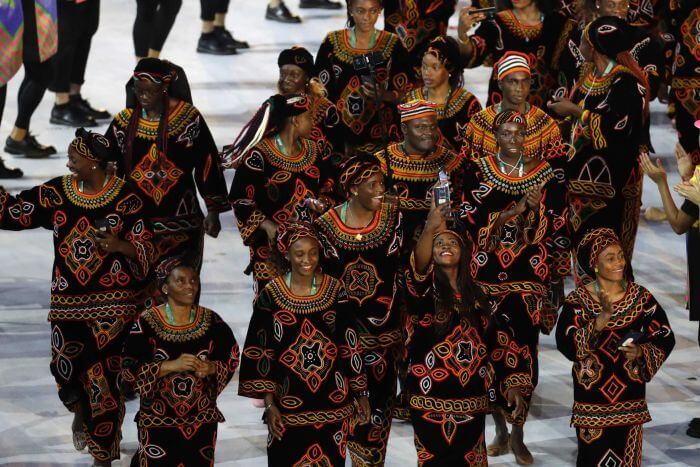
The Olympics this year had us glued to our seats, rooting for our countries and supporting our favorites for gold. You can’t deny the emotions and sheer excitement that came about this Olympic season. They had us distracted from our everyday hustle! If you’ve been following, you’ll know that there are some awe-inspiring stuff we can pick up from the recently ended Olympics. Do you! From Ibtihaj Muhmmed winning a medal in a hijab, to China’s Fu Yuanhui being candid about her menstrual cycle, it’s pretty clear that women aren’t really conforming to a set standard of doing things. Sometimes we get caught trying to fit in to a mold about what we can do or say. Women in #Rio2016 proved and shattering so many stereotypes and boundaries. They unified even in competition and showed strong bonds of sisterhood. So forget trying to be like someone else, own your hustle in your own way and people will definitely notice. You are never too old or too young to kick butt! What was really amazing to me was seeing that age is no limit to passion, determination and just being on fleek. Uzbekistani gymnast Oksana Chusovitina, is 41 years old and wowed us with her gutsy performances. Meanwhile, Simone Biles the 19 year old gymnast, was snatching edges and gold medals dominating the Olympics and winning hearts. Both women show that you have absolutely no reason put a limit to achieving your goals. Sometimes we get caught up looking at the impossibilities, but when you start looking past them and pushing for your goals, you unlock your ability to start slaying. Be different Seriously, you don’t have to fit in. If the Egypt vs Germany beach volleyball game taught me one thing, it’s that you don’t have to do the same thing the same way. Cookie cutter solutions in business or your career will not always work for you. You have to find something that is unique and that will ultimately help you grow your craft and dominate the grind. Shaunae Miller’s controversial dive for the 400 meter race shows that you won’t always win the usual way. Having out of the box ideas to accomplish your goals and targets is necessary to get you that gold. There might be times that it will be risky and you do have to look at the cost, but the payoff might also worth it. So, start thinking about those opportunities that might set you apart, look beyond the difficulties, and be your awesome self while at it!