
Victoria Mamza: The boss woman behind the indigenous brand, Wangarau Foods

Victoria Mamza is the young woman tearing up the Lagos hemisphere with her packaged African food brand, Wangarau Foods. The Lagos State University Marketing grad, who can be reached on Instagram and Twitter, loves to experiment with cooking. Having experimented with different business models, Wangarau Foods has evolved into offering to cook to the specification of customers, as well as branding and packaging food items for events. Mercedes Alfa caught up with Victoria, who reminds us aspiring Motherland Moguls how pertinent the ability to identify and exploit a business need is to launch oneself into the market space. What prompted the startup of Wangarau Foods? The inspiration to begin Wangarau Foods came from a neighbour who is a banker. As you know, Nigerian bankers often have crazy schedules and she could hardly find the time to go to the market to shop for food items. I overheard her conversation from my kitchen window about how stressful it was to go to the market after office hours. Right there, it dawned on me that there could be a market for many people like her who as a result of their busy schedules, do not have the time to purchase local items. I, therefore, saw a service I could render, one where hygienic, quality and affordable food items could be delivered to their doorsteps. What are some of the biggest challenges you face running a business in Nigeria? As an entrepreneur in the agro-allied sector, the major challenge is power. If the regularization of power supply can be effected, most of the problems faced by food manufacturers and packagers would be reduced to a minimum. Another challenge is the limitation of funds to set up Wangarau Foods to my ideal vision. Do you run your business using a business model that just works or adapt to different ones at different times? Initially when I started Wangarau Foods, I had just one business model in mind, which was to reduce the lead time in the preparation of food by saving customers the stress of going to the market. Over the last few months, I have had to adopt a few other business models to generate revenue for the company. Currently, I offer to cook to the specification of customers, and also to brand and package food items for events. For a lot of entrepreneurs, certain people have helped groom their businesses in different capacities. Who has had the most significant impact on your business and why? My good friend who happens to be the angel investor in my business has played an invaluable role in the rise of Wangarau Foods. He is a mentor who has not only encouraged me but taught me to be confident in my abilities. Do you have a philosophy you live by and apply to your business? Yes, I do. My philosophy is; “Be passionate about everything you do. Passion gives you a reason to get up in the morning and the energy to burn all the way till midnight”. I know this may sound so cliché but I have found that if you follow your passion and dare to dream, work doesn’t really seem like work. It will not be your job but your happy place. I would also say find the courage to follow your heart and intuition. These have so far, not led me astray. What is the next move for Wangarau foods? Setting up the Wangarau factory is definitely the next major step for us. Which Wangarau food items would go into a yummy concoction rice recipe? My go-to ingredients for concoction rice are Wangarau Foods rice, Wangarau Foods palm oil, Wangarau Foods crayfish, Wangarau Foods dried prawns, Wangarau Foods dried fish and Wangarau Foods cameroon pepper. Tell us what amazing entrepreneurial things women are doing in your communities here
Brenda Areto Okotkotber: I wanted to prove that I wasn’t finished
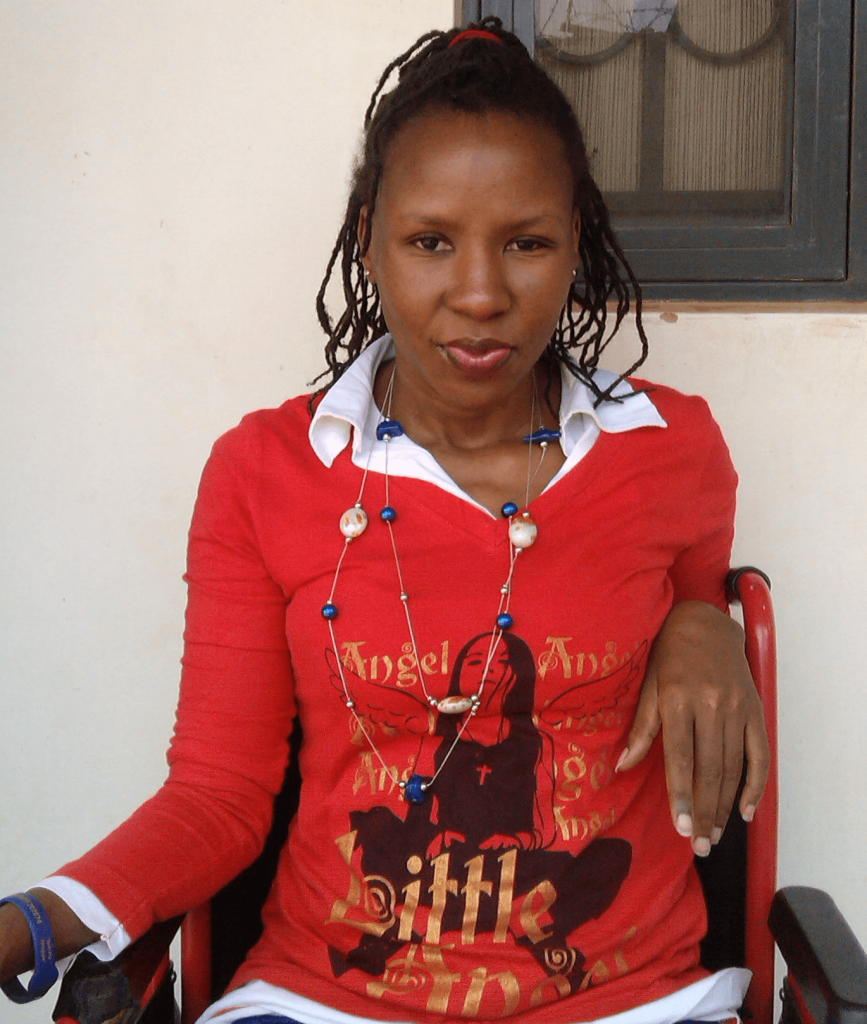
Let’s be real for a minute, we live in societies where single motherhood is seen as a almost a crime and disability, a limitation. Brenda Areto Okotkotber is a single mother and accident victim dispelling these stereotypes. In 2010, Brenda was involved in a motorcycle accident when a speeding car knocked her down from behind. She sustained blunt injuries to her ribs and majorly on her spinal cord. This brought her studies at Makerere University to a rude halt but Brenda is not one to lose a fight. Though Brenda has had to press pause on some of her dreams, she is determined to be independent even if it means having to lie on her side all day making beads. Jessica Layado, our contributor got Brenda to share her story with us, get ready to be inspired. Tell us about the things you’re passionate about Oh my, I love music! You know, that combination of MDD (long ago it used to be called Musulu Dala Dala…it means “very stupid” in Luganda. It was believed that people who do Music, Dance and Drama as a course at university were too stupid to pursue anything meaningful). I also love the arts with all my heart. I’m passionate about helping the needy. Growing up, I always knew that when I started earning money, I’d build an orphanage, pick up every child in the streets and be a mother to them. I don’t know about that anymore but right now, my desire is to help people like me. Have you always been an artistic person? As I mentioned earlier, art is a part of me. Right now, handmade craft is my passion and one that I wish to grow. I also desire to perfect my painting. Currently, though, I am more into women accessories. Interestingly, in my school days, I used to be every art teacher’s prodigy. I was always the first to do my sketches and then shadings. It wasn’t just about the assignment but how great my work was done. Only few students could beat me in the arts. I actually wanted to pursue Industrial Arts at the university but I wasn’t given that subject. I settled for IT which wasn’t my passion at all. Let’s talk about the accident. How has it affected you, both physically and mentally? As a result of this accident, my spinal cord was injured. It affected my limbs right from below my breasts. This has affected my ability to move or walk. This, in turn, has affected my productivity in most ways. It’s also affected my social life. A woman of my age should be married and looking after a family. On the bright side, though, I have my son to look after. I lost love from many people who I held so dear to my heart and this affected me greatly. I also lost my dignity as I had to live on charity. I am not one to enjoy lying on my bed and calling for help. It was such a setback and a humiliating one and to some extent, still is. However, it’s different now. I am hopeful now, productive and doing something on my own. Are you still into the arts? When I lost function of my limbs, I could not go back to school anymore. The first reason being my faculty at the college was not disability-friendly. I also had no money to finish my degree. My son and I needed to survive and so, I just didn’t see getting an education as a priority. I had dreams of singing after my degree and even approached Benon of Swangs Avenue, a very popular recording studio in Kampala. The injury affected my diaphragm and I could barely control my voice. I also dreamed of working in the tourist industry (travelling, adventure). That too, I can’t do anymore. It’s amazing that instead of self-destruction, you chose self-development. How did you do this? My first inspiration is my little boy. I grew up in poverty and didn’t have much but I promised myself that no child of mine would suffer. I therefore started building my self-worth. Like everyone, I desire the good things in life. With determination, I’m hopeful I’d be able to provide for my son and I. I also wanted to prove that I wasn’t finished. I needed to prove that I was just getting started and wasn’t going down easy. I am a fighter and survivor. I couldn’t afford the luxury of depression. That, I always say is a disease for the rich. However, in all, I can’t tell my story without mentioning the most important factor, God. He has been the ultimate, the most significant in all. He still stands by my side and says to me, “You can make it because I am with you” (Phill. 4:13). He’s been true to His word that He won’t ever leave my side (Deut 31:6). I wait upon Him whenever I feel I can’t go on. I hang on His every word (Habbakuk 2:2). I am a child of God, I learnt who I am in Christ and held onto that. He will never put me to shame (Romans 10:11). How would you encourage that person who feels down and out right now? It is not the end of the world. Put your trust in God and He sure will never let you down (Prov. 3:5). If you ever fall, get right up, dust yourself and move on. Do not allow a situation hold you down. When people see that even after a bad fall you’re still ready to fight on, they’ll be willing to lend a hand. There are people who are just naturally kind. God will place such people in your path, if you’d trust Him. I met such people and till now, they still hold my hand through my journey. That they do it with pleasure is the most amazing part of it all. Just when I thought I had lost it all —relatives, the ones who were so dear to me— God brought me such great and encouraging individuals. God will do it for you. Do not look at the situation you are
Be good to yourself: The art of self-love

We were all born and celebrated as cute little bundles of joy. Then we blossom and the cuteness somewhat fades away. Then comes the bosses, colleagues, mates, boys, men, and friends. This is when the seed of self-love you’ve sowed is put to test. If you have learnt the art of self-love, then you will easily get through life. Loving yourself more is not being greedy, selfish or unfair. We are taught to be considerate and put others first but never how to love and prepare ourselves for the journey ahead. While you can be generous and kind, it shouldn’t be with a low self-esteem. Self-esteem, self-care, self-acceptance, self-awareness, self-empowerment, self-respect, self-compassion, self-expression and self-worth are characteristics that all women should have. Notice that these words all begin with “self”? We need to get over the fear of the unknown and understand our worth by simply practicing self-love. Self-love is not a one-time event but an endless, ongoing process. “To love oneself is the beginning of a life-long romance.” – Oscar Wilde Here, ladies, is what happens when you love yourself: You take ownership of your life and understand that it doesn’t matter what others think of you, but how you feel about yourself. You stop acting small and instead allow growth in. You let yourself live your purpose and see no need to compete, prove or compare yourself to others. Negotiations become easy because you know your value and will not settle for less. You accept your failures as learning curves and know your significance isn’t dependent on what you produce. You naturally attract peace and harmony in your day-to-day relationships. I’ve got some great self-love ideas for you. Honour and love yourself Think about what makes you happy and JUST DO IT! Put yourself first Act upon your own needs first, rather than on what others expect from you. Remember, other people’s needs are not your responsibility. Take care of yourself Exercise, eat healthy, pamper yourself and interact socially. Remember to treat your body like the temple it is and spend time doing things that enrich your soul. Set boundaries and maintain them Always let people know what you will and won’t tolerate. When you set boundaries, you avoid situations at work, in relationships, or in any activity that emotionally or physically damages you. Select the right friends Don’t waste time with people who won’t mind taking away your happiness. Spend more time with like-minded people or those that bring out the best in you. Do all it takes to be you Your purpose doesn’t have to be crystal clear but figure out what makes you feel good, and do it as often as you can. Feeling good is all the permission you need to do what you love. Acknowledge your imperfect self Stop judging and criticizing yourself. You don’t always have to win. Remember, it’s the effort that counts, no matter the results. Engage in spirituality By doing this, you will just learn to naturally fall in love with yourself. Improve your skills Look for opportunities capable of increasing your self-confidence, like making time to focus on what you are good at. This will boost your self-confidence and esteem. Identify a go-to place Find a place you can sit and embrace life without anything getting in your way. Forget about work deadlines and bills that need your attention. Have a moment to connect with just yourself. These suggestions will help you to develop a sense of accomplishment and pride in what you do and who you are. You will realize that you are worthy and talented and deserve to be loved. When you start experiencing the power of self-love, trust me, the effect will be magical and everything will simply fall into place. Life can actually feel really good.
4 things to do in your 20s
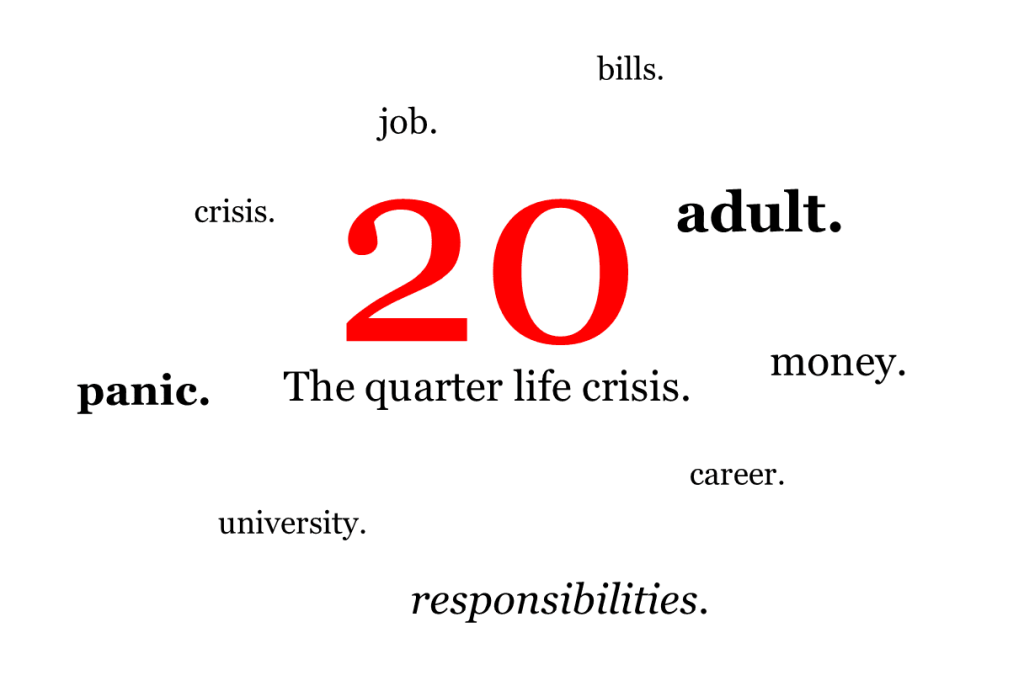
The defining decade. That is what Meg Jay calls it. The ages between twenty and thirty are crucial in a woman’s life. It gets confusing, and it never gets better. You make mistakes and realize who you do not want to be. It is also the age that you are supposed to build a career or business, grow it to success. Don’t forget family as well. Your biological clock starts ticking, and children start getting cuter. Your social circle changes and you go from young adult to a working mother and wife. All in the same number of years it took you to properly learn and write English. Well, there are some pointers that Meg Jay gives in her TED talk, “Why 30 is not the new 20”. The same were replicated in her book “The Defining Decade”, but I do not want to be a spoiler (unlike some GoT fans). Here, however, is a tease of what I picked up. Always invest in who you want to be It does not matter whether you recently graduated and are jobless, or whether you have this amazing opportunity to do what you love. Always keep growing and maturing into the general direction that you want to end up in. That means that you do not have to take that boring unpaid internship that does not really interest you. Keep collecting your identity capital. That way, when you are asked who you are, you can state what exactly influenced you to be yourself. There’s no need being a Scandal fan if you cannot really live it. What’s the fun in that? We’ve shared some more ideas were given in an earlier article. So, really, you have no one to blame but you. Those that are farthest from your reach are the most helpful Most people think we are who we spend time with. That may be true when it comes to shaping your character, but it’s not entirely true for career and business. The weakest ties can come in handy. Your cousin’s friend’s wife may just be the ideal person to get you that dream job. And no, it is not cheating the system if you are qualified for the job. It is called networking. And really, it’s no time to play niceties with your career. Be ruthless in getting those connections going. Extremely nice girls never get the corner office. You have to get your hands dirty (the good kind, though). Own your lifestyle So many people change who they are to fit into what society expects of them. Once you know who you are, do not cram yourself into someone’s box or hide your light. I’m sure we’ve all seen that meme of an orange piece fitting into a garlic bulb. The strongest words are expressed in the simplest of pictures. Once you get that job, express yourself. If you are a creative person, go ahead and do you, darling. Be that leader that you are in your church. If you are a night owl, take up night shifts. Customize your life to your own needs. Truth is, if you don’t, no one will care enough to do it for you. Never ever compare your life to anyone’s Not only is this insulting to God, it is also a lie. Especially on social media. People will only show you an amplified version of the best in their life. You don’t get to know if they are happy or not. Just keep at your gift, work on it, keep your head down and keep going, you know, like a shark. Your actions will speak for you. The whole point of this is, in your 20s, you get to make changes and set habits that may be hard to break. Use them well. You never know when winter would come.
Elizabeth Bisher: I solved my problem then turned it into an opportunity

Ever had a business idea from your own experiences? We’re sure you’ve had several as a #MotherlandMogul. A good number of us leave our ideas as just that but Elizabeth Bisher took hers a step further. Concerned with losing weight after weaning her first child, Elizabeth stumbled upon electrotherapy. She went on to start Slim Therapy as a means to share her own brand of health and wellness. Slim Therapy has grown to be the first locally-owned weight loss franchise in Kenya. Through Slim Therapy, Elizabeth now helps other people reach their health goals through alternative weight loss treatments and nutrition and lifestyle coaching. Elizabeth’s vision is to provide employment through Slim therapy’s expansion- driven franchising platform. What’s the story behind Slim Therapy? Slim Therapy started with my own need to lose weight after weaning my first child. My weight spiked as he passed the eight-month mark. I began ballooning, pardon my expression! That is how I felt and became. I was naïve and knew very little about personal health and wellness. I was quite unaware that the food I was eating was affecting my body until I had gained over 12 kilos. This, I came to realize was true for a lot of women. I tried several methods to lose weight, which did not work effectively. I had a knee injury and back sensitivity, therefore I needed to be careful on experimenting with a different solutions. In my quest to lose weight and gain wellness, I discovered electrotherapy. I was hooked —it helped me build muscle mass and lose fat without doing impact exercise. It was ideal for me. My friends noticed my transformation and were curious. This is how Slim Therapy was born. I solved my problem and turned it into an opportunity. Slim Therapy has helped many individuals, especially those with reduced mobility to achieve health goals through alternative weight loss treatments and nutrition and lifestyle coaching. What did it feel like to launch something new in Kenya? It was daunting, scary, exciting and challenging, to say the least. Being an SME with little market share, I solve one challenge after the other. I had to use my resources effectively and work smart. Most importantly, I get to effectively communicate this new alternative to weight loss, and can swear that it works. After all, I was the living proof. If there was a communication gap, the information would have been filled with rumours and innuendos. We learned to counter this by always being open and honest with our clients. Fortunately, this led to more and more people willing to try it. And with the growing number of success stories, the information spread especially by word of mouth. It’s been 6 years and I do not regret a thing. Franchising of weight loss companies seems a novel idea in Kenya. How are you making it work? Aside fast food chains and clothing lines with foreign ownership, franchising has been a fairly new concept in the Kenyan market. There are no specific franchise laws in Kenya. Therefore, we relied heavily on existing commercial laws, including the Trade Marks Act (the Slim Therapy name and logo is Trade Marked) and the Copyright Act. These gave us a guideline of the legal requirements. Also, through personal research and on guidance from my mentor, we came up with a model fit for the Kenyan market. How does Slim Therapy incorporate franchising? Two years into running the first branch, the demand for our services was overwhelming in other regions within Nairobi and in towns in Kenya. I wanted to find a way to satisfy this demand, without compromising on management and quality of service. Of course, I knew it would impossible to be in all these towns at the same time. Interestingly, one of my clients came to me with a serious interest in running a similar clinic in Mombasa. And so we came up with franchising as an option. This would ensure that we gave the same quality of service despite having different managements. They rode on the credibility of the existing brand and we provided training, machinery, advertising and continuous support to them. Quite recently, we opened our third branch in Karen, Nairobi, under the same model. We are very proud. Tell us about some of the women who work with you. The women I work with are brilliant women who have overcome a lot of adversity to be where they are today. Some of my staff were from disadvantaged backgrounds but that actually served to spur their self confidence and abilities to learn and grow. Most of my employees require mentorship and confidence-building. I encourage them to keep pursuing their dreams and following their destinies by exposing them to new challenges and providing training for them. I have tried to build these traits by encouraging them to speak publicly. And to also express themselves eloquently in both written and spoken language at all times. In this vein, I encourage my employees to pursue their own business aspirations and mentor them to their full potentials. Some have natural talent and just need a boost. How can African women achieve the same success as you have? Firstly, it’s better to know that everyone’s journey is different. Do not try to be an imitation, you are unique and should strive to be. You do not have to reinvent the wheel. And even in using existing concepts, beat your own path. Secondly and very important, find a mentor. Understand that a mentor is not someone who makes the decisions for you. They are not your crutch. They are people to help you decide if your vision is compelling enough. Or send you back to the drawing board. And lastly, as much as you follow your passion, business boils down to profitability. Your business idea may be good, but if the market isn’t ready for it, be flexible. Think outside the box and be ready to adapt to changes. Tell us about receiving the Top 40 under 40 award. How did it motivate and spur you on? The morning the Top
Noluvuyo Cakwebe: There’s much more to fashion designing than fabric cutting

When thinking about a fashion degree, the popular career choice would be being a fashion designer or seamstress. But there are many more than that. Over the next few weeks, I’ll be unpicking this industry along with its various career options. I’ll be shedding a little light on each career option in this industry. I ‘e-met’ (met over email) Noluvuyo Cakwebe earlier this year when I was sourcing clothes and shoes for a photo-shoot. Her willingness to help, without knowing me from a bar of soap was amazing, I couldn’t simply forget her! Of course, when I started this journey of finding out more about this industry, I immediately thought of her! When Noluvuyo isn’t in the kitchen, (which she loves), cooking up something delicious to share with her friends and family, she tries to keep up with her love of running. She enters as many running events as she can. And in the few minutes she has for herself, she is always sewing up something for herself or her friends. My series of articles on fashion-related careers is aimed at educating people about the various career options they have with a fashion qualification. Would you say that someone who also has a National Diploma in Fashion has other options, besides being a Fashion Designer? Most definitely, most people think that fashion ends with being a fashion designer, pattern maker or fabric cutter, but it is broader than that. One can go into procurement —buying, sourcing, retail planning, retail–visual merchandising, sales, store management, personal shopper/stylist, editorial assistant, quality assurance and warehouse assistant/ manager. Yes! Being a fashion designer is not the only option! I understand that you’re a merchandise coordinator. Please tell the readers a little more about your position. I am the merchandise coordinator for the men’s fashion department, at Spitz. My role entails assisting the buyer with raising orders, liaising with suppliers and the marketing department. Also, I manage and receive department samples, compile trends and competitor reports, compile and analyze sales and month-end reports. And how did you get into this career? I studied a National Diploma in Fashion and further completed a certificate in Wholesale & Retail Buying & Planning. I studied at the University of Johannesburg and got my certificate in Wholesale & Retail Buying & Planning at EDCON under SETA. What does your typical day look like? It is nothing like a picture from the Devil Wears Prada! I come in every morning to catch up on emails relating to stock deliveries and due costing for the stock to arrive at the warehouse. Then, I ensure that we are receiving stock at a good margin and good price. I analyze daily sales by identifying good and best sellers (stock that’s selling well or badly) for my brands. Alright and how would you combat the poorly performing stock? How do help them perform better? As much as we try to buy styles based on fashion trends and sales history, it is sometimes hard to nail the sales we project. So we analyze what the possible reasons could be. For instance, it could be a certain style detail that could have been in fashion but doesn’t seem appealing to our target market. Other instances could be price-points. We may just be highly-priced compared to our competitors and need to reduce the price. Sometimes, we may have missed opportunities in allocating stock to the correct stores. So we move the styles to stores that are performing better. With our South African economy and unemployment looking very bleak, would you say that a career in fashion offers the possibility of entrepreneurship for graduates? Yes, I believe anyone can start any business with the use of their hands and minds. One could venture into making simple things such as handbags, accessories, clothing or curtains, to having a business that sources t-shirts, work wear, and small corporate gifts. Nowadays, most people are even making money from blogging in their spare time. Some sell a variety of products over social platforms, such as Instagram and Facebook. However, one should never underestimate the advantage of working for someone. That’s if you have a dream of starting your own business one day. You get to absorb a lot of skills and knowledge. Especially if you are intending on starting a business in the same industry. Experience can go a long way. What would your advice be to scholars who want to follow a fashion-related career? This might sound cliché, but I have always known I would end up in the fashion industry since I was a little girl. You need passion for the ever-changing trends, be creative and highly driven. Being able to work efficiently on your own, work smart and plan your week in order to make necessary deadlines are all important. A sharp eye for detail is required in ensuring that you don’t miss anything crucial. Breaking into the industry is tough and competitive. But if you have a vision of the future, your career journey will be enjoyable and fruitful. Have fun exploring other career paths that you could possibly have an interest in the near future. Never limit your abilities! Do you have any advice for the parents of the scholars wanting to follow a career in fashion? I have always appreciated how my mother supported me, from the day I told her what I wanted to study in varsity (fashion). There is a lot of pressure in delivering what is needed, especially when your child has more than 6 subjects in one semester. They will need support in advising them on how to manage their time, with school and their social life. Parents should prepare themselves for unforeseen expenses for projects and fabrics. With so many activities and promotions that are held on campus, they give your child an opportunity to make extra money. You can find Noluvuyo on LinkedIn as; Noluvuyo Cakwebe. Want to see women you know featured on SLA? Tell us what amazing things women are doing in your communities here.
Yoadan Tilahun: Nothing gives more credibility than the quality of your work

So many of us dream of turning our side hustles into main ones. Few of us do but Yoadan Tilahun is one of the few who’s managed to succeed. Yoadan founded Flawless Events while working full time in corporate trade in the Washington, DC area. Flawless designs and produces corporate events, brand activations, international conferences and trade fairs on behalf of its clients in a number of industries. These include Coca Cola, Google, World Economic Forum, Africa Leadership Network among many others. Yoadan moved Flawless to her home city, Addis Ababa in 2008, where it has been flourishing since. Heran Abate, SLA contributor, spoke to Yoadan whose career decisions and approach to life demonstrate a calm boldness that exemplifies the #MotherlandMogul. Having worked in corporate trade, why did you decide to start an event management company? It started as a side gig, actually. I was looking for an additional source of income to supplement my day job. Around that same time, the events I was attending were quite unorganized —so I leveraged my existing network and tried my hand at it. But from the beginning, there was no two ways about it. The very first event sparked this exhilaration in me —from brainstorming initial designs to realizing the finest details, I was hooked! To this day, there’s nothing quite like the adrenaline rush of being in perfect sync with my team. Especially when months of planning and toil pay off and an event falls seamlessly into place before our eyes. It sounds like it was going well in the US, what prompted the re-location of the business to Addis Ababa, Ethiopia? Ethiopia has long been a center for African intergovernmental affairs, being the seat of the African Union and the Economic Council for Africa. So, there were already many international conferences going on. Particularly around the Ethiopian millennium (September 2008 —we follow a different calendar), there were a number of grand initiatives to broadly expand Addis Ababa’s infrastructure and create larger FDI (foreign direct investment) opportunities. This meant an increase in modern facilities, roads and an influx of investors who were looking to tap into networks and opportunities. That was the market gap Flawless came to Ethiopia to fill. Would you say this re-location was the turning point for the company? Yes and no. While it was good timing, the hard work ahead was in building the momentum. We had to adapt to new regulatory frameworks, re-adjust to an entirely different set of clients. And also build relationships with vendors from the ground up. Like any start-up, the initial stages were crucial. You have to be tireless and tactful in pursuing new clients, being a step ahead of their needs. Until you build a reputation for over-delivering in (seemingly) effortless fashion. That sounds like there’s more good advice where that came from for our readers, could you elaborate? Certainly. To put it simply, nothing gives you more credibility than the quality of your work itself. No amount of advertising can make up for a poorly managed event. It was through happy clients’ referrals that we were able to get some of our highest profile and exciting events. So what makes for a flawless event? What else helped you establish a compelling brand and reputation? Clear process and production, the two are different but both critical. The first requires top-down strategy to tackle the separate pieces of the whole. It also entails investing time in creative output and designs to personalize the event then tireless follow-up. As the event nears, we burn the midnight oil, making sure there are no loose ends affecting back up plans and that we are in constant readiness for crisis —this is inevitable. Our clients rely on us to trouble-shoot and problem-solve on the spot —a late visa, equipment held up at customs etc. Are the majority of your clients international? What industries do you serve? About two-thirds of our clients are international. We mostly do corporate events, international conferences in trade and investment, development as well. We have held events that companies used as entry platforms into the Ethiopian market —Google’s first event for example. We’ve set up high-level meetings for finance entities who don’t have contacts in the country. Most recently, we organized an event in which Ethiopian Airlines celebrated its newest plane acquisition by setting a Guinness World Record for the largest human formation of an airplane. That was fun! How do you nab these high-profile events? We are tireless in building and sustaining relationships both locally and internationally. We are the only private-sector members of the International Congress & Convention Association. We are close partners with professional networks in Africa including African Leadership Network (we’ve hosted their event in Kigali and Addis) as well as Extensia —a continental group of high-level professionals in ICT. On the ground, we have excellent working relationships with hotels, government offices as well as previous clients. This gives us a lot of leverage to flexibly offer our clients a whole buffet of options. Your increasing influence sounds like a direct result from the events you have previously organized. Yes. Our influence is built on opportunities born out of our previous work and our growing network, clients calling us back to take on new events or referring us to contacts in new industries. You were very recently selected among 30 women entrepreneurs to take part in the Graça Machel Fund’s Woman Advancing Africa. What was the goal of this forum? What are the implications for Flawless? I’m honored to have been selected. Graça Machel is a Mozambican humanitarian and also the widow of Nelson Mandela. This forum is a platform for African women entrepreneurs to leverage their capacity and networks to influence the economic trajectory of the continent. It’s because of the integrity of the work that our client’s have attested to that we are invited to take part in larger conversations about entrepreneurship, economic growth. In Ethiopia as well, we are now well-positioned to take initiative in expanding the MICE (Meetings,
Lingerie, going viral and Beyoncé: 10 tips for building a global brand
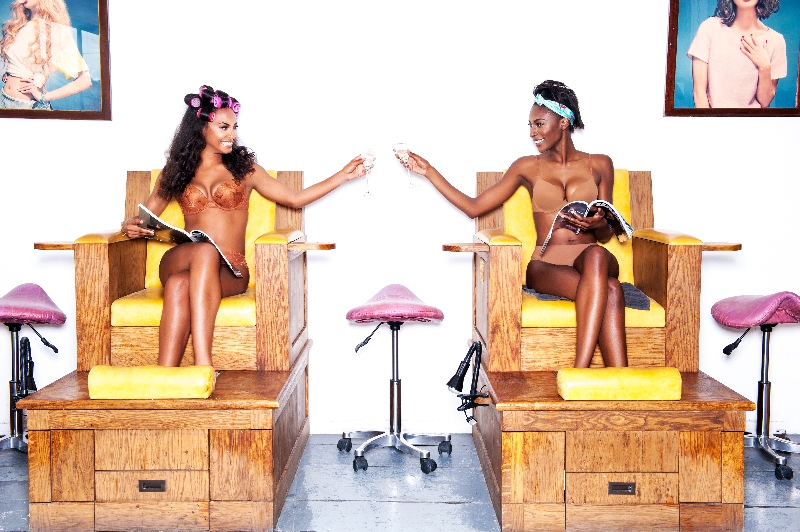
The first #SheHive London event took place this August, with inspiring talks from some of the most interesting speakers in the city. One of them was Ade Hassan, founder of Nubian Skin. From starting her career in banking to running one of the most popular new lingerie brands for women of colour, Ade’s journey is just beginning. At #SheHiveLondon, she talked about making the shift from corporate life to entrepreneurship, going viral and having her products worn on Beyoncé’s Formation World Tour. Not bad for a brand that’s only a few years old, huh? 1. Even if you’re not in your dream job, there’s still so much you can learn… Ade started her career in banking and management consultancy. While she enjoyed it at the beginning, her mind was always filled with new business ideas. As she started to pursue her Nubian Skin dream, it got more and more difficult to concentrate at work but she soldiered on. Looking back, starting her career in the corporate world taught her lessons that remain relevant as a founder: professionalism and the ability to work hard no matter what. When you’re building a global brand, challenges and mistakes are part of the territory; so being able to keep your cool, avoid burning bridges and perseverance pay off. 2. But eventually you have to put your money where your mouth is Making the move from employee to entrepreneur isn’t an easy one and for a long time, Ade bounced between the ‘should I’ and ‘shouldn’t I’ question: can I really exchange the comfort of a safe corporate job for the stormy waters running my own business? It wasn’t an easy question to answer, until a friend reminded her that putting your dreams on hold only leads to regret. And that’s what helped her leap into the unknown and pursue the Nubian Skin vision. So far, it seems to be paying off. No risk, no reward 3. Invest in yourself Although Ade was a fashion-enthusiast, she had no formal work experience or education in the industry. In order to fill that knowledge gap, she made what she describes as one of the best investments so far: hiring a lingerie consultant. The consultant gave her a crash course in the industry, complete with best practices and things to avoid along the way. She also advised her to attend a trade show which would gave her exposure to potential buyers and stockists. But remember; always be smart and protect your brand through confidentiality agreements. Imitation might be the best form of flattery but it’s also the best way to kill your business before it ever gets off the ground. 4. Never compromise on your vision When Ade started, creating lingerie for women of colour wasn’t exactly the most tried and tested thing in the world. There’s was no rulebook on which shades worked best, so Ade had to get creative. She took trips to beauty counters to understand which brown hues were the most popular, and spent hours improving samples from manufacturers by staining them with teabags to get the shade just right. She didn’t take the first outcome as the final one. She tried again and again until the final product met her standards. 5. Get social Unless you’ve been living on Mars, you have probably heard about the ‘power of social media’. But what does that really mean? After Ade finished her very first photoshoot, she posted one of the pictures on Twitter and went on holiday (#jetlife). Within a few days her phone was blowing up, the picture had gone viral and the Nubian Skin fanclub began. When asked whether her social media strategy has changed since then, Ade said not so much, the strategy remains the same: produce high-quality, exciting and relatable content. When you do this the support comes rolling in and in the case of Nubian Skin, it caught the attention of Queen Bey. Yes, you read right, BEYONCÉ. Nubian Skin was worn on the Formation World Tour. THAT’S the power of social media right there. 6. Playing in the big leagues ain’t easy Not only did Nubian Skin go viral with customers, but it has also ended up on the radar of major retailers like ASOS and Nordstrom. It’s easy to get excited by those household names and think it’s all fun and games… but it ain’t. Whether you’re a startup business or not, large retailers have strict rules on how much you can produce but the money isn’t always immediate. This can be tough on startups who don’t have loads of cash to make large stock; so you have to think creatively about what you can offer and negotiate where possible. 7. Make sure all bases are covered, and get help where it really matters Speaking of money, the mula, those dollars, all businesses need to keep themselves cash flow positive (i.e. have spare cash for major purchases and emergencies). Ade knew that she couldn’t do it all, so she hired a friend as her CFO, someone to sort out her accounts and help her avoid bankruptcy. Admitting that you don’t know it all isn’t always easy, but it is the first step to success: once you’ve identified your strengths and your weaknesses you can take steps to make sure that you’ve got it covered. 8. Don’t underestimate yourself While investing in the essentials is important, doing as much as you can by yourself will also help you save those precious coins. By moving distribution and packing in-house (i.e. doing it within the company, instead of hiring another company to do it), Ade was able to save, save, save. We tend to underestimate how much we can do, but if we challenge ourselves a bit and take responsibility we’d be surprised by just how much we can achieve. Also, think about what other sources there may be that can help you out. For example in the UK, organisations like UKFT (UK Fashion & Textiles Association) and UKTI (UK Trade and Investment) provide all sorts of advice and financial support. While its not always the same on the continent, there are so many accelerators around to
Dealing with small minds around you
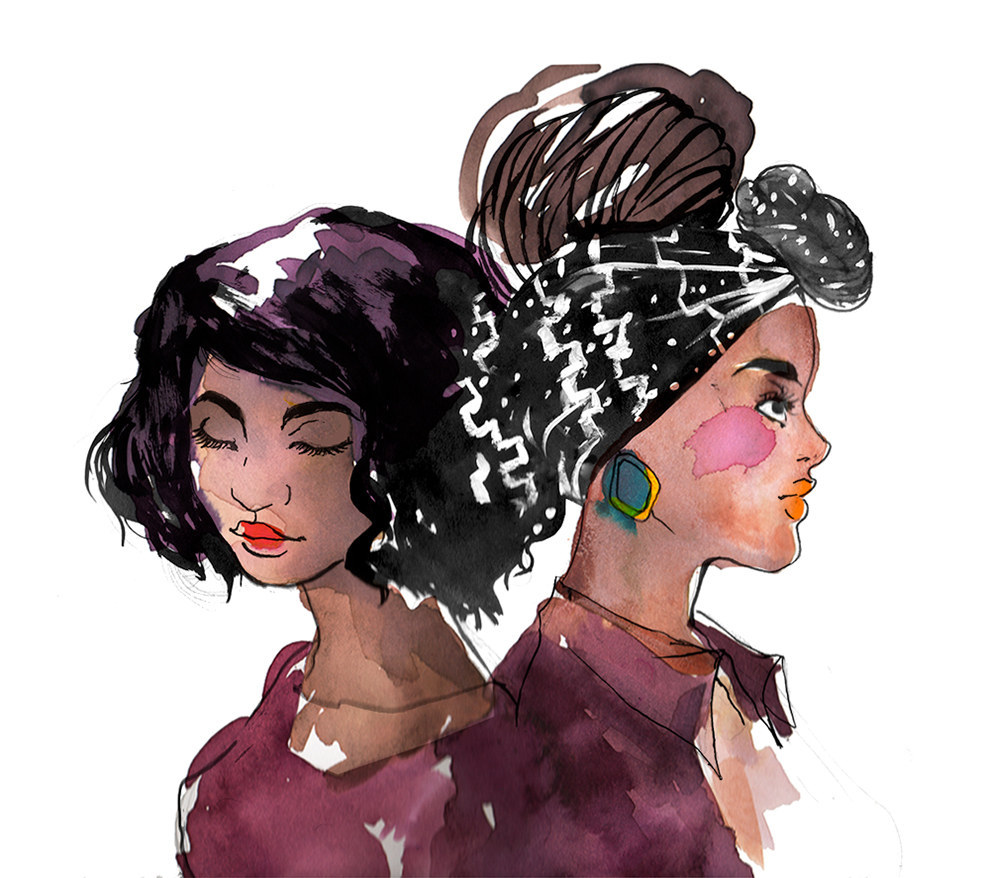
We all have small minds around us. I mean let’s face it, not everybody can be an out-of-the-box thinker. Now, picture this. You’re seated, excitedly sharing your dreams with a friend or a family member and the next thing you hear is, “Why?” Confused you ask, “Why what?” And they launch into an almost rehearsed tearing down of your dreams. Oh boy! You get questions like; “Why do you need to go to a fashion school, why don’t you just do what every other person is doing ?” “Everybody is doing it, so why should your own be different or better.” The really mean ones will go all out and tell you, “It will not work.” “Better just keep it small and forget about all that big dream.” Then they will call you names like, “I too know” or “over sabi.” If you’re someone really nice, you’ll probably spend time trying to explain to people who cannot see beyond the small scale. These people can’t see why your dream is not only feasible but a sure thing. The ones that sadden me the most are those who hide their disbelief small minds and even jealousy behind religious excuses. I’ve heard them all, “Money is evil, your plans are not ‘godly’” “Christians cannot go into fashion, or cosmetics or modelling.” As entrepreneurs and ladies, we sometimes have to battle negative feedback from those around us. Those who project their fear of taking the risks on us. Don’t get me wrong, not all of them mean harm. For some, it’s just they way they are, the way they have always thought. They can’t see outside the box. Evidently, that is not you, you see beyond that. You have probably gone through the SLA website and have seen what young African women are doing and you get ‘gingered’. Your dreams are forming, you’re redefining your plans, you expand your horizons, you go back to the board and re-evaluate. Oh, the excitement. You want to share the good news! But it’s straight back to the earth when somebody hits you with the dead weight of their own reality. You are shaken, you take a critical look at the economy and, uh oh, doubts are creeping in. Listen you don’t need all that. What you need to do is… Change your sounding boards Don’t worry, they will come around later. For now, at the early, fragile state of your dreams, you need a support team of like-minded peers, people who can see from your point of view and push you along. Know that that you’re not the only one Nothing is new under the sun. Everyday, someone gets a new idea, (well not entirely new but you get the gist). And each day, someone gives up on their dreams. Probably because somebody, anybody around them just couldn’t believe in the dream to be supportive enough. Don’t be that one who gives up at the end of the day. Don’t explain your self Popular Nigerian artiste, Olamide sang, “who you epp?”. I think that’s self-explanatory. Let the dissuasion push you There are several versions of this statement but grow with the adversity, anyway. Learn to use the attacks or negative words to grow. Remember the story of the donkey? Yeah. Be wise and picky The only consideration I take into account is from the Holy Spirit. Others, even my mum’s, are subject to scrutiny and probable discard. As much as I love my family and friends, we’re not all on the same wavelength. Realize that it will be hard And don’t let it discourage you or make you believe your small-minded crew. Initially, it’ll be hard and for some, harder than others. On some days, there may be virtually no results and you may run at a loss. But your first victory is always sweet. Be convinced They are your dreams, yeah? Good. Then be convinced about them. It will take all the conviction you have to stay on track and not veer off when those around you are taking apart your well-laid plans with their words. You will second-guess yourself, you will be tempted to concur. You might just as well throw up your hands and give up. Nah, that’s not an option. Be centered Focus. Centered. Same thing. Keep your eyes on the goal. Don’t reduce your goal down to your power. Instead, match up your goal with your faith. Think up. The best athletes know not to look at the other athletes when running. But to keep their eyes on the finish line. It’s all for the love Remember, it may all be for the love. Those that care about you, don’t want you making mistakes. Still, you should filter. While I am tempted to say zone out, I’ve come to realise that sometimes listening to the not-so-toxic criticisms can inspire you to tweak your plans. It can also open your eyes to loopholes. Above all, start on the dream and keep going forward. Nothing ventured, nothing gained.
Help! I don’t have a mentor
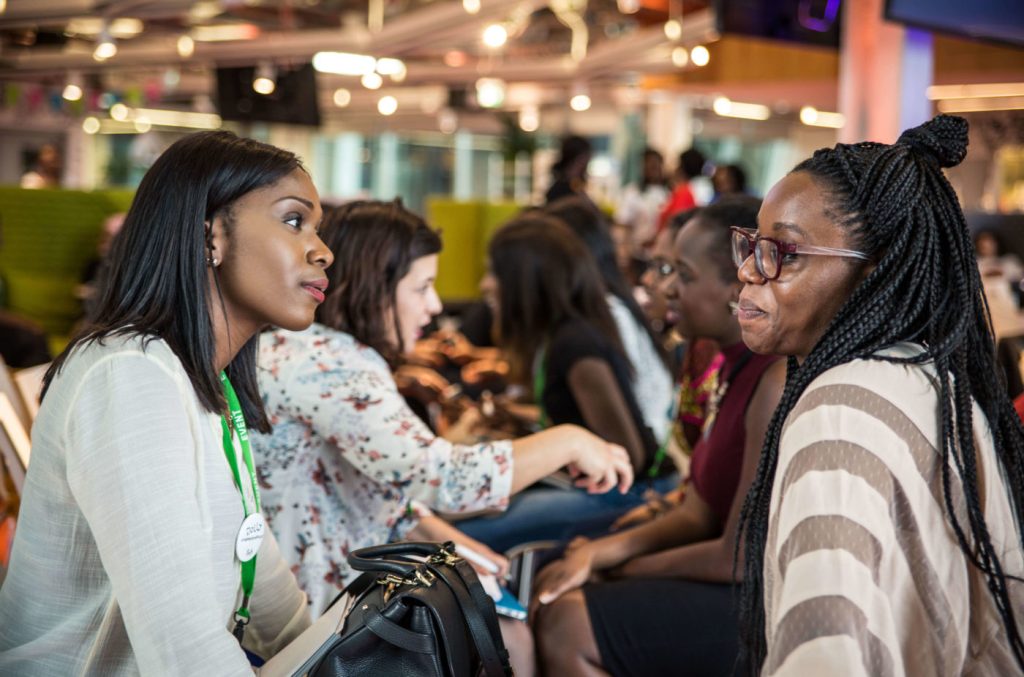
If you’ve read articles and stories of successful entrepreneurs, the word ‘mentor’ must have stood out. Even the established entrepreneurs still have mentors. And you wonder, what more do they still need to learn? Successful entrepreneurs know the benefits of having a mentor and one of those benefits is the opportunities for learning. So what happens if you don’t have a mentor? Relax, it’s not the end of the world. However, here are a few things you should do: Read books What do you need a mentor for? Do you need a guide or someone to share their business journey with you? Do you need to learn from their mistakes? Do you want to learn how to manage time, make a sales pitch or form partnerships? What better way to learn all that than reading books written by successful entrepreneurs? Reading is the way, ladies! It can’t be that hard. Try peer-to-peer mentorship When founders talk about mentors, they refer to business owners who have had about fifteen years or so of business experience. Unfortunately, very few of these business owners have time to dedicate to mentoring startups. Now, you could consider being mentored by a founder within your age group. The good thing about this is that being in the same business environment, you can relate with this mentor. He or she can prove the best person to bounce off ideas with as they’re probably also among your target clients. Quit with the attitude One thing that can put your mentors off is the I-know-it-all attitude. As an entrepreneur, be prepared to be criticized, shaken and moulded. Keep in touch with your mentor(s) and update them on your progress. You would need to be that proactive. Leave the sour attitude at the door and be ready to be guided. Unfortunately, most entrepreneurs give up along the way, and complain about their mentor not making time for them and criticizing them too much. Well, guess what, it’s all part of the learning process. In conclusion, to be mentored, you’d need an open mind and a teachable attitude.