
What Zainab Balogun taught us about branding and working for free
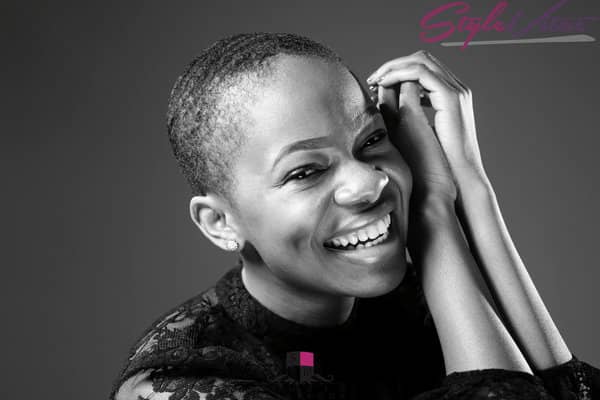
On January 14 we got the chance to connect with Motherland Mogul Zainab Balogun to learn more about building a career in the media and entertainment industry. Click here to see the full recap if you missed the chat. Zainab is a media professional, TV presenter, producer, budding actress and media entrepreneur. She is currently a presenter for the daily entertainment news show EL Now and original talk show called The Spot on EbonyLife TV. She also appears as a presenter and associate producer on Jumia TV, a teleshopping show. In addition to her presenting responsibilities she is a brand ambassador for Dark and Lovely international hair company. We learned 5 critical things from our chat with Zainab that budding media starlets, early career professionals and brand new entrepreneurs alike can learn from: 1. Maintain healthy contacts and keep people updated on your progress – that’s how you find out about new opportunities #SLAChats — She Leads Africa (@SheLeadsAfrica) January 14, 2016 2. Sometimes you have to work for free to get your foot in the door. Money shouldn’t be the only option you consider #SLAChats — She Leads Africa (@SheLeadsAfrica) January 14, 2016 3. Think about how you can build your own opportunities and content while you pursue opportunities with bigger brands #SLAChats — She Leads Africa (@SheLeadsAfrica) January 14, 2016 4. Having a strong work ethic can help bring mentors and teachers to you to help you grow #SLAChats — She Leads Africa (@SheLeadsAfrica) January 14, 2016 5. Stay consistent with your brand. Even when things are challenging, that will always be your calling card #SLAChats — She Leads Africa (@SheLeadsAfrica) January 14, 2016 Special bonus! Zainab shared the best piece of advice she received when first starting out in her career. @SheLeadsAfrica “Honour your brand” You’ll get tempted by the status quo in rough times but someone out there will buy into YOU #SLAChats — Zainab Balogun (@Zainab__Balogun) January 14, 2016 Special thanks to Zainab for joining us and for everyone who participated. If you want keep up to date with future events hosted by She Leads Africa, join our community and follow us on Twitter, Facebook and Instagram
We should all be feminists: The business case for women’s inclusion
Mao Zedong once said: “Women hold up half the sky”. While I wholeheartedly agree with this notion— I must add that in Africa, women not only hold up half the sky but also hold down the land and everything therein. Let’s examine the facts: According to ActionAid International, women make up more than half of African farmers and produce up to 90% of Africa’s food Women constitute over 50% of Africa’s growing population According to the McKinsey Global Institute, women represent 70% of Africa’s informal economy It is simply impossible to imagine Africa without its women. However, as Africa has rapidly progressed, there has been a lack of proportional representation of women. Women are often missing in the narrative of Africa’s growth and are clearly underrepresented in governance. The concepts of growth and governance are in many ways intertwined and key to a prosperous Africa. To drive growth, Africa needs leaders with diverse skills, talents and backgrounds. Given women’s make up over 50% of Africa’s human capital, Africa can’t achieve any milestones without them. There are clear benefits for integrating women into Africa’s growth story and dire consequences for excluding them. Economists estimate that Africa needs to grow at a rate of at least 7% per year to put a meaningful dent on poverty. While some countries are on track to meet this target, others are lagging behind. The Organization for Economic Cooperation and Development found that an increase in female labor force participation –or a reduction in the gap between women’s and men’s labor force participation—results in faster economic growth. Also, development economics expert Stephan Klasen found that gender inequality in employment negatively impacts growth in Sub-Saharan Africa— the continent directly suffers losses of 0.3% per year compared to East Asia due to this problem. Fundamentally, the principle of economics tells us there are 3 key ingredients for economic growth: land, capital and labor. Economic growth is maximized when all of these factors are fully tapped into and being utilized. There is no nation in the history of the world that has achieved meaningful economic growth without engaging its female population. Further, the Nike Foundation found that women reinvest 90% of their income back into the household, whereas men only reinvest 35-40%. Cross referenced, the data suggests that the path to sustainable growth for Africa is one that needs women at its forefront. Hence, governments, private sector firms and individuals need to make a conscious effort to promote female participation in building the kind of economy Africa deserves. That said, Africa needs visionary and ethical leaders. Since gaining independence from colonial powers, many African countries have been ruled by male leaders (often dictators), and in that time we have not made meaningful progress. According to the World Bank, East Asia managed to reduce extreme poverty from 78% in 1981 to 8% in 2011. In South Asia, the share of the population living in extreme poverty is now the lowest since 1981, dropping from 61% in 1981 to 25% in 2011. Sub-Saharan Africa on the other hand, has only reduced its rate of extreme poverty from 53% in 1981 to 47% in 2011. While one can argue that external factors have contributed to this reality, I emphasize that a large part of Africa’s failure to live up to its potential has been due to poor leadership. Numerous behavioral studies have found women to be more trustworthy and publicly spirited than men and particularly effective in honest governance. A study by the World Bank Development Research Group found that higher rates of female participation in government are associated with lower levels of corruption. One can argue that these studies are neither all-encompassing nor conclusive. However, given that our current modus operandi has largely failed, I suggest we employ another approach towards the leadership of our continent – one that has more female leaders at the table. The World Economic Forum Global Gender Gap Report shows Rwanda as being in the top 10 countries of gender equality globally. One area of particular strength is the political empowerment of Rwanda’s women. The country’s women hold 64% of parliament seats (highest in the world) and 39% of ministerial positions. Rwanda also holds the number 1 rank globally for female labor participation, where the country has more women than men contributing to the GDP (with a female to male ratio of 1.02). It is no surprise, then, that Rwanda’s economy grew by 7% in 2014 and is projected to grow by 7.5% in both 2015 and 2016 according to the African Economic Outlook. The success Rwanda has shown in engaging women in political leadership is a glimpse of what the rest of Africa can accomplish with more women at the table. The business case for aggressively engaging women in the development story of Africa is clear— we simply cannot achieve growth without them. While there have been some bright spots, leadership has been poor. To realize our potential across every sector, women need to be engaged women at all levels. Women will not solve all our problems, but leveraging our most talented people—both female and male—promises to be the only sustainable solution.
3 reasons you are your only competition
Every day, we are surrounded by images and individuals that remind us that we need more, need to have more and do more. In business, this pressure often comes from our competition. Sometimes our competition can be intimidating. They can make us feel as though our ideas are too small or that we will never be as good. However, it is not really our competition that is the issue here. It is our fear of reaching heights of greatness that we never thought of as possible. Over-analyzing our competition can distract us from what we should be doing and where we should be going. We become accustomed to the falsehood that because someone else is winning, we must be losing. Use competition to inspire and enlighten rather than disenchant yourself. Often those who see the most successful competitors in their industries as inspiration strive to do better in their own businesses. Use your competitors as catalysts for change and sources of motivation. They are not there to limit your success. There are enough opportunities to succeed for all of us. At the end of the day, you need to compete with yourself and here are three reasons why it’s important. 1. It will stop you from comparing yourself to others I think sometimes the anxiety that comes from seeing your competitors excel makes you question whether you are doing better than other people or not. What really matters is that you’re doing what’s best for you. Do you feel like you are succeeding? Have you determined what success means to you? 2. It will keep you focused on your goals If you stay focused on what you are doing, and your own journey, you will inevitably keep improving. Focus on your business goals will result in growing success. The minute you take your eyes off your goal, you lose sight of why you started it all in the first place! 3. It will give your business the attention it deserves Your competitors can be a great source of information. You can learn from them, but limit the time spent researching their movements and give your business your full attention. Treat it as you would a romantic partner. If you give it all your love and attention, you will reap the rewards of a great business life! Stay focused on what you want to accomplish in life, and strive to do better than the goals you have set for yourself. Be your own best competition.
From our founder’s mouth to your ears: 3 tips to light fire under your behind

Earlier, I wrote about how the devil was trying to drag me down with this curse they call inefficiency and being unproductive. As promised, I’m sharing three tricks I have used to get myself back on track. 1. To-do lists are wishlists if you don’t have deadlines We all love to-do lists and know how important they are for keeping us on track. Most importantly, you get to buy a cute notebook to put them in. However, there’s a catch – for a to-do list to be effective, each task needs a deadline. Deadlines are key. They help you prioritise. Tasks that have an earlier deadline should obviously be completed first. Writing that deadline in ink forces you to acknowledge this. This strategy is particularly effective in making sure you get through all those boring tasks that you don’t want to do and end up putting off for weeks. Deadlines create a sense of urgency which is exactly what you need when you move from a corporate setting to running your startup. Anyone who has made this transition knows that the first thing you’ll notice is all the freedom you have. Mmm…doesn’t that air smell sweet? #MotherlandMogul Tip: Unfortunately, freedom is a double-edged sword. The freedom to do whatever you want includes the freedom to wake up late, stay in your pajamas all day and generally chill a little too hard. Having firm and clear deadlines will help you avoid getting too relaxed and comfortable. 2. Delegation is the wurrrd Being productive requires energy. Having energy requires a fresh mind. There’s a little something known as Decision Fatigue. This is one of those psychological terms that you NEED to know about. In simple terms, decision fatigue refers to the idea that people make poor decisions after they’ve made a long series of decisions. Your ability to make good decisions is a lot like your willpower to say no to a tray of freshly baked cookies or fried puff-puff – it’s not an infinite resource. This is why leaders like Barack Obama and Mark Zuckerberg wear the same thing every day. They don’t want to waste precious decision making juice on something as non-essential as their daily outfit. What does this mean for you and your productivity? It means that to stay productive and get stuff done, you need to minimise the amount of decisions you make. This is where delegation comes in. If there’s something that someone else on your team can do – hand it over, step away and let Jesus take the wheel. (Okay, that’s a bit of a joke. You still need to provide oversight – abi the Big Man only helps those who help themselves). #MotherlandMogul Tip: Delegation allows you to free up all your juice for the stuff that really matters and focus on getting that done vs. doing a bunch of busy work, and then making yourself too tired to do the important stuff. 3. Find an accountability overlord The problem with working for yourself is that you are only accountable to yourself. We’re human beings so it is natural to be a little too nice to yourself. Missed that deadline – girl you had bad cramps, it’s aiight! Rescheduled that business development call – you’d already had two calls that day, you don tire sef! Missed your targets – um, if you don’t acknowledge it, it never happened, duh! You need to find someone who is going to keep you accountable, and unfortunately your co-founder or partner is not good enough, sorry. Afua and I tried this out but found that it didn’t work. An accountability overlord requires an element of shame. We know each other too well to be embarrassed if either of us dulls. Our accountability overlord is called Jan. He’s an Africa-focused investor and used to be my older sister’s friend until I stole him. We have check in calls with him once every 3 weeks. On those calls, we have a brief chat about what we’ve done over the last 3 weeks and compare it to what we said we would do in our last call. He also pushes us to make sure that all of the activities we’re doing are actually necessary and not just “busy work.” Because Afua and I have a modicum of shame, neither of us likes to look like dullards on those calls so we make sure we get our work done. The 3 week cycle is long enough to actually run the business but not too long as to allow us to hide from our responsibilities. For those of you who have investors or a board, this shouldn’t be too much of a problem – you’ve got enough hawks watching your back. So there you have it. Three simple tricks to force yourself into becoming a productivity beast.
Business incubation hub in South Africa focuses on women
Statistics indicate women-owned micro enterprises in South Africa currently experience higher barriers to success relative to those owned by men. This trend is unsurprising given the country’s predominantly patriarchal culture and history of exclusion of women in the work place. Thankfully, more effort is being directed towards correcting this injustice by both the government and civil society. Among key interventions is the growing number of business incubation hubs. These hubs differentiate themselves by levels of support, entry requirements and industry focus. At their core, they aim to help early stage businesses thrive amid the incessant challenges new business face. One recent entrant is the newly founded 1Accord, located in the East of Johannesburg, an industrial perimeter that has been hollowed out by the closure of manufacturing plants in the country. Founded by Mduduzi Dladla, an upwardly mobile businessman, the hub prioritises women enterprise support through a special program called the ‘Women Entrepreneurship Accelerated Program (WEAP)’. WEAP is aimed exclusively at women entrepreneurs at various stages of their business journey. Though he had all the traits of a street-savvy black youth, Mduduzi Dladla or Mdu, 26, as he is affectionately known, carries himself with a level of seriousness that’s rare among his peers. He sees himself as the new face of South African business: ambitious and well educated with a developmental approach to business. With his passion and drive, he’s on the way to being a business leader in South Africa. An accountant by profession, his first taste of entrepreneurship came while working full-time. For two years, he juggled his job and the start-up. When he did decide to go entrepreneurial route full-time, it was not without challenges, ranging from lack of finance to competitors. It was with this in mind that he developed 1Accord Innovation hub to provide business support, skills transfer, and linkages between small, medium and micro enterprises (SMMEs) and corporations. Mduduzi decided to dedicate a full program to women because, 21 years into South Africa’s democracy, the odds are still stacked against female entrepreneurs, especially in the mainstream sectors of the economy. “Women entrepreneurs have dominated the ‘softer’ sectors like catering, events managements, the beauty industry and the informal economy in this country,” he said. “Due to this fact, there is a growing need for structured programmes to get more women into previously male-dominated industries.” In his opinion, such a programme must provide support encompassing access to finance, markets, supply chains of large buyers of established businesses and the government, and assistance with developing business systems. “For women to learn and grow – especially those at the early stages of business – they need to learn from established women-led enterprises,” Mduduzi said. “This is key because women have a better appreciation of the subtle and not so subtle challenges women face in trying to establish their businesses.” WEAP provides support in the following areas: General information and business educational programs Financial assistance through access to finance granting institutions Mentoring and coaching programmes, and Support for networking structures. The program has been especially designed to help women entrepreneurs take charge of their journey and empower themselves. Participants are provided with expertise to enable them achieve both business and personal success. They are exposed to tools that will help become effective communicators and networkers. They also have the opportunity to upgrade their by learning finance and sales as it applies to small business. Participants also have access to a network of successful women entrepreneurs. This network provides support, guidance and links to the mainstream of the economy. Women in the program take part in business, strategic and financial workshops that accelerate their preparedness to run successful businesses. The ultimate goal is to ensure that participants leave the programme as confident, competent and motivated business women. The emphasis on ‘self-awareness as the basis for sustainable business success’ sets WEAP apart from other support initiatives. The intention is to empower women to overcome their internal inhibitions and rise to the challenge of entrepreneurship without mimicking their male counterparts, or losing what makes them successful in the many other complex roles they fulfil in society. Launching WEAP during the African Union’s Year of the Woman was vital. With the right support and access to opportunities, women have demonstrated their resolve and ability to run successful enterprises that add value to their communities and shareholders. And in the entrepreneurship landscape for women, 1Accord is a welcome addition.
Carpe Diem: Engaging Africans in the Diaspora for development
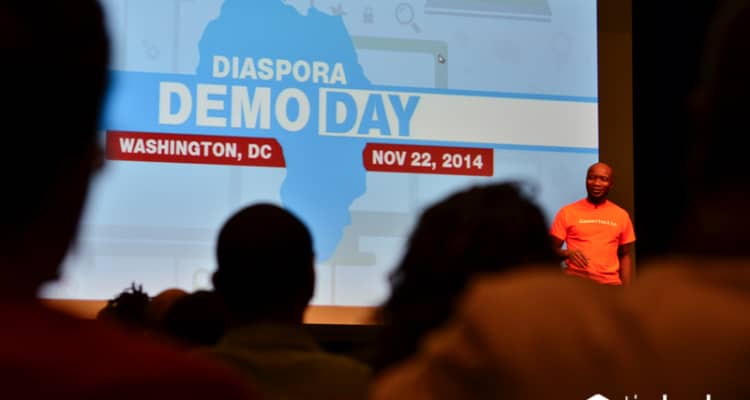
Every year, the Motherland loses some of its most brilliant minds to other parts of the globe. They leave for a number of reasons that include political instability, repression, conflict, and poverty, and do so in the hope of getting better education and job opportunities. They become a part of the diaspora, non-resident Africans who still feel a strong connection to their origins. According to the World Bank, there are 39 million Africans in North America, 113 million in Latin America, 13.6 million in the Caribbean, and 3.5 million in Europe. They are well-educated professionals and together they send over 40 billion US dollars in remittances to the Africa every year. Per The power of the diaspora lies in their duality. They identify with both cultures and act as a bridge to communicating the true African experience. Utilizing this duality can help in a number of areas. Fighting the negative imagery A number of Diasporans are young, talented and optimistic about the future. They’re also eager to return to help Africa progress. Having achieved success in their respective fields, they defy the perception of despairing poverty, corruption, and repression that often overshadow Africa’s success stories. The politics Our global representatives can also make changes in foreign policy. When it comes to negotiating interventions and support, diasporans can provide an authentic African voice to political discourse by communicating the needs, potential and realities of Africans. Sharing skills They can also apply their knowledge and talent to close the skills gap, which would help attract foreign investment. After all, the Motherland doesn’t lack intelligence. What Africa lacks are opportunities to apply and develop its talent. So how do we put this into practice? Almaz Negash, a respected business executive and non-profit leader, has a feasible solution. Negash was born and raised in Eritrea, and went on to study in the US. She now works to connect Africans on the continent with those in the Diaspora. Negash suggests using the African Diaspora Network (ADN), an online platform, to convert the $40 billion remittances into investments. This is easier said than done. The ADN solution requires reliable infrastructure and policies that are conducive to conducting functional businesses. These include enforcement of property rights and political stability. There are concerns over whether or not African governments have the capacity to enforce such policies or even comply with them themselves. The ADN must also figure out the best way to engage with the diaspora. Not all diasporans are Pan-Africans so some may focus more on their own countries than the entire continent. But, if successful, the creation of a diaspora database could work as a platform for the Diaspora to share their entrepreneurial capacity with those at home, and be a forum for Africans to seek investors and donors. This will allow Diasporans and resident Africans to form partnerships and invest in each other. ADN could also function as a space for nonprofits to connect with Africans and share ideas on how to best tackle development problems and create sustainable solutions. Over half a trillion dollars has been spent on aid to Africa since independence, and almost nothing has come of it. The ADN could be the missing link. Proof of Concept A similar model has worked in India. As a country that is dependent on remittances, the Indian government has made a conscious effort to engage with the Indian diaspora. Through liberalizing their trade policies, India has been able to attract its diaspora’s investment. They have also established the Ministry of Overseas Indian Affairs that connects to the diaspora through youth teaching, cultural education, and annual awards to revered Indians living abroad. So…what are we waiting for? Sadly, African governments aren’t doing the best they can to connect with Africans abroad. At least 32 African countries have set up specialized units or ministries to engage with diaspora, but these units tend to be under financed and understaffed. As a result, African governments are not engaged with their diasporans. But Ethiopia is making moves The country established an Ethiopian Diaspora Directorate in 2002. It now has a web portal with information for the diaspora about potential investment and trade opportunities, on-going development projects, and the Ethiopian diaspora policy. Ethiopians born outside of the country can get “yellow cards” allowing them to travel without a work permit or visa. The Ministry of Health also attracts professional diasporan doctors to work in their health sector. Ethiopia now has its first emergency response residency program. SLA also knows what’s up We too have recognized the need to harness diasporan potential. In November 2014, SLA co-produced and co-hosted Diaspora Demo Day, a social impact pitch competition. Diaspora Demo Day is the largest convention of African startups, entrepreneurs, and angel investors outside of the continent. SLA took seven African startups to the showcase where growing tech companies and social enterprises focused on Africa and the diaspora were presented. Demo Day took place in Washington DC and was attended by policymakers, impact investors, journalists, development professionals, and leaders of African enterprises. Participants gained media exposure from multiple outlets like Washington Post, BET.com, and AllAfrica.com to name a few. Carpe Diem 6 out of the 10 fastest emerging markets are in sub-Saharan Africa: Chad, the Democratic Republic of Congo, Ivory Coast, Mozambique, Ethiopia, and Sierra Leone. So now is time better to invest in Africa’s future.
Beyond handmade: Looking past Western obsession with handmade African goods
Sisi King, cofounder of the accessories brand ZikoAfrika, writes about her challenges developing a business model that allowed her to tap into efficient technology and ramp up scale while responding to growing demand for handmade African goods. Sisi King raises important questions about responding to short term market demands against long term growth opportunities. Two years after the collapse of a garment factory that killed more than 1,100 people in Bangladesh, the race to the bottom in the fashion industry may finally be slowing. Consumers are demanding products that have been made in a socially responsible manner, and brands, both large and small, are responding. With this increase in authentic goods with a social impact narrative, made-in-Africa products are gaining significant traction. Handmade items from the continent are especially in high demand; they are being carried across the retail spectrum, from low to high end luxury retailers. While this interest in handmade goods is to be celebrated, Africa is unable to compete with the high volume, low cost goods from China and India. The change in global consumer spending trends presents both unique opportunities and challenges for African production. If we buy into the hype of handmade in Africa, we ignore the bigger picture of working towards sustainable socio-economic growth for a quick marketing fix. The Story of ZikoAfrika Co-starting ZikoAfrika, a locally produced accessories brand in Kenya, I absolutely believed in the power of small-scale community focused production as a driver for fair employment opportunities. However, we were unprepared for the huge challenges we would face, producing a consistent high quality product at a price buyers were willing to pay. “Handmade goods have the powerful draw of connecting the consumer with the producer, providing a sense of meaning and transparency in a world awash with amorphous goods and murky supply chains.” Still, this is what consumers are largely unaware of: a lot of handmade production takes place in the informal work sector, which is unregulated and outside the bounds of government set minimum wages and conditions. Furthermore, the process is slow and quality is inconsistent. These issues present significant barriers to scaling. Learn to Grow Your Business In our case, these challenges made it difficult to meet timelines and low costings set by wholesalers. It became clear that to have a viable business, we would have to centralise our operations in a formal workshop and mechanise parts of the production line. As such, we explored the idea of finished by hand, not made by hand. This process involved re-evaluating our materials, designs and production line. We replaced natural materials such as bone and horn whose supply are inconsistent with perspex, a low cost and readily available plastic. This changed enabled us to utilise lasers to cut components that were then sent to an audited workshop for assembly and polishing, eliminating a huge degree of uncertainty in our production process. Available for hire in downtown Nairobi, lasers enabled us to cut high volumes of our material in a couple of hours with a 0% rejection rate. This task previously took at least a week, with up to 30% rejections. The change in production meant the opportunity to fulfill larger orders on time and with no rejection. For the workshop, it meant getting the pieces out faster, enabling employees to take on more work. In harnessing cutting edge technology available in our city, we combined two disparate worlds and broke through some of the barriers inherent in manufacturing by hand with a low-skilled labour force. The Challenge with Alternatives Being able to significantly increase production capacity, efficiency and quality was extremely exciting and motivating. However, on informing our main international client of the changes in our manufacturing process, we were told under no circumstances would products that were not 100% made by hand be accepted. At a crossroad, we had to decide whether we should continue to produce exclusively by hand, securing the short term survival of our business, or commit to a long term vision we believed had greater potential for both our business and our producers. A larger conceptual issue also loomed – is the largely western vision of the romantisized artisan and new obsession with handmade actually limiting development and fair growth in Africa rather than enabling it? To a large extent, I would argue that the obsession with handmade African goods limits development and fair growth opportunities. The global demand and value for fashion provides countless opportunities for product and market diversification. But to take full advantage of the potential for design industries to drive socio-economic growth, our products must meet quality standards, volumes, price-points and lead-times consistently. This requires some element of a mechanised production line, as well as significant investment in centralised manufacturing units that can be well managed and monitored. This is not to say that artisanal handmade production do not have a place in socio-economic development. It does – particularly in rural areas with limited money generating opportunities, or in the preservation of unique cultural handicraft techniques. However, without significant growth in the formal manufacturing sector, Kenya cannot grow from a low skill, low capital economy to a medium income one. Formalising and investing in fashion production units that utilise modern technology to eliminate bottle necks while continuing to retain an element of hands on production provides a viable hybrid to intensive industralisation. This hybrid enables our products to be competitive in international markets. Asking Ourselves the Difficult Questions As brands producing in Africa, we have a role to play in this emerging narrative. The handmade label has strong marketing currency – it is personal, the very antithesis of fast fashion and sweatshop labour, and it’s what the world wants now. But, we need to ask ourselves: is it viable? Are artisans actually making a living wage, are they working in conditions that are safe, are they working fair hours? Is what we are doing scalable and sustainable? For some it will be, particularly those in the luxury goods sector who
Building networking relationships that last
I don’t remember ever feeling comfortable in networking situations and when I had to introduce myself to a group of strangers. But the thing is, these nerve-wracking conversations could lead to critical personal and professional opportunities. Think about it! You are probably where you are in your career or as an enlightened person due to communal effort. The contribution of those around us in our individual advancement cannot be downplayed. Your network is your net worth… And we’re always one or two persons away from getting what we need. All we have to do is reach out to people we know. Mildred Apenyo, an entrepreneur and the founder of FitcliqueAfrica, was able to secure space for her women’s only gym through her network, for example. One of the trainers she worked with connected her to a family that owns a hotel and they agreed to let her turn one of their conference rooms into a fitness space. This saved her a lot of time and the resources that would have gone into searching for a usable space throughout her city. Whatever you do, don’t network just for the sake of it. Most of us are consumed with attending all the events out there and collecting as many business cards possible. Post ‘networking’ binge, we always find ourselves stuck in a rut, wondering if it was all even worth it. The key is to be deliberate about the events you attend. Show up ready to mingle. Once you get the contact information you need, don’t let it sit there gathering dust. Take action. Remember that networking is a process that requires on to be proactive. What keeps us from taking action? The fear of rejection There’s always a chance that our attempts at fostering relationships will be rejected. It’s only natural for us to avoid instances where rejection is a possibility. The thing about life however, is that nothing is certain, so you might as well try. The worst that could happen is that they’ll say ‘no.’ But remember, with every ‘no’ you are one step closer to a YES! Being stuck in our comfort zones Networking takes time, effort, energy and resources – things that a lot of us unfortunately see as ‘doing too much.’ “They have my contact information, if they are interested they will reach out,” we say. “Why should I follow up with an email or a call?” we wonder. We think that just attending the event and putting in face time is enough. It is not, unfortunately. You have to nurture the relationships. Make initial contact, follow up with in-person meetings and grow from there. Getting things done As Martha C. White outlines in TIME, it’s increasingly becoming clear that for networking to work, we have to shift from the ‘What’s in it for me?’ mindset. It is imperative to understand that there is a mutual exchange in this process. Networking is not just about accumulating a list of contacts that you can reach out to when the need arises. It is more about building real relationships that involve active participation of give and take between both parties. Depending on your situation, you need to first identify the people you would like to connect with. It could be someone you want to learn from professionally or an investor who you think might be interested in your business concept. Once the individual has been identified, the first step you take in approaching them could either seal the deal or break it. You might be tempted to bombard them with information about yourself or your potential business, but it is not about you. Remember? Your first introduction should be about connecting with that person. Show them that you are genuinely interested in what they do and what they have to say. Create an atmosphere that compels them to talk about themselves. Ask thoughtful questions and actively listen to their responses. This will build a good rapport that will seamlessly lead to a conversation about you. You have connected, what’s next? At this point, there’s only one thing left. Follow up. Follow up. Follow up! The sooner you hit the ground running, the better. Business etiquette expert Jacqueline Whitmore asserts relationships take time to be built. In order for you to build a strong professional network, mastering the art of the follow up is necessary. A quick email post the event will do. It doesn’t have to be long but it should contain the fundamentals. Begin by thanking the person for their time. If you had a very nice conversation about a particular topic, this could be the starting point to setting up the next meeting. Apart from that, it is also important to keep in mind a few details about the conversation you had. What were the other parties’ needs and how can you be involved in meeting those. Always seek out ways you can help your new contact without expecting anything in return. The level of trust will build over time if you do this.
6 Beliefs You Need to Abandon to Unlock your Professional Blessings
We’ve all done the negative self-talk at some point in our lives. Sadly, we’ve held onto self- defeating beliefs without knowing it. The SLA team has put together the 6 most defeating beliefs, that if adopted would keep you at the top of your career and yield business success. Your old belief: Only one person can win New belief: We can all win! Your old belief: everyone’s trajectory for success is the same New belief: You have the opportunity to create your own path Your old belief: I am a victim of my circumstances New belief: Your crown has already been paid for Your old belief: I don’t have my own brand of greatness New belief: Being yourself is great enough Your old belief: I need to do everything New belief: I only need to focus on one or two things and do them exceptionally well Your old belief: I have to prove myself to everyone New belief: I only need to prove that I can do it to myself. So which of these self defeating beliefs did you have in 2015? Which ones are you dropping in 2016, and new ones are you adopting in 2016? Share this article with a friend to help keep you on track this year.
Mildred Apenyo: Creating a safe space for women’s health

Mildred Apenyo set out to create a warm, supportive and safe space for women when she started FitcliqueAfrica. The women-only gym, the first of its kind in Uganda, offers a wide variety of classes including; aerobics, African yoga, dance, kickboxing, strength training and personal safety. The Kampala-based startup is focused on the overall wellness and safety of women rather than attainment of the elusive “ideal body.” By so doing, it aims to provide women with the tools that they need to empower themselves both physically and psychologically. Mildred wants women to be able to workout without harassment, discrimination or any restriction. Through FitcliqueAfrica, she hopes that women will be inspired to own their bodies and their spaces. I caught up with the fitness entrepreneur, who is also a writer and human rights activist, to talk about her experience and her unique venture. Tipping point Mildred didn’t start out in the fitness industry. After graduating from university with a degree in Mass Communication in 2012, she worked in advertising. Her office was located in Kamwokya, a neighborhood she calls the hub of street molestation. Having to navigate this environment daily caused her to experience anxiety. Running became her coping mechanism. “It helped me learn how to inhabit space,” said Mildred. “It made me feel like I owned the streets. It made me feel like I owned my body.” Mildred broke her leg and had to stop running, then decided to join a gym so that she could workout. Her gym experience was awful. The trainers did not pay attention to female clients unless they were in the aerobics classes. Mildred, who was interested in weightlifting, was dismissed by some of the instructors. The people who paid attention to her instead were lechery men. While working out one day, a man threw a dumbbell at her because she refused to give up the exercise equipment she was using. “I vowed never enter a mixed gym again,” she said. It was then that she decided she wanted to create a warm and supportive space for women. Two months after the idea solidified in her mind, the first draft of Uganda’s Anti-Pornography Bill was released. The media and the minister of ethics and integrity turned the narrative it into an anti-miniskirt campaign. As a result of this, there were many women who were undressed and violated on the streets. This enraged Mildred. “The only thing that presented itself to me was that nobody cared about the safety of women,” she said. “Not even the men who society says are the protectors.” This further fueled her desire to pursue her idea. She realized that she had to find a way to ensure that women become stronger and have more agency. “While rage will be the spark for an idea, the building of the idea depends largely on how you can begin to channel this energy to something practical, something that people will come to,” said Mildred. “That is how the space and the gym happened.” Building blocks Mildred’s plan was to start with a Facebook page where she would discuss body ownership and self-love. She wanted people to able to talk about bodies and women enjoying activities that are typically reserved for men in regular gyms. “I wanted it to be that kind of space online and offline,” said Mildred. She first had to come up with a name for this space. The naming process varies from one startup to the next. It takes anywhere from several hours to months. The key is to pick a strong name that adequately represents the ethos of your brand. As a copywriter, Mildred could have come up with a name utilizing the same process she used for her clients. However, she wanted it to be a community space, and as such sourced for name ideas from her friends on Facebook. Solomon King, one of her friends, suggested the name Fitclique256. “It got the most likes,” Mildred said. “I decided to call the space that.” In March 2014, the fitness movement officially began. Mildred decided to quit her job so as to fully focus on and dedicate herself to Fitclique. “I said to myself, ‘How can you be seated here writing copy about products that you don’t care about when women are out there being undressed on the streets?’” she said. “FitcliqueAfrica hit me in the soul and demanded to be started.” With two salaries saved from her job, she embarked on taking the open and safe online space offline in the form of a gym. The first order of business was securing gym equipment. Mildred, aware of her financial limitations, had to get innovative so as to do this. Having done her research, she knew that there were people who had bought exercise and fitness equipment in the hopes of working out but ended up not using them. She started a campaign where she traded training for equipment. People would be able to get a personal trainer to work with them for a certain duration at a reduced cost if they gave Fitclique their equipment. The concept excited people and they responded positively. There are also those who simply ended up donating their unused equipment. Mildred was able to significantly drive down costs using this strategy. The gym has grown since then and is now able to buy its own equipment with the money it makes. Then Mildred had to find a physical space for the gym. She approached a gym she had worked on a marketing campaign for while at her advertising job. They agreed to let her hold one class for an hour in their space. “It was a yoga class that was massively successful,” said Mildred. After a while, the owner pulled out of the agreement because the classes only had women. “He asked, ‘Why yoga? Why only women? Are you witches? and added ‘I don’t want this to happen anymore,’” she said. Mildred had to go back to the drawing board, a practice