
Three hacks to help you beat procrastination
[bctt tweet=”Serial procrastinator? You’ll need these 3 hacks to help you out when procrastination hits” via=”no”] We’ve all had those days. Ones where we just can’t seem to get our fingers moving on our keyboards or can’t find the words for that e-mail. Here are three hacks to helping you save time when procrastination hits. 1. Create keyboard shortcuts Spent all morning procrastinating? Save time by creating shortcuts when texting on your Samsung phone. Use a text snippet expander like the TextExpander custom keyboard to reduce time when sending those bulk e-mails. What’s the tick? Set up shorthand to stand in for a longer text. For example, if you text “eml” your full personal email address would appear. Always signing off with the same sentences? Cut out all that time by setting up a snippet. 2. Scanning business cards and receipts Make up for the time spent procrastinating by scanning your business cards, instead of manually inputting them into your Samsung phone. Save the time you spend cleaning out those nasty receipts from the bottom of your purse and the time you would spend scanning and filing them. ScanBizCards is an app from the Galaxy Apps store that lets you scan business cards on the spot. 3. Download work-related podcasts That procrastination time might as well be well spent. If you’re not going to type that e-mail, then you might as well be retaining some skills to keep you in the hustle. Use your off time to listen to business-related podcasts. Take your time to listen to a few and then pick your favourite; listen to it while you’re scrolling through Instagram or taking that 3:00pm snack break. We recommend the 500 Startups podcast; it’s filled with stories and lessons from entrepreneurs who have made that side hustle their full time hustle. Keep these three tricks in hand to make up for yesterday’s binge watch of Big Little Lies. Sponsored post
Lorraine Maphala Phiri: A brand for every woman who understands the importance of quality over quantity
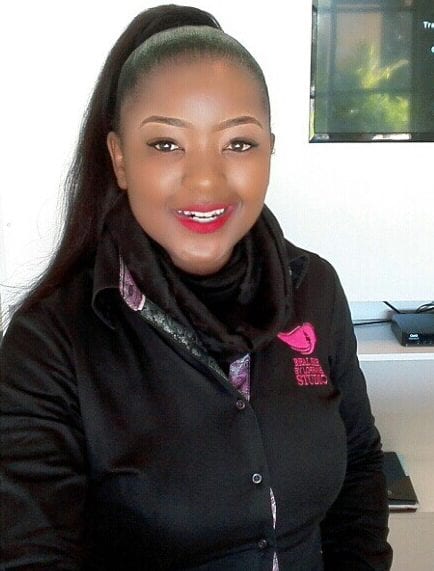
[bctt tweet=”We do more than just sell hair we educate our clients on the different types of hair” username=”SheLeadsAfrica”] Born 33 years ago, Lorraine Maphala Phiri has been nominated Female Entrepreneur of the Year 2016 at the Megafest Business Awards Southern Region. The former model is certainly making a mark in the business sector. Lorraine proves that she is a beauty with brains as she has established herself and booming business well. Lorraine has exhibited exceptional modelling prowess both locally and internationally, distinguishing herself with a unique versatility that has seen her excel during the early stages of her career. SLA contributor Neo Cheda got to chat with her, however, about her career and her business venture: Real Hair By Lorraine. Tell us about your modeling career, winning Miss Zimbabwe and going on to represent the country in Miss World. Representing my country at Miss World had always been my dream. Since high school, I always had a desire to speak and be heard. Coming from a dusty suburb of Nketa 6 it was a dream I never imagined would come true. Winning Miss Zimbabwe 2005 was a life changing moment for me as it opened doors I never thought I could go through. It was fulfilling and rewarding and proved to be a great platform for me to establish my career and brand. Tell us about your business, what product or service you provide and who your target audience is. Since the end of my reign, I have been busy growing Lorraine as a brand. Real Hair by Lorraine (RHL) is a proudly Zimbabwean brand specializing in 100% human hair i.e. Indian hair, Mongolian hair lace wigs, and all things hair. Real Hair by Lorraine Studio was then birthed after the hair brand when I realized the gap in Bulawayo, Zimbabwe for a professional upmarket hair salon. We offer beauty services as well, nails and mail art. Our target market is every woman who desires to look beautiful, feel beautiful and be treated like the Queen they are. It’s a brand for every woman who understands the importance of quality over quantity. We don’t just sell hair it’s a lifestyle. Women have also shown us great support and at the moment we have one branch in Bulawayo and an online shop which helps us supply hair products to customers in Europe, Harare and South Africa. We are different from most people in the hair business because we do more than just sell the hair but we educate our clients on the different types of hair and how to take care of it.” Please tell us what being a business owner means to you and why you became an entrepreneur in the first place? Being a business owner for me means a lot of sacrifices, being able to change people’s lives through your work and empowering families by providing jobs. The fear of poverty and being ordinary inspired me to be an entrepreneur. I became an entrepreneur because I love starting something totally new and seeing it come to life. I love challenging myself and I have always been a dreamer a big dreamer. From a young age I always knew that I would end up a businesswoman, I just didn’t know what kind of business I would venture into. [bctt tweet=”The fear of poverty and being ordinary inspired me to be an entrepreneur – Lorraine Maphala Phiri” username=”SheLeadsAfrica”] How do you achieve work-life balance? It’s an art and I’m still learning. However, having a strong support system at home makes it a lot easier and with my ability to prioritize, everything just falls into place. What or who has been your greatest influence in business and why? How did you get where you are today, and who/what helped you along the way? My husband’s work ethic has been my greatest influence in my business, however, I have always aspired to be a business woman to be reckoned with. I would never be where I am today without the sacrifice of my parents who continued to pick me up even when my businesses hit rock bottom. Their encouragement and faith in my dreams Their encouragement and faith in my dreams are what has kept me going. I am still work in progress I have not arrived yet lol. Maybe next time we speak I will be Dr. Lorraine. What would you say is your greatest professional accomplishment to date? Being founder and MD of Real Hair By Lorraine Studio. What’s the best advice you have received in business that you wish to pass on to our readers? Start where you are with what you have, the best time to start is now. If you’d like to share your story with She Leads Africa, let us know more about you and your story here.
Instagram Q & A with Peace Hyde: Fighting against the odds (May 30)
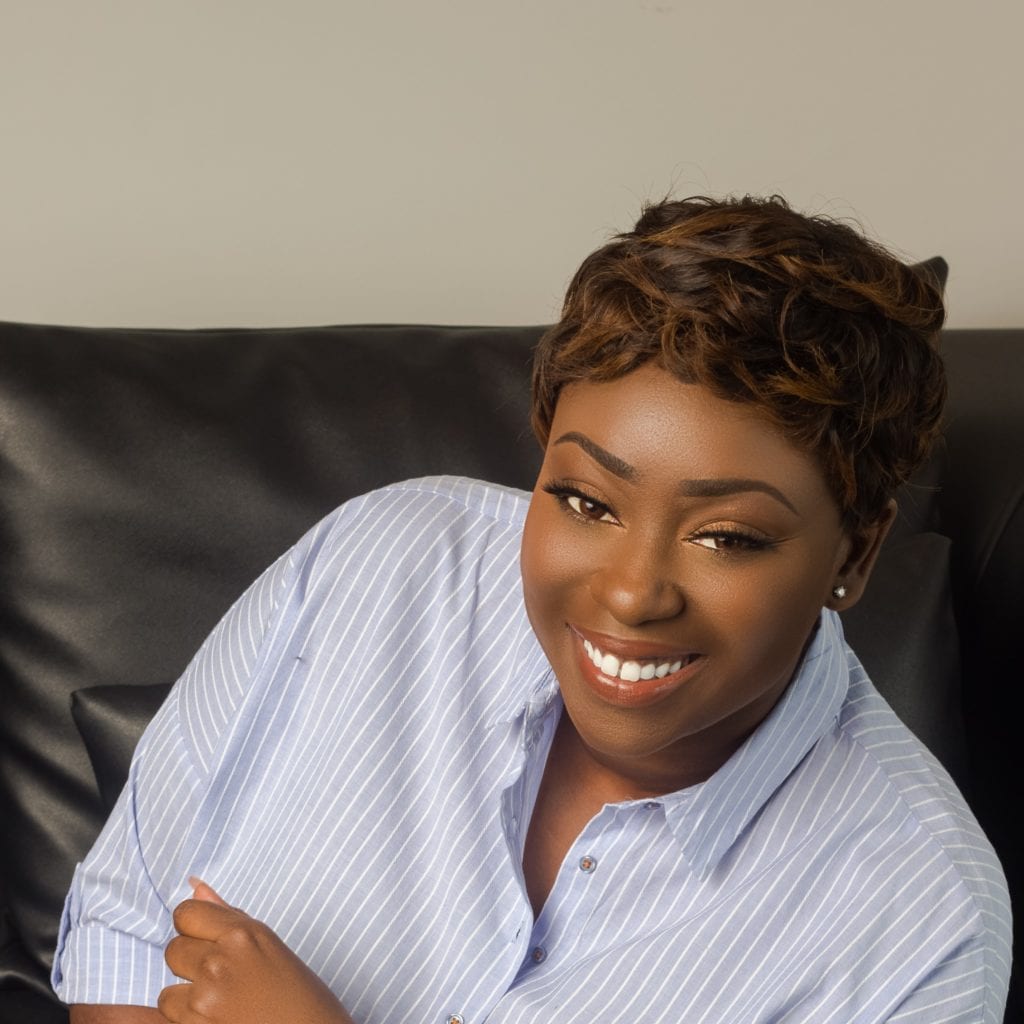
Day after day, African women keep breaking boundaries and creating an impact in their respective professions. Who says you can’t do the same? Sometimes we might encounter a hitch during our journey, but as Motherland Moguls, we have to keep fighting against all odds and let people know that we’ve got this! Award winning presenter and TV host Peace Hyde is contributing to the narrative of growing female power on the African continent. Through her work, she encourages young African women to be bold and break barriers to achieve their set goals. Join us on Instagram for a Q & A session with Peace Hyde on Tuesday 30th May. Peace will be sharing her entrepreneurial journey with us, and answering all your questions about fighting against the odds. [bctt tweet=”Join @Peac_hy for an Instagram Q & A on May 30 to discuss fighting against the odds” username=”SheLeadsAfrica”] We will be giving away a FREE cheat sheet with Peace Hyde’s top 10 lessons for everyone fighting against the odds. Register below to get your copy. Instagram Q & A Details: Date: Tuesday May 30th 2017 Time: 1pm Lagos// 2pm Joburg// 3pm Nairobi Where: https://www.instagram.com/sheleadsafrica/ About Peace Peace Hyde is the Forbes West Africa Correspondent. She is most widely known for her role as host of the flagship Forbes Africa TV show, “My Worst Day with Peace Hyde”. Some of the guests on the show to date included Africa’s richest man, Aliko Dangote and second richest woman in Africa, Folorunsho Alakija and many more. Peace is scheduled to launch a new show “Against the Odds” which will feature appearances from prolific African women who are recognised for their accomplishments in business or career.
Overachiever, are you going somewhere? Or are you stuck in the same place?

[bctt tweet=”My intense focus was exhausting to me & to my family who became casualties in my drive for success” via=”no”] Goals are meant to fulfill the purpose of helping us feel as if our actions are leading us towards something –whatever we have decided that to be. Worst case scenario? Without goals, you become a wandering nothing with no purpose and no happiness and maybe no friends. This is probably a tad dramatic but this was definitely how I felt until fairly recently. Seeing the goal as the be all, end all I’ve always been a textbook overachiever, in goal setting overdrive. From as early on as primary school I was ready and waiting to climb “that” ladder to the top. I remember in grade 7, my dad was helping me put the finishing touches on my economics and management studies project and we were having a printing mishap. The colours on the cover page were not coming out right, despite multiple attempts and shaking of the printer cartridge. After the fourth attempt failed, according to my standards, I burst into tears. My dad tried to console me by (rightly) suggesting that no one knew what the cover was meant to look like so it didn’t really matter how the colours printed. But I was inconsolable. And I cried for what felt like forever, real time 35 minutes. It really mattered to me what colour my cover page was. The colour of my cover page was linked to the success of this project, this subject, this grade, getting into high school. Life. I think at this point we can all agree that I was having an unhealthy relationship with my goals. Allowing a minor mishap to be equivalent to not meeting the goal could surely not be sustainable. Failure providing perspective Despite the cover page saga, I got into the high school I wanted and continued to pressurize myself to achieve – now focusing on university. My intense focus was exhausting, not only to me but also to my parents and sister who became casualties in my drive for success. I don’t think I fully realised my capacity to be crazy until university came and things seemed to slow down a bit. I tasted failure and it wasn’t all that bad. I failed my first economics test in my first semester of my commerce degree and you know what? I still passed the course. And got the degree. I started understanding that failing at things did not mean that failure was all you could taste. Rather failure can help you realise that things don’t fall apart if everything doesn’t go according to plan. The freedom of letting go I realised (very slowly I might add) that blind fixation to my goals was not necessary. Failure didn’t mean that everything was going to fall to the wayside. Rather, I learnt that if I wanted something there was more than one way to get it. More importantly, I realised that everything doesn’t need to always work out. Having the goal can be important but not having it can be just as valuable. [bctt tweet=”Failure isn’t the end, I learnt that if I wanted something there was more than one way to get it” username=”SheLeadsAfrica”] Because of my unhealthy relationship with goals, it felt so good to let go of always focusing on the next step. We tend to always be driven to keep moving forward but sometimes it is really nice to stand still and just take it all in. Open your mind I have learnt that sometimes not having a plan is a plan in and of itself. Things work out and you have to just trust that and you will be surprised by the opportunities that arise. Be open minded to it rather than having your head so tucked into your goal book that you miss something potentially greater. Through being more open I have found that there are wonderful memories and days that await me. And a lot less tears and self-imposed pressure. I’m not saying don’t have goals. Have them and dream a big dream! But don’t blindly follow them. Be aware of other things going on and maybe you’ll go down an unexpected but also very happy path. [bctt tweet=”Maybe everything will not come crumbling down if you don’t know the next step” username=”SheLeadsAfrica”] Ah, I still panic! I still have moments of panic when I realise I don’t have my next step concreted. But I also have days of absolute freedom when I think that anything could happen. Maybe everything will not come crumbling down if you don’t know the next step. And even if it does, I think you are stronger than you think. You can withstand a little bit of crumbling. You are strong.
Dinnah Nabwire & Mary Ajwang: Raising awareness for reproductive health with Voices for Health Uganda
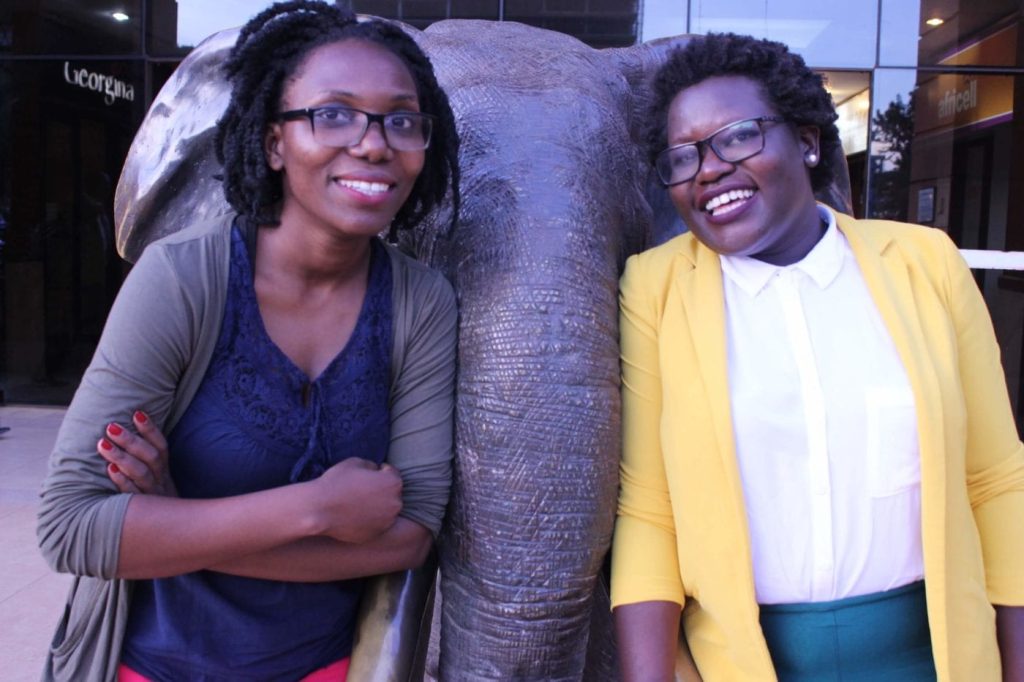
[bctt tweet=” I was drawn by the role women had in giving life but distressed by the hurdles they experienced” via=”no”] Dinnah Nabwire and Mary Ajwang are transforming their society by focusing on sexual and reproductive health. They are both behind the Voices for Health Uganda, a platform that harnesses young voices on the needs of reproductive health. Drawing from their diverse experiences and being from different parts of Uganda brings much-needed balance to their work as co-founders. You’ve both chosen to build careers in global health, and particularly in reproductive health, despite having very different backgrounds. What was the moment you each knew that this was the field for you? Dinnah: Working with Marie Stopes International through Global Health Corps gave me an opportunity to refine my career path with a focus on sexual and reproductive health. Through supporting programs related to advocacy and research on access and utilization of services, I have come to appreciate that sexual and reproductive health is central to all development interventions. Through supporting programs related to advocacy and research on access and utilization of services, I have come to appreciate that sexual and reproductive health is central to all development interventions. Mary: My initial exposure to reproductive health was during my clinical training and working as a frontline health care provider in health facilities in rural Uganda. I was drawn by the role women had in giving life but also distressed by the enormous hurdles they experienced. I, therefore, decided that I was going to take on career opportunities that refine my ability to prevent maternal death through amplifying the safe motherhood message. Did you both have a specific career strategy around addressing family planning? Yes, we wanted to close the gap in access and utilization of family planning services. So we conceptualized the Voices for Health Uganda as a platform to harness young and often marginalized voices on needs and aspirations of productive health. What are your predictions for your industry considering the recent moves by the US presidential administration to cut funding to global reproductive and sexual health initiatives? Knowing that the US government is the largest bilateral funder for sexual and reproductive health globally, we are aware of the negative implication this has on financing for services in countries such as Uganda that are among the 24 family planning priority countries. Globally, 225 million women have an unmet need for family planning whereas in Uganda the unmet need stands at 62%. This means that funding cuts towards family planning can impede the progress that has been previously made on access and utilization –this is unfortunate. We, through Voices for Health Uganda, are working to close this gap by raising awareness on the need to connect global and in-country challenges to funding for reproductive health. [bctt tweet=”Globally, 225 million women need family planning in Uganda the unmet need stands at 62%” via=”no”] You two are quite the dynamic duo in advocacy and in life! What’s been your favorite part of leading alongside each other? What’s been the most challenging? Favorite part: We enjoy debating concepts and taking the time to draw real life experiences to our work. Mary and I come from different parts of Uganda and thus each share different realities sometimes informed by our communities. Struggling to strike a balance in such cases has been the most intriguing. Most challenging: Integrating our expectations in the voices for health Uganda within our daily activities and commitments remains a work in progress for us –we just know it has to work. Sometimes as young women carving out our professional paths, we fear that asking for help, not knowing all the answers, and making mistakes are signs of weakness. What has your partnership taught you about this? We were drawn to working together based on our different expertise, knowledge, and experiences. These have taught us to continuously appreciate each other’s competencies and encourage us to keep focused on our goal. In the midst of your hustle, how do you each like to unwind and take care of yourselves? We make time to hang out over caramel milkshakes at our fave place, #CafeJavas. Mary, what’s one thing that inspires you about Dinnah? Dinnah is intelligent, hardworking and has had exposure working with non-profits –things I wanted to learn and grow in. Dinnah, what’s one thing that inspires you about Mary? Working with Mary has continued to shape me into a positive-oriented and goal-focused person. There are times I would have preferred to step out, and all I needed is a positive guide. What’s one thing you’ve each learned lately that you want to share with other young advocates interested in pursuing a career in social good? Invest in growing networks through offering a clear value addition and seeking the opportunity to leverage skills, information, and engagement with others in the space. For instance, we offer to take up high-level networking opportunities during partner-led events such as meetings and conferences. What three words come to mind for each of you when you think of a true leader? This was hard for us to choose! But, we think courage, resilience, and empathy are foundational for a true leader. If you’d like to share your story with She Leads Africa, let us know more about you and your story here.
The ultimate marketing plan guide for the service industry
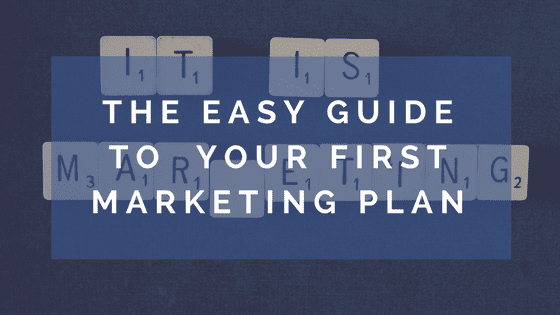
[bctt tweet=”We’ve put together an easy 7-step guide to creating a marketing plan for your business” username=”SheLeadsAfrica”] A marketing plan is a written blueprint on how to sell your services to attract new customers, retain existing ones, and build a profitable brand. Together with EM Consulting, we’ve put together a guide to help marketing planning for startups in the service industry. The aim of this guide is to provide a simple process for organizing your marketing efforts to achieve business growth and profitability. Without an intentional marketing plan, business growth becomes a function of luck and individual effort. What is the service industry? Just so we’re clear, this guide is geared towards businesses in the service industry. The service industry consists of businesses that provide services (intangible goods) to other businesses as well as final consumers. Such services include professional services, online services, ICT, tourism, travel, ecommerce, financial services, online services among others. Basically, a service business is one where no goods are produced/ manufactured. Click over to the next page where you’ll find the detailed guide as well as a link to a downloadable template (plus a surprise offer from EM Consulting).
Lynda Aphing-Kouassi: I have brought back with me this mindset of a winner and the power of excellence
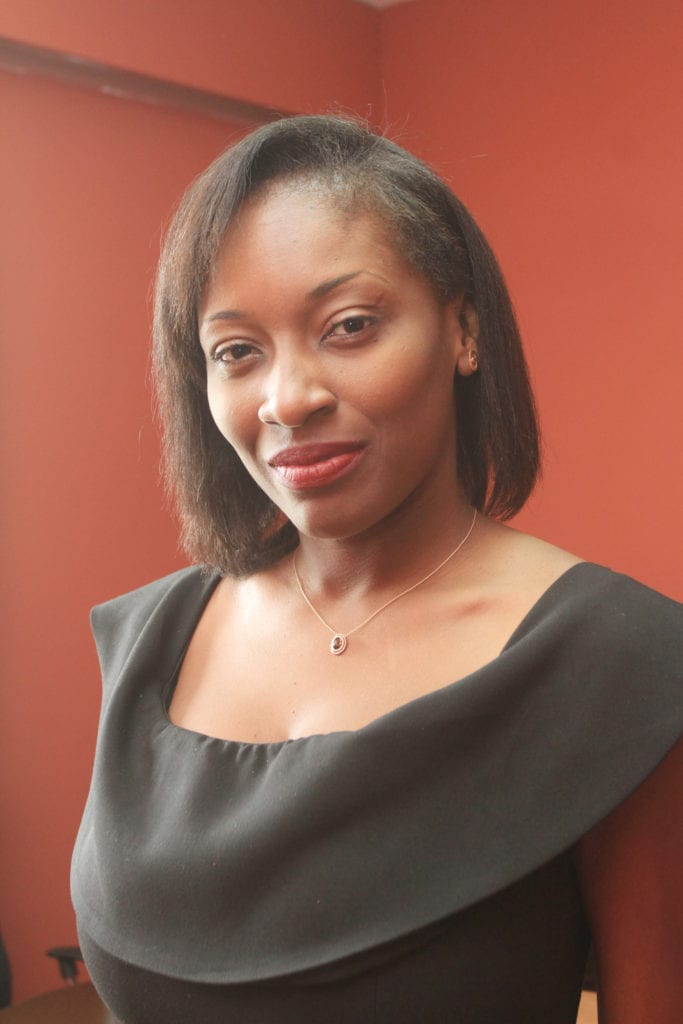
[bctt tweet=”If you want a career that fulfils you, you need to focus on your interests rather than your qualifications -Lynda Aphing-Kouassi” username=”SheLeadsAfrica”] Lynda Aphing-Kouassi is a former banker and Founder and Director of Kaizene, a firm specializing in training, coaching and networking conferences. The process of creating African leaders and encouraging the inclusion of women is the core of her business which she tries to achieve by her coaching and training sessions. Passionate and rigorous, Lynda has extensive experience in the management of companies and employees in the following sectors, portfolio management; training, coaching, and seminars; conferences organization for more than a decade. For Lynda, the biggest resource a successful company should rely on is its workforce. Not being visible on the balance sheets it’s often relegated to the bottom rank. Via its various initiatives on leadership and training seminars organized, Kaizene accompanies multinationals and SME’s by reminding them of the best leadership techniques to use in order to enhance the skills, inspire the employees, create partnerships and synergies and ensure a stable and sustainable development. “Our beautiful Africa is full of leaders we just have to accompany them to the best of our abilities, mentor them, remind them of their potential and reiterate to them the soundness of excellent leadership in order to give back to Africa the place that it should have: “the provider of excellence”. You spent 19 years abroad, fill us in on your experience in a foreign land. As a French speaker who disliked English at the time, living in London was a most difficult experience. My sister who was married to an Englishman lived in London already and they kindly allowed me to live with them. I soon found I could express my fears and got to speak English more often. My brother-in-law’s help was tremendous because he was patient and understanding despite the many mistakes that I made. I then started uni and work during which I experienced a lot of setbacks and a feeling of non-belonging as far as the lifestyle was concerned. It is at that time I realised that to belong you had to embrace the new culture. But I could see that others embraced it to the point of forgetting their own! I then decided that the authenticity of my culture would take me far. So, while learning and understanding the lifestyle in the UK I was also bringing my own to the table. For example, I would make my country’s food during parties and lunches and wear my African print dresses as often as possible. I became an object of curiosity which brought people near me to try and understand where I was from and slowly the feeling of not belonging disappeared. I started to make real friends and began to really enjoy and understand the country. The UK became my home. At work in a FTSE 100 company and being a black person, you can imagine that every disagreement or difference of opinion may well be perceived as aggression. I considered this as a form of bullying and refused to be bullied. I worked hard and developed this mindset of a winner where nothing was good enough until it was excellent. Also, I made sure that I was going to be accepted, not just tolerated. This is what you can do if you value and believe in yourself. I learnt from this experience that only you have the answer to your own doubts and that the only judge is God. So, I have brought back with me this mindset of a winner and the power of excellence. My dream is to influence my peers with this belief so we can be proud individuals, strong, developed and authentic and to then become an example to others. I believe we can and will, with our young population and this mindset of confidence and excellence, have a better Africa. Awesome! So what did you experience in terms of mindset and lifestyle that you wish to bring to your own country or Africa as a whole? During my time in Europe, I found the development of infrastructure so important that it created a great communication between companies and people. The buildings are often rehabilitated and well maintained, communities put themselves together to ensure development and the cleanliness of their spaces in order to have a decent living environment. Technology is well advanced allowing sustainable environment and every child understands the value of a prosperous technology. I truly wish we have the same type of developed infrastructure in Africa, and I am sure we will get there. All services ( water, electricity, transport etc) go through the infrastructure and ensure the development of the community. This prompted me to plan the organisation of a conference on infrastructure in October this year to discuss our lack of infrastructures and how to ensure a sustainable development for Sub-Saharan Africa. [bctt tweet=”Africans have all the necessary tools to be excellent – Lynda Aphing-Kouassi” username=”SheLeadsAfrica”] What does a better Africa look like to you? A better Africa to me is a stable Africa where we understand politics and don’t use it against ourselves. It is one where we realise that Africans have all the necessary tools to be excellent and should therefore collaborate. A better Africa is one where Africans can freely travel across Africa and use our own products, learn to transform our raw materials and understand our values. A better Africa is one where one African can’t tolerate seeing another one begging but where possible help others and grow together. And most of all where we do not envy Europe and strive to be the best. Walk us through the journey of starting up Kaizene. Kaizene is a baby that was born on the underground in London whilst talking to a friend about setting a business. Then the idea was put to bed. I had a job opportunity in Abidjan and although I had never experienced the working life in Abidjan, I
What’s proof of concept and why you should know it

[bctt tweet=”Test a business idea before scaling up your business with this simple concept” username=”SheLeadsAfrica”] There’s a huge risk attached to every new business. We’re talking the loss of lots of money. That’s why it is important to test a business idea before scaling up the business. Simply prove a business idea works and is commercially viable, and you’re off to a great start. This is called “proof of concept”. Most of the time, venture capitalists/investors look out for proof of concept before putting in money in a business venture. This is because it quantifies how much a business has (and is able) to accomplish in a way that’s measurable. When you create a product/service and are able to achieve a certain level of traction with it, it becomes easy to relate with whatever huge projections you set especially when trying to get investment. Showing that a business works can help zero in on a definite path to follow for success. In the bootstrap model, a business becomes commercially viable somewhere along the “sell” stage, just before the “growth” stage. How do I know my business shows proof of concept? Well, when a business idea shows proof of concept, it means one or all of the following The business has been able to capture its own sizeable audience. The business has been able to successfully sell a product/service and make money (profit) from its audience. Systems and processes within the business are reproducible on a commercial scale. A business that has not attained a proof of concept is not necessarily failing. However, such business has most likely not been able to clearly identify how to make money from an audience on a commercial scale. None of this applies to me, what can I do? To increase your business’ potential for success, it is important to look out for proof of concept before scaling up commercially. The proof of concept verifies important assumptions about the business and reduces the risk involved in taking a small business/startup into the mainstream market. [bctt tweet=”To increase your business’ potential for success it’s important to look out for proof of concept” via=”no”] Here are some parameters to consider when checking for proof of concept in business. Net profit Gross profit Revenue/ revenue growth rate Number of customers/clients/users Customer/clients/users growth rate Systems and processes Total amount invested in business Return on investment The result from the analysis of these parameters says a lot about the potential of a business idea that has been set in motion. These parameters can also be used to see how well a small business/startup is doing. This is why recordkeeping/bookkeeping is important in business, it lets you keep track of progress. If your business is funded by personal funds/friends and family, I recommend checking these parameters as you use the bootstrap model to develop your business.
The Customer Service Series: Be at the start of your customer’s journey
[bctt tweet=”Think your customer’s journey begins when they reach you? Think again” username=”SheLeadsAfrica”] Some weeks ago I started reading a book on customer experience called How to Wow by Adrian Swinscoe. The practical insights contained in the book are pretty much what inspired The Customer Service series. Over the next few weeks, I’ll be sharing insights from this book alongside some of my own thoughts because what is knowledge if it isn’t shared? So, if you are a business owner looking to improve (or even craft) your customer experience you might want to: Purchase the book, it’s available on Amazon Follow this series and join the conversation on Facebook, Twitter, and Instagram. Now, moving on to the first insight, I’d start by explaining what the term ‘customer journey’ means and entails. Think of the customer journey as a roadmap detailing how a customer becomes aware of your brand/business, interacts with and buys from you–and beyond. The customer journey is the complete sum of experiences that customers go through when interacting with your business and brand. INSIGHT 1: Be at the start of your customer’s journey As a business owner, you might be tempted to think (wrongly) that your customer’s journey begins when he or she steps into your office or visits your website or sends you a DM. On the contrary, when you study the consumer buying process (see image below) you’d realize that in most cases it actually begins way earlier. Let me give you a real-life example. Two weeks ago I wanted to buy a ready to wear Ankara dress for a church event and because I didn’t know whom to speak to I went to Google. Some results came up but none were relevant and could solve my problem. On Instagram, I searched for the hashtag #ReadyToWearAnkaraDress and on Twitter, I asked my ‘followers’ for recommendations. Now as a fashion designer/retailer who has ready to wear Ankara dresses as a product offering, why not consider running a Google AdWords campaign that’d bring up your business whenever relevant queries are done? What if your IG posts had the right hashtags? What if you proactively and regularly search out specific keywords on Twitter that relate to your business and product offerings? You’d easily have found a prospective customer (me) and begin to make your sales pitch rather than just waiting for me to find you by God’s grace. Does this make any sense? So as regards your business you need to begin to ask some serious questions. What does your customer journey look like? Where does it start? And are you (always) there to reach out, offer help and make your sales pitch?
Boost your business with Morin Oluwole: How to market your business on Instagram (May 23)
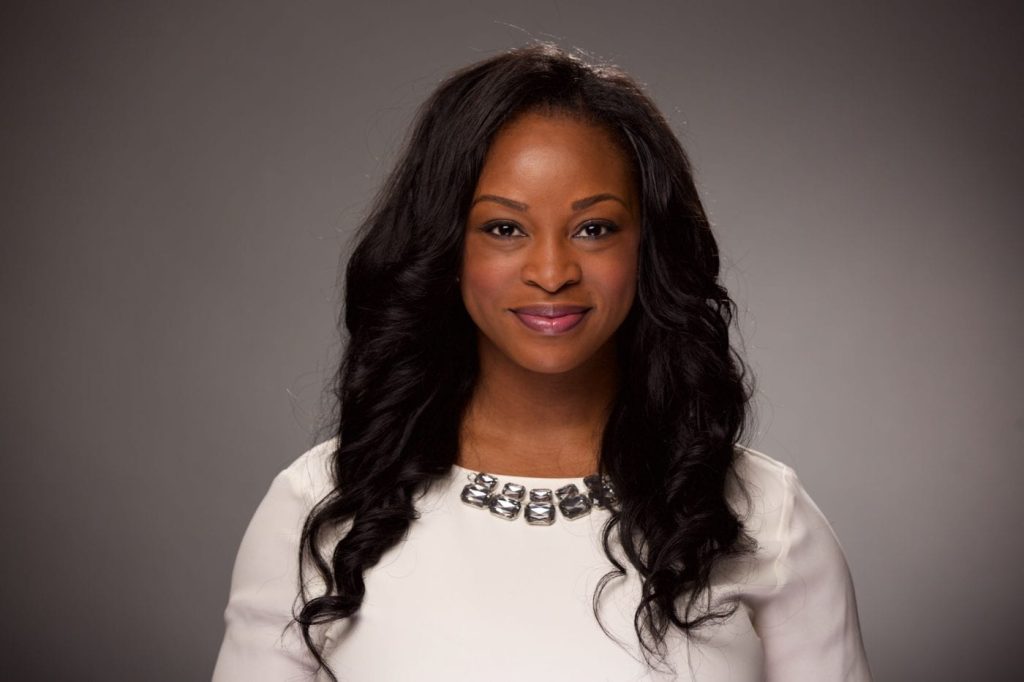
Now that Instagram has over 300 million daily active users, true Motherland Moguls are leveraging on this huge market to boost their businesses. Social media is the new marketplace for anything, and Instagram is taking the lead, become the most popular platform. So why are you not selling on Instagram? As part of our Boost Your Business digital marketing training series, we are bringing you a Facebook Live session on Tuesday May 23rd with Morin Oluwole. Morin will be showing us how luxury brands sell their products on Facebook and Instagram and how you can do the same for your products. Morin is now Head of luxury at Facebook, and was formerly Chief of Staff to the VP, Global Marketing Solutions at Facebook where she developed business strategies for global brand partners. Register below to get the exclusive link to join this session Some of the topics we’ll cover How you can leverage Facebook and Instagram to get clients Key digital marketing lessons learned while working with global luxury brands Best practices of selling fashion on Instagram and Facebook Social and digital strategies to market online Facebook Live Details: Date: Tuesday May 23rd 2017 Time: 3pm Lagos// 4pm Paris// 5pm Nairobi Where: facebook.com/sheleadsafrica/ Watch video here: https://www.facebook.com/sheleadsafrica/videos/1887518318138146/ About Morin Morin Oluwole is an expert in positioning brands on social media. With more than 10 years of experience at Facebook, she knows what works and how to best maximize it. Morin holds a BA and MA from Stanford University in Human Biology and Sociology and an MA in Management from Columbia University. She was a Bill Gates Millennium Scholar and received the Dean’s award for academic excellence – both for 5 consecutive years. Morin who has lived on three continents and currently resides in Paris, has been featured in the New York Times, Black Enterprise, Movelifestyle.com, and Alder Social Media Report. She speaks four languages (English, Yoruba, Spanish, and French).