
How to get discounts and sponsors for your next event
When you’re just getting started, the hustle for customers and publicity is real. You need to get your product in everyone’s face in the cheapest way possible. Events seem to be a favourite for their ability to generate brand exposure and activate your fans. But events cost money and most companies just starting out, don’t really have any so the hunt for sponsors and discounts is on. Everyone wants sponsors, and discounted products and brands get requests from everyone all the time. If you want to stand out and get brands on board for your event, follow these steps for your next event. 1. Start early Give yourself at least 3 months before the event to start looking for sponsors. This can be a long and tedious process and you don’t want to rush at the last minute. 2. Pull together your facts Create a budget as if you were going to pay for everything. This way you are clear about what everything you want costs. Then decide what things are the most important and what things you can afford to lose, if you had to. 3. Decide what you are able to pay for Most of the time it is advisable to pay for the items that the event can not run without. This way no matter what happens, you’ll still be able to run your event and be in control even if a sponsor falls through. However having the money and being prepared to pay for them does not mean you can’t ask for sponsorship. You can also use this during negotiations to let them know that you aren’t just looking for handouts. Brands want to know that you’re investing your own resources to make the event a success as well. 4. Determine if you want a discount, product or cash So many start-ups request cash for their events but that is always the hardest thing to get from a sponsor. Think about what kind of support a brand can provide via in kind services or through exchanges. By being creative in this area, you can strike deals. 5. Decide which sponsors you want to approach and why Beyond just the financial value, think about which brands you want to be associated with your business. Even though you’re just starting out, you want to make sure you’re working with brands that connect to your values and identity. You also want to target brands where whatever you’re offering in return actually matters to them. Most companies that provide sponsorship are looking for the advertising opportunities or to connect to your community. Some may just be happy to support but these companies are few and far between. Generally, everybody wants something in return and you need to figure out what that is. 6. Do your research Call people you know and find out as much as you can about other events this company may have sponsored. Look online for their values and if they have a sponsorship request form. Use LinkedIn to find the right contacts in marketing or communications departments. 7. Prepare a sponsorship package that is targeted at the sponsor Do not ever send a generic proposal. That is the fastest way to get your proposal ignored. Looking for another way to get your proposal in the trash? Have another company’s information in the proposal. That’s a big no no. Spend the time demonstrating that you’ve done your research and know exactly why you want to work with this brand. 8. Send your e-mail Be clear, polite and straight to the point. Ask for a meeting, whether online or face to face so you can explain further and build a relationship. If you have chosen your sponsors carefully you should at least peak their interest in you. 9. Keep track of who you have approached and when If you haven’t heard within 5 days try and follow up with a phone call. 10. Ensure you are able to fulfil the offers you provide sponsors Sponsors can become long term partners if they like your work ethic, product and customer service. Treat sponsors the same as customers. Ensure you have clear agreements so that everyone is on the same page and you keep in touch after the event. Be creative, keep going and good luck with getting them coins!
7 inspirational websites you need to follow
The most beautiful thing about being a young professional or career woman today is that your knowledge isn’t limited to what you can find in your neighbourhood or community. The digital world allows you to connect with experts and information from across the globe. Whatever issue you think you might have, there are probably 100 or so websites that can help you solve your problem. While there are over a too websites we love, here are 7 of our favourites that help us stay informed, motivated and ready for whatever life throws at us. 1. Smart Money Africa The Smart Money Movement is championed by financial guru Arese Ugwu. Her website provides a platform for young people to learn to manage their finances better by knowing their net worth and prioritizing the accumulation of assets over frivolous spending. In other words, being smart about your money. Keep an eye out for the blog, the Smart Money Workshops and the Smart Money Journal. They will literally change your life. You’re welcome. 2. Minding Her Business Young? Ambitious? Fabulous? Ready to move to the next level of all-round wellness? Then you need to be minding her business. Starting out as a series of motivational quotes on social media, MHB evolved into a practical guide for the modern woman in the form of an e-book covering financial success, self-confidence, love and relationships. Navigate the site to get inspired by Ivy’s story, keep afloat with the blog and to get acquainted with the book. 3. Ms Afropolitan If you’re searching for a space to address your feminist woes and reaffirm your womanhood in the African context, then this is your destination. Through its blog articles, this website dissects topical issues such as colonialism, race, politics and what it’s like living in Diaspora. It offers strong, powerful, relevant messages for women of colour. 4. Haute Fashion Africa Haute Fashion Africa is basically the fashion portfolio for the modern African woman. This website is on top of all that’s happening in the African fashion stratosphere. We’re talking all the fashion trends, the major fashion shows in different African cities, profiles on designers, stylists and models. 5. Food and the Fabulous This lifestyle website showcases cuisine and culture from all over the continent and the rest of the world. Award-winning South African journalist, Ishay Govender-Ypma takes you on a journey with the Food and the Fabulous Food tours introducing you to Cape Town’s mouth-watering dishes. Many of these recipes are available for you to try out. You can also gain travel inspiration and take a dig at current issues. 6. Travel Africa Story Sure you’ve heard the saying that one’s education is incomplete without the experience of travel. This inspirational site features travel experiences and highlights amazing travel destinations from across Africa. If you need ideas for your next vacation, check out ‘Travel Tips & Trips’. With several helpful articles and feature stories on travel etiquette and fun things to do on your trip, it’s an amazing travel guide. The best part? You have the opportunity to tell your own travel story and get featured on the site. 7. She Leads Africa (duh!) Did you think we were going to leave this out of the list? Think again. SLA is arguably the #1 go-to website for young African females with a focus on getting started or improving their careers and business. It’s a resource pool packed with power articles and insight from the co-founders and diverse team of editors and contributors. It also features practical tips and advice, webinars, access to career coaches and more. The SheHive events which bring together the SLA community and industry leaders are hosted in various cities around the world. Motherland Moguls, let’s get surfing! Share with us what some of your favorite websites are to check out. Besides us of course 😉
Isn’t it time we stopped following the rules?

When I began doing business and the chase for clients began, I think I probably felt every emotion there was to feel sometimes all at once. The need to maintain customers, rules of the business world, the attempts at adjusting or learning to adjust to the demands of each customer and even getting used to the word “customer” or “client’ and the wonder and satisfaction that I too had something like that. One day, a friend who also runs a business showed me a picture online that said “power of feminism” and another that said “I’m a strong, independent woman. I have a mind of my own”. I nodded in approval and said I was going to use it as my Whatsapp profile picture and she agreed distractedly but when I suggested she do the same, she gave me a very alarmed look saying; “Ah! Noooo! One has to be very careful in business, don’t forget my clients are also on Whatsapp, many of them are men and I might lose them”. I was instantly reminded of medieval women. Not just in Africa but in Greece and Rome too, I remember reading that women who worked were looked down on as the lowliest of women and were not allowed to earn more than a particular amount. Women could own anything including land but had no authority to give them away or sell them; even their dowry was not essentially theirs, it belonged to their husbands and in the event that the husband died it belonged to the son and in the event that there was no son, it belonged to the next male in the family. They had no inheritance, only dowry. Inheritance was for the sons and if there were no sons, fathers arranged to adopt one or arranged for a potential son-in-law to agree to adoption and drop all former familial ties. If the father made no such arrangements before dying then the daughter became an heiress and any man was free to make a bid and marry her. If she was already married, any man strong enough could force her to divorce her husband and marry him. The basic goal was for the woman to not be in charge of any wealth. I read that the famous Plato suggested that dowry be removed to “curb the arrogance of women” and some said that women could not act independently because of what was described as ‘lightness of the mind’. They had to be modest and restrained and possess a certain kind of sense of honour prescribed for them by society. What struck me though was reading that women had the choice to break out of such oppression —at a cost, yes— but they had the choice. They could have made a collective agreement with a firm mind assured in its own belief or they could have buoyed each other to action…but it never happened that way. It was always one woman springing up separately after the other. I sensed an age-old lack of assertion. Once I visited a potential sponsor for a project in the works and we began conversing in the way of two strangers attempting to build a bridge of familiarity. There was a patronizing superiority in the air as soon he began to talk about career women and what they really should be doing —not career. After minutes of hmms and head-shakes in an accommodating manner, I knew I didn’t agree. I didn’t agree at all…and I wanted to say exactly that. Then I remembered my friend from the other day and knew I could possibly be treading a risky path but after another couple of minutes, I took a good look at my company… This person who saw the importance of the matter at hand but didn’t quite take me seriously so found a way to veer off it into domestic topic, who did not know me but brazenly advised that instead of web design, I should have gone into food business because it was more suited for women, who even more brazenly asked how much I was being paid, who casually asked if I ever consulted a career counsellor. So I spilled. Smiling. I disagreed nicely. It suffices to say I didn’t get that sponsor. I wondered what would have happened if I had frowned… The need for the choice of bold assertion especially for women goes beyond the office, it encompasses every sphere of life because so far it’s been particularly tough for the female folk. What wins in the battle between our cautious conservative side and our radical side? When do we truly understand that although we might not be able to fly always, we’re certainly not as restricted as we fear or as we are told? With the times changing, it still seems as though many women persistently —some knowingly— kowtow to the past and the stubborn insistence of many to hold on to its traditions. We have reached several turning points but how many of us have really chosen to turn? What do I think? It’s simple. Put your resources together and construct a new platform that makes you proud. Follow an inspired feeling not a rule book. Society has never really known what women needed, what they are truly. The phrase “inner queen” may sound cliché but it is truth and we need to push it forward and assert our right to exist and be free in truth —not the existence and freedom grudgingly meted out by society. Stop the subdued success act! Be especially articulate about ideas, needs and desires And if it causes some drama? Don’t be afraid. Sometimes we need a little drama to motivate us to make changes and improvements to our lives
Remi Owadokun: I started with N10 and now have customers in 7 countries
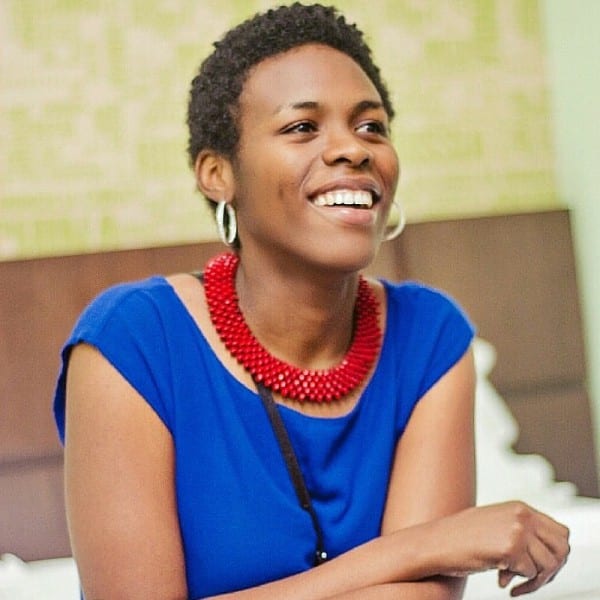
Remi Owadokun used a major life change to kickstart her online business as a weight loss coach and nutritionist. She also used that motivation to start an online video series that spreads health consciousness in a fun and interactive way. Remi shares with us her thoughts on what’s keeping young women healthy, how she started her business with only N10 in her wallet and how she’s planning to take her business global. Why did you start the Total Makeover Program? I started the Total Makeover Program when I made the decision to change my life and lost 40kg. During this process my life was transformed emotionally, financially, spiritually and mentally and I wanted other women to experience this power as well. The first thing that came to mind was simply to blog about my experience because many people who knew me wanted to know how I did it. How many people do I want to tell? So one weekend I sat down and started compiling my experiences. Once my blog was up I started sharing it via email to friends and family. When I went out and people asked me about my health transformation I always referred them to my blog. It was meant to start and end there but I started getting a lot of feedback from people who wanted me to keep writing. There were people who had started their weight loss journeys simply by reading my story and I started getting emails from people who wanted me to coach them. I initially said no because I was not comfortable with people coming to me or me going anywhere. But one day, a lady emailed me and said; “Please coach me, we never have to meet, just email me meal plans and exercise plans.” That was when it occurred to me that I could turn this into an online business. I imagined that if one person was interested, I could get more people interested too. Why do you think most young professional women struggle with living a healthy lifestyle? Many young women are misinformed about what good health means and how they can maintain a healthy lifestyle in today’s environment. Most people assume that someone who is healthy is slim. This is not always the case, there are several “fit looking” people who are unhealthy. They eat junk, don’t sleep well and are constantly stressed. Most people assume that by just eating right and exercising, you will automatically be healthy. There are many factors that contribute to being healthy and whole. You can eat all the greens in the world and exercise 2 hours a day, if you are a bitter, angry person, you are upsetting your biological make up. You can actually find rare cases where an individual eats all sorts of crap but because she is happy and fun loving may end up being in a healthier state than most. Being healthy and living a healthy lifestyle requires a more holistic approach that most ignore. The tendency is to focus on just one area of life and ignore the rest. What makes Total Makeover Program different from other health startups? Most health start ups focus solely on exercise and diet. At TMP we focus on two things: primary and secondary foods. Primary foods are things that feed us but don’t come on a plate like love, relationships, career, spirituality, education, etc. Secondary foods are the items we actually eat on our plates every day. We know that there is no point trying to control your diet if you don’t focus on the things that trigger you to eat. If we can fix the triggers then we worry less about your understanding of food. Most people are emotional eaters but most start ups never focus on the emotions. People eat when they are happy, sad, angry, stressed, etc. For some people a fight with the significant other that displaces them and sends them into over eating. For others it is boredom, being stuck in traffic, or a fight with their boss. I don’t see the point in telling people if they are ill equipped to deal with their emotions when stressful situations arise. I want to avoid the situation where someone I’m working with faces the same triggers and they revert back to their old habits and get so disappointed that they don’t want to try again. Life can be unpredictable and it is unhealthy and unwise to build our lives based on the happenings around us that are outside our control. At TMP we empower you to take full control of the only thing you truly have control over, YOU. For your business to get to the next level, would you prefer funding or a mentor? Which one would you choose and why? I started this business with N10 in my wallet and built it to where it is without needing to look for funding. I would pick mentoring any day as I have always had mentors and I understand the role they play in my life and how they have created opportunities for me. Proper mentoring provides value that will eventually translate to money. As a thought leader and as a mentor, I find that people who have worked with me are more impacted by the time spent together than anything else. Money will finish, then what next? What can we expect to see from Total Makeover Program over the next 6 months? I have coached a little over 80 men and women 1-on-1 in 7 countries in the last 20 months. There is a limit to the amount of people I can coach 1-on-1 , so I am currently creating an online course where people all over the world can download, partake and achieve results without having me there full time. I recently became an international best selling author for my book “How I lost 40kg” when I hit the number 2 spot only 8 hours after it’s release on Amazon. My next book is due in December and I hope to hit number 1. I am also starting the
Nneji Akunne: We are truly passionate about each customer
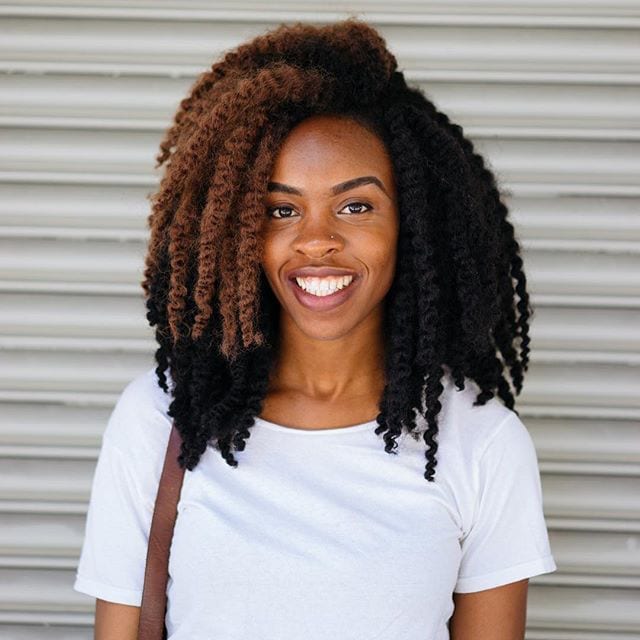
Inspiration can come from anywhere and when Nneji Akunne and siblings weren’t satisfied with the skin care options that were available to them, they decided to develop their own. With experience as a Sustainability Fellow for H&M Germany and marketing consultant for smaller startup brands, Nneji has used her experience to develop ILERA Apothecary, a luxury personal organic skin care line. Why did you start ILERA Apothecary? We started ILERA Apothecary because we sought transparency in the personal care industry. Making our own products for personal use and seeing how effective they were made us wonder why other products within the industry needed so many ingredients to do the same job. We looked as far back as 10,000 BC on more traditional practices, where Ancient Egyptians used elements from the earth to heal and protect their skin, and realised that the foundation of natural beauty came from the ingredients in the products used each day. Why do you think organic and natural personal care is important and matters in the beauty industry? What you put in your body is just as important as what you put on it. We are so blinded by big corporations marketing and advertising that sell us “younger looking skin” that we don’t pay attention to the ingredients used in each product. Because the FDA does not currently regulate the ingredients of beauty products in the U.S. with the same thoroughness done in the E.U., it’s up to consumers to read and understand each product’s labels; which in reality is something that’s not always done. When you choose organic skincare, you’re choosing products whose ingredients work with the natural systems of your skin, not the scientific formulas that have been tested on animals to produce results unrelated to human beings. Organic and natural personal care companies like ours that are truly passionate about each customer, carefully spell out the ingredients used in all products offered and the reasoning behind them. What makes ILERA Apothecary different from other personal care startups? ILERA Apothecary aims to educate our customers about their overall health. It’s one thing to simply promote a more natural skincare regimen but, as stated before, what goes inside of your body is important as well. We take a more hands-on approach and speak about the health of the individual from all areas like diets, mental health and lifestyle. All skin types are not created equal and while it would be easy to sell the same product to every customer as they come, we offer consultation services where we can get to know the customer better and understand their skin and lifestyle needs. What is your favourite product and why? Both of our personal favourites is the unscented body butter. I (Nneji) am all about the touch and feel of the skin along with being able to determine my scent for the day. For Chinonye, the body butter leaves her skin feeling so rich and smooth day and night which is very important since she has dry skin. For your business to get to the next level, would you prefer funding or a high-value mentor? High-Value Mentor. I say this because funding would only be able to take us so far. With a mentor, not only would the individual be able to provide us with networks we may not have been granted access to, but also the insight and experience of a seasoned mentor are worth way more than money can buy. What can we expect from ILERA Apothecary over the next 6 months? We are looking to expand the brand into international markets and entering into more retail spaces. We are also working to expand our product offerings to include a separate men’s line. While our products are currently unisex, we want to cater to the specifics of a man at all life stages. What is the most important thing you’ve learned on your journey towards healthy skin and body care? Understanding the importance of planning for the future right now has shifted our lives tremendously. We always heard that your body is your temple and it should be treated as such but it wasn’t until we began testing products to sell that we truly understood that notion. Skin is the body’s largest organ that serves to protect your insides from the outside world. Where you live, what you eat, and what you do on a daily basis can determine the type of life you’ll live once you get further in age. Living healthy and active lifestyles are our goals as we age and taking care of our skin is one of the first steps in making that happen. Want to see women you know featured on SLA? Tell us what amazing things women are doing in your communities here.
Omnia and Salma: We want to connect the Sudans using culture and technology
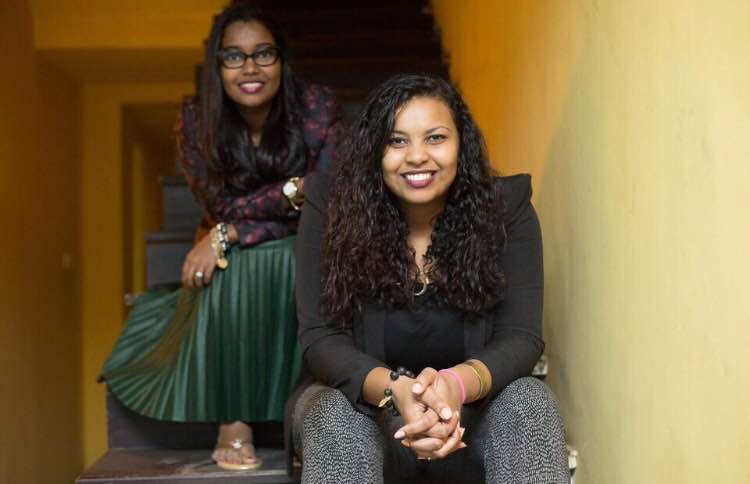
Sudan and South Sudan have been under fire for decades from the perils of civil war, famine, poverty, corruption, Islamic jihad and other crisis that affect the countries politically, socially and economically as well as culturally. Omnia Shawkat and Salma Amin Saad decided to build a contemporary platform to voice independent opinions of the diverse, intelligent, and peaceful youth that diverge massively from the mainstream that places them in tiny status-quo boxes. Omnia and Salma started the online magazine Andariya for Sudan & South Sudan in both English and Arabic to lifting our spirits, sharing contemporary analysis and opinions & promoting creative arts ideas and events. Since the launch of the magazine they’ve also launched a photography project titled “MyKhartoum” to show the beauty of the capital city with a series focused on Juba coming soon. Omnia and Salma shared with us why online media is so important, why Andariya is different and what they’ve learned about organic growth. Why do you think digital media matters in Sudan and South Sudan? Sudan and South Sudan have a shared cross-border culture that was severed along with the political ties in July 2011. The current generation witnessed a tough time of great polarization and we had no time to heal, reconcile or mend our broken matter when the political secession came upon. This need to open the road of communication is one great reason why digital media matters right now; it transcends boundaries. The publishing industry is also lagging behind due to many factors (economic, censorship, access, language etc.) and a way to overcome some of these challenges and reach and engage a wider audience that is already online, beyond even the Sudans (there is a massive diaspora population from both countries) is through the use of digital media of various types. What role would you like Andariya to play in the development of these two countries? Our mandate is purely cultural, so if we are to perfect our mandate, the cultural footprint of the Sudans on the internet will be enhanced along with more offline engagement due to the conversations that spring up online. One underlying factor is to really connect both countries (both local and diaspora communities) over intersecting cultural values, opinions & aspirations. Both Sudans are in similar development stages, and cultural development is key in advancing all the other pillars of development. What makes Andariya different from other youth-focused media platforms? There are the basic building blocks of being a bi-lingual digital cultural platform for South Sudan and Sudan. We target a larger age group- for once, the “youth” or younger generation is online and discussing matters of importance to them in a common platform that welcomes all views. More importantly, we are discussing issues that older generations have exclusively hashed out over the last few decades (i.e. identity issues, culture and acculturation, etc.) and adding our perspectives to the conversation. Another differentiating factor is our belief in using different mediums to reach diverse audiences. We’re across social media platforms but slowly growing into creating online-offline campaigns to engage more people. Can you share your favourite story from the platform and why? The way our community was formed is both interesting and inspiring; we practically found each other as if we were long lost souls. We have an incredibly harmonious relationship with more than 50 community members across the world, and we treasure this the most. For your business to get to the next level, would you prefer funding or a high-value mentor? We’d prefer to have a mentor to help us reach that next level. We’re a very hands-on platform that organically adapts to challenges and opportunities and finding a mentor who can understand the climate we operate in and growth we’re aspiring to would be invaluable. So far, we’ve taught ourselves what we discovered was needed, but a community of more than 50 people also means everyone brings wisdom and creativity to the table, so we’d like to think we’re currently being internally mentored. What can we expect to see from Andariya over the next 6 months? We’re launching a new website so we expect editorial growth. Our business model has shifted massively in the last four or five months so we’re experimenting with more offline engagement. A few online projects are also in the works. We are actively pursuing expanding our network and partnerships base both inside the Sudans and outside. What is the most important thing you’ve learned on your journey towards building Andariya? Be flexible. Organic evolution can be disruptive but can also be harmonious. Want to see women you know featured on SLA? Tell us what amazing things women are doing in your communities here.
Top 10 best black girl magic moments of getting ‘WANDA’ in formation
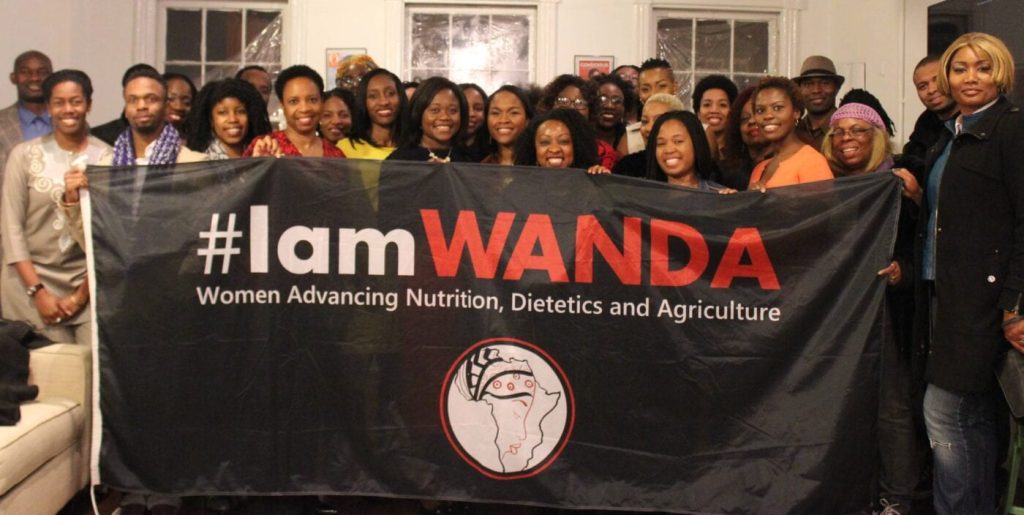
Earlier this month, I had the distinct pleasure of attending the launch of WANDA, a newly established nonprofit organization educating, empowering and advocating for women and girls of African decent to become leaders in the fields of nutrition, dietetics and agriculture. The launch, which took place on March 5th was held in honor of International Women’s Day and as such, featured a panel of innovative and groundbreaking social entrepreneurs in industries ranging from beauty and cosmetics, to television and entertainment. WANDA Founder, Tambra Raye Stevenson, groundbreaking in her own right as a National Geographic Traveler of the Year and founder of the DC-based NativSol Kitchen, describes WANDA (Women Advancing Nutrition, Dietetics, and Agriculture) as an initiative bringing together “sisters of the soil” to encourage all women, young and old, to lead in advancing the fields of nutrition and agriculture. “Women and girls are at the heart of transforming our communities through preserving our foodways, building vibrant economies and healthy communities,” she said. WANDA will also be launched in Abuja, Nigeria in May. As a Ghanaian-American woman just beginning her journey into the fields of agriculture and nutrition, I find WANDA’s mission intriguing. The organization promotes itself as a Pan-African initiative, which is hugely significant to me at this point in my career. Though most of my professional experience falls within the realm of international development, a heightened social awareness of racial injustice in the United States, underscored by the growth of the “Black Lives Matter” movement, has compelled me to offer whatever service I can to ensuring a healthy future for Africans AND African-Americans alike. Having shared this passion with colleagues and advisors, I have been told that I cannot have a successful career straddling both sides of the Atlantic – I would have to choose. The launch of this organization confirmed that I am not alone in my desire to protect and promote health throughout the African Diaspora. And for me WANDA is blazing a trail where there had been none before. If you missed the launch, check out my top 10 black girl magic moments that continue to resonate with me. 1. Getting in formation Inspired by the song that launched many a think piece, WANDA flexed its impressive marketing and social media muscle by borrowing from Beyonce’s celebrated and controversial song, “Formation” for the title of their event. Dubbing the launch, “Black Women Getting in Formation: Power of Media and the Arts to Advance Nutrition and Agricultural Advocacy,” WANDA brought attention to the convening power of a song some have identified as a call to arms for black women. In a recent interview with Black Enterprise, Stevenson shared that WANDA’s version of “getting in formation” means encouraging women and girls to pursue education and leadership roles in health and agriculture. For me, gathering under the backdrop of “Formation” and a national conversation about self-love and unapologetic blackness brought a palpable sense of pride and purpose to the launch. It was an environment that allowed participants to celebrate each others accomplishments, relate to each others struggles and commit to partnerships moving forward. A moment that stayed with me, however, was when panelist and WANDA honoree Rahama Wright, CEO of Shea Yeleen International reminded attendees that countless unnamed and unknown women have always and are still doing the work only recently championed by Beyonce. Way before the Super Bowl performance that stunned America, black women worked together to achieve success and independence. This moment from Wright reminded me that despite Beyonce’s undeniable contributions to the movement, the real heroes in the quest for justice and equality are in our midst and should not be overlooked. 2. Celebrating excellence in entrepreneurship Speaking of celebrating the heroes in our midst, WANDA set a great example by honoring four WANDA women leading the way in promoting positive images of blackness and black women. Along with Ms. Wright, WANDA honored Julian Kiganda, CEO of Bold and Fearless, DeShuna Spencer, Founder and CEO of KweliTV, and Mukami Kinoti Kimotho, Founder and CEO of Joodj. During the panel discussion, each honoree offered a unique perspective on the realities of being a black female entrepreneur. The most memorable moment for me was the vulnerability each woman shared in explaining that their successes were not won overnight. The panelists openly discussed the tendency in the black community to erase struggles from one’s personal narrative. By openly discussing the blood, sweat and tears that goes into growing an organization from the ground up, the panelists believe that more women may be encouraged to continue chasing their dreams even when they face hardship. It was a message that resonated with the audience who clapped in support of these personal and uplifting statements. 3. The food NativSol Kitchen provided the tasty, healthy and culturally relevant fare originating from different countries across the continent. Stevenson dazzled attendees with a Morroccan stew, West African rice dishes, savory black eyed peas, and my personal favorite from the event, bissap, or zobo as it is known in Nigeria. The drink is made from dried hibiscus leaves and is known for its tangy flavor and deep crimson color. NativSol spiced its version up with a touch of ginger, giving the beverage a kick that rounded out the meal. The message I took away from the impressive spread is that food from across the African continent and Diaspora is naturally delicious and healthy. Over time, departure from these foods and the uptake of the Western diet has left a staggering percentage of the Diaspora suffering from overweight, obesity, heart disease, hypertension, and diabetes. In the United States, over 75% of African Americans are overweight or obese, while in Africa nutrition related non-communicable disease will account for 40% of the disease burden on the continent by 2030. A part of WANDA’s mission is to reverse this trajectory and restore health to the Diaspora by embracing the heritage foods that characterize so many of its classic dishes. For more information about the link between culture, food and
5 TEDx Talks that remind us why failure is okay
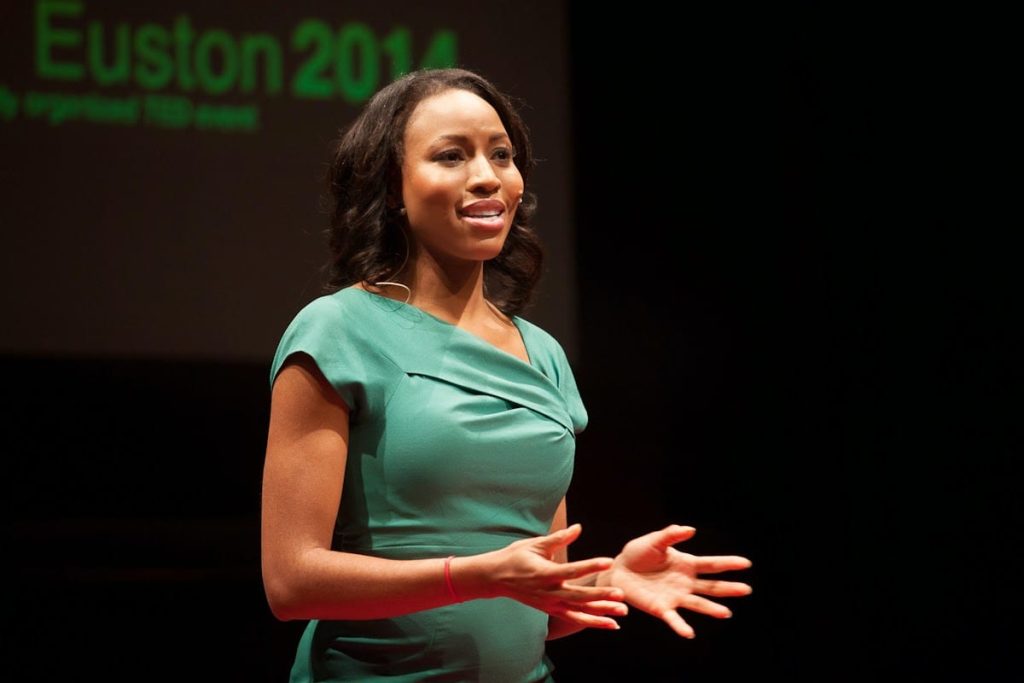
When your finances, relationship with bae, worklife and hair are on fleek, it can feel like you’re on top of the world. But the real challenge of growth comes when you get knocked down and everything seems to be going wrong. It takes courage to keep going when everything around you is saying stop. But don’t fret. The following TEDx Talks hit the nail on the head on why it’s okay to fail. Failing All the Way to Success | Jason Njoku “I was broke, I was living with my mom. But, I was still in the game” Jason Njoku dubs himself a “certified failure” after his 10 failed entrepreneurship ventures landed himself back on his mother’s couch. His TEDx talk chronicles how he eventually found a winning idea and became the CEO and founder of Iroko Partners, a leading online distribution company focused on the Nigerian entertainment industry. Trust your struggle | Zain Asher “But I think that having that competitive spirit and having the need for one upmanship and comparing yourself to other people again and again can actually bring out fears and insecurities that end up holding you back” Zain Asher was a receptionist in the US and no matter how hard she worked she wasn’t able to get a promotion. The company she was working at even began to look for external candidates for the position she was aiming for. Through that struggle, Zain realized that the learning process was worth it, and she is now a national business and personal finance correspondent at CNN International. Success is scarier than failure | Jemele Hill “If you ask me today what my fear is, it is success. It’s so much easier imagine failure, we do it all the time.” Jemele Hill first pursued writing because it was an outlet from her drug addicted parents. The negatives in her life were transformed into positives as she used that skill to become a celebrated sports columnist and television host for ESPN. Reprogramming your brain to overcome fear | Olympia LePoint “The truth is if we do not have a way to reprogram our minds to overcome fear. We will never be successful at our own specific missions in life.” Olympia LePoint failed algebra, geometry, chemistry and calculus in high school. Through her failures, Olympia learned to name and reject her fears. Olympia went from failing subjects in high school to becoming one of the top five graduates out of a 6500 graduating class with a degree in Mathematics. Olympia went on to get her Master’s degree in Applied Mathematics and is now an award winning rocket scientist who has helped launch 28 space shuttle missions to outer space. Perseverance and the power of not giving up | Christine Krzyzanowski “So many people have visions and dreams and they are put into uncomfortable situations then they quit and settle” Christine Krzyzanowsk thought she lost all glimpse of being successful when she quit her high paying job in New York City and moved to Texas. But through the lessons she learned from failed business ventures, she’s now become the co-founder and chief marketing officer for Xtreme Tilt, LLC., where she leads marketing for the gaming company worldwide. Sometimes we just see the end results of someone’s success but never get a glimpse of their journey. These TEDx Talks showcased the underlying theme of not letting failure hold you back from doing something you know within yourself that you are capable of accomplishing. Which one of these videos did you relate with the most?
Want your business to break out? Create a whole new market

As entrepreneurs already know, finding clients can be a long, frustrating and expensive process. When you have little or no brand recognition, you have to work so much harder to get noticed in the market. I recently read in Entrepreneur Magazine, that “it is so important to prioritize future-minded strategy over short term opportunism”, and I completely agree with this. So what does this mean for a young woman who wants to set her business apart? To me it means that this is the time to look for new business opportunities which typically haven’t been as welcome or open to women. While we may be more familiar with industries like beauty and fashion which are easier to start from home, developing a future-minded strategy requires us to look at opportunities beyond ourselves such as construction and heavy industries. It is with such opportunities that we must understand that the only limitations we now have, are those we hold on as truth in our own minds. Being in the industrial sphere does not even always mean that you would have to get dirt under your fingernails; the takeover of technology in almost every business sector has opened up so many doors that the line to what is possible, and impossible has become almost invisible. Many entrepreneurs and CEO’s know that competing head-to-head with other entities can become daunting and cutthroat, more so when markets are slow and quite flat. All leaders in any business would agree that if there’s an easier alternative to get out of the head-to-head competing, and instead find a clear opportunity that has not yet been tapped; they would opt for that direction. In a world with hundreds of thousands of different products & services, innovation has become central to the survival of any new of mature business. Creating new markets for your entity requires just that, INNOVATION’. An article published by Harvard Business Review titled ‘Creating new markets’ stated that, ‘Most companies focus on matching and beating their rivals, and as a result their strategies tend to converge along the same basic dimensions of competition. Such companies share an implicit set of beliefs about “how we compete in our industry or in our strategic group.” They share a conventional wisdom about who their customers are and what they value, and about the scope of products and services their industry should be offering. The more that companies share this conventional wisdom about how they compete, the greater the competitive convergence. As rivals try to outdo one another, they end up competing solely on the basis of incremental improvements in cost or quality or both.’ So, the first thing to understand about creating new markets is that it requires a different pattern of strategic thinking. Instead of looking within the accepted boundaries that define how we compete, entrepreneurs should look systematically across them. By doing so, you can find unoccupied territory that represents a real breakthrough in value. Let’s have a look at UBER, a company that, instead of buying a fleet of cabs and competing head-to-head with other cab companies, decided to do something completely different. The founders of UBER could have innovated and stopped at how they could get hybrid cars as part of their strategy or maybe even offer more comfortable vehicles with WIFI connection and well-trained drivers. Instead, the founders looked at how to make the process easier for customers and developed a tech friendly solution that provides lower costs through accurate monitoring of the distance travelled and drivers trained to a standard level of service. By looking at the problem and the industry from another angle, they have created an entire market for themselves and disrupted an entrenched industry that had little innovation over the past 50 years. I doubt any of the UBER founders had ever driven a cab for a living or dreamt of being a cab driver. However they were able to capitalize on this opportunity because those who had been in that industry were very comfortable with the same old way that they had been operating for years. They couldn’t see the way technology could disrupt the industry and they missed the opportunity. When thinking about creating a new market the popular question “What are my competitors doing?” should immediately be followed by the question “What should my competitors be doing?” Or more bluntly, how can I bring those who could be my head-to-head competitors to my mercy? If you already have a product line, maybe look into a second generation product to help the financial standpoint of the company by creating a new market altogether. Finding secondary marketing can be as easy as adjusting packaging. Look at Coca-Cola or Kellogg’s, these companies have an array of products which aren’t worlds apart where taste or ingredients are concerned. Exhibit A would be the much loved amongst women market, the Special K cereal. Special K promises health benefits & sells fitness indirectly to us and what woman doesn’t want to be fit or at least healthy? Then have a look at Coco Pops, same company, different branding, a bit more sugar and even a cartoon character to attract the kids market. All these have proven to me that as an entrepreneur, your perspective seldom matters above that of the market. You may as the entrepreneur see things ‘Ok as they are’, but one thing you should always bare in mind is that you’re not selling these to yourself, so get into the mind of the market. Think the unthinkable. Now here’s the challenge: Go back to your businesses. Identify your ‘old ways of doing things’ and see how you could catapult yourself to being an industry leader by offering an entirely new way of doing business. Don’t lose sight of your original product or service but explore ways that you could make a similar product that’s targeted at a whole new market. A new market demographic could be a simple as age group, gender or even race. Start innovating. Research how you could infuse technology into your new or existing business. Technology is on the rise, you may just be a tech pioneer in
9 reasons you should (seriously) consider an internship

I started giving proper thought to my career during my second year at university. The buzz towards the end of that period was crazy, and getting an internship was all everyone seemed to talk about. The energy was amazing; everybody wanted to get into big firms, especially the investment banks. I would be having lunch, walking along the corridors, working in the computer labs and it was the same – Goldman Sachs this, JP Morgan that, Morgan Stanley, Credit Suisse, Merrill Lynch, Barclays Capital, Deutsche Bank, BNP Paribas…my head almost exploded at a point because that’s all I would hear about. I wasn’t particularly bothered about getting an internship because I had gained a considerable amount of part-time work experience up until that time, and I had a very well paying summer job coming up at Edexcel (now Pearson UK). I had really enjoyed doing the job the previous summer because of the large number of Nigerian students working there. It was serious fun and there must have been at least 100 of us young Nigerians working there at some point. Anyway, a great friend and classmate of mine, Chitra, asked me if I had applied to any of the investment banks. I said, “Nope, Edexcel pays very well and I enjoy the work.” She must have thought I was crazy, because she gave me an, ‘Are you ok? Can’t you see what your mates are doing?’ look. She managed to convince me to put in at least ONE application. I procrastinated for a few days before deciding to check the websites. Lo and behold, I was too late – I had missed all the application deadlines (or so I thought). I didn’t even feel bad, thinking ‘it wasn’t meant to be’. It must have been a few days later when she asked, “Did you check the Credit Suisse website?” I was like “Errr”…Anyway she told me it was still open and that the deadline was that day. I was like “Today? How am I supposed to get it done in a few hours?” Long story short, I dropped everything else, put in my application and forgot about it. I was convinced they wouldn’t call me because of how I rushed to get it done. Imagine my surprise when I got called for a telephone interview – I couldn’t believe it. I passed the phone interview, and was invited to attend a 9-hour assessment centre (story for another day). I somehow managed to make it through that successfully, and the rest, as they say, is history. It was an A M A Z I N G experience. I got to meet and learn from so many brilliant people and was especially fortunate to have a great boss who helped me gain clarity with regards to a decision I had been struggling with for a while, like whether or not to do a master’s degree – I ended up not doing it). Best of all, though, was the lunch. They had ALL sorts in there, Italian, Indian, Chinese – you name it. Even the dessert was nice. I always looked forward to lunch because of the many different options. Anyway, let me get down to the real reason I wrote this post. What competitive advantage did my 3 months at Credit Suisse give me? Why should YOU intern? Internships are one of the best ways to get your foot in the door in terms of getting a full time role. Work hard while you’re there, and there’s a good chance you’ll be asked back. I was made a full time offer for a graduate position immediately after my internship and this meant I didn’t have to worry about applying for jobs in my final year. Upgrade your CV Even if you’re not made an offer where you interned, the experience will seriously boost your CV and increase your chances of getting a job elsewhere. Test drive a career path you’re interested in I was bent on getting into the telecoms industry after graduation because I enjoyed all the telecoms modules I took as an undergrad. I’m glad I got a chance to intern because my experience at Credit Suisse was a key turning point in terms of helping me discover what I really enjoy doing. (I eventually did my NYSC at a telecoms company and I absolutely hated it). Develop key transferable skills An internship is a great opportunity to hone your existing skills and develop new ones, which employers are always looking out for when recruiting. Learn the importance of work ethic The workplace is very different from the school environment and the best way to learn work etiquette is in a real life work environment. Build your network You get to meet new people and build relationships you can leverage. ALL the jobs I’ve had since NYSC (and I mean ALL 5 jobs since 2009) have been through the network I’ve built over time. Get professional training I was ‘trained professionally’ for the first time during my internship. It was the Information Technology Infrastructure Library (ITIL) training and must have been worth around $150 at the time. Not only did I get it free, I learnt some concepts that I still use today. Earn a salary While some internships are unpaid, mine was very well paid and I remember thinking ‘WOW’. It gave me an idea of what I could possibly earn as a full time graduate trainee. Besides, who (especially as a student) doesn’t like some extra cash? 😀 Boost your confidence The experience seriously boosted my confidence because I had to hit the ground running in terms of the tasks I was assigned. I also had to learn and apply new concepts very quickly in a ‘real-life’ setting. This made me feel like I could achieve anything I set my mind to. So, what’s holding you back from an internship? I hear many young job seekers complaining about the lack of opportunities in terms of jobs