
The scramble to the top: 8 things overlooked in a fitness entrepreneur’s journey

[bctt tweet=”People have to see to believe that you are capable of transforming fitness goals into a physical reality” via=”no”] The hustle is real. Becoming a fitness entrepreneur may be one of the hardest career choices a person can make because of the required level of patience and discipline accorded to success in the fitness industry. People often overlook the journey of a fitness entrepreneur owing to the fact that they are not privy to the behind-the-scenes footage in their lives. Most fitness entrepreneurs start out juggling their passion with another job in order to fund their lifestyle, gain experience and get professional certification. Here are eight considerations that are often overlooked in a fitness entrepreneur’s journey to career growth and stability: 1. Food and supplement expenses A small fortune may be spent on food depending on fitness goals; weight loss, muscle gain or maintenance. Protein requirements vary per person depending on their body mass index and daily activity levels, so buying protein and multivitamins may be a major consideration. Sometimes eating a balanced diet may dig a hole in your pocket but the results are totally worth it. 2. Blood, sweat, and tears In order to stay relevant, you literally have to keep training. This could involve coming up with different challenges, hitting personal targets and diversifying your fitness regime to stay on top of your game. A serious fitness entrepreneur trains at least five times a week and rests on other days. 3. Getting that perfect shot It’s time to get into amateur modelling via social media. People have to see to believe that you are capable of transforming fitness goals into a physical reality. Sharing clear photos taken from a good camera is absolutely necessary to showcase your physique to a target audience of potential clients. Early in one’s journey, a good camera phone may suffice but if you choose to engage your clients and audience through workout videos and short inspirational clips then investing in a professional camera will be worthwhile. [bctt tweet=”Building an army of loyal clients may take some time but requires consistent effort” username=”SheLeadsAfrica”] 4. Client loyalty Building an army of loyal clients may take some time but requires a show of consistent efforts on your part. Following through with a plan and holding yourself accountable for every bit of information shared on social media will build trust in potential clients and reinforce working relationships with existing clients. Let’s face it, you have to lead by example; don’t expect your clients to be thrilled at their chicken salad dinner when you are actively sharing photos of Italian thin crust pepperoni pizza topped with extra cheese and a glass of South African wine. 5. Sponsorships Becoming a sponsored athlete or fitness professional may not only be for the ‘elite’. You just need to position yourself to attract brands through social media and official websites. The companies that approach fitness professionals may not be in the fitness industry as they may be looking for an unexpected beauty icon or someone to drive their sales traffic. Although it takes a while to get to this stage, doing what you love for photoshoots, working holidays and press briefings will give you a financial boost and expose you to greater opportunities. 6. Becoming a thought leader Want to become the next Lita Lewis? Growing in your area of fitness expertise will allow you develop ideologies on a certain type of fitness goal or exercise. Trying and testing what worked for you in your fitness journey will spark peoples’ interest and increase your following. This can be reinforced by testing your ideologies on yourself and a focus group to build credibility. [bctt tweet=”Maintaining relevance in the fitness industry can be likened to a product life cycle” username=”SheLeadsAfrica”] 7. Competitions Sports, physique or athletic competitions are great ways to advertise your personal brand, challenge your physical capabilities while escalating your career to a different level of professionalism. Placing in a competition usually attracts endorsements from supplement and fitness apparel brands which may be in the form of money or free products in exchange for regular promotion and modelling. 8. Guest appearances Making a name for yourself in the fitness industry requires you to actively network at fitness festivals and other related events. Popular fitness entrepreneurs may often have the chance to speak at health and wellness workshops or lead a corporate wellness event. These appearances will ensure that your face becomes familiar to fitness enthusiasts and people that are just beginning their journey. Maintaining relevance in the fitness industry can be likened to a product life cycle: a fitness entrepreneur will get to a stage that requires innovation to maintain steady growth. This phase is mentally and physically tasking but the benefits accrued are insurmountable. Apart from growing in discipline and perfecting your time management skills, you get to be in the best shape of your life while turning your passion into profit! This career path may not be suitable for introverts or socially awkward people unless they are willing to grow in their confidence and interpersonal skills. Are you ready to step outside your comfort zone and embark on this journey?
13 questions to ask before starting a business

[bctt tweet=”Do I need a business plan? and other common business questions answered by @BiznessVirgins” username=”SheLeadsAfrica”] Q&A time! There’s no perfect way to start a business, the key is to arm yourself with the right knowledge and set the ball rolling. And to help you set the ball rolling, we’ve answered 13 questions we’ve come across over and over again in relation to starting a new business. 1. How do I get funding? The best way to fund a new business is to bootstrap (from personal savings/funds, family, friends and revenue generated by the business). Pitch your idea to close family and friends, get them to believe in it and fund it. However some businesses require high startup costs; such businesses cannot be bootstrapped, funds for such businesses can be acquired from investors, banks, crowd funding, grants … 2. What kind of business should I start? Its always easier to go for something you know about, have talent and passion for. Find your talent and passion, do your research, this makes it easy to identify the right kind of hustle for you. 3. How should I choose a name? A good business name can quickly get your brand the right attention it needs. Put some thought into picking a name. Avoid random names or names that restrict you. Go for a name that won’t confuse people about what your business does. A business name should set you apart and protect it. Search the internet, especially social media platforms to see if the name you pick is available for use. 4. Do I need a business plan? When you are setting up a business on a low budget, you do not need a business plan. Simply do a lot of research, then put down your mental model for it. Be sure you reconcile this mental model with the bootstrap model as you go along, this will give you a working business model as you scale up. In the case of a business with high startup cost, a plan is required to create structure; it is important that this plan allows for flexibility as you go along. 5. How do I employ? For a bootstrapped business, at the beginning of the venture, try as much as you can to involve yourself with the various aspects of the business so you able to determine the skills required when employing. Except you are on the look out for a specialized skill, employ interns and smart inexperienced people, they are usually trainable and eager to learn. For bigger startups that are run on business plans, you can hire human resource consultants to work out the employment process. To save on costs you can use professional networking sites like LinkedIn to find qualified individual for various job roles. 6. What licenses and/or permits do I require? This depends. Find out what permits, licenses or registrations clients/customers look out for in your kind of product or service. For certain businesses you can obtain permits/licenses from local councils at a minimal cost to operate within a particular scope, you can later upgrade the permits/licenses as you go along in business. 7. What do I need to know about book keeping? Understand financial statements and bookkeeping terms; Balance sheet, income statement and statement of cash flow, net profit, gross profit, revenue, cash investment….. Keep a close eye on your cash flow, cash investments, net profit and revenue. Software applications like Waveapp can be used for bookkeeping. Also keep record of your business activities. 8. Can I operate my business from home? Again, this depends. Some businesses require a space where customers can come walk in while others do not. This is one good way to save on cost as a start-up so except its absolutely necessary, work from home and let the business grow itself to acquire and maintain a work space. 9. Should I operate a franchise or start a business from scratch? A franchise comes with structure, this reduces the amount of risk involved in setting up a business. On the other hand, a franchise requires a good amount of capital to set up, there are usually many clauses in the agreement and you never really get to build the business structure you want, instead you manage an already existing structure. Before becoming a franchisee, make sure the model is viable in your choice area, work with a lawyer, make sure its something you are ready for otherwise simply start from scratch. 10. When can I expect to become profitable? Most new businesses take up to a year to become profitable; Here are a few tips to help you stay afloat during this time Keep your expenses low Keep a close eye on financials. Engage in quick cash transactions/turnover Generate extra cash along the way by offering products and services relating to your business, make sure this does not distract you from your main business. 11. How will I cope with competition? Always stay aware of what your competition is up to. Regularly update your knowledge of what’s going on in the industry you operate. Listen closely to customers. 12. How much do I pay myself? Put yourself on a minimal salary; even if the business cannot pay you yet, keep a record of it, you can later convert it to sweat equity. 13. How do I pick a partner? A partner can make or break a business, choose them with care. A business partner should complement you in such a way that makes the business stronger. A partner is supposed to bring in something you do not already have. Have a good knowledge of who your partner is to avoid surprises, make sure you are aware of all the risks involved in partnerships. Make the partnership agreement tidy, involve a lawyer, please do not set up a partnership on a gentleman’s agreement. Goodluck!
Olubukola Adebiyi: The solution to poverty is to bridge the gap between the less privileged & the privileged
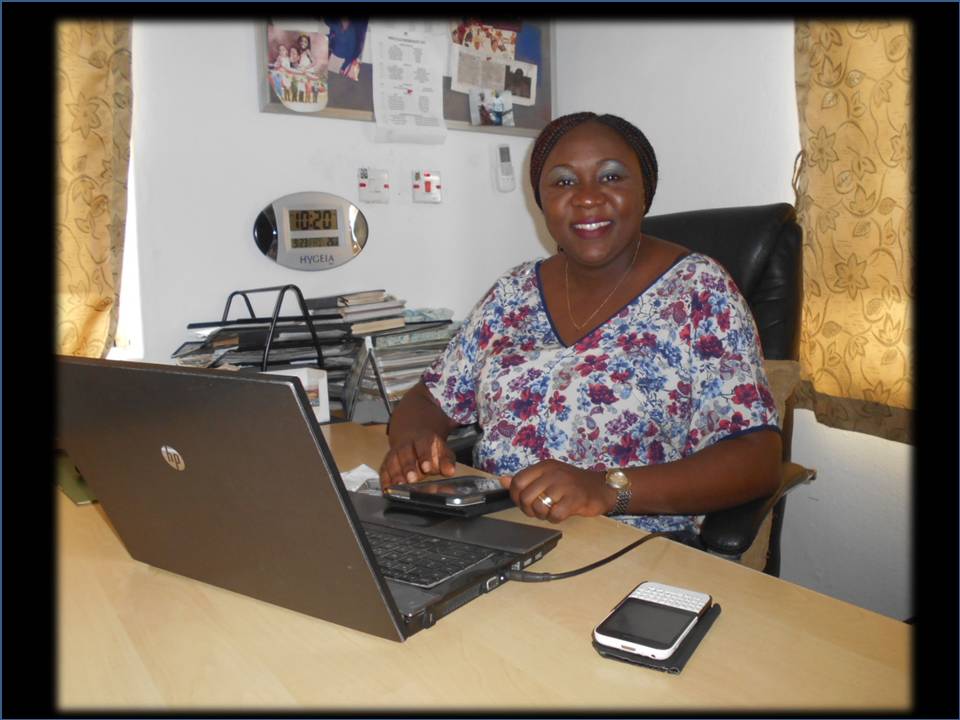
[bctt tweet=”Be completely focused and committed to your passion against all odds. – Olubukola Adebiyi” username=”SheLeadsAfrica”] Buzzing with a powerful and uncompromising energy, the social enterprise, Jakin NGO is a place that has become home to many who don’t have much that they can proudly call their own. Bearing at its core a commitment to improve the everyday lives of society’s most vulnerable, Jakin serves as space for transformation; it serves as a training ground. It is a place where hope meets education; where dreams meet technology. Jakin is for many, a temporal refuge away from home. Olubukola “Bukky” Adebiyi, the President and CEO of Jakin, fully embodies Jakin’s commitment to serving humanity. Her service and commitment to change are championed through her passion and optimistic ambition to see Jakin serve even more people. Bukky is fully hands on as she not only obliges to her role as CEO but trains, serves food, greets, advices and lives the passion for her calling each and every single day. How would you describe what you do? As is described in our mission statement, I work with vulnerable groups to overcome health, economic and educational hardships. Our group targets are by majority orphans and vulnerable children, women —mostly widows, people living with HIV, people living in slums and hard to reach areas, particularly youth. What inspired you to get involved in this particular field of work? It’s my passion to put smiles on faces. By the grace of God, I realized that the “less privileged are simply those who lack the privileges of the privileged.” The solution to poverty is to bridge the gap by creating a conducive, secure and encouraging platform for the “privileged” to share their resources with the “less privileged”. What do you think has been your greatest contribution to your work? My life and my time! Your work can be challenging considering the fact that you are dealing with the vulnerabilities of people’s lives, what keeps you motivated? It’s the joy that breaks forth in the life, faces, and households of the beneficiaries that keep me motivated. Once they receive any form of assistance, they seem to light up with some immeasurable hope that tomorrow will be better. Thereafter, they seem to have a new drive to survive, despite all the odds. Most of the time you can hear them thanking God for remembering them for good. Can you please share with us a great story of success? Jakin has been in operation for 13 years, and yet we have never held a single fundraiser or partners forum. Nevertheless, we have over a thousand individuals, corporate and faith-based partners here at home (Lagos, Nigeria) and abroad that help keep us operational. All our projects till date always record outstanding success. We have over 6,000 orphans and vulnerable children, and over 2,000 vulnerable families including youth, widows, and people living with HIV, that are receiving support from 17 different projects that we have. How do you ensure that you maintain a level of commitment and integrity from your employees and the individuals that you supervise throughout the whole year? Consistency with our organizational values of transparency, integrity, humility, passion and the fear of God make that easy. I make my adherence to these values the first example that others follow. [bctt tweet=”The less privileged simply lack the privileges of the privileged. – Olubukola Adebiyi” username=”SheLeadsAfrica”] In your line of work, what are some of the things that you do to begin the year well? I make sure I personally start my year annually with rededicating my life to God and seeking His direction for the year by fasting and praying for the most of January. We normally have staff prayer meeting on the first work day of the year before commencing with general meetings, reviews of the last year, and other activities. Our annual training happens in that first week as work plans are completed by each department, in line with the organization’s yearly budget. Most implementation commences skeletally in January while the majority kicks off in February. How do you ensure that all your departments are working in line with the goals that you set forth as an organization? The organization is well structured. We have an organogram headed by a six-member Board of Directors that meet regularly. The office is also run by a management team comprising of all departmental heads who ensure that all members of staff are working in line with organizational goals and objectives. What word of advice would you have for a young woman wanting to do what you do? Have a clear vision of your passion. Be completely focused and committed to it against all odds. Start small, be transparent and always give feedback to your partners. Encourage your helpers and supporters. Above all, walk closely with God. [bctt tweet=”Start small, be transparent and always give feedback to your partners – Olubukola Adebiyi” username=”SheLeadsAfrica”] What is the best part about being a boss lady and owning that power of freedom? It teaches you humility and fear of God. You can’t afford to abuse power because it’s a privilege. How do you maintain a healthy work-life balance? I spend the bulk of my work life serving humanity so I make sure all my spare time is spent with my husband and children. Also, I enjoy being at home with my loved ones. I am blessed with the support of my husband. How do you de-stress and/or unwind from a long day of work? I watch TV, cook, dance to gospel songs and enjoy my time with lovely kids. I go out once in a while. Here is how you can support and learn more about the work of Jakin NGO. If you’d like to share your story with She Leads Africa, let us know more about you and your story here.
5 things to do before leaving school

[bctt tweet=”All students should make plans for life after school if they plan to be #MotherlandMoguls” username=”SheLeadsAfrica”] One of the biggest mistakes students make is avoiding the future. That is making no plans for after school or laying down foundations for post graduate life. Many times, you see graduates sitting at home even after the one year National Youth Service without potential jobs or side gigs and no money. With the rate of unemployment, post-graduate life is scary. That’s why you shouldn’t be slacking! Here are a few tips on things to do before leaving school so you’re on top of your game after graduation. 1. Save up Whether you are in your first year, your last year or in-between, if you haven’t started, it is time to get on the bandwagon. A little sum put away at intervals makes a substantial sum at the end of the day. Sometimes, the money is just not enough, we get that. Still, shaving a little off the top before facing your list of needs and wants, helps build a safety blanket. This may help finance a start-up venture or provide sustenance during the dry after-school days. 2. Lay it all out Things don’t always go the way we plan but trust me girl, it feels good to have a plan. Now, I am not just talking about relationship and marriage plans, which are needed. I am talking business and entrepreneurial visions. Map it out. Map the road to those goals out too. Yes, things change, life happens, and sometimes we have to make some tweaks to our initial plans. Yet, it is necessary to have something to look forward to after school and to work towards them. Your plan will determine how you work in school. Your grade points and your business life will also be geared towards those visions. Think this is too much work? Don’t, you’ll be thanking us in the future. [bctt tweet=”Your future plans will determine how you work while in school” username=”SheLeadsAfrica”] 3. Make use of the opportunity If you plan on working within your course of study then being in school is the right time to become a member of the professional body of your course. Here’s a tip, it is usually cheaper to join professional bodies as students than as postgraduates. Another thing to make use of is online courses. Most campuses have free or cheap WiFi access and most service providers have special plans that are campus oriented. Use this to your advantage and get a boatload of free or cheap relevant online courses without breaking the bank on data charges. Business wise, you can use the opportunity to hone your skills, go online and improve your work. Though the workload might be bulky, students still have a great chance to fit in extracurricular activities. So, rather than spending too much time partying it up (this is needed but it’s not a priority), carve out time to use what is available to you to get what you want. [bctt tweet=”Start making friendships that will last a lifetime while in university” username=”SheLeadsAfrica”] 4. Squad goals Yes! Start making friendships that will last a lifetime. This is the best period to build your support team and your squad. You can figure out people of like minds, goals and visions, people with the ability to propel you. No haters, slackers or scrubs need apply. You need true friends to stand by you. Friends whose lanes cross with yours, but never clash. This can be the foundation of an empire tomorrow. Squad shopping is slightly hard but not impossible. Making close-knit friendships post-school can be hard but in school you have lost of time for girls night out and everything in between. You get to plant, water and grow something beautiful —your squad. 5. Please LIVE! You know the saying, “don’t just go through school, let school go through you”? Live, savour every moment, do not zone out and do not go through school in a haze! Make sure your time in school is filled with memorable days. Keep a journal if necessary (which is like totally necessary). Make mistakes and learn. Get yourself out of messes, dust yourself and go on. Let your school life be one massive “WHOOP!!!!” with a lot of “yays!” and a few “oops!” [bctt tweet=”Live, savour every moment, do not zone out and do not go through school in a haze!” username=”SheLeadsAfrica”] Go all round, do not be fixed, fit in, then stand out. Complicated, yeah? But no. There are places to fit in and there are other places where you need to do you. Be well rounded, academically, socially and spiritually. Make every moment count and have an amazing squad to share them with. Finally, here is a toast to you for the amazing journey you will embark on.
Starting a business while in school

So, you’re in school and you want to go into entrepreneurship? Cool! I like playing dangerous too. Gone are the days of waiting after graduation and getting a job. Gone are the days of “business is for uneducated people”. Come on, you and I know better and frankly, starting a business when you are in school is probably one of the best ideas. It gives you time to prepare for “post-school” days. Starting a business is never easy, but here are a few tips to help you get started and stay on the hustle. Eureka! First, get the idea! You can either be innovative by starting something new or redefining something old. Usually, most student campuses are filled up with people peddling the same wares in the same manner. If your idea is based on an already existing idea, then you should be one step ahead of those already in the business by having a modification. New ideas are always fresh. Analyze the demand rate for your product (goods or services). This can be done either by studying the existing market for an already existing idea or carrying out a mini survey for a new idea. You should be sure of your target market, which should mostly be students. But also consider, do you provide services for the non-student members of the community? Make sure your idea has no legal implications. Evaluate yourself How much technical know-how is needed in the business? How much do you know or can you provide? Do you have what it takes? Should you first acquire certain knowledge and skills? Do you have the time to see it through? These are some of questions you need to ask yourself when self-evaluating. Research the competition No, this is not spying or “copy-catting”. This is purely a form of business survey. Some of the important things to research include, who your competitors are, any similarities in business (yours and theirs) and how long they have been in business. How do they relate with their customers? What is their price range? et investigating and uncover these facts about the competition. Plan You remember this… (s)he who fails to plan, plans to fail? You might think you’re an expert in the field you plan on venturing into, but if you do not make concrete plans, you are just an over experienced failure waiting to happen. I want to debunk the notion most student entrepreneurs have about starting a business in school and ending it after school. Except you are only into business as a means to pay the bills and not interested in expanding what will become your brand, then you shouldn’t think of a business that will stop after graduation. Most successful #MotherlandMoguls started in school and grew it from there. So, your business plan should have room for growing the brand outside and after school. Partners? Is this a one woman venture or a partnership? Your partner can either be someone who has been there from the word go and is willing to invest time and money, or someone who started with you but wants to only invest money. She can also be someone you pair up with later on. Is it necessary to have a business partner? The nature of the business will determine that. If it is a service providing business like home cleaning services, then the answer is yes. You will need a partner, if not at the beginning, then later on. Let’s talk money I know this is a the one that will probably interest you the most. Where do you get money for your business? Well, this should also be in your business plan. Here are some sources you can raise money from: Personal savings- You should have savings, everybody should. Donations from family and friends Loans- check to see the types of loans available to you as a student and the general ones you’re eligible for. Thrift collections- These are local saving schemes that afford members the opportunity to take loans based on the arrangement. Ajo/esusu is a popular type of thrift collection in Nigeria. Crowdfunding. On your marks… Ready? Before you start, check to see if you have most of what you need, and if you do, start. Do not wait to be 100% ready, just do it. Advertise and network Well, what are friends for? Get your friends to use word of mouth, social media and even school related platform to blow your horns. Use colourful fliers (duh) to drag attention. Oh and hashtags are another way to go. Network among your peers and locate your customers. Goodluck You are in business, yay! Keep and eye on your profit margin. Don’t be too keen on the profit at first, just make sure your service or production cost are being covered. Breaking even at the beginning is a really good thing. But watch your monthly returns and weigh them against your expenses. You should notice a slight growth. Always take reviews. Do an audit after the first 3 or 4 months and see the places you need to improved. Good luck dear student Motherland Mogul!
7 steps to starting your business with a full time job

I had at least 3 failed attempts at running a business with a full time job before I got things right. I often wondered how other people managed to do it. But now I finally got it right, I can let you know how to start right. For the last 4 years, I’ve combined my 9-5 job with starting and growing my business Deluxe Childbirth Services. Today I’ll share 7 simple steps with you that have helped me effectively manage this leap of ‘craze’. Be clear on how much you really want your new business Why exactly do you want to start your business? Is it because everyone your age has one? Or is it because you don’t mind having multiple streams of income? Do you want to exit the rat race? Or do you want to provide solutions to challenges around you? There really is no right or wrong answer. The important thing here is to know your real motivation and write it down. Write down why you want to start your new business, your first year goals and what you are willing to give to see it become a success. You’ll need it to keep you going when the tough times come calling. Take a break to clear your head for action Your current job might leave you working long hours. If you add in the long commute to work and back home, it’ll leave you totally drained. This is why when you want to start any new business while working, you may need some time off to clear your head! My idea of time-off is at least three full days with no distractions. You’ll spend the first day resting to refresh your body and brain cells. Then you start thinking up your launch plans from the second day. At the end of this much-need timeout, you should have a list of the key actions to launch and sustain your business. These actions should cover the first 1 year, at least. It should answer when these actions need to be completed by, which of the actions you will complete yourself and those you will delegate to others, and who you’ll outsource to when necessary. Understand your fears and destroy them Dreaming about an idea and how it will blossom into a successful big business can be a pleasurable experience. Sometimes I wish that’s all we needed to do to make money from our hustles. Sadly, when it’s time to start, reality sets in and some people get scared. I know I did when I was about to start my current business. Most of the women I speak to also get super scared! But guess what? It’s okay to get scared. It’s even okay if the fear sounds flimsy, I was scared of my name being out there. What is not okay is letting your fears rule you. To move ahead with your new business idea, you owe it to yourself to understand why you might be afraid and conquer that fear immediately. Turn the needed actions into small tasks; pace yourself and celebrate success I know you might be tempted to take your new business launch on like you take on projects at work. You know, with that ready to bulldoze it attitude. But when it comes to your business, you might need to go a bit slowly. Remember that you’ll most likely work on your business after your regular work hours. By that time, your body and head will most likely be tired. So pace yourself, give yourself more than usual time to complete a task. And, once the task is completed be sure to give yourself a small treat. Be ready to work HARD My friend, there is no escaping this! To be a success at both your job and business, you need to work hard and be disciplined. While at work, focus on your job and deliver your agreed priorities with as much excellence as you can afford. And when you get home, focus on your business full-time. You may need to tweak your work schedule to include working on your business on Saturdays. This may mean sacrificing a lot of time, sleep and outings to work your business but you can be sure you’ll be off on a great start. Get an accountability partner/coach and have regular reviews with her An accountability partner is someone with whom you can share your dreams and plans. This person will constantly remind you on agreed deliverables. She is someone you really would not like to see upset when your regular reviews reveal that you are behind on agreed actions. Your accountability coach must be someone who is genuinely concerned about you. She is someone who wants to see living your dreams, not someone who will kill those dreams. Recognize His grace and ask for help I believe we are nothing without God’s grace. As such, I always advice acknowledging this and asking for His help because really what you are about to go into is not an easy task. Once you are clear on your business ‘goals, it’s a good idea to ask God for the strength and capacity to do more. You want an environment free of obstacles and stumbling blocks so you can close out tasks faster. Most importantly ask for opportunities at work and in your business where you can shine brightly with little effort. So there you have them! Start out today and keep me posted on how it goes. If your job is flexible and not as demanding as most jobs…count your blessings and make it work in your favour!
5 lessons learned from not protecting my business idea

I am part of an entrepreneurial Facebook group (we’re now over 7,000 members strong). Let’s divide the group into two; techies and non techies. One of the most asked question by the non techies is, “I have an idea for an app and I’m looking for a developer. How I can I protect my idea?” In order words, how do I prevent a developer from running off with my idea, claiming it as his own, working on the idea himself and making millions of dollar off it? The response is usually the same; make him/her sign a non-disclosure agreement (NDA). This question always reminds me of my own experience with my second developer which I will share with you. I first met him in the summer of 2014. I got to know he was a developer during our introduction but I was still poking around my idea so I said nothing. Over the next few weeks, our friendship grew. When I had figured out exactly what I wanted to do, I gave him a call and discussed my idea briefly. I also told him I wanted to build a small team; no more than four -including both of us. He said he could help with this. The next time we spoke, he informed me that one of the developers he had available was going to work for Google and would not be available. The other developer was working on a project. He advised me that the best way was to get started with just the two of us . In the meantime, he wanted a one page Word document about my idea. I wrote a one and half page explanation of my idea and emailed it to him -without a non disclosure agreement. For many other reasons, it all fell apart. We never got started; neither did I ever speak with his developer friends. Here is what I have learnt since then; 1. Execution is all that matters Ideas are like opinions. Everyone has one. I know that’s not how the saying goes but you catch my drift right? Do you realize how many million people are in the world? Do you know how many million people are thinking of the same idea you are thinking of? Well, I’ll put it this way then. A person can steal your idea, but cannot steal your vision. Like the non techies in the group, I was afraid of my idea being stolen that I became worried sick, almost lost appetite and drove myself crazy with paranoia for no reason. Do you know how much willpower it takes to execute an idea? Even if your idea is stolen, the execution will be different. No two executions are quite alike. 2. You are the visionary As the non techie, if your idea holds any depth, meaning, you’re not looking to make a quick buck. You truly want effect change in a particular industry and change the world, you are the visionary. As the visionary, it is likely that you’re more committed than anyone else will ever be. As it is right now, I am mentally, physically, wholeheartedly committed to OneSavvyDollar and creating value for my readers in ways I cannot even begin to describe to you. 3. Domain protection I have always been an advocate of getting a good business name and buying the domain name. It is a relatively inexpensive way to protect your business. Most companies run domain name promotions periodically. Even if the developer steals my idea tomorrow, surely, it will never be named OneSavvyDollar. He is going to have to pick a different name. 4. Ideas change upon implementation Until you actually begin to implement an idea, you never quite know how it will turn out. What I wrote as a one page document does not even begin to surmount to the changes and challenges my developers and I faced the moment we started working on this. But an idea does not necessarily stay in its original form from inception. The interesting part, the idea continues to change because I let my users guide me to what they want (to a reasonable extent.). You can only understand this when you begin to match action to words. 5. A rule is only as good as its enforceability It’s one thing to have a non disclosure. It’s another thing to be able to be able to pursue it should there be any violations. We watch movies and believe the rules apply all the time. But it doesn’t quite happen that way. In the case of the Face book lawsuit between the Winklevoss twins and Mark Zuckerberg, the Winklevoss twins had the resources. Here are five fast facts about them: They were born in South Hampton and lived in Greenwich (read as ritzy areas). They attended Harvard. They are Olympians and competed in Beijing 2008. Their father is a professor at Wharton, an author and entrepreneur. He owns a technology and consultancy companies. They hired a high power law firm. Can you understand now what I mean by resources? Truthfully, you most likely do not have the luxury of the time or the resources to pursue developer should the idea become a hit; particularly, if you are the sole business owner. Don’t forget it’s a game of probability; an idea could either be successful or not. If Facebook wasn’t successful, they never would have bothered.
4 ways I was failing my business

A friend asked me to attend an event she was setting up to discuss the challenges that women have when it comes to running a business in Kenya. Everyone knows that running a business has its challenges but what does it mean to have ‘women only challenges’? Are we saying that it’s hard for Kenyan women to run profitable businesses? I can list the cost of doing business, from the licenses to the cost of raw materials. From the taxes to the high cost of living. From corruption to sexual harassment on these streets. However, while we talk about the external factors that affect our businesses, we rarely focus on ourselves as women entrepreneurs and what we do that may cause our businesses to fail. When I thought about it, I realized that most of the challenges I have had, have little to do with the business environment and more to do with my attitude. These are challenges that have been in my control and could be fixed. My doubts and my fears When I chose to be an entrepreneur, I wanted to create a solution to a problem that many girls and women face. It took me a long time to figure out my path and in that time, I lost some relations. I had friends who were far ahead of me in life. They were investing in property and driving big cars. They were employed and happy, or so I thought. When business was slow, I would always fantasize about the lives ‘other women’ are having and how easy their lives are. This affected how I ran my hustle. Then, I would often entertain the thought of going back to employment. I started doubting if I took the right path. I worried about how I would pay rent and fuel my small car. As this was going on, I was focusing less and less on the business. My doubts would show when I told someone about my business. They would see I was not sure of myself. Why would they trust me when I did not trust myself to run a business? My lack of confidence I hated speaking in public, so how was I supposed to pitch my business in front of 100 strangers? How was I supposed to show how passionate I was about my business? I think I lost out in my first pitches because they did not see a woman confident enough in herself to speak out passionately about her business. With practice, I have been able to speak in front of strangers. I start by telling a story, from the problems to solutions of my entrepreneurial journey. I find that the crowd is calm and ready to listen. I imagine that the crowd travelled thousands of miles to hear me speak and I cannot let them down. Now, I have been invited to speak at conferences and forums and before I take the mic, I remember the days I shook and stammered and I smile. My exit plan I always had an exit plan. If I did not do this business, I would run the best digital media house in Nairobi. I would spend hours imagining how I would bring Huffpost to my city and run it better than mainstream media. What I did not realize was that every time I would wander into the thought, I was detaching my mind from my main business. Every time I got a rejection email, I would always come up with another idea. This made my business slow down and I kept blaming it on the tough business environment. Yet I did not sleep, eat and breathe my business. I was entertaining other ventures and not giving my main 100%. I was not knocking harder on the closed doors because I filled my head with these other ideas. I felt that I needed an exit plan. Now, the only exit plan I have is to sell to a big corporate company when my company is worth millions of dollars. My social life Ever had love so good that you make your business an afterthought? Having relationships affects your business either positively or negatively. For a long time, I did not know how to balance my relationship and my business. I did not have the discipline to say no to those late night dates that affected my performance the following morning. I would spend time on the couch watching movies and enjoying our time together, then rush to beat deadlines the following day. What I realize as a Motherland Mogul is that I do not have the luxury to enjoy a weekend or a holiday as an ordinary person. Work comes calling at odd times and as the leader of the team, I simply cannot ignore the calls just to have a great night out. That time will come, just not now. Whenever I meet a great person, I make sure to tell them just how important my business is. I ensure they realize that my work comes first and when we have made those millions, we can afford to take a one month long holiday and relax. But for now, my work comes first. If he is understanding, he will stay. I have learnt to point the finger at myself first before blaming other factors for the poor performance of my business. Share with us what challenges you have learnt to overcome as a business woman.
You’re now a Motherland Mogul, have you thought about safety?

A light bulb just came on and you’re already smiling at the money you’d be making from the business idea… You just slammed a pitch and you’re already practicing the speech you’ll be giving other young people on how you made it… You’ve launched your website and have snagged a client or two, business is looking promising… Your business is expanding, income is rolling in, your reputation is soaring, you’re making impact… You are now a known brand… Pause. Hold up. Wait a minute. Have you given any thought to safety on the job? Chances are you haven’t thought about the safety of both yourself and your employees. Yet, whatever stage you are on your entrepreneurship journey, it is important to consider the health and safety of everyone involved in your operation and invest in it. A safety management system (SMS) is a proactive and systematic process of safety. It involves developing a safety culture that ensures your organisation/business remains safe from loss of any kind. There are numerous benefits to incorporating a SMS in your startup. It reduces business costs and increases efficiency. With a SMS in place, you won’t have to worry about spending limited resources addressing the fallout of accidents and other incidents such injury, loss of goods, damage to business property, even death. Financing Banks and investors are more likely to invest in a business that is set up on a right foundation. No one wants to lose hard-earned money to accidents that could have been averted. Employee morale In business, word of mouth travels faster than any advertising. Employees do not want to leave a job worse than when they got into it, broken bones, injuries or ill-health. A safety system boosts their morale and lets them know that their employer is interested in their overall well-being. This morale of staff is inadvertently manifest in improved client relations and that is a plus to a business. Business confidence Big companies in construction, aviation and oil and gas seek credible businesses with a safety culture to work with. This singular investment in a safety culture could set you apart from other business owners Legal compliance And of course, using SMS means you would be complying with relevant laws in your country of operation. They say, train a woman and you train a nation. Here is to building safer businesses and workplaces as we become Motherland moguls.
Beyond handmade: Looking past Western obsession with handmade African goods
Sisi King, cofounder of the accessories brand ZikoAfrika, writes about her challenges developing a business model that allowed her to tap into efficient technology and ramp up scale while responding to growing demand for handmade African goods. Sisi King raises important questions about responding to short term market demands against long term growth opportunities. Two years after the collapse of a garment factory that killed more than 1,100 people in Bangladesh, the race to the bottom in the fashion industry may finally be slowing. Consumers are demanding products that have been made in a socially responsible manner, and brands, both large and small, are responding. With this increase in authentic goods with a social impact narrative, made-in-Africa products are gaining significant traction. Handmade items from the continent are especially in high demand; they are being carried across the retail spectrum, from low to high end luxury retailers. While this interest in handmade goods is to be celebrated, Africa is unable to compete with the high volume, low cost goods from China and India. The change in global consumer spending trends presents both unique opportunities and challenges for African production. If we buy into the hype of handmade in Africa, we ignore the bigger picture of working towards sustainable socio-economic growth for a quick marketing fix. The Story of ZikoAfrika Co-starting ZikoAfrika, a locally produced accessories brand in Kenya, I absolutely believed in the power of small-scale community focused production as a driver for fair employment opportunities. However, we were unprepared for the huge challenges we would face, producing a consistent high quality product at a price buyers were willing to pay. “Handmade goods have the powerful draw of connecting the consumer with the producer, providing a sense of meaning and transparency in a world awash with amorphous goods and murky supply chains.” Still, this is what consumers are largely unaware of: a lot of handmade production takes place in the informal work sector, which is unregulated and outside the bounds of government set minimum wages and conditions. Furthermore, the process is slow and quality is inconsistent. These issues present significant barriers to scaling. Learn to Grow Your Business In our case, these challenges made it difficult to meet timelines and low costings set by wholesalers. It became clear that to have a viable business, we would have to centralise our operations in a formal workshop and mechanise parts of the production line. As such, we explored the idea of finished by hand, not made by hand. This process involved re-evaluating our materials, designs and production line. We replaced natural materials such as bone and horn whose supply are inconsistent with perspex, a low cost and readily available plastic. This changed enabled us to utilise lasers to cut components that were then sent to an audited workshop for assembly and polishing, eliminating a huge degree of uncertainty in our production process. Available for hire in downtown Nairobi, lasers enabled us to cut high volumes of our material in a couple of hours with a 0% rejection rate. This task previously took at least a week, with up to 30% rejections. The change in production meant the opportunity to fulfill larger orders on time and with no rejection. For the workshop, it meant getting the pieces out faster, enabling employees to take on more work. In harnessing cutting edge technology available in our city, we combined two disparate worlds and broke through some of the barriers inherent in manufacturing by hand with a low-skilled labour force. The Challenge with Alternatives Being able to significantly increase production capacity, efficiency and quality was extremely exciting and motivating. However, on informing our main international client of the changes in our manufacturing process, we were told under no circumstances would products that were not 100% made by hand be accepted. At a crossroad, we had to decide whether we should continue to produce exclusively by hand, securing the short term survival of our business, or commit to a long term vision we believed had greater potential for both our business and our producers. A larger conceptual issue also loomed – is the largely western vision of the romantisized artisan and new obsession with handmade actually limiting development and fair growth in Africa rather than enabling it? To a large extent, I would argue that the obsession with handmade African goods limits development and fair growth opportunities. The global demand and value for fashion provides countless opportunities for product and market diversification. But to take full advantage of the potential for design industries to drive socio-economic growth, our products must meet quality standards, volumes, price-points and lead-times consistently. This requires some element of a mechanised production line, as well as significant investment in centralised manufacturing units that can be well managed and monitored. This is not to say that artisanal handmade production do not have a place in socio-economic development. It does – particularly in rural areas with limited money generating opportunities, or in the preservation of unique cultural handicraft techniques. However, without significant growth in the formal manufacturing sector, Kenya cannot grow from a low skill, low capital economy to a medium income one. Formalising and investing in fashion production units that utilise modern technology to eliminate bottle necks while continuing to retain an element of hands on production provides a viable hybrid to intensive industralisation. This hybrid enables our products to be competitive in international markets. Asking Ourselves the Difficult Questions As brands producing in Africa, we have a role to play in this emerging narrative. The handmade label has strong marketing currency – it is personal, the very antithesis of fast fashion and sweatshop labour, and it’s what the world wants now. But, we need to ask ourselves: is it viable? Are artisans actually making a living wage, are they working in conditions that are safe, are they working fair hours? Is what we are doing scalable and sustainable? For some it will be, particularly those in the luxury goods sector who