
Oladoyin Oladapo: I never planned on writing a book series
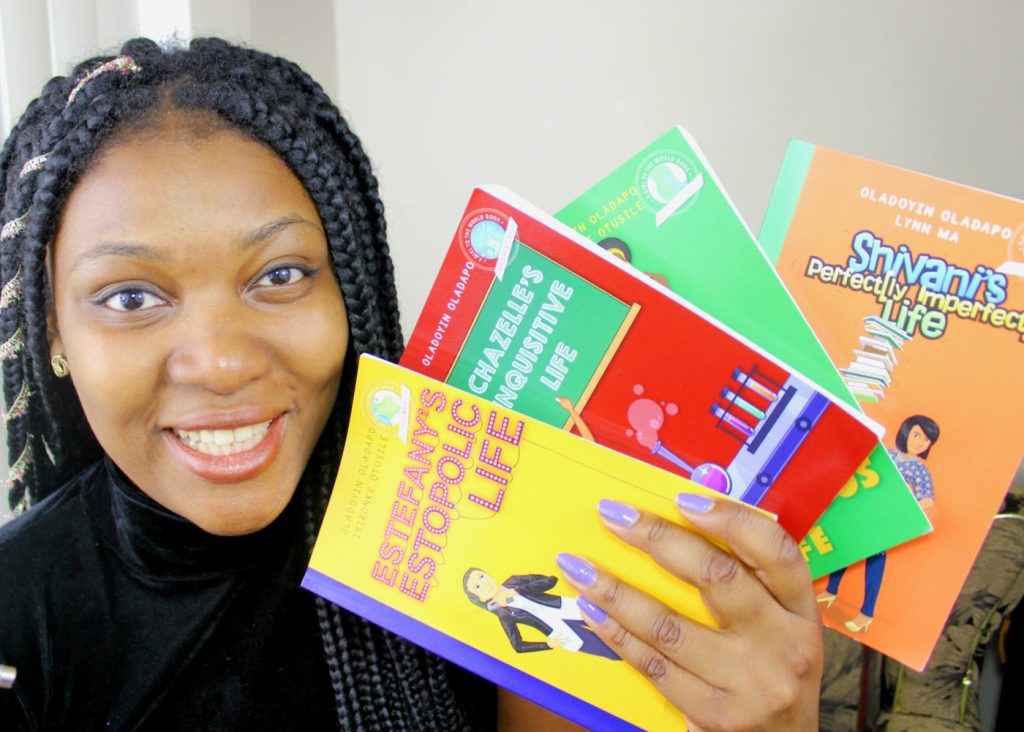
[bctt tweet=”Oladoyin Oladapo is inspiring girls to reach their maximum awesomeness with Girl to the World” username=”SheLeadsAfrica”] Oladoyin Oladapo is the author of the “Girl to the World” book series which consist of four chapter books and four picture books for children below 12. These books share values essential to girlhood; intelligence, curiosity and self-esteem while highlighting the diverse world around us. They are more than learning about differences instead, they are fun and captivating to read like traditional children’s stories. This is because after spending six months in a local elementary school with her team, Oladoyin discovered that children that age are not as concerned as we were about learning about developmental concepts such as culture and values. So if her team wanted to get children to read, they had to mask all the educative material with fun and exciting stories. This led them to create the “Girl to the World” book series which empower children but are still fun to read. The series teaches children but not are not textbooks. Oladoyin believes that the content children consume at this age moulds their future; her goal is to expose children especially girls to different cultures. Read on to find out how Oladoyin Oladapo is helping girls reach their maximum awesomeness through the celebration of culture, girl power and universal concepts like arts, friends, family, fashion, sports and school. Tell us a little about yourself and your writing background? I am from Nigeria but live in the USA. My family migrated to the States when I was very young, so that was where I had most of my education. I studied sociology with education concentration and political science with international relations concentration. Around my junior year, when I first got the “Girl to the World” idea, I was studying gender and inequality in education and I think that a lot of that really formed the idea. I however planned on making multiple things with the idea; thus toys and animation etc. The first prototype I made with this idea wasn’t a book. I had to try out other things until I finally decided to start with a book, which was a great idea I must say. With regards to my writing background, I never had professional experience in writing. But I was always doing creative writing among others in school which gave me some experience in this field. So when the time came to write the books, what I did was to put together what I knew and I guess I did the best that I could. You said you and your sister read a lot when you were young, which books had the most impact on your life? Would you say reading so much at a young age ignited this passion to write the Girl to the World series? My sister and I read a lot, I remember reading the Bible a lot when I was growing up. At that young age however, I wasn’t able to understand the Bible so I was given the picture Bible which made it a lot easier to understand. In terms of actual storybooks, our dad would take us to the library all the time. We spent an entire summer reading Chicken Soup for the Soul. I mean we read the entire series of that book just like the Babysitters Club, the Magic Treehouse, Junie B. Jones and Captain Underpants series. I really enjoyed Captain Underpants because it was an easy read and I loved the pictures and how funny it was. Also I believe that because I read so much, I had the confidence that I could write the book even though it was something I never planned on doing. [bctt tweet=”Everyone wants to know why I don’t have a Nigerian girl in my series – Oladoyin Oladapo ” username=”SheLeadsAfrica”] From your Youtube video, you stated that there are four chapter books and four picture books about four amazing girls. These girls are Akua from Ghana, Shivani from India, Estefany from Colombia and Chazelle from Trinidad and Tobago. How did you come up with these characters and how did you choose their nationalities? Was is random or planned? Everyone wants to know why I don’t have a Nigerian girl. It’s a long story. The thing is, the first person who joined my team was a Ghanaian girl who helped me write the first story. And later, when we decided to extend to other characters, we wanted geographical diversity. It didn’t make sense to have Nigeria which is like two doors from Ghana. I wanted to get other places around the world. Ghana was already there so I decided to hold on with Africa and try other continents. Then I decided to choose countries that I felt like I knew enough to write about. As I am an outsider and not from any of these cultures so I did research and talked to people who are from there. I wanted to make sure I had enough resources, facts and details so I could write about them. I wanted it to be authentic, genuine and good. That was the major reason for creating stories from different regions. Also these were cultures I really really enjoyed. I feel like if I wasn’t a Nigerian, I will be Indian. All these countries I was exposed to, I felt like part of them. With each character we wrote about, I felt like I was the one in the story. As a Nigerian, I have lots of Ghanaian friends and I am used to their culture so I chose cultures that resonated with me. However, these characters are just the beginning. I plan to extend to all the other cultures. You and your team spent six months in a local elementary school to study and test out your contents. Can you share with us some of your findings? What I learnt was that children just want to have fun and want to be engaged first and foremost.
Minna Salami: I’m impatient with the idea that the reason we should empower women is to grow the economy

[bctt tweet=”Like all ideologies, feminism is an always changing one – Minna Salami” username=”SheLeadsAfrica”] Listed by ELLE Magazine as one of “12 women changing the world”, Minna Salami is a Nigerian-Finnish writer, blogger and commentator who has contributed to the popularisation of African feminism through her blog, MsAfropolitan. Her writing appears in the UK Guardian, Al Jazeera and The Independent. She is a columnist for the Huffington Post and The Guardian Nigeria, where she writes a bi-monthly column. Salami is a member of Duke University’s Global Educator Network and the Guardian Books and Africa Networks. Salami is a frequent speaker at international universities and featured on the BBC, SVT, Deutsche Welle, as well as TEDx Talks. She holds an MA (Distinction) in Gender Studies from the University of London, School of Oriental and African Studies (SOAS), and a BA (Distinction) in Political Science from the University of Lund, Sweden. She grew up in Lagos, Nigeria, in a multi-racial and inter-faith household where four languages were spoken, and has since lived in Sweden, Spain, New York and London. As a blogger who has written about feminist issues for many years, can you define in three words who a feminist is? Why does the word frighten some? I’d like to first say that like all ideologies, feminism is an always changing one. So anything I say is simply my contribution to the forever changing landscape of what it means to be a feminist. In that vein, here’s what I think. A feminist is a person who believes that feminism is the best tool (movement, framework, ideology) for the cultural, political, sexual and psychological liberation of women, men and all genders. By the way, I believe that although men, through manipulation, violence and force, now inhabit the top position in the gender pyramid, they are also imprisoned by our current forms of social relations, even if their “prison” has golden bars. Anyway, in defining a feminist this way, I’m simultaneously suggesting that a feminist is not merely a strong woman who happens to be a politician, a single mother of three, a sassy seductress, a successful entrepreneur etc. as many seem to think. While such women may be living their lives in a feminist way, a feminist is ultimately one who at least has an awareness of the political philosophy of feminism. That said, if the choice was between a great number of women living feminist lives but not referring to themselves as feminists –or– between a small number of women referring to themselves as feminist and living feminist lives, the former would be my clear preference. The reason that I nevertheless formulate it the way I do is because I think that the canon of feminist philosophy is a treasure. Just like anyone who calls themselves a Marxist, would engage with economic systems, workers, the bourgeoisie etc., feminists benefit from engaging with feminist theory. Sorry, that was more than three words. I really can’t define a feminist in three words! Who is the empowered woman, and what’s your opinion on the use of the word ’empowered’ as a marketing tool? At the risk of sounding too spiritual, or something, let me first say that I believe that if there is a purpose to life, then it is self-actualisation. Some might call this “becoming the highest version of yourself”. Now, there are two types of obstacles to self-actualisation. The first are psychological obstacles, e.g. fear, family abuse, depression etc. The second are socially constructed obstacles. These can, depending on your gender, ethnicity, sexuality, class or race, follow similar patterns. To use an academic term – these obstacles form ‘institutionalised oppression’ – meaning that they are obstacles that are systematic and reinforced by established laws, customs, and practices. [bctt tweet=”I believe that if there is a purpose to life, then it is self-actualisation – @MsAfropolitan” username=”SheLeadsAfrica”] Bearing those two types of obstacles in mind, I would say that an empowered woman is one who is able to identify and subsequently transcend the obstacles that stand in the way of her self-actualisation. It’s not the same process for everyone, and it’s not an easy process for anyone, but society sets it up especially difficult for certain groups. As for the business of empowerment, yes everyone from Coca-Cola to Ariel to H&M is now in the business of empowering women. The problem is that their formula is to cater to the first types of psychological obstacles I mentioned above while ignoring the institutionalised oppressions caused by traditions, social attitudes, sexual norms, the institution of family, international politics, the legal system, higher education, religions, professional spaces etc. This makes most so-called feminist marketing campaigns not only hypocritical but counterproductive. That said, there are also brand campaigns that get it right and address both types of oppression in creative and innovative ways. Goldieblox had a pretty cool campaign some years ago. I’m not saying that using empowerment as a marketing tool is in itself an issue. What matters is that consumers discern genuine from faux empowerment. What are the two biggest challenges facing professional women in Nigeria, and how can they be solved? I would say, firstly, the absence of adequate constitutional rights. And secondly, the absence of a robust civil society fighting for adequate constitutional rights. The absence of both disturbs the smooth flow of a woman’s professional life. This is because there are no clear parameters for dealing with challenges that women are bound to encounter in professional life such as sexual harassment, maternity leave, domestic life-work balance, insurance policies, minimum wages, equal pay, and so on. Feminist civil society groups are needed for various reasons. They educate women about their rights (or lack of rights) in the workplace through workshops, conferences etc. They formulate gender-sensitive policies and push for constitutional reform. Civil society groups teach women about feminism and how it can help them achieve real empowerment. They gather statistics and equip women with practical tools such as how to obtain bank loans or how to use technology to their
How to manage a horrible boss
[bctt tweet=”I suffered greatly at the hands of a horrible boss, here’s what you can learn from my experience” username=”SheLeadsAfrica”] Having a horrible boss that doesn’t like you or who humiliates you at the slightest opportunity can be really daunting on your self-esteem as a woman. The feel of someone indifferently showing off hatred towards you is scary. You tell yourself, “if I can just do a little more, maybe he will get to like me” or, “if I tried doing some things differently, maybe he would appreciate my work more”. Yet, when you’re coming to the office, you are terribly frightened as if it’s your first day at school. I was one of those people that suffered greatly at the cold hands of a horrible boss. It was my first job as a Medical Laboratory Scientist in a reputable hospital in Nigeria. I know some can relate to the euphoria of the first day of work and how mixed your feelings could be —happiness and fright. What I never thought could happen was my direct boss hating me, I mean, tangible hatred. The first week and month passed and I felt I was in hell. Everything I did went wrong and it was obvious to the rest of the department that my boss hated me. He constantly told me I wasn’t good enough —humiliating and dragging me through the mud in front of everyone. My colleagues would say, “Maybe he wants to go out with you and doesn’t know how to say it”, but the truth is we never had a clue to the reason why. My boss bullied me for months, it got bad to the extent I would cry my eyes out wishing I never had the job. One day, I told myself that wasn’t who I am —I’m better and stronger than this and I made a decision that changed my life and career for good; and it silenced my boss all through my stay at the workplace. I would like to share with you some of them, exploring what could cause a boss hating you in the first place. [bctt tweet=”My boss bullied me so much, I would cry my eyes out wishing I never had the job” username=”SheLeadsAfrica”] What could cause a boss to hate you? Negative perceptions Some men believe that most gorgeous looking women are flirts. That is ridiculous, right? Yet, we still have those men amongst us on this planet; in this modern age they see beautiful ladies as easy or wayward. Most times, this type of man would want to make advances towards you because he feels you will give him free access. Then if you snub him, he becomes so angry and humiliated that he feels the need to frustrate you out of your job. If you have such a man as a boss, he will make the workplace unbearable for you. Ethnicity Some people just have a clear pictured hatred to individuals from different tribes or cultures. If you are so unfortunate to work with a boss who discriminates against your ethnicity, then your mental well-being is at risk. When you work with such people, they can make you feel unworthy and useless, but hang in there sister… Your intellectual capacity Your level of intelligence can actually be intimidating to your boss; if you are intellectually sound then a boss with low self-esteem will feel awkward around you, this awkwardness will stimulate hatred. This type of hatred comes from your boss not wanting you to excel over him, don’t you know? He will detest you more when you are the one receiving all the praises from your head office and not him. How to manage a horrible boss Having a horrible boss deprives you of the joy you are supposed to get from your job. It drains your levels of happiness, enthusiasm, and focus. Some research suggests that most employees leave their jobs not because it is stressful, but due to how horrible and terrifying their bosses are. The decision to leave my job due to my boss is the best I have ever done in my life. Now here’s what to do if your boss is a bully and you don’t have the option of leaving. Be proactive and hard working Part of what really helped me in gaining my liberty from my boss is pro-activeness. I decided not to waste time on any job given to me. Before he could utter a word about my work, my response will be, “It’s done”. This reduced his continuous negative feedback towards me, because there was just nothing left to say. I didn’t give him any chance to insult me any more. If you don’t want anybody not even your boss to mouth-rubbish you, then be proactive and be hard working at your job. [bctt tweet=”Having a horrible boss deprives you of the joy you are supposed to get from your job” username=”SheLeadsAfrica”] Don’t ever be bullied into silence One of Tim Fields quotes struck me while writing this article, it says; “Never be bullied into silence. Never allow yourself to be made a victim. Accept no one’s definition of your life, but define yourself.” This quote is perfect for making you realize no one can make you feel inferior, only if you allow them. Once you have done your best at your work, and your horrible boss still makes you feel like a loser; then it’s time you take your stand and say no more. There is a way you can be firm, stick to your principles and still be very respectful. Make your boss know you are not a weakling that should be cowered into silence or bullied. Be a team player There is this overwhelming fulfilment that comes with doing your work well and being a team player. When you do this, you have other people’s respect and support, disregarding your boss feelings towards you. Who cares if he doesn’t like you when other people
Falling into the gap: life in-between varsity and employment
[bctt tweet=”A gap year is not a waste of time, no matter what our relatives love to say” username=”SheLeadsAfrica”] Graduating from university is one of the most satisfying moments in life, you’ve accomplished your goals and now you are ready for the rest of your life. It can also bring a lot of anxiety especially if you don’t have a job lined up. Don’t worry though, great things take time but its how you spend that time that also matters. What you do during period between finishing university and starting a job can actually shape the rest of your career so here’s some tips on how to make the most of it. Take a gap year Varsity can leave you burnt out, tired and overall unable to deal. A gap year is not a waste of time, no matter what our relatives love to say. Taking time off can help you figure out what you want from life and your career. If you can afford to travel, do so. If you have to pay your way, consider teaching overseas or if you’re just looking for work experience an internship at the UN could be a viable option. If you are settling back home you could also volunteer, this opportunity will not only look great on your CV but is an opportunity to help in your local community. Use the time to plan Graduating from university doesn’t necessarily mean you know exactly what you want to do. It is highly likely you spent more time focusing on the next assignment due or exam to write and never really sat down to think about your future. This is the time you have to sit back and plan, perhaps start a journal. Set out your career goals (using this SLA guide), business plan, decide who you are and where you are going. Doing this can keep you extremely motivated and will help you plan your next step. Set new goals, you don’t always have to fit into the traditional path and this may be the time to broaden your career search, you could consider going back to school. Protect your mental health It is extremely demoralizing to watch your peers get jobs straight out of varsity. It is also very easy to lose motivation when the job hunt is not automatically successful; so keeping a positive attitude is important for your well being. Exercising can be a fun way to keep emotionally grounded and fit. You could try out new forms of exercise like Pilates or Yoga which have been said to be mood boosters. Creating structures is important especially for people who find a balance by knowing what to do. You could wake up at a certain time each day, set aside hours to job hunt, set time for writing etc. Creating structure can help you from falling into a slump, when we feel like we are doing nothing we lose our way a bit and so by creating stability we keep motivated. Make your hobbies your career One of the coolest things about having downtime is being able to do what you love most. If that’s reading novels, create a book list and get to reading. If writing is your thing, start a blog. It is a great creative outlet that could potentially lead to new opportunities. Through exploring your passions, you could turn your hobbies in to a possible career opportunity. The opportunities are endless. Online courses Keeping occupied during this period is important to make sure you keep motivated. By taking online courses you enhance your skills and keep your brain active. The courses you could take could be influenced by your career choice because they could potentially make you a better candidate when you apply for jobs. It could also be a smart opportunity to read up on different disciplines, use this time to explore your options. [bctt tweet=”Use this time to work through your business ideas or set your career goals” username=”SheLeadsAfrica”] It is okay to not be okay Sometimes life has its own plans for us and timing just is not in your favour. Even though this gap feels like the worst thing that could happen to you it might not be. The time will allow you to work through your business ideas or setting your career goals. Your emotional well- being definitely is vital so taking time off to check yourself may just be what you need. Sometimes time has to stand still for us to move forward.
Dr Tlaleng Mofokeng: I envision a world where all people are at the centre of reproductive health agenda
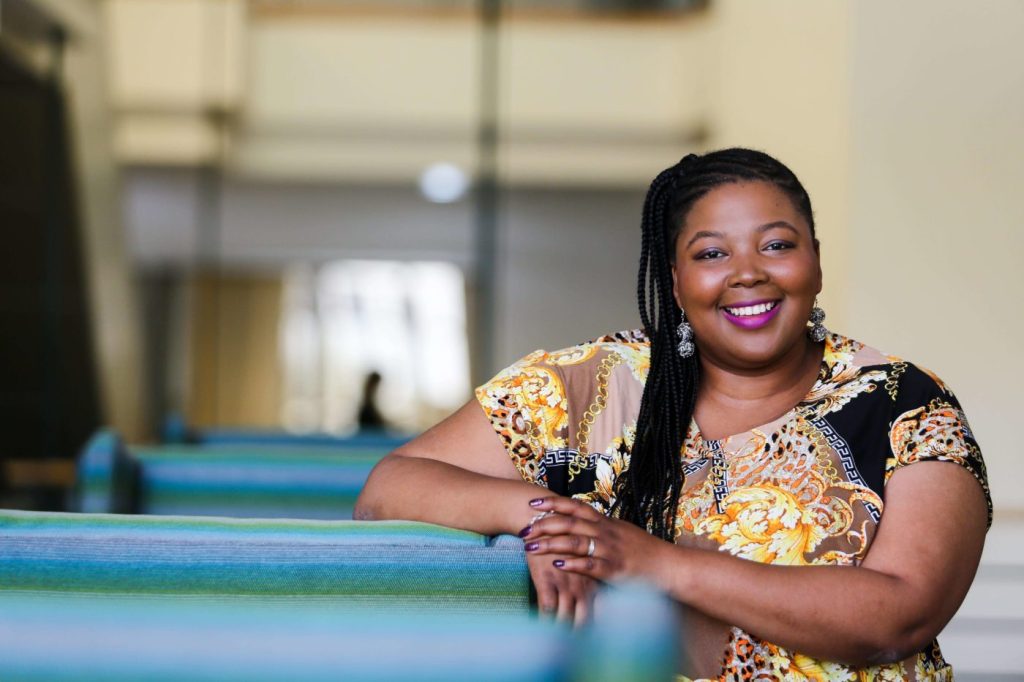
[bctt tweet=” An advocate for reproductive justice, Dr T dedicates her time to realise her vision” username=”SheLeadsAfrica”] As African women we know the struggles we face when it comes to accessing quality sexual and reproductive health services, especially if you are not privileged enough to afford private health care. Dr Tlaleng Mofokeng, also known as Dr T, is a young woman who is passionate about making such services available to all regardless of economic status –including those marginalised because of their sexual and gender identities. Dr T is a South African medical doctor, an activist, facilitator, speaker and columnist. Being a doctor has been her childhood dream. As soon as Dr Tlaleng knew what doctors did, she’s always wanted to be one. Now, Dr. T is a winner of the 2016 120 under 40: The New Generation of Family Planning Leaders and the Mail and Guardian 200 young South Africans in 2016. Who is Dr Tlaleng Mofokeng? I graduated from the University of Kwa-Zulu Natal in 2007. As a student, I set up the first youth friendly clinic in Matatiele in the Eastern Cape as part of my rural community project under Lovelife. Currently I run a Reproductive Clinic in Sandton and serves as the vice-chairperson of the Sexual and Reproductive Justice Coalition. I’m also a Medical Columnist at Sunday Times Newspaper, a Resident Doctor at Kaya FM, a facilitator and speaker. What made you choose sexual reproductive health? Sexual and reproductive health chose me. I had the first real inclination that I would work in this field during community service year; while I was working in the West Rand clinics in Johannesburg. I had many patients, often young women who consulted with me for medical issues and somehow they would end up opening up to me regarding their sexual health and relationship issues. It was very rewarding and I think the process was organic in that it is the patients who found me receptive enough to share their experiences. I remember one of the days when I had more patients waiting for me in the parking lot than inside the hospital, to talk about sex and ask questions. [bctt tweet=”Sexual and reproductive health chose me – Dr Tlaleng Mofokeng” username=”SheLeadsAfrica”] What is the Sexual and Reproductive Justice Coalition all about? The Sexual and Reproductive Justice Coalition, is a civil society organization made up individuals, academics, researchers, activists, service providers etc. We believe in, and are creating, a future informed by an intersectional sexual and reproductive justice perspective. Equality, dignity and bodily integrity to inform services, information and resources and options that are provided to all including marginalised sexual and gender identities. Tell us about your experience at the Johns Hopkins University and being in the top 120 under 40? The trip to the USA was an amazing trip. I am one of 40 winners and one of 10 invited to the USA to receive the award in person. I spent time in Baltimore, Washington and New York. The time at Johns Hopkins was really special as we attended a lecture by Professor Mosley, who is one of the top rated lecturers at Johns Hopkins. What impact would you like to make in your field? I envision a world where all people regardless of gender, orientation, geography, disability or economic status are at the centre of reproductive health agenda and service provision. As an advocate for reproductive justice, I dedicate my time and expertise to ensure that this vision becomes a reality. What are some of the day to day challenges of your job and how do you overcome them? The main thing is physical and mental exhaustion, one has to be emotionally present for all your patients. Sometimes one goes from a therapy session, to doing procedures followed by consultations. By the nature of the field, many people have really emotional stories and experiences and it can be exhausting but also rewarding, especially on a busy day. It is for this reason that debriefing and self-care is of the most importance for one’s own emotional and psychological wellbeing. [bctt tweet=” Self-care is very important for one’s emotional & psychological well being- @drtlaleng” username=”SheLeadsAfrica”] How do you stay inspired? The struggles are real and very personal. Our existence as black women is political and we can never switch off from the struggles of gender politics, racial oppression and the quest for economic freedom. The vision of a just world in which we as black women thrive and not just survive is further compromised because many women remain landless and unable to have shelter and food security. The daily experiences of not only my patients but also of my own in navigating an unjust world keeps me inspired. [bctt tweet=”We can’t switch off the struggles of gender politics & racial oppression – @drtlaleng” username=”SheLeadsAfrica”] What is the one thing you wish someone had told you about being a successful career woman? I do not think you can ever prepare for all possibilities especially in business or regarding careers and people may try but they too cannot tell you all there is to know. I have been fortunate to have a mother who was a working mother and career driven as a result of her modelling I have had no issues or inner battles about family life versus commitment to my career. Is there anything that you would change about the career choices you have made? Not a single thing. I know for sure that I am in the right field. What is your advice to the young women out there that want to follow in your footsteps? Medical school is tough. You will break but you will rise and you will realise your dream. No matter what the world tells you, you are beautiful, you are intelligent and you were born with all the power and are deserving of a good life. You can catch Dr T on Kaya FM 95.5 Gauteng and Al-Jazeera channel 406 on DSTV.
Wonderfull Abuah: Our desire is to see women acquire skills from scratch
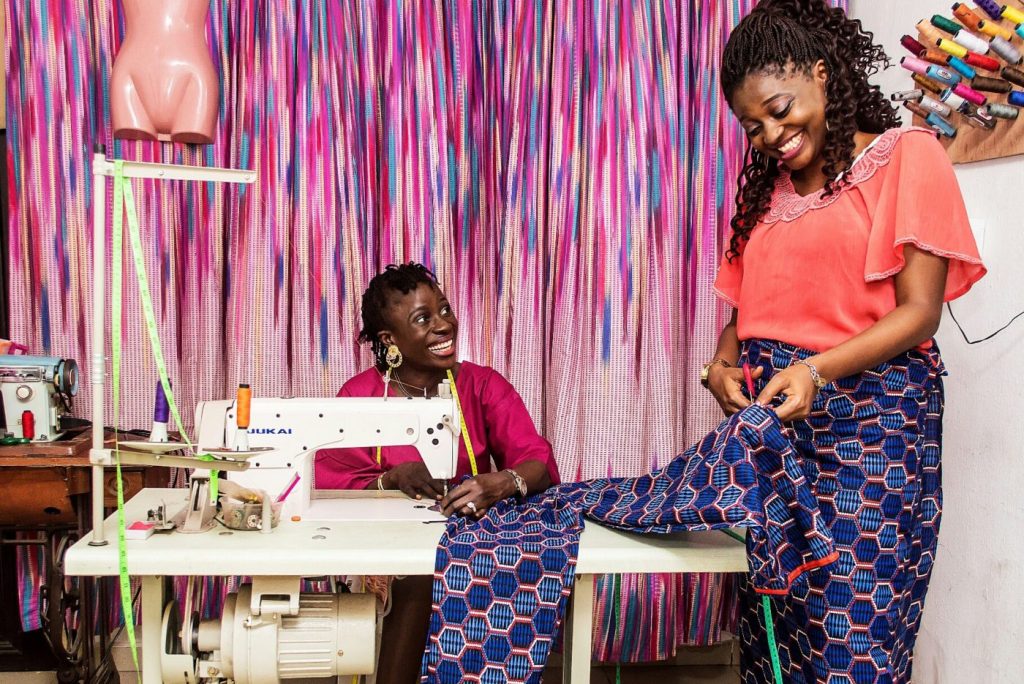
[bctt tweet=”It’s important for fashion enthusiasts to attend a fashion school – Wonderfull Abuah ” username=”SheLeadsAfrica”] Wonderfull Abuah’s first name is a perfect ice-breaker. She is co-founder and partner of Sew Easy Workshop (S.E.W), which she runs with Folasade Dan-Oketola. S.E.W is an online school for all things fashion, providing courses that are easy to digest and super easy to implement. Wonderfull’s journey into the world of fashion design started post-NYSC (National Youth Service Corps). Depressed over the fact that no job was forthcoming, she jumped at the opportunity to acquire sewing skills at a vocational centre where she met Folasade. Prior to co-founding S.E.W, Wonderfull spent her time making & selling outfits. With S.E.W, Wonderfull Abuah is living out her lifelong dream of impacting others. Would you say it’s important for fashion enthusiasts to go to fashion school? I would say it’s important for fashion enthusiasts to attend a fashion school. It isn’t mandatory, as we have some renowned fashion designers who are self-taught. However, times have evolved. A fashion school has a comprehensive curriculum that one can benefit immensely from. It saves time, energy and effort attending a fashion school rather than spending hours searching online or reading necessary and unnecessary books. How do you teach women to make money from sewing? At S.E.W, we teach women how to make money from sewing via an intensive coaching program. In this program, we cover their products, the quality and relevance to the current season/trends. We also deal with their pricing model and online/offline sales strategy. We literally show students how to properly position themselves as a brand that would attract the right target market. For example, we always emphasize product quality to the women we coach. Tailors already have a negative brand image around so it’d be catastrophic to be branded as “one of them”. By “them”, we mean tailors who disappoint their customers with poor finishing, poor customer service etc. We believe women should first of all, work on the quality of their products, then work on the packaging and marketing strategies. Our curriculum is created for absolute beginners and women with intermediate skill set. Our desire is to see women acquire this skill from scratch and be able to trade it eventually. We ensure that whatever we put into the curriculum would be suitable for a novice with zero knowledge about dressmaking. You’re a virtual company. What would you say to someone who doesn’t believe that one can learn fashion skills without a teacher looking over their shoulder? We are aware that many women in this part of the world are used to the traditional way of learning; i.e. physically with a tutor. And so we decided that our online teaching model would be as visual as possible and super easy to understand. However, our biggest breakthrough has been the testimonials from the women who dared to sign up for our online tutoring. This has been a major factor in convincing so many other women in our online sewing community to opt in for online sewing courses. We’ve had a wide variety of women use our program; from women who have 9-5 jobs,women who have children, young ladies freshly out of university and even students. We have received tons of tear-jerker messages from women who have taken our free and paid courses. It’s hard to pick one exactly because we have touched them in different ways. There are women who have had no extra time to enroll in a school and then discovered us and suddenly their dreams can come true, finally. We have stay-at-home moms whose kids are toddlers; they have no time to leave the house but with us tutoring them, they have begun mini sewing businesses from home. There are others who live in far away countries and discovering us has been an answered prayer. The scenarios are different but the results are same. We rekindled their dreams! How did you meet founder Folasade? What do you think compliments the both of you so S.E.W runs smoothly? I met Folasade at a vocational institute in 2009 where we both acquired dressmaking skills. We became good friends and kept in touch afterwards. She went on to intern with high profile designers and then established her sewing business, even as a banker back then. Last year 2015, Folasade called me and told me about her idea of us teaching women online. We had taught several ladies physically before; we did this separately. I loved her idea and we created our online group the same night! We added our family and friends (forcefully I might add) and then they added others. And that’s how we grew. Our partnership has been of great value. Folasade is the level headed one. She thinks through each proposal we create. She’s very practical and patient. On the other hand, I’m the instantaneous one. So we compliment each other so well. Folasade helps me slow down when my adrenaline is too high and I want to make decisions rashly. I also nudge her a bit more when we seem to slowing down on our goals. It’s been awesome working with her. What are the challenges in running a fashion school that is based online? Our challenges in running a fashion school online have been eye-opening. We have had to win the trust of women who were strangers via free online tutoring. About 5 months before we launched a paid course, we offered free online tutoring. We still offer free tutoring monthly within our sewing community and we’ll always do so. Eventually, we have been able to gain their trust. We have also had to deal with being present almost at every hour, answering questions from our online sewing community. We had to set a schedule for this to avoid burnout and to remain valuable to our students. [bctt tweet=”Wonderfull Abuah used free online tutoring at S.E.W to gain the trust of women to her brand” username=”SheLeadsAfrica”] Any New Year resolutions for
Dreaming up new career goals
[bctt tweet=”Ever experienced a sudden change to your career path? This one is for you” username=”SheLeadsAfrica”] Have you ever been so confused about which career path to take —or better still be jaded by the courses on offer. In the part of the world I live, capabilities are often reduced to the ‘societal value’ of the course studied. That is why almost 90% of university hopefuls in Nigeria fight tooth and nail to get admitted into the ‘robust and lucrative’ departments. Parents want their kids to study courses that will secure their futures; not ones that are merely a “waste of time: (going with my dad’s words). Courses like Medicine, Law, Accounting, Pharmacy or Mechanical Engineering are regarded as ‘de la crème’. This inevitably puts a lot of pressure on young people and those who fail to meet up to this expected standard are often seen as the leftovers. I can be considered as one of the leftovers because I was part of those denied admission into law. My broken dreams One lesson I have learnt that is still relevant in my career journey is that dreams can change and so we can’t afford to focus on the unfulfilled ones. Soon after my graduation, I was given an opportunity to become a copywriter; I never thought writing could be a path for me. It was when I went for an interview that the two panelists convinced and opened my eyes to the uniqueness of my ability to write. At the moment I realized that the allure for law or banking was no longer there. The interviewers had planted an idea of creative writing inside of me and since then I have learnt to hone my skills. Over the years, I have come to love my new career in writing and I thrive to become better. So if you happen to stumble into a career like l did, you might find these steps useful: 1. Never stop being hungry Don’t ever be content with the basicness of the new career. Get empowered with every given opportunity. When I started as a copywriter, I quickly enrolled myself in an advertising school in Lagos where I learnt firsthand from the industry veterans. Soon after, I began to attend trainings related to my field and I still to date commit myself to multiple learning. Also don’t be afraid to spread your wings in the new field. I started with copywriting but I gradually began to explore journalistic writing. I used to send weekly opinion pieces to the Sunday editor of Punch newspaper. Those publications boosted my morale and steadied my feet later as a journalist. Explore the new field and don’t be comfortable with average,strive for excellence. As African women, we put a lot at stake if we decide to be complacent in our careers and not seize the moment. [bctt tweet=”Dreams can change and we can’t afford to hold on to the unfulfilled ones —even with your career” username=”SheLeadsAfrica”] 2. The key word is patience I know you have heard this word ‘patience’ countless times; but it remains one virtue that must be acquired for us to get to the peak of our careers. Yes, it was one interview that reset my career goals but it is patience that I have continually needed to stay calm in my career journey stay calm in my career journey. It is so easy for us to fall into the trap of comparing our career stories with others but it is not right or fair on us. I particularly am guilty of this as often times I feel behind in my career in comparison to the different success stories of my colleagues. This is what I do whenever the thought crosses my mind; I take a deep breath and remind myself how far I have come and further challenge myself on the next career decision. The secret to being patience is never giving up even when all doesn’t make sense. 3. Get mentors There are mistakes in life that we can escape from. This is what mentors are for; they’ve walked that path and they can constructively guide us through our career goals if only we ask. Career mentorship is vital and it can detect how far we can go in our careers, so get to it today and seek out those mentors now. There are lots of mentoring programs for women of African descent that are committed to building and shaping the careers of African women; give yourself the opportunity of having a voice in this patriarchal society. Recently, I realized I was getting rusty in writing (I took a break to have babies) and I decided to seek professional help from an old colleague. I periodically began to send articles to her so she could constructively critique me. It’s been months now and am eternally grateful that she took me under her wing to mentor because my skills have significantly improved and l now have better approaches than before.
Say thank you: How to fuel your career with gratitude
[bctt tweet=”Showing gratitude goes a long way to create real and lasting impact in our careers” username=”SheLeadsAfrica”] Let’s start by being thankful for the New Year (Mama, we made it!) And hopefully, it’s going to be the year for breaking new career frontiers and becoming own our #BossLady. While we’re in the pursuit of greater career success, let’s not overlook the one thing that really matters; gratitude. Understanding the importance of being thankful and showing appreciation is one major key for career success. Generally, when we show gratitude on a personal basis, we tend to attract more good things and have people want to help us out, over and again; same applies to our professional life. Being grateful in our professional lives and learning to show gratitude equally goes a long way to create real and lasting impact in our careers. So, no matter the level of your career success, be it #MotherlandMogul or aspiring #BossLady, there’s a lot more you can achieve by constantly being thankful, and here’s just a few: Advances your career When you stay grateful for how far you’ve come in your career (which may not be sooo far), you increase your positive vibes to become better. Self reflection for criticism is good once in a while. However rather than sulking yourself to stagnancy by constant complaining, be thankful for your achievements so far. Even if it’s only a degree you have just yet or you’re on your way to getting one, still be thankful. This way, you allow for increased positivity and energy which lets you plan and plan the next step to take. [bctt tweet=”Grateful people are happy people, and happy people are more productive in their career” username=”SheLeadsAfrica”] Improves your career Grateful people are happy people, and happy people are more productive, engaged and resilient in their career. Happiness always pays off in your career. It also helps you focus on your goal, stay optimistic, and continue to strive for the best despite the hurdles life may throw at you. Also, you get to improve your decision making skills, which eventually improves your self esteem and your social interaction. Improves your professional relationships Being grateful helps deepen and improve your professional relationships, while building new networks. When you’re being thankful, you attract mentors, protégés, investors and even amazing partners. People love to help out and be around grateful individuals, because gratitude always has an effect on everybody. Increases opportunities Opportunity comes, but not once. When you appreciate people more, chances are that you’ll always be readily in their mind to be referred for new career opportunities they find to be essential for you. [bctt tweet=”Forming the habit of always being thankful would be a great for your career this year” username=”SheLeadsAfrica”] Increased productivity Learn to appreciate your team, employees, colleagues, and the endless list of people you deal with. It improves their esteem which motivates them to get more work done for you and even go the extra mile when necessary. Gratitude makes people feel good about helping you out which is essential in achieving your goals and visions. There are a whole lot more benefits of gratitude beyond our career life, and forming the habit of always being thankful would be a great value for your career this year. Whatever your position, learn to be thankful, always. Get rid of any feeling of entitlement you might have and learn to give genuine gratitude. Now if you’re ready to start implementing my advice, download the SLA Gratitude List and start making things happen.
How to deal with end of year disappointment
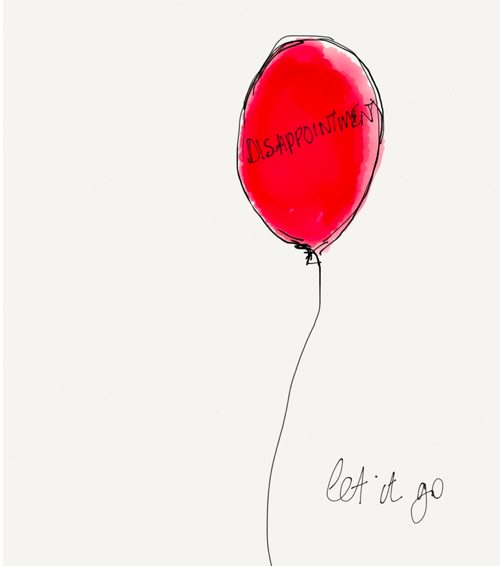
[bctt tweet=”Many of us are nursing our failed New Years resolution from last year, let 2017 be different” username=”SheLeadsAfrica”] Happy New Year to you all. Congratulations we made it!! It’s the first month of the year, and it seems like just yesterday that we were saying “2016 is going to my year” and I truly hope it was. I hope 2016 was the year you finally went back to school, or lost the last 10 pounds of your baby weight or quit your 9-5 and started your own business. If this person is you, “you go girl!” We are all so proud of you! Keep reaching higher in this new year. But for many of us, we are nursing the wounds of our failed New Years resolution from last year. The gym membership you bought only got used in January, you never quite got the hang of sticking to the budget that was supposed to help you come out of debt and your business never made it to year two. This doesn’t mean that New Years resolutions are bad, in fact I hope you have started creating your list for this year. For many of us after the countdown to the new year and getting our kiss at midnight, comes the new year blues. January can be the hangover month where we suddenly come face to face with all the things we didn’t do last year. All the projects we started and did not finish. The relationships that was supposed to lead to the altar but failed. The friends that left us last year. It can all be very depressing. So before you get all moody for the new year or anxious to make new goals, here are some tips to help you deal with last years disappointment. Be genuinely happy for your friends, your season is coming too If you are in the right girl squad, you should constantly see your friends succeeding. You should constantly be going to store openings, weddings, baby showers, business launches and etc. You shouldn’t be bitter at the successes of your friends, actually I would encourage you to get a new circle of friends for 2017 if your current circle isn’t full of girls constantly winning. So don’t get bitter, get better. Remember that social media is just a highlight reel Okay, when did December become the “celebrate everything” month? By Christmas day, I had already counted 4 engagement announcements, 3 “Guess who is pregnant again” posts and 5 promotions and college acceptances. Don’t get me wrong, I am happy for my friends. But before I sink into a depression, thinking that I am behind all my peers, I remember that people rarely post about their negative experiences on social media. Never let social media be the measure of how badly you are doing or how much your friends are thriving. Social media can be dangerous because we have a front row seat to people’s strengths and achievements. At the same time, we are so intimately aware of our own weaknesses and failures. I have a friend who posts things like “Grad school is kicking my butt, I gained 10 pounds and I didn’t get that job I wanted, but I will keep trying”. Now that is someone who definitely went on my gifts list for Christmas. We all need people who honestly remind us that the grass is not greener where they are. [bctt tweet=”It’s okay to fail. Many of us forget that the mark of success is what we learned along the way” username=”SheLeadsAfrica”] Failure is okay —the only people who don’t fail are those who don’t try Nothing I say here matters. Because if you wont listen to Queen B, why would you listen to me? No but seriously, write a list of all the things you failed at last year. And then next to it, write all the things you learned even though you failed. Many of us need to remember that the mark of success is rarely about the destination but rather the process and the lessons learned along the way. Sure you were denied that grant that you needed to run your business, but in the process you learned how to write a killer business proposal. Not to forget, you nailed the presentation even though a year ago, public speaking terrified you. Does that sound like failure? So go on, make that list, and be pleasantly surprised at all the things you accomplished last year by “failing”. Try again, this year tomorrow Seriously! Try again! Keep trying. Keeping going until you hear a “yes”. As a Motherland Mogul the only thing you should not chase is a man…Every other thing is fair game to be chased down. If you are disappointed at the end of 2016 that is a sign that you know you are capable of more. Do you know what Africa would look like if all the girls who failed last year and those girls who succeeded this year decided to just keep trying? To keep pushing. Keep writing. Keep creating. Keep drawing. Keep building. Keep coding. Keep loving themselves. [bctt tweet=”Every single Motherland Mogul is capable of so much! Don’t be scared of failure” username=”SheLeadsAfrica”] Whether you are in the failed bucket or succeeded bucket one thing is certain, there is room for so much more…and you know it! I cant wait to see all the many successes of Motherland Moguls this year. Every single one of you are capable of so much. #SquadGoals Cheers to more winning in 2017!
Clothing etiquette 101
[bctt tweet=”Wearing something really great for the wrong occasion can totally take away your style” username=”SheLeadsAfrica”] Clothing etiquette is defined as ‘knowing what is appropriate to wear for particular occasions’. In other words, what you wear is defined by the entertainment. For example: Black is the standard colour to a funeral, as opposed to a bright yellow or pink. Lighter colours are worn to weddings, and seldom black (unless specified) —although it seems to be in trend at the moment. Bright colours and short items are not worn in court. No matter how great you look, when looked at in isolation, wearing something really great for the wrong occasion can totally take away your elegance and style. Fear not, with styling, you can dress certain items up or down to fit the entertainment or occasion. Let’s take jeans for example, as these are nearly worn by everyone, every day. So naturally, one often has to wear them appropriately as they transition through the day and various activities. Let’s look at a Saturday for example, where one may run most of their errands, have a coffee date and end the day with a fun and social evening. We’ll use boyfriend jeans in this scenario. Errands Comfort is key when you’re running errands, as one needs to move around easily. So something easy to wear and comfortable is required. These boyfriend jeans could be styled with a loose T-Shirt, hat or cap, some sneakers and perhaps a scarf and sunglasses for a bit of flair. Sneakers give the look a relaxed, practical and comfortable feel; they are for running around. A scarf and hat add some personality to the outfit. Here’s our look below: Coffee date Now for that coffee date later on, the same jeans could easily be taken from my morning errands to a meeting, by adding some sandals and styling the hair a bit. One could throw on a blazer/jacket to add a smart and sophisticated element to the look. Evening look With that coffee date/meeting done and dusted, this look could easily be translated into an evening look. This would be achieved with adding some glamorous heels, a smart top, some bold jewellery and a stylish hair-style. Here’ the look below; With that said, none of this is set in stone. You can easily run errands in any of the looks above, or go out in the morning look, if it were to a pub where you need not really dress up. One can style outfits as they wish, by playing around with clothes, colours, textures, statement pieces, as long as they fit the occasion and make one feel great. With that said, stay stylish and rock on!